


 English
  русский
  عربى
عربى  Español
Advanced Brass Excess Flow Shut-Off Valve for Safer Low-Pressure Gas Connections
Content
- 1 Product Overview
- 2 Key Technical Specifications
- 3 Why Excess Flow Protection Matters
- 4 Built-In Excess Flow Shut-Off: The Core Advantage
- 5 Manual Reset for Reusability and Practical Maintenance
- 6 Female Thread and Hose Connector Design
- 7 Low-Pressure Compatibility and Stable Operation
- 8 Material Strength: Why Brass Is a Practical Choice
- 9 Application in Household Gas Safety Systems
- 10 Application in Commercial Kitchen Gas Lines
- 11 Application in Portable Gas Equipment
- 12 Competitive Advantages Over Ordinary Hose Valves
- 13 How the Valve Helps Reduce Gas Leakage Hazards
- 14 Manufacturing Strength Behind the Product
- 15 Precision Machining and Its Role in Valve Performance
- 16 Automated Assembly and Testing
- 17 Quality Philosophy and Long-Term Reliability
- 18 Installation and Selection Considerations
- 19 Maintenance Benefits
- 20 Value for Distributors, OEMs, and Project Buyers
- 21 Positioning Within the Broader Valve Market
- 22 Frequently Asked Questions
- 22.1 What is the main purpose of the YH-216A Brass Excess Flow Shut-Off Valve?
- 22.2 How is it different from an ordinary brass hose ball valve?
- 22.3 Can the valve be reused after it shuts off?
- 22.4 What pressure is the valve designed for?
- 22.5 What shut-off flow options are available?
- 22.6 What connection design does the valve use?
- 22.7 What thread standard is supported?
- 22.8 What media can the valve work with?
- 22.9 What temperature range does the valve support?
- 22.10 Where can this valve be used?
- 22.11 Does the valve require electricity?
- 22.12 Who should install the valve?
- 23 Conclusion
- 24 References
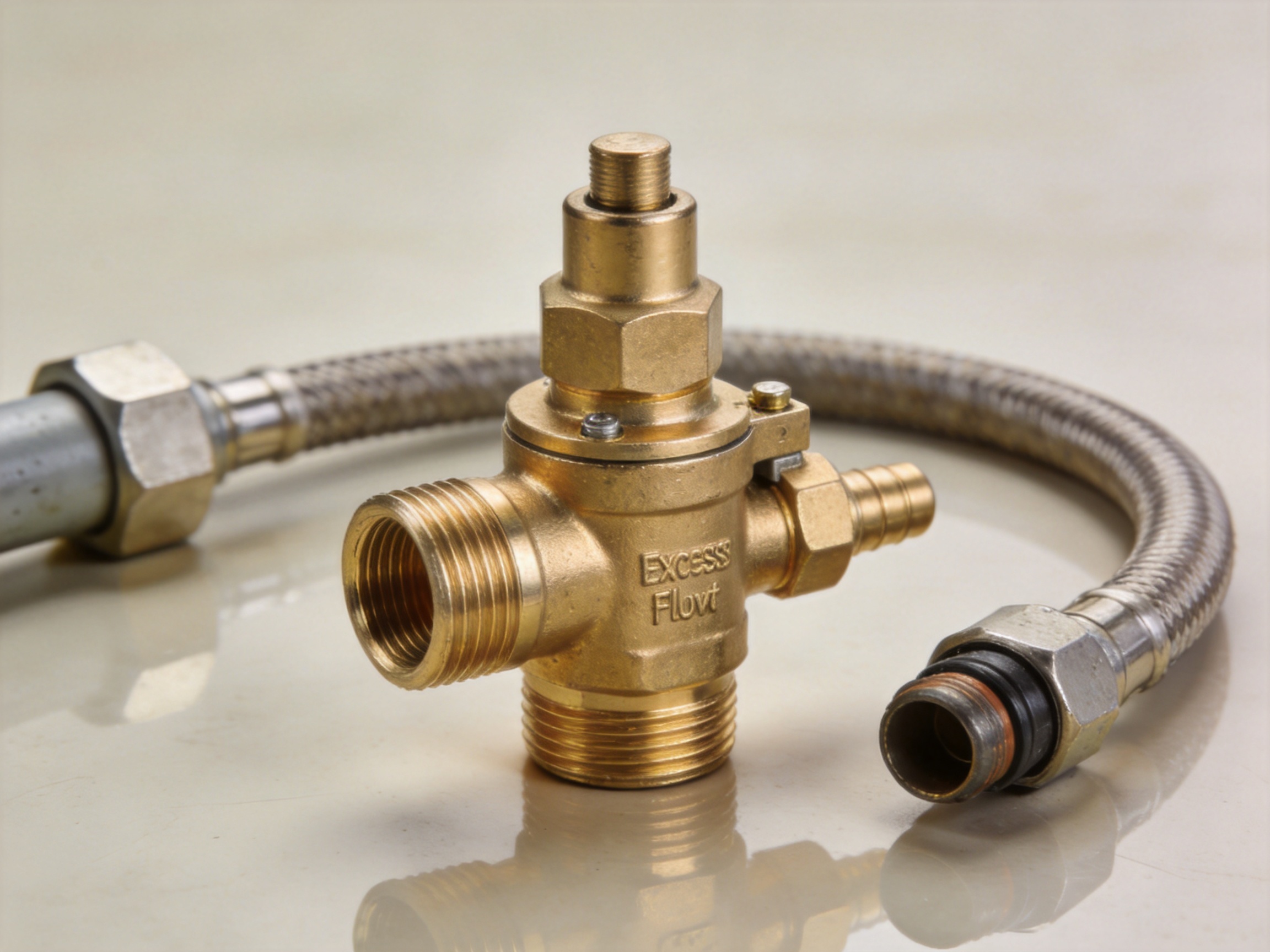
In low-pressure gas distribution, a small component can make a major difference in safety, reliability, and long-term operating cost. The YH-216A Brass Excess Flow Shut-Off Valve is designed for applications where a gas line must remain convenient to use while also being protected against abnormal flow conditions, such as a ruptured hose, accidental disconnection, or sudden leakage. Unlike an ordinary brass hose ball valve that simply opens or closes through manual operation, this valve incorporates an automatic flow-activated shut-off function. When the flow rate exceeds a preset safe threshold, the valve closes to help prevent continued gas release.
This product is especially valuable in household gas safety systems, commercial kitchen gas lines, and portable gas equipment where flexible hoses are commonly used. Flexible hoses improve installation convenience, but they also introduce risks if damaged, aged, pulled loose, or improperly connected. The YH-216A addresses this challenge by combining a female threaded connection, a hose connector interface, low-pressure compatibility, brass construction, and a reusable manual reset mechanism in one compact valve body.
The result is a practical safety valve that supports normal gas use while offering an additional layer of active protection. For distributors, contractors, appliance manufacturers, and gas system integrators, the product provides a balanced solution: simple installation, dependable operation, and enhanced risk control without requiring complex electronic sensors or external power.
Product Overview
The YH-216A Brass Excess Flow Shut-Off Valve is a brass valve designed for low-pressure gas and fluid systems. Its core function is to automatically shut off flow when the flow rate rises beyond a safe level. This may occur when a downstream hose ruptures, a hose connector becomes detached, or a severe leak creates an abnormal discharge condition. By reacting to flow rather than relying only on manual intervention, the valve helps reduce the chance of uncontrolled gas release.
The product belongs to the brass hose ball valve category, but its role extends beyond ordinary on-off control. Its built-in excess flow protection provides a safety function that many standard hose valves do not include. The valve is suitable for a nominal pressure of 0.015 MPa and is optimized for low-pressure gas networks. This pressure rating is particularly important because household and similar gas systems often operate at low pressure, and a safety valve must be sensitive enough to respond to dangerous events while stable enough to avoid nuisance shut-offs during normal use.
The valve supports flow-activated shut-off options of 1.2 m³/h and 1.5 m³/h. These options allow the product to be matched with different gas consumption requirements. A system with lower consumption may use one shut-off threshold, while a higher-demand application may require another. Proper selection helps achieve the intended safety effect while maintaining smooth everyday performance.
The YH-216A also features a female thread plus hose connector design. The female threaded side can connect with compatible male pipes or fittings, while the hose connector side enables connection to flexible hoses. This dual-interface structure makes the valve highly practical in real installations, where rigid piping and flexible appliance connections often meet.
Key Technical Specifications
| Item | Specification | Practical Meaning |
|---|---|---|
| Product Type | Brass excess flow shut-off valve with hose connector | Combines manual valve utility with automatic safety shut-off |
| Model | YH-216A | Designed for low-pressure gas safety and hose connection applications |
| Nominal Pressure | 0.015 MPa | Suitable for household and similar low-pressure gas systems |
| Working Medium | Water, non-corrosive fluids, gas | Applicable to compatible gas and fluid control environments |
| Working Temperature | -20°C < t < 80°C | Supports use across common indoor and protected installation conditions |
| Flow-Activated Shut-Off | 1.2 m³/h or 1.5 m³/h | Allows selection according to system flow requirements |
| Thread Standard | Parallel pipe thread to ISO 228 | Supports standardized threaded connection compatibility |
| Connection Form | Female thread plus hose connector | Adapts to male pipe fittings and flexible hose assemblies |
| Reset Method | Manual reset | Valve can be reused after a shut-off event when conditions are safe |
Why Excess Flow Protection Matters
Gas safety depends on preventing ignition sources, maintaining sealed connections, and limiting the amount of gas that can escape during an abnormal event. Many systems depend heavily on user attention. A conventional manual valve can stop flow only if someone notices the problem and closes it quickly. In a sudden hose rupture, accidental pull-out, or severe leak, valuable time may be lost before manual action is taken.
An excess flow shut-off valve addresses this risk by responding to the flow condition itself. Under normal operating conditions, gas flows through the valve at a controlled rate. If the downstream side is suddenly opened to the atmosphere because of hose failure or disconnection, the flow rate increases rapidly. The built-in protection mechanism detects this excessive flow and closes the passage. This helps prevent continuous gas discharge and reduces the risk of fire, explosion, poisoning, or property damage.
This type of protection is particularly important for household kitchens, commercial kitchens, mobile cooking equipment, and temporary gas connections. These environments may involve frequent hose movement, cleaning activity, equipment relocation, or exposure to heat and mechanical stress. A safety valve that can react automatically provides a more robust protection strategy than relying on a conventional valve alone.
The YH-216A is designed to bring this protection into a compact, brass-bodied valve that remains easy to install and reset. It does not require electricity, batteries, electronic controls, or complicated commissioning. This mechanical simplicity is one of its greatest advantages because it allows reliable operation in many practical environments.
Built-In Excess Flow Shut-Off: The Core Advantage
The defining feature of the YH-216A is its built-in excess flow shut-off function. In normal use, the valve permits gas flow to downstream appliances or equipment. When the flow exceeds the preset safe range, the internal mechanism acts to shut off the flow path. This automatic closure is designed to occur when the system experiences a sudden and abnormal increase in gas discharge.
Compared with ordinary brass hose valves, this feature provides a significant safety upgrade. A standard hose ball valve is useful for manual isolation, but it does not distinguish between safe flow and dangerous flow. If a downstream hose fails while the valve is open, the standard valve will continue allowing gas to escape until someone closes it. The YH-216A reduces this dependence on immediate human response.
Compared with some simple one-time safety devices, the YH-216A offers the advantage of manual reset. After a shut-off event, the valve does not automatically become waste material. Once the cause of the abnormal flow has been identified and corrected, the valve can be manually reset to restore normal service. This helps reduce maintenance cost, replacement inventory, and downtime.
The product also avoids unnecessary complexity. Electronic gas safety systems can be useful in larger or more demanding installations, but they often require sensors, wiring, power supplies, controllers, and periodic maintenance. The YH-216A provides flow-based mechanical protection at the connection point itself, making it suitable for applications where simple, dependable, and cost-effective safety is required.
Manual Reset for Reusability and Practical Maintenance
A safety shut-off device must not only respond to abnormal conditions; it must also support practical recovery after the event. The YH-216A includes a manual reset function, which means the valve can be returned to service after shut-off once the system has been inspected and the problem has been resolved.
This is an important advantage over devices that require replacement after activation. In commercial settings, equipment downtime can affect productivity and revenue. In residential settings, unnecessary replacement increases inconvenience and cost. With the manual reset design, maintenance personnel or qualified users can restore service without replacing the entire valve, provided that the installation remains safe and the valve is not damaged.
The reset feature also promotes responsible safety management. Because the valve must be manually reset, the shut-off event naturally draws attention to a possible problem. Users are encouraged to check the hose, connector, downstream appliance, and surrounding environment before restoring flow. This is better than a system that silently resumes flow without investigation.
In this way, the YH-216A combines automatic protection with controlled recovery. It acts quickly during abnormal flow conditions and supports reuse after corrective action. This balance of protection and maintainability is one of the reasons it stands out from many ordinary hose connection valves.
Female Thread and Hose Connector Design
Gas installations frequently require a transition between fixed piping and flexible hose. Rigid pipes provide stable distribution, while hoses allow appliances or equipment to be positioned conveniently. The connection point between the two is critical because it must be secure, compatible, and easy to install correctly.
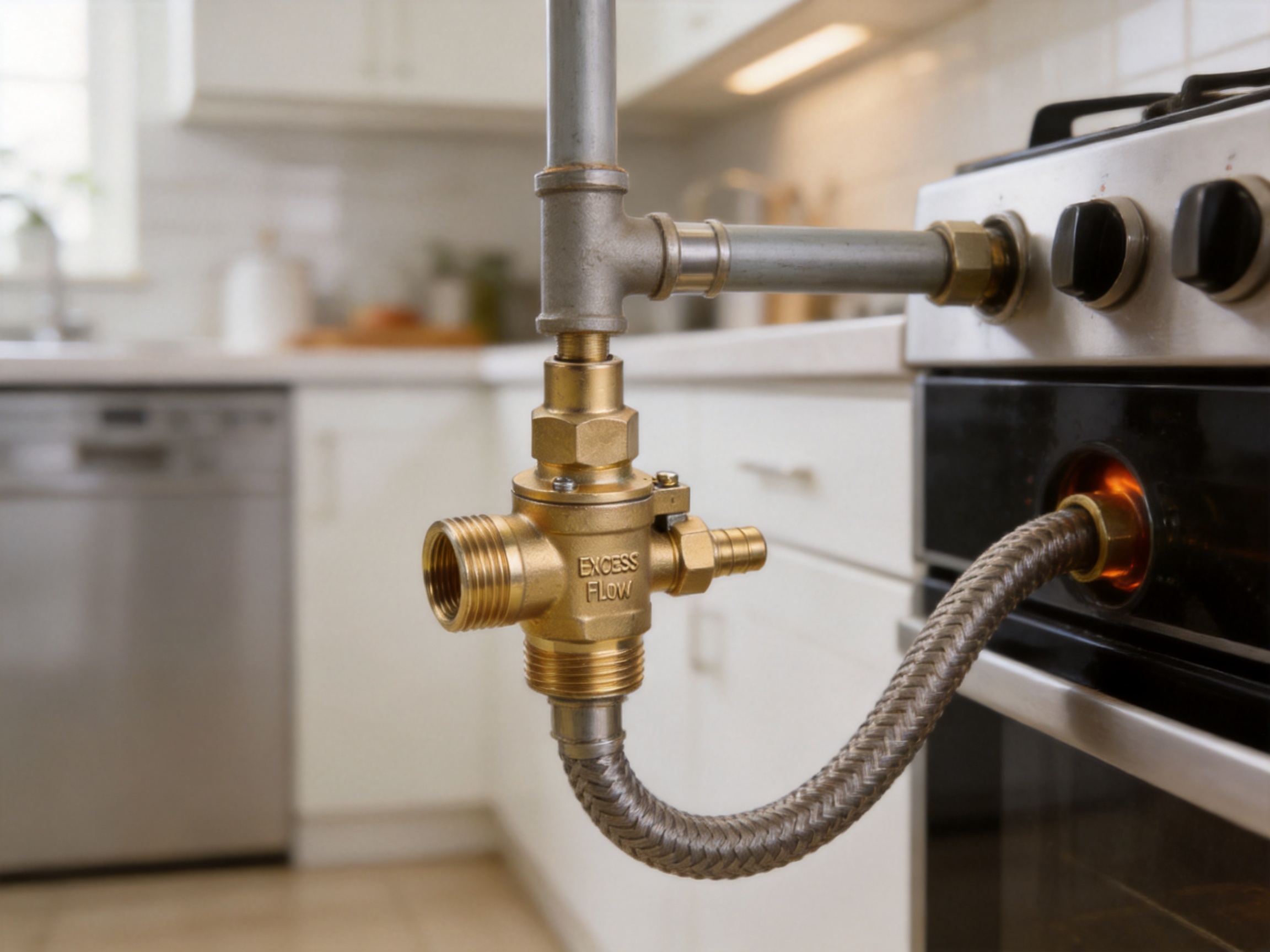
The YH-216A uses a female thread plus hose connector configuration. The female threaded end is designed to connect with a compatible male pipe or fitting. The hose connector end provides a practical interface for flexible hose attachment. This dual-interface design reduces the need for additional adapters, simplifies layout, and helps installers create a cleaner connection.
The use of parallel pipe thread to ISO 228 supports standardized compatibility. Standardization is important in international supply chains and project work because it reduces uncertainty during selection and installation. When components follow recognized thread standards, buyers and installers can more easily match fittings and reduce assembly errors.
Compared with valves that offer only one connection style, the YH-216A provides better flexibility. Some products are designed only for threaded pipe connection, while others are intended only for hose attachment. The YH-216A bridges both needs, making it useful in residential gas lines, commercial kitchen equipment, and portable gas systems where hose connection is part of the design.
Low-Pressure Compatibility and Stable Operation
The valve is rated for a nominal pressure of 0.015 MPa, which makes it suitable for low-pressure gas systems. This is a key technical point because safety components must be matched to the actual operating environment. A valve designed for higher-pressure industrial systems may not respond properly in low-pressure household networks, while a poorly calibrated low-pressure valve may trigger too easily during normal appliance operation.
The YH-216A is optimized to avoid false triggering under typical low-pressure conditions. False triggering is more than a minor inconvenience. If a valve shuts off repeatedly during normal use, users may lose confidence in the device, bypass it, or replace it with a less protective component. A well-designed valve must therefore provide both sensitivity and stability.
The available flow-activated shut-off values of 1.2 m³/h and 1.5 m³/h provide selection flexibility. Different equipment has different consumption rates, and matching the shut-off level to the actual installation is important. A properly selected valve remains open during normal demand but closes when the flow rises to a level associated with severe leakage or hose failure.
This low-pressure compatibility is one of the product’s competitive strengths. It is not merely a generic valve with a safety label; it is designed around the practical requirements of gas safety systems where household and light commercial appliances operate at relatively low pressures.
Material Strength: Why Brass Is a Practical Choice
Brass is widely used in valve manufacturing because it offers an effective combination of strength, machinability, corrosion resistance in suitable media, and dimensional stability. For gas and non-corrosive fluid applications, a properly manufactured brass valve provides a durable and reliable body structure.
The YH-216A benefits from brass construction because the material supports precision machining of threads, sealing surfaces, and internal passages. Accurate machining is especially important for a safety valve. The internal mechanism must move predictably, the sealing areas must perform reliably, and the connection interfaces must fit properly with mating components.
Brass also provides a professional appearance and good resistance to many common service conditions. For household and commercial gas equipment, users and installers often prefer brass components because they are familiar, robust, and easy to integrate with existing fittings.
Compared with lower-grade materials or poorly machined alternatives, a high-quality brass valve is less likely to suffer from thread damage, deformation, leakage at connection points, or inconsistent assembly results. Material quality alone does not guarantee performance, but when combined with controlled manufacturing and testing, brass becomes an excellent foundation for dependable valve production.
Application in Household Gas Safety Systems
In household gas systems, safety and convenience must work together. Users need reliable gas supply for cooking, heating, or other appliances, but they also need protection against common risks such as hose aging, improper installation, accidental pulling, and leakage. The YH-216A is well suited for these scenarios because it provides automatic excess flow shut-off directly at the hose connection area.
Household kitchens often include flexible gas hoses for convenience. These hoses may be moved during cleaning, appliance replacement, or renovation. If a hose is damaged or disconnected while gas is available, the flow rate can increase sharply. The YH-216A is designed to respond to this type of abnormal flow condition, reducing the amount of gas that can escape.
Because the valve is compatible with low-pressure systems, it can be selected for residential gas networks without introducing unnecessary complexity. The manual reset function is also valuable in household use. After a shut-off event, the cause should be checked, and the valve can then be reset once safe conditions are restored.
For homeowners, property managers, and gas appliance installers, this product offers an easy way to upgrade safety beyond ordinary manual isolation. It supports safer use of flexible hose connections while keeping installation straightforward.
Application in Commercial Kitchen Gas Lines
Commercial kitchens place high demands on gas components. Equipment may operate for long hours, staff may move quickly in crowded spaces, and cleaning operations may expose hoses and fittings to physical disturbance. In such environments, safety valves must be durable, practical, and easy to maintain.
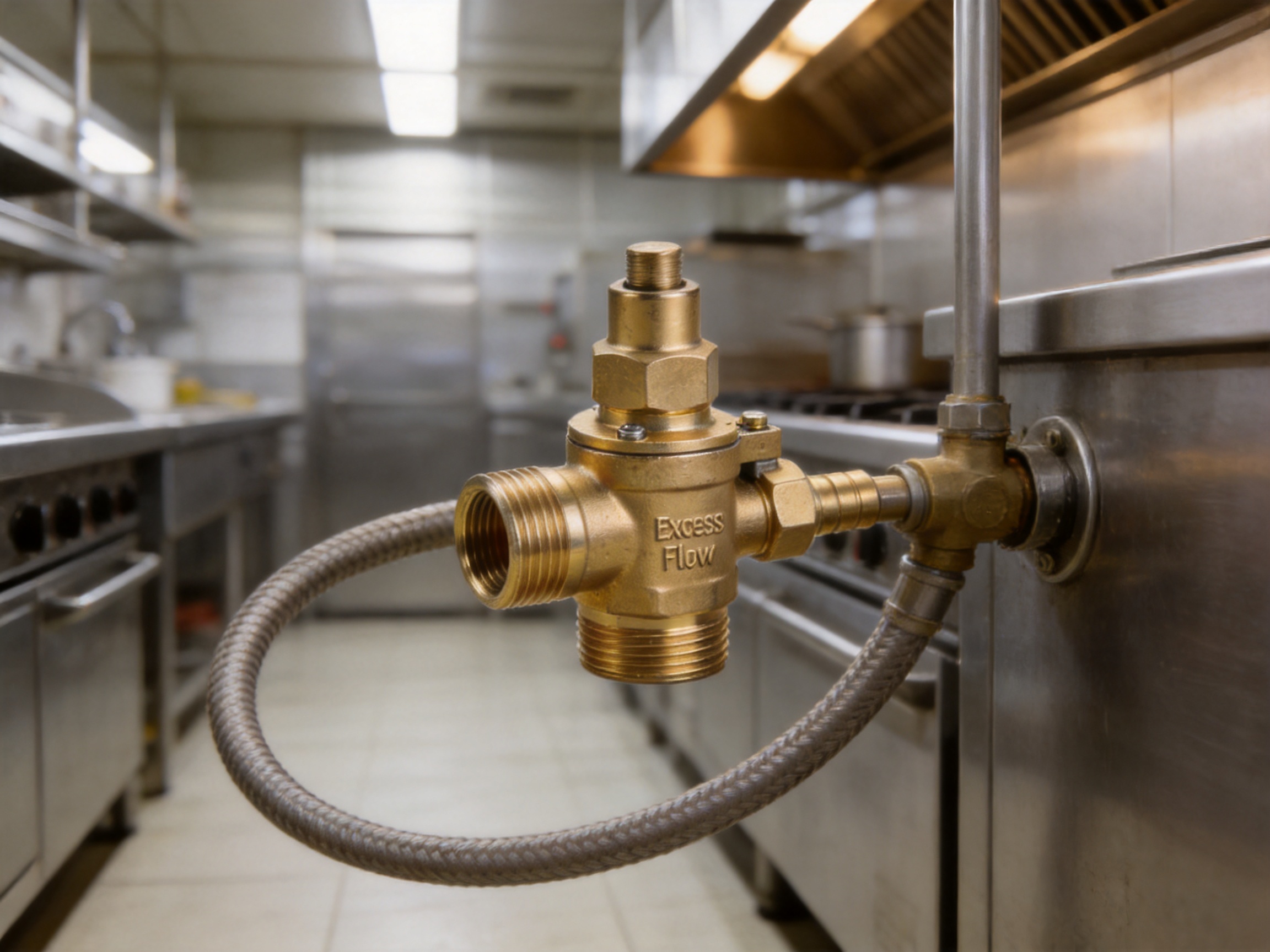
The YH-216A can be used as part of a commercial kitchen gas safety strategy, especially where low-pressure gas lines connect to appliances through flexible hoses. Its excess flow shut-off function helps limit gas release if a downstream hose or connector fails. Its manual reset design reduces replacement cost after activation, which is beneficial for operators who want to minimize downtime.
The brass body and standardized threaded connection also support professional installation. Commercial kitchens often require components that can be serviced and inspected efficiently. A compact mechanical valve with a clear safety function fits well into this requirement.
While every commercial installation should follow applicable local standards and be handled by qualified personnel, the YH-216A provides a useful component for enhancing gas line safety. It is especially appropriate where operators want more than a simple shut-off valve but do not need a complex electronically controlled system at every connection point.
Application in Portable Gas Equipment
Portable gas equipment introduces another set of risks. Movement, temporary setup, repeated connection and disconnection, and exposure to varied environments can increase the chance of hose damage or connection failure. A mechanical excess flow shut-off valve can provide valuable protection in these applications.
The YH-216A’s female thread and hose connector design is practical for portable or semi-portable equipment because it supports a secure transition between a threaded supply fitting and a flexible hose. The shut-off mechanism adds protection if the hose becomes damaged or disconnected during operation.
Portable applications also benefit from the valve’s mechanical nature. Since the valve does not require electricity, it can be used in locations where power supply is unavailable or undesirable. Its working temperature range of -20°C to 80°C supports many ordinary operating environments, provided that the installation conditions and medium compatibility are appropriate.
For equipment suppliers, this valve can be incorporated into product packages to increase perceived safety value. For users, it offers an additional safeguard that operates automatically when abnormal flow occurs.
Competitive Advantages Over Ordinary Hose Valves
The first competitive advantage of the YH-216A is active safety. Ordinary hose ball valves provide manual control only. They are useful, but they cannot react independently to a sudden hose rupture. The YH-216A, by contrast, includes a flow-activated shut-off function that helps stop abnormal flow automatically.
The second advantage is reusability. Some safety devices are designed for one-time activation or require replacement after a safety event. The YH-216A’s manual reset function helps reduce total ownership cost and simplifies maintenance.
The third advantage is connection flexibility. A female thread plus hose connector design makes the valve suitable for installations where rigid piping meets flexible hose. This can reduce adapter requirements and improve installation convenience.
The fourth advantage is low-pressure suitability. The valve is rated for 0.015 MPa and designed for systems where false triggering must be avoided. This is particularly important in household and light commercial gas networks.
The fifth advantage is mechanical simplicity. The valve provides automatic protection without relying on external power, electronic sensors, or complex control systems. For many applications, this makes it easier to specify, install, and maintain.
The sixth advantage is manufacturing support. A valve with a safety function must be produced with consistent precision. Ningbo Yunhua Valve Co., Ltd. supports production with advanced CNC machining, automated assembly, testing workshops, and professional manufacturing management. These strengths help ensure that the product is not only well designed but also consistently produced.
How the Valve Helps Reduce Gas Leakage Hazards
Gas leakage hazards are serious because combustible gas can accumulate and create fire or explosion risks. The severity of a leak depends on factors such as flow rate, ventilation, ignition sources, and response time. Reducing the amount of gas released during an abnormal event is therefore a central safety objective.
The YH-216A helps address this issue by limiting continued flow when excessive flow is detected. If a hose breaks or disconnects, the downstream resistance drops and flow increases. The valve’s internal mechanism is designed to recognize this abnormal flow condition and close. By stopping or greatly limiting continued discharge, the valve helps reduce the volume of gas released before users can respond.
This function is particularly useful because severe leaks may occur suddenly. Users may not be close to the valve at the exact moment of failure. Automatic shut-off shortens the time between failure and flow interruption, improving safety compared with purely manual systems.
It is important to understand that an excess flow valve is part of a broader safety system. Proper installation, suitable hose selection, regular inspection, ventilation, and compliance with applicable gas codes remain essential. However, by adding automatic flow-based shut-off at a vulnerable connection point, the YH-216A strengthens the overall safety design.
Manufacturing Strength Behind the Product
A safety valve must perform reliably not only in design theory but also in mass production. Manufacturing consistency is critical because small variations in machining, assembly, sealing, or internal mechanism performance can affect valve behavior. Ningbo Yunhua Valve Co., Ltd. has built its strengths around precision manufacturing, automated production, and quality-focused management.
The company is an innovative enterprise specializing in the research, development, production, sales, and service of gas and fluid valves, water supply valves, and hardware accessories. Over more than ten years, it has developed a professional management team, improved its operating system, and cultivated a manufacturing culture focused on safety, quality, and practical value.
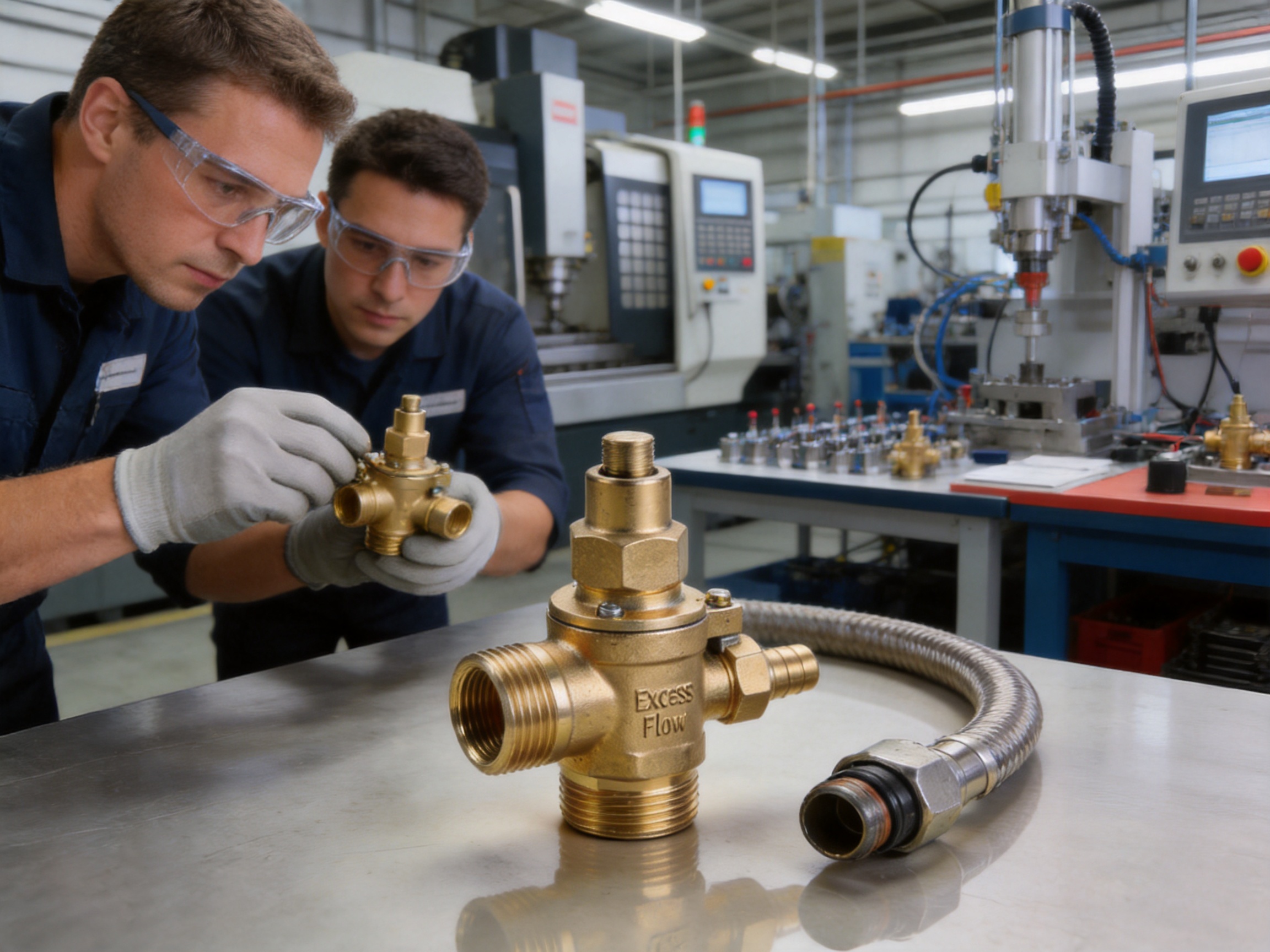
The company covers an area of 20,000 square meters, giving it the physical capacity to organize machining, assembly, testing, and logistics efficiently. It has established a professional, fully automated precision machining workshop, assembly line, and testing workshop. These facilities support repeatable production and help ensure that products meet relevant standards and customer expectations.
Advanced domestic and international CNC machine tools enable accurate machining of brass valve components. For a product like the YH-216A, this precision is essential. Thread quality, internal bore dimensions, sealing geometry, and mechanism fit all influence performance. CNC machining improves dimensional control and repeatability compared with less controlled processes.
The company also uses professional automated assembly and testing equipment. Automated assembly can help improve consistency, reduce human error, and support higher production efficiency. Testing equipment helps verify performance before shipment, which is especially important for gas valves where leakage control and functional reliability are critical.
Precision Machining and Its Role in Valve Performance
Precision machining is one of the most important foundations of reliable valve performance. The YH-216A includes threaded connection surfaces, hose connector geometry, internal flow paths, sealing areas, and excess flow mechanism components. Each of these features must be formed accurately.
Thread accuracy affects installation. Poorly machined threads can cause leakage, cross-threading, weak connections, or difficulty during assembly. By using CNC equipment and controlled machining processes, the company can produce threads that support reliable connection with compatible ISO 228 parallel pipe threads.
Internal flow path accuracy affects shut-off behavior. Excess flow protection depends on predictable flow characteristics. If internal dimensions vary significantly, the valve may respond inconsistently. Precision machining helps maintain the designed relationship between normal flow and abnormal flow response.
Sealing surface quality affects leakage control. Gas valves must seal effectively to maintain safety and system efficiency. Smooth, correctly dimensioned sealing surfaces are essential to preventing unwanted leakage. Precision machining supports better surface finish and dimensional consistency.
Hose connector geometry affects hose retention and sealing. A connector that is poorly formed may not grip or seal properly with the hose assembly. Accurate machining helps produce a stable connection interface.
In short, the advanced function of the YH-216A depends heavily on disciplined manufacturing. The company’s investment in automated precision machining is therefore not just a production advantage; it is directly connected to product safety and reliability.
Automated Assembly and Testing
Assembly quality is critical for any valve, and it becomes even more important when the product includes an internal shut-off mechanism. Components must be positioned correctly, seals must be installed properly, and moving parts must operate smoothly. Automated assembly equipment can improve consistency by controlling repetitive operations and reducing variation.
Professional assembly lines also support traceable and organized production. A well-arranged line allows each step to be completed in sequence, with checks placed at appropriate points. This helps reduce the possibility of missing parts, incorrect orientation, or inconsistent tightening.
Testing is equally important. A gas safety valve should be checked for leakage, mechanical operation, and functional suitability. Testing workshops provide the environment and equipment needed to evaluate product performance before delivery. For buyers, this reduces risk and supports confidence in bulk purchasing.
The company’s annual production capacity of 2 million sets of valves and 10 million sets of hardware accessories indicates strong manufacturing scale. Scale matters because it demonstrates that the company can support stable supply for distributors, project buyers, and OEM customers. At the same time, automated testing helps maintain quality across high-volume production.
This combination of capacity and control is a key advantage. Some competitors may offer low-cost valves but lack advanced testing infrastructure. Others may provide technical capability but struggle with high-volume delivery. Ningbo Yunhua Valve Co., Ltd. brings together production scale, automated equipment, and specialized valve experience.
Quality Philosophy and Long-Term Reliability
The company’s mission is to build a safe fluid ecosystem with high-quality valves. This mission is closely aligned with the purpose of the YH-216A. A valve designed to shut off excessive gas flow must be treated as a safety product, not merely a commodity fitting.
Long-term reliability begins with design selection. The product uses brass construction, practical connection geometry, low-pressure rating, and mechanical shut-off design. It continues through material control, machining accuracy, assembly quality, and testing. Finally, reliability depends on correct installation and appropriate use by customers.
By specializing in gas and fluid valves, water supply valves, and hardware accessories, the company builds product knowledge across related categories. This experience supports improvements in sealing, machining, assembly, and usability. The ability to produce both valves and hardware accessories also provides strong understanding of connection components and installation requirements.
The company’s vision is to become a leading company in the global fluid control industry. Products like the YH-216A support that vision by addressing real safety needs in practical markets. The valve is not an abstract innovation; it solves a common problem in gas connections with a compact mechanical design.
Installation and Selection Considerations
Proper product selection is essential. The YH-216A is designed for nominal pressure of 0.015 MPa and working temperature from -20°C to 80°C. It is intended for compatible media such as water, non-corrosive fluids, and gas. Before installation, users should confirm that the medium, pressure, temperature, flow requirement, and connection dimensions are suitable.
The flow-activated shut-off threshold should be selected according to the downstream equipment demand. If the selected value is too low for the application, the valve may shut off during normal high-demand operation. If it is too high, it may not respond as desired in some leakage conditions. The available 1.2 m³/h and 1.5 m³/h options give customers flexibility, but proper engineering judgment remains important.
Installation should be performed by qualified personnel in accordance with applicable local codes and safety rules. Connections should be inspected for tightness, and hoses should be compatible with the medium and operating conditions. After installation, the system should be tested to confirm proper sealing and operation.
Users should not treat any safety valve as a substitute for regular inspection. Hoses, clamps, connectors, appliances, and ventilation conditions should be checked periodically. If the valve shuts off, the cause should be identified before resetting. Manual reset should occur only after the downstream issue has been corrected and it is safe to restore flow.
Maintenance Benefits
The YH-216A offers maintenance advantages because it can be manually reset after activation. This reduces the need to replace the valve after every shut-off event. For commercial operators, this can reduce downtime. For residential users, it reduces inconvenience and cost.
Maintenance personnel should inspect the valve and connected hose assembly if activation occurs. Common causes may include hose rupture, loose connection, sudden downstream opening, or equipment malfunction. Once the cause is corrected, the valve can be reset according to proper procedure.
The brass body supports durability in suitable environments. However, like all mechanical products, the valve should be protected from improper force, incompatible chemicals, severe corrosion, contamination, and installation damage. The product should be stored in a clean, dry environment before installation.
Regular inspection helps ensure that the hose connector remains secure, the threaded joint remains tight, and the valve remains free from visible damage. In gas applications, leak testing should be performed using approved methods and never with open flame.
Value for Distributors, OEMs, and Project Buyers
For distributors, the YH-216A is attractive because it is easy to explain and addresses a clear safety need. Customers understand the value of a valve that can shut off automatically if a hose fails. The product’s brass construction, standardized thread, low-pressure suitability, and manual reset function provide strong selling points.
For OEMs, the valve can be integrated into gas appliance packages, portable gas equipment, or safety connection kits. Its mechanical operation avoids the need for electronic integration, making it simpler to include in product assemblies. The availability of different shut-off flow values supports adaptation to different equipment requirements.
For project buyers, the company’s production capacity and manufacturing infrastructure are important. Projects often require stable supply, consistent quality, and reliable delivery. The company’s 20,000-square-meter facility, automated precision machining, assembly lines, testing workshops, and large annual production capacity support these needs.
Buyers also benefit from the company’s specialization in gas and fluid valve products. A specialized manufacturer is more likely to understand the practical details of valve selection, sealing, threading, testing, and packaging. This expertise can reduce procurement risk and support long-term cooperation.
Positioning Within the Broader Valve Market
The valve market includes many categories, from threaded globe valves and forged steel valves to brass gas ball valves and specialized safety valves. Each category serves a different function. Threaded globe valves are often associated with flow regulation and isolation in piping systems. Forged steel valves are commonly selected for strength in demanding environments. Brass gas ball valves are widely used for manual gas shut-off. The YH-216A fits into the safety-focused brass gas connection segment.
Its distinguishing point is not simply that it is made of brass or that it connects to a hose. Its defining value is the combination of hose connection and excess flow shut-off. This combination makes it especially relevant in the final connection area between gas supply and appliance, where flexible hoses are common and mechanical disturbance can occur.
In competitive terms, this means the YH-216A should not be compared only on the basis of price. A basic valve may cost less, but it does not provide the same automatic protection. A complex safety system may provide broader monitoring, but it can be more expensive and more difficult to install. The YH-216A occupies a practical middle ground: enhanced safety, simple mechanical operation, reusable reset, and straightforward installation.
Frequently Asked Questions
What is the main purpose of the YH-216A Brass Excess Flow Shut-Off Valve?
The main purpose is to automatically shut off flow when the gas flow rate exceeds a safe limit, such as during hose rupture, accidental disconnection, or severe leakage. It helps reduce gas leakage hazards in low-pressure systems.
How is it different from an ordinary brass hose ball valve?
An ordinary brass hose ball valve usually provides manual open and close control only. The YH-216A adds built-in excess flow protection, allowing it to respond automatically to abnormal high-flow conditions.
Can the valve be reused after it shuts off?
Yes. The valve has a manual reset function. After the cause of the shut-off has been found and corrected, the valve can be manually reset to restore normal flow, provided that the system is safe.
What pressure is the valve designed for?
The valve is rated for a nominal pressure of 0.015 MPa, making it suitable for low-pressure gas systems such as household and similar applications.
What shut-off flow options are available?
The product offers flow-activated shut-off options of 1.2 m³/h and 1.5 m³/h. Selection should be based on the normal flow demand of the downstream equipment.
What connection design does the valve use?
It uses a female thread plus hose connector design. This allows connection to compatible male threaded fittings on one side and flexible hose on the other side.
What thread standard is supported?
The valve uses parallel pipe thread to ISO 228, supporting standardized connection compatibility.
What media can the valve work with?
The listed working media include water, non-corrosive fluids, and gas. Users should confirm compatibility with the specific medium and operating conditions before installation.
What temperature range does the valve support?
The working temperature range is -20°C < t < 80°C.
Where can this valve be used?
It can be used in household gas safety systems, commercial kitchen gas lines, and portable gas equipment safety protection, provided that the technical conditions match the product specifications.
Does the valve require electricity?
No. The excess flow shut-off function is mechanical and does not require external power, batteries, or electronic controls.
Who should install the valve?
Installation should be performed by qualified personnel according to applicable local regulations, gas safety requirements, and proper installation practices.
Conclusion
The YH-216A Brass Excess Flow Shut-Off Valve provides a practical and valuable upgrade for low-pressure gas connection safety. Its built-in excess flow protection helps shut off abnormal flow caused by hose rupture, leakage, or accidental disconnection. Its manual reset function supports reuse after safety events, reducing maintenance cost and downtime. Its female thread plus hose connector design makes installation flexible and suitable for real-world gas systems where rigid piping and flexible hoses meet.
Compared with ordinary hose valves, the product offers active safety rather than manual control alone. Compared with more complex safety systems, it provides a simpler, mechanical, power-free solution. Compared with non-resettable devices, it offers better long-term economy and maintainability.
Behind the product is a manufacturer with strong production capabilities. Ningbo Yunhua Valve Co., Ltd. operates a 20,000-square-meter facility with automated precision machining workshops, assembly lines, testing workshops, advanced CNC equipment, and professional automated testing systems. With annual production capacity reaching 2 million sets of valves and 10 million sets of hardware accessories, the company supports both quality consistency and stable supply.
For households, commercial kitchens, portable gas equipment, distributors, OEMs, and project buyers, the YH-216A represents a balanced combination of safety, practicality, durability, and manufacturability. It is a compact valve with a clear mission: to help build safer gas and fluid control systems through dependable brass valve engineering.
References
International Organization for Standardization. ISO 228 Pipe Threads Where Pressure-Tight Joints Are Not Made on the Threads.
Gas Safety Engineering Handbook. Principles of Low-Pressure Gas Distribution and Appliance Connection Safety.
Valve Manufacturers Association. Technical Guidance on Valve Materials, Testing, and Quality Control.
Industrial Fluid Control Manual. Fundamentals of Flow Control, Shut-Off Mechanisms, and Mechanical Safety Devices.
Brass Components in Fluid Systems. Material Selection, Machining Practice, and Application Considerations.

Related Products
-
 View More
-
 View More
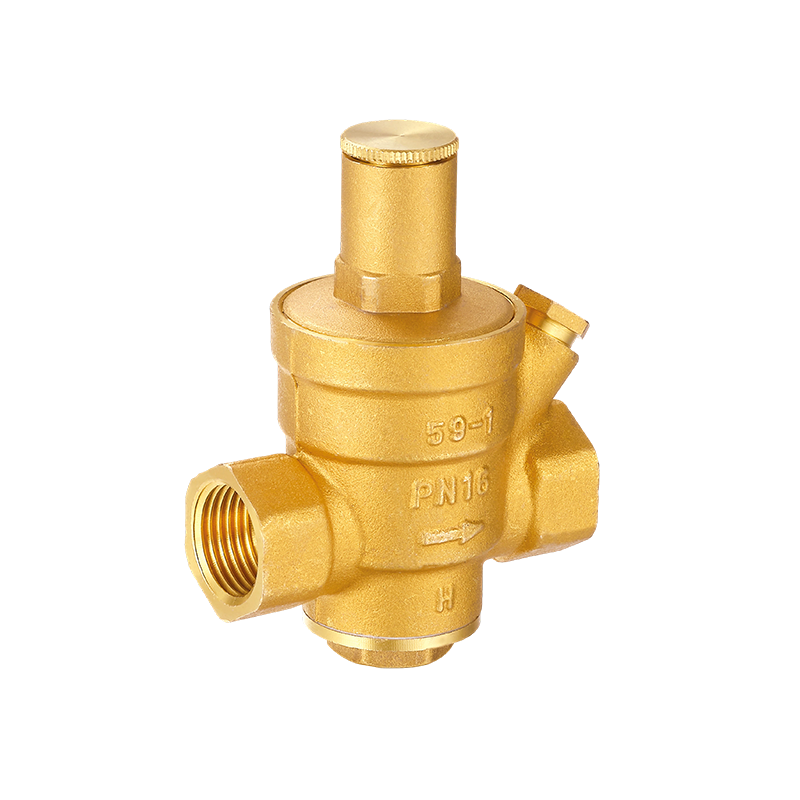
YH-601 Brass Piston Pressure Reducing Valve
-
 View More
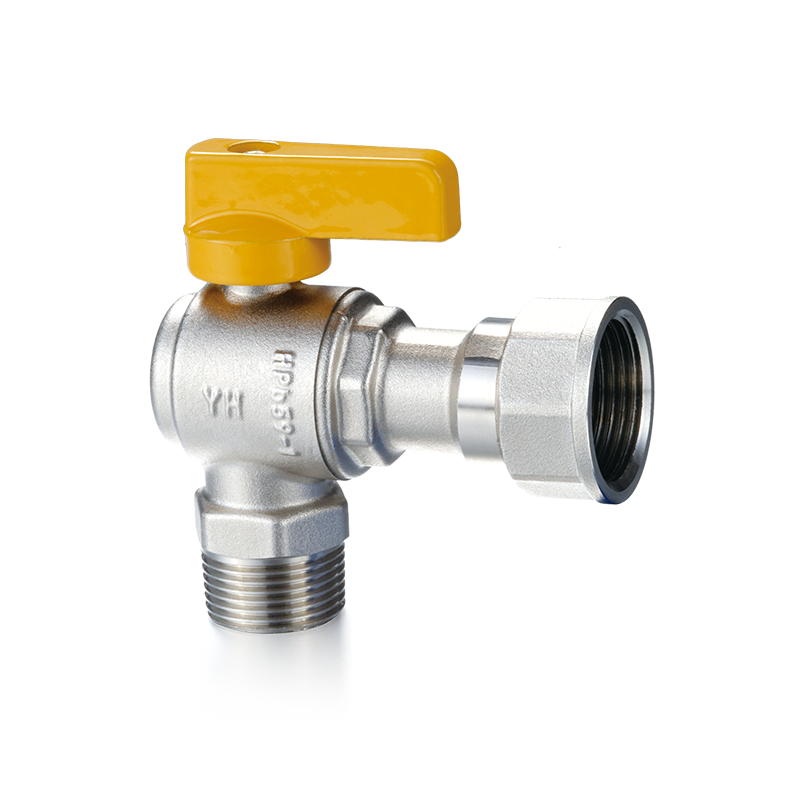
YH-215 Brass Right Angle Ball Valve(F/M)
-
 View More
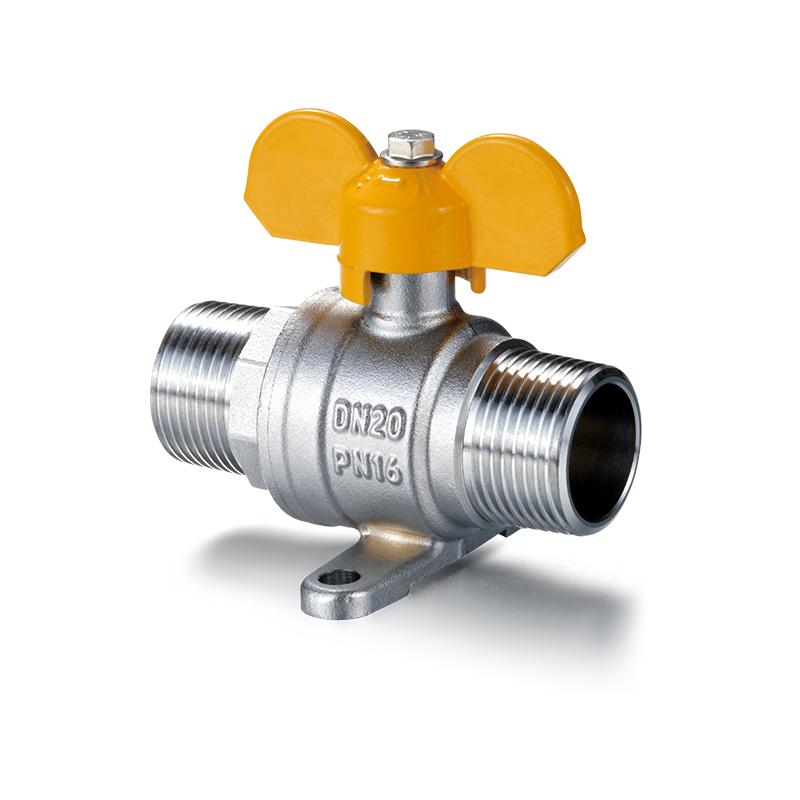
YH-214 Brass Ball Valve with Base& Butterfly Handle(M/M)
-
 View More
YH-221 Brass Ball Valve with Long Handle(M/M)
-
 View More
YH-220 Full Port Brass Ball Valve with Long Handle(F/F)
Related News
Contact Us
-

-
 +86-0574-63742169
 -
 No.104-128, Cizhang East Road, Zhangqi Town, Cixi City, Ningbo, Zhejiang Province, China


Message Us Now !
