

 English
 русский
 عربى
 Español

How Precision Pipe Fittings Improve Safety, Efficiency, and Fluid Control Systems
Content
- 1 Understanding the Role of Pipe Fittings
- 2 Product Characteristics of Precision Pipe Fittings
- 3 Materials Used in Pipe Fitting Production
- 4 Advanced Manufacturing Processes
- 5 Why Manufacturing Capability Matters to Customers
- 6 Advantages Over Low-Control Alternatives
- 7 Applications for Pipe Fittings
- 8 How to Select the Right Pipe Fitting
- 9 Installation and Maintenance Recommendations
- 10 Quality Management and Customer Confidence
- 11 Customization and OEM Cooperation
- 12 Environmental and Operational Considerations
- 13 Frequently Asked Questions
- 13.1 What are pipe fittings used for?
- 13.2 Why is thread accuracy important?
- 13.3 Which materials are commonly used for pipe fittings?
- 13.4 Are brass fittings suitable for gas applications?
- 13.5 How does CNC machining improve fitting quality?
- 13.6 What information should be provided when requesting a quotation?
- 13.7 How can leakage be prevented?
- 13.8 Can pipe fittings be customized?
- 13.9 Why should fittings be tested before shipment?
- 13.10 How should pipe fittings be stored?
- 14 Conclusion
- 15 References
- 16 Product: Pipe Fittings
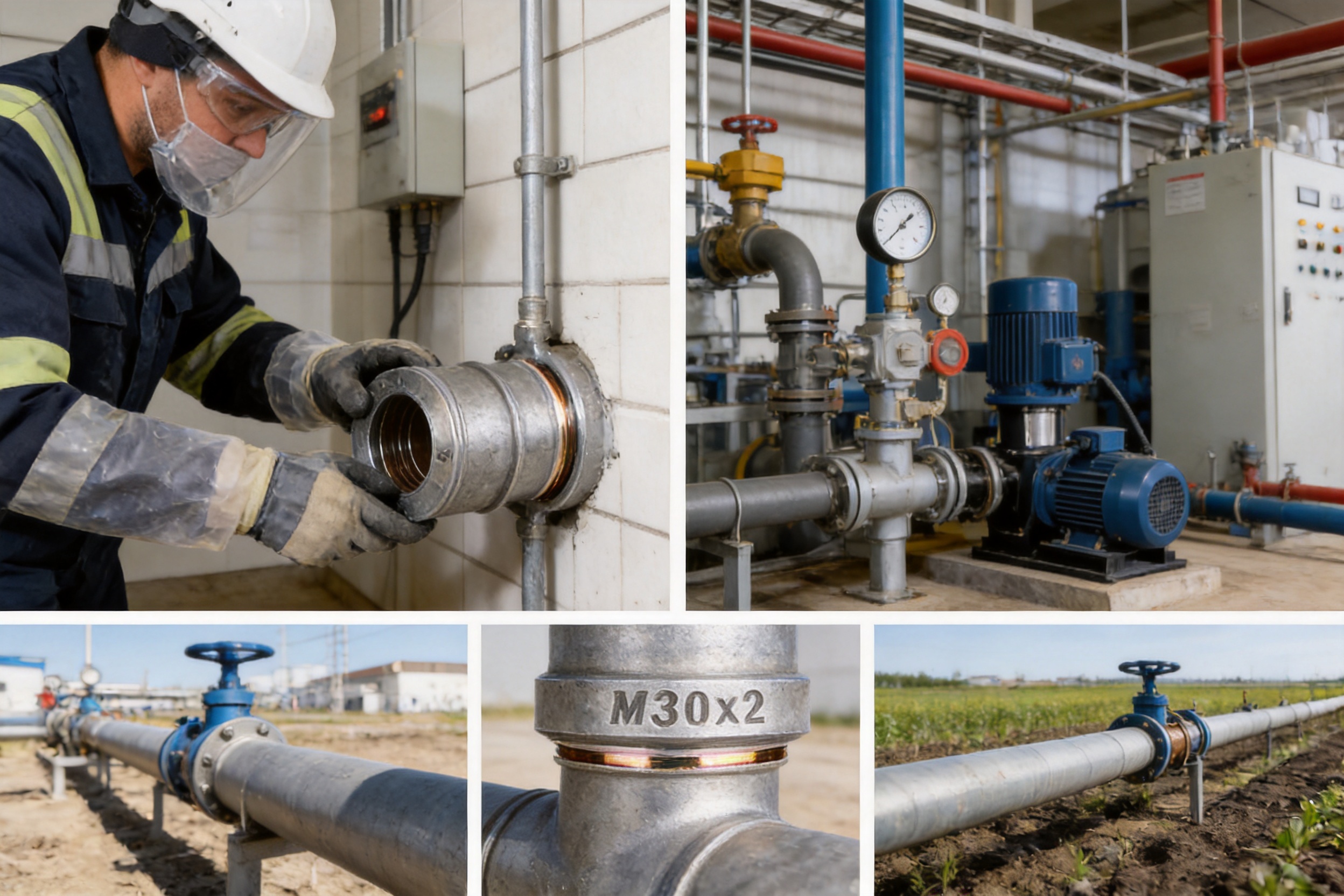
Pipe fittings are essential components in almost every fluid-handling installation. They connect pipes, change flow direction, create branches, adapt different connection sizes, and provide secure transitions between valves, equipment, and distribution lines. Although fittings are often smaller and less visible than pipes or valves, their performance has a direct effect on system safety, service life, maintenance costs, and operating efficiency.
Modern industrial, commercial, agricultural, residential, and utility systems require fittings that can deliver dependable mechanical strength, dimensional accuracy, corrosion resistance, and reliable sealing. A fitting that is poorly machined, incorrectly assembled, or manufactured from unsuitable material may cause leakage, pressure loss, vibration, thread damage, or premature system failure. For this reason, the selection of a qualified pipe fitting manufacturer is as important as the selection of the pipe, valve, or pump connected to it.
Precision pipe fittings manufactured by Ningbo Yunhua Valve Co., Ltd. are developed for applications involving gas, water, fluid control, and hardware connection systems. Supported by automated precision machining, organized assembly procedures, and dedicated testing facilities, these fittings are designed to provide stable performance across a wide range of installation environments. The company combines production experience in valves and hardware accessories with a quality-focused manufacturing system, allowing customers to obtain components that are compatible with broader fluid-control solutions.
This article explains the functions, construction, performance advantages, manufacturing process, quality considerations, and application value of precision pipe fittings. It also examines how a well-equipped manufacturer can help distributors, contractors, equipment builders, and end users improve the reliability of complete piping systems.
Understanding the Role of Pipe Fittings
Pipe fittings are mechanical components used to join, redirect, extend, reduce, terminate, or control sections of piping. They may be installed in water supply networks, gas distribution systems, compressed-air lines, irrigation equipment, heating systems, industrial machinery, and building services. Common fitting types include elbows, tees, couplings, unions, adapters, reducers, caps, plugs, nipples, and threaded connectors.
The basic function of a fitting is to create a continuous fluid path while maintaining structural stability. This requires more than simply connecting two pipes. The fitting must match the pipe dimensions, withstand the operating pressure, tolerate temperature changes, and maintain a reliable seal during repeated use. In threaded systems, the connection must also be accurately formed so that the threads engage smoothly without excessive looseness or interference.
Fittings are frequently installed in locations that are difficult to access. A small leak behind a wall, beneath flooring, inside a machine, or in a buried service line can be expensive and time-consuming to repair. Reliable fittings reduce the possibility of such problems and help protect the equipment connected to the system. In gas applications, connection quality is especially important because leakage can create safety hazards as well as energy loss.
Fittings also influence the hydraulic behavior of a system. Internal passages that are smooth, correctly sized, and free from unnecessary irregularities can help reduce turbulence and pressure loss. Accurate geometry allows the fitting to connect properly with valves, meters, hoses, regulators, pumps, and other components. When several fittings are used together, dimensional consistency becomes particularly important because small deviations can accumulate across the installation.
Product Characteristics of Precision Pipe Fittings
Precision pipe fittings are designed with attention to material selection, dimensional control, connection quality, surface condition, and functional reliability. These characteristics distinguish professionally manufactured fittings from low-cost components produced without adequate process control.
Accurate Dimensions and Consistent Geometry
Dimensional accuracy is one of the most important advantages of precision fittings. The outer dimensions, internal passage, thread profile, connection length, and alignment of each part must remain within appropriate tolerances. Consistency makes installation easier and reduces the need for excessive force, rework, or adjustment.
Accurate geometry is also essential when fittings are connected to valves or other precision components. If the fitting is not properly aligned, the resulting stress may be transferred to the valve body, pipe, or equipment connection. Over time, this stress may lead to distortion, leakage, or cracking. Consistently manufactured fittings help maintain a balanced load across the complete assembly.
Reliable Threaded Connections
Many pipe fittings use threaded connections because threads provide a practical and widely accepted method for assembly and disassembly. A properly manufactured threaded fitting should have a clean thread profile, suitable pitch, consistent depth, and a surface finish that supports effective sealing.
Thread quality affects both installation efficiency and long-term performance. Threads that are rough, incomplete, misaligned, or inconsistent may damage the mating component or make it difficult to achieve the correct tightening position. Excessive tightening can deform the fitting or connected valve, while insufficient tightening may cause leakage. Precision machining helps produce threads that engage predictably and support a secure connection when installed according to the relevant technical requirements.
Strong and Stable Construction
Fittings must withstand mechanical loads generated by internal pressure, pipe movement, vibration, temperature change, and installation forces. A strong body helps the fitting maintain its shape under service conditions. This is particularly important for elbows, tees, reducers, and adapters, where changes in flow direction or connection size may create additional stress.
Material and wall thickness must be selected according to the intended application. Water supply fittings may have different requirements from fittings used with gas, oil, compressed air, or industrial fluids. A responsible manufacturer evaluates the intended service conditions and produces components appropriate for the relevant application category.
Clean Surface and Controlled Finish
The surface condition of a fitting affects appearance, corrosion resistance, sealing, and ease of maintenance. A clean and controlled surface helps reduce the risk of contamination entering the piping system. It also makes inspection easier and provides a more uniform base for plating, coating, polishing, or other finishing treatments when required.
Surface treatment may be used to improve appearance or provide additional protection against environmental exposure. The appropriate finish depends on the base material, operating environment, fluid characteristics, and customer requirements. Regardless of the selected finish, controlled processing helps ensure that the fitting remains suitable for installation and service.
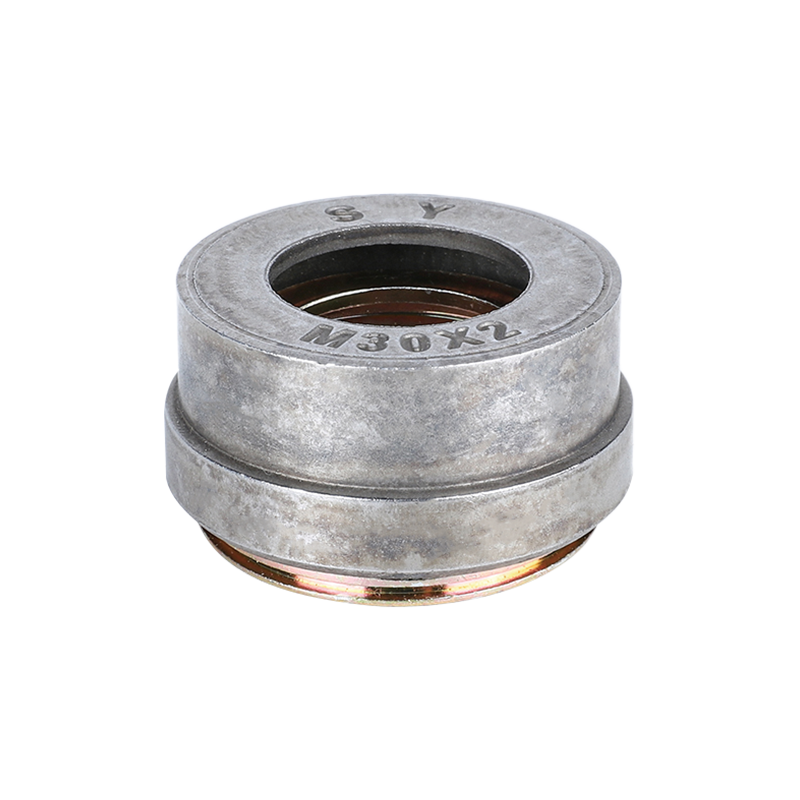
Pipe Fittings
Materials Used in Pipe Fitting Production
The material used in a fitting determines many of its performance characteristics, including strength, corrosion resistance, temperature capability, machinability, and compatibility with the conveyed medium. Common fitting materials include brass, stainless steel, carbon steel, alloy steel, ductile iron, copper, and various engineering plastics. The most suitable material depends on the application rather than on price alone.
Brass Fittings
Brass is widely used in water, gas, heating, and general hardware applications. It offers a useful balance of corrosion resistance, machinability, mechanical strength, and appearance. Brass can be accurately machined to produce threaded connections and complex fitting shapes, making it suitable for adapters, connectors, valves, and compact fluid-control components.
Brass fittings are often selected for building services and equipment connections because they are comparatively easy to install and maintain. They can also provide a durable connection in environments where moderate corrosion resistance and good dimensional stability are required. For gas-related applications, the material grade and product design must be appropriate for the relevant service conditions and regulatory requirements.
Stainless Steel Fittings
Stainless steel is selected when higher corrosion resistance, cleanliness, or mechanical durability is required. It is often used in food processing, chemical equipment, water treatment, marine environments, and industrial installations. Stainless steel may require more demanding machining conditions than brass, which makes equipment capability and process control especially important.
Forged and Carbon Steel Fittings
Steel fittings are frequently used in high-pressure, high-temperature, and demanding industrial systems. Forged steel construction can provide high strength and structural integrity when the fitting is designed and manufactured correctly. These fittings may be used in energy equipment, process piping, machinery, and other applications where mechanical performance is a priority.
The manufacturing process for steel fittings may include forging, heat treatment, machining, inspection, and surface protection. Each stage can affect the final performance of the fitting, so traceability and process consistency are important considerations for buyers.
Material Compatibility
A fitting should not be selected only by nominal size. The material must be compatible with the fluid, temperature, pressure, surrounding atmosphere, and connected components. Chemical exposure, galvanic corrosion, freezing conditions, ultraviolet radiation, and repeated thermal cycling may all influence service life.
Professional technical support can help customers identify a suitable combination of material, connection type, size, and finish. When necessary, customers should provide information about the medium, operating pressure, operating temperature, installation environment, and applicable standards before confirming an order.
Advanced Manufacturing Processes
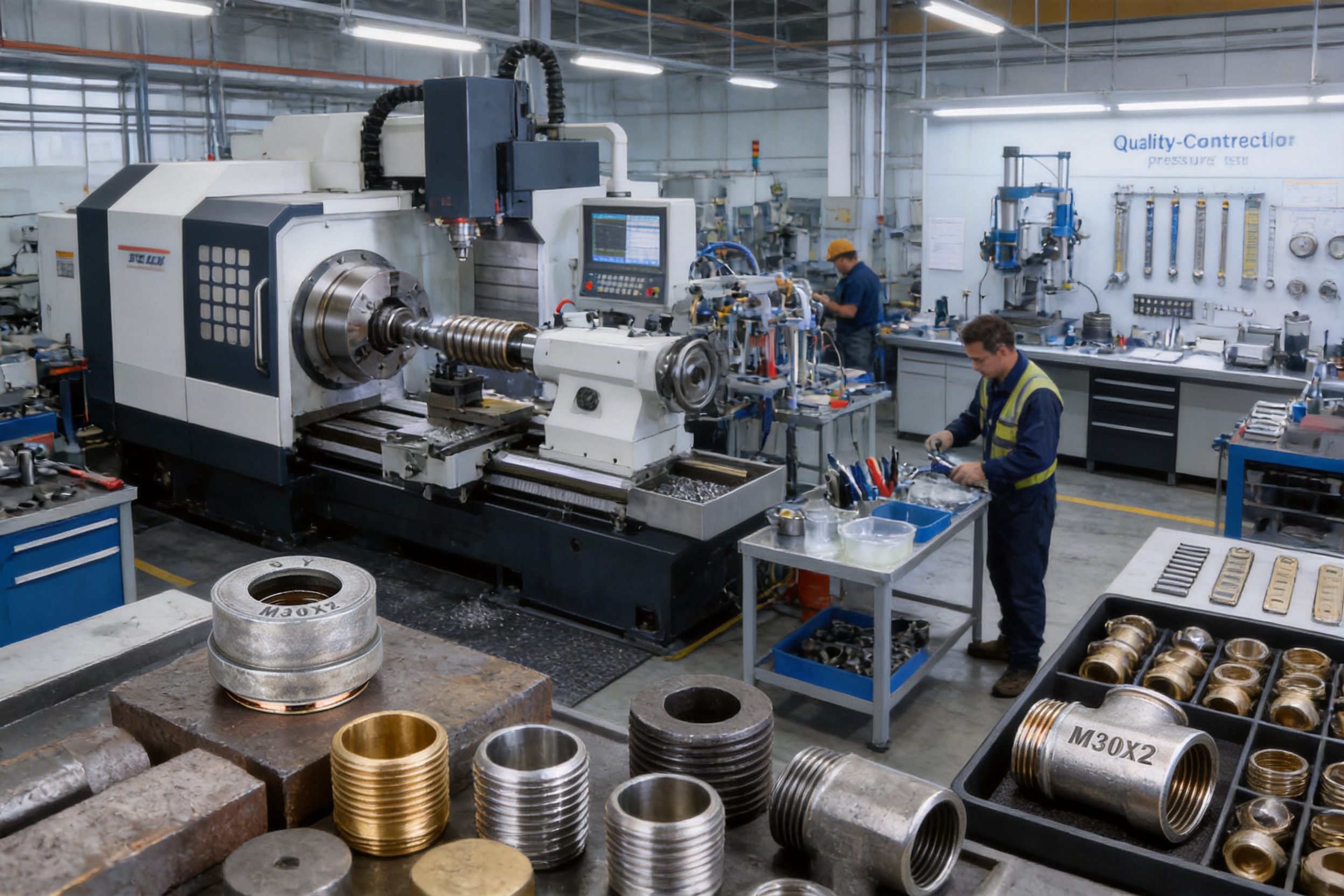
The quality of a pipe fitting is determined by the entire manufacturing chain rather than by one isolated operation. Ningbo Yunhua Valve Co., Ltd. operates a professional precision machining workshop, assembly line, and testing workshop. The company is equipped with domestic and international CNC machine tools as well as automated assembly and testing equipment. This production structure supports repeatable processing and helps reduce variation between batches.
Raw Material Preparation
Production begins with the selection and preparation of suitable raw materials. Material specifications should be reviewed before machining to confirm that the stock is appropriate for the product design. Proper preparation helps reduce defects associated with inclusions, unsuitable hardness, dimensional inconsistency, or improper storage.
Materials are typically cut or formed into blanks suitable for the next process. The preparation method depends on the fitting design and material type. A well-controlled preparation stage reduces machining waste and helps ensure that sufficient material remains for forming accurate external and internal features.
CNC Precision Machining
CNC machine tools are central to the production of accurate fittings. Computer-controlled equipment can perform turning, drilling, boring, threading, milling, chamfering, and other operations with repeatable settings. Once the process has been properly programmed and verified, the same sequence can be applied across a production batch with a high level of consistency.
CNC machining is particularly valuable for threaded fittings because thread dimensions and alignment must be controlled carefully. Automated tool movement reduces dependence on manual adjustment and supports stable production efficiency. It also allows manufacturers to produce a broad range of fitting configurations while maintaining organized process control.
Machining parameters such as cutting speed, feed rate, tool condition, coolant use, and workholding method may affect the final result. Regular equipment maintenance and tool inspection are therefore essential. Worn tools can gradually change dimensions or surface finish even when the program remains unchanged.
Deburring and Edge Treatment
Machining may leave small burrs or sharp edges around openings, threads, and transitions. Deburring removes unwanted material and helps produce a cleaner, safer component. Edge treatment can also support better sealing and reduce the possibility that loose particles will enter the system during installation.
Deburring must be controlled carefully. Excessive removal may alter a critical dimension, while insufficient removal may leave contamination or interfere with assembly. The correct approach depends on the fitting design, material, and intended application.
Cleaning and Surface Treatment
After machining, fittings may undergo cleaning to remove chips, cutting fluids, dust, and other residues. Clean components are easier to inspect and assemble. They also reduce the risk of contaminating the connected piping system.
Depending on the product specification, surface treatment may include polishing, plating, passivation, coating, or other protective processes. The treatment should be applied evenly and should not obstruct threads, reduce the effective passage, or interfere with sealing surfaces. Process control is important because uneven treatment can create both functional and visual defects.
Automated Assembly
Automated assembly equipment can improve production consistency for products that include multiple components or sealing elements. It can help regulate the sequence, position, and force used during assembly. This is useful when fittings are incorporated into valve assemblies, connectors, or other hardware accessories.
Automation does not eliminate the need for engineering supervision. Equipment must be calibrated, assembly parameters must be verified, and operators must understand the product requirements. The most effective production systems combine automated repeatability with skilled technical management.
Testing and Final Inspection
A dedicated testing workshop allows fittings and related products to be evaluated before shipment. Depending on the product type, testing may include dimensional inspection, thread inspection, pressure testing, leakage testing, appearance inspection, assembly verification, and functional testing.
Testing helps identify problems before products reach the customer. It also provides feedback for process improvement. If a recurring dimensional or sealing issue is detected, manufacturing personnel can review the machining, assembly, tooling, or material stages and make appropriate corrections.
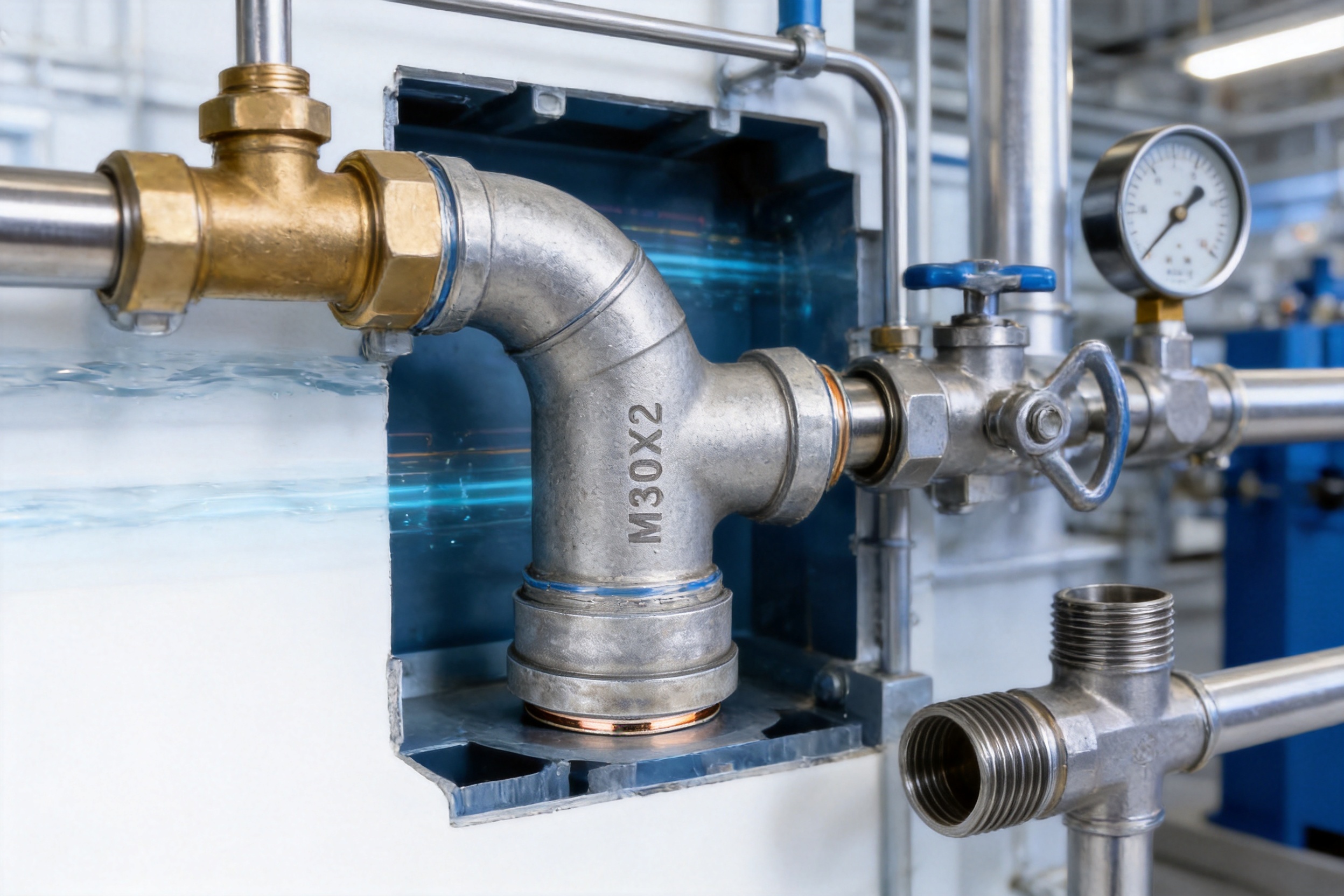
Why Manufacturing Capability Matters to Customers
Customers purchasing pipe fittings are usually purchasing more than individual metal components. They are purchasing predictable installation, compatibility with related products, dependable delivery, and reduced risk over the operating life of the piping system. A manufacturer with a complete production structure can address these needs more effectively than a supplier that relies entirely on uncontrolled outsourcing.
Improved Batch Consistency
Batch consistency is important for wholesalers, distributors, contractors, and equipment manufacturers. When fittings from different production batches have noticeably different dimensions or finishes, inventory management becomes more difficult and installation problems become more likely. Controlled CNC machining and organized inspection help reduce variation.
Consistency is also valuable for customers who assemble fittings into larger product kits or systems. Matching components can reduce assembly time and limit the need for selective fitting or manual correction.
Better Coordination Between Design and Production
A manufacturer experienced in valves and hardware accessories can better understand how fittings interact with shutoff valves, regulating devices, gas components, water supply products, and other system parts. This product knowledge supports more practical design decisions.
For custom or semi-custom orders, production capability makes it easier to review dimensions, connection forms, material choices, packaging needs, and testing requirements. Customers can discuss the complete application instead of purchasing an isolated component without considering the surrounding system.
Reduced Lead-Time Risk
A professional manufacturing facility with machining, assembly, and testing resources can offer stronger control over production schedules. While lead time depends on order volume, product complexity, material availability, and customization, internal process coordination can reduce delays caused by excessive dependence on unrelated suppliers.
Reliable scheduling is particularly important for construction projects, equipment production, maintenance programs, and distributor inventory planning. Even a small fitting shortage can delay the installation of a larger system.
More Effective Quality Feedback
When production and testing activities are closely connected, quality information can be communicated more efficiently. Inspection results can be used to improve machine settings, tooling, work instructions, packaging methods, and operator training.
This feedback loop supports continuous improvement. It also helps the manufacturer identify whether a problem originated from raw material, machining, assembly, transport, installation, or product selection.
Advantages Over Low-Control Alternatives
Price is an important purchasing consideration, but the lowest initial price does not always represent the lowest total cost. A fitting that is difficult to install, prone to leakage, or inconsistent in size may create additional expenses through labor, replacement, equipment damage, and service interruption.
More Dependable Installation
Accurate threads and consistent dimensions allow installers to work more efficiently. The fitting can be tightened to the expected position without repeated removal and adjustment. This is especially useful when a system contains many connections or when installation takes place in a restricted space.
Lower Leakage Risk
Leakage can result from many factors, including incorrect installation, unsuitable sealing material, damaged threads, poor alignment, excessive vibration, and defective components. Precision manufacturing cannot eliminate every installation-related issue, but it can reduce the risk associated with poor geometry, rough threads, and inconsistent sealing surfaces.
Improved System Compatibility
Fittings manufactured under controlled specifications are more likely to connect correctly with valves, pipes, regulators, gauges, hoses, and equipment produced to compatible dimensions. This reduces the need for improvised adapters or modifications that may weaken the system.
Better Appearance and Professional Presentation
Appearance may not be the primary performance factor, but it matters in exposed plumbing, commercial facilities, equipment panels, and packaged products. Clean surfaces, uniform finishing, and consistent dimensions create a more professional installation and make future inspection easier.
Support for Custom Requirements
Many customers require more than a standard catalog fitting. They may need a specific thread type, length, material, surface finish, logo-free configuration, packaging method, or combination with a valve or hardware accessory. A manufacturer with engineering and machining capabilities can often evaluate such requirements more effectively than a trading-only supplier.
Applications for Pipe Fittings
Water Supply Systems
Pipe fittings are widely used in residential water supply, commercial buildings, public facilities, irrigation networks, and water treatment equipment. They connect supply lines, branch pipes, meters, valves, pumps, storage tanks, and appliances.
Water-system fittings should be selected for appropriate pressure, temperature, corrosion resistance, and material compatibility. Installation should include correct thread sealing, adequate support, and protection against excessive mechanical stress.
Gas Distribution and Gas Equipment
Gas systems require special attention to material, sealing, pressure rating, and installation practice. Fittings may be used with gas valves, regulators, burners, meters, appliance connections, and distribution lines. A secure connection helps reduce leakage risk and supports safe system operation.
Products intended for gas service must be selected and installed according to applicable local regulations and technical standards. Product suitability should be confirmed before use, and completed systems should be inspected and tested by qualified personnel.
Industrial Fluid Control
Industrial equipment may use fittings to connect pumps, valves, filters, heat exchangers, pressure instruments, cylinders, and process piping. These applications can involve higher pressure, elevated temperature, corrosive media, or frequent operation.
Industrial buyers should evaluate fitting material, pressure class, temperature range, connection design, maintenance requirements, and compatibility with the process fluid. In demanding applications, technical documentation and traceability may also be important.
Heating, Ventilation, and Utility Equipment
Heating and utility systems use fittings in circulation loops, boilers, radiators, control assemblies, and equipment connections. Fittings must accommodate thermal expansion, vibration, and repeated changes in operating temperature. Reliable connections help prevent water loss and maintain system efficiency.
Agricultural and Irrigation Systems
Irrigation installations require fittings that can connect pumps, hoses, filters, sprinklers, valves, and distribution lines. Outdoor conditions may expose components to moisture, soil, ultraviolet radiation, fertilizer residues, and temperature changes. Material selection and surface protection should reflect the installation environment.
Hardware Accessories and Equipment Assemblies
Pipe fittings are also used as hardware accessories in machinery, support systems, compact fluid modules, and specialized equipment. Their small size and modular connection methods make them useful for creating adaptable assemblies. Manufacturers that produce both fittings and valves can offer coordinated components for these applications.
How to Select the Right Pipe Fitting
Choosing a fitting should begin with the complete application rather than with nominal diameter alone. The following factors should be reviewed before ordering or installation.
| Selection Factor | Key Question | Why It Matters |
|---|---|---|
| Connection type | Is the system threaded, soldered, flanged, compression-based, or another design? | The fitting must match the pipe and connected equipment. |
| Nominal size | What are the pipe outside diameter, inside diameter, and fitting size? | Correct sizing supports proper flow and secure assembly. |
| Material | Which material is compatible with the fluid and environment? | Material affects strength, corrosion resistance, and service life. |
| Pressure | What are the normal and maximum operating pressures? | The fitting must safely withstand the system pressure. |
| Temperature | What temperatures will the fitting experience during operation? | Temperature can affect strength, sealing, and dimensional stability. |
| Fluid compatibility | Is the conveyed medium water, gas, oil, air, chemical fluid, or another substance? | Some materials and seals may react with specific media. |
| Environment | Will the fitting be indoors, outdoors, underground, wet, corrosive, or exposed to vibration? | Environmental conditions influence finish and maintenance needs. |
| Standards | Which local, national, or industry requirements apply? | Standards may define dimensions, testing, materials, and installation rules. |
Connection Type
Threaded fittings are convenient for many installations because they can be assembled and disassembled with common tools. However, the thread standard must be confirmed. Different thread forms may appear similar while being incompatible. Buyers should verify whether the system requires a particular pipe thread, metric thread, tapered thread, parallel thread, or another configuration.
Size and Flow Requirements
A fitting that is too small may restrict flow and increase pressure loss. A fitting that is unnecessarily large may increase cost, weight, and installation space. The correct size should be determined by the pipe, expected flow rate, pressure drop, and equipment connection.
Pressure and Temperature
Pressure and temperature ratings should be considered together. Some materials lose strength at elevated temperatures, and some sealing materials may become brittle or soft when exposed to unsuitable conditions. Buyers should distinguish between normal operating conditions and possible peak or abnormal conditions.
Installation Space
Fitting dimensions and shape affect installation access. Elbows, tees, unions, and adapters should be selected with sufficient clearance for tools and future maintenance. A compact fitting may be advantageous in machinery, but it must still allow correct tightening and inspection.
Installation and Maintenance Recommendations
Even a high-quality pipe fitting must be installed correctly. Before installation, inspect the fitting and mating components for damage, contamination, deformation, or thread defects. Confirm that the fitting size, material, and connection type match the design requirements.
Clean the connection surfaces and remove loose particles. Use a sealing method suitable for the connection design and fluid. Sealant should be applied carefully so that it does not enter the internal passage or interfere with valves and other moving parts.
During assembly, align the components by hand before applying a wrench. Cross-threading can damage both the fitting and the mating component. Tighten the connection according to appropriate installation practice. Avoid excessive force because over-tightening can distort threads, crack a fitting, or place damaging stress on the connected equipment.
Pipework should be properly supported so that the fitting does not carry the full weight of a long pipe section. Additional support may be necessary near pumps, valves, regulators, and vibrating machinery. Thermal expansion and contraction should also be considered in systems that experience significant temperature changes.
After installation, inspect the connection and perform the required pressure or leakage test. Gas systems require particular care and should be tested using approved procedures by qualified personnel. Any sign of leakage, unusual movement, corrosion, or damage should be addressed promptly.
Routine maintenance may include visual inspection, checking for corrosion, confirming that supports remain secure, and examining areas exposed to vibration or moisture. Fittings that show serious damage or thread deformation should be replaced rather than reused.
Quality Management and Customer Confidence
A capable manufacturer must manage more than machine operation. Quality depends on product design, purchasing, production planning, equipment maintenance, inspection, employee training, packaging, and customer communication. A complete management system helps ensure that these activities support one another.
Ningbo Yunhua Valve Co., Ltd. has developed a professional management team and an organized production environment. The company covers approximately 20,000 square meters and has established dedicated areas for precision machining, assembly, and testing. This structure reflects an emphasis on process coordination and production discipline.
The company’s stated annual capacity includes approximately 2 million sets of valves and 10 million sets of hardware accessories. Such capacity can support the needs of customers who require stable volume production, provided that product specifications, schedules, and inspection requirements are clearly defined.
For customers, a manufacturer’s production capacity should be evaluated together with its quality approach. High output alone does not guarantee reliable products. The important question is whether the company can maintain consistent standards as order volume changes. Equipment capability, process documentation, inspection arrangements, and technical communication all contribute to this ability.
Customization and OEM Cooperation
Pipe fittings may need to be customized for equipment manufacturers, distributors, engineering projects, or special installation conditions. Customization can involve dimensions, connection types, materials, finishes, packaging, markings, and assembly combinations.
A successful custom project begins with complete technical information. Drawings, samples, specifications, operating conditions, annual quantity, inspection requirements, and packaging expectations should be communicated clearly. If the customer does not have a finalized drawing, application information can still help the manufacturer recommend a practical configuration.
Manufacturing flexibility is particularly valuable when fittings are used together with valves. A coordinated assembly may require a specific connection length, orientation, thread combination, or transition between different components. Experience with fluid-control products helps the manufacturer assess whether the requested design can be machined, assembled, tested, and packaged efficiently.
Before mass production, sample approval or first-article inspection may be used to confirm dimensions, appearance, assembly, and function. This step reduces the risk of producing a large quantity of components that do not meet the customer’s application needs.
Environmental and Operational Considerations
Efficient manufacturing can reduce material waste, improve productivity, and support more responsible use of energy and resources. CNC machining allows production planning to be optimized, while automated assembly can reduce repetitive manual variation. Proper maintenance also extends equipment life and helps prevent avoidable production losses.
Product durability has an environmental benefit because fittings that remain in service longer do not need to be replaced as frequently. Reliable connections can also prevent water, gas, or process-fluid losses. In this way, product quality contributes not only to safety and cost control but also to more efficient system operation.
Customers can support responsible product use by selecting the correct fitting for the application, avoiding unnecessary oversizing, installing components correctly, and replacing only those parts that have reached the end of their useful service life. Proper storage before installation is also important. Fittings should be protected from moisture, dirt, impact, and contamination.
Frequently Asked Questions
What are pipe fittings used for?
Pipe fittings connect, redirect, branch, reduce, extend, or terminate piping. They are used to create complete fluid paths and connect pipes with valves, pumps, regulators, meters, hoses, and equipment.
Why is thread accuracy important?
Accurate threads support smooth assembly, correct alignment, reliable sealing, and compatibility with mating components. Poor threads may cause cross-threading, leakage, damage, or excessive installation force.
Which materials are commonly used for pipe fittings?
Common materials include brass, stainless steel, carbon steel, forged steel, copper, ductile iron, and engineering plastics. The correct choice depends on pressure, temperature, fluid compatibility, corrosion exposure, and applicable standards.
Are brass fittings suitable for gas applications?
Brass fittings may be suitable for certain gas applications when the material, design, pressure rating, sealing method, and product approvals meet the relevant requirements. The application should always be reviewed against local regulations and technical specifications.
How does CNC machining improve fitting quality?
CNC machining supports repeatable control of dimensions, threads, holes, chamfers, and other features. It can reduce variation between parts and improve the consistency of large production batches when equipment, tooling, and inspection are properly managed.
What information should be provided when requesting a quotation?
Useful information includes fitting type, size, connection standard, material, surface finish, operating pressure, temperature, fluid medium, expected quantity, drawings or samples, packaging requirements, and applicable inspection standards.
How can leakage be prevented?
Leakage prevention requires a suitable fitting, compatible materials, clean and undamaged threads, appropriate sealant, correct alignment, proper tightening, adequate pipe support, and a completed pressure or leakage test.
Can pipe fittings be customized?
Many fittings can be customized in terms of dimensions, materials, thread combinations, finishes, packaging, markings, or assembly configuration. Feasibility depends on the design, quantity, manufacturing process, and required inspection criteria.
Why should fittings be tested before shipment?
Testing helps identify dimensional, sealing, appearance, assembly, or functional problems before the products reach the customer. It supports quality control and reduces the risk of installation delays or field failures.
How should pipe fittings be stored?
Fittings should be stored in a clean, dry location protected from impact, dust, corrosive chemicals, and excessive moisture. Threaded ends and sealing surfaces should be protected from damage and contamination before installation.
Conclusion
Pipe fittings are fundamental to the safety and efficiency of fluid-control systems. Their value extends beyond the ability to join two pipes. A reliable fitting must provide accurate geometry, secure connections, suitable material performance, clean finishing, and stable behavior under operating conditions.
The advantages of precision pipe fittings become especially clear in systems where installation time, leakage prevention, maintenance access, and long-term dependability are important. Consistent dimensions help components fit together correctly. Quality threads support secure assembly. Appropriate materials improve resistance to pressure, temperature, corrosion, and fluid exposure. Controlled testing provides additional confidence before products are shipped.
Ningbo Yunhua Valve Co., Ltd. supports pipe fitting production through precision machining workshops, automated assembly and testing equipment, experienced management, and a broader product background in valves and hardware accessories. Its production capacity and integrated manufacturing structure provide a foundation for serving standard, volume, and customized requirements.
For distributors, contractors, equipment manufacturers, and engineering buyers, the best fitting supplier is one that combines product quality with manufacturing capability, technical communication, dependable process control, and practical customer service. By selecting fittings according to the complete application and partnering with a qualified manufacturer, customers can build fluid systems that operate more safely, efficiently, and reliably over the long term.
References
International Organization for Standardization. General principles for piping components, dimensional control, and quality management.
American Society of Mechanical Engineers. Piping and pipe component design considerations for pressure systems.
American Society for Testing and Materials. Standards for metallic materials, mechanical properties, corrosion resistance, and product testing.
International Association of Plumbing and Mechanical Officials. Guidance on plumbing components, water distribution systems, and installation practices.
Industrial Valve and Fitting Engineering Manuals. Principles of fluid control, threaded connections, sealing, and maintenance.
Manufacturing Engineering Reference Guides. CNC machining, thread production, deburring, inspection, and process control.
Occupational and Industrial Safety Publications. Safe handling, installation, pressure testing, and maintenance of fluid-control components.
Product: Pipe Fittings

Related Products
-
 View More
-
 View More
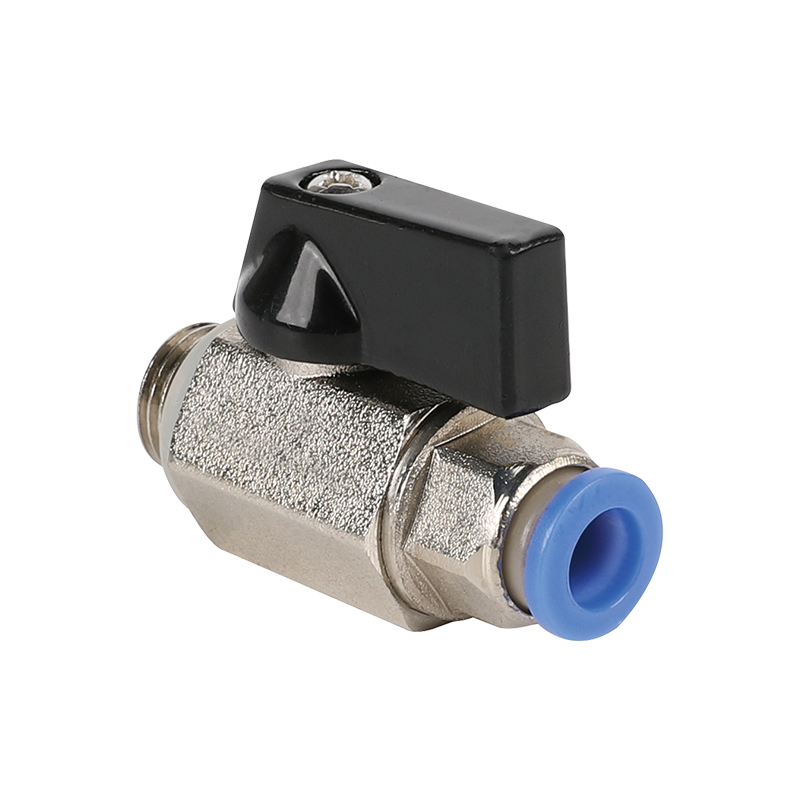
MINI-2 Mini Short-Handle Ball Valve(M/M)
-
 View More
YH-2210 Forged Steel Ball Valve with Long Handle (F/F)
-
 View More
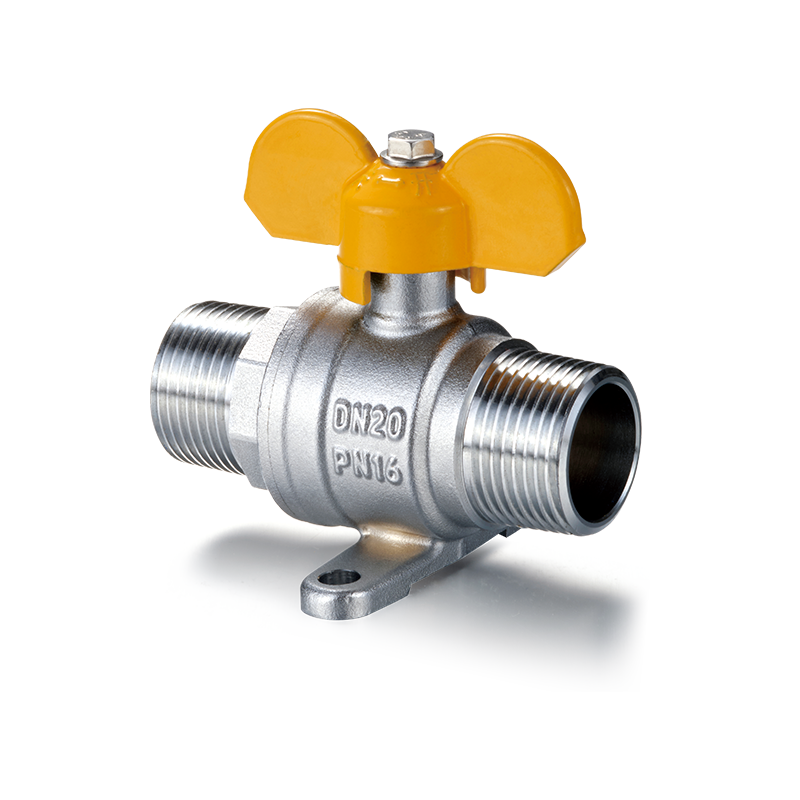
YH-214 Brass Ball Valve with Base& Butterfly Handle(M/M)
-
 View More
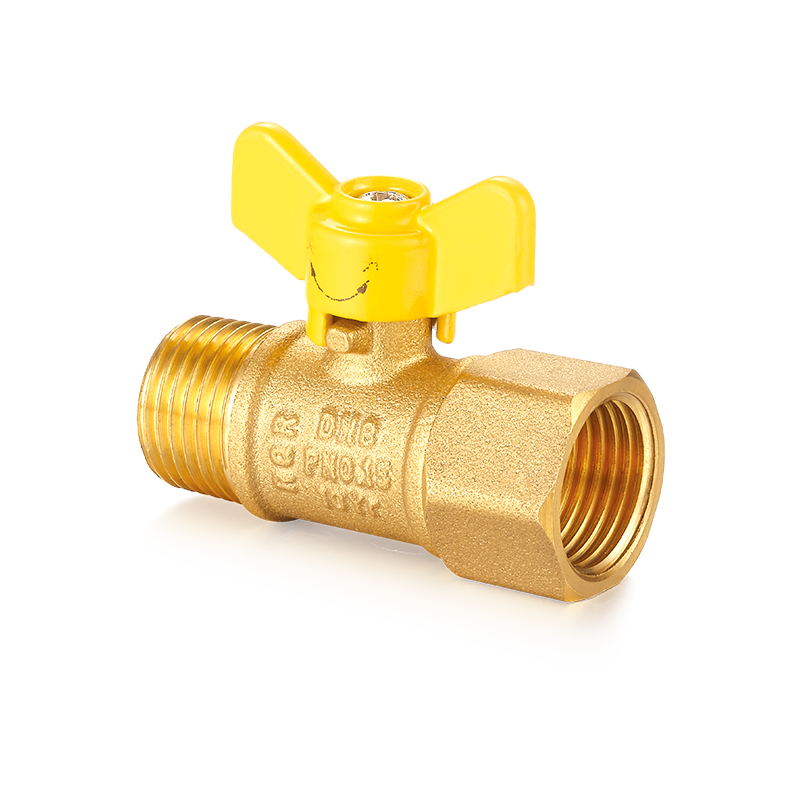
YH-205 Brass Ball Valve with Butterfly Handle(F/M)
-
 View More
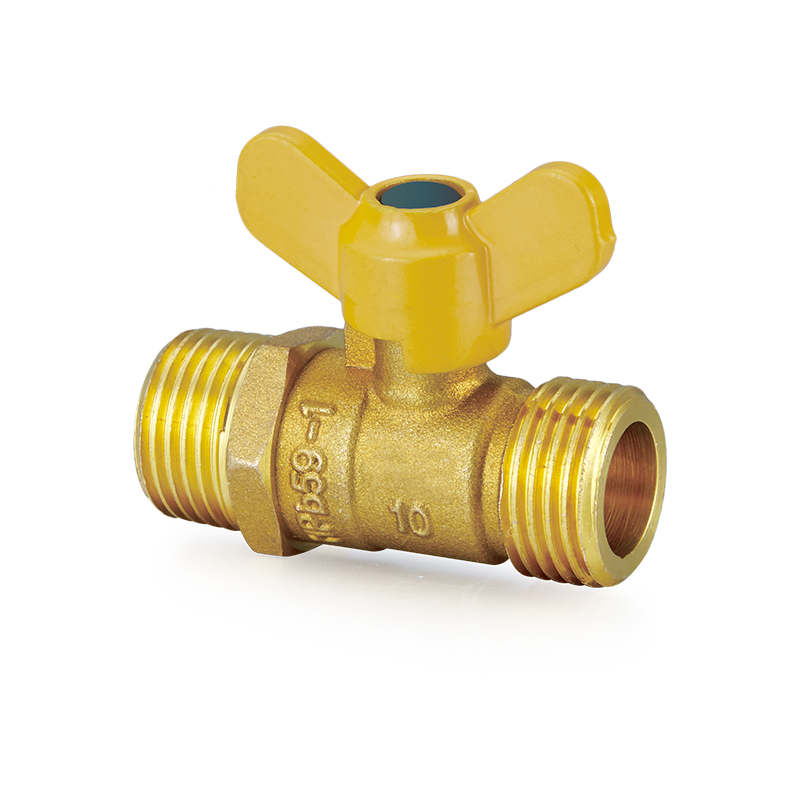
YH-206 Brass Ball Valve with Butterfly Handle(M/M)
Related News
Contact Us
-

-
 +86-0574-63742169
-
 No.104-128, Cizhang East Road, Zhangqi Town, Cixi City, Ningbo, Zhejiang Province, China


Message Us Now !
