

 English
 русский
 عربى
 Español

Irregular-Shaped Pipe Fittings: Precision Solutions for Complex Fluid Systems
Content
- 1 What Are Irregular-Shaped Pipe Fittings?
- 2 Why Complex Piping Systems Need Special Fittings
- 3 Principal Design Features
- 4 Advantages Compared with Assemblies Made from Multiple Standard Fittings
- 5 Material Selection for Irregular-Shaped Pipe Fittings
- 6 Precision Manufacturing Process
- 7 Automated Assembly and Testing Strengths
- 8 Quality Control from Raw Material to Finished Product
- 9 Applications in Gas and Fluid Systems
- 10 How the Product Compares with Competing Solutions
- 11 Manufacturing Capacity and Company Strengths
- 12 Information Required for Custom Fitting Development
- 13 Installation and Maintenance Considerations
- 14 Sustainability and Production Efficiency
- 15 Frequently Asked Questions
- 15.1 What makes a pipe fitting irregular-shaped?
- 15.2 Are irregular-shaped fittings suitable for gas systems?
- 15.3 Can a special fitting replace several standard elbows and adapters?
- 15.4 What materials are commonly used?
- 15.5 Why are CNC machine tools important for these fittings?
- 15.6 What information should be provided when requesting a quotation?
- 15.7 How are irregular-shaped fittings inspected?
- 15.8 Can these fittings be customized for different valves or equipment?
- 15.9 Do special fittings always improve fluid flow?
- 15.10 What is the main advantage of purchasing from an integrated manufacturer?
- 16 Conclusion
- 17 References
- 18 Product: Irregular-Shaped Pipe Fittings
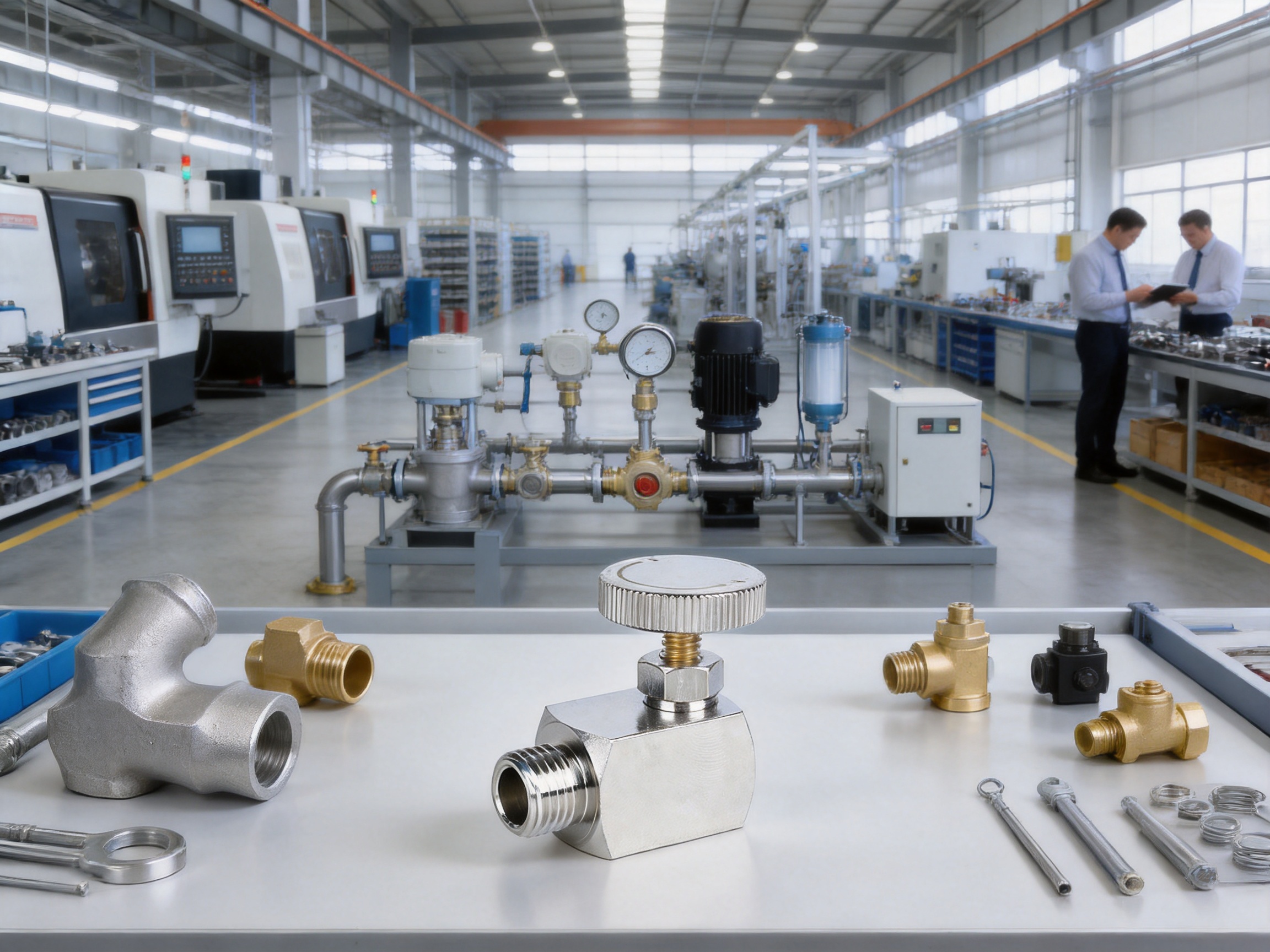
Irregular-shaped pipe fittings are specialized connection components designed for piping systems where standard elbows, tees, reducers, unions, or couplings cannot provide the required installation geometry. Unlike conventional fittings with uniform and predictable shapes, irregular fittings may include offset outlets, asymmetric branches, non-standard angles, stepped profiles, integrated mounting sections, multi-directional ports, or specially formed connection ends. These features allow engineers to solve difficult routing, clearance, alignment, and equipment-connection problems without relying on excessive adapters or complicated field modifications.
In modern fluid-control systems, space is often limited and piping layouts must work around valves, pumps, heat exchangers, machinery frames, structural supports, meters, tanks, and other components. An irregular-shaped pipe fitting can provide a compact and reliable transition between these elements. It can reduce the number of joints, simplify assembly, improve flow continuity, and help create a cleaner, more serviceable installation.
For manufacturers, producing these fittings requires much more than basic metal forming. The component must be engineered according to its intended fluid, pressure, temperature, connection standard, installation orientation, and operating environment. Material selection, precision machining, dimensional control, surface treatment, assembly, and inspection all influence the final performance of the product. A fitting that appears simple from the outside may require several carefully coordinated production processes before it is ready for use.
Ningbo Yunhua Valve Co., Ltd. manufactures hardware accessories and fluid-control products for applications involving gas, water, and other fluid media. Its product range includes irregular-shaped pipe fittings as well as valves and related hardware components. With a professional precision machining workshop, automated assembly lines, testing facilities, CNC equipment, and an established quality-management approach, the company is positioned to support both standard and customized fitting requirements.
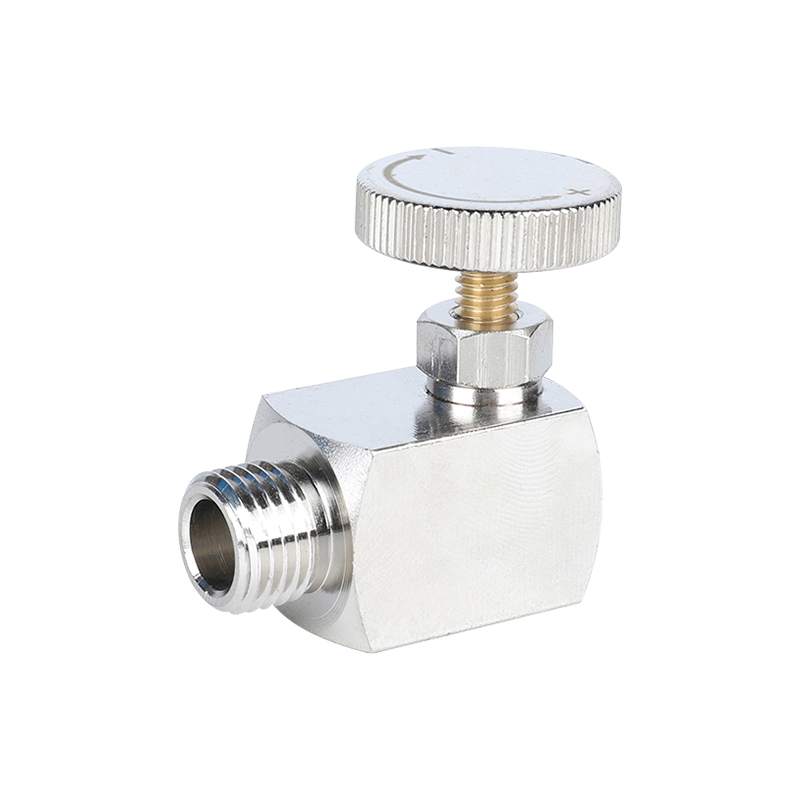
Irregular-Shaped Pipe Fittings
What Are Irregular-Shaped Pipe Fittings?
Irregular-shaped pipe fittings are fittings whose geometry differs from common symmetrical piping components. Their shape is determined by the requirements of the connected system rather than by a universal standard form. A fitting may have two or more outlets positioned at unusual angles, an offset centerline, a changing cross-section, a combination of threaded and smooth ends, or a body that incorporates a special mounting or positioning feature.
These fittings are sometimes described as custom pipe fittings, special pipe connectors, non-standard fittings, or engineered piping accessories. The specific name depends on the design, industry, and connection method. Some products are manufactured for a single application, while others are developed as repeatable components for a particular equipment platform, building system, appliance, or industrial assembly.
Common examples include offset connectors for connecting misaligned pipes, angled branch fittings for restricted equipment spaces, transition fittings between different pipe sizes, special unions for service access, compact adapters for valve connections, and multi-port components designed to replace several conventional fittings. In gas and water systems, they may be used to create a precise connection between a supply line and a valve, regulator, appliance, manifold, or control device.
The term “irregular” does not mean uncontrolled or inconsistent. A high-quality irregular-shaped fitting is manufactured to controlled dimensions and defined technical requirements. Its geometry may be unusual, but its performance must remain predictable. The fitting must maintain mechanical strength, sealing reliability, and dimensional repeatability throughout production.
Why Complex Piping Systems Need Special Fittings
Standard fittings are effective for many installations, but they cannot address every practical challenge. Buildings, machines, and industrial systems are rarely designed around perfectly straight pipe routes. Pipes must pass through limited spaces, avoid obstructions, connect to equipment at different elevations, and accommodate existing structures. In renovation work, the original pipe layout may also contain unavoidable deviations that make standard components difficult to install.
Using several standard fittings to imitate the shape of one special fitting may appear to be a convenient solution. However, this approach can create more threaded or sealed joints, increase overall dimensions, restrict maintenance access, and add possible leakage points. It can also produce greater pressure loss because the fluid must pass through multiple changes in direction.
An irregular-shaped fitting can consolidate several functions into one carefully engineered component. It may combine an offset, a directional change, and a size transition in a single body. This can shorten the piping assembly and reduce the number of components required. Fewer components generally mean fewer installation operations, fewer opportunities for assembly error, and easier inspection after installation.
Special fittings are also valuable when the connection must meet an exact position. For example, an appliance inlet, valve handle, pressure gauge, sensor, or drainage point may need to remain accessible after the pipe has been installed. A fitting with a controlled angle or offset can place the connection in the correct location without forcing the installer to bend or reposition the surrounding pipe.
Principal Design Features
Offset Geometry
An offset fitting moves the connection centerline from one position to another while maintaining a controlled route. This design is useful when two pipes are parallel but not aligned, or when a pipe must pass around a support, cabinet, equipment housing, or structural element. The offset may be small and subtle or may involve a larger stepped profile.
Accurate offset dimensions are essential. If the offset is too large, the installer may need to force the pipe into position, creating stress in the fitting or adjoining components. If it is too small, the assembly may not clear the obstruction. Precision machining and stable production fixtures help maintain the required centerline distance from batch to batch.
Non-Standard Angles
Conventional elbows are commonly available at familiar angles, but real installations may require a different direction. An irregular-shaped fitting can be designed with a specialized angle to connect a pipe to a valve, equipment port, or manifold without an unnecessary combination of elbows.
Controlling a non-standard angle involves more than machining the outside profile. The internal passage must also be designed so that the wall remains sufficiently thick and the flow route is not excessively restricted. The transition between the ports should avoid sharp internal discontinuities wherever practical, especially in applications where pressure loss or turbulence must be controlled.
Multiple Connection Types
Some special fittings combine different connection forms. One end may be internally threaded, another externally threaded, and a third designed for a particular tube or hose connection. Other designs may include a connection for a valve body, a mounting face, or a compression interface.
Combining connection types in one component reduces the need for additional adapters. It also allows the fitting to serve as a controlled interface between different parts of a fluid system. The thread profile, thread depth, sealing surface, port diameter, and end-face geometry must all be manufactured accurately to ensure compatibility.
Integrated Mounting Features
Some irregular-shaped fittings include flats, bosses, brackets, holes, or other features that help position or secure the component. These features can reduce movement caused by vibration, simplify installation, and support a more compact assembly.
Integrated mounting details are especially useful in equipment and appliance applications. Instead of attaching a separate bracket or clamp, the installer may be able to secure the fitting directly to the equipment frame. This can reduce part count while improving the repeatability of the final assembly.
Stepped and Transitional Profiles
A stepped fitting connects pipes or ports with different diameters or different installation heights. The transition may be axial, radial, or angled. Properly designed transitions help maintain adequate wall thickness and reduce abrupt changes in the flow passage.
In water, gas, and general fluid applications, size transitions must be considered together with flow rate, pressure, and media characteristics. A fitting should not be selected only according to the outside dimensions of the pipe. The internal passage and effective flow area are equally important.
Advantages Compared with Assemblies Made from Multiple Standard Fittings
Reduced Number of Joints
Every additional joint in a piping assembly introduces another sealing or connection point. Threaded joints require suitable sealing methods and correct tightening. Compression joints require proper tube insertion and assembly. Flanged joints require alignment, gaskets, and appropriate bolt tightening. A custom-shaped fitting can combine several directional or dimensional changes and reduce the total number of joints.
Fewer joints can simplify leakage inspection and reduce the amount of maintenance required over the service life of the system. This advantage is particularly important in concealed piping, compact equipment, and installations where access is limited after commissioning.
Improved Space Efficiency
A group of elbows, adapters, and couplings can occupy considerably more space than one engineered fitting. The additional components may interfere with nearby equipment or make insulation and protective covers more difficult to install. An irregular-shaped fitting can follow the available space more closely and create a cleaner, more compact arrangement.
Space efficiency is important in control cabinets, water-treatment units, gas appliances, mechanical rooms, packaged skids, and mobile equipment. A smaller assembly may also reduce shipping dimensions and make the final product easier to handle.
Lower Installation Complexity
Installers often need to rotate several components to achieve the correct orientation. This can be time-consuming and may create uncertainty about the final position of the outlet. A special fitting with a defined orientation can simplify installation and reduce the need for trial assembly.
When the fitting is supplied according to a clear drawing or specification, the installer can position the component more quickly. This is valuable in high-volume production, where even a small saving in assembly time can have a meaningful effect on overall manufacturing efficiency.
Better Alignment
Forced alignment can place stress on pipes, valves, and equipment ports. Over time, this stress may affect sealing surfaces or cause deformation in connected components. A fitting manufactured with the required offset and angle allows the system to be assembled without excessive loading.
Good alignment also improves the appearance of exposed piping. In commercial, residential, and equipment applications, orderly pipe routing can support easier inspection and service work.
Potential Flow Benefits
Replacing multiple directional changes with one engineered body may reduce unnecessary turbulence and pressure loss. The actual benefit depends on the internal design, passage size, surface condition, and operating conditions. A special fitting should therefore be assessed not only by its external shape but also by the quality of its internal flow route.
For low-pressure water or gas applications, maintaining an adequate internal passage helps ensure that the fitting does not become a restriction in the system. For more demanding applications, flow analysis or prototype testing may be appropriate before final production.
Material Selection for Irregular-Shaped Pipe Fittings
Material selection depends on the fluid, pressure, temperature, connection method, corrosion environment, manufacturing process, and expected service life. Brass is widely used for many water, gas, and general plumbing components because it offers a combination of machinability, strength, corrosion resistance, and compatibility with threaded connections.
Brass can be machined accurately and is suitable for components that require clean threads, controlled sealing faces, and complex external profiles. Different brass compositions may be selected according to applicable regulations, fluid compatibility requirements, and mechanical performance expectations.
Other materials may be considered for particular applications. Stainless steel can provide enhanced corrosion resistance in demanding environments. Carbon steel or alloy steel may be selected where higher strength or specific pressure capability is required. Engineering plastics may be suitable for lightweight, corrosion-resistant, or electrically insulating applications when the temperature and pressure conditions permit.
The material should be evaluated together with the joining method. A material that machines well may behave differently during forming, brazing, welding, plating, or heat treatment. Surface treatment must also be compatible with the intended fluid and the surrounding environment.
| Design Consideration | Why It Matters | Typical Evaluation |
|---|---|---|
| Material | Determines strength, corrosion resistance, machinability, and compatibility | Grade, composition, hardness, and fluid compatibility |
| Port Size | Affects flow capacity and connection compatibility | Nominal size, internal diameter, and wall thickness |
| Angle and Offset | Controls installation position and clearance | Centerline dimensions, orientation, and tolerance |
| Connection Type | Determines how the fitting is installed and sealed | Thread, compression, flange, tube, or special interface |
| Pressure Requirement | Influences wall thickness and structural design | Working pressure, test pressure, and safety margin |
| Surface Condition | Affects corrosion resistance, appearance, and sealing | Finish, plating, burr removal, and cleanliness |
| Inspection | Confirms that the product meets the drawing and performance requirements | Dimensional, visual, pressure, and functional checks |
Precision Manufacturing Process
The performance of an irregular-shaped pipe fitting begins with a well-defined manufacturing process. Because the geometry is more complex than that of a basic coupling or straight adapter, the production route must be planned carefully. A typical process may include design review, material preparation, forming or blank production, CNC machining, deburring, surface treatment, cleaning, assembly, inspection, and packaging.
Engineering and Drawing Review
Before production begins, the fitting drawing should identify all critical dimensions and functional requirements. These may include port diameters, thread specifications, overall length, centerline offsets, angular relationships, sealing surfaces, surface finish, material, pressure class, and inspection criteria.
The design review should also consider whether the shape can be manufactured consistently. Sharp internal corners, inaccessible surfaces, very thin walls, and excessive machining depths can increase production difficulty. Experienced engineering teams can suggest practical modifications that preserve the required function while improving manufacturability and repeatability.
For custom fittings, communication between the customer and manufacturer is particularly important. A three-dimensional model, two-dimensional drawing, sample component, or detailed dimensional schedule may be used to define the product. Clarifying the reference points and orientation prevents misunderstandings during machining and inspection.
Material Preparation
Material is prepared according to the selected manufacturing method and final component requirements. The incoming material should be identified and controlled so that the correct grade is used throughout production. Consistent material quality supports stable machining performance and predictable mechanical properties.
For a manufacturer producing valves and hardware accessories, material control is also important because related components may be produced in the same facility. Clear identification and organized storage help prevent mixing materials or using an incorrect specification for a particular order.
Blank Production
The initial blank may be produced through forging, casting, bar cutting, tube preparation, or another suitable method. The choice depends on the fitting shape, production volume, material, required strength, and dimensional complexity.
Forged blanks can provide a dense and robust starting structure for many pressure-bearing components. Machined blanks may be appropriate for lower-volume or highly customized products. The blank should provide enough material for the final profile while avoiding unnecessary machining waste.
CNC Precision Machining
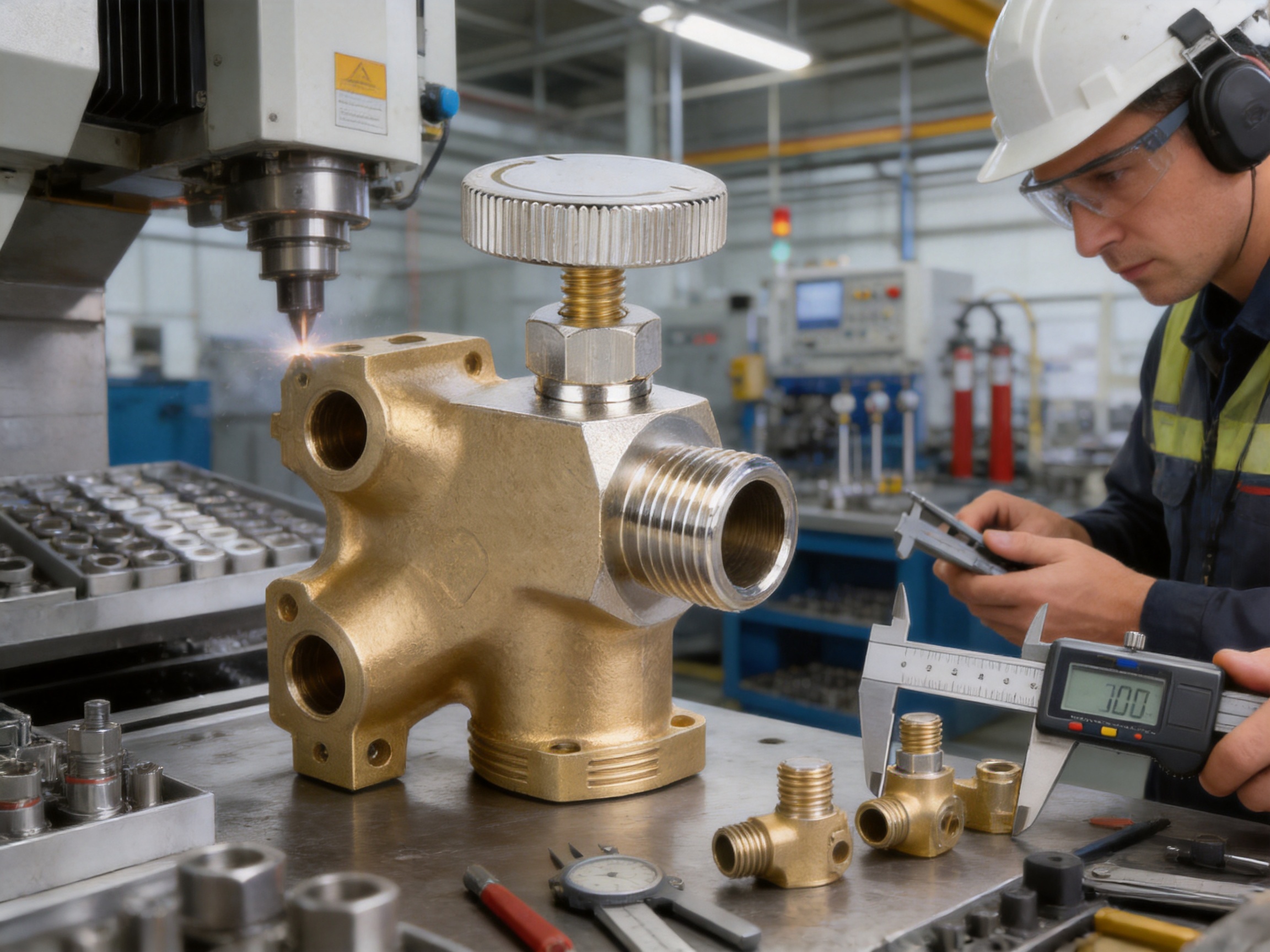
CNC machine tools are central to the production of accurate irregular-shaped fittings. Computer-controlled machining allows the manufacturer to produce complex external profiles, threaded ports, internal passages, flats, grooves, and mounting features according to a programmed sequence.
Multiple operations may be required. A component can be turned to create a cylindrical base, drilled to establish a port, tapped to form an internal thread, milled to create an offset or flat, and reoriented for a secondary connection. The order of operations matters because each step can influence access, clamping, and dimensional stability.
Proper workholding is especially important for irregular shapes. The component must be secured firmly without distorting the blank or damaging finished surfaces. Dedicated fixtures, soft jaws, locating pins, or reference surfaces may be used to maintain repeatable positioning during machining.
CNC production offers several advantages over less controlled manual methods. Programs can be repeated for consistent batches, tool paths can be optimized, and critical dimensions can be measured against defined standards. The result is greater uniformity between individual fittings and improved compatibility with the mating components.
Thread Machining
Threads are among the most important functional features of many pipe fittings. A thread that is too loose may leak or lack mechanical stability. A thread that is too tight may be difficult to assemble or may damage the mating component. Thread form, pitch, major diameter, minor diameter, depth, and surface condition must all be controlled.
Threaded fittings should be checked with suitable gauges or mating reference components. The thread should be clean and free of burrs that could interfere with assembly. When a fitting uses different thread types on different ends, each connection must be identified and inspected independently.
Deburring and Surface Finishing
Machining can leave sharp edges, small burrs, or residual chips around ports and threads. These imperfections can interfere with sealing, damage gaskets, contaminate the fluid system, or create a safety hazard during handling. Deburring is therefore a functional process rather than merely a cosmetic step.
Surface finishing may include polishing, cleaning, plating, coating, or other treatments appropriate to the material and application. The selected finish should support corrosion resistance, appearance, handling, and sealing performance. Internal surfaces should receive suitable attention because residue or roughness inside the passage can affect flow and cleanliness.
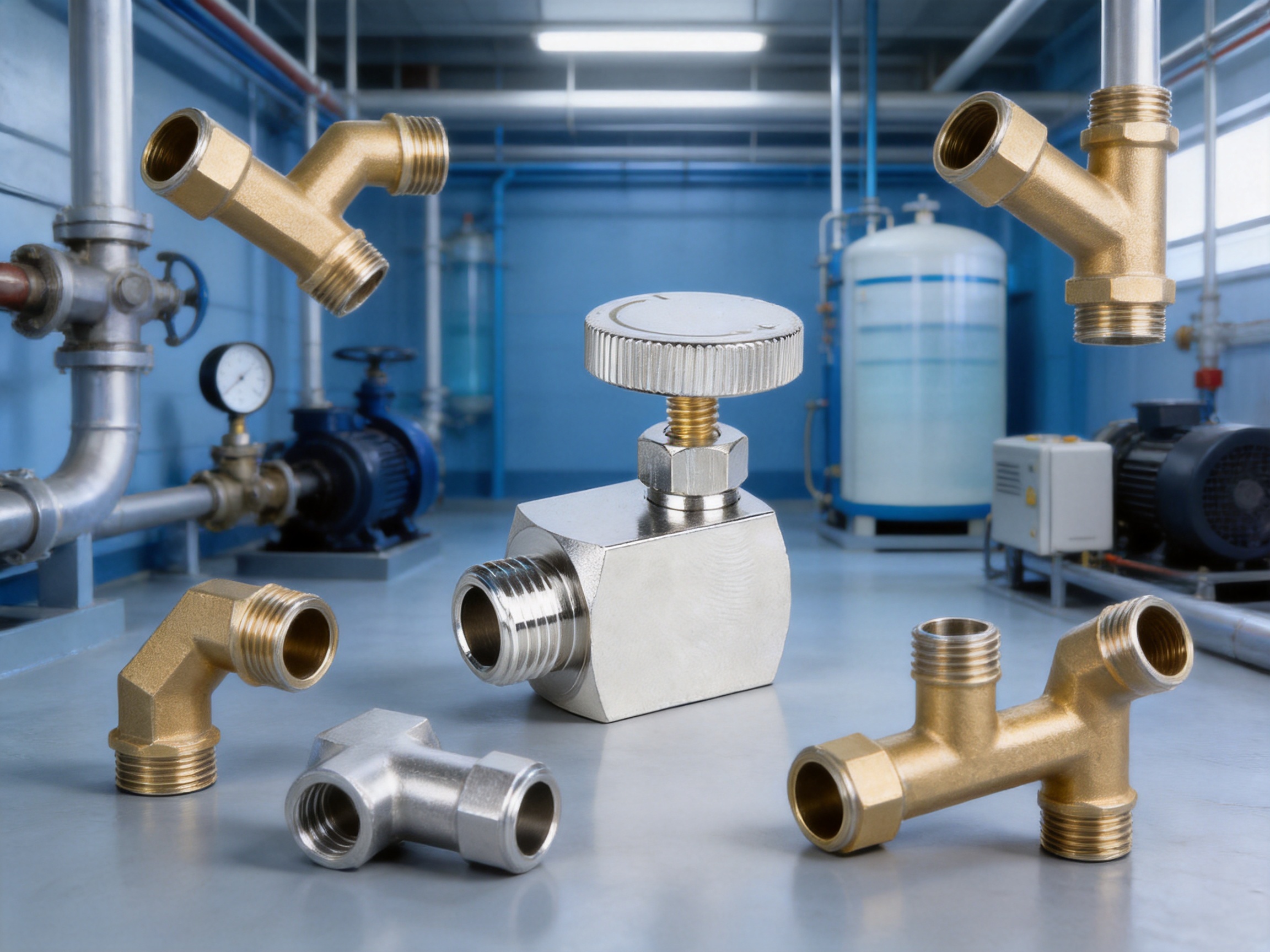
Automated Assembly and Testing Strengths
Automated assembly equipment can improve process consistency when the fitting is combined with sealing elements, inserts, plugs, valves, or other accessories. Automation helps control positioning, insertion depth, tightening sequence, and production rhythm. It can also reduce variation caused by manual handling.
Automation does not eliminate the need for skilled personnel. Operators and technicians remain responsible for equipment setup, process verification, tool maintenance, abnormal-condition response, and final quality decisions. The strongest manufacturing systems combine automated repeatability with experienced technical supervision.
Testing confirms whether the finished fitting performs as intended. Depending on the product design, testing may include dimensional inspection, thread inspection, visual examination, pressure testing, leakage testing, functional checks, and cleanliness verification.
Pressure testing is particularly important for fittings used in gas, water, and other fluid systems. The test method should be selected according to the product’s intended application and technical requirements. Test results should be recorded in a controlled manner so that production performance can be reviewed and traced when necessary.
Quality Control from Raw Material to Finished Product
Reliable quality is created through control of the complete manufacturing chain. Inspecting only the final product is not enough because hidden process variation may already have affected the component. A comprehensive system considers incoming materials, machining parameters, tooling condition, workholding, operator procedures, cleaning, assembly, testing, and packaging.
Incoming Material Control
Incoming material should be checked against the purchase specification and production order. Identification, dimensions, surface condition, and relevant material documentation should be reviewed. Proper storage protects the material from contamination, damage, and confusion with other grades.
In-Process Inspection
In-process inspection allows problems to be detected before a large quantity of parts is completed. Critical dimensions can be checked after key machining operations. Thread gauges, calipers, micrometers, coordinate measurement equipment, optical tools, or custom inspection fixtures may be used according to the product requirements.
In-process checks are especially valuable for irregular fittings because a dimensional error in one area may affect several other features. For example, an incorrect reference position can change the outlet angle, offset, mounting relationship, and final assembly alignment at the same time.
Final Inspection
Final inspection should confirm that the completed fitting matches the approved drawing or specification. Inspectors may review appearance, dimensions, threads, port cleanliness, burr removal, surface treatment, markings, and packaging condition.
When the fitting is intended for a valve or equipment assembly, a functional fit check may be performed. This can verify that the component can be installed correctly and that the connected parts are oriented as required.
Traceability and Continuous Improvement
Production records, inspection results, and process information support traceability. If a concern is identified, traceability helps determine which material lot, machine, tool, or production period may be involved. It also supports corrective action and process improvement.
Continuous improvement may involve reducing machining time, improving fixture design, extending tool life, optimizing inspection methods, reducing material waste, or improving packaging. These efforts can increase efficiency without compromising the technical performance of the fitting.
Applications in Gas and Fluid Systems
Gas Equipment
Gas systems require careful attention to sealing, material compatibility, pressure control, cleanliness, and safe installation. Irregular-shaped fittings can help connect gas valves, regulators, appliance inlets, manifolds, and supply lines in confined spaces.
In these applications, the fitting must be selected and manufactured according to the applicable technical requirements. Thread quality, sealing surfaces, pressure capability, and leakage performance are essential. The fitting should not be modified in the field unless the modification is specifically permitted by the responsible design and safety requirements.
Water Supply Systems
Water supply installations often contain cabinets, wall cavities, equipment connections, meters, filters, pumps, and valves that must be connected within limited spaces. Special fittings can help position shutoff valves, create clean transitions between different pipe sizes, and reduce unnecessary bends.
For potable-water applications, material and surface cleanliness must be considered carefully. The fitting should be suitable for the water quality and regulatory requirements of the intended market.
Heating and Cooling Equipment
Heating and cooling systems may require compact connections around heat exchangers, circulation pumps, control valves, and temperature sensors. An offset or multi-port fitting can improve accessibility and allow the system to fit within a packaged enclosure.
Temperature variation can cause expansion and contraction in the connected piping. The fitting design and installation method should therefore avoid imposing excessive loads on equipment ports or threaded connections.
Industrial Fluid Equipment
Industrial systems often use customized piping layouts because every machine, skid, and process line has different dimensions. Special fittings can connect pumps, filters, regulators, meters, actuators, and process vessels while preserving access to maintenance points.
In industrial applications, the fitting may need to satisfy more detailed requirements related to pressure, temperature, corrosion, cleaning, fluid contamination, or inspection documentation. Early cooperation between the equipment designer and fitting manufacturer helps ensure that the product is appropriate for the complete system.
Hardware and Appliance Assemblies
Hardware accessories and appliance assemblies frequently depend on small components with precise dimensions. A fitting may need to connect tubing to a valve while also locating a control knob, outlet, sensor, or mounting point. The compact size of the component does not reduce the importance of dimensional accuracy.
For high-volume products, repeatability is particularly important. Every fitting must install in the same way so that the assembly line can operate efficiently and the finished appliance meets its design requirements.
How the Product Compares with Competing Solutions
The main alternatives to an irregular-shaped pipe fitting are assemblies made from standard elbows, tees, adapters, couplings, flexible hoses, or field-modified pipe sections. Each alternative can be useful in the right circumstance, but each also presents limitations.
Standard fittings are easy to source and may be economical for simple layouts. Their limitation is that they may require multiple parts to achieve a special route. This increases the total assembly length and the number of connections.
Flexible hoses can accommodate some misalignment, but they may not be suitable for every pressure, temperature, chemical, or regulatory environment. They may also require additional supports and protection against abrasion, kinking, or excessive bending.
Field-modified components can provide a quick solution, but uncontrolled cutting, bending, drilling, or welding may affect wall thickness, surface condition, thread quality, and pressure performance. A purpose-designed fitting manufactured under controlled conditions generally provides greater consistency.
The competitive advantages of a well-manufactured irregular-shaped fitting include fewer components, better dimensional control, improved space utilization, repeatable orientation, simplified installation, and the possibility of customized production. These advantages become more valuable when the fitting is produced by a manufacturer with integrated machining, assembly, and testing capabilities.
| Solution | Main Strength | Possible Limitation | When a Special Fitting Is Preferable |
|---|---|---|---|
| Multiple standard fittings | Easy availability and familiar installation | More joints, larger footprint, and greater assembly complexity | When a compact, aligned, and integrated connection is required |
| Flexible hose | Accommodates movement and minor misalignment | May have limits related to pressure, temperature, wear, and service life | When a rigid, precisely positioned connection is needed |
| Field-modified pipe | Can be adapted during installation | Variable quality and possible damage to the pipe or coating | When repeatable factory-controlled geometry is important |
| Standard adapter | Suitable for simple size or thread transitions | May not solve angle, offset, clearance, or mounting problems | When several functions must be combined in one component |
| Irregular-shaped fitting | Purpose-designed geometry and reduced part count | Requires accurate design information and controlled production | When the system has unusual routing, limited space, or special interfaces |
Manufacturing Capacity and Company Strengths
Ningbo Yunhua Valve Co., Ltd. specializes in the research, development, production, sales, and service of gas and fluid valves, water supply valves, and hardware accessories. This product focus provides a practical foundation for manufacturing pipe fittings that work alongside valves and other fluid-control components.
The company covers approximately 20,000 square meters and has developed a professional precision machining workshop, assembly line, and testing workshop. These facilities support a production process in which machining, assembly, and verification can be coordinated rather than treated as isolated activities.
Advanced domestic and international CNC machine tools help the company produce components with repeatable dimensions and complex profiles. For irregular-shaped fittings, CNC capability is valuable because the product may require several machining orientations and close control of ports, threads, angles, and offsets.
Professional automated assembly and testing equipment further supports stable production. Automation can help standardize repetitive operations, while testing equipment provides a basis for confirming sealing and functional performance before shipment.
The company reports an annual production capacity of approximately two million sets of valves and ten million sets of hardware accessories. This scale indicates the ability to support both regular production and the supply-chain requirements associated with larger projects. Capacity alone does not determine product quality, but it can help provide stable scheduling, organized production planning, and component availability.
Ten years of business development have also supported the company’s management system and professional management team. For customers purchasing special fittings, effective management is important because a successful order involves more than machining. It requires drawing confirmation, production planning, inspection coordination, packaging control, and communication regarding technical details.
The company’s stated vision is to become a leading enterprise in the global fluid-control industry, supported by a mission to build a safe fluid ecosystem through high-quality valves. Irregular-shaped pipe fittings complement this objective by helping create secure and efficient connections within broader fluid systems.
Information Required for Custom Fitting Development
Customers requesting an irregular-shaped fitting should provide as much technical information as possible. A clear drawing is ideal, but other documents may also be useful during the initial review. These can include a three-dimensional model, a sample fitting, photographs of the installation area, a piping sketch, or a dimensional table.
Important information typically includes the material, pipe or tube size, connection type, thread standard, required angle, offset distance, overall length, pressure, temperature, fluid medium, surface treatment, and expected annual quantity. The customer should also identify which dimensions are critical and which can be adjusted for manufacturing convenience.
Orientation must be explained clearly. For example, the drawing should show the reference plane, port direction, rotation angle, and relationship between the inlet and outlet centerlines. Ambiguous orientation is one of the most common causes of difficulty when producing non-standard components.
If the fitting will connect directly to a valve, regulator, pump, appliance, or manifold, the mating component dimensions should be confirmed. A small difference in thread length, shoulder position, or sealing-face depth can affect assembly. Providing a mating sample or approved interface drawing can reduce risk.
Installation and Maintenance Considerations
Even a precisely manufactured fitting must be installed correctly. The installer should verify that the part matches the approved specification and inspect the threads, sealing surfaces, ports, and external body for damage before assembly.
Connections should be aligned naturally. Pipes should not be forced into position to compensate for an incorrect route or an unsuitable fitting. Excessive force can damage threads, distort sealing surfaces, or transfer stress to valves and equipment.
The appropriate sealing method should be used for the connection design. Thread sealant, sealing tape, gasket, compression ring, or another method should be selected according to the system requirements. Sealant should not be allowed to enter the internal passage where it could restrict flow or contaminate sensitive equipment.
After installation, the system should be tested according to the applicable procedure. A pressure or leakage test can identify problems before the system enters service. Any abnormal leakage, deformation, or movement should be addressed immediately.
During maintenance, exposed fittings should be inspected for corrosion, mechanical damage, leakage, vibration, or loosening. Concealed fittings should be considered whenever connected equipment shows unexpected pressure loss, moisture, odor, or performance changes. Maintenance personnel should avoid using the fitting as an unintended support point for heavy components or tools.
Sustainability and Production Efficiency
Efficient fitting design can contribute to more sustainable piping systems by reducing material usage, assembly time, packaging volume, and the number of replacement parts. A compact component may require less metal than a multi-part assembly while providing the same connection function.
Precision machining also supports material efficiency when blank sizes, tool paths, and machining allowances are optimized. Reusable production fixtures and controlled cutting parameters can reduce waste and improve equipment utilization.
Long service life is another important sustainability factor. A fitting that maintains its connection integrity and resists corrosion can reduce the need for premature replacement. Correct material selection, high-quality machining, suitable surface treatment, and appropriate installation all contribute to durability.
Manufacturing efficiency must always be balanced with safety and performance. Reducing material or machining time is beneficial only when the finished fitting continues to satisfy its mechanical, dimensional, and sealing requirements.
Frequently Asked Questions
What makes a pipe fitting irregular-shaped?
An irregular-shaped fitting has a non-standard geometry created for a specific routing or connection requirement. It may include an unusual angle, offset, stepped profile, multiple connection types, integrated mounting features, or an asymmetric body.
Are irregular-shaped fittings suitable for gas systems?
They can be suitable for gas systems when they are designed, manufactured, tested, and installed according to the applicable technical and safety requirements. Material compatibility, thread accuracy, sealing performance, pressure capability, and leakage testing are especially important.
Can a special fitting replace several standard elbows and adapters?
In many applications, yes. A purpose-designed fitting can combine directional changes, offsets, size transitions, or connection interfaces into one component. The exact design should be reviewed to ensure that the internal passage, wall thickness, and pressure performance remain suitable.
What materials are commonly used?
Brass is commonly used for many water, gas, and general hardware applications because it offers good machinability, strength, and corrosion resistance. Stainless steel, steel, and engineering plastics may also be considered when the application requires different performance characteristics.
Why are CNC machine tools important for these fittings?
CNC machine tools allow complex profiles, ports, threads, angles, and offsets to be produced with repeatable accuracy. They also support stable batch production and make it easier to control dimensions that would be difficult to maintain through less precise processes.
What information should be provided when requesting a quotation?
The customer should provide a drawing or model, material, connection sizes, thread specifications, angle, offset, pressure, temperature, fluid medium, surface requirements, order quantity, and any applicable standards. Installation photographs or a mating sample can also be helpful.
How are irregular-shaped fittings inspected?
Inspection may include visual checks, dimensional measurement, thread gauging, surface evaluation, functional fit checks, pressure testing, and leakage testing. The exact inspection plan depends on the fitting design and intended application.
Can these fittings be customized for different valves or equipment?
Yes. Customization may include port arrangement, centerline offset, outlet angle, thread type, mounting features, material, surface treatment, and overall dimensions. The final design should be confirmed against the mating equipment and system requirements.
Do special fittings always improve fluid flow?
Not automatically. A well-designed fitting may reduce unnecessary joints and directional changes, but flow performance depends on the internal passage, port size, surface finish, fluid properties, and operating conditions. The internal geometry should be evaluated as part of the design.
What is the main advantage of purchasing from an integrated manufacturer?
An integrated manufacturer can coordinate design review, precision machining, assembly, testing, and quality control within one production system. This can improve communication, dimensional consistency, production efficiency, and support for customized requirements.
Conclusion
Irregular-shaped pipe fittings provide practical solutions for fluid systems that cannot be served efficiently by standard components alone. Their value lies in controlled geometry: the correct angle, offset, port arrangement, transition, mounting feature, and connection interface are incorporated into one engineered part.
Compared with assemblies made from multiple elbows and adapters, a special fitting can reduce joint count, save space, simplify installation, improve alignment, and support a cleaner system layout. These advantages are especially useful in gas equipment, water supply systems, valves, appliances, heating and cooling equipment, industrial machinery, and compact hardware assemblies.
The quality of the final fitting depends on the complete manufacturing process. Drawing review, material control, blank preparation, CNC machining, thread production, deburring, surface finishing, automated assembly, pressure testing, and final inspection must work together. A fitting with an unusual shape still requires predictable performance, repeatable dimensions, and dependable sealing.
With precision machining workshops, automated assembly and testing equipment, professional management, and substantial production capacity, Ningbo Yunhua Valve Co., Ltd. offers a manufacturing platform for valves, water and gas components, hardware accessories, and customized irregular-shaped pipe fittings. Its experience in fluid-control products supports the development of connection solutions designed for safe, efficient, and space-conscious piping systems.
References
1. American Society of Mechanical Engineers, standards and guidance for pressure piping components and dimensional control.
2. International Organization for Standardization, standards relating to metallic pipe threads, pressure systems, and quality-management practices.
3. American Society for Testing and Materials, material specifications and test methods for copper alloys, steel products, and pipe components.
4. International Association of Plumbing and Mechanical Officials, technical guidance for plumbing fittings and water distribution components.
5. Manufacturer technical documentation for CNC machining, automated assembly, pressure testing, and fluid-control component inspection.
6. General engineering principles for pipe-flow design, threaded connections, sealing systems, dimensional tolerancing, and manufacturing quality control.
Product: Irregular-Shaped Pipe Fittings

Related Products
Related News
Contact Us
-

-
 +86-0574-63742169
-
 No.104-128, Cizhang East Road, Zhangqi Town, Cixi City, Ningbo, Zhejiang Province, China


Message Us Now !
