

 English
 русский
 عربى
 Español

Pipe Fittings for Reliable Fluid Control Systems
Content
- 1 Introduction to Modern Pipe Fittings
- 2 What Are Pipe Fittings?
- 3 Important Types of Pipe Fittings
- 4 Material Selection for Pipe Fittings
- 5 Advantages of Professionally Manufactured Pipe Fittings
- 6 Advanced Manufacturing Capabilities
- 7 Manufacturing Process from Raw Material to Finished Fitting
- 8 Quality Control and Testing
- 9 Applications of Pipe Fittings
- 10 Pipe Fittings Compared with Low-Cost Alternatives
- 11 Customization and OEM Support
- 12 How to Select the Right Pipe Fitting
- 13 Installation Recommendations
- 14 Maintenance and Service Life
- 15 Why Manufacturing Strength Matters to Global Buyers
- 16 Environmental and Operational Considerations
- 17 Frequently Asked Questions
- 17.1 What is the main purpose of a pipe fitting?
- 17.2 What materials are commonly used for pipe fittings?
- 17.3 Are threaded fittings suitable for gas applications?
- 17.4 How can I reduce the risk of leakage?
- 17.5 Why is CNC machining important for pipe fittings?
- 17.6 What quality tests should be considered?
- 17.7 Can pipe fittings be customized?
- 17.8 What information should be provided when requesting a quotation?
- 17.9 How do professional fittings compare with inexpensive alternatives?
- 17.10 What is the benefit of purchasing fittings from a valve and hardware specialist?
- 17.11 How should pipe fittings be stored?
- 17.12 Does production capacity guarantee product quality?
- 18 Conclusion
- 19 References
- 20 Product: Pipe Fittings
Introduction to Modern Pipe Fittings
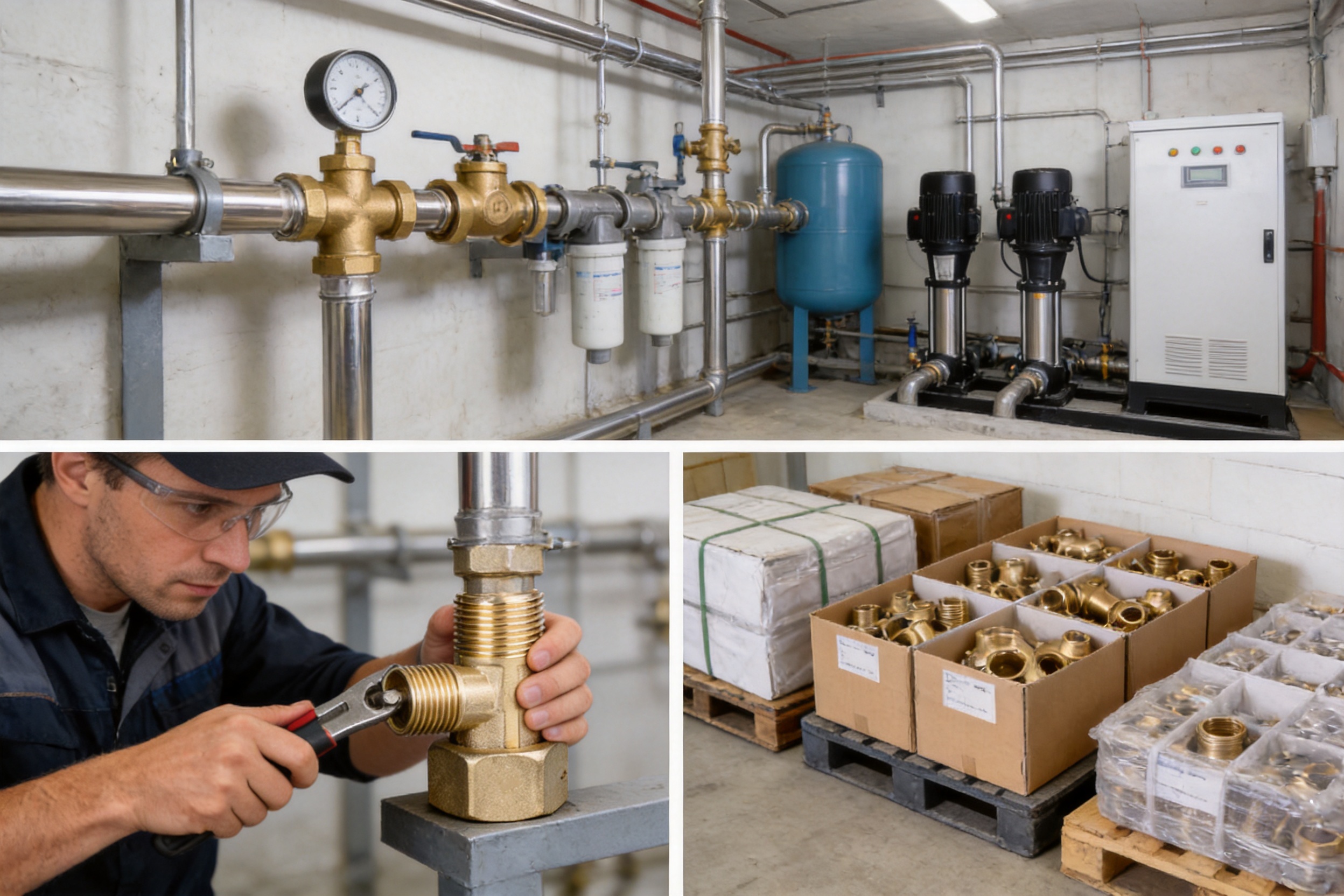
Pipe fittings are essential components in almost every fluid control, water supply, gas distribution, industrial processing, and mechanical installation system. Although fittings are often smaller than pipes, valves, tanks, or pumps, they have a major influence on the safety, efficiency, service life, and maintenance requirements of the complete installation. A fitting connects, redirects, extends, reduces, supports, or terminates a pipeline. It may also provide a transition between different connection types, pipe sizes, materials, or equipment interfaces.
High-quality pipe fittings must perform reliably under changing pressure, temperature, vibration, flow conditions, and environmental exposure. They need accurate dimensions, consistent threads or connection surfaces, suitable material strength, and dependable sealing performance. Poorly manufactured fittings can lead to leakage, pressure loss, installation delays, corrosion, or premature system failure. For this reason, professional buyers increasingly evaluate not only the appearance and price of a fitting, but also its manufacturing process, quality control system, production capacity, and supplier service capabilities.
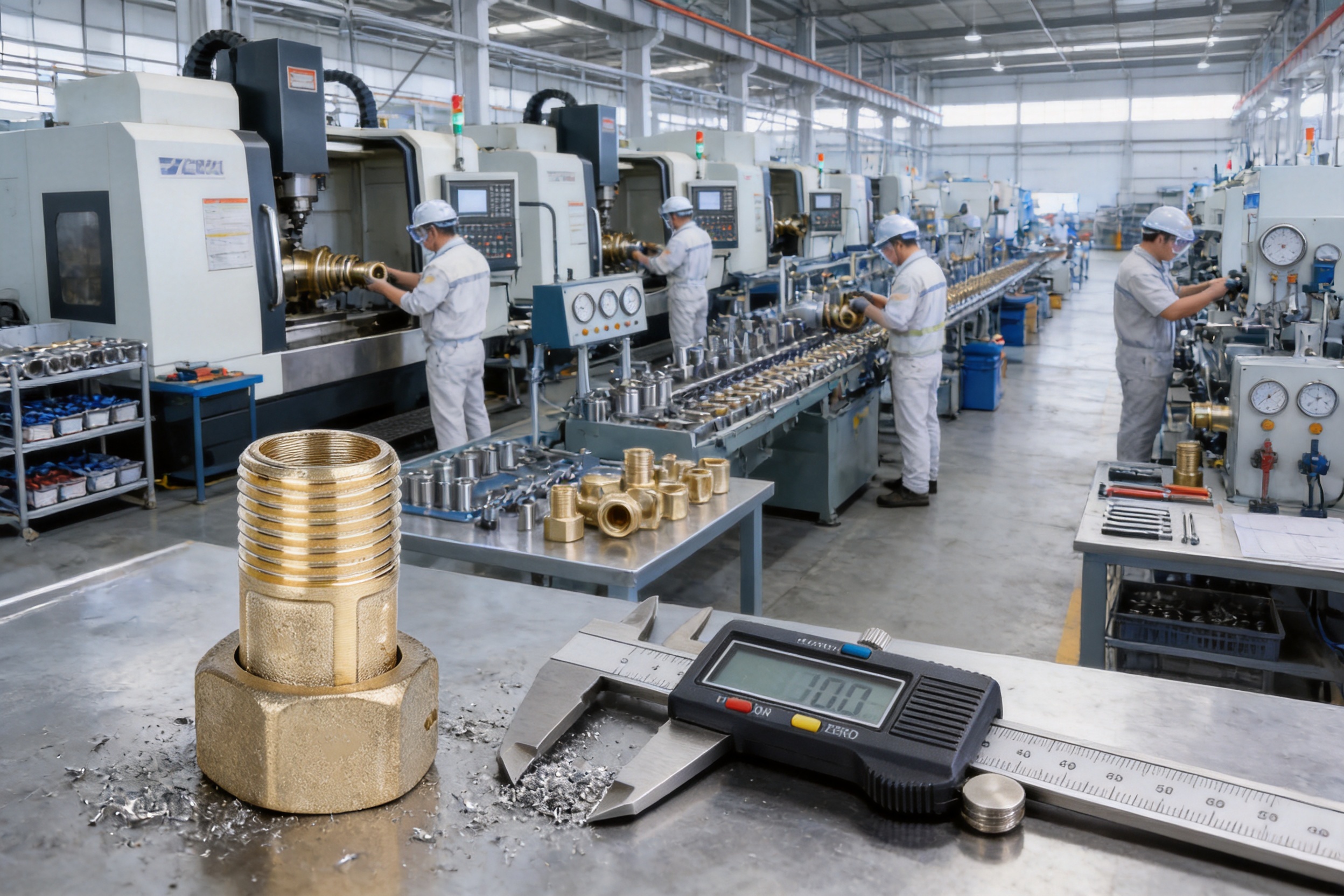
Ningbo Yunhua Valve Co., Ltd. develops and manufactures valves and hardware accessories for gas, fluid, and water supply applications. Its pipe fittings product range is supported by precision machining, automated assembly, testing equipment, and a production system designed to meet relevant quality standards. With a manufacturing site covering approximately 20,000 square meters, the company has established dedicated machining, assembly, and testing workshops. Its annual capacity includes approximately 2 million valve sets and 10 million hardware accessory sets, giving customers access to a supplier with substantial production resources and experience in related fluid-control products.
This article explains the role of pipe fittings, the qualities that distinguish reliable products from ordinary alternatives, and the reasons a professionally manufactured fitting can provide better long-term value. It also examines selection principles, applications, manufacturing procedures, inspection methods, customization possibilities, and frequently asked questions for distributors, contractors, engineers, and equipment manufacturers.
Pipe Fittings
What Are Pipe Fittings?
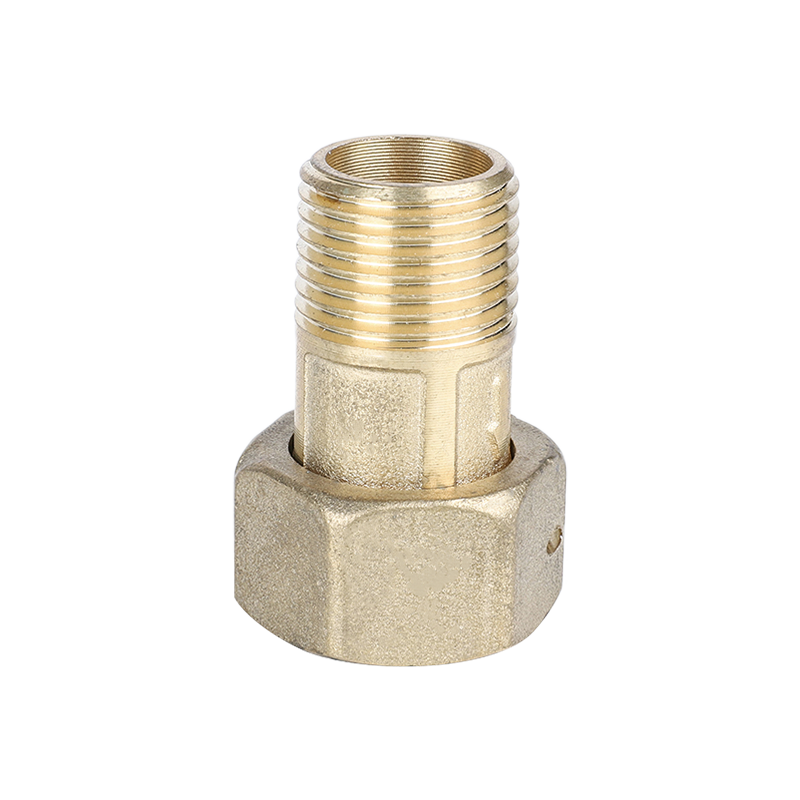
Pipe fittings are mechanical components used to connect sections of pipe or to connect pipes with valves, meters, pumps, tanks, appliances, and other equipment. Depending on the design, a fitting may change the direction of flow, adjust the pipe diameter, divide one flow path into several branches, close a pipeline, or create a detachable connection for inspection and maintenance.
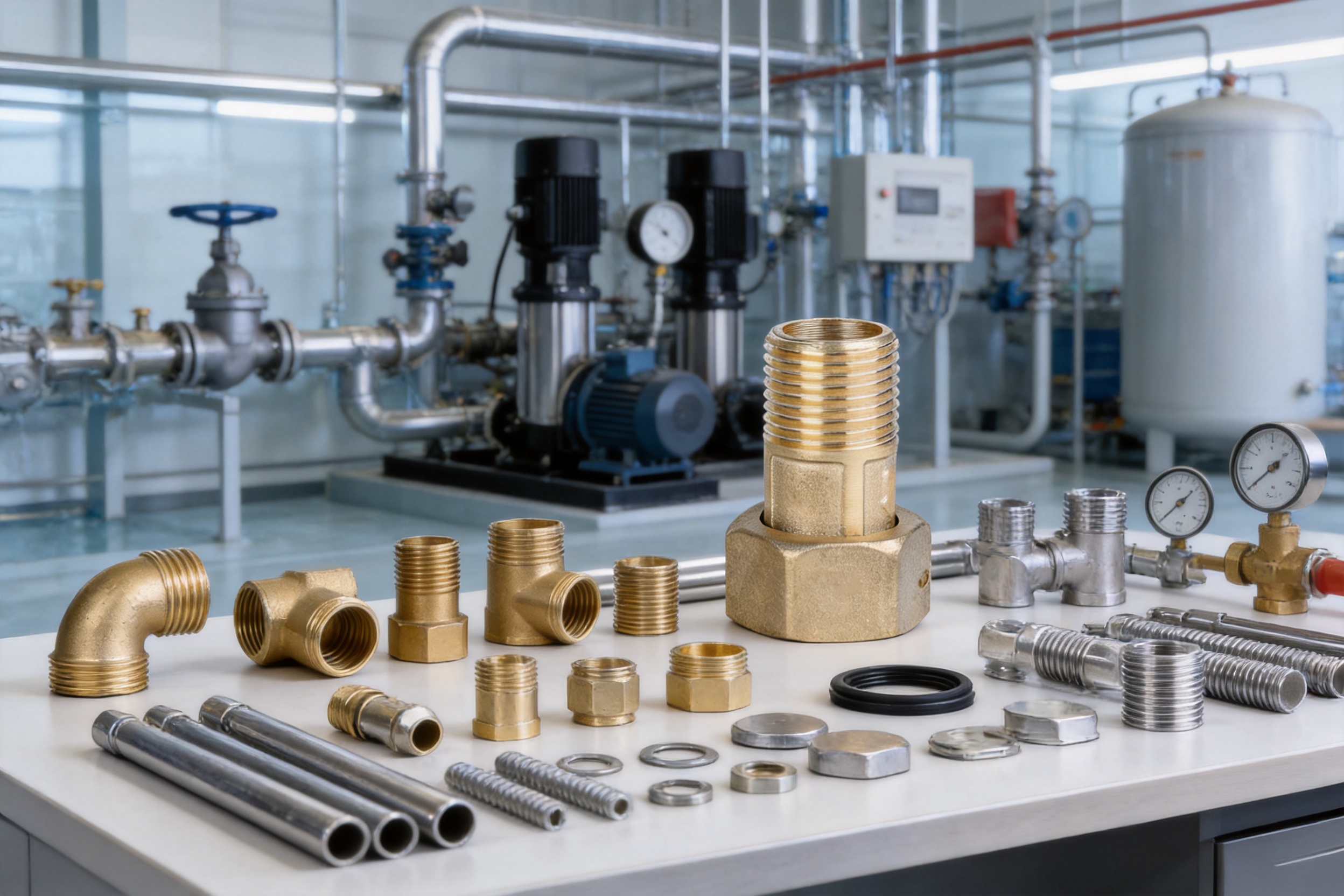
Common fitting configurations include elbows, tees, crosses, reducers, couplings, unions, adapters, nipples, caps, plugs, and threaded connectors. Each configuration serves a specific purpose. An elbow changes the direction of the pipeline, while a tee creates a branch. A reducer joins pipes with different nominal diameters. A coupling connects two pipes, and a union allows a section of pipe to be disconnected without rotating the entire pipeline. Adapters are used when two connection standards or connection types must be joined.
Pipe fittings may use threaded, compression, soldered, brazed, welded, flanged, grooved, or push-fit connections. The correct connection depends on the working pressure, fluid, temperature, pipe material, installation environment, maintenance requirements, and applicable standards. Threaded fittings are frequently selected for smaller-diameter systems because they are compact, practical, and relatively easy to install. In gas and water applications, a correctly manufactured threaded fitting can provide a strong and dependable connection when installed with the appropriate sealing method.
The performance of a fitting depends on more than its nominal size. Important factors include dimensional accuracy, thread profile, surface condition, wall thickness, material composition, machining quality, resistance to corrosion, and compatibility with the transported medium. The design must also account for installation forces and the possibility of thermal expansion, vibration, pressure surges, and repeated maintenance.
Important Types of Pipe Fittings
Elbows
Elbows redirect fluid flow, most commonly by 45 or 90 degrees. They are available in different radii and connection configurations. A larger-radius elbow may reduce turbulence and pressure loss, while a compact elbow may be more suitable where installation space is limited. The internal geometry should be smooth and accurately formed to reduce unnecessary flow resistance.
Tees and Branch Fittings
Tees divide a main flow path into a branch or combine two flows into one. Equal tees have the same size at all openings, while reducing tees connect a main pipe to a smaller branch. These fittings are widely used in water distribution, heating systems, gas installations, industrial equipment, and process lines.
Reducers
Reducers connect pipes with different diameters. A concentric reducer maintains a common centerline, while an eccentric reducer shifts the centerline to one side. The choice between these designs depends on the installation and flow requirements. Accurate reducer dimensions help minimize turbulence, avoid unwanted air pockets, and maintain a stable connection between different pipe sizes.
Couplings and Unions
Couplings are used to join two pipe sections with compatible connection ends. Unions perform a similar function but are designed for easier disassembly. In systems requiring periodic inspection, cleaning, replacement, or equipment servicing, a union can reduce maintenance time and simplify component replacement.
Adapters and Nipples
Adapters connect different thread types, connection forms, or component interfaces. Nipples are short lengths of pipe with connection ends on one or both sides. These components are often used to connect valves, gauges, filters, regulators, appliances, and other fluid-control equipment.
Caps and Plugs
Caps close the end of a pipe from the outside, while plugs usually close an opening from inside the fitting or pipe connection. They may be used for temporary isolation, permanent termination, pressure testing, or future expansion. The sealing surface and thread accuracy are particularly important for these products because any imperfection may result in leakage.
Material Selection for Pipe Fittings
Material selection should be based on the fluid, operating temperature, pressure, surrounding environment, installation method, and required service life. Different materials provide different balances of strength, corrosion resistance, machinability, weight, cost, and compatibility.
Brass is widely used in water, gas, heating, plumbing, and general hardware applications. It offers good machinability, useful corrosion resistance, and a practical combination of strength and appearance. Brass fittings can be accurately machined to produce clean threads and consistent sealing surfaces. They are also suitable for many compact installations where ease of handling and reliable connection are important.
Stainless steel is selected when stronger corrosion resistance, higher mechanical strength, or a more demanding environment is involved. It may be suitable for industrial, chemical, food-processing, marine, and outdoor applications, depending on the grade and service conditions. Carbon steel and forged steel can provide high strength and pressure resistance for appropriate industrial applications, but surface protection and environmental compatibility must be evaluated.
Plastic fittings may be appropriate for selected low-temperature, corrosion-sensitive, or lightweight systems. However, plastic materials have different thermal, pressure, and mechanical characteristics from metal fittings. The product must be selected according to the pipe system design rather than by price alone.
When selecting material, buyers should also consider galvanic corrosion. Connecting dissimilar metals in a wet or electrically conductive environment can accelerate corrosion if the combination is not properly designed. Sealing compounds, pipe materials, water chemistry, and external exposure should also be considered before final selection.
Advantages of Professionally Manufactured Pipe Fittings
Accurate Dimensions and Consistent Interchangeability
One of the most important advantages of professionally manufactured fittings is dimensional consistency. A fitting that matches its stated nominal size and connection standard is easier to install and more likely to be interchangeable with pipes and components from other approved suppliers. Consistent dimensions reduce the need for excessive force, rework, filing, or on-site modification.
Precision machining is especially important for threaded fittings. Threads must have a suitable profile, pitch, depth, and alignment. If the thread is too shallow, too deep, damaged, or misaligned, the installer may be unable to achieve a proper engagement. A professional machining process helps ensure that the thread is formed accurately across production batches.
Reliable Sealing Performance
Pipe fittings are often judged by their ability to prevent leakage. A reliable seal requires suitable thread geometry, smooth sealing surfaces, correct tolerances, and compatibility with the selected sealing material. The fitting should also withstand the tightening force needed to create a seal without cracking, deforming, or stripping.
Professional quality control can identify surface defects, burrs, dimensional deviations, and thread damage before products reach the customer. This reduces the possibility of leakage during installation and helps contractors maintain consistent project quality.
Improved Mechanical Strength
A fitting must withstand internal pressure as well as external forces generated by installation, pipe movement, vibration, and thermal expansion. Material quality, wall thickness, design geometry, and machining accuracy all contribute to mechanical strength. Fittings manufactured with stable processes are more likely to deliver consistent performance throughout the product batch.
Better Corrosion Resistance
Corrosion resistance depends on material selection, surface condition, environmental exposure, and manufacturing quality. Properly selected brass, stainless steel, coated steel, or other approved materials can provide dependable service in their intended environments. A clean and controlled manufacturing process also helps prevent contamination, rough surface defects, and avoidable damage that could accelerate corrosion.
Lower Total Cost of Ownership
The lowest purchase price does not always represent the lowest overall cost. A low-quality fitting may create additional expenses through leakage, installation delays, replacement labor, damaged equipment, product recalls, or customer complaints. Reliable fittings can reduce these risks and support smoother project completion.
Consistent products are also valuable for distributors. When a product performs predictably, distributors can reduce the number of returns, simplify inventory planning, and build stronger relationships with installers and end users. For large-volume buyers, stable production capacity and consistent batch quality may be more valuable than a small initial price difference.
Advanced Manufacturing Capabilities
The quality of pipe fittings begins with the manufacturing system. Ningbo Yunhua Valve Co., Ltd. has developed a production structure covering research and development, manufacturing, sales, and service. Its facilities include a precision machining workshop, an assembly line, and a testing workshop. The company uses domestic and international CNC machine tools together with automated assembly and testing equipment.
CNC machining provides accurate and repeatable control over important dimensions. For pipe fittings, this may include external diameter, internal bore, thread profile, shoulder position, connection length, and sealing surface geometry. Automated or semi-automated processes can reduce variation caused by manual operations and help maintain a consistent output over larger production quantities.
A professional manufacturing process normally begins with material preparation and incoming inspection. Materials are checked according to purchasing requirements, specifications, and production needs. Suitable material control is important because chemical composition, hardness, surface condition, and mechanical properties influence the final performance of the fitting.
The next stage may include cutting, forging, casting, turning, drilling, threading, deburring, cleaning, surface treatment, assembly, and final inspection. The exact sequence depends on the product structure and material. Each operation must be controlled so that the component remains within its approved dimensional and quality requirements.
Automated assembly equipment helps improve consistency when fittings are combined with other components or prepared for specific applications. Automated testing equipment can support more efficient inspection of leakage, pressure resistance, operation, and other performance characteristics. The use of dedicated equipment also helps increase production efficiency and supports large-volume order fulfillment.
A production capacity of approximately 10 million hardware accessory sets per year demonstrates the ability to support distributors, wholesalers, equipment manufacturers, and project-based customers. Capacity alone does not guarantee quality, but when it is combined with process control, testing, trained personnel, and an established management system, it provides a strong foundation for dependable supply.
Manufacturing Process from Raw Material to Finished Fitting
1. Product Design and Engineering Review
Before production begins, the fitting design should be reviewed for application, dimensions, material, connection type, pressure requirements, and production feasibility. Engineering review helps identify potential problems such as insufficient wall thickness, difficult machining areas, sharp internal transitions, or unsuitable sealing surfaces.
Design review is also important for customized products. A customer may require a special length, a different thread standard, a modified outlet, a particular surface finish, or packaging for a specific market. These requirements should be clarified before tooling and production planning begin.
2. Material Preparation
Material is selected according to the approved design and application. Bars, forgings, cast blanks, tubes, or other raw material forms may be prepared for machining. Incoming inspection helps verify that the material is suitable for the required process. Proper storage prevents damage, contamination, and mix-ups between material grades.
3. Forming and Rough Machining
Depending on the design, the basic fitting body may be formed by forging, casting, extrusion, or machining from bar stock. Rough machining establishes the general shape and removes excess material. The process must provide enough allowance for finishing operations while maintaining the structural integrity of the part.
4. Precision CNC Machining
CNC turning, milling, drilling, and related operations produce the final connection dimensions and functional surfaces. CNC equipment allows production parameters to be programmed and repeated. This is particularly useful when a fitting includes several concentric features, multiple outlets, or close dimensional tolerances.
5. Threading and Connection Preparation
Threads are created using suitable cutting or forming operations. The selected method depends on the material, thread type, size, and production requirements. After threading, the connection should be checked for profile accuracy, engagement, cleanliness, and damage. Burr removal is essential because loose burrs can interfere with sealing, obstruct flow, or enter downstream equipment.
6. Cleaning and Surface Treatment
Machined components may require cleaning to remove chips, oils, dust, and other residues. Surface treatment may be used to improve appearance, corrosion resistance, or compatibility with the intended application. The selected treatment should be appropriate for the base material and should not interfere with the connection dimensions.
7. Assembly and Testing
Where a fitting is supplied with additional components, assembly should be performed under controlled conditions. Testing may include visual inspection, dimensional inspection, thread gauges, pressure testing, leakage testing, and functional checks. The specific tests depend on the product and customer requirements.
8. Final Inspection and Packaging
Final inspection confirms that the finished fittings meet the approved requirements. Packaging should protect threads, sealing surfaces, and visible finishes during transportation and storage. Correct labeling supports traceability, inventory management, and efficient installation.
Quality Control and Testing
Quality control should be integrated throughout production rather than limited to the final inspection. Process inspection can identify deviations at an early stage, reducing waste and preventing large quantities of nonconforming products from progressing to later operations.
Dimensional inspection verifies critical measurements such as overall length, outside diameter, inside diameter, outlet location, wall thickness, and thread dimensions. Go and no-go gauges may be used for certain connection types. More advanced measuring equipment can be applied when tighter tolerances or complex geometries are required.
Visual inspection identifies surface cracks, dents, deep tool marks, incomplete forming, oxidation, burrs, and other visible defects. Although visual inspection is simple, it remains important because surface damage can affect sealing, appearance, corrosion resistance, and customer acceptance.
Pressure and leakage tests evaluate whether the fitting can withstand the specified conditions without visible leakage or structural failure. Test methods and pressure levels should be selected according to the product design, intended application, and relevant standards. Testing must be conducted with suitable equipment and appropriate safety procedures.
Thread inspection confirms that connection components can be assembled correctly. A thread that appears acceptable visually may still have dimensional or alignment problems. Gauging and sample assembly can provide additional confidence in interchangeability and installation performance.
Quality records support traceability and continuous improvement. Production data, inspection results, rejected-part analysis, customer feedback, and corrective actions can help identify recurring issues. A company with a structured management system is better positioned to maintain stable quality as production volumes increase.
Applications of Pipe Fittings
Water Supply Systems
Pipe fittings are used in residential, commercial, municipal, and industrial water systems. They connect water pipes to valves, meters, pumps, tanks, filters, heaters, and other equipment. Reliable fittings help reduce leakage and simplify installation in both new construction and repair projects.
Gas Distribution and Gas Appliances
Gas systems require careful material selection, accurate connections, and strict attention to leakage prevention. Fittings may be used in distribution lines, appliance connections, regulators, meters, and control assemblies. Components intended for gas service must be selected and installed according to applicable regulations and local requirements.
Heating and Fluid-Circulation Systems
Heating systems use fittings to connect boilers, radiators, heat exchangers, circulation pumps, expansion vessels, and control valves. Because these systems experience temperature changes, the fitting material and sealing method must be compatible with thermal expansion and repeated operating cycles.
Industrial Equipment
Industrial equipment often includes complex networks of pipes, valves, gauges, filters, and actuators. Fittings provide the connections required to assemble and maintain these networks. The right fitting can help reduce installation space, improve access to service points, and support efficient equipment layout.
Hardware and General Mechanical Installations
Hardware accessories are used in workshops, building services, machinery, agricultural equipment, and general maintenance. In these applications, flexibility, availability, dimensional consistency, and ease of installation are often important purchasing criteria.
Pipe Fittings Compared with Low-Cost Alternatives
Low-cost fittings may appear attractive when a project is evaluated only by unit price. However, differences in raw material, machining accuracy, inspection frequency, surface quality, and production control can significantly affect practical performance.
Some low-cost products may have inconsistent threads that require excessive tightening or repeated adjustment. Others may have rough internal surfaces, uneven wall thickness, or poorly controlled dimensions. These issues can create leakage risks, increase installation time, and reduce confidence in the complete system.
Professionally manufactured fittings offer advantages in repeatability and predictability. A contractor can use the same installation method across a batch, while a distributor can provide customers with more consistent products. Stable quality is particularly valuable when fittings are used in large projects where one defective connection can cause delays or rework.
Another difference is supplier capability. A manufacturer with research and development resources, precision equipment, automated production, testing facilities, and an established service system is generally better prepared to support technical questions, product adjustments, quality investigations, and repeat orders. This is an important advantage over suppliers focused only on trading or short-term price competition.
| Evaluation Factor | Professionally Manufactured Fittings | Uncontrolled Low-Cost Alternatives |
|---|---|---|
| Dimensional consistency | Controlled through precision machining and inspection | May vary between pieces or batches |
| Thread quality | Designed for accurate engagement and sealing | May include rough, damaged, or misaligned threads |
| Material control | Selected and managed according to product requirements | May be unclear or inconsistent |
| Leakage performance | Supported by suitable inspection and testing | May depend heavily on installation correction |
| Production capacity | Suitable for repeat and large-volume orders | May be affected by unstable supply |
| Customization | Can be evaluated through engineering and production teams | May have limited technical support |
| Long-term value | Lower risk of rework, returns, and premature replacement | Potentially higher hidden costs |
Customization and OEM Support
Different markets and projects may require different fitting specifications. Customization can involve thread standards, connection combinations, dimensions, material options, surface treatment, logo marking, packaging, labeling, and assembly configuration. A practical customization program begins with clear technical communication.
Customers should provide drawings, samples, product photographs, dimensional information, application details, target standards, expected order quantity, and packaging requirements whenever possible. The manufacturer can then evaluate feasibility, tooling needs, production methods, inspection requirements, and expected lead times.
Customization does not simply mean changing the external appearance. A modified fitting may require a new machining program, special tooling, revised inspection gauges, additional testing, or a new packaging method. Engineering review helps ensure that the customized product remains safe, functional, manufacturable, and commercially practical.
Ningbo Yunhua Valve Co., Ltd. combines product development, production, sales, and service capabilities. This integrated structure can support customers seeking standard pipe fittings as well as buyers who require coordinated hardware accessories and valve-related products. The company’s experience with gas and fluid valves, water supply valves, and hardware accessories also provides useful technical context when fittings must be integrated into a broader fluid-control system.
How to Select the Right Pipe Fitting
Confirm the Application
Begin by identifying the transported medium and the system purpose. Water, gas, air, oil, chemicals, and other fluids may require different materials and sealing methods. The application should also indicate whether the fitting is for indoor, outdoor, underground, high-temperature, corrosive, or sanitary service.
Check Size and Connection Standard
Confirm the nominal pipe size, actual dimensions, thread type, thread direction, and connection method. Do not assume that fittings with similar nominal descriptions are automatically interchangeable. Regional and industry standards may use different dimensions or designations.
Review Pressure and Temperature
The fitting should be suitable for the maximum working pressure, test pressure, operating temperature, and possible pressure surges. Temperature changes may affect material strength and sealing performance. If the application includes steam, hot water, refrigerated fluid, or repeated thermal cycling, these conditions must be considered in advance.
Evaluate Material Compatibility
Check the compatibility between the fitting material, pipe material, transported medium, sealing compound, and surrounding environment. Corrosion, chemical attack, galvanic interaction, and contamination can reduce service life if material selection is not carefully reviewed.
Consider Installation and Maintenance
Space limitations, access for tools, expected maintenance frequency, and the possibility of future system expansion can influence the best fitting configuration. A union or detachable adapter may provide greater long-term convenience than a permanent connection in an area requiring regular servicing.
Verify Supplier Capability
Evaluate the manufacturer’s production equipment, testing process, capacity, quality management, technical support, and ability to provide repeat orders. A dependable supplier should be able to communicate clearly about specifications and respond efficiently to quality or delivery questions.
Installation Recommendations
Before installation, inspect each fitting for visible damage, contamination, thread deformation, and incorrect specifications. Confirm that the fitting matches the pipe and that all sealing surfaces are clean. Do not use a component that has been dropped, severely scratched, or visibly distorted.
Use the sealing material recommended for the connection and transported medium. Excessive sealant can enter the pipeline, restrict flow, contaminate valves, or damage sensitive equipment. Insufficient sealant or incorrect application can lead to leakage. The installer should follow recognized procedures and local regulations.
Threaded fittings should be aligned carefully before tightening. Cross-threading can damage both the fitting and the pipe. Apply tightening force to the appropriate areas and avoid using excessive force that could deform or crack the component. When connecting a fitting to a valve or other equipment, use suitable tools to prevent damage to the body or operating parts.
After installation, the system should be inspected and tested according to the relevant project requirements. Leakage testing should be performed safely and with appropriate precautions. Any connection that shows leakage, unusual movement, or damage should be corrected before the system is placed into normal service.
Pipe supports should be installed where necessary to prevent excessive loads from being transferred to fittings and valves. Fittings are not intended to compensate for poorly supported or misaligned pipework. Correct alignment and support can reduce stress, vibration, and fatigue during operation.
Maintenance and Service Life
Even a high-quality fitting requires suitable installation and operating conditions. Routine maintenance should include visual inspection for leakage, corrosion, mechanical damage, vibration, and changes in the surrounding environment. Areas near joints, valves, pumps, and equipment connections deserve particular attention because these locations may experience greater mechanical or thermal stress.
If a fitting is removed during maintenance, inspect the threads and sealing surfaces before reuse. Some sealing materials are intended for one-time use and should be replaced. Damaged threads, deep corrosion, cracks, or deformation are reasons to replace the fitting rather than reinstall it.
Service life depends on the material, fluid, pressure, temperature, installation quality, and environment. A fitting used in a clean indoor water system may have different service expectations from one installed outdoors, underground, or in a chemically aggressive environment. Correct selection and periodic inspection are therefore essential parts of lifecycle management.
Why Manufacturing Strength Matters to Global Buyers
International distributors and project contractors need more than a product catalog. They need dependable supply, stable specifications, clear communication, acceptable packaging, and the ability to repeat an order with minimal variation. Manufacturing strength directly supports these requirements.
A company with its own machining and testing resources can respond more effectively to production adjustments than a supplier that depends entirely on unrelated subcontractors. In-house process knowledge supports better control of dimensions, tooling, inspection, assembly, and corrective action. It can also make communication more efficient when a customer requests a technical change.
Large production capacity is another practical advantage. With annual output of approximately 2 million valve sets and 10 million hardware accessory sets, Ningbo Yunhua Valve Co., Ltd. has developed resources suitable for both regular distribution and larger-volume demand. Capacity planning helps reduce the risk of supply interruptions and supports customers who require scheduled replenishment.
The company’s focus on gas and fluid valves, water supply valves, and hardware accessories creates product synergies. Pipe fittings can be supplied as part of a broader fluid-control solution, helping customers coordinate related components through one experienced source. This can simplify purchasing, product matching, technical communication, and quality management.
Environmental and Operational Considerations
Efficient manufacturing can reduce material waste, rework, and unnecessary energy consumption. Precision machining and process control help manufacturers use raw materials more effectively and reduce the number of defective parts. Automated production and testing can also improve operational efficiency when properly managed.
From the user’s perspective, durable fittings support sustainability by reducing the frequency of replacement and limiting the resources required for repairs. A fitting that performs reliably over a long service period can help reduce material consumption, transport requirements, packaging waste, and maintenance disruption.
Responsible selection also includes choosing the correct product rather than an unnecessarily oversized or unsuitable component. Engineers and purchasing teams should evaluate the real requirements of the system, including pressure, temperature, flow, material compatibility, and maintenance conditions. Correct specification is beneficial for both system performance and resource efficiency.
Frequently Asked Questions
What is the main purpose of a pipe fitting?
A pipe fitting connects, redirects, branches, reduces, extends, or terminates a pipeline. It can also connect pipes to valves, pumps, gauges, tanks, appliances, and other equipment.
What materials are commonly used for pipe fittings?
Common materials include brass, stainless steel, carbon steel, forged steel, copper alloys, and various plastics. The correct choice depends on the fluid, pressure, temperature, corrosion conditions, connection type, and applicable regulations.
Are threaded fittings suitable for gas applications?
Threaded fittings may be suitable for specific gas applications when they are designed, manufactured, certified where required, and installed according to applicable standards and local regulations. The fitting, sealant, pipe, and installation method must all be compatible with gas service.
How can I reduce the risk of leakage?
Select a fitting with accurate threads and suitable material, keep the connection clean, use an approved sealing method, avoid cross-threading, apply appropriate tightening force, and perform the required leakage test after installation. Proper pipe support and alignment are also important.
Why is CNC machining important for pipe fittings?
CNC machining provides repeatable control over critical dimensions such as bores, threads, shoulders, and connection lengths. It helps reduce variation between products and supports better interchangeability and sealing performance.
What quality tests should be considered?
Depending on the product, relevant checks may include visual inspection, dimensional measurement, thread gauging, material verification, pressure testing, leakage testing, surface inspection, and functional testing. The exact requirements should correspond to the intended application and applicable standards.
Can pipe fittings be customized?
Many fittings can be customized in terms of dimensions, thread standards, material, surface treatment, connection configuration, marking, packaging, and assembly. Customers should provide detailed drawings or specifications so the manufacturer can evaluate feasibility and testing requirements.
What information should be provided when requesting a quotation?
Useful information includes fitting type, nominal size, connection standard, material, pressure and temperature requirements, application medium, quantity, surface finish, packaging, inspection requirements, destination market, and whether a customized design is needed.
How do professional fittings compare with inexpensive alternatives?
Professional fittings generally provide more consistent dimensions, better thread quality, stronger process control, more reliable testing, and improved repeatability. These qualities can reduce leakage, installation problems, returns, and long-term maintenance costs.
What is the benefit of purchasing fittings from a valve and hardware specialist?
A valve and hardware specialist understands how fittings interact with fluid-control components. This can simplify product matching, technical communication, purchasing coordination, and the development of complete connection solutions.
How should pipe fittings be stored?
Fittings should be stored in a clean, dry location protected from impact, excessive humidity, corrosive chemicals, and contamination. Threads and sealing surfaces should be protected from damage, and different materials or specifications should be clearly separated.
Does production capacity guarantee product quality?
Production capacity by itself does not guarantee quality. However, substantial capacity supported by precision equipment, automated assembly, testing facilities, process control, trained personnel, and a structured management system can provide a strong foundation for stable and repeatable quality.
Conclusion
Pipe fittings are fundamental to the safety and functionality of fluid, gas, water, and mechanical systems. Their performance depends on accurate dimensions, suitable materials, reliable threads or connection surfaces, proper sealing, mechanical strength, corrosion resistance, and correct installation. A fitting that appears simple may require sophisticated engineering and manufacturing control to perform consistently in demanding service.
Ningbo Yunhua Valve Co., Ltd. combines product development, precision manufacturing, automated assembly, testing, sales, and service in support of valves and hardware accessories. Its approximately 20,000-square-meter production site, CNC machining capabilities, automated equipment, professional workshops, and substantial annual capacity provide a solid foundation for manufacturing pipe fittings and related fluid-control products.
Compared with uncontrolled low-cost alternatives, professionally manufactured fittings can offer better dimensional consistency, more reliable sealing, improved batch repeatability, lower installation risk, and stronger long-term value. For distributors, contractors, equipment manufacturers, and project buyers, these advantages can support more efficient purchasing and dependable system performance.
The best pipe fitting is not simply the least expensive component. It is the component that matches the application, connects correctly, withstands the operating conditions, supports safe maintenance, and remains available from a capable supplier. By combining appropriate specification with advanced manufacturing and systematic quality control, pipe fittings can contribute to a safer and more efficient fluid-control ecosystem.
References
1. ASME B16.5, Pipe Flanges and Flanged Fittings: Dimensions, Pressure-Temperature Ratings, Materials, and Testing Considerations.
2. ASME B16.11, Forged Fittings, Socket-Welding and Threaded: General Design and Manufacturing Considerations.
3. ISO 7-1, Pipe Threads Where Pressure-Tight Joints Are Made on the Threads.
4. ISO 9001, Quality Management Systems: Requirements.
5. International Organization for Standardization, General Principles of Industrial Dimensional Inspection and Quality Control.
6. American Society of Mechanical Engineers, Fluid Control and Piping Engineering Principles.
7. Industrial Valve and Piping Engineering Practice, Materials, Connections, Installation, and Maintenance Guidance.
Product: Pipe Fittings

Related Products
Related News
Contact Us
-

-
 +86-0574-63742169
-
 No.104-128, Cizhang East Road, Zhangqi Town, Cixi City, Ningbo, Zhejiang Province, China


Message Us Now !
