

 English
 русский
 عربى
 Español

Brass Y-Type Strainer: Efficient Pipeline Protection for Water and Fluid Systems
Content
- 1 1. The Role of a Y-Type Strainer in Pipeline Protection
- 2 2. Product Overview
- 3 3. Advantages of Brass Construction
- 4 4. The Benefits of the Y-Shaped Design
- 5 5. Filter Screen Configuration
- 6 6. Dimensional Range and Selection Guidance
- 7 7. Working Pressure, Temperature, and Medium
- 8 8. ISO 228 Parallel Pipe Threads
- 9 9. Comparison with Alternative Strainer Solutions
- 10 10. Maintenance and Cleaning Practices
- 11 11. Applications in Different Industries
- 12 12. Manufacturing Strengths and Quality Approach
- 13 13. Product Consistency and Supply Reliability
- 14 14. Installation Considerations
- 15 15. Engineering and Procurement Checklist
- 16 16. Sustainability and Lifecycle Value
- 17 17. Why Choose the YH-501 Brass Y-Type Strainer?
- 18 18. Frequently Asked Questions
- 18.1 18.1 What is the main function of the YH-501?
- 18.2 18.2 What material is used for the strainer body?
- 18.3 18.3 What pressure can the strainer handle?
- 18.4 18.4 What liquids are suitable for this product?
- 18.5 18.5 What is the operating temperature range?
- 18.6 18.6 Can the strainer be installed vertically?
- 18.7 18.7 How is the filter screen cleaned?
- 18.8 18.8 What sizes are available?
- 18.9 18.9 What thread standard does the product use?
- 18.10 18.10 Is this product a complete water purification filter?
- 18.11 18.11 How often should the screen be cleaned?
- 18.12 18.12 What manufacturing capabilities support this product?
- 18.13 18.13 Is the product suitable for potable water?
- 18.14 18.14 What should be considered when comparing this product with a competitor’s strainer?
- 19 19. Conclusion
- 20 References
- 21 Product: YH-501 Brass Y-Type Strainer
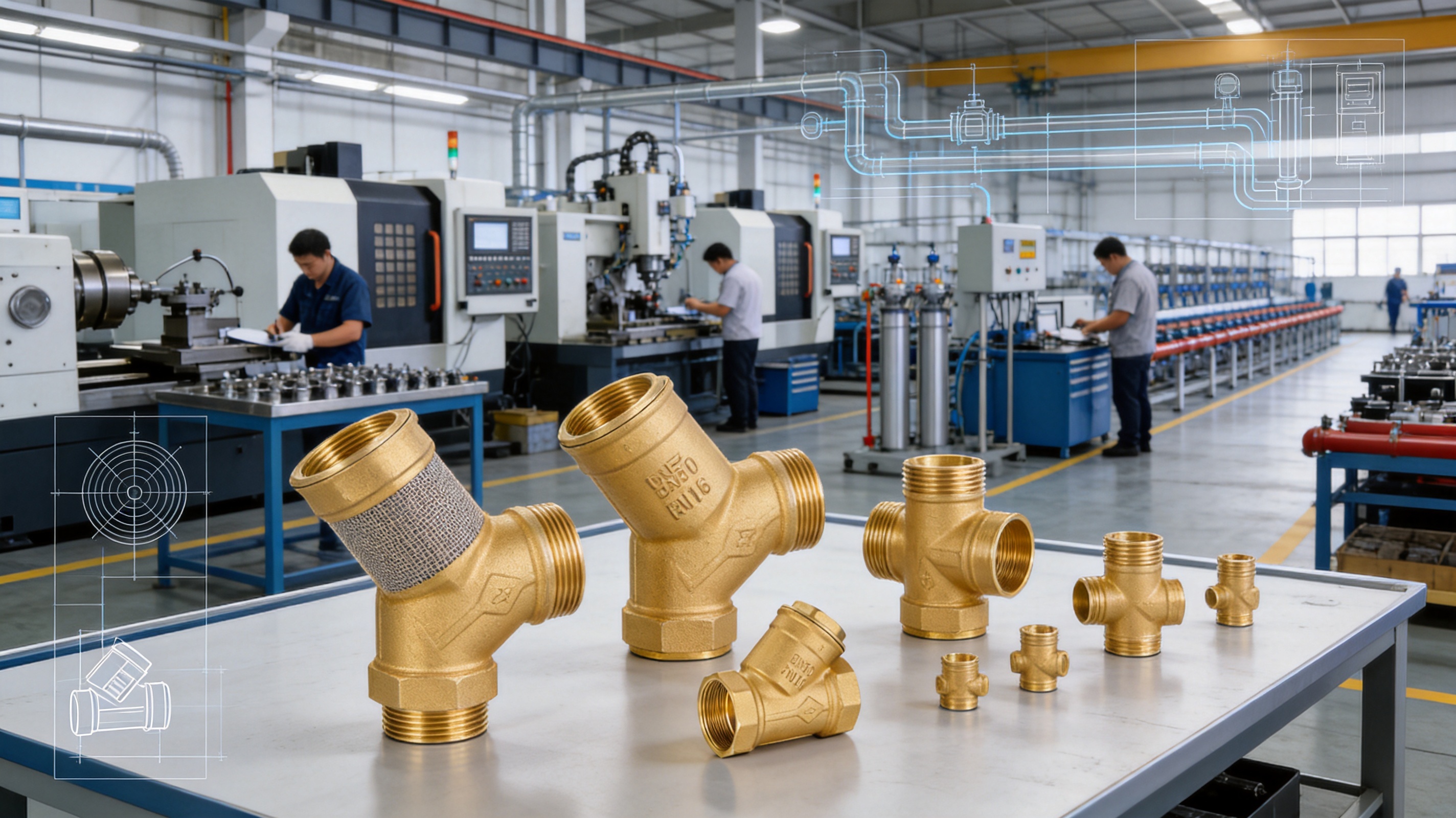
A reliable filtration component is essential wherever pipelines transport water or other non-caustic liquids. Even a well-designed fluid system can collect rust, welding residue, scale, sand, and other solid particles during installation and operation. If these contaminants reach pumps, valves, meters, heat exchangers, irrigation equipment, or control devices, they may cause blockage, abrasion, reduced efficiency, leakage, or premature failure. The YH-501 Brass Y-Type Strainer is designed to address this problem by providing a compact and serviceable filtration point within the pipeline.
Built as a brass filter for general water and fluid applications, the YH-501 combines corrosion resistance, mechanical durability, convenient cleaning, and flexible installation. Its Y-shaped body supports installation in either horizontal or vertical pipelines, while the removable cap provides access to the internal filter screen. This allows maintenance personnel to remove accumulated debris without dismantling the complete pipe system.
The product is suitable for HVAC systems, water supply networks, irrigation lines, industrial fluid circulation, and other applications involving water or non-caustic liquids. With a nominal pressure rating of 1.6 MPa, a working temperature range from 0°C to 120°C, and parallel pipe threads conforming to ISO 228, the strainer is designed for practical use across a broad range of common pipeline conditions.
1. The Role of a Y-Type Strainer in Pipeline Protection
A pipeline strainer is a mechanical filtration device installed upstream of equipment that may be damaged or obstructed by suspended solids. Unlike a fine purification filter intended to remove very small particles, a strainer generally provides an initial or protective stage of filtration. Its purpose is to capture larger contaminants before they enter sensitive equipment.
Typical pipeline debris includes metal chips from machining, fragments of sealing material, rust flakes, sand, pipe scale, welding slag, and particles introduced during construction or repair. Although these materials may appear insignificant individually, they can create serious problems when concentrated in a valve seat, pump impeller, flow meter, or narrow heat exchanger passage.
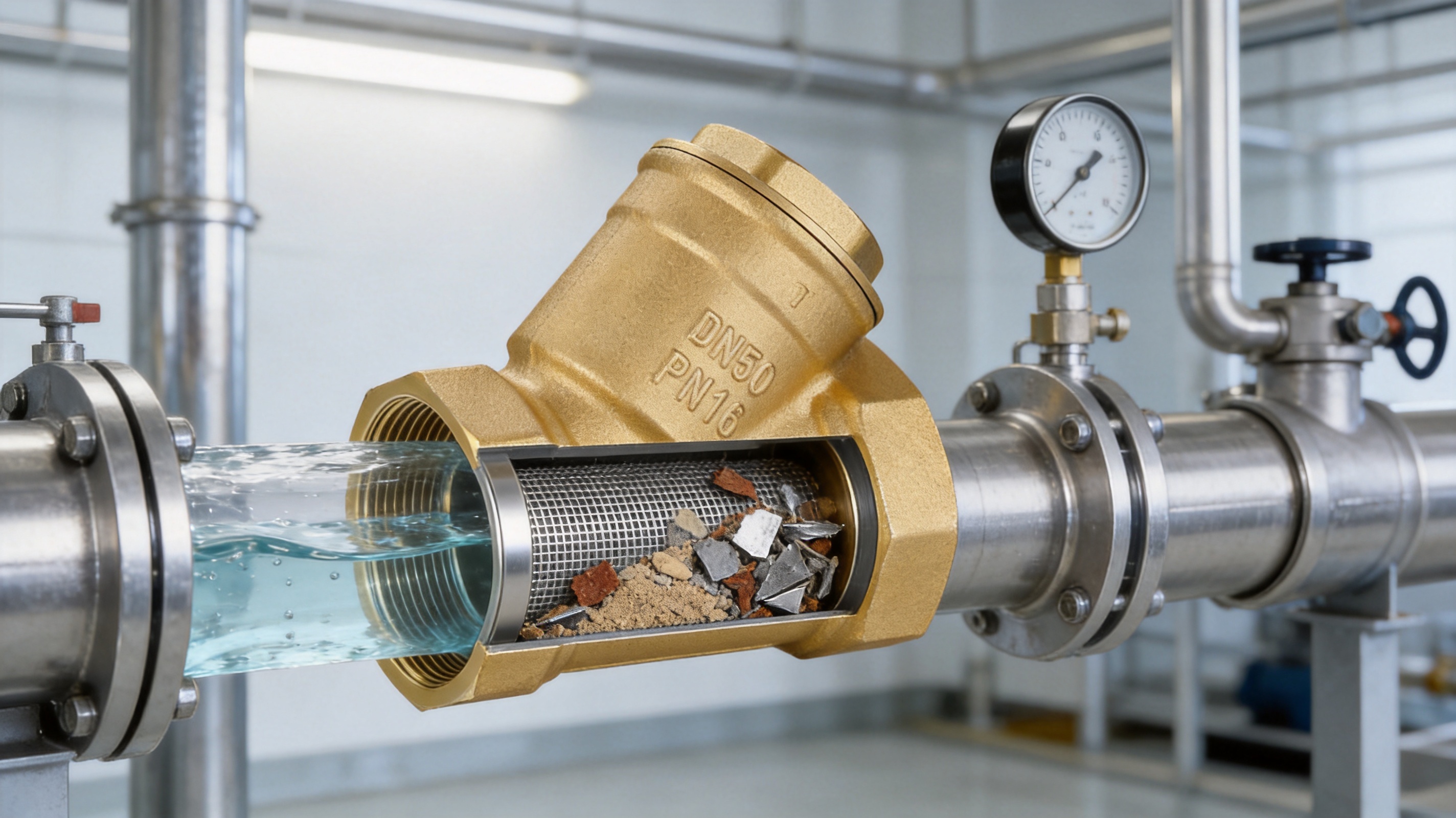
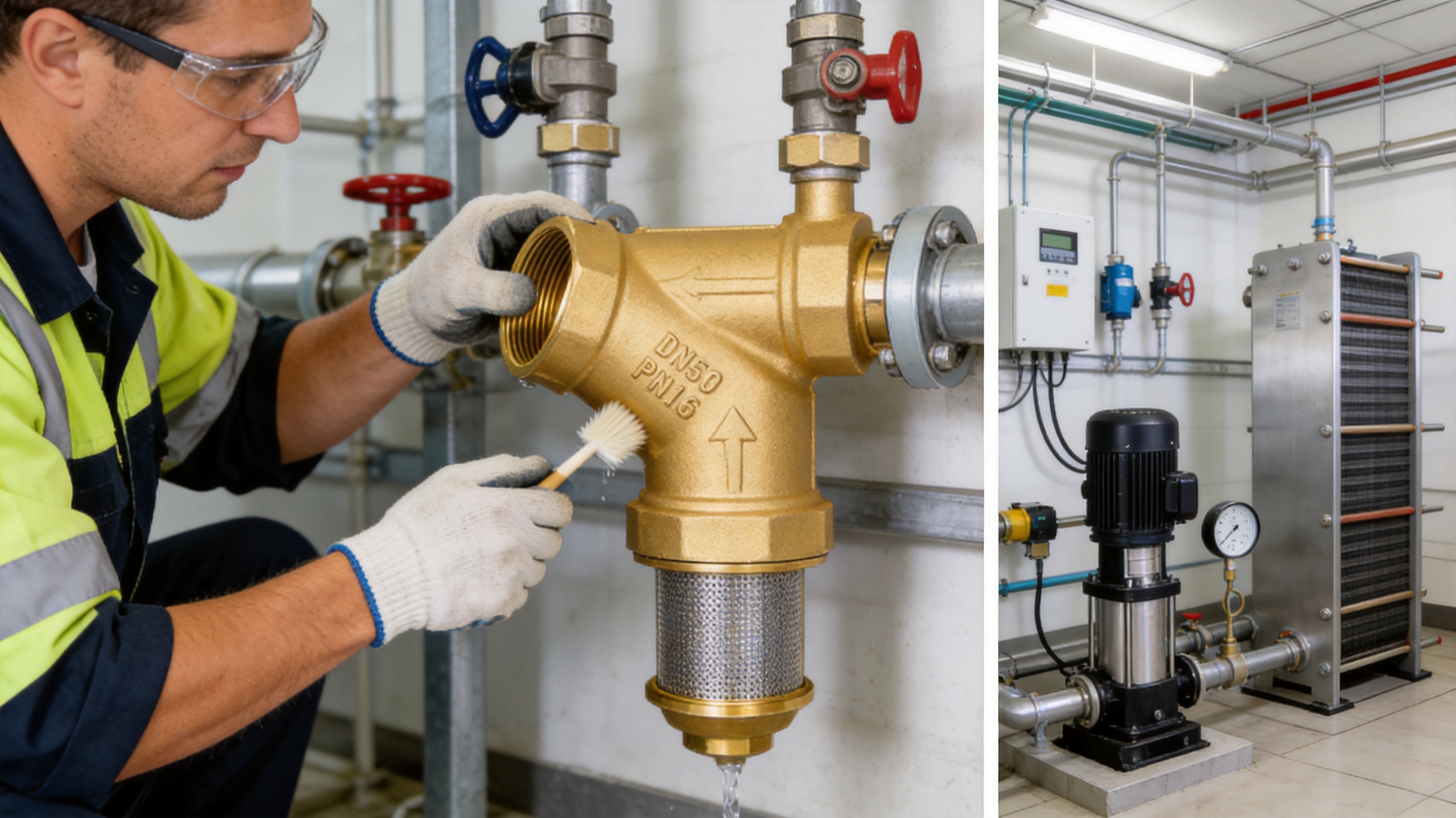
The YH-501 Brass Y-Type Strainer uses a removable screen positioned within a Y-shaped body. As the fluid passes through the screen, solid particles are retained while the filtered liquid continues through the pipeline. The collected material remains inside the strainer chamber until the cap is removed for cleaning.
This arrangement offers several practical benefits. First, filtration is integrated directly into the pipeline rather than requiring a separate large filtration assembly. Second, the angled branch creates a collection chamber for debris. Third, the filter screen can be accessed through the cap, reducing service time. Finally, the compact form is suitable for installations where available space is limited.
2. Product Overview
The YH-501 is a brass Y-type strainer categorized as a brass filter. It is intended for pipeline protection in water and non-caustic liquid services. The body is manufactured from brass, a material commonly selected for valves and pipeline accessories because of its balance of corrosion resistance, strength, machinability, and long-term service performance.
The product is available in nominal sizes from DN15 to DN50, corresponding to common pipe connection sizes from 1/2 inch to 2 inches. This range allows the same product design to serve residential, commercial, agricultural, and light industrial piping requirements.
The principal specifications are as follows:
| Specification | Product Information |
|---|---|
| Product type | Brass Y-type strainer |
| Model | YH-501 |
| Nominal pressure | 1.6 MPa |
| Working medium | Water and non-caustic liquids |
| Working temperature | 0°C to 120°C |
| Thread standard | Parallel pipe thread to ISO 228 |
| Available nominal sizes | DN15, DN20, DN25, DN32, DN40, and DN50 |
| Connection range | 1/2 inch to 2 inches |
The strainer is designed to provide a practical balance between filtration and flow. Its screen mesh count varies according to size. The smaller models from DN15 through DN25 use a 24 × 24 mesh specification, while DN32 through DN50 models use a 12 × 9 mesh specification. This size-based configuration supports the mechanical and flow requirements of different connection sizes.
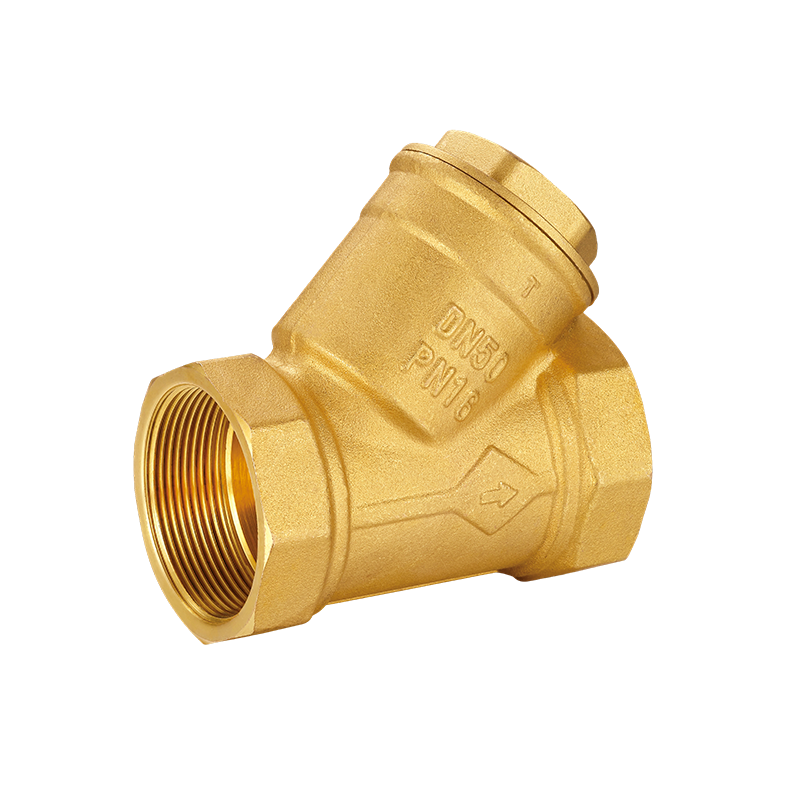
YH-501 Brass Y-Type Strainer
3. Advantages of Brass Construction
Material selection has a direct influence on the service life and reliability of a pipeline accessory. Brass is widely used in water valves, strainers, fittings, and other fluid-control components because it provides a combination of useful engineering properties.
3.1 Corrosion Resistance
In ordinary water service, metal components are continuously exposed to moisture and dissolved substances. A material with insufficient corrosion resistance may develop surface deterioration, wall thinning, or connection problems over time. Brass offers strong resistance to many common water-related corrosion conditions, helping the strainer maintain its mechanical integrity during normal service.
Brass is also suitable for many indoor and outdoor installations where the product may encounter humidity, condensation, or occasional splashing. The actual service life will depend on water chemistry, temperature, pressure, installation quality, and maintenance, but the material provides a dependable foundation for general water applications.
3.2 Mechanical Strength and Stability
A strainer body must withstand internal pressure, tightening forces, vibration, and thermal changes. Brass provides useful mechanical strength while remaining practical to machine into accurate threaded and sealing surfaces. This supports stable assembly and helps reduce the risk of damaged connection threads during installation.
The body must also maintain alignment between the inlet, outlet, cap, and internal screen. Accurate machining is important because distortion or poor alignment can affect sealing, flow, and maintenance access. A well-produced brass body supports consistent performance across repeated production batches.
3.3 Efficient Machining
Brass is well suited to precision machining. Its machinability allows manufacturers to produce clean threads, smooth sealing areas, consistent internal passages, and accurately formed connection geometry. These details are particularly important for a threaded strainer, where dimensional variation can lead to assembly difficulty or leakage.
Precision machining also contributes to product consistency. When the body, cap, and connection surfaces are manufactured within controlled tolerances, installers can expect more predictable fitting behavior and maintenance access.
3.4 Practical Service Life
A brass strainer can provide a long service life when used within its specified pressure, temperature, and medium limitations. Regular cleaning of the screen is also important. A clean screen reduces unnecessary pressure loss and allows the strainer to continue protecting downstream equipment efficiently.
Compared with some lightweight plastic alternatives, brass offers greater resistance to mechanical impact, elevated temperatures, and tightening forces. Compared with certain ordinary steel components, brass may offer better resistance to common water-related corrosion without requiring the same level of surface protection. These advantages make brass a practical choice for compact pipeline accessories.
4. The Benefits of the Y-Shaped Design
The Y-shaped configuration is one of the most widely used designs for pipeline strainers. Its geometry combines a straight flow path with an angled chamber containing the filter screen. This arrangement provides efficient filtration while keeping the main body relatively compact.
4.1 Flexible Installation Orientation
The YH-501 can be installed in horizontal or vertical pipelines, subject to proper orientation of the strainer chamber and consideration of the manufacturer’s installation guidance. This flexibility is valuable in mechanical rooms, plant piping, irrigation networks, and compact equipment assemblies where the available route may not allow a single fixed orientation.
In many installations, the strainer is positioned so that the collection chamber faces downward or in another serviceable direction. This helps debris settle into the chamber and makes cleaning more convenient. Proper orientation should always be selected according to the pipeline layout and the need for safe access.
4.2 Compact Form
Space is often limited around pumps, boilers, heat exchangers, water meters, and control valves. A large filtration assembly may require additional supports, longer pipe runs, and more installation labor. The Y-type structure provides a compact solution that can be placed close to the equipment being protected.
The compact body can be particularly useful in retrofit projects. When an existing system needs additional protection, the strainer may be installed with comparatively limited changes to the pipe arrangement. This can reduce disruption to the surrounding equipment and simplify project planning.
4.3 Effective Debris Collection
The angled chamber gives retained particles a designated collection area rather than allowing them to remain distributed throughout the main flow passage. This design helps separate debris from the primary flow route. During cleaning, the collected material can be removed through the cap along with the screen.
4.4 Reduced Maintenance Disruption
The strainer’s removable cap provides access to the screen without requiring the entire body to be cut out or removed from the pipeline. When isolation valves are installed correctly around the strainer, maintenance personnel can shut off the relevant section, release pressure safely, remove the cap, clean the screen, and restore the assembly.
This service arrangement is a major advantage over permanently enclosed or difficult-to-access filtration points. It can lower maintenance labor, reduce downtime, and make routine inspection more likely to occur on schedule.
5. Filter Screen Configuration
The filter screen is the working element that captures solid contaminants. The YH-501 uses different mesh counts for different size ranges. DN15, DN20, and DN25 models are specified with a 24 × 24 mesh count, while DN32, DN40, and DN50 models are specified with a 12 × 9 mesh count.
| Nominal Size | Connection Size | Body Dimension A | Body Dimension B | Connection Dimension C | Filter Mesh Count |
|---|---|---|---|---|---|
| DN15 | 1/2 inch | 44.5 | 55 | 1/2 inch | 24 × 24 |
| DN20 | 3/4 inch | 51.4 | 62 | 3/4 inch | 24 × 24 |
| DN25 | 1 inch | 61.3 | 75 | 1 inch | 24 × 24 |
| DN32 | 1 1/4 inches | 72.5 | 88 | 1 1/4 inches | 12 × 9 |
| DN40 | 1 1/2 inches | 80.5 | 100 | 1 1/2 inches | 12 × 9 |
| DN50 | 2 inches | 100.5 | 120 | 2 inches | 12 × 9 |
The mesh count should be considered together with the system’s flow rate, expected debris load, allowable pressure drop, and the sensitivity of downstream equipment. A finer screen can capture smaller particles, but it may require more frequent cleaning if the fluid contains a high level of suspended solids. A coarser screen may offer greater contamination capacity and lower resistance, but it may not provide sufficient protection for sensitive equipment.
For this reason, the YH-501 should be selected as a protective strainer rather than assumed to be a complete purification system. If a project requires very fine filtration, chemical treatment, microbiological control, or potable-water certification beyond the available product documentation, additional equipment and approval requirements may be necessary.
6. Dimensional Range and Selection Guidance
The YH-501 is offered in six nominal sizes. Selecting the correct size is important for maintaining system performance. The nominal connection size should match the pipeline or be integrated through suitable approved fittings. However, connection size alone is not enough. Engineers and installers should also consider flow rate, operating pressure, fluid temperature, expected debris quantity, available space, and maintenance access.
6.1 DN15 to DN25 Models
The DN15, DN20, and DN25 models are suitable for many small water lines, equipment branches, domestic utility systems, compact HVAC circuits, and irrigation sub-lines. Their 24 × 24 mesh specification provides a relatively detailed screening arrangement for common small-pipe applications.
These sizes are convenient where the protected device has a smaller inlet and outlet, such as a compact pump, water meter, small control valve, or localized heat-transfer component. The shorter dimensions can also be useful in crowded mechanical assemblies.
6.2 DN32 to DN50 Models
The DN32, DN40, and DN50 models are intended for larger branch lines and equipment connections. They can be used in commercial water systems, larger HVAC circuits, irrigation headers, and industrial utility lines, provided the operating conditions remain within the product specifications.
The 12 × 9 mesh configuration in these models supports the practical requirements of larger flow passages. Engineers should still verify system pressure loss and cleaning intervals according to actual operating conditions.
6.3 Dimensional Planning
The listed dimensions A, B, and C should be reviewed before installation. The installer must allow enough clearance to remove the cap and extract the screen. Installing the strainer in a position where the cap is blocked by a wall, cable tray, insulation, or adjacent equipment can make routine service unnecessarily difficult.
Dimensional planning should also include room for isolation valves, drainage, pressure release, tools, and safe access. A strainer that is easy to clean is more valuable when the surrounding installation allows technicians to use that feature safely and efficiently.
7. Working Pressure, Temperature, and Medium
The YH-501 has a nominal pressure rating of 1.6 MPa. This rating provides a useful reference for selecting the strainer for water and non-caustic liquid systems. The actual application must consider pressure fluctuations, water hammer, pump start-up conditions, and any other transient events that could affect the pipeline.
The specified working temperature range is 0°C to 120°C. This range covers many ordinary water, heating, HVAC, and industrial utility applications. Temperature affects material behavior, seal performance, fluid viscosity, and pressure conditions, so the strainer should not be used outside the specified range without technical confirmation.
The working medium is water or non-caustic liquid. The product should not automatically be applied to aggressive chemicals, corrosive solutions, flammable fluids, gases, or liquids with unusual chemical properties. Compatibility depends on the brass body, screen, seals, connection materials, concentration, temperature, and exposure duration.
When a project involves special fluids, the user should provide complete operating information for review. Important details include fluid composition, concentration, pressure, temperature, flow rate, solids content, and cleaning chemicals. This approach helps avoid selecting a standard water strainer for a service that requires specialized materials or certifications.
8. ISO 228 Parallel Pipe Threads
The YH-501 uses parallel pipe threads to ISO 228. A standardized thread system helps improve compatibility between the strainer and suitable pipe fittings, adapters, unions, and related accessories. It also supports more consistent installation practices across different projects and markets.
Parallel threads are generally used with an appropriate sealing method at the connection. The installer should confirm the required gasket, sealing washer, thread sealant, or compatible connection accessory according to the exact joint design. Excessive sealant should be avoided because loose material may enter the fluid passage or interfere with proper assembly.
Threaded connections should be aligned before tightening. Cross-threading, excessive force, impact tools, or unsupported pipe loads can damage the body or create leakage. The pipework should be properly supported so that the strainer is not required to carry bending stress or weight from adjacent components.
Using a recognized thread standard is an advantage over products with unclear or inconsistent connection specifications. It simplifies procurement, supports installation planning, and makes replacement easier when maintenance is required.
9. Comparison with Alternative Strainer Solutions
Pipeline strainers are available in several designs and materials. The best choice depends on system requirements. The YH-501 has particular advantages when a compact, threaded, brass solution is required for water or non-caustic liquid service.
9.1 Comparison with Basic Plastic Strainers
Plastic strainers may be lightweight and economical, but they may have limitations in high-temperature service, mechanical impact resistance, and resistance to tightening forces. Brass provides a more robust material option for installations where the component may experience vibration, repeated maintenance, or higher operating temperatures within the specified range.
The YH-501 also provides the dimensional stability associated with a machined metal body. This can be beneficial when the strainer is connected to metal piping or installed in a compact equipment assembly where accurate threads and durable sealing surfaces are important.
9.2 Comparison with Ordinary Steel Strainers
Steel can offer high strength, but ordinary steel may require protective treatment to resist corrosion in water environments. Brass is naturally attractive for many water-service accessories because it provides corrosion resistance without relying solely on an external coating.
A brass strainer may also be easier to machine into a compact threaded component. This supports clean connection geometry and convenient production of small and medium nominal sizes.
9.3 Comparison with Flanged Strainers
Flanged strainers are often selected for larger pipelines, higher mechanical loads, or systems where dismantling through flange bolts is preferred. However, flange connections require more space, additional fasteners, gaskets, alignment, and installation labor.
The threaded YH-501 is advantageous for smaller and medium-sized lines where a compact connection is preferred. It can reduce the physical footprint of the assembly and simplify installation when the pipe system already uses threaded connections.
9.4 Comparison with Temporary Start-Up Screens
Temporary screens may be installed during commissioning to collect construction debris, but they are not always intended for continuous service or convenient routine maintenance. A dedicated Y-type strainer offers an integrated, repeatable filtration point that can remain in the system during normal operation.
The YH-501 is therefore suitable not only for initial pipeline cleaning but also for ongoing protection of downstream devices, provided the screen is inspected and cleaned according to actual operating conditions.
10. Maintenance and Cleaning Practices
The main maintenance advantage of a Y-type strainer is the removable screen. As debris accumulates, the pressure difference across the screen may increase and downstream flow may decrease. Regular inspection helps identify contamination before it causes serious system restriction.
10.1 Recommended Maintenance Sequence
Before maintenance, isolate the relevant pipeline section and confirm that internal pressure has been released. The fluid may be hot, pressurized, or contaminated, so appropriate personal protective equipment and site safety procedures must be followed.
Once the system is safe, remove the cap carefully and take out the screen. Rinse the screen with clean water or use a suitable soft brush to remove accumulated particles. Avoid tools or methods that could deform the screen or enlarge its openings.
Inspect the screen for tears, deformation, blockage, corrosion, or other damage. Inspect the cap and sealing surfaces as well. Any damaged screen or sealing component should be replaced with a suitable approved part before the strainer is returned to service.
After cleaning, reinstall the screen in the correct position, inspect the sealing arrangement, and tighten the cap appropriately. Restore the system gradually and check for leakage. Sudden pressurization can create unnecessary stress and may conceal installation problems.
10.2 Cleaning Frequency
There is no single cleaning interval suitable for every application. Frequency depends on the cleanliness of the water, condition of the pipework, system age, construction debris, seasonal conditions, and the sensitivity of downstream equipment.
Newly installed systems may require more frequent inspection because residual debris can be released during early operation. Irrigation systems may require additional attention when water sources contain sand or organic material. HVAC systems may need inspection after flushing, maintenance, or major component replacement.
A pressure gauge installed upstream and downstream can help operators monitor pressure differential. A rising differential may indicate that the screen is becoming blocked. Where gauges are not installed, reduced flow, pump performance changes, unusual noise, or downstream equipment malfunction may provide warning signs.
11. Applications in Different Industries
11.1 HVAC Systems
Heating, ventilation, and air-conditioning systems contain pumps, control valves, heat exchangers, fan coil units, and other components that can be affected by debris. A Y-type strainer installed upstream of sensitive equipment helps protect narrow passages and moving components.
In chilled-water and hot-water circuits, the product’s stated temperature range may cover many common operating conditions. Engineers should still confirm pressure, temperature, fluid treatment, and material compatibility before specification.
11.2 Water Supply Systems
Water supply systems can contain particles released from upstream piping, storage tanks, fittings, or repair work. The YH-501 can be used as a local protective filter for meters, valves, pumps, and other equipment.
Where the system is intended for potable water, the purchaser and project authority should confirm all applicable material, hygiene, and certification requirements. General suitability for water service does not replace local regulatory approval.
11.3 Irrigation Networks
Irrigation systems often transport water containing sand, silt, organic particles, or other suspended matter. A strainer can protect solenoid valves, sprinklers, drip emitters, pumps, and flow-control components from blockage.
Because irrigation water quality varies significantly, the cleaning schedule should be based on actual field conditions. In heavily contaminated water, a larger upstream filtration system may be used together with local Y-type strainers for additional equipment protection.
11.4 Industrial Utility Lines
Many industrial facilities use water or non-caustic liquids for cooling, washing, circulation, and general utility service. The YH-501 can serve as a compact protective component in these systems when its pressure, temperature, medium, and mesh requirements are appropriate.
Industrial users should assess the possibility of chemical additives, elevated solids concentration, vibration, thermal cycling, and pressure surges. The strainer is best applied within clearly defined service conditions rather than treated as a universal solution for every industrial fluid.
12. Manufacturing Strengths and Quality Approach
The performance of a brass strainer depends not only on its design but also on manufacturing control. Ningbo Yunhua Valve Co., Ltd. specializes in the research, development, production, sales, and service of gas and fluid valves, water supply valves, and hardware accessories. Its product range and manufacturing experience provide a foundation for producing compact pipeline accessories such as the YH-501.
The company operates across a site of approximately 20,000 square meters and has established a precision machining workshop, assembly line, and testing workshop. These facilities support a structured production process from component machining to final assembly and inspection.
12.1 Precision Machining Capability
Brass valve and strainer components require accurate machining of threads, passages, sealing surfaces, and cap interfaces. The company’s use of CNC machine tools supports repeatable production and helps control important dimensions across different batches.
Precision machining is particularly relevant to threaded products. Consistent thread geometry improves assembly compatibility, while accurate sealing surfaces help reduce the risk of leakage when the correct installation method is used.
12.2 Automated Assembly
Automated assembly equipment can improve process consistency by controlling the sequence, position, and repeatability of production operations. For a strainer, assembly quality may influence the fit of the screen, the installation of sealing components, the alignment of the cap, and the overall appearance of the finished product.
Automation does not eliminate the need for quality personnel. Instead, it provides a stable production platform that can be combined with process checks, material control, operator training, and final inspection.
12.3 Testing Workshop
A dedicated testing workshop provides space for product inspection and performance verification. Depending on the production and customer requirements, inspection may include dimensional checks, thread verification, appearance evaluation, pressure testing, sealing checks, and functional confirmation.
Testing is important because a strainer must perform as both a pressure-containing component and a filtration device. A product may have a correct appearance but still require verification of pressure integrity and sealing performance before shipment.
12.4 Production Capacity
The company reports an annual production capacity of approximately 2 million sets of valves and 10 million sets of hardware accessories. This capacity supports both standard product supply and the ability to serve customers with recurring volume requirements.
For distributors, contractors, and equipment manufacturers, production capacity can contribute to more stable procurement planning. It may also support coordinated delivery of multiple valve and hardware accessory categories from one experienced supplier.
13. Product Consistency and Supply Reliability
For professional buyers, product quality is only one part of supplier evaluation. Consistent dimensions, stable materials, repeatable packaging, production capacity, technical communication, and after-sales service all influence the total cost of ownership.
A manufacturer with dedicated machining, assembly, and testing resources can coordinate these activities more effectively than a supplier that relies entirely on disconnected external sources. This integrated approach can support better traceability between raw materials, machining operations, assembly, inspection, and shipment.
Ningbo Yunhua Valve Co., Ltd. has developed its business around fluid-control products and hardware accessories. Its stated mission is to build a safe fluid ecosystem with high-quality valves. This product focus is relevant to customers seeking a supplier that understands the relationship between strainers, valves, fittings, pumps, and broader pipeline systems.
14. Installation Considerations
Correct installation is essential to achieving the expected performance of any strainer. The pipework should be flushed or cleaned as appropriate before installation so that excessive construction debris does not immediately overload the screen.
The flow direction should be checked against the product design and installation instructions. The strainer should be installed in a location where the cap and screen can be accessed. Adequate space should be provided for tool use and removal of the internal screen.
Pipe supports should be installed independently of the strainer wherever necessary. The body should not be used as a structural support for heavy pipe sections, pumps, or other equipment. External loads can distort connections and contribute to leakage or premature damage.
Threaded connections should be cleaned before assembly. The installer should use a compatible sealing method and tighten the connection without applying excessive force. After installation, the system should be pressurized gradually while checking all joints.
For systems that require continuous operation, isolation valves may be installed around the strainer. This arrangement allows the strainer to be serviced without draining the complete network. A drain point or safe discharge arrangement may also be useful where the collected fluid or debris must be removed in a controlled manner.
15. Engineering and Procurement Checklist
Before ordering the YH-501, the purchaser should confirm the following application details:
- Required nominal pipe size.
- Connection thread standard and compatibility with existing fittings.
- Normal and maximum operating pressure.
- Normal and maximum working temperature.
- Fluid composition and whether it is non-caustic.
- Expected level and type of suspended solids.
- Required filtration mesh configuration.
- Available installation space.
- Access required for cap and screen removal.
- Need for isolation valves, gauges, drains, or bypass piping.
- Applicable local material, pressure, hygiene, or project certifications.
- Expected delivery quantity and replacement-part requirements.
This checklist helps prevent common selection errors. A strainer that is correctly sized but installed in an inaccessible location may create maintenance problems. Similarly, a product that meets the pressure requirement but is exposed to an incompatible chemical may not provide reliable service.
16. Sustainability and Lifecycle Value
Pipeline accessories contribute to sustainability when they protect expensive equipment and reduce avoidable replacement. By capturing debris before it reaches pumps, valves, meters, and heat exchangers, a strainer can help maintain system efficiency and extend the service life of downstream components.
The removable-screen design also supports repair and maintenance rather than complete replacement. In many cases, cleaning the screen is sufficient to restore flow. This reduces the consumption of new components and minimizes maintenance waste.
Brass is a durable engineering material with established recycling value. At the end of a product’s service life, appropriate recycling and disposal practices can recover material and reduce unnecessary waste. Users should follow local requirements for handling brass, screens, seals, and any contaminants collected during operation.
17. Why Choose the YH-501 Brass Y-Type Strainer?
The YH-501 offers a combination of features that makes it suitable for many water and non-caustic liquid systems:
- Brass construction for corrosion resistance and mechanical durability.
- Y-type geometry for compact installation and effective debris collection.
- Horizontal or vertical pipeline installation flexibility when correctly oriented.
- Removable cap for convenient screen cleaning.
- Nominal pressure rating of 1.6 MPa.
- Working temperature range from 0°C to 120°C.
- Parallel pipe threads conforming to ISO 228.
- Six nominal sizes from DN15 to DN50.
- Mesh configurations suited to different size ranges.
- Applications in HVAC, water supply, irrigation, and industrial utility lines.
- Manufacturing support from a company with precision machining, assembly, and testing facilities.
These features address the practical concerns faced by designers, installers, maintenance teams, distributors, and equipment manufacturers. The product is compact enough for ordinary equipment connections, durable enough for demanding general water service, and serviceable enough to support routine cleaning.
18. Frequently Asked Questions
18.1 What is the main function of the YH-501?
The YH-501 filters debris from water and non-caustic liquids before the fluid reaches downstream equipment. It is designed to protect pumps, valves, meters, heat exchangers, irrigation devices, and other pipeline components from particles such as rust, scale, sand, and installation residue.
18.2 What material is used for the strainer body?
The product is made as a brass Y-type strainer. Brass provides corrosion resistance, mechanical durability, and good machinability for threaded pipeline components.
18.3 What pressure can the strainer handle?
The nominal pressure rating is 1.6 MPa. The complete system design should also consider pressure surges, water hammer, temperature, installation quality, and the ratings of connected components.
18.4 What liquids are suitable for this product?
The specified working media are water and non-caustic liquids. Chemical compatibility should be confirmed before use with special fluids, additives, aggressive liquids, gases, or flammable media.
18.5 What is the operating temperature range?
The stated working temperature range is 0°C to 120°C. The product should not be applied outside this range without technical confirmation.
18.6 Can the strainer be installed vertically?
The YH-501 is suitable for horizontal or vertical pipeline installation when installed in the correct orientation. The collection chamber should remain accessible, and the installation should support effective debris collection and convenient cleaning.
18.7 How is the filter screen cleaned?
The relevant pipeline section should first be isolated and depressurized. The cap can then be removed, the screen taken out, and accumulated debris washed away with clean water or removed with a suitable soft brush. The screen, cap, and sealing surfaces should be inspected before reassembly.
18.8 What sizes are available?
The available sizes are DN15, DN20, DN25, DN32, DN40, and DN50. These correspond approximately to connection sizes from 1/2 inch through 2 inches.
18.9 What thread standard does the product use?
The product uses parallel pipe threads to ISO 228. The installer should confirm connection compatibility and use an appropriate sealing method for the specific joint.
18.10 Is this product a complete water purification filter?
No. It is a protective pipeline strainer intended to remove solid debris. It is not a substitute for fine purification, chemical treatment, microbiological treatment, or other specialized water-treatment equipment.
18.11 How often should the screen be cleaned?
Cleaning frequency depends on water quality, pipe condition, solids concentration, flow rate, and the sensitivity of downstream equipment. Newly installed systems and irrigation lines with sediment may require more frequent inspection.
18.12 What manufacturing capabilities support this product?
The manufacturer operates precision machining, assembly, and testing facilities and uses CNC machine tools and automated assembly and testing equipment. These capabilities support dimensional consistency, controlled assembly, and product inspection.
18.13 Is the product suitable for potable water?
The product description identifies water service as an application. For potable-water projects, buyers should confirm applicable local regulations, material requirements, hygiene approvals, and project certifications before installation.
18.14 What should be considered when comparing this product with a competitor’s strainer?
Comparison should include body material, pressure and temperature ratings, thread standard, mesh configuration, dimensions, maintenance access, quality-control process, production capacity, documentation, and supplier service. The lowest purchase price does not necessarily represent the lowest lifecycle cost.
19. Conclusion
The YH-501 Brass Y-Type Strainer is a practical pipeline protection device for water and non-caustic liquid systems. Its brass construction provides a durable and corrosion-resistant body, while the Y-shaped design supports compact installation, flexible orientation, and efficient debris collection. The removable cap and accessible screen simplify cleaning and help reduce maintenance disruption.
With sizes from DN15 to DN50, a nominal pressure rating of 1.6 MPa, a working temperature range of 0°C to 120°C, and ISO 228 parallel pipe threads, the product is suitable for a broad selection of HVAC, water supply, irrigation, and industrial utility applications.
Its advantages over less durable or less serviceable alternatives include a robust metal body, standardized connections, easy screen access, and a size range suited to common threaded piping. The product is further supported by the manufacturer’s precision machining workshop, automated assembly capabilities, testing workshop, experienced management structure, and substantial production capacity.
For successful application, users should select the correct size and mesh configuration, verify fluid compatibility, provide adequate maintenance access, install the strainer in the correct orientation, and follow safe pressure-release procedures during cleaning. When properly selected and maintained, the YH-501 can help protect downstream equipment, preserve system efficiency, and support a longer operating life for complete fluid-control installations.
References
1. ISO 228, Pipe Threads Where Pressure-Tight Joints Are Not Made on the Threads.
2. General engineering principles for mechanical pipeline strainers and protective filtration devices.
3. Industrial guidance on brass materials used in water valves, fittings, and fluid-control accessories.
4. Standard practices for threaded pipe installation, sealing, pressure testing, and maintenance.
5. Manufacturer-provided technical information for the YH-501 Brass Y-Type Strainer.
6. Manufacturer-provided company information concerning precision machining, automated assembly, testing facilities, production capacity, and fluid-control product development.
Product: YH-501 Brass Y-Type Strainer

Related Products
-
View More
-
 View More
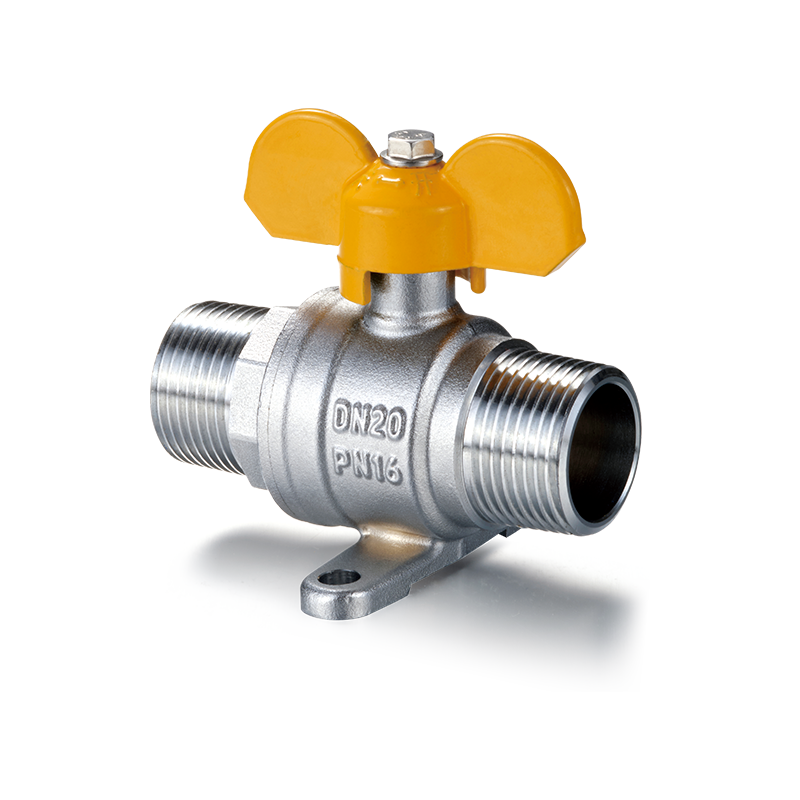
YH-214 Brass Ball Valve with Base& Butterfly Handle(M/M)
-
 View More
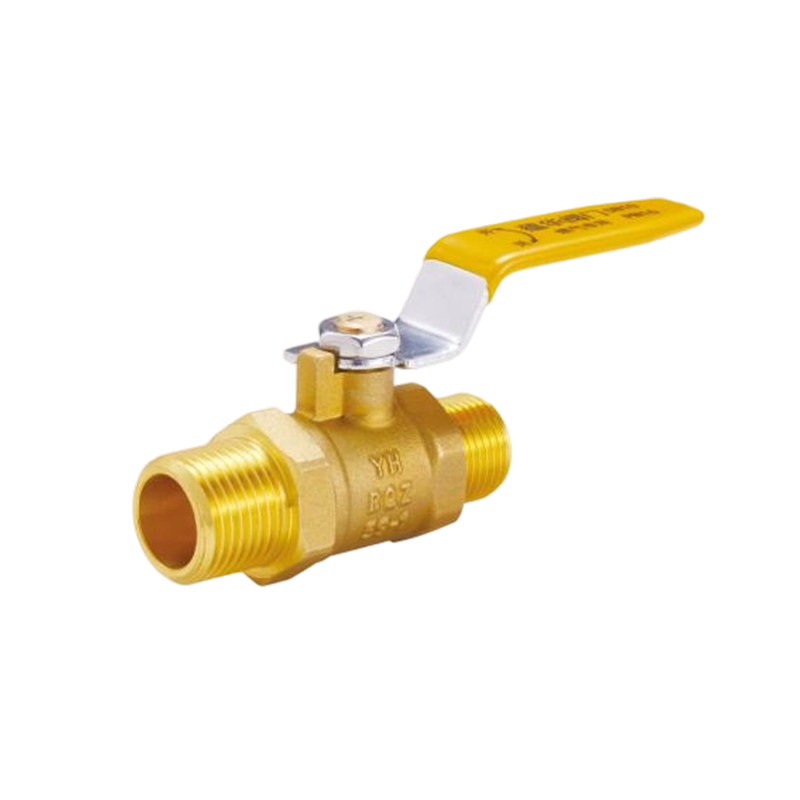
YH-221 Brass Ball Valve with Long Handle(M/M)
-
 View More
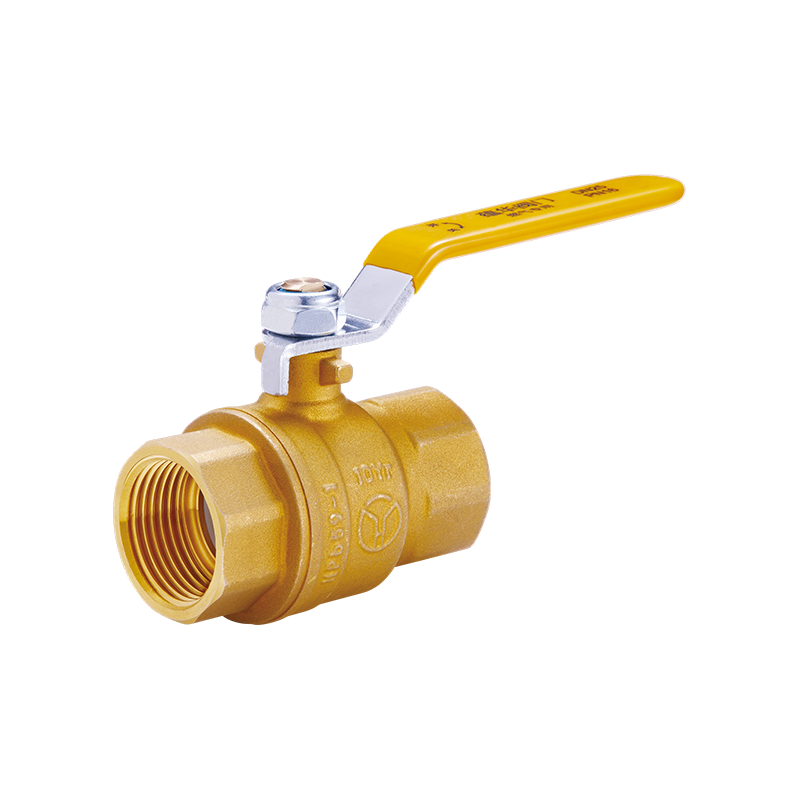
YH-220 Full Port Brass Ball Valve with Long Handle(F/F)
-
 View More
YH-202 Brass Ball Valve with Long Handle(F/M)
-
 View More
YH-201 Brass Ball Valve with Long Handle(F/F)
Related News
Contact Us
-

-
 +86-0574-63742169
-
 No.104-128, Cizhang East Road, Zhangqi Town, Cixi City, Ningbo, Zhejiang Province, China


Message Us Now !
