


 English
  русский
  عربى
عربى  Español
Full-Port Brass Ball Valves with Long Handles: Efficient Flow Control for Water, Gas, and Industrial Systems
Content
- 1 Understanding the Full-Port Ball Valve Design
- 2 Long-Handle Operation for Easier Manual Control
- 3 Forged Brass Construction for Pressure and Service Reliability
- 4 Female-to-Female Threaded Connections
- 5 Dimensional Range and Product Selection
- 6 Manufacturing Strengths and Quality Control
- 7 Advantages Over Conventional Standard-Port Alternatives
- 8 Application Scenarios
- 9 Installation and Maintenance Recommendations
- 10 Safety and Engineering Considerations
- 11 Procurement Guidance for Distributors and Project Buyers
- 12 Why Manufacturing Capability Matters to Product Performance
- 13 Frequently Asked Questions
- 13.1 What is a full-port brass ball valve?
- 13.2 What is the main advantage of the YH-220 full-port design?
- 13.3 Why does the valve have a long handle?
- 13.4 What pressure can the valve handle?
- 13.5 What media are suitable for this valve?
- 13.6 What sizes are available?
- 13.7 Which thread standards are available?
- 13.8 Is the YH-220 suitable for gas service?
- 13.9 Can the valve be used for flow regulation?
- 13.10 How should the valve be installed?
- 13.11 What should be checked before purchasing?
- 14 Conclusion
- 15 References
- 16 Product: YH-220 Full Port Brass Ball Valve with Long Handle(F/F)
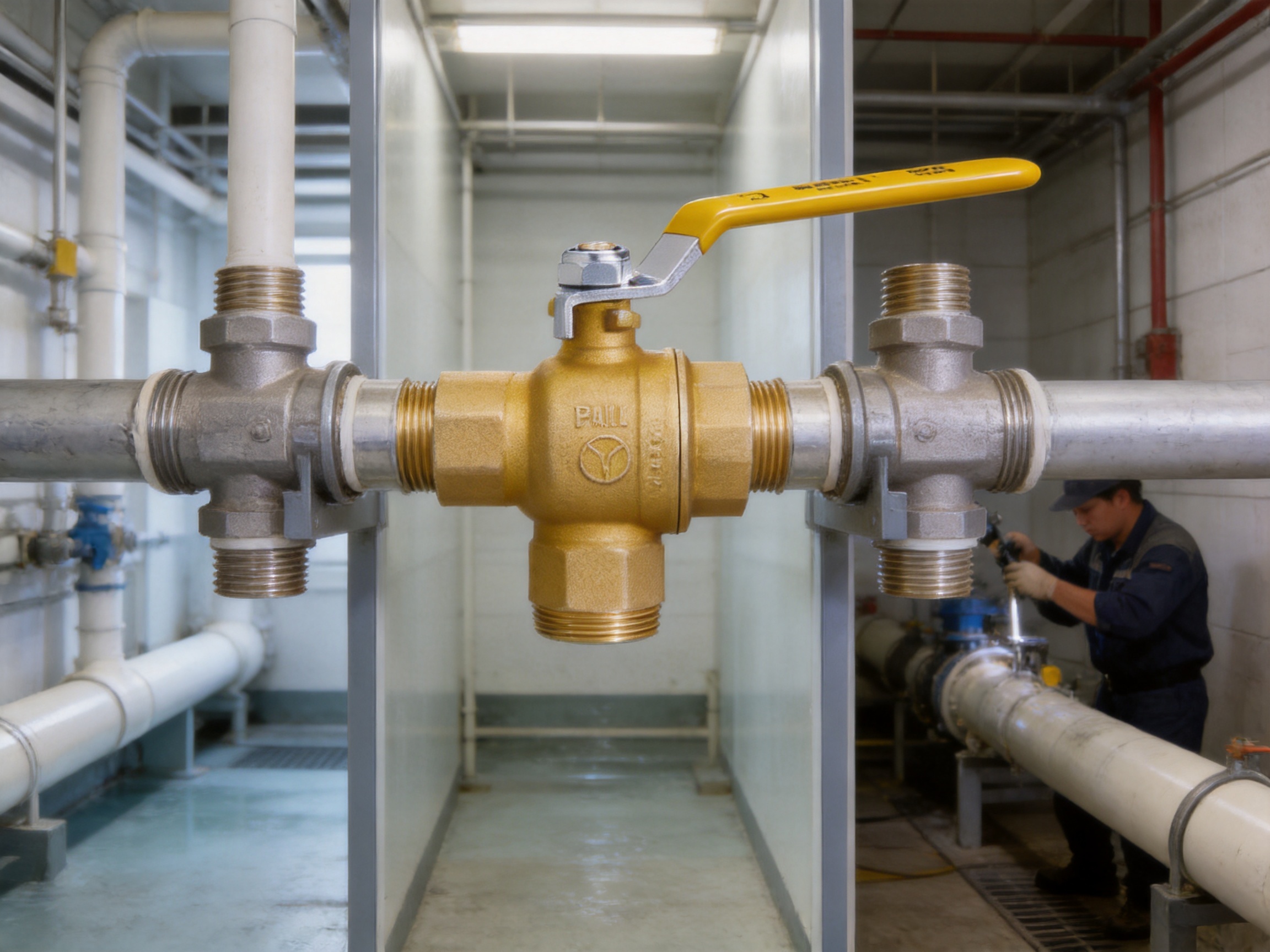
Reliable flow control is essential in industrial process lines, commercial plumbing systems, gas distribution networks, and general-purpose fluid applications. A valve must do more than simply open and close a pipeline. It must provide a stable seal, withstand working pressure, support efficient flow, remain easy to operate, and simplify installation and maintenance. The YH-220 full-port brass ball valve with a long handle is designed to address these requirements through a combination of a forged brass body, unobstructed flow passage, female threaded connections, high pressure resistance, and low-effort manual operation.
Unlike a reduced-port valve, which narrows the internal passage and creates additional resistance, a full-port ball valve uses an internal bore that closely matches the nominal pipe diameter. This configuration allows fluid to pass through the valve with less obstruction. It is particularly valuable in systems where flow efficiency, pressure management, and dependable shutoff are important. The extended handle further improves usability by reducing the effort needed to rotate the valve, especially when the valve is installed in a larger pipeline or exposed to higher flow conditions.
The YH-220 is available in nominal sizes from 1/2 inch to 2 inches, with connection options including G, Rc, and NPT thread standards. Its stated nominal pressure is 1.6 MPa, while its operating temperature range is -20°C to below 80°C. The valve is intended for water, non-corrosive fluids, and gas applications when the selected size, thread, pressure, temperature, and sealing arrangements are compatible with the installation requirements.
This article examines the construction, operating advantages, installation considerations, manufacturing strengths, application suitability, and selection factors associated with the YH-220 full-port brass ball valve with long handle.
Understanding the Full-Port Ball Valve Design
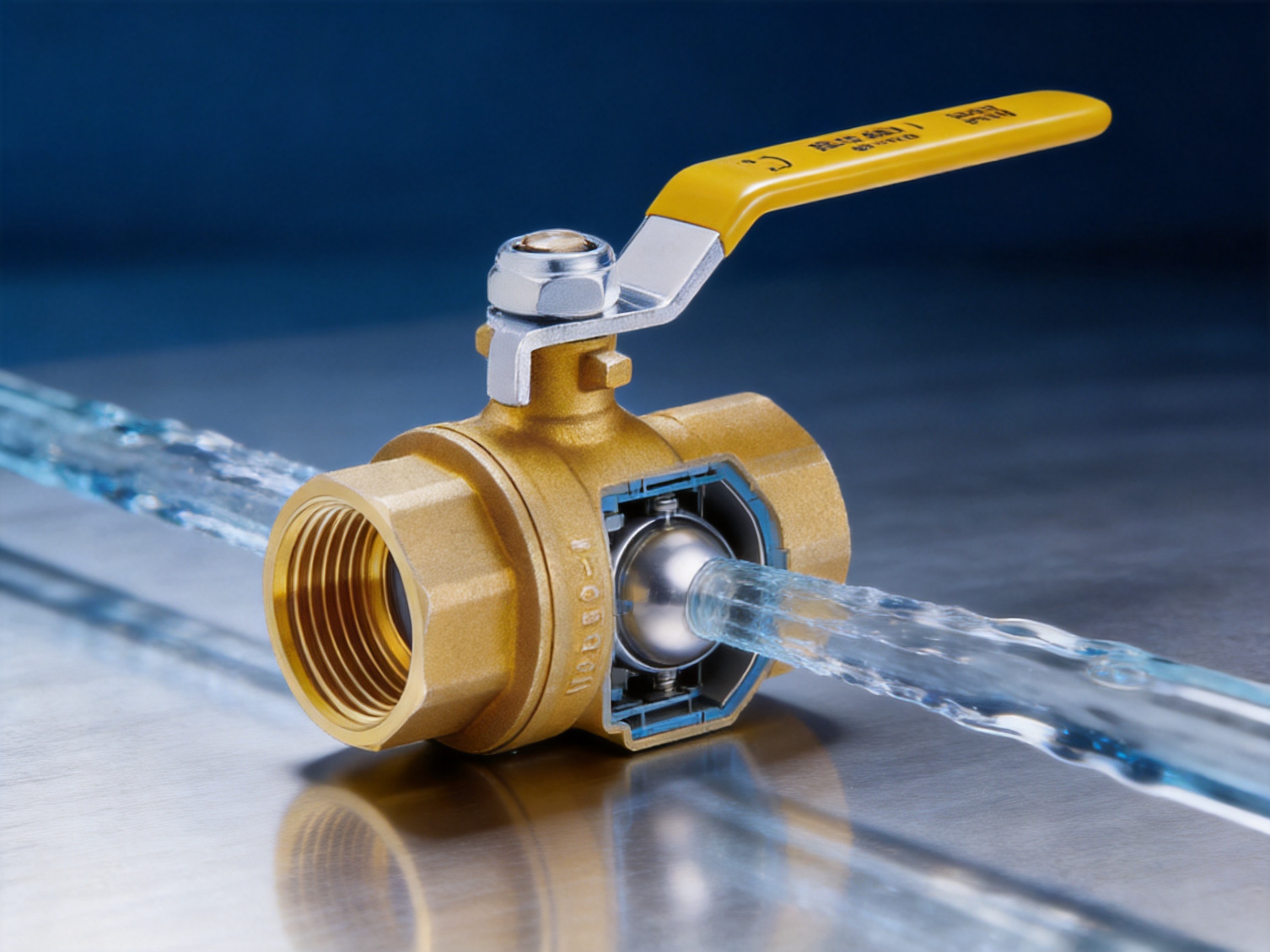
A ball valve controls fluid flow through a spherical closure element with a precisely machined passage through its center. When the valve is open, the bore aligns with the pipeline, allowing fluid to move through the body. When the handle is rotated 90 degrees, the ball turns so that the bore is perpendicular to the pipeline, stopping the flow. This quarter-turn operating principle enables rapid isolation and straightforward visual indication of the valve position.
The most significant design characteristic of the YH-220 is its full-port flow path. In a full-port valve, the passage through the ball is designed to provide a relatively unrestricted route from the inlet to the outlet. The bore is matched closely to the nominal pipe diameter, minimizing sudden reductions that could otherwise produce turbulence, pressure loss, and unnecessary flow resistance.
Reduced-port valves may be suitable for applications where compactness, lower initial cost, or moderate flow requirements are priorities. However, the restricted passage can become a disadvantage in high-flow systems. A smaller opening may increase fluid velocity through the valve, raise pressure loss, and make the valve more sensitive to debris or deposits. The full-port configuration of the YH-220 is therefore better suited to pipeline systems that require efficient movement of water, gas, or other non-corrosive media.
The full-port arrangement also supports easier pipeline maintenance. When the valve is opened, the relatively continuous internal passage can make it easier to flush the line and reduce the likelihood of material accumulating around a sharp internal restriction. This is an important consideration in commercial plumbing, process support systems, and utility lines where cleanliness and predictable flow are operational priorities.
Flow Efficiency and Pressure Management
Every component in a pipeline contributes a certain amount of pressure loss. Elbows, filters, pumps, regulators, and valves all influence system performance. While the effect of one valve may appear small, the cumulative impact of multiple restrictions can increase pump demand, reduce downstream pressure, or limit the amount of fluid delivered to a point of use.
The YH-220 full-port design is intended to minimize the valve’s contribution to this problem. The product information indicates that the unobstructed bore can reduce flow resistance and pressure loss by up to 40 percent compared with standard-port valves. Actual performance depends on size, media, flow rate, piping configuration, and installation conditions, but the design principle is clear: a larger internal passage generally permits more efficient flow than a narrowed passage of the same nominal connection size.
For engineers and installers, this can provide several practical benefits. A system may achieve the required flow rate with less pressure available at the valve. Pumps may operate closer to their intended duty point. The risk of excessive velocity through the valve may be reduced. In a gas distribution line, a full-port design can help maintain more consistent delivery conditions, subject to all applicable safety requirements and system calculations.
Full-port valves can also be useful when a pipeline may need to be cleaned, drained, or inspected. Their internal geometry is less likely to create an abrupt step between the pipe and the valve passage. This does not eliminate the need for filtration or routine maintenance, but it can support a more practical overall pipeline design.
Long-Handle Operation for Easier Manual Control
Manual valves should be easy to identify and operate. An operator may need to isolate equipment quickly, adjust a service line, or shut off a branch circuit during maintenance. Excessive operating force can slow down the response and may encourage users to apply tools or improvised extensions, which can damage the valve or compromise safe operation.
The YH-220 uses an extended long handle to provide improved leverage. Because the handle is longer than a compact lever, the operator can generate the required turning moment with less hand force. This is especially useful when the valve is installed in a high-flow system, when the line has been unused for an extended period, or when normal operating conditions create greater resistance to ball movement.
The long handle also provides a clear visual indication of valve position. In a conventional quarter-turn ball valve, the handle is generally aligned with the pipeline when the valve is open and positioned across the pipeline when the valve is closed. This simple visual reference helps maintenance staff and operators identify the valve status without disassembling the line or relying on hidden markings.
Compared with short-handle alternatives, the YH-220 can be more convenient in locations where frequent manual adjustment is required. It may also be advantageous for users wearing gloves or working in environments where fine hand movement is difficult. Nevertheless, the handle should be operated smoothly and without excessive impact. A longer handle improves leverage, but it should not be treated as a reason to force a seized valve.
Benefits Compared with Compact or Reduced-Feature Valves
Many low-cost valves prioritize compact dimensions and basic shutoff capability. These products may perform adequately in lightly used service lines, but they can be less convenient where flow efficiency and repeated operation matter. A short handle can require more effort, while a reduced-port body can add avoidable resistance.
The YH-220 combines two practical operating advantages: a full-port passage and an extended handle. The first supports fluid movement; the second supports human interaction. Together, these features make the valve a strong option for applications that need both efficient pipeline performance and convenient manual control.
The product is also available in multiple nominal sizes, allowing the same general design approach to be used across different branches of a system. The available sizes include DN15, DN20, DN25, DN32, DN40, and DN50, corresponding approximately to 1/2 inch, 3/4 inch, 1 inch, 1 1/4 inch, 1 1/2 inch, and 2 inches. This range covers many common building service, equipment connection, and light industrial pipeline requirements.
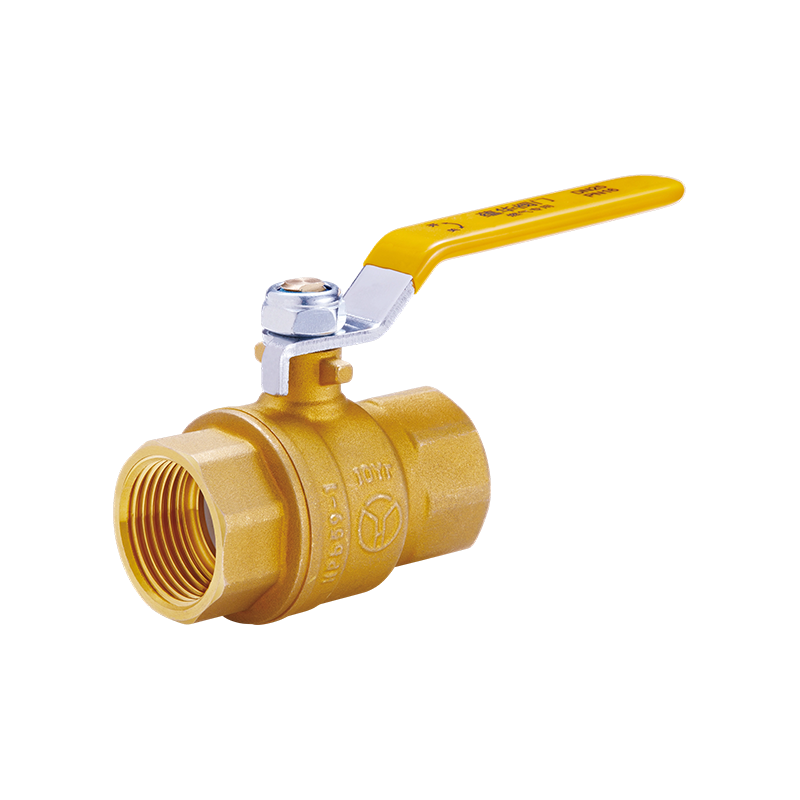
YH-220 Full Port Brass Ball Valve with Long Handle(F/F)
Forged Brass Construction for Pressure and Service Reliability
The valve body is made from forged brass. Forging forms the metal under controlled pressure, producing a dense body structure suitable for pressure-containing components. Brass is widely used for water, gas, and general fluid valves because it combines mechanical strength, corrosion resistance in many service environments, machinability, and practical cost efficiency.
For a valve body, material selection affects more than appearance. The body must withstand internal pressure, thread machining, repeated assembly, temperature changes, and the mechanical loads applied by connected piping. A properly manufactured forged brass body provides a robust foundation for the valve’s internal components and threaded ends.
The YH-220 is rated for a nominal pressure of 1.6 MPa. This rating makes it suitable for many medium-pressure water, gas, and non-corrosive fluid systems when the complete installation is designed within the relevant limits. Pressure ratings should always be considered together with temperature, medium compatibility, connection standard, sealing material, and local regulations.
Brass also offers practical advantages during installation. Its machinability allows manufacturers to produce accurate threads and smooth internal surfaces. Properly formed threads help create reliable connections with compatible male pipe fittings. The material’s durability reduces the likelihood of damage during normal handling, provided installers use appropriate tools and avoid excessive tightening.
Suitability for Water and Non-Corrosive Fluids
The stated working media for the YH-220 are water, non-corrosive fluids, and gas. These categories include many common applications, but they do not represent every possible chemical or process fluid. Before installation, users should confirm that the brass body, ball, seats, stem seals, and other wetted materials are compatible with the specific medium.
Water applications may include building water distribution, equipment isolation, utility piping, commercial plumbing branches, and general service lines. Non-corrosive fluids may include selected oils, air, or process liquids, subject to material compatibility and pressure-temperature requirements. Gas use requires particular care. The valve, seal materials, installation method, and complete pipeline system must comply with applicable gas safety codes and approval requirements.
The operating temperature range is specified as -20°C to below 80°C. This range supports many indoor and outdoor service conditions, but the actual selection should account for ambient temperature, fluid temperature, pressure, thermal cycling, and the possibility of freezing. A valve installed outdoors in a cold climate may require insulation or other protective measures, especially when water is present.
Female-to-Female Threaded Connections
The YH-220 uses full female threaded connections on both ends. This F/F configuration connects directly to male-threaded pipes or fittings. It is a practical arrangement for branch lines, equipment connections, utility services, and other installations where threaded pipework is preferred.
Female-to-female construction can simplify layout planning because the valve can be installed between two male-threaded components. The valve body does not require a separate adapter on each side when the pipeline already has compatible male ends. This can reduce the number of components in the connection and make the installation more straightforward.
The product information identifies G, Rc, and NPT as available thread options. These thread systems are not interchangeable in every application. G threads, Rc threads, and NPT threads have different profiles, standards, sealing principles, and dimensional characteristics. The selected valve must match the mating pipe or fitting. Forcing incompatible threads together may damage the connection, create leakage, or make future maintenance difficult.
Thread Selection and Installation Practice
G threads are commonly associated with parallel pipe threads, while Rc threads are tapered female pipe threads under relevant international standards. NPT is a tapered pipe thread standard widely used in North American applications. The correct selection depends on the destination market, system drawings, mating components, and regulatory requirements.
Installers should inspect all threads before assembly. Threads should be clean, undamaged, and free from metal chips, dirt, or excessive sealant. An approved thread sealing method should be selected according to the medium and system requirements. Sealant should not be applied in a way that allows material to enter the valve passage, where it could interfere with the ball or sealing seats.
The valve should be held by the appropriate body flats during installation. The handle, stem, or other operating components should not be used as a wrenching surface. Over-tightening can distort the body, damage the threads, or place unnecessary stress on the pipeline. After installation, the system should be tested gradually at the appropriate pressure and inspected for leakage.
A threaded valve also benefits from good pipe support. If the connected pipe is unsupported, its weight or movement can impose bending loads on the valve body. Proper brackets, clamps, and alignment reduce these stresses and help preserve long-term connection integrity.
Dimensional Range and Product Selection
The YH-220 is offered in six nominal sizes. The dimensional information supplied for the product includes length, internal diameter reference, handle-related dimensions, and connection designation. These dimensions assist engineers and installers in confirming fit, clearance, and replacement compatibility.
| Nominal Size | L | D | C | A | Connection |
|---|---|---|---|---|---|
| DN15 | 55 mm | 14 mm | 86 mm | — | Rc 1/2 |
| DN20 | 66 mm | 19 mm | 96 mm | — | Rc 3/4 |
| DN25 | 77 mm | 25 mm | 112 mm | — | Rc 1 |
| DN32 | 88 mm | 32 mm | 125 mm | — | Rc 1 1/4 |
| DN40 | 104 mm | 39 mm | 130 mm | — | Rc 1 1/2 |
| DN50 | 120 mm | 49 mm | 142 mm | — | Rc 2 |
The supplied dimensional table lists the connection designation in the A column in the original product information. The values shown above preserve the available dimensional data while identifying the connection clearly for selection purposes. Buyers should confirm final dimensional drawings, tolerances, and the required thread standard before placing an order or preparing a replacement installation.
Nominal size should not be selected solely by matching the outside diameter of a pipe. Engineers should consider required flow rate, allowable pressure loss, pipe schedule, medium, velocity, system pressure, and connection standard. A full-port valve is most effective when its bore and connected pipework are properly matched. Installing an oversized valve may increase cost and space requirements without improving the system, while an undersized valve may restrict capacity.
Manufacturing Strengths and Quality Control
The performance of a valve depends on the quality of its materials, machining, assembly, testing, and inspection. Ningbo Yunhua Valve Co., Ltd. is described as an enterprise specializing in the research, development, production, sales, and service of gas and fluid valves, water supply valves, and hardware accessories. Its manufacturing capabilities are relevant to the YH-220 because the product requires accurate body machining, consistent threading, reliable assembly, and pressure testing.
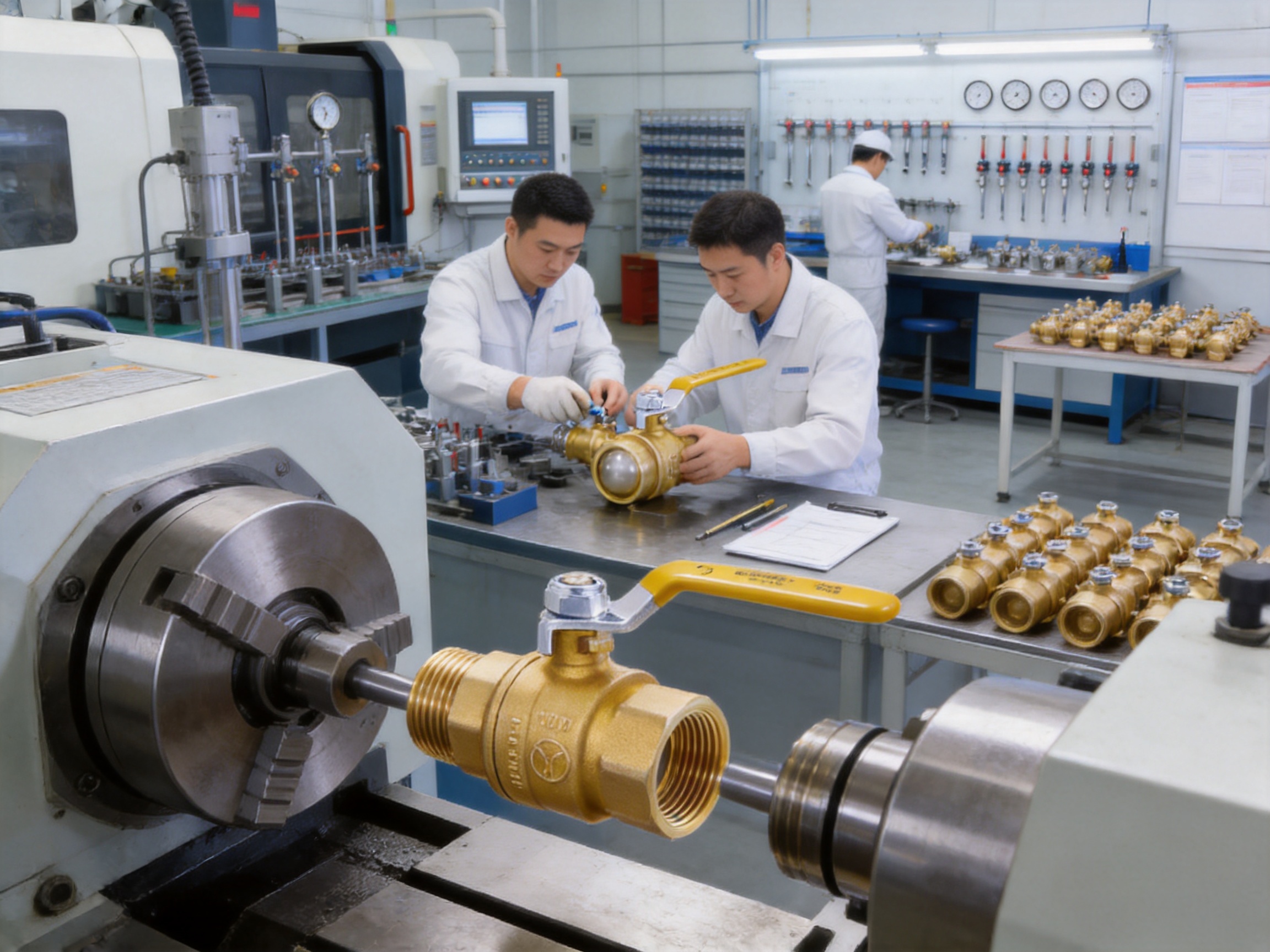
The company operates across an area of approximately 20,000 square meters and has established a precision machining workshop, assembly line, and testing workshop. The use of automated production equipment and CNC machine tools supports repeatable manufacturing. These capabilities are particularly important for ball valves, where small variations in the ball, seats, threads, stem, or body can affect operating torque and sealing performance.
Precision Machining
CNC machining allows the manufacturer to control critical dimensions more consistently than less controlled manual processes. For a threaded brass valve, machining may include body cavity formation, port alignment, thread cutting, stem opening, body flats, and other functional surfaces. Consistent machining helps ensure that the ball rotates smoothly and that the threaded ends align correctly with mating components.
Machining accuracy also contributes to the full-port objective. The internal passage must be formed with appropriate alignment and surface quality so that the opening is not unnecessarily obstructed. A well-machined passage helps support the intended flow characteristics while reducing irregular edges that could disturb the fluid or collect debris.
Automation can improve production consistency across large quantities. The company reports an annual capacity of approximately 2 million valve sets and 10 million hardware accessory sets. Such capacity indicates the ability to support both standard product demand and structured supply programs for distributors, contractors, equipment manufacturers, and project buyers.
Assembly and Testing
Assembly is another important stage in valve manufacturing. The ball, sealing seats, stem, handle, fasteners, and body components must be assembled in the correct sequence and with appropriate control of compression and alignment. If the sealing elements are incorrectly positioned, the valve may become difficult to operate or fail to provide dependable shutoff.
A dedicated assembly line can help standardize these procedures. Automated or semi-automated assembly equipment may improve repeatability, reduce avoidable handling variation, and support higher throughput. It also provides a framework for process monitoring and operator training.
The testing workshop provides a separate environment for checking valve performance. Pressure testing can identify body, connection, or closure leakage before products leave the factory. Operational testing can verify that the handle and stem rotate correctly. Visual and dimensional inspections can confirm that the finished valve meets the required product configuration.
Quality assurance should not be viewed as a single final inspection. It begins with material selection and continues through machining, cleaning, assembly, testing, packaging, and shipment. A manufacturer with dedicated workshops and professional equipment is better positioned to establish process controls at each stage.
Advantages Over Conventional Standard-Port Alternatives
The YH-220 has several characteristics that distinguish it from basic standard-port brass ball valves. The first is the full-port bore. Standard-port designs generally use a smaller internal passage than the nominal pipe diameter. This may reduce material use or allow a more compact internal arrangement, but it can also create a greater pressure drop.
For applications where the valve remains open for long periods, the difference in flow resistance may be operationally significant. A full-port valve allows the pipeline to operate with a passage closer to the pipe’s natural capacity. This is advantageous for high-flow water services, commercial distribution lines, equipment supply circuits, and selected gas applications.
The second difference is the long handle. A conventional short lever may be adequate for small, low-resistance service, but it offers less mechanical advantage. The longer handle on the YH-220 reduces the manual force needed to operate the valve and provides an easier grip.
The third advantage is the combination of forged brass construction and a 1.6 MPa pressure rating. This offers a stronger service profile than lightweight valves intended only for low-pressure domestic use. It allows the product to address more demanding medium-pressure applications, provided that the installation remains within the product’s specified limits.
The fourth advantage is the availability of multiple thread standards and sizes. A product range that includes G, Rc, and NPT options can serve different market requirements and project specifications. However, the correct thread type must always be ordered and verified before installation.
Where Alternatives May Still Be Appropriate
Product selection should be based on application requirements rather than a single feature. A reduced-port valve may be appropriate where the flow rate is low and pressure loss is not important. A compact handle may be preferred where installation space is extremely limited. Stainless steel or specialized alloy valves may be necessary for corrosive media, high-temperature service, or demanding chemical environments.
The YH-220 is designed for water, non-corrosive fluids, and gas within its stated pressure and temperature range. It should not be selected automatically for aggressive chemicals, steam, high-temperature fluids, abrasive slurries, or applications requiring a different material or certification. Its strengths are most valuable when the system needs efficient flow, manual quarter-turn isolation, threaded installation, and brass construction.
Application Scenarios
Industrial Process Support Lines
Industrial facilities often contain numerous utility lines that supply water, air, gas, or other non-corrosive media to equipment. These lines may require frequent isolation during maintenance, equipment replacement, or process adjustment. The YH-220 can provide a practical shutoff point where a threaded, manually operated valve is appropriate.
The full-port design helps maintain efficient flow through utility lines, while the long handle supports quick operation by maintenance personnel. The brass body provides a durable option for general service applications where the medium is compatible with brass and the pressure remains within the rated limit.
Commercial Plumbing Systems
Commercial buildings frequently use multiple branches for restrooms, kitchens, heating equipment, water treatment units, fire-related auxiliary services, and mechanical rooms. Isolation valves must be accessible, identifiable, and reliable. A full-port valve can help avoid unnecessary restriction in branch lines that serve fixtures or equipment with significant flow demand.
The range from 1/2 inch to 2 inches covers many common commercial plumbing sizes. The F/F threaded arrangement can be convenient for equipment connections and localized pipework, especially where the system uses male-threaded adapters or nipples.
High-Flow Water Distribution
Water distribution systems may experience reduced downstream pressure when valves and fittings introduce excessive resistance. The full-port passage of the YH-220 is suitable for situations where maintaining a larger effective flow area is important. Examples may include supply branches, pump-related pipework, irrigation support lines, and equipment service connections.
Hydraulic calculations should still be performed for the complete system. Valve selection must account for flow rate, pipe size, pump capacity, elevation, fittings, filters, and other sources of pressure loss. The full-port configuration is a design advantage, but it does not replace system engineering.
Gas Distribution Networks
The product information identifies gas as one of the intended working media. Gas installations require strict attention to local codes, approved materials, pressure limits, leak testing, ventilation, and qualified installation. The correct thread standard and sealing method are essential.
In a gas line, the full-port design may help reduce unnecessary restriction, while the long handle can make manual isolation more convenient. The valve must be selected only when it meets the applicable gas-service requirements. Users should verify certifications, approvals, and regulatory acceptance for the specific country and gas type before installation.
Installation and Maintenance Recommendations
Before installation, confirm the valve size, thread type, pressure rating, temperature range, medium compatibility, flow direction requirements, and available operating clearance. Ball valves are generally suitable for on-off isolation rather than precise throttling. If the valve will be used for continuous flow regulation, the manufacturer or system designer should confirm that this operating method is acceptable.
Inspect the valve for shipping damage and ensure that the internal passage is clean. Check that the handle moves through its intended quarter-turn range without abnormal resistance. Prepare the mating pipe ends carefully, maintaining alignment and removing burrs or debris.
Apply the selected thread sealant to the male pipe threads according to the sealant manufacturer’s instructions. Avoid excessive sealant. Material that enters the valve can contaminate the sealing surfaces or obstruct the bore. Screw the connection together by hand until properly engaged, then use a suitable wrench on the valve body flats to complete tightening.
Do not use the handle to tighten the valve. Doing so can transfer installation torque through the stem and damage the operating mechanism. Do not exceed the recommended tightening force. The pipework should be supported independently so that the valve is not used as a structural support.
After installation, open and close the valve gradually. Pressurize the system in a controlled manner and check the body, threaded joints, and surrounding connections for leakage. If leakage is found, depressurize the system before attempting corrective work.
Routine maintenance should include visual inspection, confirmation of handle accessibility, and checking for signs of leakage or corrosion. In systems where the valve remains unused for long periods, periodic operation may help confirm that the ball and stem remain functional. The operating interval should be determined by the system owner and service conditions.
Ball valves should not normally be forced with pipes or extensions. If the operating torque becomes unusually high, the system should be depressurized and the cause investigated. Possible causes include contamination, excessive pressure differential, incompatible sealant, damaged components, thermal effects, or incorrect installation.
Safety and Engineering Considerations
A valve’s pressure rating applies only within the relevant temperature and service conditions. The stated 1.6 MPa nominal pressure should be evaluated alongside the working temperature range of -20°C to below 80°C. Pressure capability may be affected by temperature, medium, sealing materials, and applicable standards.
The product is intended for water, non-corrosive fluids, and gas. Aggressive chemicals may attack brass or elastomeric seals. Abrasive media may wear the ball and seats. Fluids containing significant solid particles may interfere with shutoff. Where the service medium is unusual, a compatibility review should be completed before purchasing.
For gas service, installation should be completed by qualified personnel. The system should be leak-tested using an approved procedure, and the valve should remain accessible for emergency isolation. The use of open flames to check for leaks is unsafe and unacceptable.
For water systems in freezing environments, trapped water inside the valve may expand and damage the body. Appropriate insulation, draining, heat tracing, or freeze protection should be considered. Outdoor installations should also be protected from impact, unauthorized operation, and environmental exposure when necessary.
The valve should be installed in a location where the long handle can rotate freely. Adequate clearance is required above and around the handle. Nearby walls, insulation, cable trays, equipment panels, or other components should not prevent full operation.
Procurement Guidance for Distributors and Project Buyers
Distributors should identify the product using the complete model reference, nominal size, thread standard, and connection configuration. “Full-port brass ball valve with long handle” describes the main product characteristics, but it may not be sufficient to determine the exact variant. A buyer should specify whether the required thread is G, Rc, or NPT and confirm the desired size from 1/2 inch through 2 inches.
Project buyers should request or review the applicable product data before approving substitution. Important information includes pressure rating, temperature limits, body material, sealing materials, dimensions, thread standard, testing requirements, and any necessary approvals. Substitution with a similar-looking valve may result in a different bore, pressure rating, handle design, or thread profile.
For larger projects, consistent batch supply can be important. A manufacturer with dedicated machining, assembly, and testing facilities can help support product uniformity across repeated orders. The reported annual production capacity also indicates the ability to support distributors and industrial buyers requiring regular replenishment.
Packaging should protect threaded ends, handle components, and finished surfaces during transportation. Valves should be stored in a clean, dry environment and protected from impact, moisture, and contamination. Thread protectors or suitable packaging materials can help preserve connection quality before installation.
Why Manufacturing Capability Matters to Product Performance
The visible features of a ball valve are easy to identify, but many performance differences are created during manufacturing. Two valves may share the same nominal size and material description while differing significantly in machining accuracy, surface finish, assembly control, testing discipline, and quality traceability.
Advanced CNC equipment can support consistent port dimensions and thread profiles. Automated assembly equipment can help maintain repeatable positioning of seats, balls, stems, and handles. A dedicated testing workshop can identify leakage and operating problems before shipment. Together, these capabilities provide a stronger foundation for dependable field performance.
Research and development capability is also relevant. Valve manufacturers must continually address changing market requirements, connection standards, safety expectations, and application needs. An enterprise involved in product development can refine designs such as the YH-220 to improve flow passage, handle ergonomics, machining efficiency, and production consistency.
The company’s stated mission is to build a safe fluid ecosystem through high-quality valves. This goal is reflected in the importance placed on professional management, automated production, precision machining, assembly, and testing. For customers, the benefit is not limited to a single valve. It includes access to a manufacturing organization capable of supporting product development, production scaling, technical communication, and after-sales service.
Frequently Asked Questions
What is a full-port brass ball valve?
A full-port brass ball valve has an internal passage through the ball that closely matches the nominal pipe diameter. When open, it provides a relatively unobstructed flow path. The valve uses a rotating ball to start or stop the flow and normally operates through a 90-degree handle turn.
What is the main advantage of the YH-220 full-port design?
The main advantage is reduced flow restriction compared with standard-port valves. The product information indicates that the design can reduce flow resistance and pressure loss by up to 40 percent compared with standard-port alternatives, depending on actual system conditions. This makes it suitable for applications where flow efficiency is important.
Why does the valve have a long handle?
The extended handle provides greater leverage, helping reduce the manual force required to turn the ball. It can make operation easier in high-flow systems, commercial plumbing installations, and locations where operators need a clear visual indication of the open or closed position.
What pressure can the valve handle?
The stated nominal pressure is 1.6 MPa. Users should apply this rating only within the specified temperature range and for compatible media. The complete installation, including pipes, fittings, seals, and other components, must also be rated for the operating pressure.
What media are suitable for this valve?
The stated working media are water, non-corrosive fluids, and gas. Compatibility must be confirmed for the specific fluid, concentration, temperature, pressure, and sealing materials. The valve should not be used for aggressive, abrasive, or high-temperature media without technical approval.
What sizes are available?
The available sizes are 1/2 inch, 3/4 inch, 1 inch, 1 1/4 inch, 1 1/2 inch, and 2 inches. These correspond approximately to DN15, DN20, DN25, DN32, DN40, and DN50.
Which thread standards are available?
The product information identifies G, Rc, and NPT thread options. The required thread must match the mating pipe or fitting. These standards should not be mixed without an appropriate compatible adapter and engineering confirmation.
Is the YH-220 suitable for gas service?
Gas is listed as an intended working medium. However, gas installation requires compliance with applicable local regulations, certifications, pressure limits, sealing requirements, and qualified installation procedures. Users should confirm that the exact valve variant is approved for the intended gas application.
Can the valve be used for flow regulation?
A ball valve is primarily designed for rapid on-off isolation. Although it can be partially closed, prolonged throttling may increase wear, turbulence, and seat damage. The system designer should determine whether throttling is acceptable for the specific service.
How should the valve be installed?
Confirm the size and thread standard, clean the mating threads, apply a suitable sealant to the male threads, and tighten the valve using the body flats. Do not use the handle as a wrenching surface. Support the pipework independently and conduct a controlled leak test after installation.
What should be checked before purchasing?
Buyers should confirm the nominal size, thread type, pressure rating, temperature range, working medium, dimensions, installation clearance, material compatibility, and any required approvals. Project buyers should also verify that the product meets the specifications and standards applicable to the intended location.
Conclusion
The YH-220 full-port brass ball valve with long handle is designed for efficient, dependable manual isolation in water, gas, and non-corrosive fluid systems. Its full-port flow path reduces unnecessary restriction, while the extended handle improves operating leverage and visibility. The forged brass body and 1.6 MPa nominal pressure rating provide a practical solution for many medium-pressure applications.
The F/F threaded configuration supports direct connection to compatible male-threaded pipework, and the availability of G, Rc, and NPT options helps address different installation standards. A size range from 1/2 inch to 2 inches makes the valve applicable to commercial plumbing, industrial support lines, high-flow water branches, and selected gas distribution systems.
Beyond the product’s design features, manufacturing capability is an important part of its value. Precision CNC machining, professional assembly lines, dedicated testing facilities, automated equipment, and substantial production capacity support consistent quality and reliable supply. These strengths help distinguish the valve from basic alternatives that may provide only simple shutoff without the same focus on flow efficiency, operating convenience, and production control.
Correct selection and installation remain essential. Users should verify the media, pressure, temperature, thread standard, dimensions, and regulatory requirements before use. When applied within its specified service conditions, the YH-220 offers a balanced combination of efficient flow, durable brass construction, convenient manual operation, and practical threaded installation.
References
1. Product information for the YH-220 Full-Port Brass Ball Valve with Long Handle, including pressure, temperature, size, thread, dimensional, and application data.
2. General engineering principles for quarter-turn ball valve operation, full-port flow passages, and pressure-loss management in piping systems.
3. General guidance on forged brass components, precision machining, threaded pipe connections, and pressure-containing valve construction.
4. Manufacturer-provided information concerning precision machining workshops, automated assembly and testing equipment, production capacity, and quality management capabilities.
5. General installation and safety practices for threaded valves used in water, non-corrosive fluid, and gas service.
Product: YH-220 Full Port Brass Ball Valve with Long Handle(F/F)

Related Products
-
View More
-
 View More
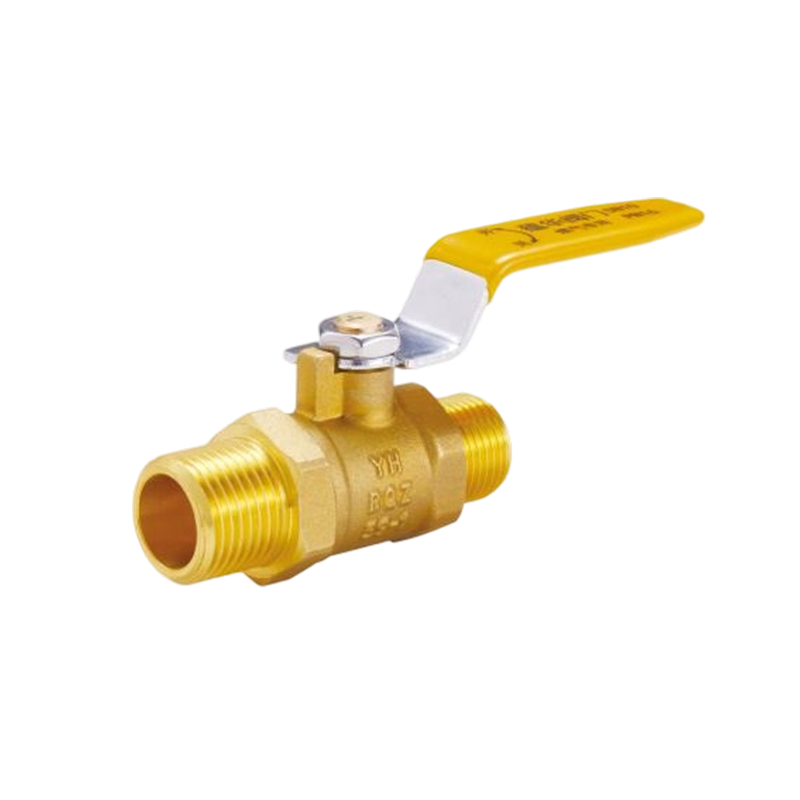
YH-221 Brass Ball Valve with Long Handle(M/M)
-
 View More
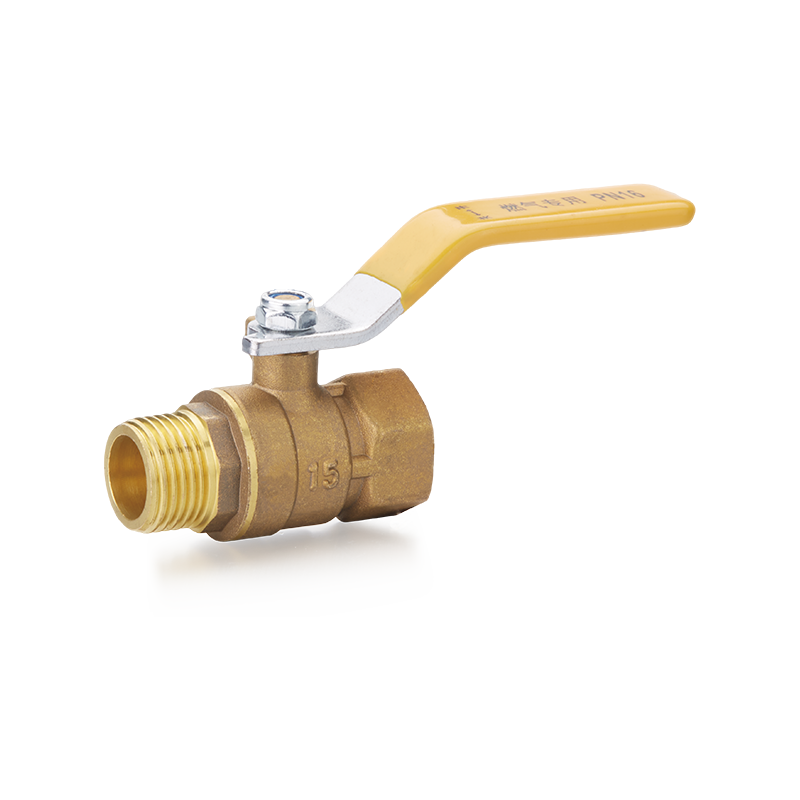
YH-202 Brass Ball Valve with Long Handle(F/M)
-
 View More
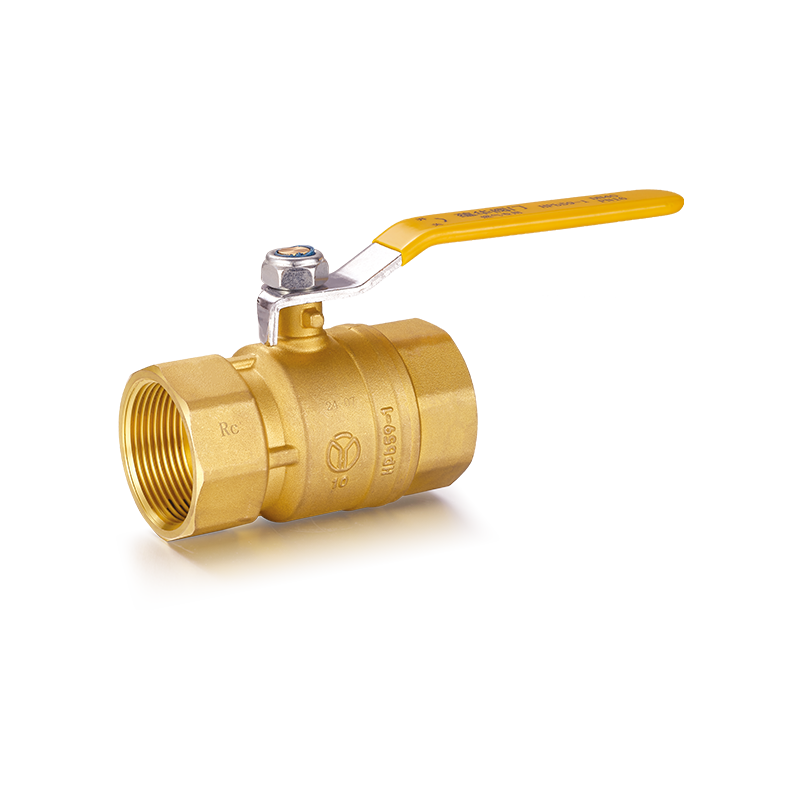
YH-201 Brass Ball Valve with Long Handle(F/F)
-
 View More
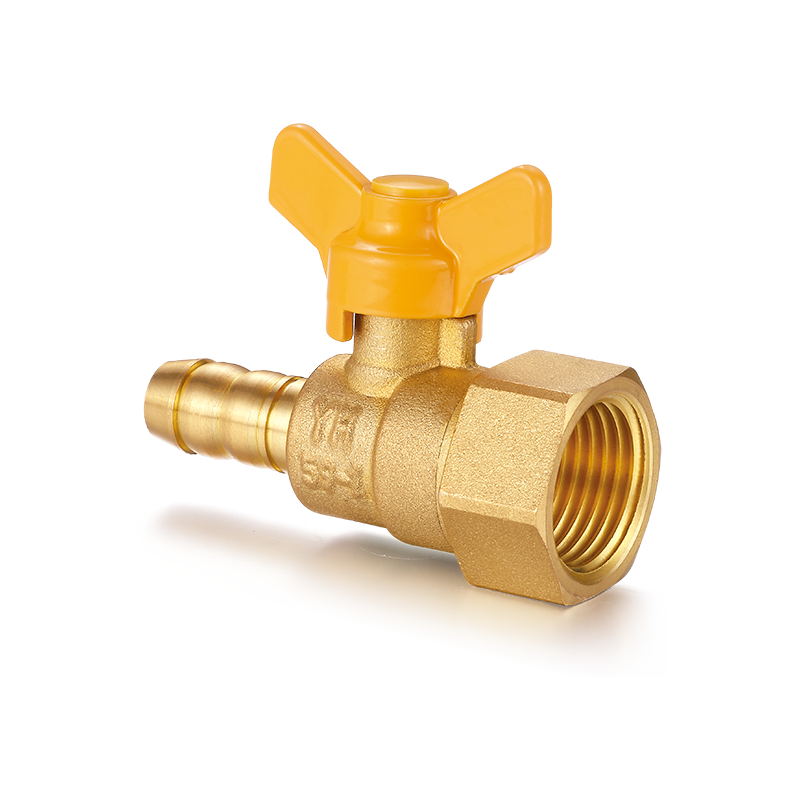
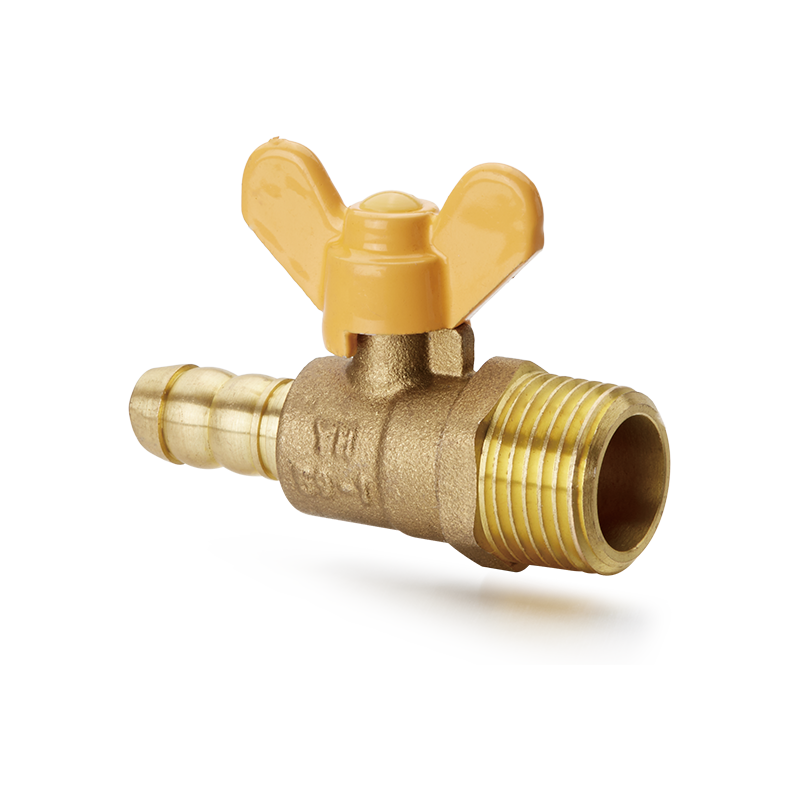
YH-216 Brass Ball Valve with Butterfly Handle(F/Hose Connector)
-
 View More
YH-207 Brass Ball Valve with Butterfly Handle(M/hose connector)
Related News
Contact Us
-

-
 +86-0574-63742169
 -
 No.104-128, Cizhang East Road, Zhangqi Town, Cixi City, Ningbo, Zhejiang Province, China


Message Us Now !
