


 English
  русский
  عربى
عربى  Español
How Precision Pipe Fittings Improve Safety, Efficiency, and Fluid Control Systems
Content
- 1 1. The Role of Pipe Fittings in Fluid Systems
- 2 2. Product Design Considerations for Pipe Fittings
- 3 3. Materials Used in Pipe Fittings
- 4 4. Precision Machining and Dimensional Consistency
- 5 5. Automated Assembly and Testing
- 6 6. Quality Control from Raw Material to Finished Product
- 7 7. Advantages Compared with Inconsistent or Low-Control Production
- 8 8. Pipe Fittings for Gas Applications
- 9 9. Pipe Fittings for Water Supply and Plumbing
- 10 10. Compatibility with Valves and Hardware Accessories
- 11 11. Customization and Project-Specific Requirements
- 12 12. Manufacturing Facility and Production Organization
- 13 13. Application Areas
- 14 14. How to Select the Correct Pipe Fitting
- 15 15. Installation and Maintenance Best Practices
- 16 16. Sustainability and Resource Efficiency
- 17 17. Why Manufacturing Experience Matters
- 18 18. Procurement Questions for Distributors and Project Buyers
- 19 19. Frequently Asked Questions
- 19.1 What are pipe fittings used for?
- 19.2 Are pipe fittings used with valves?
- 19.3 Why is thread accuracy important?
- 19.4 What materials are commonly used for fittings?
- 19.5 Are brass fittings suitable for gas systems?
- 19.6 What is the benefit of CNC machining?
- 19.7 Why are pressure tests important?
- 19.8 Can pipe fittings be customized?
- 19.9 What information should be included in an inquiry?
- 19.10 What makes an experienced valve manufacturer a useful fitting supplier?
- 19.11 How should fittings be maintained?
- 20 20. Conclusion
- 21 References
- 22 Product: Pipe Fittings
Pipe fittings are essential components in modern fluid control systems. They connect, redirect, extend, reduce, isolate, and support pipelines that carry water, gas, air, oil, and other industrial fluids. Although fittings are often smaller and less mechanically complex than valves, their performance has a direct influence on the safety, reliability, service life, and operating cost of an entire piping installation.
Well-designed pipe fittings help create secure connections between pipes, valves, meters, filters, regulators, pumps, and other equipment. Poorly selected or inconsistently manufactured fittings can cause leakage, pressure loss, misalignment, vibration, corrosion, difficult maintenance, and premature system failure. For this reason, buyers increasingly look for fittings produced by manufacturers that combine material control, precision machining, automated assembly, systematic testing, and stable production capacity.
Pipe fittings supplied for gas and fluid applications must perform consistently under changing pressure, temperature, and flow conditions. They must also be compatible with the connected pipe material, installation method, thread standard, sealing system, and intended medium. A reliable fitting is therefore more than a simple connector. It is a precision-engineered part of a complete fluid safety system.
Ningbo Yunhua Valve Co., Ltd. specializes in the research, development, production, sales, and service of gas and fluid valves, water supply valves, and hardware accessories. Its pipe fitting product category supports a broad range of fluid control applications and benefits from the company’s experience in valve manufacturing, precision machining, automated assembly, and product testing.
This article explains the role of pipe fittings, the main factors that determine their quality, the manufacturing strengths that support consistent performance, and the advantages buyers can expect when selecting fittings from an experienced valve and hardware accessories manufacturer.
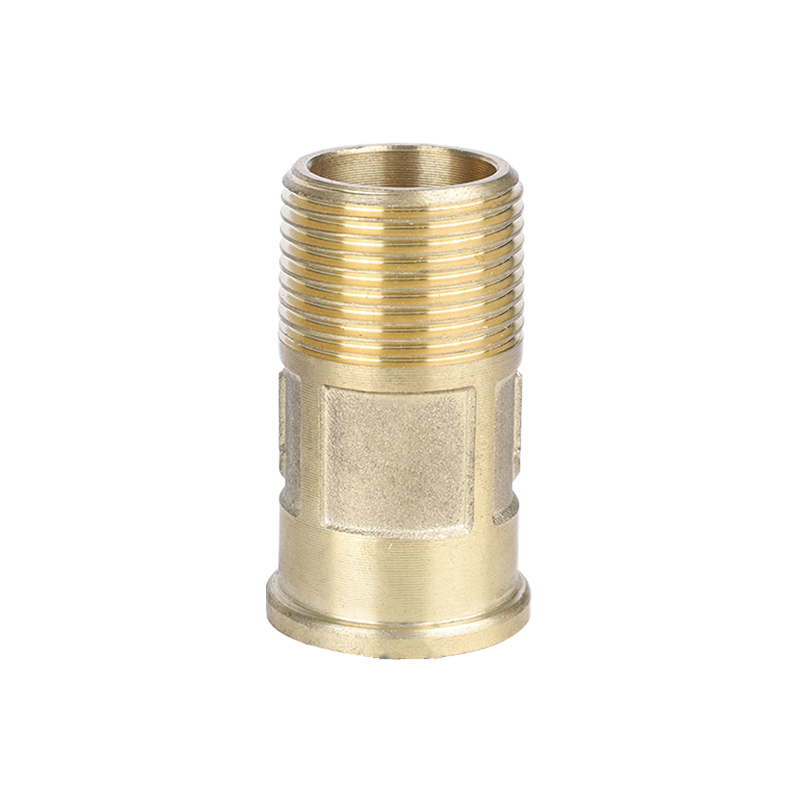
Pipe Fittings
1. The Role of Pipe Fittings in Fluid Systems
A piping system is rarely made from straight pipe alone. Changes in direction, variations in pipe size, equipment connections, branch lines, maintenance points, and installation limitations all require specialized fittings. These components provide the mechanical and fluid connections necessary to transform individual pipe sections into a functional network.
Common types of fittings include elbows, tees, crosses, couplings, unions, reducers, adapters, plugs, caps, and threaded connectors. Each fitting performs a specific role. An elbow changes the flow direction, a tee creates a branch, a reducer connects pipes with different diameters, and a coupling joins two pipe sections. An adapter can connect different thread types or connection systems, while a union can simplify disassembly during service.
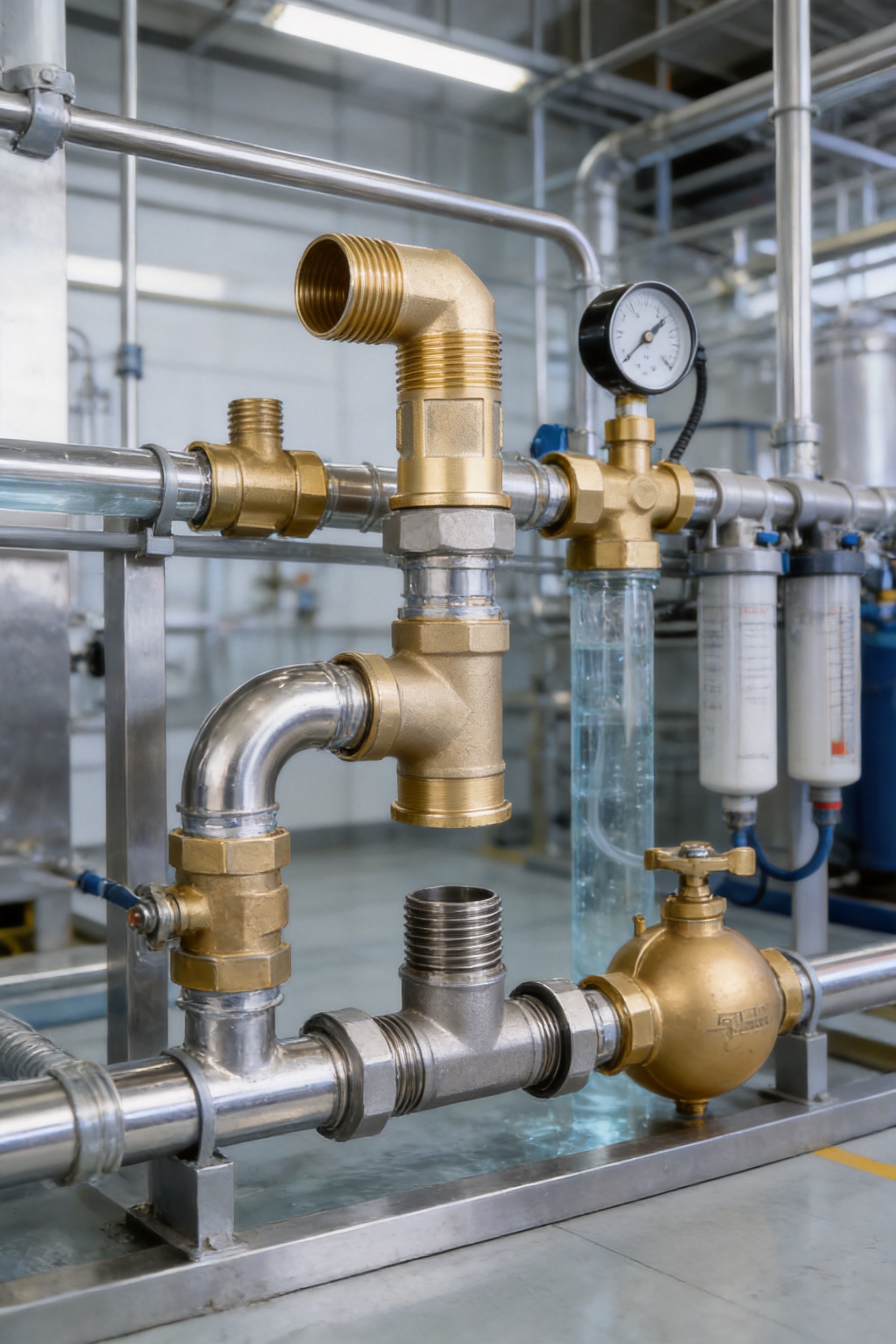
Fittings are also used at the inlet and outlet of valves. A threaded globe valve, for example, may require compatible threaded fittings to connect securely to upstream and downstream pipework. A brass gas ball valve may be installed with fittings that provide a reliable transition between the valve body and the gas pipeline. In water supply systems, fittings connect shut-off valves, meters, pumps, tanks, and distribution lines.
The fitting must withstand the mechanical forces generated by the system. These forces may include internal pressure, thermal expansion, pipe weight, vibration, installation torque, water hammer, and movement caused by equipment operation. The fitting must also maintain dimensional accuracy so that the pipe and connected components can be installed without excessive stress.
In gas applications, sealing performance is especially important. Even a small leak can create a serious safety hazard. A fitting must therefore provide dependable thread engagement, controlled dimensional tolerances, suitable sealing surfaces, and compatibility with the selected sealant. In water and industrial fluid systems, leakage can result in wasted resources, corrosion, equipment damage, and costly downtime.
2. Product Design Considerations for Pipe Fittings
Connection Type
The connection type determines how the fitting is installed and how it interacts with the rest of the piping system. Threaded fittings are widely used in residential, commercial, utility, and light industrial applications because they are compact, practical, and relatively easy to install. They are particularly suitable for smaller pipe sizes and systems where welding or flanged connections would be unnecessary.
Threaded connections require accurate thread geometry. The pitch, diameter, taper, crest, root, and flank angle must be controlled so that the mating parts engage correctly. If the thread is too loose, sealing becomes difficult and the connection may move under pressure. If it is too tight or inaccurately formed, installation may damage the thread or create excessive stress in the fitting.
Other connection methods include socket connections, compression connections, push-fit connections, brazed connections, welded connections, and flanged connections. The correct choice depends on the pressure rating, pipe material, installation environment, service medium, local standards, and maintenance requirements.
Flow Path and Internal Geometry
The internal passage of a fitting affects flow resistance and pressure loss. A poorly designed internal profile can create turbulence, dead zones, or sharp changes in velocity. These conditions may increase energy consumption, generate noise, accelerate erosion, or interfere with the operation of connected valves and instruments.
Precision manufacturing allows internal passages to be produced with consistent dimensions and smooth transitions. In applications where flow efficiency is important, the fitting should maintain a practical passage diameter and avoid unnecessary restrictions. Smooth internal geometry also reduces the likelihood of deposits accumulating in the fitting.
When a fitting connects to a valve, its internal profile should be considered together with the valve’s flow path. A fitting that is too small or poorly aligned can reduce the performance of a correctly selected valve. This is one reason why fittings and valves should be evaluated as parts of a complete system rather than as isolated products.
Wall Thickness and Structural Strength
Fitting wall thickness must be sufficient to withstand the expected internal pressure and mechanical loading. The design should account for the selected material, operating temperature, pressure cycling, corrosion allowance, and connection geometry. Threaded sections may require additional material because machining removes part of the original wall thickness.
Strength is also affected by the shape of the fitting. Elbows, tees, and reducers experience different stress patterns. Branch connections can create local stress concentrations, while sharp corners may reduce fatigue resistance. Careful design and controlled machining help produce fittings that remain stable during long-term service.
Sealing Surfaces
A secure connection depends on the interaction between the fitting, the pipe, and the sealing method. Threaded fittings may rely on tapered threads, a gasket, an O-ring, thread sealant, or a combination of these methods. The sealing surfaces must be free from defects that could create leakage paths.
Surface finish is important because excessive roughness can prevent uniform contact, while an unsuitable surface may interfere with sealant performance. A consistent finish also helps installers achieve predictable results across multiple connections.
3. Materials Used in Pipe Fittings
Material selection should match the intended application. Common fitting materials include brass, stainless steel, carbon steel, ductile iron, cast iron, copper alloys, engineering plastics, and specialized corrosion-resistant alloys.
Brass is widely used in water supply, gas distribution, plumbing, and general hardware applications. It offers a useful combination of machinability, corrosion resistance, strength, and dimensional stability. Brass fittings can be produced with accurate threads and smooth machined surfaces, making them suitable for applications that require reliable connection and repeated production consistency.
Steel fittings are selected when higher strength, elevated pressure resistance, or demanding industrial service is required. Forged steel valves and associated fittings are often used in applications where structural integrity and resistance to mechanical stress are priorities. Stainless steel may be preferred where corrosion resistance, hygiene, or chemical compatibility is important.
Material quality begins with controlled raw material sourcing. The chemical composition, mechanical properties, surface condition, and dimensional characteristics of the incoming material influence the final product. A professional manufacturer must establish suitable inspection procedures before material enters the machining process.
The material must also be compatible with the fluid being transported. Gas, potable water, heating water, compressed air, and industrial chemicals can impose different requirements. Buyers should consider corrosion, contamination, temperature, pressure, and regulatory requirements when selecting a fitting material.
4. Precision Machining and Dimensional Consistency
One of the main advantages of a professional pipe fitting manufacturer is the ability to control dimensions throughout the production process. A fitting may look simple, but its performance depends on numerous measurements, including external diameter, internal diameter, thread dimensions, overall length, shoulder position, concentricity, and sealing surface geometry.
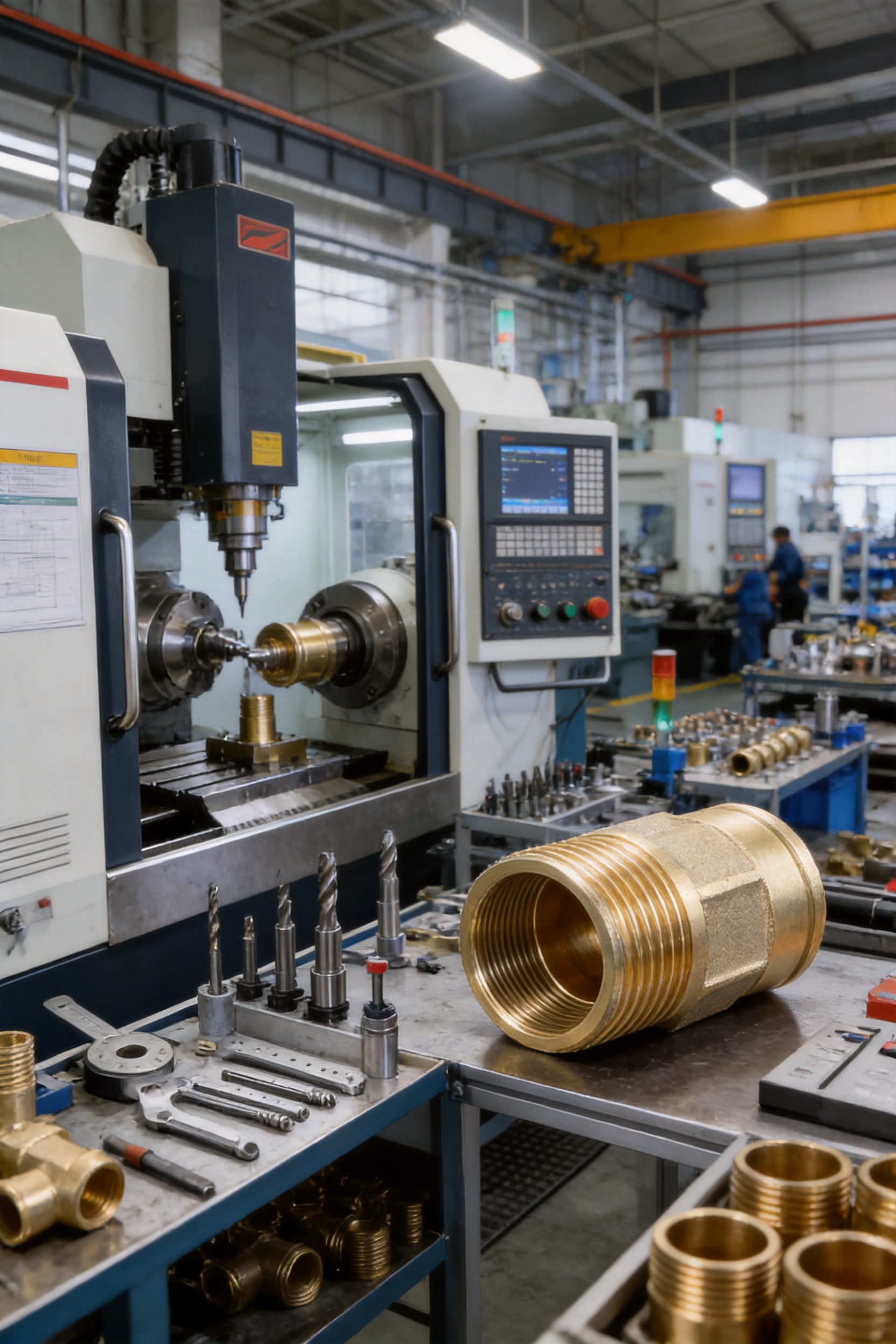
Ningbo Yunhua Valve Co., Ltd. has established a professional, fully automated precision machining workshop. The facility is equipped with advanced domestic and international CNC machine tools. CNC machining supports repeatable production by controlling cutting paths, tool movements, speeds, feeds, and machining sequences through programmed parameters.
Compared with inconsistent manual machining, controlled CNC production can reduce variation between batches. This is especially valuable for fittings because even small dimensional differences can affect installation torque, thread engagement, alignment, and sealing reliability.
Precision machining also supports efficient production of different fitting configurations. When a product family includes multiple sizes, thread specifications, shapes, or connection types, programmable equipment can help maintain consistent standards while allowing production to adapt to different customer requirements.
Automated machining does not eliminate the need for engineering control. Tool selection, fixture design, program verification, tool wear monitoring, workpiece positioning, and inspection methods all influence the finished product. A capable manufacturer combines automated equipment with experienced process management.
Tool wear is particularly important when machining brass, steel, or other metal materials. As cutting tools wear, thread dimensions and surface finish can gradually change. Regular inspection and timely tool replacement help maintain production accuracy. Fixtures must also hold workpieces securely without distortion or damage.
Benefits of CNC Production for Fittings
CNC machining provides several practical advantages:
First, it improves repeatability. Products manufactured using consistent programs and fixtures are more likely to match the approved sample and drawing.
Second, it supports dimensional accuracy. Important features such as threads, bores, shoulders, and sealing surfaces can be produced within controlled tolerances.
Third, it increases production efficiency. Automated equipment can perform repeated operations with less variation and shorter cycle times.
Fourth, it helps reduce material waste. Programmed cutting paths allow the manufacturer to optimize machining operations and control the amount of material removed.
Finally, CNC machining supports product development. Once a design has been verified, the process can be documented and repeated more reliably for future orders.
5. Automated Assembly and Testing
Machining is only one stage of fitting production. Some products require additional components, sealing elements, inserts, protective treatments, or assembly operations. The quality of the final fitting depends on how these stages are controlled.
The company has established an automated assembly line and professional automated assembly and testing equipment. Automation can help control assembly sequence, component positioning, insertion force, tightening operations, and production traceability. It can also reduce the risk of inconsistent manual handling.
For fittings used with valves or other hardware accessories, assembly accuracy is important. A component that is not seated correctly may create a leakage path or interfere with the connection. Automated equipment can help ensure that parts are installed according to defined process parameters.
Testing provides an additional level of protection. Depending on the product design and application, inspections may include dimensional verification, thread gauging, visual inspection, pressure testing, leakage testing, material checks, and functional evaluation of assembled components.
Pressure testing is especially relevant for gas and fluid products. The test method should be appropriate for the fitting structure and intended service. A fitting may be tested under a specified pressure for a defined period, with the product checked for visible leakage, pressure loss, deformation, or other abnormal behavior.
Thread inspection is another important quality control activity. Thread gauges can help verify that the fitting will mate correctly with the intended pipe or valve. Inspection should consider both the internal and external thread, depending on the product type.
Visual inspection may identify scratches, cracks, burrs, casting defects, machining marks, contamination, or surface damage. Although visual inspection cannot replace dimensional and pressure testing, it is a valuable part of a complete quality system.
6. Quality Control from Raw Material to Finished Product
Reliable fittings are the result of controlled processes rather than a single final inspection. Quality management should begin with incoming materials and continue through machining, cleaning, assembly, testing, packaging, and shipment.
At the incoming material stage, the manufacturer should verify the supplied material against the purchase specification. This may include checking dimensions, surface condition, grade identification, and documentation. Material segregation is also important when different grades or sizes are used in the same facility.
During machining, operators and quality personnel can monitor key dimensions at planned intervals. In-process inspection helps identify problems before a large quantity of products is completed. It also provides information about tool wear, fixture stability, and process capability.
After machining, fittings should be cleaned to remove chips, cutting fluid, dust, and other contaminants. Cleaning is particularly important for gas and water applications because residue may affect sealing, fluid quality, or downstream equipment.
Final inspection confirms that the finished product matches the required specifications. Inspection records can include product size, thread type, material, appearance, test results, quantity, and packaging condition. Clear records improve order consistency and make it easier to investigate any future issue.
A professional manufacturing system also benefits from continuous improvement. Production data can reveal recurring dimensional deviations, assembly difficulties, packaging damage, or customer feedback. Engineers can then adjust tooling, process parameters, inspection frequency, or product design.
7. Advantages Compared with Inconsistent or Low-Control Production
Customers often compare pipe fitting suppliers on price alone, but the lowest initial purchase price does not necessarily represent the lowest total cost. A fitting that leaks, fails to install correctly, or causes repeated maintenance can create expenses far beyond the original product cost.
One important advantage of a controlled manufacturer is batch consistency. When fittings from different production lots maintain stable dimensions and appearance, installers can work more efficiently and reduce the need for sorting or adjustment.
Another advantage is improved compatibility with valves and other components. A manufacturer experienced in both fittings and valves understands how threads, connection dimensions, sealing surfaces, and flow passages interact. This integrated knowledge can help reduce mismatches between connected components.
Precision production may also reduce installation time. Correctly formed threads engage more smoothly, and accurately machined shoulders can support better alignment. Installers are less likely to encounter cross-threading, excessive tightening, or repeated disassembly.
Reliable sealing helps reduce operating risks. In gas systems, leakage prevention is directly linked to safety. In water systems, it reduces waste and property damage. In industrial installations, it helps prevent production interruptions and contamination.
Professional testing provides buyers with greater confidence. While no manufacturing process can eliminate every possible field condition, documented inspection and testing provide evidence that products have been evaluated against defined requirements.
Production capacity is also important for projects requiring regular supply. Ningbo Yunhua Valve Co., Ltd. has an annual production capacity of approximately 2 million sets of valves and 10 million sets of hardware accessories. This capacity supports larger orders, recurring procurement programs, and coordinated supply of valves and fittings.
| Evaluation Area | Controlled Professional Production | Potential Risk of Low-Control Production |
|---|---|---|
| Dimensional accuracy | Supported by CNC machining, fixtures, and inspection procedures | Variation may cause poor fit or installation difficulty |
| Thread quality | Controlled thread production and gauge inspection | Cross-threading, loose engagement, or sealing problems |
| Material consistency | Raw material selection and incoming verification | Uncertain strength, corrosion resistance, or compatibility |
| Leakage control | Pressure and sealing tests according to product requirements | Hidden defects may appear during field operation |
| Production stability | Automated equipment and documented processes | Batch-to-batch variation may be higher |
| Supply capability | Established workshops, assembly lines, and production capacity | Delays may occur during large or repeated orders |
| Technical coordination | Valve and fitting experience supports system compatibility | Products may not match connected valves or accessories |
8. Pipe Fittings for Gas Applications
Gas piping requires particularly careful attention to connection integrity, material suitability, installation practice, and inspection. A fitting used for gas should be selected according to the pressure, gas type, temperature, applicable standards, and local installation regulations.
Brass fittings are frequently used in gas-related hardware because brass can provide good machinability, corrosion resistance, and reliable threaded connections when properly designed and manufactured. However, the material and product configuration must always be appropriate for the specific gas service.
Pipe fittings used with a brass gas ball valve should provide a secure connection without placing excessive stress on the valve body. The installer should use compatible thread standards and an approved sealing method. The fitting and valve should be aligned before tightening, and excessive force should be avoided.
Gas system fittings should be inspected for damage, contamination, and thread deformation before installation. After installation, the completed system should be tested according to applicable safety procedures. Leak detection should never depend only on visual inspection.
The manufacturer’s experience in gas and fluid valves is a practical advantage when producing related fittings. Valve and fitting performance are closely connected, and knowledge of gas flow control, sealing, machining, and pressure testing can support better product integration.
9. Pipe Fittings for Water Supply and Plumbing
Water supply systems use fittings in residential buildings, commercial facilities, irrigation networks, utility infrastructure, and industrial plants. These systems may operate under varying pressure and temperature conditions, and the fitting material must be compatible with water quality and installation requirements.
Fittings for water supply applications should resist corrosion, maintain stable dimensions, and provide reliable sealing during pressure changes. They should also be easy to install and service. In areas where space is limited, compact threaded fittings can offer practical advantages over larger connection designs.
Fittings are often installed near water supply valves, pressure regulators, meters, pumps, and filtration equipment. Accurate dimensions help ensure that these components remain aligned and accessible. Poor alignment can transfer stress to valves and pipes, increasing the possibility of leakage.
For potable water applications, buyers should confirm that the selected material, surface treatment, production process, and product approvals meet the requirements of the target market. Requirements can vary by country, region, building code, and application.
For industrial water systems, additional factors may include suspended solids, chemical treatment, elevated temperature, pressure cycling, and continuous operation. The fitting design should be evaluated for the actual service environment rather than selected only by nominal size.
10. Compatibility with Valves and Hardware Accessories
Pipe fittings are commonly purchased as part of a broader hardware package. A project may require valves, fittings, pipe clamps, connectors, adapters, sealing components, and other accessories. Coordinating these products through an experienced supplier can simplify procurement and reduce compatibility concerns.
A threaded globe valve is designed to regulate or stop flow through a threaded pipeline connection. The fittings used with it must match the valve’s thread type, nominal size, pressure rating, and installation requirements. Correct coordination helps prevent unnecessary adapters and reduces the number of possible leakage points.
Forged steel valve systems may require fittings capable of handling higher mechanical loads and more demanding service conditions. The fitting’s material, wall thickness, connection geometry, and pressure performance should be selected accordingly.
Brass gas ball valve assemblies often require compact, accurately machined fittings that support secure gas connections. The fitting should not obstruct the valve handle, interfere with maintenance, or create a difficult installation angle.
Because Ningbo Yunhua Valve Co., Ltd. manufactures gas and fluid valves, water supply valves, and hardware accessories, customers can discuss related components with a supplier familiar with the complete connection system. This may be especially valuable for distributors, equipment manufacturers, contractors, and project buyers who need consistent product matching.
11. Customization and Project-Specific Requirements
Standard pipe fittings are suitable for many applications, but certain projects require customized dimensions, materials, markings, packaging, or connection specifications. Customization may involve changes to length, wall thickness, thread type, port arrangement, surface treatment, logo marking, or special inspection requirements.
Custom fitting production should begin with clear technical information. Useful details include the application, medium, nominal size, connection standard, pressure, temperature, material preference, quantity, installation method, and required documentation.
Drawings or samples can help define the product accurately. However, the manufacturer should review the design for machinability, sealing performance, structural strength, and production efficiency. A fitting that is easy to specify may not always be easy or economical to manufacture without engineering adjustment.
Manufacturing experience supports better customization decisions. CNC equipment can produce repeatable special dimensions after the design has been verified. Automated assembly and testing can then be adapted to the product’s requirements where appropriate.
Customization should not be understood as simply changing one dimension. Any modification can influence wall thickness, thread engagement, flow area, pressure resistance, tool access, and packaging. A professional review helps prevent unintended consequences.
For repeat orders, a documented customized product specification can improve consistency. The specification may include approved drawings, material requirements, inspection criteria, packaging instructions, and revision control. This creates a stable basis for future production.
12. Manufacturing Facility and Production Organization
The company covers an area of approximately 20,000 square meters. Its production organization includes a precision machining workshop, assembly line, and testing workshop. The combination of these areas supports a relatively integrated manufacturing flow.
An integrated facility can improve coordination between machining, assembly, quality control, and shipping. It may reduce unnecessary transportation between separate locations and make it easier to communicate production issues. It also allows process improvements to be evaluated across multiple stages rather than in isolation.
Advanced domestic and international CNC machine tools provide the equipment foundation for precision component production. Professional automated assembly and testing equipment supports repeatability in downstream operations. Together, these resources help the manufacturer manage both product quality and production efficiency.
Facility size alone does not guarantee product performance, but it can support organized production when combined with effective management. The company has spent more than ten years developing its corporate culture, management system, and professional management team. This organizational development is important because reliable manufacturing depends on people, processes, equipment, and quality standards working together.
Production planning is another important strength. Customers need suppliers that can coordinate raw materials, machining schedules, inspection, packaging, and delivery. A stable production system is particularly valuable for distributors and project contractors that need repeated supply rather than one-time purchasing.
13. Application Areas
Pipe fittings can be used in a wide variety of fluid control and hardware applications. Common application areas include residential plumbing, commercial water supply, heating systems, irrigation, gas distribution, compressed air, equipment manufacturing, agricultural systems, utility networks, and industrial fluid handling.
In residential and commercial plumbing, fittings connect supply pipes to faucets, water heaters, pumps, meters, filters, and shut-off valves. Compact dimensions and easy installation are often important.
In gas distribution, fittings connect valves and pipeline sections while supporting leak-resistant installation. The selected product must comply with the relevant local requirements and be installed by qualified personnel.
In industrial equipment, fittings may be used in skids, control panels, compressors, pumps, boilers, filtration units, and process machinery. Here, factors such as vibration, pressure cycling, temperature, chemical exposure, and service access may be more demanding.
In irrigation and agricultural systems, fittings help connect distribution lines, control valves, pumps, filters, and branch circuits. Corrosion resistance, ease of maintenance, and cost-effective replacement can be important considerations.
In water treatment and utility systems, fittings may be exposed to treated water, cleaning chemicals, suspended particles, or continuous flow. Material and sealing compatibility should be confirmed before use.
14. How to Select the Correct Pipe Fitting
Confirm the Nominal Size
The nominal size must match the connected pipe, valve, or accessory. Nominal size does not always equal the exact measured outside or inside diameter, so buyers should confirm the applicable standard and actual dimensions.
Identify the Connection Standard
Thread standards may vary between markets and applications. Buyers should confirm whether the system requires a particular tapered or parallel thread, as well as the applicable dimensional standard. Mixing incompatible thread systems can result in poor engagement or leakage.
Review Pressure and Temperature
The fitting should be suitable for the maximum working pressure and operating temperature of the system. Pressure ratings may change with temperature, material, size, and connection type. The fitting should not be selected only by appearance or nominal diameter.
Evaluate the Medium
Water, gas, air, oil, steam, and chemical fluids can affect materials and seals differently. Consider corrosion, swelling, contamination, permeability, temperature, and cleaning requirements.
Consider Installation Conditions
Available space, access for tools, expected movement, vibration, pipe support, and maintenance frequency can influence the best fitting configuration. A fitting that meets the technical specification may still be unsuitable if it cannot be installed or serviced safely.
Check Quality Documentation
For professional projects, buyers may require drawings, material information, inspection records, test reports, certificates, product markings, and packaging details. These requirements should be agreed before production.
Assess Supplier Capability
Consider whether the supplier has suitable machining equipment, assembly resources, testing facilities, production capacity, technical support, and experience with related valves or accessories. A reliable supplier should be able to discuss both standard products and project-specific requirements.
15. Installation and Maintenance Best Practices
Correct installation is essential even when the fitting has been manufactured to a high standard. Before installation, inspect the fitting and pipe for dirt, damage, burrs, moisture, or deformed threads. Clean components can improve sealing and reduce the possibility of contamination.
Confirm that the fitting is the correct size and connection type. Do not force incompatible threads together. Begin engagement by hand where possible, ensuring that the fitting is aligned and not cross-threaded.
Use a suitable sealing method for the application. The sealant should be compatible with the medium, pressure, temperature, material, and local requirements. Excessive sealant should not enter the internal flow passage, where it could restrict flow or damage downstream equipment.
Tighten the fitting using suitable tools and controlled force. Excessive torque can deform threads, crack certain materials, or place unnecessary stress on connected valves and pipes. Insufficient torque may prevent proper sealing.
Support the pipework so that the fitting does not carry loads for which it was not designed. Pipe weight, vibration, thermal movement, and equipment misalignment can place stress on connections. Proper supports and flexible arrangements can improve service life.
After installation, test the system according to the applicable procedure. Check for leakage under safe conditions before placing the system into full operation. Inspection should also be repeated after maintenance, modifications, or significant pressure events.
During service, look for signs of leakage, corrosion, vibration, discoloration, damaged threads, or unusual noise. Repeated tightening is not a substitute for finding and correcting the underlying cause of a connection problem.
16. Sustainability and Resource Efficiency
Manufacturing quality contributes to sustainability because durable products are less likely to require early replacement. A fitting that remains secure and functional for a longer period reduces material consumption, transportation, installation labor, and waste.
Precision machining can also support resource efficiency by improving material utilization and reducing defects. Process control helps prevent large quantities of products from being rejected because of avoidable dimensional or assembly problems.
Efficient flow paths may reduce pressure loss and the energy required to move fluids. While the fitting is only one part of a complete system, its internal geometry and alignment can contribute to overall efficiency.
Long-term sustainability also depends on responsible material selection, suitable packaging, repairability, and the ability to supply replacement components. Buyers should consider the complete product life cycle rather than focusing only on the initial purchase price.
17. Why Manufacturing Experience Matters
Pipe fittings are closely related to valves, and experience in valve production can provide useful insight into fitting design. Both products depend on accurate machining, controlled sealing surfaces, material knowledge, pressure performance, and reliable inspection.
A company that understands gas and fluid control can better appreciate how fittings influence valve installation and system operation. It can also help customers evaluate the relationship between a fitting’s passage, connection geometry, and the valve’s body and port design.
Ningbo Yunhua Valve Co., Ltd. has developed its capabilities through more than ten years of business growth and manufacturing experience. Its product scope includes gas and fluid valves, water supply valves, and hardware accessories. The company’s stated mission is to build a safe fluid ecosystem with high-quality valves.
This product knowledge supports a practical approach to pipe fittings. Instead of treating the fitting as an isolated hardware item, the manufacturer can consider how it functions within a larger fluid control assembly.
The company’s vision is to become a leading company in the global fluid control industry. Its production capacity, automated equipment, precision machining workshop, assembly line, and testing workshop provide a foundation for serving domestic and international customers.

18. Procurement Questions for Distributors and Project Buyers
Distributors should evaluate whether a fitting supplier can maintain consistent product specifications across recurring orders. They should also consider packaging, labeling, product identification, mixed-size order handling, lead time, and technical communication.
Project buyers should provide complete technical requirements at the quotation stage. This reduces the risk of receiving a product that meets the nominal size but does not match the required thread, material, pressure rating, or regulatory expectation.
Equipment manufacturers may need fittings designed around a particular valve, panel, skid, or machine. In these cases, dimensional drawings and samples are useful. The supplier should be able to review the interface between the fitting and the equipment.
It is also helpful to ask how the supplier controls changes. If a material, tool, machining process, or component changes, customers may need advance notification or re-approval. Clear communication protects product consistency.
Buyers may also request information about inspection equipment, pressure testing, production capacity, packaging, and quality records. These questions help distinguish an organized manufacturer from a supplier that relies primarily on trading or uncontrolled outsourcing.
19. Frequently Asked Questions
What are pipe fittings used for?
Pipe fittings connect and organize pipe sections and related equipment. They can change flow direction, create branches, join different pipe sizes, connect pipes to valves, close unused ports, or provide removable service points.
Are pipe fittings used with valves?
Yes. Fittings are commonly used to connect valves such as threaded globe valves, ball valves, water supply valves, and other fluid control products to the surrounding pipeline. The fitting must match the valve’s size, thread, pressure, material, and service requirements.
Why is thread accuracy important?
Accurate threads support proper engagement, alignment, installation torque, and sealing. Inaccurate threads may cause cross-threading, loose connections, damaged components, or leakage.
What materials are commonly used for fittings?
Common materials include brass, stainless steel, carbon steel, ductile iron, cast iron, copper alloys, and engineering plastics. The correct material depends on the fluid, pressure, temperature, corrosion exposure, and applicable regulations.
Are brass fittings suitable for gas systems?
Brass fittings are used in many gas-related applications, but suitability depends on the specific material grade, design, pressure, gas type, local regulations, and installation method. Buyers should confirm that the product is approved and appropriate for the intended gas service.
What is the benefit of CNC machining?
CNC machining provides repeatable control over important dimensions such as bores, threads, shoulders, and sealing surfaces. It can improve consistency, production efficiency, and compatibility between fittings produced in different batches.
Why are pressure tests important?
Pressure tests help identify leakage, deformation, or other defects under controlled conditions. They provide evidence that the fitting has been evaluated against defined product requirements before shipment.
Can pipe fittings be customized?
Many fittings can be customized in terms of size, connection type, material, length, configuration, surface treatment, marking, and packaging. Customization should be reviewed by the manufacturer to confirm structural performance and production feasibility.
What information should be included in an inquiry?
An inquiry should include the fitting type, nominal size, connection standard, material, application medium, pressure, temperature, quantity, drawing or sample if available, packaging requirements, and any inspection or certification requirements.
What makes an experienced valve manufacturer a useful fitting supplier?
An experienced valve manufacturer understands the relationship between fittings, valves, sealing systems, pressure control, machining, and testing. This can help reduce compatibility problems and support coordinated procurement of related products.
How should fittings be maintained?
Inspect fittings for leakage, corrosion, vibration, thread damage, and unusual movement. Maintain proper pipe support, avoid excessive tightening, and replace components that show damage or cannot maintain a reliable seal.
20. Conclusion
Pipe fittings are fundamental to the performance and safety of gas, water, and industrial fluid systems. Their small size does not reduce their importance. Accurate threads, suitable materials, dependable sealing surfaces, appropriate wall thickness, and consistent internal geometry all contribute to reliable operation.
The main advantages of professionally manufactured fittings include better dimensional consistency, improved compatibility with valves and accessories, more predictable installation, reduced leakage risk, and stronger support for repeat orders or customized projects.
Ningbo Yunhua Valve Co., Ltd. combines experience in gas and fluid valves, water supply valves, and hardware accessories with a professional production infrastructure. Its 20,000-square-meter facility includes a precision machining workshop, automated assembly line, testing workshop, advanced CNC machine tools, and automated assembly and testing equipment. Its annual production capacity includes approximately 2 million sets of valves and 10 million sets of hardware accessories.
These capabilities provide a solid foundation for producing pipe fittings that support modern fluid control systems. By combining manufacturing technology, process management, quality inspection, and application knowledge, the company is positioned to serve customers seeking reliable standard fittings, coordinated valve accessories, and customized connection solutions.
For buyers, the best fitting selection is based on the complete application rather than price or appearance alone. When size, material, thread, pressure, temperature, sealing method, installation conditions, and supplier capability are evaluated together, pipe fittings can provide a durable and efficient foundation for safe fluid control.
References
1. American Society of Mechanical Engineers, Process Piping Design and Pressure Piping Principles.
2. International Organization for Standardization, Metallic Pipe Threads and General Piping Requirements.
3. American Society for Testing and Materials, Standard Practices for Metallic Materials, Pressure Testing, and Dimensional Inspection.
4. International Organization for Standardization, Quality Management Systems and Manufacturing Process Control.
5. Industrial Valve and Piping Engineering, Principles of Fluid Control, Sealing, and Pipeline Component Selection.
6. Plumbing and Gas Piping Engineering References, Threaded Connections, Installation Practices, and Leak Testing.
Product: Pipe Fittings

Related Products
-
 View More
-
 View More
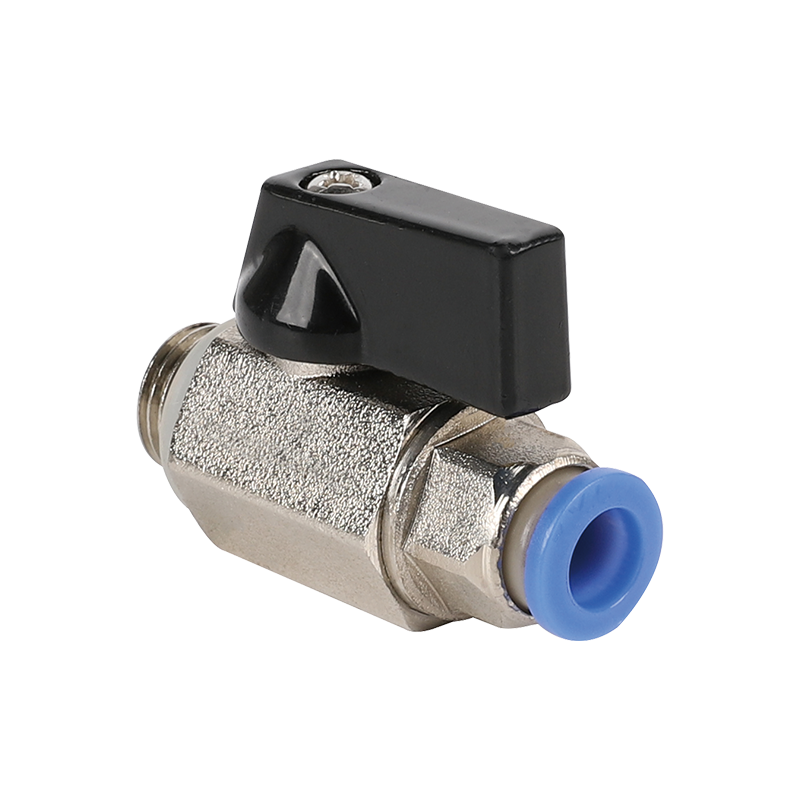
MINI-2 Mini Short-Handle Ball Valve(M/M)
-
 View More
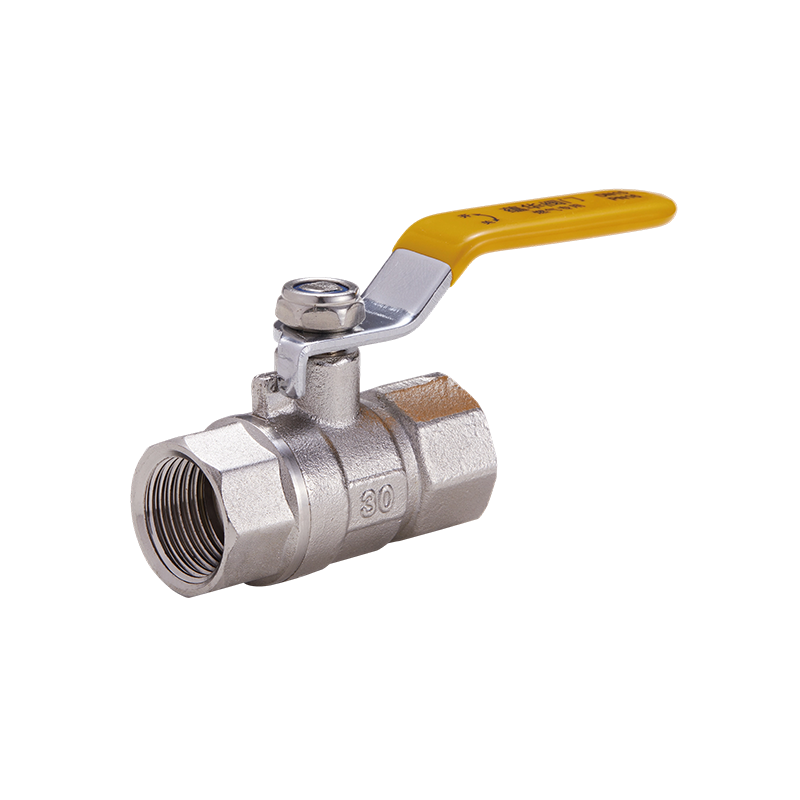
YH-2210 Forged Steel Ball Valve with Long Handle (F/F)
-
 View More
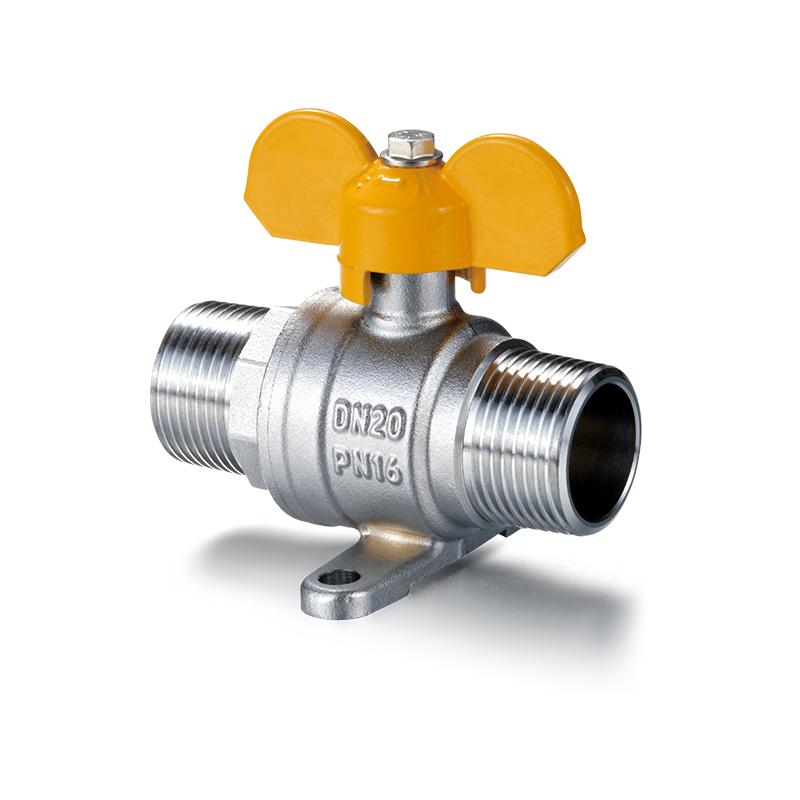
YH-214 Brass Ball Valve with Base& Butterfly Handle(M/M)
-
 View More
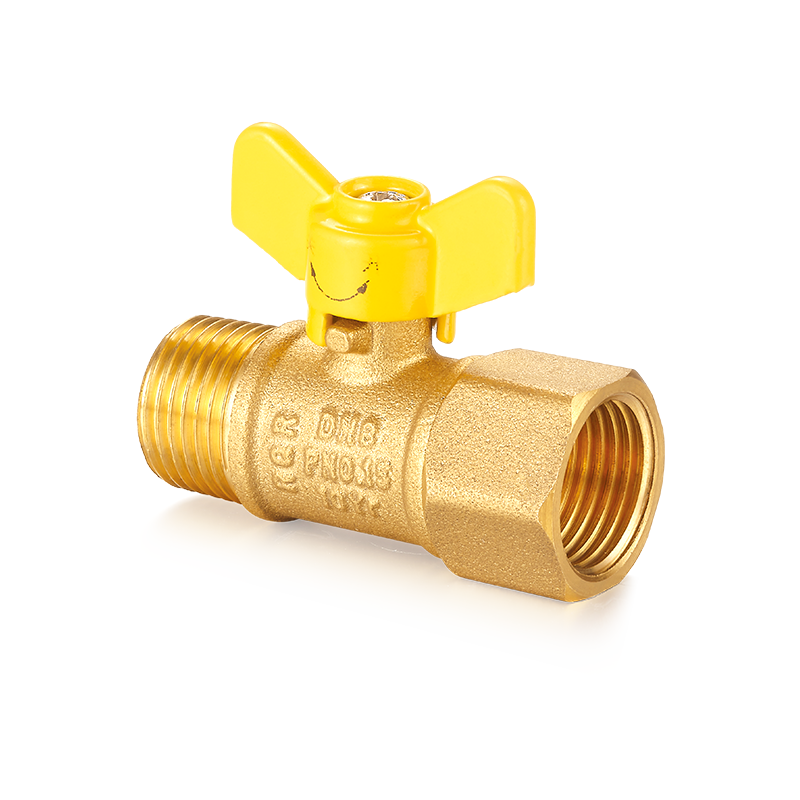
YH-205 Brass Ball Valve with Butterfly Handle(F/M)
-
 View More
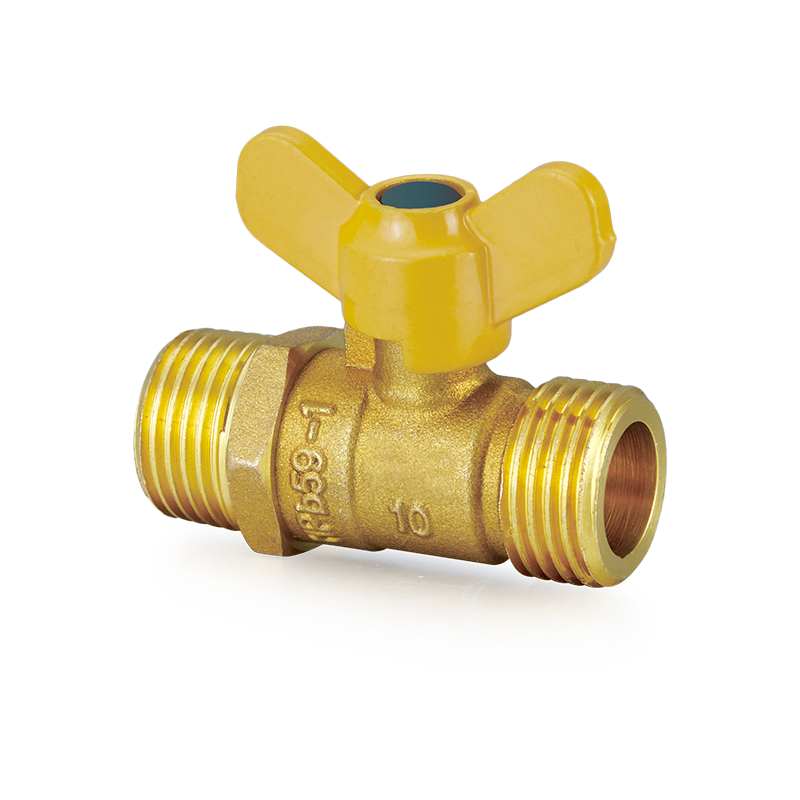
YH-206 Brass Ball Valve with Butterfly Handle(M/M)
Related News
Contact Us
-

-
 +86-0574-63742169
 -
 No.104-128, Cizhang East Road, Zhangqi Town, Cixi City, Ningbo, Zhejiang Province, China


Message Us Now !
