


 English
  русский
  عربى
عربى  Español
Irregular-Shaped Pipe Fittings: Precision Flow Connections for Complex Piping Systems
Content
- 1 Understanding Irregular-Shaped Pipe Fittings
- 2 Why Complex Piping Systems Need Irregular Geometry
- 3 Key Product Advantages
- 4 Materials and Connection Considerations
- 5 Precision Manufacturing Process
- 6 Manufacturing Strengths Supporting Product Reliability
- 7 Advantages Compared with Conventional Multi-Fitting Assemblies
- 8 Application Areas
- 9 How to Select the Right Irregular-Shaped Pipe Fitting
- 10 Customization and Customer Support
- 11 Quality Control and Reliability
- 12 Installation Recommendations
- 13 Why Manufacturing Location and Capacity Matter
- 14 Sustainability and Efficient Resource Use
- 15 Frequently Asked Questions
- 15.1 What are irregular-shaped pipe fittings used for?
- 15.2 Are irregular-shaped fittings suitable for gas applications?
- 15.3 Can these fittings be customized?
- 15.4 What information should be provided for a quotation?
- 15.5 How do irregular fittings compare with several standard fittings?
- 15.6 Can one fitting connect different pipe sizes?
- 15.7 How does CNC machining benefit these products?
- 15.8 Are irregular-shaped fittings pressure tested?
- 15.9 Can these fittings be used with valves?
- 15.10 How can installation problems be avoided?
- 15.11 Why is internal cleaning important?
- 15.12 What makes a supplier reliable for repeat orders?
- 16 Conclusion
- 17 References
- 18 Product: Irregular-Shaped Pipe Fittings
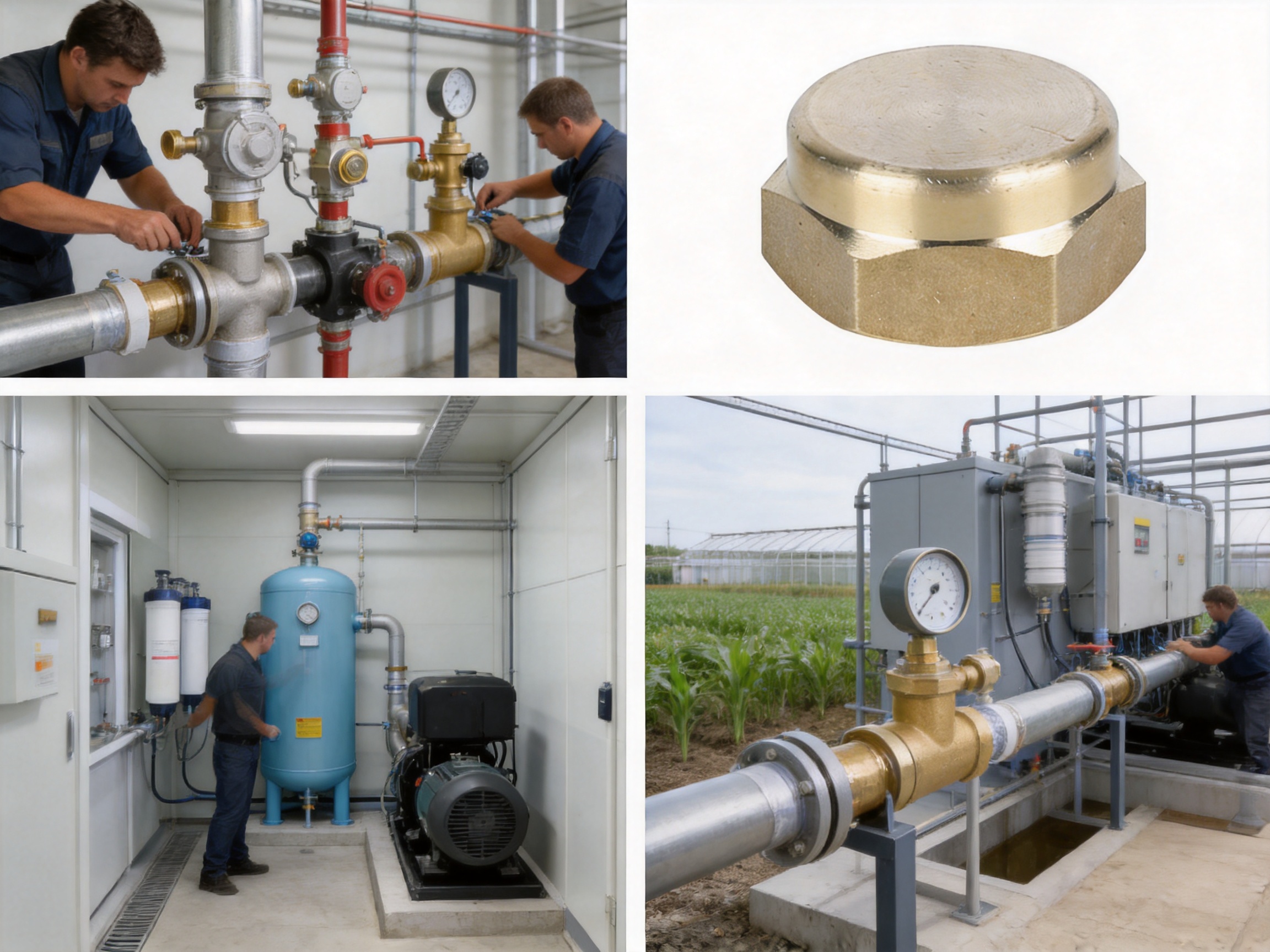
Irregular-shaped pipe fittings are essential components in piping systems where standard elbows, tees, reducers, and couplings cannot provide the required connection geometry. They are designed to accommodate unusual angles, offset dimensions, changing pipe directions, restricted installation spaces, equipment interfaces, and special fluid-routing requirements. By combining practical geometry with accurate machining and dependable sealing surfaces, these fittings help engineers create safer, more compact, and more efficient piping assemblies.
In modern industrial, commercial, agricultural, residential, and utility applications, piping systems are rarely completely straight or uniform. A pipe may need to pass around structural elements, connect two components with different centerlines, transition between dissimilar connection points, or fit into a confined equipment enclosure. Irregular-shaped pipe fittings provide the flexibility required for these situations while maintaining mechanical integrity and fluid continuity.
Ningbo Yunhua Valve Co., Ltd. develops and manufactures gas and fluid valves, water supply valves, and hardware accessories, including irregular-shaped pipe fittings. With a manufacturing area of approximately 20,000 square meters, the company operates precision machining, assembly, and testing facilities supported by domestic and international CNC machine tools and automated equipment. This production environment enables the company to serve customers seeking consistent dimensions, reliable processing quality, stable supply, and application-oriented product support.
Understanding Irregular-Shaped Pipe Fittings
Irregular-shaped pipe fittings are connection components with a geometry that differs from common symmetrical pipe fittings. Their shape may include an offset passage, a non-standard bend, an unequal connection arrangement, an angled outlet, an unusual body profile, or a customized interface. The specific form depends on the intended piping layout and the requirements of the connected equipment.
Unlike ordinary fittings that are often selected from a standardized catalog based only on nominal size and connection type, irregular-shaped fittings frequently require a closer evaluation of dimensions, flow direction, installation clearance, wall thickness, sealing method, and operating environment. The fitting must not only connect pipes; it must also perform correctly within the complete system.
These fittings can be manufactured for different types of piping assemblies. Depending on design requirements, they may be used with threaded connections, compression arrangements, brazed or soldered interfaces, welded connections, or other mechanical joining methods. Material selection may also vary according to pressure, temperature, corrosion exposure, fluid compatibility, and the standards applicable to the destination market.
Because irregular-shaped pipe fittings are often used in space-constrained or technically demanding applications, dimensional accuracy is especially important. A small deviation in an angle, centerline, thread position, or connecting face can make installation difficult or create stress in the connected pipe. Precision machining and controlled inspection are therefore central to dependable performance.
Why Complex Piping Systems Need Irregular Geometry
Standard fittings are efficient when a piping system follows a regular layout. However, real installations often include pumps, valves, tanks, heat exchangers, filters, meters, support frames, walls, cabinets, and other obstacles. The piping route may need to change direction while preserving a specific centerline or connecting two components that were not designed around the same axis.
An irregular-shaped fitting can solve these challenges without requiring extensive field bending, multiple adapters, or a long series of standard fittings. Reducing the number of separate components may simplify assembly and reduce the number of potential leakage points. It can also improve the appearance and serviceability of the finished piping system.
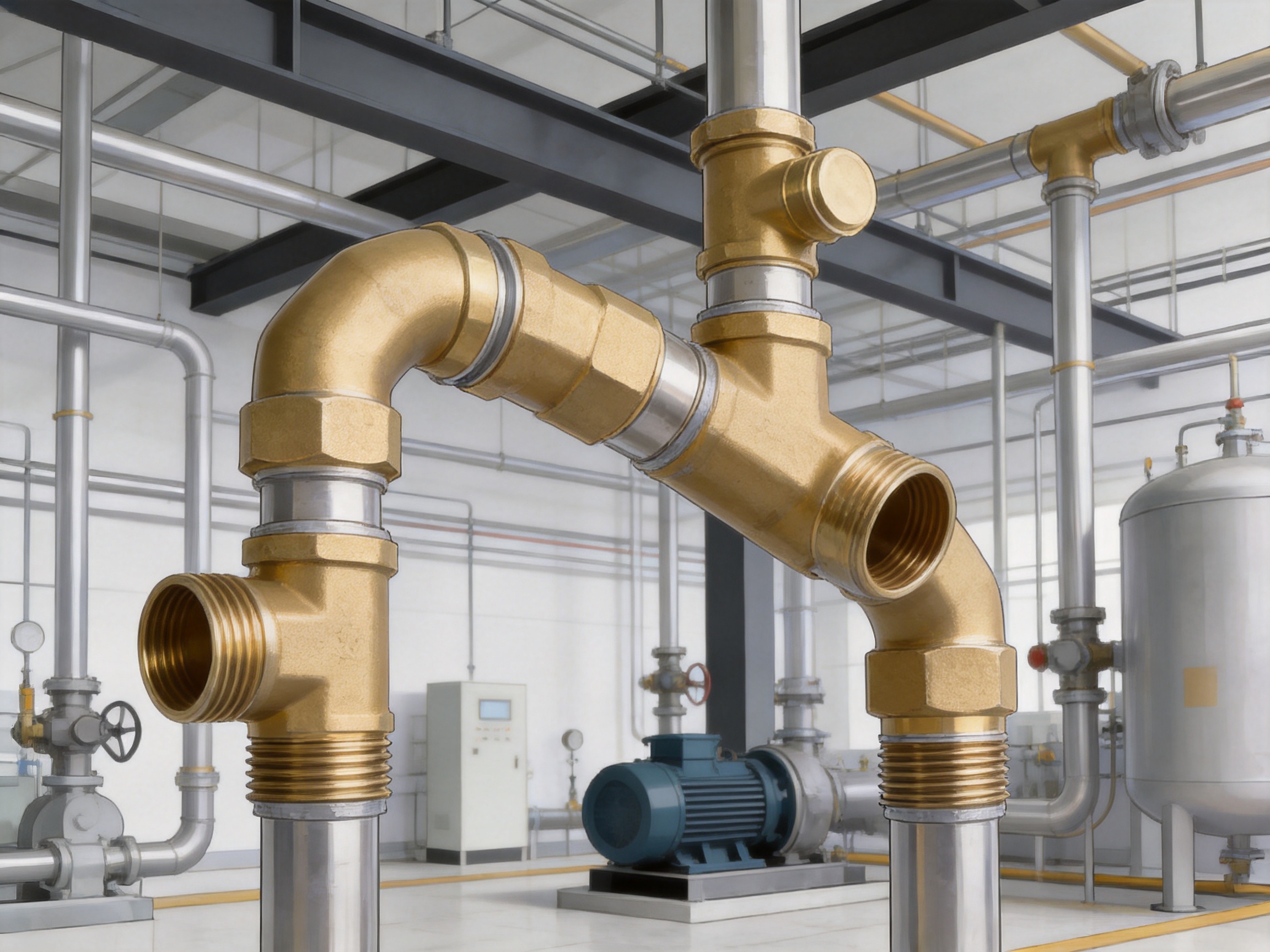
Complex geometries are particularly useful where installation space is limited. In compact equipment, a conventional elbow followed by a reducer and an adapter may occupy too much room. A purpose-designed irregular fitting can combine the same functions in a more compact body. This approach may help designers reduce pipe length, protect the system from unnecessary mechanical loads, and improve access to nearby valves or service points.
Irregular fittings can also help accommodate equipment that has a non-standard outlet position. For example, an equipment manufacturer may provide an offset port to meet internal design requirements, while the facility piping follows a different layout. Rather than modifying the entire pipe route, an appropriately designed fitting can bridge the difference between the equipment connection and the main line.
The correct fitting geometry can contribute to smoother installation and more predictable system performance. It may reduce forced alignment, minimize excessive tightening, and help maintain a natural pipe route. When combined with suitable supports and proper installation procedures, these advantages can improve long-term reliability.
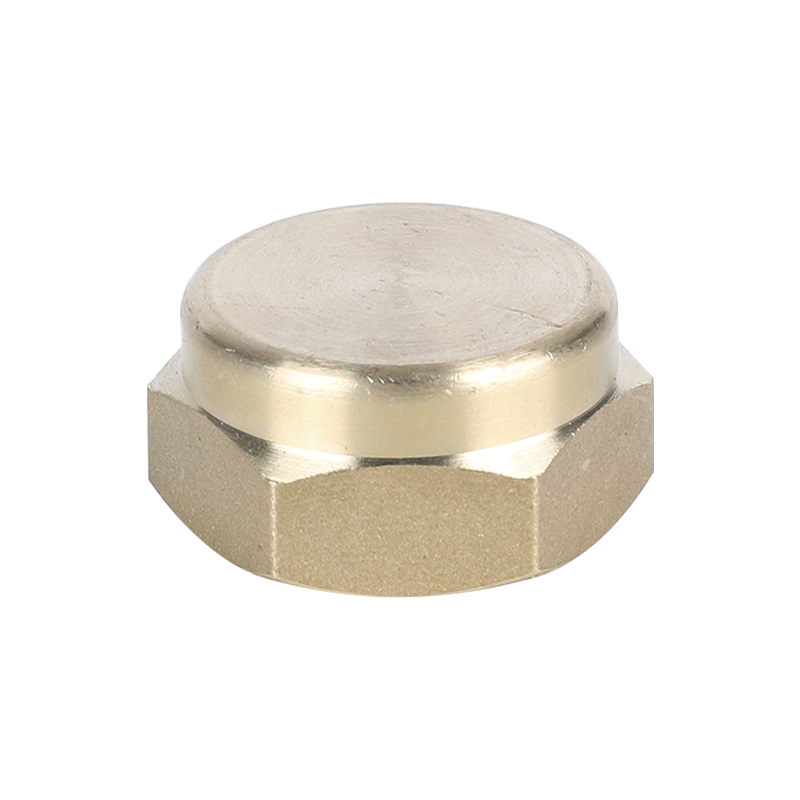
Irregular-Shaped Pipe Fittings
Key Product Advantages
1. Adaptability to Non-Standard Layouts
The primary advantage of irregular-shaped pipe fittings is their ability to adapt to piping systems that cannot be served efficiently by conventional components. Their geometry can be developed around a specific direction change, offset, connection distance, or equipment interface.
This adaptability is valuable for original equipment manufacturers, engineering contractors, maintenance departments, and distributors. OEMs can integrate the fittings into machines or packaged systems. Contractors can use them to solve installation constraints. Maintenance teams can replace difficult legacy connections with components that better match the existing arrangement. Distributors can offer specialized solutions for customers whose needs extend beyond standard catalog products.
2. Reduced Number of Connection Points
A complex route assembled from several ordinary fittings may require multiple threaded, welded, or sealed joints. Each additional joint increases assembly time and creates another location that must be inspected and maintained. An irregular-shaped fitting can sometimes combine two or more directional or transition functions into one component.
Fewer connection points may provide several practical benefits. Installation can become faster, the overall assembly can become more compact, and the risk associated with incorrect joint preparation can be reduced. Although the final configuration must always be evaluated by a qualified designer, integrated geometry is often a valuable alternative to a long chain of standard components.
3. Better Use of Installation Space
Industrial and building services systems increasingly require compact layouts. Mechanical rooms, control cabinets, equipment skids, water treatment units, gas assemblies, and process modules may have very limited clearance. Irregular-shaped fittings are designed to make better use of the available space while maintaining a functional flow path.
A compact fitting can help keep the piping closer to the equipment body or support structure. This may reduce interference with access panels, instruments, insulation, cable trays, and maintenance tools. It can also make the completed system more orderly and easier to identify during inspection.
4. Improved Alignment
Good alignment is essential to the service life of a piping system. When pipes are forced into position to compensate for an unsuitable fitting, the resulting stress may be transferred to threads, valves, equipment ports, or supports. An appropriately shaped fitting helps align the connected components naturally.
Improved alignment supports better sealing and can reduce mechanical strain. It also helps installation personnel work more efficiently because the pipe does not need to be twisted, pulled, or excessively adjusted to reach the connection point.
5. Application-Oriented Design
Irregular-shaped pipe fittings are not limited to one single industry. Their value comes from being designed around actual operating conditions and system layouts. A fitting for a water supply assembly may have different requirements from one used in a gas control system or industrial fluid installation.
Application-oriented design considers the working fluid, pressure, temperature, connection method, installation position, expected vibration, corrosion conditions, and maintenance requirements. A manufacturer with experience in valves and hardware accessories can evaluate the fitting as part of the wider fluid-control system rather than treating it as an isolated metal component.
Materials and Connection Considerations
Material selection has a direct influence on fitting performance. The selected material must be compatible with the conveyed medium and suitable for the expected pressure, temperature, environmental exposure, and joining method. Common considerations may include mechanical strength, corrosion resistance, machinability, surface finish, weight, and cost.
For water supply applications, the material should be appropriate for contact with the intended water and resistant to the conditions found in the installation environment. For gas service, the fitting must be compatible with the gas medium and the applicable safety requirements. For industrial fluids, engineers may need to consider chemical exposure, thermal cycling, abrasion, or contamination control.
Connection type is equally important. Threaded fittings are convenient for many installation environments and can be removed for service when correctly assembled. Welded designs may be selected where a permanent connection and high structural continuity are required. Compression or other mechanical arrangements may be suitable for applications that prioritize quick assembly or specific maintenance procedures.
The fitting geometry must be designed together with its connection method. Threads need adequate engagement and accurate pitch. Sealing faces require controlled flatness and surface quality. Weld ends must provide suitable access and dimensional consistency. A fitting that has a good outer shape but poor connection details will not deliver reliable system performance.
| Design consideration | Why it matters | Typical evaluation focus |
|---|---|---|
| Geometry | Determines whether the fitting can solve the layout problem | Angles, offsets, centerlines, outlet positions, clearance |
| Material | Influences strength, durability, and fluid compatibility | Corrosion resistance, temperature suitability, machinability |
| Connection type | Controls installation method and serviceability | Thread, weld, compression, brazing, sealing arrangement |
| Dimensional accuracy | Supports alignment and interchangeability | Thread accuracy, port size, face position, tolerance control |
| Surface quality | Contributes to sealing and appearance | Machining finish, burr removal, cleanliness, coating condition |
| Inspection | Confirms conformity before shipment | Visual checks, dimensional inspection, pressure or leak testing |
Precision Manufacturing Process
The performance of an irregular-shaped pipe fitting begins with a controlled manufacturing process. Since the product geometry may be more complex than that of a standard fitting, each stage must be carefully coordinated from initial design through final inspection.
Engineering and Product Planning
The process starts with an evaluation of the intended application. Product planning may include the required pipe sizes, connection standards, centerline dimensions, angles, offsets, wall thickness, operating medium, pressure range, and installation environment. Clear product information helps the manufacturer determine whether the fitting should be produced as a standard design, a modified model, or a customized component.
Engineering review is particularly important for irregular products because shape and function are closely connected. The body must provide sufficient material around ports and transitions while avoiding unnecessary weight or excessive flow restriction. The design should also allow stable clamping, practical machining access, effective deburring, and reliable inspection.
Raw Material Preparation
Suitable raw material is selected according to the product specification and manufacturing method. Material preparation can influence dimensional stability, surface quality, and machining efficiency. Correct identification and controlled handling help prevent material mix-ups and support consistent production.
Before machining, the material may be checked for basic conformity, visible defects, and suitability for the planned operation. Good preparation reduces the likelihood of problems later in the process and supports a stable production schedule.
CNC Precision Machining
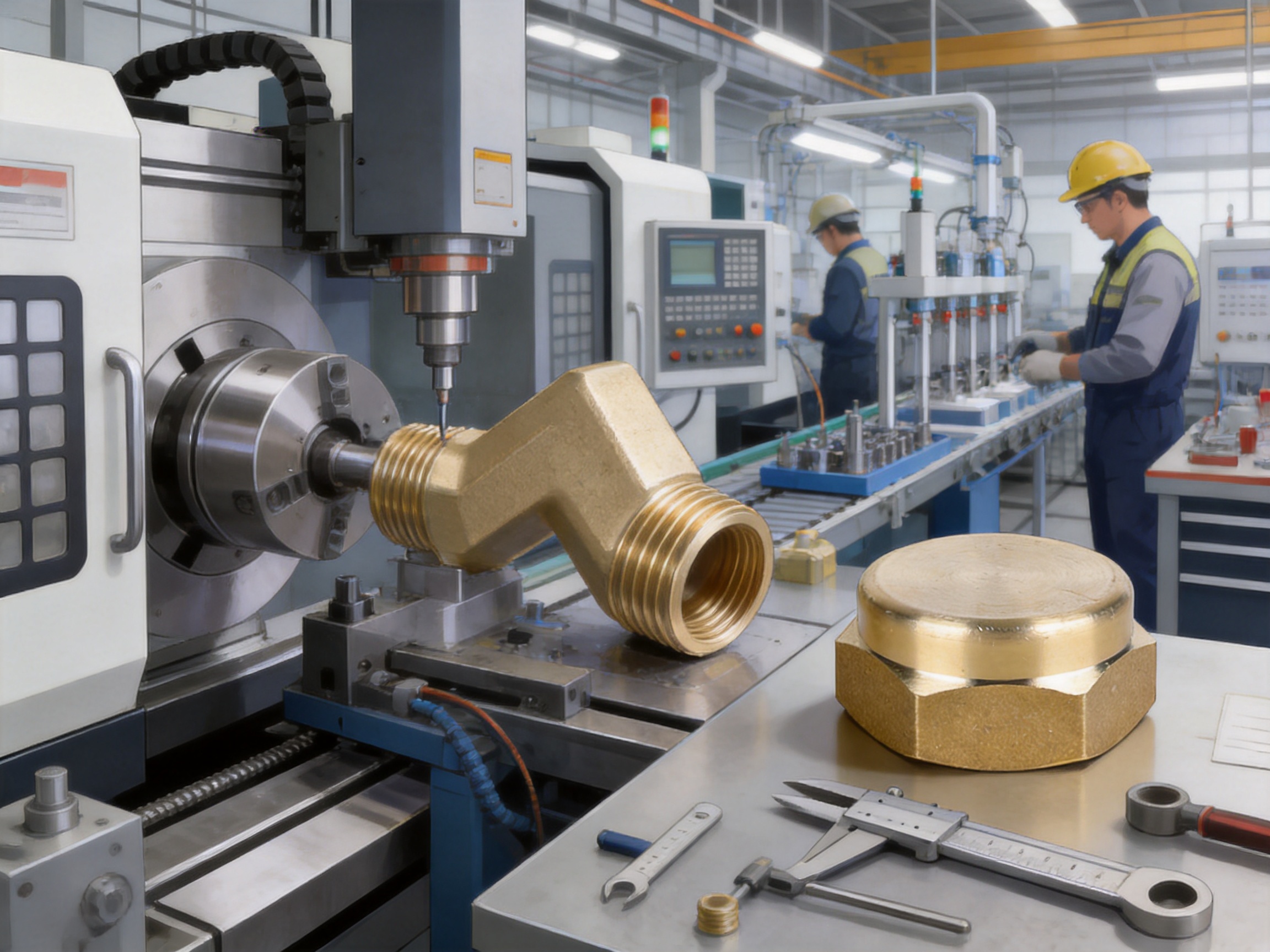
Advanced CNC machine tools are particularly valuable for irregular-shaped fittings because they can produce complex profiles with repeatable accuracy. CNC machining supports controlled turning, milling, drilling, tapping, boring, facing, and other operations required to form the fitting body and its connection features.
Computer-controlled equipment can maintain consistent tool movement and repeat the same machining sequence across production batches. This is important for customers who require consistent assembly dimensions across multiple units. It also enables the manufacturer to manage complex features more effectively than manual processing alone.
Machining parameters are selected according to the material, tool type, feature geometry, and required surface finish. Proper control helps reduce burrs, dimensional variation, tool marks, and deformation. For threaded areas and sealing surfaces, accuracy is especially important because these features directly affect installation and leak resistance.
Drilling, Tapping, and Port Formation
Many irregular-shaped fittings include one or more ports positioned at non-standard angles or distances. Drilling and tapping must therefore be carried out with careful control of location, depth, direction, and thread specification. The port must align with the intended pipe or valve connection without creating unnecessary internal restriction.
Where multiple ports intersect inside the fitting, the internal passage requires additional attention. The intersection should be formed without leaving excessive chips, sharp edges, or avoidable obstructions. Internal cleaning and deburring are important steps before the fitting proceeds to inspection and assembly.
Deburring and Surface Treatment
After machining, burrs and sharp edges are removed from the fitting. Deburring protects installers, improves handling safety, and helps prevent fragments from entering the piping system. It is particularly important around internal passages, threaded sections, sealing faces, and drilled openings.
Depending on the material and application, additional surface treatment may be used to improve appearance, corrosion resistance, or compatibility with the customer’s assembly process. Surface treatment must be controlled so that it does not interfere with threads, sealing faces, dimensional tolerances, or internal cleanliness.
Assembly and Automated Production Support
For products supplied as part of a valve or hardware assembly, assembly procedures must follow defined work instructions. The use of professional automated assembly equipment can support consistent positioning, tightening, and repeatability. Automation is especially helpful where a product is manufactured in significant volume and stable production quality is required.
Automated equipment does not replace engineering judgment or quality control. Instead, it supports the production team by making repetitive operations more consistent and by reducing variation caused by manual handling. The best results come from combining automation with trained personnel, documented procedures, and regular equipment maintenance.
Testing and Final Inspection
Testing verifies whether the completed fitting meets the applicable product requirements. Depending on the design and application, inspection may include dimensional checks, visual examination, thread verification, surface review, cleanliness assessment, and pressure or leak testing.
Final inspection is intended to identify nonconformities before shipment. It also provides production feedback that can be used to improve machining parameters, tooling, assembly procedures, and process control. A systematic inspection process strengthens customer confidence and supports repeatable quality across different orders.
Manufacturing Strengths Supporting Product Reliability
Integrated Production Resources
Ningbo Yunhua Valve Co., Ltd. integrates research and development, production, sales, and service within one organization. This structure helps connect customer requirements with product design and manufacturing decisions. Feedback from application support can be transferred to engineering and production teams, enabling improvements that are more difficult to achieve when design and manufacturing are completely separated.
The company’s product scope includes gas and fluid valves, water supply valves, and hardware accessories. This broad technical base is relevant to irregular-shaped pipe fittings because fittings are frequently installed alongside valves and other fluid-control components. Understanding the complete assembly helps the manufacturer consider connection compatibility, flow direction, installation sequence, and maintenance access.
Professional Workshop Configuration
The company has established a precision machining workshop, an assembly line, and a testing workshop. This configuration creates a logical production path from component processing to finished product verification. It also supports the separation of machining, assembly, and testing activities, making process responsibilities easier to define and monitor.
A dedicated testing workshop is particularly important for fluid-control products. Dimensional accuracy alone cannot confirm that a component is suitable for service. Leak resistance, assembly condition, and other application-related characteristics must also be considered according to the product type and relevant requirements.
Advanced CNC Equipment
Domestic and international CNC machine tools provide the foundation for accurate and repeatable machining. These machines can support the production of detailed fitting geometries, controlled ports, and consistent connection features. They also help the company respond to different product specifications without relying exclusively on manual operations.
For irregular-shaped fittings, equipment capability must be matched with suitable programming, tooling, fixtures, and inspection methods. A complex design can only be manufactured consistently when the entire process is controlled. The company’s investment in precision equipment provides an important foundation for this type of production.
Automated Assembly and Testing Equipment
Professional automated assembly and testing equipment helps improve process stability. Automated systems can support repeatable production, reduce unnecessary variation, and increase efficiency for high-volume orders. When combined with inspection procedures and trained operators, automation contributes to dependable product consistency.
Automation also supports production capacity. The company reports an annual production capacity of approximately 2 million valve sets and 10 million hardware accessory sets. This capacity indicates that the organization is structured to manage substantial production demand while maintaining an established manufacturing workflow.
Quality-Centered Management
Quality is influenced by every stage of production, from product planning and material handling to machining, assembly, testing, packaging, and service. A quality-centered management system helps ensure that these stages are connected rather than treated as isolated activities.
For customers purchasing irregular-shaped pipe fittings, quality management is valuable because the product may be used in a system with limited room for correction. Consistent dimensions, proper port alignment, clean surfaces, and reliable sealing features can reduce installation delays and avoid unnecessary field modifications.
Advantages Compared with Conventional Multi-Fitting Assemblies
Conventional standard fittings remain appropriate for many applications, and they should not be replaced without a sound engineering reason. However, when the layout is unusual, an irregular-shaped fitting may offer several advantages over a series of standard components.
The first potential advantage is reduced assembly complexity. A multi-fitting arrangement may require several parts, multiple seals, and more installation steps. An integrated irregular fitting can simplify the bill of materials and reduce the number of joints that need to be prepared and inspected.
The second advantage is compactness. A sequence of elbows and adapters can create a bulky arrangement with a large turning radius. A purpose-designed fitting can provide a more direct transition and may fit into a smaller envelope.
The third advantage is improved alignment. Standard components are often combined at fixed angles, which may not match the exact requirements of the equipment. The installer may need to rotate or reposition the connected pipe to compensate. An irregular fitting designed around the actual centerlines can help reduce this problem.
The fourth advantage is potential reduction in system pressure loss. Every change in direction, sudden transition, and internal obstruction can influence fluid flow. A carefully designed fitting may provide a smoother internal route than a chain of separate components. Actual pressure-loss performance must be confirmed through engineering evaluation, but integrated geometry can create a useful design opportunity.
The fifth advantage is easier maintenance planning. A more compact and orderly connection can improve visibility and access around nearby valves, instruments, and service points. This is especially useful in equipment assemblies that require regular inspection or replacement.
| Comparison area | Irregular-shaped fitting | Multiple standard fittings |
|---|---|---|
| Layout flexibility | Designed for a specific offset, angle, or connection arrangement | Limited by the available standard combinations |
| Number of joints | May combine several functions in one component | Usually requires several separate connections |
| Installation space | Can be optimized for a compact envelope | May require a larger turning or transition area |
| Alignment | Can be matched to equipment centerlines | May require field adjustment or additional adapters |
| Inventory | Useful for a defined application or project | Standard parts may be easier to stock |
| Customization | Strong option for special layouts | Usually limited to catalog dimensions |
Application Areas
Gas and Fluid Control Systems
Gas and fluid control systems often combine valves, regulators, meters, filters, and pipe sections in a confined area. Irregular-shaped fittings can help connect these components while maintaining an organized route. The fitting material, connection method, and testing requirements must be selected according to the medium and applicable safety criteria.
In gas-related installations, correct assembly and leak prevention are essential. Thread condition, sealing method, port alignment, and testing should be handled according to the relevant installation standard and project specifications. A fitting manufacturer with experience in gas valves can provide useful insight into connection compatibility and production control.
Water Supply and Plumbing Assemblies
Water supply systems often encounter walls, cabinets, pumps, storage tanks, meters, and other obstacles. Irregular-shaped fittings can help connect pipes to equipment outlets or route water lines through compact spaces. They may be used in residential, commercial, municipal, and industrial water applications, subject to material and approval requirements.
In water systems, durability, corrosion resistance, cleanliness, and sealing reliability are important. A well-machined fitting can support easier installation and help maintain a stable connection over the service life of the piping assembly.
Industrial Equipment
Industrial machines frequently include custom ports and closely spaced components. Hydraulic, pneumatic, cooling, lubrication, and process-fluid circuits may require special connection geometry. Irregular-shaped pipe fittings can be integrated into equipment skids, production machinery, packaged units, and fluid distribution assemblies.
Industrial users may value repeatability as much as the initial design. Once a fitting has been approved for a machine or assembly, consistent replacement parts are needed for future production and maintenance. CNC-based manufacturing and documented inspection can support this requirement.
Heating, Cooling, and Mechanical Systems
Heating and cooling systems may contain pumps, heat exchangers, expansion equipment, control valves, and insulated pipework. Space around these components is often restricted, while access for maintenance must be preserved. An irregular fitting can help route the pipe without blocking removable panels or service areas.
Temperature changes can cause expansion and contraction, so the complete system must be designed with appropriate supports and flexibility. The fitting should be selected as part of the overall piping design rather than viewed as a substitute for proper expansion control.
Agricultural and Irrigation Equipment
Agricultural equipment and irrigation systems may have uneven terrain, mobile machinery, pump outlets, filters, and non-standard connection layouts. Irregular fittings can simplify transitions between equipment and distribution lines. Their suitability depends on the pressure, water quality, exposure to weather, and required connection type.
Repair and Replacement Projects
Replacement work often involves existing pipework that no longer matches current equipment. The original arrangement may include discontinued parts, modified sections, or limited access. An irregular-shaped fitting can help connect the existing line to a replacement valve, pump, tank, or appliance without rebuilding the complete system.
Before ordering a replacement fitting, installers should record the pipe sizes, connection standards, center-to-center distances, port orientation, available clearance, and operating conditions. Accurate field information is necessary to avoid delays and ensure correct fit.
How to Select the Right Irregular-Shaped Pipe Fitting
Define the Connection Requirements
Begin by identifying every connection involved in the fitting. Record the nominal pipe size, actual outside diameter where relevant, connection type, thread standard, port orientation, and required centerline dimensions. A drawing or dimensioned sketch is often more useful than a verbal description.
For projects involving several ports, indicate the flow direction and the relationship between each port. Mark the required angles and offsets clearly. If the fitting connects directly to a valve or equipment body, include the mating component’s interface dimensions.
Confirm the Operating Conditions
The working medium, pressure, temperature, and expected operating cycles should be reviewed before selecting the fitting. Consider whether the system is exposed to vibration, outdoor weather, chemical substances, condensation, or abrasive particles. These factors influence material, wall thickness, sealing, surface treatment, and testing requirements.
Evaluate Installation and Maintenance Space
The fitting should fit within the available space without blocking nearby components. Allow sufficient room for tightening tools, inspection, insulation, removal, and future maintenance. A fitting that technically connects the pipes but cannot be installed or serviced properly may create long-term difficulties.
Review Applicable Standards
Different markets and applications may require specific standards for dimensions, threads, pressure ratings, materials, testing, and product marking. The buyer should identify the relevant requirements before production begins. The manufacturer can then review the specification and confirm the available production and inspection arrangements.
Consider Quantity and Repeatability
For a one-time repair, a special fitting may be produced in a small quantity. For OEM or project use, repeatability becomes more important. The same geometry must be reproduced accurately across multiple production batches. A manufacturer with CNC machining, documented processes, and established inspection capability is better positioned to support repeated orders.
Customization and Customer Support
Customization is one of the most important values associated with irregular-shaped pipe fittings. Customers may require a special angle, offset, port position, length, thread arrangement, surface treatment, or packaging method. Successful customization depends on clear communication between the customer and manufacturer.
The inquiry process should include drawings, three-dimensional models where available, photographs of the installation, sample parts, required quantities, material preferences, fluid information, and applicable standards. The more complete the technical information, the more accurately the manufacturer can assess feasibility and prepare a quotation.
During design review, potential concerns may include thin wall sections, difficult machining access, excessive internal restriction, insufficient thread engagement, or limited inspection access. Addressing these issues before production can prevent expensive changes later.
After approval, the manufacturer should maintain clear records of the product specification, revision status, material, machining process, inspection requirements, and packaging instructions. This documentation supports consistent production and simplifies future repeat orders.
Ningbo Yunhua Valve Co., Ltd. combines product development, production, sales, and service capabilities. This integrated structure can support customers from initial product discussion through manufacturing and delivery. Its experience with valves and hardware accessories also provides a practical foundation for understanding how irregular fittings function in complete fluid systems.
Quality Control and Reliability
Reliability is not created by one inspection at the end of production. It is built through process control. For irregular-shaped pipe fittings, quality control should cover design verification, material handling, machine setup, dimensional inspection, thread checking, deburring, cleaning, assembly, and final testing.
Dimensional inspection confirms that the fitting matches the approved drawing. Important dimensions may include port location, angle, offset, overall length, thread depth, connection diameter, sealing-face position, and wall thickness. The inspection method should be suitable for the tolerance and product geometry.
Visual inspection identifies surface defects, cracks, dents, incomplete machining, excessive tool marks, contamination, and damage caused during handling. While visual inspection cannot replace dimensional or pressure testing, it remains an important part of the quality process.
Thread inspection helps confirm that mating components can be assembled correctly. Threads should be free from damaging burrs and should meet the specified form and depth. Sealing faces should be checked for damage or irregularities that could affect joint performance.
Where required by the product specification, pressure and leak testing can provide additional assurance. The test method, pressure, duration, and acceptance criteria should be defined according to the application and applicable requirements. Testing should be performed using appropriate equipment and controlled procedures.
Packaging also contributes to product quality. Fittings should be protected from impact, moisture, contamination, and thread damage during storage and transportation. Ports may require protective caps or other suitable protection. Clear labeling supports identification, traceability, and efficient receiving inspection.
Installation Recommendations
Before installation, compare the delivered fitting with the approved drawing or purchase specification. Check the connection type, dimensions, orientation, surface condition, and protective packaging. Do not install a component that appears damaged or does not match the required configuration.
Clean the pipe ends and mating connections before assembly. Remove dirt, metal particles, oil residue, and other contaminants that may affect sealing or enter the fluid system. Confirm that the pipe is properly supported and aligned before tightening the fitting.
Use a sealing method suitable for the connection type, fluid, pressure, and temperature. Sealant should not be applied in a way that blocks the internal passage or contaminates sensitive equipment. Threaded connections should be tightened according to an appropriate procedure rather than forced beyond their design capability.
Do not use the fitting to compensate for excessive pipe misalignment. If the pipe must be pulled, twisted, or heavily stressed to reach the connection, stop and review the layout. Correct the support or pipe positioning before completing the assembly.
After installation, inspect the connection and perform the required leak or pressure test. Follow the relevant system commissioning procedure. In gas applications and other safety-critical systems, testing and inspection should be conducted by qualified personnel in accordance with applicable regulations.
Why Manufacturing Location and Capacity Matter
Manufacturing capability affects more than production volume. It influences lead time, product consistency, engineering responsiveness, quality documentation, and the ability to support repeat orders. A supplier with an established workshop and multiple production stages can often coordinate complex requirements more effectively.
Ningbo Yunhua Valve Co., Ltd. is located in Cixi City, Ningbo, Zhejiang Province, China, an area with strong manufacturing and export connections. Its stated facility covers approximately 20,000 square meters and includes precision machining, assembly, and testing operations. This infrastructure supports the production of fluid valves and hardware accessories for different customer requirements.
The company reports annual capacity of approximately 2 million valve sets and 10 million hardware accessory sets. Such capacity can be valuable to distributors, OEM customers, and project suppliers that need stable supply over time. Capacity must always be considered together with quality control and production planning, but a well-organized high-volume facility can provide a strong supply foundation.
The company’s stated mission is to build a safe fluid ecosystem through high-quality valves. This mission is relevant to pipe fittings because fittings, valves, and accessories work together as one functional system. A reliable fitting helps protect the integrity of the complete fluid route, while poor compatibility can undermine the performance of otherwise high-quality valves.
Sustainability and Efficient Resource Use
Efficient fitting design can support responsible resource use. An integrated component may reduce the quantity of separate parts, packaging materials, and sealing consumables required for a particular assembly. A compact layout may also reduce pipe length and installation labor, although each design must be evaluated according to engineering, safety, and lifecycle requirements.
Precision machining can contribute to efficient material use by producing the required geometry with controlled removal of material. Process stability may reduce rejected parts, rework, and unnecessary consumption of raw materials. Proper maintenance of CNC equipment and tooling also helps sustain efficient production.
Durable fittings can provide environmental value by reducing premature replacement and maintenance-related waste. Long service life depends on correct material selection, suitable operating conditions, proper installation, and regular system inspection.
Frequently Asked Questions
What are irregular-shaped pipe fittings used for?
They are used to connect pipes, valves, equipment, or other components when the required route includes a special angle, offset, centerline, port position, or compact geometry that standard fittings cannot provide efficiently.
Are irregular-shaped fittings suitable for gas applications?
They may be suitable for gas applications when their material, connection method, pressure capability, sealing arrangement, testing, and approvals meet the requirements of the specific gas system. The application should be reviewed by qualified professionals before selection and installation.
Can these fittings be customized?
Many irregular-shaped fittings can be customized according to approved drawings, samples, or detailed dimensional information. Customization may involve geometry, port location, connection type, material, surface treatment, or packaging. Feasibility depends on the design and production requirements.
What information should be provided for a quotation?
Useful information includes a technical drawing or sketch, pipe sizes, connection standards, port orientation, angles, offsets, material, working medium, pressure, temperature, quantity, surface requirements, inspection requirements, and delivery expectations.
How do irregular fittings compare with several standard fittings?
An irregular fitting may reduce the number of joints, save installation space, improve alignment, and simplify assembly. Standard fittings may be easier to stock and replace. The best choice depends on the system layout, cost, maintenance plan, availability, and engineering requirements.
Can one fitting connect different pipe sizes?
Some designs can include unequal or transitional connections, but this must be confirmed from the product drawing. The manufacturer should review the required sizes, wall thickness, internal passage, and connection standards before production.
How does CNC machining benefit these products?
CNC machining supports repeatable control of complex profiles, angles, ports, threads, and sealing surfaces. It can improve dimensional consistency and make it easier to reproduce an approved design for future orders.
Are irregular-shaped fittings pressure tested?
Testing depends on the product design, application, customer specification, and applicable requirements. Where pressure or leak testing is required, the method and acceptance criteria should be agreed before production.
Can these fittings be used with valves?
Yes. They are often used to connect valves with pipework or equipment in compact fluid-control assemblies. The valve interface, flow direction, pressure requirements, and maintenance clearance must be checked during design.
How can installation problems be avoided?
Use accurate dimensions, confirm the connection standards, inspect the fitting before installation, align the pipe without force, use a compatible sealing method, and perform the required leak or pressure test after assembly.
Why is internal cleaning important?
Particles, chips, or burrs inside a fitting can restrict flow, damage valves, contaminate equipment, or affect sealing. Proper deburring, cleaning, inspection, and protective packaging help preserve internal quality.
What makes a supplier reliable for repeat orders?
Important factors include stable manufacturing processes, precision equipment, documented specifications, dependable inspection, production capacity, responsive communication, and the ability to maintain consistency across different batches.
Conclusion
Irregular-shaped pipe fittings provide a practical solution for piping systems that require more than standard connection geometry. By accommodating special angles, offsets, port arrangements, and restricted spaces, they can simplify installation, improve alignment, reduce the number of connection points, and support more compact fluid-control assemblies.
The advantages of these fittings depend on accurate design and dependable production. CNC precision machining, controlled port formation, careful deburring, professional assembly, and systematic testing are essential to achieving reliable results. Material selection, connection compatibility, operating conditions, and installation procedures must also be evaluated as part of the complete system.
Ningbo Yunhua Valve Co., Ltd. offers a manufacturing platform supported by research and development, production, sales, service, precision machining, assembly, and testing. Its experience in gas and fluid valves, water supply valves, and hardware accessories provides a useful foundation for producing components intended to work within complete fluid systems. The company’s approximately 20,000-square-meter facility, advanced CNC equipment, automated assembly and testing resources, and stated production capacity support customers requiring consistent quality and stable supply.
For OEM projects, equipment manufacturers, engineering contractors, distributors, and maintenance applications, irregular-shaped pipe fittings can deliver value when the product is correctly designed around the real installation. A detailed technical review, appropriate material and connection selection, controlled manufacturing, and proper commissioning together create the foundation for a safe and durable piping solution.
References
1. Industrial Piping Design Principles, technical reference material on pipe routing, fittings, alignment, and pressure considerations.
2. Fluid Mechanics and Piping Systems Engineering, reference material on flow paths, pressure loss, transitions, and system layout.
3. CNC Machining Practice and Process Control, technical guidance on precision machining, tooling, tolerances, and repeatability.
4. Valve and Fitting Installation Guidelines, reference material on threaded connections, sealing methods, inspection, and commissioning.
5. Quality Management Principles for Industrial Components, guidance on material control, process inspection, final testing, traceability, and packaging.
6. Water Supply and Gas Piping Safety Practices, general technical reference for application review, leak prevention, pressure testing, and qualified installation.
Product: Irregular-Shaped Pipe Fittings

Related Products
Related News
Contact Us
-

-
 +86-0574-63742169
 -
 No.104-128, Cizhang East Road, Zhangqi Town, Cixi City, Ningbo, Zhejiang Province, China


Message Us Now !
