


 English
  русский
  عربى
عربى  Español
Forged Steel Long-Handle Ball Valve for Reliable Industrial Flow Control
Content
- 1 Product Overview: Strength, Control, and Practical Operation
- 2 Why Forged Steel Matters in Valve Performance
- 3 The Long Handle Advantage
- 4 Leak-Proof Shut-Off and Flow Control Reliability
- 5 Applications in Demanding Industries
- 6 Competitive Advantages Over Common Alternatives
- 7 Manufacturing Strength Behind the Valve
- 8 Precision Machining and Quality Consistency
- 9 Testing for Safety and Reliability
- 10 Installation Considerations for Best Performance
- 11 Maintenance and Service Life
- 12 Value for Distributors, Contractors, and Industrial Buyers
- 13 How the Product Supports Safer Fluid Systems
- 14 Company Capability and Quality Philosophy
- 15 Selection Guidance for Engineers and Purchasers
- 16 Frequently Asked Questions
- 16.1 Q1: What is the main advantage of a forged steel ball valve?
- 16.2 Q2: Why does the valve use a long handle?
- 16.3 Q3: What applications is this valve suitable for?
- 16.4 Q4: Does the valve provide tight shut-off?
- 16.5 Q5: What does F/F mean in the product configuration?
- 16.6 Q6: How does this valve compare with a cast valve?
- 16.7 Q7: Why is CNC machining important for valve quality?
- 16.8 Q8: How does the manufacturer support product reliability?
- 16.9 Q9: Is this valve suitable for steam service?
- 16.10 Q10: What should be checked before installation?
- 17 Conclusion
- 18 References
- 19 Product: YH-2210 Forged Steel Ball Valve with Long Handle (F/F)
In demanding fluid control systems, the quality of a shut-off valve can directly influence safety, uptime, energy efficiency, maintenance cost, and process stability. A ball valve may appear simple from the outside, but the internal requirements are exacting: the body must withstand pressure, the sealing structure must close tightly, the stem must transmit torque reliably, and the handle must allow operators to identify valve position quickly. The forged steel ball valve with a long handle and F/F end configuration is designed for these practical requirements. It combines a forged steel body, precision flow control, reliable shut-off performance, and an extended handle intended to make operation easier in industrial environments.
This product is especially suited for applications where durability and dependable isolation are essential. Industrial process lines, oil and gas systems, steam service, high-pressure water systems, utility networks, and fluid distribution equipment all require valves that can perform consistently over long periods. Compared with general-purpose cast valves or lighter-duty valves, a forged steel ball valve provides a stronger material foundation, a denser structure, and better resistance to pressure-related stress. When paired with precision machining and strict testing, the result is a valve that supports safer operation and lower lifecycle risk.
The long handle is also a meaningful design feature rather than a minor accessory. In many industrial sites, valves are installed in crowded piping corridors, near insulation, around equipment frames, or in areas that require quick visual confirmation of valve status. A longer handle allows better leverage, easier turning, and clearer indication of whether the valve is open or closed. For maintenance teams and plant operators, this improves convenience and reduces the chance of operational mistakes.
Behind the product is Ningbo Yunhua Valve Co., Ltd., an enterprise specializing in the research, development, production, sales, and service of gas and fluid valves, water supply valves, and hardware accessories. With a 20,000-square-meter production base, professional automated precision machining workshops, assembly lines, testing workshops, advanced CNC machine tools, and automated assembly and testing equipment, the company is positioned to supply valves with consistent quality and scalable production capacity. Its annual capacity reaches 2 million sets of valves and 10 million sets of hardware accessories, reflecting both industrial capability and a commitment to stable supply.
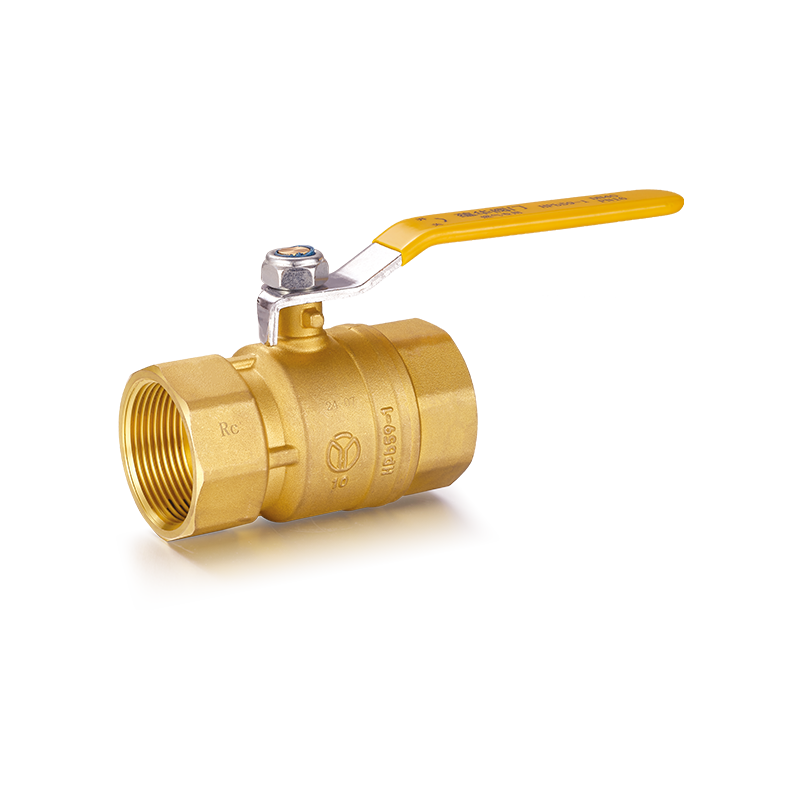
YH-2210 Forged Steel Ball Valve with Long Handle (F/F)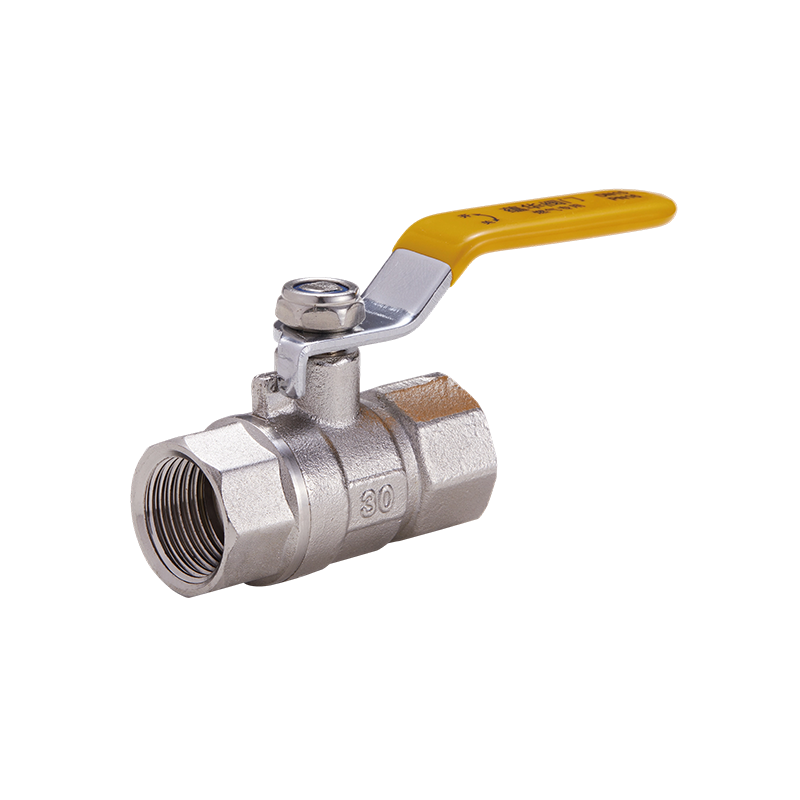
Product Overview: Strength, Control, and Practical Operation
The forged steel ball valve with a long handle is designed as a robust shut-off valve for systems that require secure opening and closing. The ball valve structure offers fast quarter-turn operation, meaning the valve can move from fully open to fully closed with a 90-degree turn of the handle. This is particularly valuable in systems where operators need fast isolation during maintenance, startup, shutdown, or emergency response.
The forged steel construction is one of the product’s most important characteristics. Forging compresses and shapes metal under high pressure, creating a refined grain structure and improved mechanical strength compared with many cast alternatives. In a valve body, this helps improve resistance to pressure, temperature fluctuation, and mechanical stress. For systems that handle steam, water, gas, oil, or process media, this material advantage can make a major difference in long-term reliability.
The F/F end configuration is intended to provide a secure and convenient installation interface for compatible piping systems. Depending on project requirements and regional standards, F/F is commonly understood in valve selection as an end-to-end connection type that should be matched to the piping specification. Proper matching of connection standards, sealing materials, pressure class, installation torque, and operating environment is essential for achieving full performance. A valve should always be selected according to system design conditions and applicable engineering standards.
The valve’s long handle supports easier manual operation. In high-pressure lines or larger valve sizes, the torque required to operate a valve may increase. A longer handle provides better leverage, making it easier for operators to open or close the valve without excessive force. It also provides a clear visual indicator: when the handle is aligned with the pipeline, the valve is typically open; when the handle is perpendicular to the pipeline, the valve is typically closed. This simple indication can support safer operation and quicker inspection.
For buyers comparing different valve options, this product provides a balance of heavy-duty construction and user-friendly operation. It is not merely a commodity shut-off component; it is a dependable flow control element designed for practical industrial conditions.
Why Forged Steel Matters in Valve Performance
The choice of valve body material has a direct effect on pressure resistance, durability, fatigue performance, and service life. Forged steel is widely valued in industrial valve manufacturing because it provides a more compact and uniform structure than many cast materials. During forging, the metal is shaped through compressive force, reducing internal voids and refining the grain flow. This can improve the material’s ability to resist cracking, impact, and deformation.
In cast valves, the molten metal is poured into a mold and solidifies into shape. Casting is useful for many products, especially complex shapes and large components, but it may introduce risks such as porosity, shrinkage cavities, or inconsistent internal structure if not tightly controlled. High-quality cast valves can perform well, but forged steel valves often offer a performance advantage in demanding pressure and temperature applications because of their stronger material integrity.
For a ball valve, the body must hold pressure while maintaining accurate alignment of internal components. If the body deforms, sealing performance may suffer. A forged steel body helps preserve dimensional stability, which supports proper seating of the ball and sealing components. This contributes to leak-proof performance and dependable shut-off.
Forged steel also supports long-term durability in environments where valves are subjected to vibration, temperature cycling, or repeated operation. Industrial facilities often expect valves to remain in service for years, sometimes under harsh conditions. A stronger body structure can reduce the likelihood of premature failure and improve confidence in system safety.
In high-pressure water systems, steam lines, oil and gas handling, and industrial process equipment, the cost of valve failure can be much higher than the cost of the valve itself. Leakage can lead to downtime, product loss, safety hazards, and environmental concerns. Choosing a forged steel valve is therefore a preventive decision that supports risk control.
The Long Handle Advantage
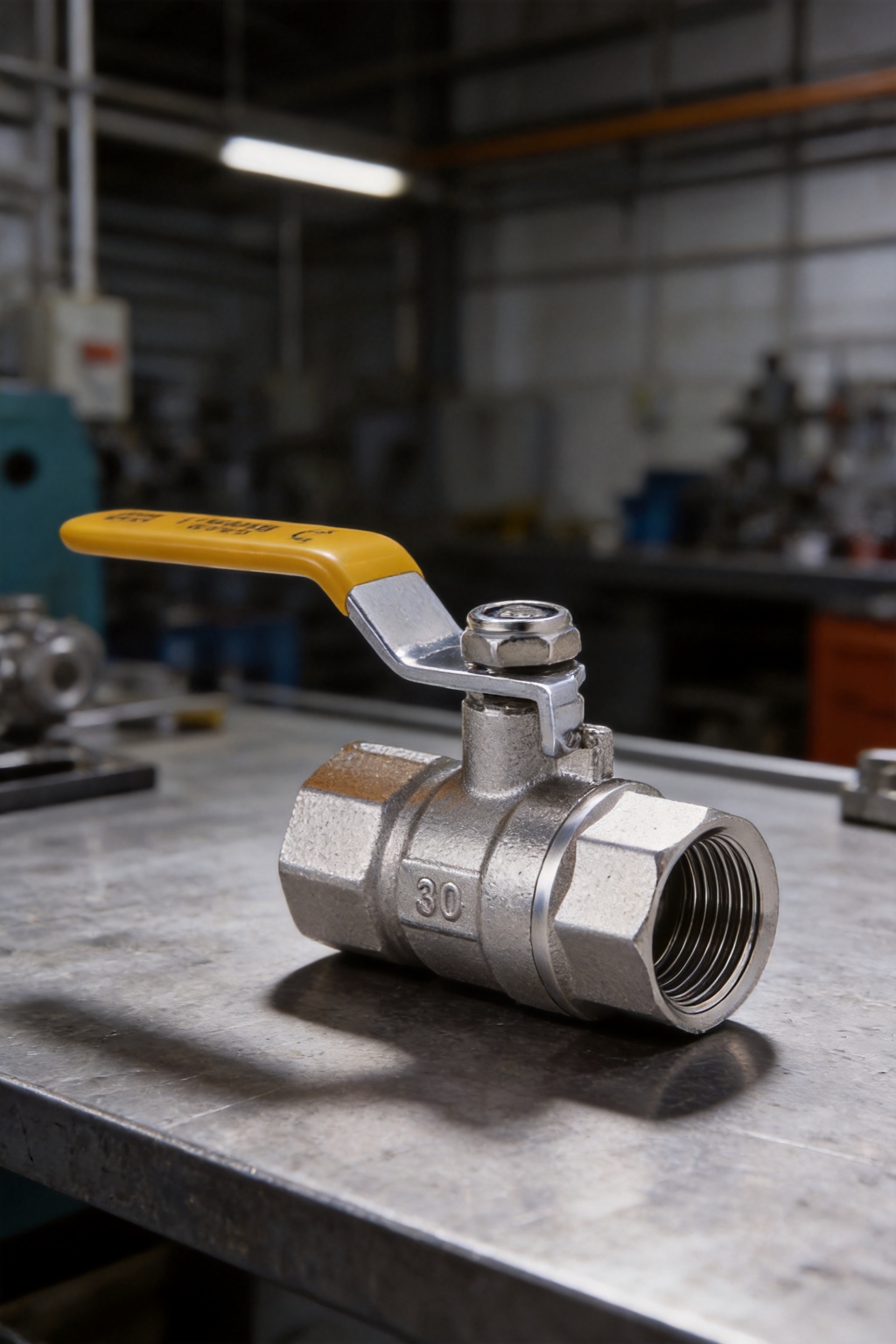
The extended handle is one of the defining features of this forged steel ball valve. A long handle improves leverage, allowing the operator to apply turning force more easily. This can be especially important when the valve is installed in systems with higher pressure, when the valve has remained in one position for a long period, or when the installation location makes access difficult.
Manual valves must be practical for real operating environments. In many industrial plants, pipework is not installed in ideal open spaces. Valves may be close to walls, equipment, support brackets, insulation, or adjacent pipelines. Operators may need to open or close a valve while wearing gloves or safety equipment. A longer handle gives them a better grip and more operating control.
The long handle also supports fast visual checking. During routine inspections, maintenance teams often need to confirm valve status quickly. The handle position provides a clear indication of whether the valve is open or closed. A longer handle is easier to see from a distance, helping reduce the risk of confusion in complex pipeline networks.
Another benefit is reduced strain on the operator. If a valve requires high torque and has a short handle, the operator may need to apply excessive force. This can be inconvenient and may increase the risk of improper operation. A longer handle distributes effort more effectively, supporting smoother movement and better control.
However, a long handle must also be designed with strength and stability. It should not bend easily, loosen prematurely, or interfere with surrounding equipment. Proper handle design, secure fastening, and accurate valve machining all contribute to reliable operation. When these factors are combined with a forged steel body, the result is a product that supports both mechanical durability and operational convenience.
Leak-Proof Shut-Off and Flow Control Reliability
A ball valve is expected to provide dependable isolation. The ball inside the valve has a bore that aligns with the pipeline when open and rotates perpendicular to block flow when closed. The sealing elements around the ball must maintain close contact to prevent leakage. Precision machining is critical because small dimensional errors can affect the contact between the ball, seats, stem, and body.
The product is positioned to deliver reliable, bubble-tight shut-off performance. This is especially important in systems handling media where leakage is unacceptable. In gas lines, leakage creates safety concerns. In steam systems, leakage wastes energy and may create burn hazards. In water systems, leakage can cause pressure loss, equipment damage, and inefficient operation. In oil or industrial fluid systems, leakage can result in product loss and environmental risk.
Leak-proof performance depends on multiple factors: material strength, machining accuracy, surface finish, sealing design, assembly quality, and testing. A strong forged steel body gives the valve a stable structural base. Precision machining helps ensure accurate geometry. Correct assembly supports proper sealing compression and smooth rotation. Testing confirms that the valve meets quality expectations before delivery.
Quarter-turn operation also helps simplify flow control. While a ball valve is primarily used for on-off service, its quick response is useful where fast isolation is needed. Operators can close a line rapidly without multiple wheel rotations. This makes ball valves convenient for emergency shut-off, maintenance isolation, and process switching.
The smooth internal passage of a ball valve can also reduce pressure drop when fully open, depending on bore design and system conditions. A lower pressure drop helps improve energy efficiency because pumps or compressors do not need to overcome excessive resistance. For industrial buyers, reduced resistance and dependable shut-off can contribute to overall operating efficiency.
Applications in Demanding Industries
The forged steel long-handle ball valve is suitable for a range of industrial and utility applications. Its robust construction and reliable shut-off performance make it a practical choice for systems requiring strength and dependability.
Industrial Process Systems
In manufacturing and processing facilities, valves are used to control raw materials, auxiliary fluids, cleaning systems, cooling water, heating circuits, and process media. A forged steel ball valve provides reliable isolation during equipment maintenance and process adjustments. The long handle makes it easier for operators to control flow in busy production environments.
Oil and Gas Service
Oil and gas systems demand valves that can handle pressure, safety requirements, and harsh operating conditions. A forged steel body provides the strength needed for dependable service. Reliable sealing helps prevent media loss and supports safer handling. The quick quarter-turn operation is useful when lines must be isolated quickly.
Steam and Thermal Systems
Steam service places stress on valves due to high temperature, pressure, and thermal cycling. Forged steel construction provides improved resistance to these demanding conditions compared with lighter-duty materials. Proper valve selection must consider temperature range, seat material, pressure rating, and compatibility with steam service, but the forged steel body provides a strong foundation.
High-Pressure Water Systems
High-pressure water supply, industrial cleaning, hydraulic support systems, and utility pipelines require valves that can resist pressure and maintain sealing integrity. A forged steel ball valve can provide strong isolation and stable operation. The long handle is useful where higher operating torque may be encountered.
General Fluid Control and Utility Networks
Many factories need valves for compressed air, water, non-corrosive fluids, and auxiliary services. Even when the media are not extremely demanding, a durable forged steel valve can reduce maintenance frequency and improve long-term reliability. Buyers who prioritize quality often choose stronger valves to reduce the risk of unplanned downtime.
Competitive Advantages Over Common Alternatives
When comparing this forged steel long-handle ball valve with competing products, several advantages stand out. These advantages are not limited to material selection; they also include operational convenience, manufacturing consistency, testing capability, and supplier strength.
| Comparison Item | Forged Steel Long-Handle Ball Valve | Common Lower-Duty Alternative | Practical Benefit |
|---|---|---|---|
| Body Material | Forged steel structure with strong mechanical integrity | Cast or lighter materials with potentially lower pressure resistance | Better durability and confidence in demanding service |
| Operation | Extended handle for easier leverage and clear position indication | Short handle or less ergonomic design | Faster, easier, and more visible manual control |
| Shut-Off Performance | Precision-engineered sealing for reliable closure | Variable sealing consistency depending on manufacturing quality | Reduced risk of leakage and media loss |
| Manufacturing Support | Produced with CNC machining, automated assembly, and testing equipment | May rely more heavily on manual or inconsistent production methods | More stable product quality and repeatability |
| Supply Capability | Backed by large-scale annual valve and hardware accessory capacity | Limited production flexibility or inconsistent delivery | Better support for projects, distributors, and OEM demand |
The forged steel structure gives the valve a clear advantage in pressure and temperature resistance. While a low-cost valve may appear acceptable at the purchase stage, the real test is long-term service. If a valve leaks, seizes, or fails prematurely, the total cost can include labor, downtime, replacement parts, system cleaning, product loss, and safety management. A stronger valve can therefore provide better lifecycle value.
The long handle is another competitive advantage because it supports ease of use. In industrial operations, equipment that is easier to operate is less likely to be misused. Clear handle position reduces ambiguity. Better leverage reduces physical effort. These features may seem simple, but they matter in daily maintenance and plant operation.
Manufacturing consistency is also a key differentiator. A valve supplier with advanced CNC machining and testing systems can better control dimensions, surface quality, assembly accuracy, and leakage performance. In a competitive market, many valves may look similar externally, but differences in manufacturing precision often become visible after installation. A valve that opens smoothly, seals reliably, and performs consistently is the result of controlled production rather than appearance alone.
Manufacturing Strength Behind the Valve
Ningbo Yunhua Valve Co., Ltd. has developed manufacturing capabilities that support the reliable production of gas and fluid valves, water supply valves, and hardware accessories. The company’s production base covers 20,000 square meters, providing the space needed for precision machining, assembly, testing, storage, and coordinated production management. A large manufacturing environment allows better workflow organization and supports stable production capacity.
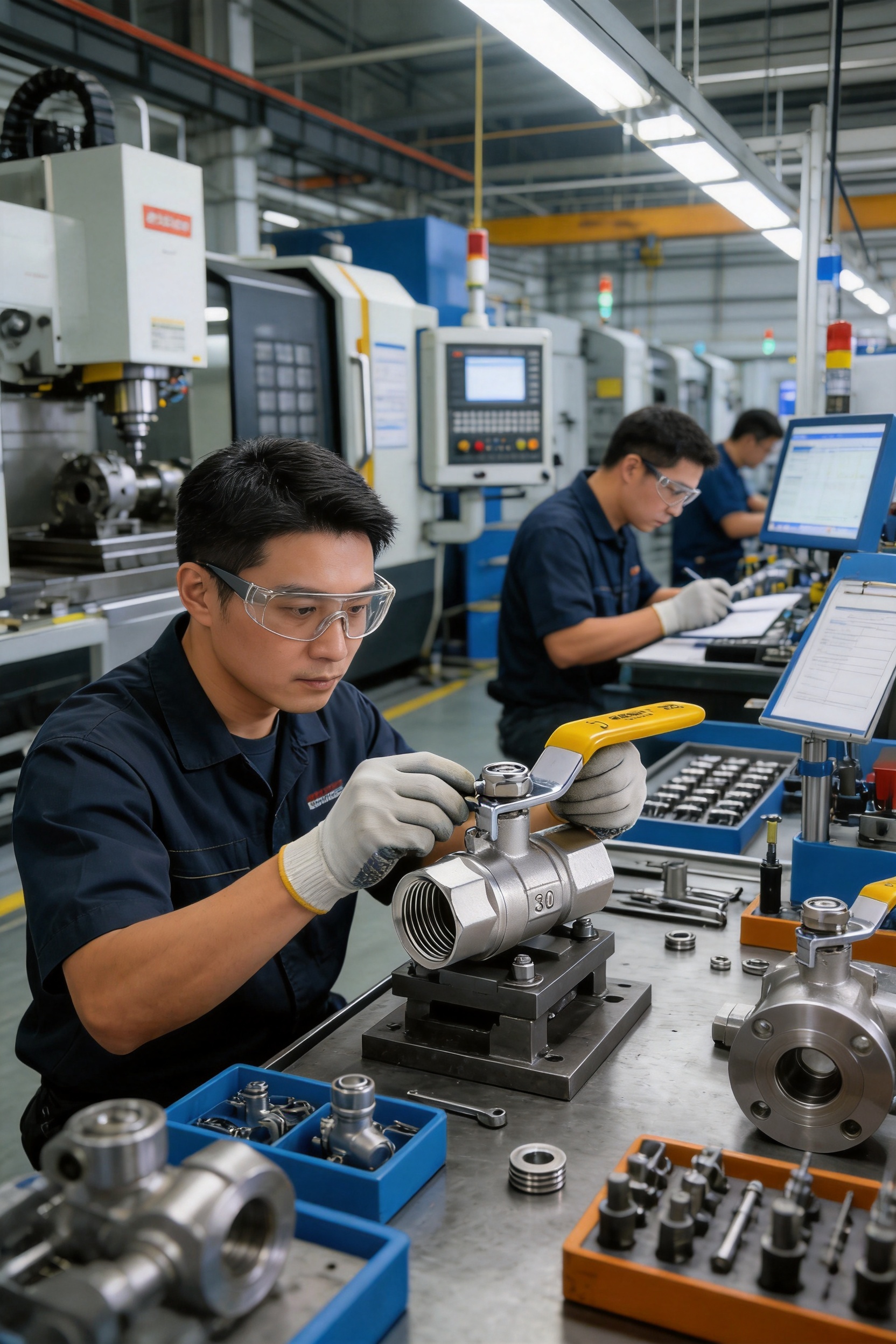
The company has established a professional automated precision machining workshop. Precision machining is essential for valves because sealing surfaces, threaded areas, body cavities, stem holes, and connection interfaces must be accurate. If machining tolerances are not controlled, the valve may experience leakage, difficult operation, poor assembly fit, or reduced service life. CNC machine tools help improve repeatability and dimensional accuracy, especially in batch production.
Advanced domestic and international CNC machine tools are used to support consistent machining quality. CNC machining reduces variation compared with purely manual processes. It allows programmed control of cutting paths, feed rates, drilling operations, and surface finishing. This helps ensure that each valve body and component meets the required dimensional standards.
Automated assembly lines further strengthen product consistency. Assembly is a critical stage because the body, ball, seats, seals, stem, handle, and fastening parts must be installed correctly. The correct compression of sealing components, accurate alignment of the ball, and smooth torque response all influence final performance. Automation and standardized assembly procedures help reduce operator variation and support repeatable product quality.
The testing workshop is equally important. A valve should not be judged only by material or machining; it must be tested to confirm performance. Automated testing equipment can help verify sealing performance, pressure integrity, and functional operation. This is particularly important for valves intended for industrial process lines, oil and gas service, steam systems, and high-pressure water applications.
Over the past ten years, the company has also developed a professional management team and a quality-oriented culture. Manufacturing strength is not only about machines; it also requires process control, trained personnel, documented procedures, production planning, inspection discipline, and continuous improvement. These management elements help ensure that advanced equipment is used effectively.
Precision Machining and Quality Consistency
Valve quality depends heavily on machining precision. The body cavity must hold the ball securely without excessive clearance. The stem bore must be accurately aligned to prevent uneven load or leakage. The sealing surfaces must be finished properly to ensure that seats make consistent contact. Connection ends must match installation requirements and support secure assembly with piping systems.
CNC machining helps achieve this precision. By using programmed operations, the production process can repeat the same dimensions across large quantities of components. This reduces variation and improves interchangeability. In valve production, repeatability is crucial because even small deviations can cause differences in operating torque, sealing force, or installation fit.
Surface finish is also important. Rough or inconsistent surfaces can damage seals or create leakage paths. A well-controlled machining process produces smoother contact surfaces and better component fit. This contributes to lower operating friction and longer seal life.
Precision machining also improves assembly efficiency. Components that fit correctly require less corrective work, reduce assembly defects, and support smoother production flow. For customers, this means more consistent product quality from batch to batch.
For a forged steel valve, machining is especially important because the forged body provides strength, but the final valve performance depends on the precision of the finished geometry. The combination of forging and CNC machining allows the product to deliver both material strength and functional accuracy.
Testing for Safety and Reliability
Testing is a vital part of valve manufacturing. A valve may look complete after assembly, but testing verifies whether it can perform under service conditions. For an industrial shut-off valve, common testing concerns include body pressure integrity, seat leakage, stem sealing, operating torque, and functional movement.
Reliable shut-off performance is one of the major selling points of this forged steel ball valve. To support this, the manufacturer uses professional testing equipment in a dedicated testing workshop. Automated testing helps improve consistency by applying controlled test conditions and reducing subjectivity. It also helps identify defects before products reach customers.
Leak testing is particularly important. A bubble-tight shut-off claim requires careful engineering and verification. During testing, the valve is checked to confirm that the sealing structure can prevent unwanted media passage when closed. The body may also be tested to confirm it can withstand pressure without leakage.
Functional testing ensures that the handle and internal ball operate smoothly. The valve should open and close without abnormal resistance, looseness, or sticking. Smooth operation is essential for user confidence, especially in emergency or maintenance situations.
Testing also supports traceability and quality improvement. When manufacturers collect and analyze test results, they can identify trends, improve machining processes, refine assembly procedures, and reduce defect rates. This creates a continuous improvement cycle that benefits customers over time.
Installation Considerations for Best Performance
To obtain the best performance from a forged steel long-handle ball valve, proper installation is essential. Even a high-quality valve can experience problems if it is installed incorrectly or selected for unsuitable conditions. Buyers and installers should confirm pressure rating, temperature range, end connection type, media compatibility, flow direction requirements if any, and applicable installation standards before use.
The F/F end configuration must be matched to the piping system. Installation surfaces or threads should be clean and undamaged. Appropriate sealing materials should be selected according to the media and operating temperature. Excessive installation force should be avoided because over-tightening can damage connections, deform components, or affect sealing performance.
The valve should be installed in a position that allows the long handle to move freely through its full quarter-turn range. Adequate clearance should be provided around insulation, support frames, walls, and adjacent piping. If the handle cannot rotate fully, the valve may not open or close completely, which can cause flow restriction or leakage.
Before commissioning, the pipeline should be cleaned to remove welding slag, metal chips, sand, sealing tape fragments, or other debris. Foreign particles can damage valve seats and reduce sealing performance. This step is especially important in new piping systems or after major maintenance.
After installation, the valve should be operated several times to confirm smooth movement. The system should then be pressure-tested according to project procedures. Any abnormal leakage, torque, or vibration should be investigated before the system enters normal operation.
Maintenance and Service Life
A forged steel ball valve is designed for durability, but routine maintenance can further extend service life. The maintenance approach depends on the application, media, temperature, operating frequency, and site conditions. In many systems, ball valves require relatively low maintenance because of their simple quarter-turn structure, but periodic inspection is still recommended.
Operators should check the valve for external leakage, handle looseness, corrosion, abnormal vibration, or difficult operation. If the valve is used infrequently, it may be beneficial to operate it periodically to prevent sticking. In systems with scale-forming media or particulate contamination, filtration and pipeline cleaning can help protect the valve seats.
The handle position should be kept clear and visible. Since the long handle serves as a visual indicator, it should not be obstructed, painted over in a confusing way, or modified without engineering approval. If a handle becomes damaged, it should be replaced with a compatible component rather than improvised.
Seat and seal materials should be compatible with the media. If process conditions change, the valve selection should be reviewed. A valve originally installed for water service may not be appropriate for aggressive chemicals, high-temperature steam, or abrasive slurry unless its materials and design are confirmed suitable.
Good maintenance practices contribute to lifecycle value. A durable forged steel body, precision sealing structure, and careful installation can provide long service life, but the operating environment and maintenance discipline ultimately influence performance.
Value for Distributors, Contractors, and Industrial Buyers
For distributors, a valve product must offer dependable quality, market relevance, and stable supply. The forged steel long-handle ball valve meets a broad range of industrial needs, making it suitable for inventory programs serving contractors, maintenance departments, equipment manufacturers, and engineering projects. Its strong construction and practical design create a clear selling proposition for customers who prioritize reliability.
Contractors benefit from valves that install securely and perform predictably. A project schedule can be disrupted if valves leak during pressure testing or require replacement before commissioning. Products manufactured with precision machining, standardized assembly, and testing reduce the risk of installation delays.
Industrial buyers focus on lifecycle performance. They often evaluate not only the purchase price but also maintenance cost, downtime risk, safety, and operational convenience. A forged steel ball valve with reliable shut-off and easy operation can support lower total cost of ownership. The long handle can improve operator efficiency, while the forged steel body can reduce the likelihood of material-related failure.
OEM customers and equipment manufacturers also need consistent product quality. When a valve becomes part of a larger machine or system, its reliability reflects on the entire equipment package. A supplier with large-scale production capacity and testing capability can support repeat orders and stable quality requirements.
The manufacturer’s annual capacity of 2 million sets of valves and 10 million sets of hardware accessories demonstrates an ability to support both standard demand and larger supply programs. This capacity is supported by automated precision machining, assembly, and testing processes, helping customers manage procurement continuity.
How the Product Supports Safer Fluid Systems
Safety in fluid systems depends on controlling pressure, temperature, flow, and isolation. A shut-off valve is a critical safety component because it allows sections of a system to be isolated during maintenance or emergency conditions. If a valve fails to close properly, personnel may be exposed to hot, pressurized, flammable, or otherwise hazardous media.
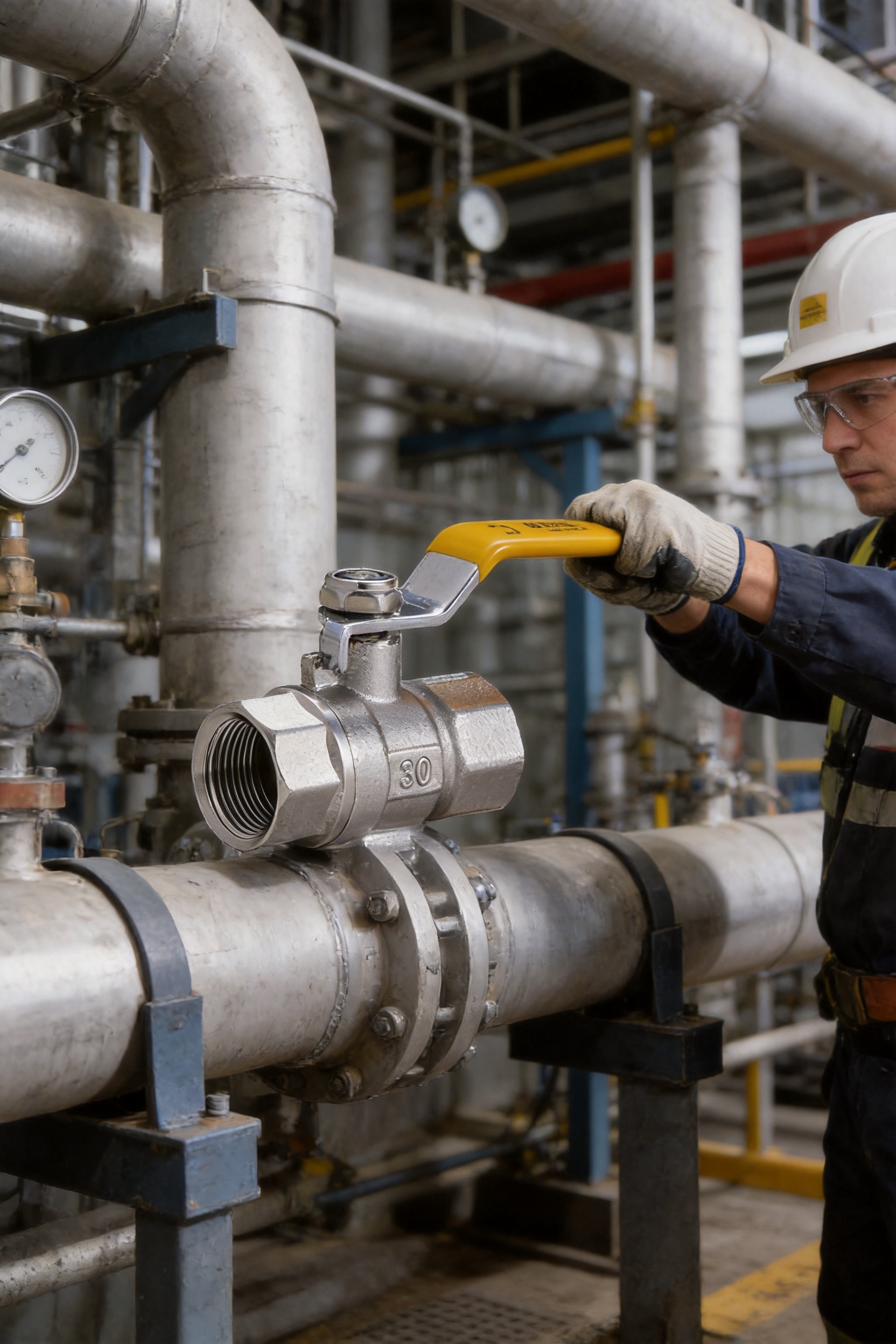
The forged steel ball valve supports safety by providing a strong pressure-retaining body and reliable sealing performance. Forged steel construction helps resist mechanical stress, while precision engineering supports tight shut-off. The long handle improves operator control and makes valve position easier to identify.
Clear visual indication is a simple but important safety factor. In complex piping systems, operators must quickly understand which valves are open or closed. Misidentification can lead to unintended flow, equipment damage, or unsafe maintenance conditions. A long handle makes status easier to confirm, reducing operational uncertainty.
Leak prevention is another safety priority. Uncontrolled leakage can create slip hazards, fire hazards, pressure loss, environmental contamination, or exposure to harmful media. A valve designed for leak-proof performance helps protect both personnel and equipment.
Safety also depends on correct selection and installation. The valve should be used within its specified pressure and temperature limits, and media compatibility should be confirmed. When properly selected and installed, the forged steel long-handle ball valve can become an important part of a safe and reliable fluid control system.
Company Capability and Quality Philosophy
Ningbo Yunhua Valve Co., Ltd. has built its business around the development and production of valves and hardware accessories for fluid control. The company’s mission is to build a safe fluid ecosystem with high-quality valves, and its vision is to become a leading company in the global fluid control industry. These goals align directly with the requirements of products such as forged steel ball valves, where quality affects safety and system reliability.
The company’s development over the past decade includes the cultivation of corporate culture, improvement of management systems, and establishment of a professional management team. These organizational strengths help support stable manufacturing, consistent quality control, and responsive customer service.
Manufacturing scale is another important factor. A 20,000-square-meter facility allows for organized production flow, from raw material handling to machining, assembly, testing, and packaging. Professional workshops reduce process interference and help ensure that each stage is managed according to quality requirements.
Advanced CNC machine tools and automated equipment show a commitment to precision manufacturing. In the valve industry, advanced equipment helps reduce defects, improve repeatability, and support efficient production. Customers purchasing forged steel valves can benefit from this manufacturing foundation because product consistency is essential for industrial applications.
The company serves markets involving gas valves, fluid valves, water supply valves, and hardware accessories. This broad experience supports understanding of different media, installation environments, and customer expectations. It also allows the manufacturer to refine production practices across multiple product categories.
Selection Guidance for Engineers and Purchasers
When selecting a forged steel ball valve, engineers and purchasers should evaluate several technical and commercial factors. The first is service condition. The valve must be suitable for the media, pressure, temperature, and operating environment. If the system handles steam, oil, gas, or high-pressure water, material compatibility and sealing performance are especially important.
The second factor is connection compatibility. The F/F configuration must match the piping system. Connection dimensions, sealing method, installation space, and applicable standards should be confirmed before purchase. A mismatch can lead to installation delays or leakage risk.
The third factor is operating accessibility. The long handle requires space to rotate. Buyers should confirm that the installation location allows full handle movement. If the valve is installed in a tight area, handle orientation and clearance must be considered during piping design.
The fourth factor is quality assurance. Buyers should choose valves manufactured with controlled processes and tested before delivery. Forged steel construction is valuable, but it must be supported by machining precision and inspection. A supplier with automated machining and testing capability can offer better confidence.
The fifth factor is supply reliability. For projects and distributors, delivery consistency matters. A manufacturer with large production capacity and organized workshops can better support repeat orders, project schedules, and inventory planning.
The final factor is lifecycle value. The lowest purchase price is not always the best economic choice. A valve that lasts longer, seals better, and reduces maintenance interruptions can provide better total value. The forged steel long-handle ball valve is designed for buyers who value long-term performance over short-term savings.
Frequently Asked Questions
Q1: What is the main advantage of a forged steel ball valve?
The main advantage is strength. Forged steel generally provides a denser and more uniform structure than many cast materials, helping improve resistance to pressure, temperature changes, and mechanical stress. This makes it suitable for demanding industrial applications.
Q2: Why does the valve use a long handle?
The long handle provides better leverage, making the valve easier to operate. It also gives a clearer visual indication of valve position, which helps operators quickly confirm whether the valve is open or closed.
Q3: What applications is this valve suitable for?
It is suitable for industrial process systems, oil and gas service, steam systems, high-pressure water systems, and general fluid control applications where reliable shut-off and strong construction are required.
Q4: Does the valve provide tight shut-off?
The valve is designed for reliable, leak-proof shut-off through precision engineering and controlled manufacturing. Proper installation, correct media compatibility, and operation within specified conditions are necessary to maintain sealing performance.
Q5: What does F/F mean in the product configuration?
F/F refers to the valve’s end configuration and should be matched to the project’s piping specification. Before installation, engineers should confirm the exact connection standard, dimensions, and sealing requirements for the system.
Q6: How does this valve compare with a cast valve?
A forged steel valve often offers improved strength and structural integrity compared with many cast alternatives. This can provide better reliability in pressure-bearing applications. However, final selection should always consider service conditions and applicable standards.
Q7: Why is CNC machining important for valve quality?
CNC machining improves dimensional accuracy and repeatability. In a ball valve, accurate machining supports proper alignment, smooth operation, reliable sealing, and consistent quality from one unit to another.
Q8: How does the manufacturer support product reliability?
The manufacturer supports reliability through a 20,000-square-meter production base, automated precision machining workshops, assembly lines, testing workshops, advanced CNC machine tools, and automated assembly and testing equipment.
Q9: Is this valve suitable for steam service?
It can be used in steam-related applications when the complete valve specification, pressure rating, temperature rating, seat material, and sealing design are confirmed suitable for the specific steam conditions.
Q10: What should be checked before installation?
Before installation, check pressure and temperature requirements, media compatibility, connection type, handle clearance, pipe cleanliness, sealing materials, and applicable engineering standards. Correct installation is essential for reliable service.
Conclusion
The forged steel ball valve with a long handle and F/F end configuration is a practical and durable solution for demanding flow control applications. Its forged steel body provides a strong structural foundation, while precision engineering supports reliable shut-off performance. The extended handle improves leverage, operator convenience, and visual position indication, making the valve well suited for industrial environments where safety and efficiency matter.
Compared with lower-duty alternatives, the product offers clear advantages in durability, operation, sealing reliability, and manufacturing consistency. It is especially valuable for industrial processes, oil and gas systems, steam services, and high-pressure water applications where valve failure can cause costly downtime or safety risks.
The manufacturing capabilities behind the product further strengthen its value. Ningbo Yunhua Valve Co., Ltd. combines a large production base, automated precision machining, advanced CNC equipment, professional assembly lines, and testing workshops to support consistent valve quality. With strong annual production capacity and a focus on safe fluid control, the company is positioned to serve distributors, contractors, industrial users, and equipment manufacturers seeking dependable valve solutions.
For purchasers who need more than a basic shut-off component, this forged steel long-handle ball valve provides a balance of strength, practical operation, leak-proof performance, and production reliability. It is a product designed not only to control flow, but also to support safer, more efficient, and more dependable fluid systems.
References
American Society of Mechanical Engineers. ASME B16.34: Valves Flanged, Threaded, and Welding End.
American Petroleum Institute. API 598: Valve Inspection and Testing.
International Organization for Standardization. ISO 5208: Industrial Valves, Pressure Testing of Metallic Valves.
Manufacturers Standardization Society. MSS SP-72: Ball Valves with Flanged or Butt-Welding Ends for General Service.
Smith, P. Valve Selection Handbook: Engineering Fundamentals for Industrial Flow Control.
Skousen, P. Valve Handbook: Design, Operation, and Maintenance of Industrial Valves.
Product: YH-2210 Forged Steel Ball Valve with Long Handle (F/F)

Related Products
Related News
Contact Us
-

-
 +86-0574-63742169
 -
 No.104-128, Cizhang East Road, Zhangqi Town, Cixi City, Ningbo, Zhejiang Province, China


Message Us Now !
