


 English
  русский
  عربى
عربى  Español
Brass Ball Valve with Long Handle for Reliable Gas and Water Control
Content
- 1 Product Overview
- 2 Core Product Advantages
- 3 Technical Specifications
- 4 Why a Long-Handle Brass Ball Valve Matters
- 5 Performance Compared with Ordinary Competing Valves
- 6 Application Scenarios
- 7 Manufacturing Strength Behind the Product
- 8 Advanced Manufacturing Process
- 9 Quality Control Philosophy
- 10 Design Considerations for Safety and Reliability
- 11 Installation Guidelines
- 12 Maintenance and Service Life
- 13 Benefits for Distributors and Project Buyers
- 14 Company Strength and Industry Capability
- 15 How This Valve Supports a Safe Fluid Ecosystem
- 16 Selection Guide
- 17 Comparison with Other Valve Types
- 18 Market Value and Customer Experience
- 19 Environmental and Operational Efficiency
- 20 Packaging, Handling, and Storage Considerations
- 21 Q&A Section
- 21.1 Q1: What is the main advantage of the long handle?
- 21.2 Q2: What media can this valve be used for?
- 21.3 Q3: What is the pressure rating?
- 21.4 Q4: What thread types are available?
- 21.5 Q5: Why is forged brass preferred for this type of valve?
- 21.6 Q6: What role do PTFE seats and seals play?
- 21.7 Q7: Can this valve be used as a regulating valve?
- 21.8 Q8: What should be checked before installation?
- 21.9 Q9: Why is manufacturing capability important when buying valves?
- 21.10 Q10: What sizes are available?
- 22 Conclusion
- 23 References
- 24 Product: YH-201 Brass Ball Valve with Long Handle(F/F)
In modern fluid control systems, a valve is not merely an accessory installed between two pipe sections. It is a safety component, an efficiency component, and a long-term reliability component. The YH-201 brass ball valve with long handle and female-to-female threaded connection is designed for practical pipeline control in residential, commercial, light industrial, HVAC, gas, and water applications. It combines a forged brass body, a 1.6 MPa nominal pressure rating, PTFE sealing, standardized threaded interfaces, and an extended lever handle that makes operation easier in daily use.
YH-201 Brass Ball Valve with Long Handle(F/F)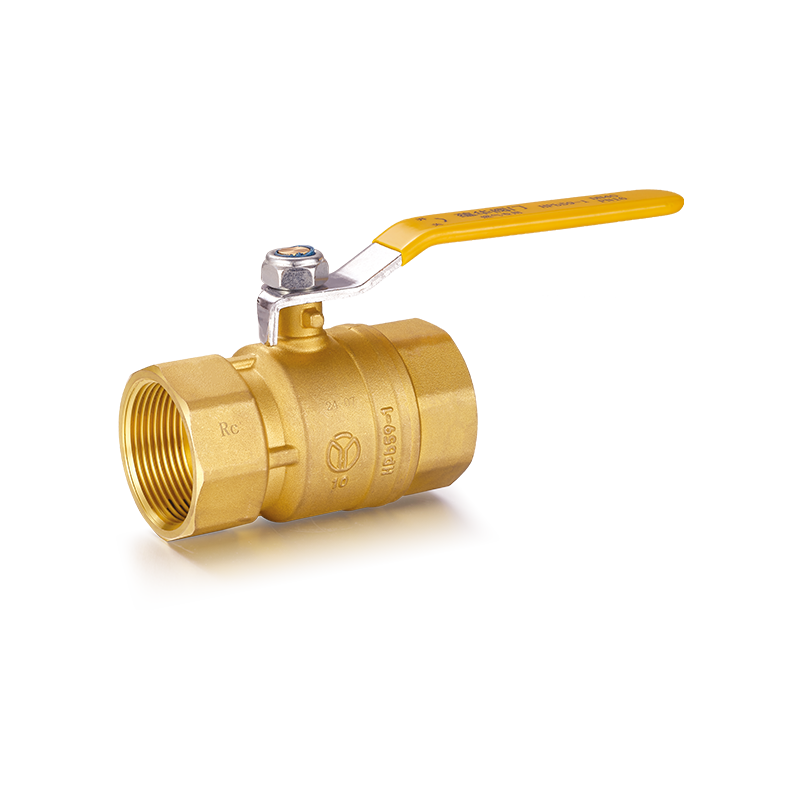
This article introduces the product’s structure, application value, competitive advantages, manufacturing background, quality-control logic, installation considerations, and purchasing benefits. It also explains why a high-quality brass long-handle ball valve can create measurable advantages compared with ordinary low-cost valves, especially when users need stable sealing, smooth operation, convenient maintenance, and dependable service life.
Product Overview
The YH-201 brass ball valve with long handle is a full female-threaded brass ball valve designed for direct connection with male-threaded pipe fittings. Its F/F interface makes it convenient for pipeline extension, system integration, retrofitting, and equipment connection. The product is available in common sizes including 1/2 inch, 3/4 inch, 1 inch, 1¼ inch, 1½ inch, and 2 inches, corresponding to common DN specifications from DN15 to DN50.
The valve is suitable for water, non-corrosive fluids, and gas media. Its recommended working temperature range is -20°C to 80°C, making it suitable for many indoor and protected outdoor installations. With a nominal pressure rating of 1.6 MPa, the valve is designed for medium-pressure fluid control environments where a stable shutoff function is required.
The key feature of this product is its long lever handle. Compared with compact short-handle valves, the extended handle provides greater mechanical leverage. This helps reduce operating torque and allows the user to open or close the valve more easily. In systems where valves are operated frequently, this ergonomic advantage can reduce operator fatigue and improve workflow efficiency. In tight or hard-to-reach spaces, a longer handle also provides better grip and control.
Core Product Advantages
Extended Lever Handle for Easier Operation
The long-handle design is one of the most practical features of this brass ball valve. A ball valve works by rotating a ball with a through-hole inside the valve body. When the hole is aligned with the pipeline, the valve is open. When the handle is turned 90 degrees, the ball blocks the flow path and the valve is closed. Although this action is simple, the torque required can increase over time due to pressure, temperature variation, scaling, or long periods of non-operation.
The extended lever handle improves mechanical advantage, allowing the user to operate the valve with less force. This is particularly useful for gas and water pipelines in residential and commercial buildings, where maintenance personnel may need to open or close valves repeatedly. It is also useful in HVAC systems, industrial process lines, and utility rooms where valves may be installed behind equipment or in dense pipe networks.
Compared with ordinary short-handle valves, the long handle can reduce operating resistance and make the valve feel smoother during operation. For users, this means less effort, less risk of incomplete closure, and more confidence when controlling flow. For facility managers, easier operation can reduce the probability of improper handling by inexperienced users.
Forged Brass Body for Strength and Durability
The valve body is made of brass, a material widely valued in fluid control because of its mechanical strength, corrosion resistance, machinability, and compatibility with water and gas systems. A forged brass body offers better density and structural consistency than many low-grade cast alternatives. Forging compresses the metal under pressure, helping reduce internal voids and improving the integrity of the valve body.
This structural strength supports the valve’s 1.6 MPa nominal pressure rating. In medium-pressure applications, the ability of the valve body to resist deformation, cracking, and pressure fatigue is essential. A well-made brass valve body also provides a reliable threaded connection, reducing the risk of thread damage during installation when proper tools and sealing materials are used.
Compared with some lightweight or thin-wall valves, the forged brass construction provides a more dependable foundation for long-term use. Users often focus on the sealing components of a valve, but the body is equally important. A strong body supports alignment, thread stability, seat compression, and stem sealing. When all these elements are controlled properly, the valve performs more consistently across its service life.
PTFE Sealing System for Leak Resistance
The valve uses PTFE valve seats and stem seals. PTFE is known for its low friction, chemical resistance, and sealing performance. In a ball valve, the seat must hold the ball securely while allowing it to rotate smoothly. It must also maintain tight contact to prevent leakage when the valve is closed. PTFE is a proven material for this function because it can provide a tight seal while reducing operating friction.
Stem sealing is also critical. The stem connects the handle to the internal ball. If the stem seal is poorly designed or poorly manufactured, leakage may occur around the handle area. By using corrosion-resistant sealing components, the valve supports reliable shutoff performance and reduces the risk of leakage during normal use.
Competitor products with inferior sealing materials may work well at first but can deteriorate quickly under frequent operation, pressure cycling, or temperature changes. A stable PTFE sealing system helps improve service life, reduce maintenance needs, and maintain zero-leak expectations under appropriate working conditions.
Full Female Threaded Connection for Easy Installation
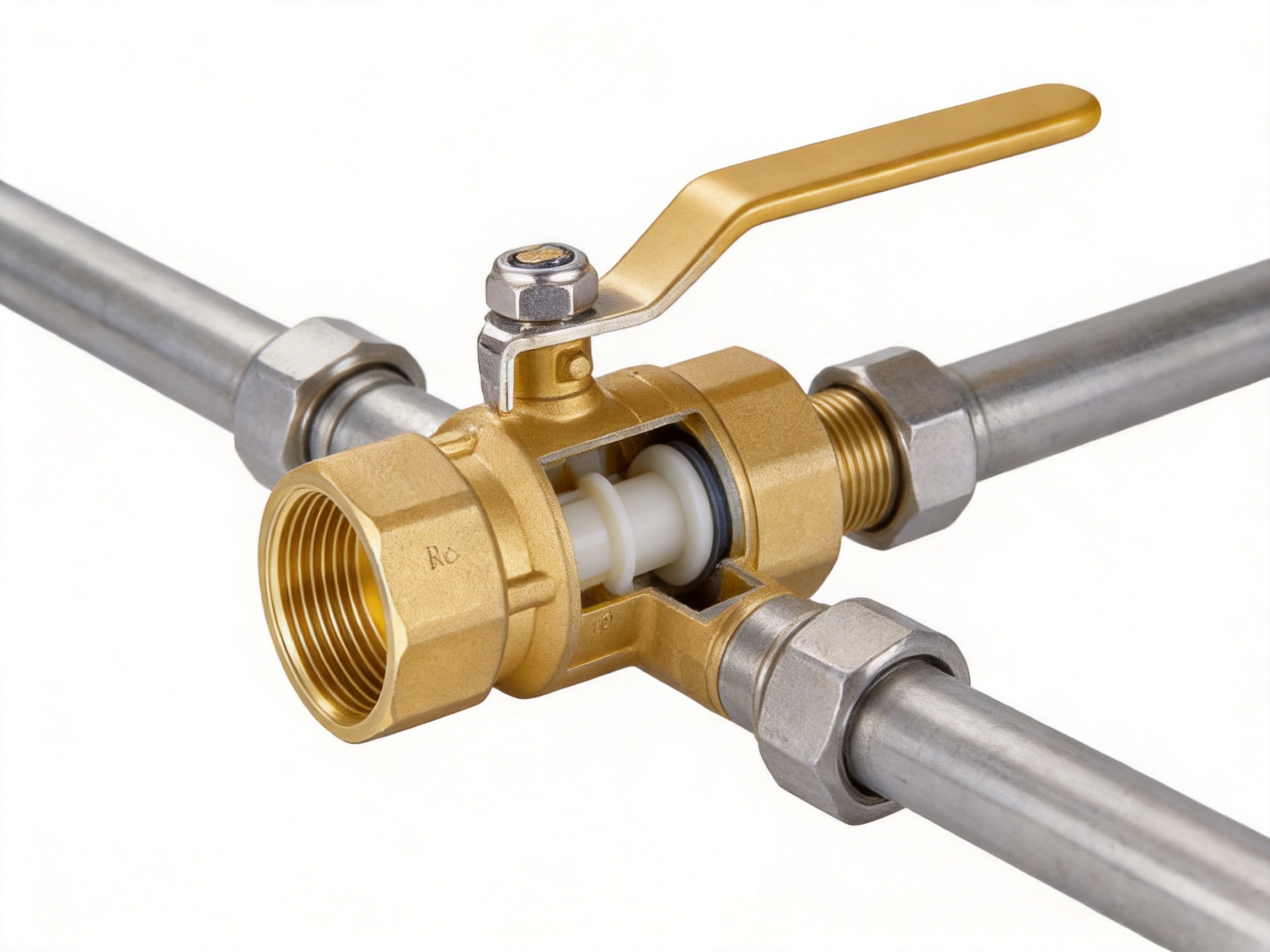
The YH-201 valve features female threads on both ends. This F/F design allows direct connection to male-threaded pipes, adapters, meters, regulators, elbows, and other fittings. It is especially convenient for systems where a valve must be inserted into an existing threaded pipeline or used as part of a modular assembly.
The available thread standards include G, Rc, and NPT, allowing compatibility with different regional and engineering requirements. This flexibility is important for distributors, contractors, OEM equipment manufacturers, and international buyers who may serve multiple markets. A standardized threaded connection also helps simplify inventory planning, because the same valve structure can be selected with different thread options according to project requirements.
Compared with valves that require welding, special compression fittings, or custom adapters, a female-threaded ball valve offers fast installation and easy replacement. This reduces labor time and makes maintenance more efficient. For many gas and water systems, threaded brass valves remain one of the most practical and widely accepted solutions.
Technical Specifications
The following table summarizes the key dimensional data for the product range. The dimensions help buyers, engineers, and installers confirm compatibility with available installation space, pipeline layout, and handle clearance.
| Specification | L | D | A | B |
| DN15 | 55 | 12 | 97 | 42 |
| DN20 | 66 | 18 | 83 | 46 |
| DN25 | 75.5 | 22 | 112 | 56 |
| DN32 | 75.5 | 24 | 128 | 61 |
| DN40 | 87 | 31 | 130 | 65 |
| DN50 | 100 | 37 | 148 | 68 |
Nominal pressure is 1.6 MPa. Working media include water, non-corrosive fluids, and gas. The operating temperature range is -20°C to 80°C. Available sizes include 1/2 inch, 3/4 inch, 1 inch, 1¼ inch, 1½ inch, and 2 inches. Thread options include G, Rc, and NPT.
Why a Long-Handle Brass Ball Valve Matters
A valve can be evaluated from several angles: sealing reliability, material strength, installation convenience, flow performance, operating feel, maintenance demands, and total service value. The YH-201 brass ball valve is designed to perform well in all these categories.
In many real-world projects, operators do not choose valves based on appearance alone. They need a valve that can be opened and closed confidently after months or years of service. They need threads that fit accurately. They need a handle that does not feel weak or unstable. They need sealing that remains dependable when the line is pressurized. They need a valve body that can withstand routine mechanical stress. A long-handle brass ball valve answers these needs with a simple but robust design.
The extended handle is especially important in environments where users wear gloves, where valves are installed overhead, or where a valve must be operated during emergency shutoff. A short handle may be acceptable for occasional use, but a long handle provides more practical control. In emergency situations, the ability to close a valve quickly and completely can be significant.
Performance Compared with Ordinary Competing Valves
Better Operating Comfort
Ordinary ball valves often use short handles to reduce cost or save space. While compact handles may be useful in some installations, they can be harder to operate, especially when the valve size increases. The long handle of this product provides improved leverage, making operation smoother and easier. This advantage becomes more noticeable in DN25, DN32, DN40, and DN50 sizes, where torque demands are naturally higher.
More Reliable Body Integrity
Some low-cost valves are produced with inconsistent materials, insufficient body thickness, or less controlled manufacturing processes. Such valves may be vulnerable to thread deformation, leakage, or premature failure. The forged brass body of the YH-201 supports better mechanical integrity and long-term use. It is designed for dependable performance in gas and water applications within the stated operating conditions.
Improved Sealing Stability
Lower-grade valves may use inferior seats or stem seals that wear quickly or lose elasticity. This can lead to internal leakage or external leakage around the stem. The PTFE sealing design helps maintain a secure seal while supporting smooth ball rotation. For users, this means fewer service interruptions and greater confidence in system safety.
Flexible Thread Compatibility
With G, Rc, and NPT thread options, the valve can be adapted to various markets and installation standards. This is a competitive advantage for international buyers and project suppliers. Instead of searching for multiple valve types from different sources, buyers can select the same product family with the thread standard required by the local system.
Practical Value Over the Product Life Cycle
The lowest purchase price does not always mean the lowest total cost. A valve that leaks, sticks, cracks, or requires early replacement may cost more in labor, downtime, water loss, gas safety risk, and customer complaints. A durable brass ball valve with smooth operation and reliable sealing can reduce these hidden costs. The YH-201 is designed to provide value not only at the time of purchase but throughout its service period.
Application Scenarios
Residential Water and Gas Pipelines
In residential buildings, valves are needed for water supply lines, gas distribution lines, appliance connections, maintenance shutoff points, and branch pipeline control. The YH-201 valve is suitable for these applications when selected according to the correct size, thread type, pressure, temperature, and medium compatibility. Its long handle makes it easy for homeowners, technicians, or maintenance workers to operate when needed.
Commercial Building Systems
Commercial buildings often include more complex water, gas, heating, and cooling networks. Valves may be installed in equipment rooms, ceiling spaces, service shafts, and branch pipelines. A durable brass ball valve can help facility managers isolate sections of a system for maintenance without shutting down the entire building. The threaded connection makes installation and replacement efficient, while the long handle supports quick operation.
HVAC Systems
HVAC systems require reliable flow control for water and other non-corrosive fluids. Ball valves are frequently used for shutoff, balancing support, equipment isolation, and maintenance access. The compact but strong structure of a brass threaded ball valve makes it suitable for many HVAC configurations. The long handle is helpful when valves are located near pumps, coils, manifolds, and mechanical equipment.
Industrial Process Lines
Light industrial process lines often use water, air, gas, or non-corrosive fluids. A ball valve provides quick shutoff and low flow resistance when fully open. The YH-201 product can serve as a dependable shutoff valve in appropriate industrial conditions. Its corrosion-resistant PTFE sealing and forged brass body help support stable service in medium-pressure environments.
Pipeline Extension and Retrofitting
The female-to-female threaded interface makes this valve particularly convenient for pipeline extension and retrofitting. When a pipeline needs a new shutoff point, installers can connect the valve between male-threaded pipe sections or fittings. This can reduce installation complexity and help upgrade existing systems without extensive modification.
Manufacturing Strength Behind the Product
A valve’s final performance depends not only on design but also on manufacturing capability. Ningbo Yunhua Valve Co., Ltd. is an enterprise specializing in research, development, production, sales, and service of gas and fluid valves, water supply valves, and hardware accessories. The company has developed a professional management system and production structure over more than ten years of industry experience.
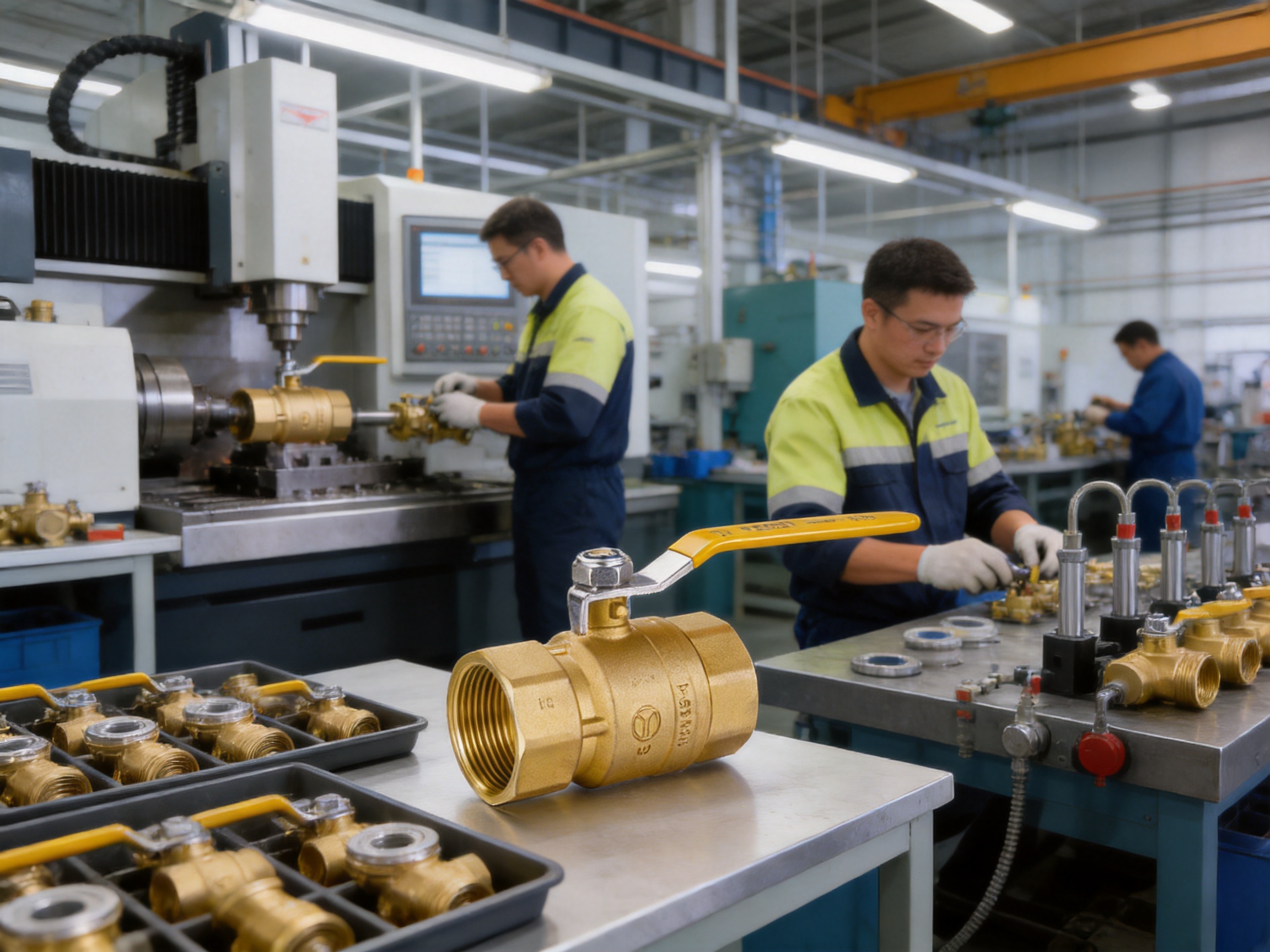
The company covers an area of 20,000 square meters and has established a professional, fully automated precision machining workshop, assembly line, and testing workshop. These manufacturing assets are important because ball valves require accurate machining, reliable assembly, and strict testing. Even small deviations in ball roundness, seat fit, stem alignment, or thread accuracy can affect valve performance.
Advanced CNC machine tools allow precise processing of valve bodies, threads, internal chambers, sealing surfaces, and component interfaces. Automated assembly and testing equipment improve consistency across high-volume production. The company has an annual production capacity of 2 million sets of valves and 10 million sets of hardware accessories, demonstrating its ability to support both regular orders and larger procurement programs.
Advanced Manufacturing Process
Material Selection and Incoming Inspection
Manufacturing begins with material selection. For a brass valve, material quality affects corrosion resistance, pressure resistance, machinability, and long-term structural reliability. Reliable production requires incoming inspection to confirm that raw materials meet expected specifications. This may include checking material composition, appearance, dimensional consistency, and batch traceability.
High-quality brass supports accurate forging and machining. If the raw material is inconsistent, the final valve may suffer from weak points, poor thread quality, or unstable sealing. By controlling material input, the manufacturer strengthens the foundation of the product before machining begins.
Forging for Dense and Strong Valve Bodies
The valve body is produced through forging, a process that forms metal under pressure. Compared with some casting methods, forging can improve density and reduce internal defects. For pressure-bearing components, this is an important advantage. A forged body can better withstand mechanical loads and pressure cycles when designed and manufactured correctly.
Forging also supports stable external shape and internal structure. After forging, the body can be machined accurately to form the threaded ends, inner cavity, ball seat areas, and stem passage. A well-forged body helps ensure that later assembly steps are stable and repeatable.
CNC Precision Machining
CNC machining is central to valve quality. Threads must match the required standard, whether G, Rc, or NPT. The internal bore must be aligned properly to reduce flow resistance. The seat contact surfaces must be machined precisely to support sealing. The stem hole must maintain proper fit to prevent leakage and ensure smooth operation.
Advanced CNC machine tools provide repeatable accuracy across large production batches. This repeatability is important for distributors and OEM customers who expect consistent quality from one shipment to another. Precision machining also improves installation experience, because well-formed threads reduce the risk of difficult assembly or poor sealing caused by dimensional error.
Surface Treatment and Cleaning
After machining, components must be cleaned to remove chips, oil, and residues. Cleanliness is important because foreign particles can damage sealing surfaces or interfere with seat compression. Proper surface treatment and cleaning help improve appearance, assembly quality, and product reliability.
For a valve used in water or gas systems, internal cleanliness is not simply cosmetic. Debris inside a valve may move into downstream equipment or compromise the sealing interface. A disciplined cleaning process helps prevent such issues and supports a professional product standard.
Component Assembly
Assembly requires accurate placement of the ball, PTFE seats, stem, seals, handle, and fastening elements. Each component must be positioned correctly to create smooth rotation and reliable shutoff. If the ball is too loose, leakage may occur. If the ball is too tight, operating torque may become excessive. The correct balance depends on component quality and assembly control.
Automated or semi-automated assembly lines improve consistency. Skilled workers and controlled procedures also remain essential. A strong manufacturing system combines equipment precision with human quality awareness. This is especially important for valves, where small assembly differences can affect the user’s experience.
Pressure and Leakage Testing
Testing is one of the most important steps in valve manufacturing. A valve must be checked for body strength, seat sealing, and stem sealing. Pressure and leakage testing helps confirm that each product meets performance expectations before leaving the factory. For gas and water applications, leak resistance is a core requirement.
A dedicated testing workshop allows the manufacturer to apply consistent inspection standards. This reduces the risk of defective products entering the market. Buyers benefit from fewer complaints, fewer returns, and stronger confidence in the valve’s reliability.
Quality Control Philosophy
Quality control is not a single inspection at the end of production. It is a full-process discipline that begins with raw materials and continues through forging, machining, cleaning, assembly, testing, packaging, and shipment. For the YH-201 brass ball valve, quality control must focus on body integrity, dimensional accuracy, thread precision, sealing performance, handle operation, and appearance.
Thread quality is particularly important because poor threads can create installation problems. Overly loose threads may leak even with sealing tape or compound. Overly tight or inaccurate threads may damage mating fittings or make installation difficult. Precision thread machining and inspection help ensure reliable connection performance.
Sealing performance is another core quality point. The ball and PTFE seats must interact properly. The stem seal must prevent leakage while allowing smooth rotation. A strong quality system verifies these functions before the product reaches users.
Handle performance also matters. A valve may technically seal but still feel rough, stiff, or unstable. The long handle should be securely attached and should allow clear open-close positioning. Good operation feel is a sign of proper component fit and assembly control.
Design Considerations for Safety and Reliability
Safety is central to valve design, especially for gas systems. Although every installation must follow local regulations and professional standards, the valve itself must provide dependable shutoff. A ball valve with a clear 90-degree operating motion is easy to understand: handle aligned with the pipe usually indicates open, while handle perpendicular to the pipe indicates closed. This intuitive operation supports safety in daily use and emergency response.
The product’s brass body and PTFE sealing materials support compatibility with the stated media: water, non-corrosive fluids, and gas. Users should not apply the valve to corrosive fluids or conditions outside the specified temperature and pressure range. Proper selection is part of system safety. A high-quality valve performs best when used within its intended scope.
Installation safety also requires correct thread matching. G, Rc, and NPT threads are different standards and should not be mixed improperly. Using the wrong thread type can create leakage or mechanical damage. Buyers should confirm the required thread standard before ordering.
Installation Guidelines
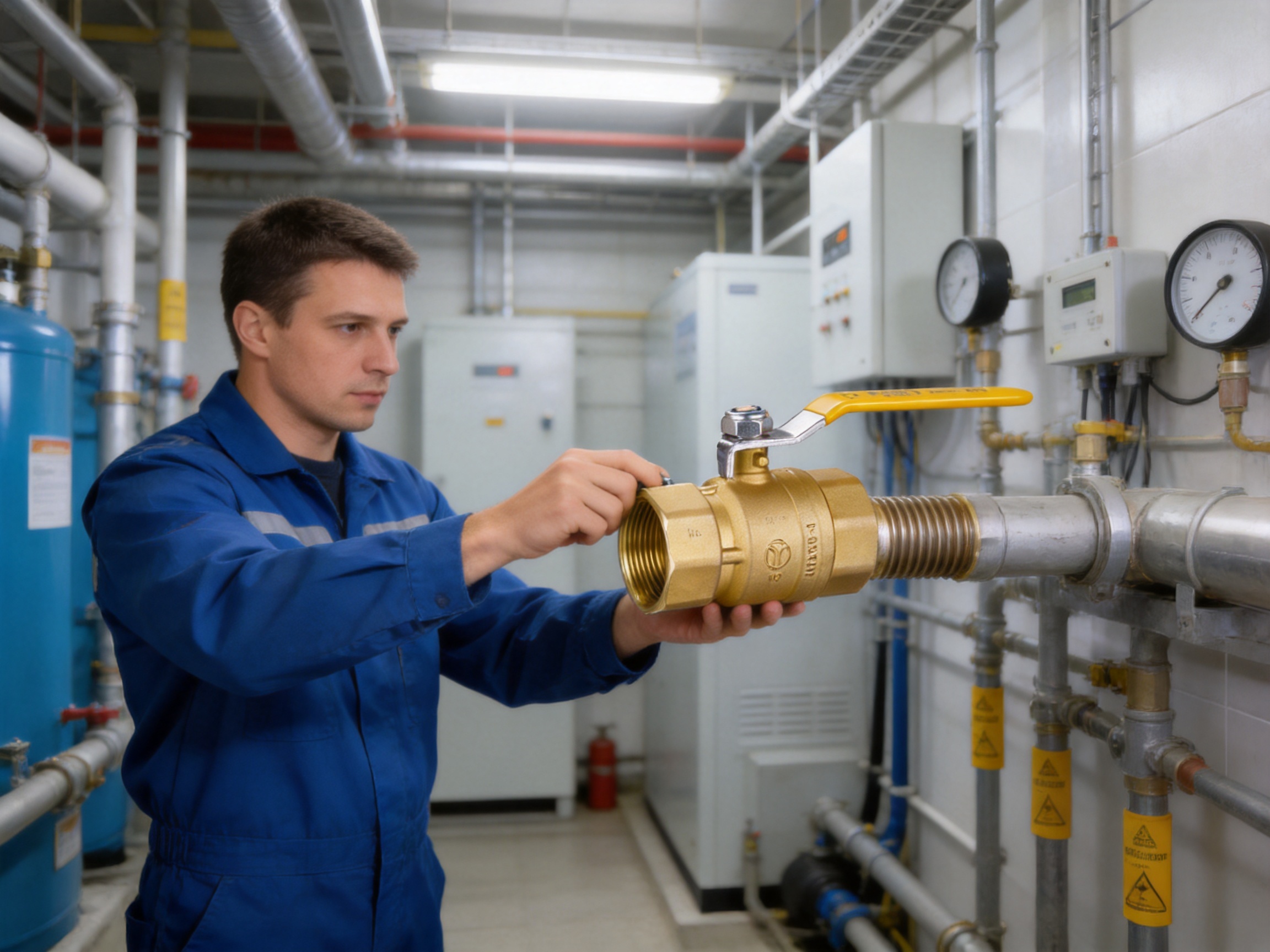
Before installation, confirm the valve size, thread standard, pressure rating, temperature range, and medium compatibility. Inspect the valve visually to ensure that the threads are clean and undamaged and that the handle operates smoothly. Confirm that the pipeline is depressurized and safe to work on.
Use suitable sealing materials for the thread type and application, such as approved thread seal tape or sealing compound. Apply sealing material carefully to avoid excessive residue entering the pipeline. Align the valve with the mating fitting and tighten using appropriate tools. Avoid applying force directly to the handle during installation, as the handle is intended for operation, not for wrenching.
After installation, gradually pressurize the system and check for leakage at the threaded connections and around the valve stem. Operate the valve to confirm smooth opening and closing. In gas applications, leak testing should follow applicable safety procedures and local regulations.
For long-term use, operate the valve periodically if the system allows. Valves left in one position for long periods may become stiffer due to scale, deposits, or environmental conditions. Periodic operation can help maintain movement and confirm readiness.
Maintenance and Service Life
A well-designed brass ball valve typically requires minimal maintenance when used correctly. The main maintenance actions are visual inspection, leak checking, and periodic operation. If a valve is installed in a harsh environment, more frequent inspection may be necessary. Users should check for signs of corrosion, mechanical damage, thread leakage, or handle looseness.
If leakage is detected at threaded connections, the system should be depressurized and the connection should be resealed or reinstalled by qualified personnel. If leakage occurs around the stem or through the closed valve, replacement may be more practical than repair depending on the system requirements and valve condition.
The PTFE sealing system is designed for durability, but all sealing materials have practical service limits. Pressure, temperature, operating frequency, medium quality, and installation conditions can affect service life. Selecting the correct valve and installing it properly are the best ways to maximize durability.
Benefits for Distributors and Project Buyers
Distributors need products that are easy to sell, easy to explain, and reliable in the field. The YH-201 brass ball valve offers clear selling points: long-handle operation, forged brass strength, 1.6 MPa pressure rating, PTFE sealing, female-to-female threaded connection, multiple sizes, and multiple thread standards. These features address practical market demands and make the product suitable for a wide customer base.
Project buyers need consistency. Large projects may require dozens, hundreds, or thousands of valves, and inconsistent quality can create significant installation delays. The manufacturer’s automated machining, assembly, and testing capabilities support stable batch quality. This helps reduce project risk and improves procurement confidence.
OEM and system integrator customers may also value the product because it fits common fluid control assemblies. Its threaded structure allows integration into meters, manifolds, equipment skids, gas appliance connections, water treatment units, and HVAC packages. The product’s broad applicability makes it a versatile component for many system designs.
Company Strength and Industry Capability
Ningbo Yunhua Valve Co., Ltd. has developed as an innovative enterprise focused on valves and hardware accessories for gas, fluid, and water supply applications. Its manufacturing base includes a fully automated precision machining workshop, assembly line, and testing workshop. This production environment supports efficient manufacturing and quality assurance.
The company’s use of advanced domestic and international CNC machine tools helps improve dimensional precision and production consistency. Automated assembly and testing equipment support product reliability and reduce variability. With annual production capacity reaching 2 million sets of valves and 10 million sets of hardware accessories, the company is positioned to serve both domestic and international buyers with stable supply capacity.
Beyond equipment, the company emphasizes a professional management team and a developed corporate culture. In valve manufacturing, management quality matters because every step must be controlled: purchasing, production planning, machining, inspection, assembly, packaging, and after-sales response. A mature management system helps ensure that technical capability becomes dependable product performance.
How This Valve Supports a Safe Fluid Ecosystem
A safe fluid ecosystem depends on many components working together: pipes, fittings, regulators, pumps, meters, appliances, and valves. Among these components, valves provide control. They allow systems to be isolated, maintained, started, stopped, and protected. A weak valve can become a weak point in the entire system.
The YH-201 brass long-handle ball valve supports safety by providing clear shutoff control, strong body construction, dependable sealing, and easy operation. In water systems, this can help prevent uncontrolled leakage and simplify maintenance. In gas systems, reliable shutoff is even more important because leakage may create safety hazards. While proper installation and compliance with local codes remain essential, a well-made valve provides a stronger foundation for safe operation.
The product also supports efficiency. Quick quarter-turn operation reduces time during maintenance. Standard threaded connections simplify installation. The long handle reduces effort. Durable sealing reduces the need for replacement. These advantages contribute to lower total operating burden.
Selection Guide
When selecting this brass ball valve, buyers should begin with the pipeline size. The valve size must match the pipe and fitting size. Next, confirm the thread standard. G, Rc, and NPT threads are not interchangeable in all situations, and the correct choice depends on the system design and regional practice.
Pressure and temperature should also be checked. The valve is rated for 1.6 MPa nominal pressure and a working temperature range of -20°C to 80°C. Applications outside these limits require a different valve solution. Medium compatibility is equally important. The valve is intended for water, non-corrosive fluids, and gas. It should not be used with corrosive chemicals unless compatibility has been professionally confirmed.
Handle clearance should be considered during installation design. The long handle provides operating leverage, but it also requires space to rotate. Before installation, confirm that the handle can move fully from open to closed without obstruction. This is especially important in equipment cabinets, wall cavities, crowded mechanical rooms, and compact HVAC assemblies.
Comparison with Other Valve Types
Ball valves, globe valves, gate valves, and check valves serve different purposes. A threaded globe valve is commonly used for throttling or flow regulation, while a ball valve is typically preferred for quick shutoff. A forged steel valve may be chosen for high-pressure or high-temperature industrial service, while a brass gas ball valve is widely used for gas and water systems in residential, commercial, and light industrial settings.
The YH-201 brass ball valve is best understood as a practical shutoff valve rather than a regulating valve. When fully open, it allows flow through the ball port with relatively low resistance. When closed, it provides tight shutoff through seat contact. This makes it suitable for isolation duties, emergency shutoff, equipment service points, and pipeline branch control.
Compared with a globe valve, the ball valve is faster to operate because it requires only a quarter turn. Compared with a gate valve, it generally provides more visible handle position and quicker action. Compared with some plastic valves, a forged brass valve offers stronger mechanical resistance and better suitability for gas and medium-pressure water applications.
Market Value and Customer Experience
Customers increasingly expect valves that are not only functional but also convenient and dependable. A product may meet basic technical requirements but still disappoint users if it is difficult to operate, hard to install, or inconsistent in quality. The YH-201 addresses these concerns through ergonomic design, standardized interfaces, quality materials, and controlled manufacturing.
For end users, the most noticeable benefit is smooth operation. The long handle provides confidence. The user can feel the valve opening and closing clearly. For installers, the threaded connection and accurate machining reduce installation frustration. For distributors, the wide size range and thread options support market flexibility. For project owners, the durable construction and tested sealing performance help protect long-term system reliability.
In competitive markets, these practical benefits matter. Many valves look similar from the outside, but differences in material, machining, sealing, and testing become clear during installation and service. A valve that performs consistently helps build trust between manufacturer, distributor, contractor, and end user.
Environmental and Operational Efficiency
Leak prevention is not only a safety issue; it is also an efficiency and sustainability issue. Water leakage wastes resources and can damage buildings or equipment. Gas leakage can create hazards and energy loss. A reliable valve helps conserve resources by maintaining system integrity.
Operational efficiency is also improved by easy shutoff. Maintenance teams can isolate equipment quickly, reducing downtime. The quarter-turn ball valve design is simple and fast. The long handle further reduces effort, making routine operation easier. In facilities with many valves, this ease of use can produce meaningful labor savings over time.
Durability contributes to environmental value as well. Products that last longer require fewer replacements, less packaging, less transportation, and less disposal. By using a strong forged brass body and reliable PTFE seals, the valve is designed to support a longer service cycle under suitable conditions.
Packaging, Handling, and Storage Considerations
Before installation, valves should be stored in a clean, dry environment. Threaded ends should be protected from impact and contamination. Dust, sand, metal chips, or other particles should not enter the valve because debris can damage sealing surfaces. Valves should not be thrown, dropped, or stacked in a way that bends handles or damages threads.
During transportation and handling, packaging should protect the valve body and handle from mechanical impact. For distributors, proper storage helps maintain product appearance and prevents customer complaints caused by handling damage rather than manufacturing defects.
Before shipment, professional packaging and inspection can help ensure that products arrive ready for installation. This is another area where a mature manufacturing and management system benefits customers.
Q&A Section
Q1: What is the main advantage of the long handle?
The long handle provides greater leverage, making the valve easier to open and close. This reduces operating effort and is especially useful for frequent operation, larger valve sizes, or installations in hard-to-reach areas.
Q2: What media can this valve be used for?
The valve is suitable for water, non-corrosive fluids, and gas within the specified pressure and temperature range. It should not be used with corrosive media unless compatibility is professionally verified.
Q3: What is the pressure rating?
The nominal pressure rating is 1.6 MPa, making the valve suitable for many medium-pressure gas and water control applications.
Q4: What thread types are available?
The valve can be supplied with G, Rc, and NPT thread options. Buyers should select the thread standard that matches their pipeline system and regional requirements.
Q5: Why is forged brass preferred for this type of valve?
Forged brass provides good strength, density, corrosion resistance, and machinability. It supports reliable pressure-bearing performance and accurate threaded connections.
Q6: What role do PTFE seats and seals play?
PTFE seats and stem seals help provide tight sealing, low friction, chemical resistance, and smooth valve operation. They are important for leak prevention and long-term performance.
Q7: Can this valve be used as a regulating valve?
It is primarily designed as a shutoff valve. Ball valves are best used fully open or fully closed. For precise throttling or flow regulation, a different valve type may be more suitable.
Q8: What should be checked before installation?
Before installation, confirm size, thread standard, pressure rating, temperature range, medium compatibility, thread condition, handle clearance, and pipeline safety. After installation, perform leak testing according to applicable standards.
Q9: Why is manufacturing capability important when buying valves?
Valve performance depends on precise machining, correct assembly, reliable sealing materials, and strict testing. Advanced CNC machining, automated assembly, and dedicated testing workshops help improve consistency and reduce quality risks.
Q10: What sizes are available?
Available sizes include 1/2 inch, 3/4 inch, 1 inch, 1¼ inch, 1½ inch, and 2 inches, corresponding to common DN specifications from DN15 to DN50.
Conclusion
The YH-201 brass ball valve with long handle and female-to-female threaded interface is a practical, durable, and user-friendly valve solution for gas, water, non-corrosive fluid, HVAC, residential, commercial, and light industrial systems. Its extended lever handle improves operating comfort. Its forged brass body supports strength and pressure resistance. Its PTFE sealing system helps maintain leak-tight performance. Its standardized threaded connection simplifies installation and retrofitting.
Compared with ordinary competing valves, this product offers advantages in operating leverage, body integrity, sealing reliability, thread flexibility, and life-cycle value. These advantages are strengthened by the manufacturer’s advanced production capabilities, including precision CNC machining, automated assembly, professional testing, and large-scale production capacity.
For buyers seeking a dependable brass gas ball valve, water shutoff valve, or threaded pipeline isolation valve, this long-handle brass ball valve provides a strong balance of performance, convenience, and manufacturing quality. It is a small component with a large responsibility: controlling flow safely, efficiently, and reliably.
References
Crane Co. Flow of Fluids Through Valves, Fittings, and Pipe. Technical Paper No. 410.
International Organization for Standardization. ISO 7-1: Pipe Threads Where Pressure-Tight Joints Are Made on the Threads.
International Organization for Standardization. ISO 228-1: Pipe Threads Where Pressure-Tight Joints Are Not Made on the Threads.
American Society of Mechanical Engineers. ASME B1.20.1: Pipe Threads, General Purpose, Inch.
American Society of Mechanical Engineers. ASME B16.44: Manually Operated Metallic Gas Valves for Use in Aboveground Piping Systems.
Manufacturers Standardization Society. MSS SP-110: Ball Valves Threaded, Socket-Welding, Solder Joint, Grooved and Flared Ends.
Skousen, Philip L. Valve Handbook. McGraw-Hill Education.
Smith, Peter, and R. W. Zappe. Valve Selection Handbook. Elsevier.
Product: YH-201 Brass Ball Valve with Long Handle(F/F)

Related Products
-
 View More
-
 View More
YH-220 Full Port Brass Ball Valve with Long Handle(F/F)
-
 View More
YH-202 Brass Ball Valve with Long Handle(F/M)
-
View More
YH-201 Brass Ball Valve with Long Handle(F/F)
-
 View More
YH-2210 Forged Steel Ball Valve with Long Handle (F/F)
-
 View More
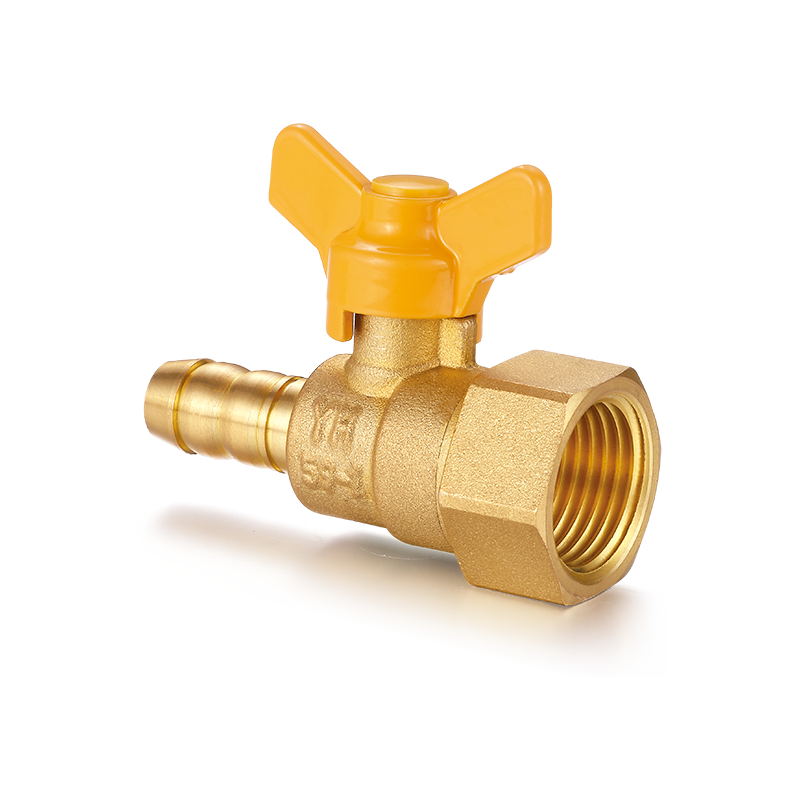
YH-216 Brass Ball Valve with Butterfly Handle(F/Hose Connector)
Related News
Contact Us
-

-
 +86-0574-63742169
 -
 No.104-128, Cizhang East Road, Zhangqi Town, Cixi City, Ningbo, Zhejiang Province, China


Message Us Now !
