


 English
  русский
  عربى
عربى  Español
Brass Ball Valve with Butterfly Handle for Reliable Low-Pressure Fluid Control
Content
- 1 Product Overview: A Compact Valve Designed for Practical Low-Pressure Applications
- 2 Core Advantages of the Male-to-Male Series Design
- 3 Optimized Flow Path for Low-Pressure Gas and Fluid Delivery
- 4 Ergonomic Butterfly Handle for Secure and Convenient Operation
- 5 Outdoor Weather Resistance and Brass Material Benefits
- 6 Technical Characteristics and Application Suitability
- 7 Advantages Compared with Common Competing Valve Designs
- 8 Manufacturing Strength Behind the Valve
- 9 Precision Machining and Thread Quality
- 10 Assembly Control and Leak Testing
- 11 Application Scenario: Outdoor Low-Pressure Gas Pipelines
- 12 Application Scenario: Garden Irrigation and Outdoor Water Supply
- 13 Application Scenario: Rural Homestays and Utility Water Supply
- 14 Application Scenario: Campers and RV Low-Pressure Fluid Control
- 15 Installation Considerations for Best Performance
- 16 Maintenance and Service Life Factors
- 17 Why Manufacturing Capability Matters to Buyers and Distributors
- 18 Product Value in the Broader Valve Market
- 19 Quality, Safety, and Responsible Product Selection
- 20 Q&A Section
- 20.1 Q1: What is the YH-206 Brass Ball Valve with Butterfly Handle mainly used for?
- 20.2 Q2: What is the main advantage of the male-to-male threaded design?
- 20.3 Q3: Why does the valve use a butterfly handle instead of a long lever handle?
- 20.4 Q4: Is the valve suitable for outdoor use?
- 20.5 Q5: What media can pass through this valve?
- 20.6 Q6: What is the working temperature range?
- 20.7 Q7: What thread standard does the valve follow?
- 20.8 Q8: How does this valve compare with plastic valves?
- 20.9 Q9: Why is manufacturing capability important for this type of valve?
- 20.10 Q10: Who manufactures the YH-206 valve?
- 21 Conclusion: A Practical Brass Valve for Reliable Low-Pressure Control
- 22 References
- 23 Product: YH-206 Brass Ball Valve with Butterfly Handle(M/M)
In low-pressure fluid systems, a valve is more than a simple on-off component. It is a safety point, a flow-control point, a maintenance point, and often the difference between a clean, efficient installation and a system that requires constant adjustment. The YH-206 Brass Ball Valve with Butterfly Handle, designed with male threads on both ends, is developed for users who need a compact, durable, and easy-to-operate valve for water, non-corrosive fluids, and low-pressure gas applications.
This valve belongs to the brass butterfly handle ball valve category and is especially suitable for installations where direct threaded connection, stable operation, and outdoor durability are important. Its full male thread design enables straightforward series connection, reducing the need for extra adapters and helping installers create cleaner pipeline layouts. For low-pressure gas pipelines, garden irrigation systems, rural water supply, campers, and RV fluid control, this structure offers practical value in both installation and long-term use.
Unlike ordinary valves that may require additional fittings, extended installation space, or less convenient operating handles, the YH-206 focuses on efficiency, reliability, and user comfort. Its butterfly handle provides a secure grip in dry or wet environments, while the brass body and passivated surface help resist environmental aging. These advantages are supported by the manufacturing strength of Ningbo Yunhua Valve Co., Ltd., a specialized valve enterprise with automated machining, assembly, and testing capabilities.
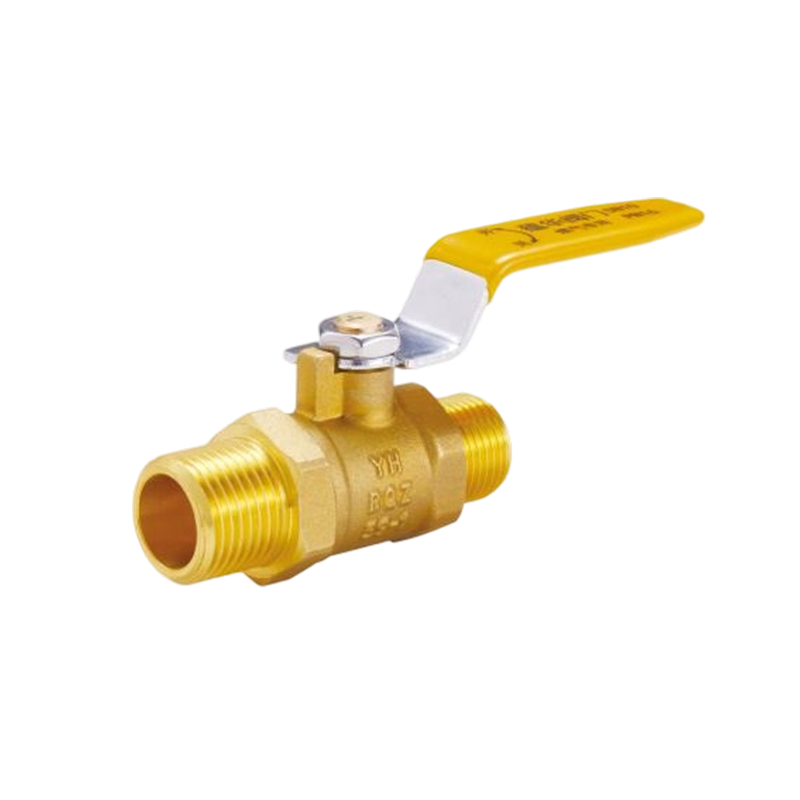
YH-206 Brass Ball Valve with Butterfly Handle(M/M)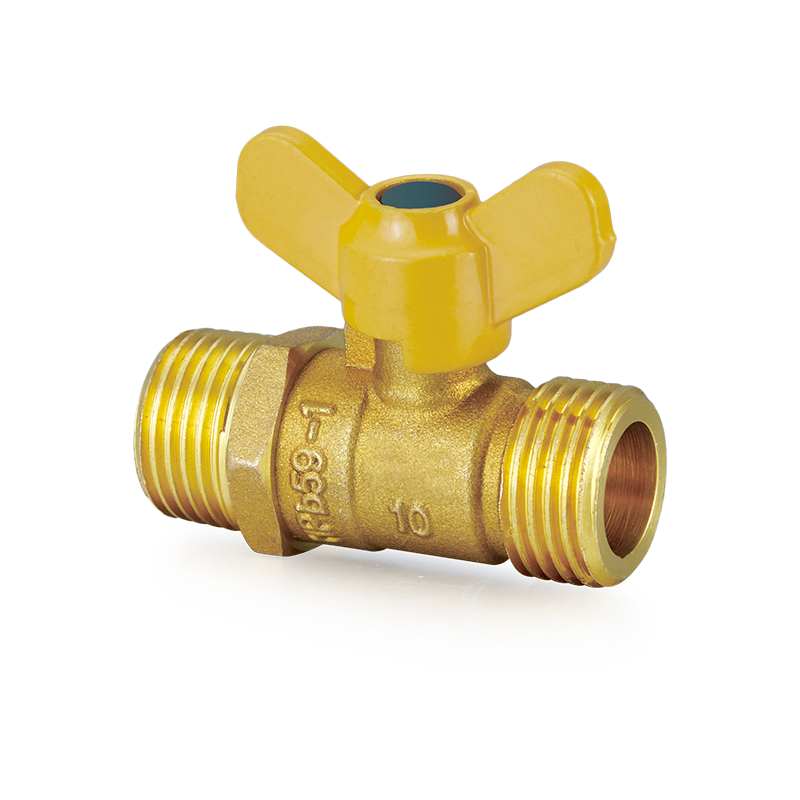
Product Overview: A Compact Valve Designed for Practical Low-Pressure Applications
The YH-206 Brass Ball Valve with Butterfly Handle is a male-to-male ball valve designed for low-pressure control of water, non-corrosive fluids, and gas. Its structure is simple in appearance, but its value is found in the details: full male threaded ends, a carefully designed flow path, a compact butterfly handle, and an outdoor-suitable brass body treatment.
In many low-pressure pipeline systems, space is limited and installation speed matters. A valve that requires extra coupling parts can increase material cost, add possible leakage points, and make the system more difficult to maintain. The YH-206 solves this issue by using male threads at both ends, allowing direct connection into compatible threaded layouts. This is especially useful for series installations and extended low-pressure pipelines.
The butterfly handle is another important feature. A traditional lever handle can be useful in large valves, but in compact installations it may interfere with surrounding pipes, walls, brackets, or equipment. The butterfly handle reduces the operating envelope of the valve. It allows the user to open or close the valve with stable hand control while keeping the overall installation compact. This makes the valve suitable for garden supply systems, outdoor pipeline cabinets, RV equipment compartments, and utility areas where space is limited.
The product is intended for a nominal pressure of 0.015 and a working temperature range of -20°C to 80°C. It is compatible with water, non-corrosive fluids, and gas. Its parallel pipe thread follows ISO 228, helping it fit standardized threaded pipeline systems when correctly selected and installed.
Core Advantages of the Male-to-Male Series Design
The full male thread design is one of the most important structural advantages of the YH-206. In low-pressure systems, the number of connection points directly affects the probability of leakage. Each extra adapter, coupling, or intermediate fitting creates another sealing surface. While a properly installed fitting can be reliable, fewer joints generally mean fewer opportunities for installation error, seal aging, loosening, or thread mismatch.
With male threads on both ends, the valve can be inserted directly into compatible female-threaded components or assemblies. This is particularly useful in series connection, where multiple components must be connected along a pipeline. Compared with valves requiring extra male nipples or adapter pieces, the YH-206 reduces the component count and helps simplify the system structure.
This advantage is especially relevant for long-distance low-pressure fluid transport. In such systems, pressure may not be high, but maintaining stable flow and preventing small leaks are still essential. A minor leak in a low-pressure gas line can become a safety concern. A minor leak in an outdoor water supply line can waste water and damage surrounding areas. The YH-206 supports a more reliable layout by reducing unnecessary threaded transitions.
For installers, the direct male-to-male structure can also shorten installation time. Fewer fittings mean fewer parts to prepare, fewer joints to seal, and fewer alignment steps. For distributors and project buyers, simplified installation can reduce total project cost, not only through lower accessory consumption but also through reduced labor time and fewer after-sales issues.
Optimized Flow Path for Low-Pressure Gas and Fluid Delivery
Low-pressure systems are sensitive to internal resistance. A valve that creates unnecessary turbulence, narrowing, or obstruction may reduce flow stability and make the system less efficient. The YH-206 is designed with an optimized low-pressure flow path to support efficient delivery of low-pressure gas and fluid media.
In many low-pressure gas systems, stable flow is important because equipment downstream may depend on predictable supply. For example, outdoor gas pipeline branches, camper systems, and small utility applications often require a valve that opens and closes cleanly while maintaining effective flow when open. The ball valve structure is widely valued because it offers quick shutoff and a relatively direct flow passage.
Compared with some compact valves that prioritize size but restrict flow, the YH-206 balances compactness with flow efficiency. Its internal channel is designed for low-pressure service, helping the system maintain practical delivery performance. For users, this means a valve that does not become a weak point in the pipeline when correctly matched with the system design.
The valve also supports water and non-corrosive fluid control. In garden irrigation, rural water supply, and outdoor washing points, users need valves that can operate repeatedly and allow water to pass smoothly. The optimized flow path helps reduce unnecessary pressure loss, which can be important when the supply pressure is already limited.
Ergonomic Butterfly Handle for Secure and Convenient Operation
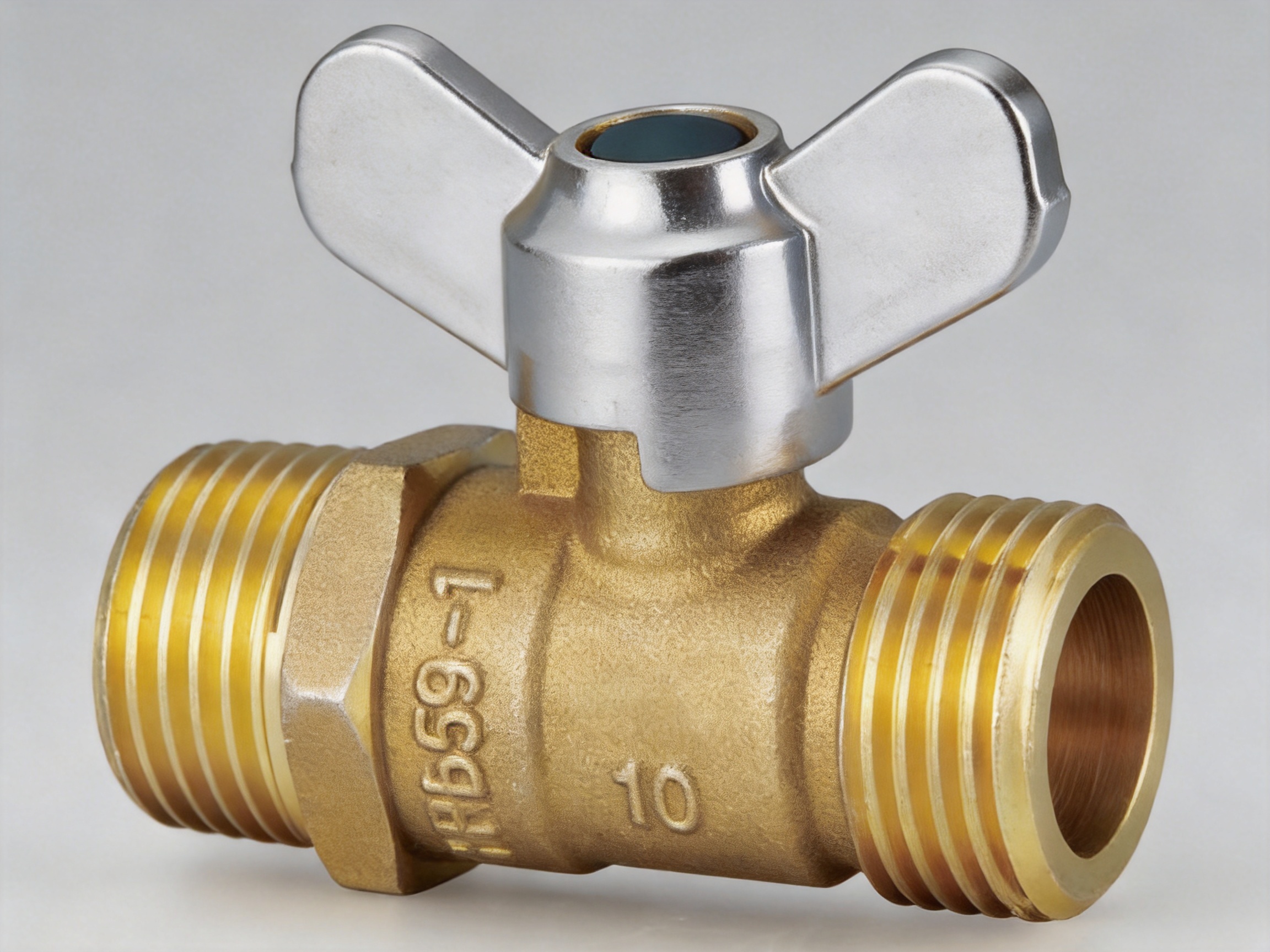
The butterfly handle is a defining feature of the YH-206. Its compact shape provides easy manual control while reducing interference in tight spaces. In outdoor and utility applications, the user may need to operate the valve with wet hands, gloves, or limited visibility. A handle that offers stable grip and clear turning feedback improves both convenience and safety.
The butterfly handle design allows users to apply torque from both sides of the handle. This can feel more balanced than a small knob and more compact than a long lever. The result is smooth operation in a valve that remains suitable for narrow installations.
In garden irrigation systems, valves may be installed near soil, plants, walls, or protective boxes. A long lever handle can be knocked accidentally or blocked by nearby objects. The butterfly handle reduces this risk. In RV or camper applications, space is even more valuable. A compact handle can prevent damage during movement and reduce the chance of accidental operation when equipment is packed tightly.
For maintenance teams, the handle also supports quick visual identification of valve status. Ball valves typically show open or closed status by handle direction, and a butterfly handle can provide clear orientation while remaining compact. This is useful in systems with multiple branch lines, where quick operation and clear control are needed.
Outdoor Weather Resistance and Brass Material Benefits
Outdoor valves face temperature variation, moisture, ultraviolet exposure, dirt, and repeated manual contact. The YH-206 uses a passivated body surface to improve resistance to environmental aging. This surface treatment helps the valve remain suitable for outdoor low-pressure gas pipelines and garden water supply systems.
Brass is a widely used material in valve manufacturing because it offers a strong combination of machinability, corrosion resistance in many water and non-corrosive fluid environments, mechanical strength, and sealing stability. For small and medium valves, brass can be manufactured with precise threads and smooth internal surfaces, supporting reliable installation and operation.
Compared with some lower-grade alloy or plastic valves, a well-manufactured brass ball valve can offer better durability under repeated use and changing outdoor conditions. Plastic valves may be lightweight and economical, but they can be more vulnerable to aging, thread deformation, or mechanical damage in demanding environments. Lower-quality metal valves may have inconsistent machining, rough threads, or weaker surface treatment. The YH-206 is positioned as a reliable brass solution for users who need long-term performance in practical field conditions.
Weather-resistant durability is especially important in rural homestays, garden supply systems, and outdoor utility pipelines. These applications may not always receive frequent professional maintenance. A valve must remain functional after exposure to sun, humidity, seasonal temperature shifts, and occasional dirt accumulation. The passivated brass surface supports longer service life and better appearance retention compared with untreated or poorly finished alternatives.
Technical Characteristics and Application Suitability
The YH-206 is designed for defined working conditions. Correct selection is essential for safety and service life. It is suitable for water, non-corrosive fluids, and gas under low-pressure conditions. Its working temperature range is -20°C to 80°C, making it suitable for many outdoor and utility environments, provided that the medium and system conditions remain within specification.
The parallel pipe thread conforms to ISO 228. This is important for international compatibility, especially for buyers, distributors, and installers working with standardized pipe systems. Thread standard consistency helps reduce installation problems and improves sealing reliability when the correct sealing method and compatible parts are used.
| Item | Specification or Feature | Practical Benefit |
|---|---|---|
| Product Type | Brass ball valve with butterfly handle | Compact shutoff control for low-pressure systems |
| Connection | Male thread to male thread | Direct series connection with fewer extra fittings |
| Working Medium | Water, non-corrosive fluids, gas | Versatile use in utility, garden, and low-pressure gas systems |
| Working Temperature | -20°C to 80°C | Suitable for many indoor and outdoor environments |
| Nominal Pressure | 0.015 | Designed for low-pressure applications |
| Thread Standard | Parallel pipe thread to ISO 228 | Supports standardized installation compatibility |
| Handle Type | Butterfly handle | Secure grip and compact operation |
| Surface Feature | Passivated brass body | Improved resistance to outdoor aging and environmental exposure |
The table highlights why the valve is well matched to systems where low-pressure reliability, compact size, and direct threaded installation are important. It should not be selected for corrosive media, high-pressure systems, or applications outside its temperature range. When used correctly, however, it provides a practical balance of durability, convenience, and installation efficiency.
Advantages Compared with Common Competing Valve Designs
Many competing low-pressure valves appear similar at first glance, but differences in connection type, handle design, material quality, machining accuracy, and manufacturing control can create major differences in field performance. The YH-206 is designed to compete not only as a component but as a complete installation solution.
Fewer Leakage Points Than Adapter-Based Designs
Some valves require additional adapters to connect with the rest of the pipeline. Every additional fitting adds cost and risk. The male-to-male design of the YH-206 reduces unnecessary transitions and supports a cleaner connection path. This can be a major advantage in long pipeline runs, outdoor gas lines, and garden systems where maintenance access may be inconvenient.
More Compact Than Long Lever Handle Valves
Long lever handles can be easy to operate, but they may not be ideal in small boxes, camper compartments, or narrow garden installations. The butterfly handle offers controlled operation in a smaller footprint. This makes the valve more suitable for compact equipment and multi-valve arrangements.
More Durable Than Low-Grade Plastic Alternatives
Plastic valves may be acceptable for temporary or light-duty water service, but outdoor aging, thread wear, and mechanical impact can shorten their service life. A brass body with passivated surface treatment provides stronger mechanical performance and better resistance to many environmental conditions. For users seeking fewer replacements and more dependable operation, the YH-206 offers a stronger long-term value proposition.
Better Manufacturing Consistency Than Uncontrolled Low-Cost Valves
The performance of a ball valve depends heavily on machining accuracy, thread quality, sealing surface finish, assembly consistency, and testing. Low-cost valves made without strong process control may suffer from rough threads, inconsistent torque, poor sealing, or early leakage. The YH-206 benefits from the manufacturing system of Ningbo Yunhua Valve Co., Ltd., which includes precision machining, automated assembly lines, and testing workshops.
Manufacturing Strength Behind the Valve
A valve’s quality is determined long before it reaches the installer. Material selection, machining, assembly, inspection, and testing all influence whether the finished product can perform reliably. Ningbo Yunhua Valve Co., Ltd. is an enterprise specializing in gas and fluid valves, water supply valves, and hardware accessories. Its production capabilities support stable quality for products such as the YH-206.
The company operates a production base covering 20,000 square meters. Within this facility, it has established a professional automated precision machining workshop, assembly line, and testing workshop. These resources allow the company to control critical manufacturing steps in-house and maintain consistent product standards.
Advanced CNC machine tools are especially important for brass valve production. Threads must be accurately formed. Sealing surfaces must be precisely machined. The ball, body, and stem interfaces must align correctly. Even small deviations can affect operating torque, sealing performance, and service life. By using advanced domestic and international CNC machine tools, the company supports repeatable machining accuracy across large production volumes.
Automated assembly and testing equipment also contribute to quality stability. Manual assembly can be flexible, but without proper process control, it may produce variation in torque, seal compression, and component positioning. Automated or semi-automated assembly systems help standardize critical operations. Testing equipment helps verify that valves meet relevant performance requirements before delivery.
With an annual production capacity of 2 million sets of valves and 10 million sets of hardware accessories, the company is able to support both regular supply and larger project demand. This capacity is important for distributors, wholesalers, and OEM customers who need reliable delivery schedules and consistent batch quality.
Precision Machining and Thread Quality
For a male-to-male valve such as the YH-206, thread quality is central to performance. Threads must be clean, accurate, and compatible with ISO 228 parallel pipe thread requirements. Poor thread geometry can cause difficult installation, weak sealing, misalignment, or damage to mating components.
Precision machining helps create threads that engage smoothly and consistently. A clean thread profile reduces installation resistance and helps the installer achieve proper connection without excessive force. This is particularly important for brass components because overtightening or cross-threading can damage the threads and compromise sealing reliability.
In addition to threads, the body cavity and ball seating surfaces must be machined with care. A ball valve relies on close contact between the ball and seats to provide shutoff. If internal surfaces are rough or misaligned, the valve may require excessive operating torque or may fail to seal properly. Precision equipment reduces such risks and improves uniformity from one valve to the next.
Manufacturing consistency also matters for replacement and repeat purchasing. When a distributor or project contractor uses the same valve model across multiple installations, predictable dimensions and operating feel make training, installation, and maintenance easier. The YH-206 is supported by a production system designed for repeatable quality.
Assembly Control and Leak Testing
Assembly is where machined parts become a functional valve. The ball, seats, stem, handle, seals, and body must be assembled in the correct sequence and to the correct fit. If parts are too loose, leakage may occur. If parts are too tight, operation may become difficult and wear may increase. Proper assembly control balances sealing and smooth movement.
Testing is equally important. A valve may look good externally but still fail under working conditions if internal sealing is poor. Professional testing workshops help verify product performance before shipment. For a low-pressure gas or fluid valve, leak prevention is a core requirement. Testing reduces the chance that defective products reach customers and helps protect the reputation of the installer, distributor, and manufacturer.
The YH-206 is designed for systems where users need reliable shutoff. In outdoor gas pipelines, the consequences of leakage can be serious. In water and irrigation systems, leakage can waste resources and cause damage. A controlled manufacturing and testing process is therefore not merely a production advantage; it is a functional necessity.
Application Scenario: Outdoor Low-Pressure Gas Pipelines
Outdoor low-pressure gas pipelines require careful component selection. Valves in these systems must offer secure shutoff, stable operation, and resistance to outdoor conditions. The YH-206 is suitable for low-pressure gas applications within its specified working range and when installed according to applicable regulations and safety practices.
The male-to-male threaded design can be especially valuable in outdoor pipeline layouts where multiple sections or components are connected in series. By reducing extra fittings, the valve helps minimize possible leakage points. The butterfly handle provides quick manual control when the gas line must be opened or closed for operation, maintenance, or emergency isolation.
The passivated brass body is suitable for outdoor exposure, helping resist aging from weather conditions. However, correct installation remains essential. Gas systems should be installed by qualified personnel, and sealing materials must be compatible with gas service and thread type. The valve should be inspected periodically for damage, corrosion, looseness, or leakage.
Application Scenario: Garden Irrigation and Outdoor Water Supply
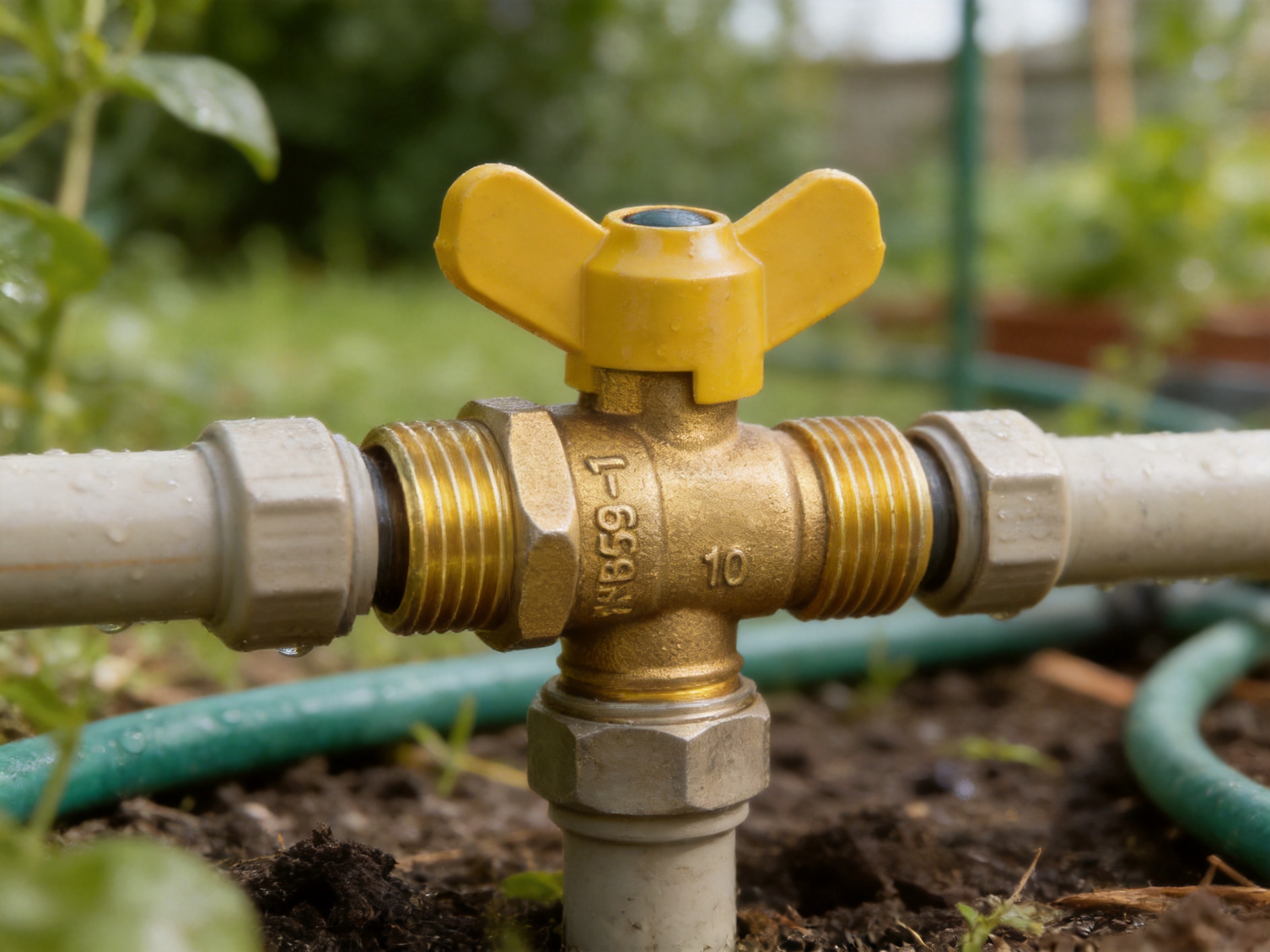
Garden irrigation systems often require many small control points. A valve may be installed near a faucet, between hose connections, in a branch line, or inside a small outdoor control box. The YH-206 offers several advantages in these situations: compact handle operation, brass durability, and direct threaded connection.
In garden environments, valves may be exposed to sunlight, rain, soil, fertilizer residue, and repeated hand operation. The passivated body surface improves durability, while the brass construction provides strength for threaded connections. The butterfly handle is easy to operate even when the user’s hands are wet from irrigation work.
Compared with temporary plastic connectors, a brass ball valve offers a more permanent and reliable control point. It is suitable for users who want a stable garden water supply system rather than a short-term hose accessory. For rural homestays, outdoor guest facilities, and utility gardens, this can improve both convenience and perceived quality.
Application Scenario: Rural Homestays and Utility Water Supply
Rural homestays often combine residential comfort with outdoor utility needs. Water supply systems may serve kitchens, wash areas, gardens, guest outdoor facilities, and maintenance points. In such environments, a valve must be simple for non-specialist users to operate but durable enough for regular service.
The YH-206 provides a practical solution. Its butterfly handle is intuitive, and the ball valve design allows quick open-close control. The brass body supports long-term use, while the male-to-male connection helps installers create efficient layouts. In a rural homestay, reducing leakage and simplifying maintenance can improve guest experience and reduce operating costs.
Outdoor water supply in rural areas may experience variable pressure, seasonal temperature changes, and occasional interruptions. A reliable shutoff valve allows sections of the system to be isolated for repair or seasonal maintenance. The YH-206’s temperature range of -20°C to 80°C supports many common environments, though freeze protection should still be considered when water may remain inside the valve in freezing conditions.
Application Scenario: Campers and RV Low-Pressure Fluid Control
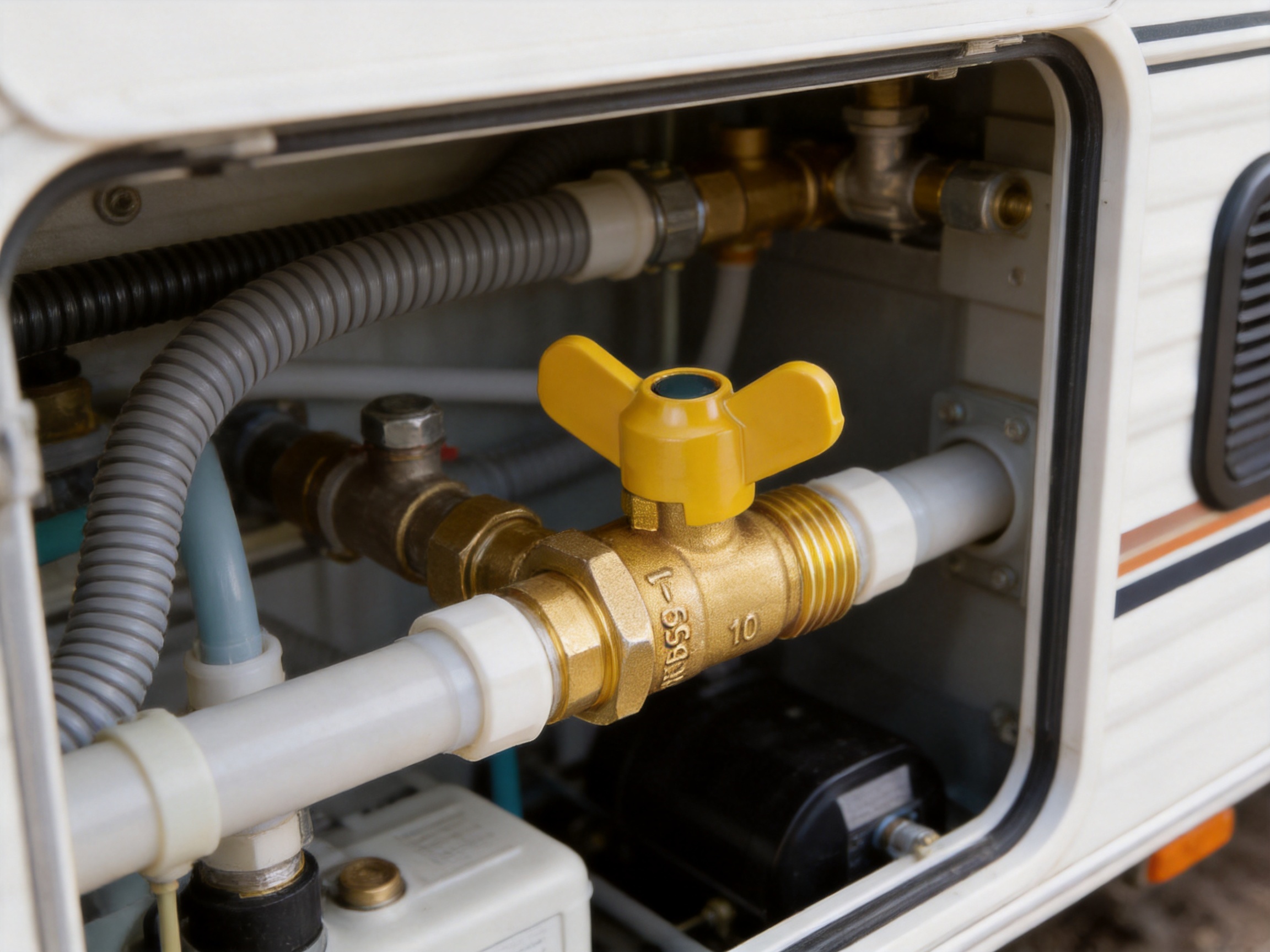
Campers and recreational vehicles require compact, lightweight, and dependable fluid control components. Space is limited, and components may be exposed to vibration, movement, moisture, and frequent operation. The YH-206’s compact butterfly handle and direct threaded design make it suitable for certain low-pressure fluid control points in campers and RVs.
In RV systems, long lever handles can interfere with storage compartments or other equipment. A butterfly handle reduces protrusion and helps protect the valve from accidental impact. The male-to-male design can also simplify assembly where compatible threaded fittings are used.
For low-pressure water or non-corrosive fluid systems, the valve can provide a convenient shutoff point for maintenance or system isolation. When used in gas-related RV applications, professional installation and compliance with relevant safety standards are essential. The valve must be selected according to pressure, medium, temperature, and thread compatibility.
Installation Considerations for Best Performance
A high-quality valve still requires proper installation. To achieve the best performance from the YH-206, installers should confirm that the valve specification matches the system medium, pressure, temperature, and thread standard. The ISO 228 parallel pipe thread should be matched with compatible components and appropriate sealing methods.
Before installation, the pipeline should be clean. Dirt, metal chips, sealing tape fragments, or other debris can damage sealing surfaces or interfere with ball movement. The installer should avoid cross-threading and should not use excessive force. Brass threads provide strong performance when properly installed, but overtightening can deform components or damage mating threads.
The valve should be positioned so that the butterfly handle can move freely between open and closed positions. Even though the handle is compact, clearance should still be checked. For outdoor installations, the valve should be located where inspection and operation are convenient. In freezing environments, water systems should be drained or protected to avoid damage from ice expansion.
After installation, the system should be tested under appropriate conditions. For gas systems, leak testing should follow applicable safety procedures. For water systems, the installer should check for seepage at threaded joints and confirm smooth valve operation. Periodic inspection helps ensure long-term reliability.
Maintenance and Service Life Factors
The YH-206 is designed for durable service, but maintenance practices can extend its useful life. Regular operation helps prevent stiffness in valves that remain in one position for long periods. Outdoor valves should be inspected for dirt accumulation, mechanical damage, thread loosening, or signs of leakage.
For water applications, water quality can affect valve life. Non-corrosive fluids are suitable, but fluids containing aggressive chemicals, heavy sediment, or corrosive agents should be avoided unless compatibility is confirmed. For gas applications, the gas type and system requirements must be consistent with the valve’s intended use.
The butterfly handle should be operated by hand only. Tools should not be used to force the handle, as excessive torque can damage the handle, stem, or internal components. If operation becomes difficult, the system should be inspected rather than forcing the valve.
In outdoor environments, the passivated brass surface provides improved resistance to aging, but no outdoor component is completely maintenance-free. Periodic cleaning and inspection are recommended, especially in coastal, industrial, or chemically exposed environments.
Why Manufacturing Capability Matters to Buyers and Distributors
For individual users, one valve may seem like a small purchase. For distributors, contractors, and OEM buyers, however, valve quality affects reputation, warranty cost, and customer satisfaction. A supplier with strong manufacturing capability can provide more reliable batch consistency, stable delivery, and better technical support.
Ningbo Yunhua Valve Co., Ltd. has developed its capabilities over more than ten years, forming a professional management system and a production platform for valves and hardware accessories. Its automated precision machining workshop helps maintain dimensional accuracy. Its assembly line supports efficient production. Its testing workshop helps verify product performance. Together, these strengths provide a foundation for reliable products such as the YH-206.
Annual production capacity is another advantage. With the ability to produce 2 million sets of valves and 10 million sets of hardware accessories, the company can support both standard product demand and customized supply needs. This is important in competitive markets where buyers need not only a good product but also dependable availability.
The company’s mission to build a safe fluid ecosystem with high-quality valves aligns with the practical expectations of customers. In fluid control, safety and quality cannot be separated. A valve must be easy to sell, easy to install, and reliable in use. The YH-206 reflects this philosophy through its connection design, material selection, handling comfort, and manufacturing control.
Product Value in the Broader Valve Market
The market for hardware accessories and valves includes many categories, including threaded globe valves, forged steel valves, brass gas ball valves, water supply valves, and compact utility valves. Each valve type has a specific purpose. Globe valves are commonly used for throttling and flow regulation. Forged steel valves are often selected for demanding industrial conditions. Brass gas ball valves are valued for quick shutoff and practical installation in gas systems.
The YH-206 occupies a focused position within this broader market. It is not intended to replace every type of valve. Instead, it provides a specialized solution for low-pressure water, non-corrosive fluid, and gas applications where compact installation, direct male-threaded connection, and convenient operation are required.
This focus is an advantage. A product designed for a clear application range can perform better than a general-purpose component used incorrectly. The YH-206 combines the quick shutoff function of a ball valve with a butterfly handle and male-to-male thread format. For the right applications, this combination offers excellent practical value.
Quality, Safety, and Responsible Product Selection
Valve safety begins with correct selection. Users should not choose a valve only by appearance or thread size. Pressure, medium, temperature, thread standard, installation environment, and regulatory requirements must all be considered. The YH-206 is specified for low-pressure use, with a nominal pressure of 0.015, and should be applied accordingly.
For gas applications, local codes and professional installation requirements are especially important. A valve may be mechanically suitable, but the complete system must still be designed, installed, and tested safely. For water and non-corrosive fluid applications, compatibility with the medium and environment should be confirmed.
Responsible selection also includes considering long-term maintenance. A brass valve with a passivated surface may cost more than a basic temporary component, but it can reduce replacement frequency and improve system reliability. In many installations, the cost of a leak or failure is far greater than the price difference between a low-quality valve and a well-manufactured one.
Q&A Section
Q1: What is the YH-206 Brass Ball Valve with Butterfly Handle mainly used for?
It is mainly used for low-pressure control of water, non-corrosive fluids, and gas. Typical applications include outdoor low-pressure gas pipelines, garden irrigation systems, rural homestay water supply, and low-pressure fluid control in campers and RVs.
Q2: What is the main advantage of the male-to-male threaded design?
The male-to-male threaded design allows direct series connection with compatible female-threaded components. This reduces the need for additional fittings, lowers the number of potential leakage points, simplifies installation, and helps create a cleaner pipeline layout.
Q3: Why does the valve use a butterfly handle instead of a long lever handle?
The butterfly handle provides a compact operating shape that is suitable for limited spaces. It offers a secure grip for dry or wet-hand operation and reduces the chance of interference with nearby pipes, walls, boxes, or equipment.
Q4: Is the valve suitable for outdoor use?
Yes, the valve is designed with outdoor applications in mind. Its brass body and passivated surface help resist environmental aging, making it suitable for garden water supply and outdoor low-pressure pipeline systems when used within the specified conditions.
Q5: What media can pass through this valve?
The valve is suitable for water, non-corrosive fluids, and gas. It should not be used with corrosive media unless compatibility is confirmed by qualified technical personnel.
Q6: What is the working temperature range?
The working temperature range is -20°C to 80°C. Systems exposed to freezing conditions should be properly drained or protected when water is present.
Q7: What thread standard does the valve follow?
The valve uses parallel pipe thread to ISO 228. Installers should ensure that mating components and sealing methods are compatible with this thread standard.
Q8: How does this valve compare with plastic valves?
Compared with many plastic valves, the brass construction provides better mechanical strength, more durable threaded connections, and improved long-term performance in outdoor or frequently operated systems.
Q9: Why is manufacturing capability important for this type of valve?
Manufacturing capability affects thread accuracy, sealing quality, operating torque, surface finish, and leak prevention. Precision CNC machining, controlled assembly, and testing help ensure that each valve performs consistently.
Q10: Who manufactures the YH-206 valve?
The YH-206 is manufactured by Ningbo Yunhua Valve Co., Ltd., a specialized enterprise engaged in the research, development, production, sales, and service of gas and fluid valves, water supply valves, and hardware accessories.
Conclusion: A Practical Brass Valve for Reliable Low-Pressure Control
The YH-206 Brass Ball Valve with Butterfly Handle is a focused solution for low-pressure fluid and gas systems that require compact operation, direct threaded installation, and durable brass construction. Its male-to-male design reduces unnecessary fittings and helps minimize leakage points. Its optimized flow path supports efficient low-pressure delivery. Its butterfly handle provides secure, space-saving operation. Its passivated brass body improves suitability for outdoor use.
Beyond the product design itself, the valve is supported by the manufacturing strengths of Ningbo Yunhua Valve Co., Ltd. Precision machining, automated assembly, professional testing, advanced equipment, and strong production capacity all contribute to consistent product quality. For distributors, installers, and end users, these strengths translate into easier installation, more dependable performance, and better long-term value.
In applications such as outdoor low-pressure gas pipelines, garden irrigation, rural water supply, campers, and RV fluid systems, the YH-206 offers a balanced combination of reliability, convenience, and durability. When selected and installed correctly, it serves as a dependable control point in the safe and efficient movement of water, non-corrosive fluids, and gas.
References
International Organization for Standardization. ISO 228 Pipe Threads Where Pressure-Tight Joints Are Not Made on the Threads.
Crane Co. Flow of Fluids Through Valves, Fittings, and Pipe.
American Society of Mechanical Engineers. ASME Standards for Valves, Fittings, and Fluid Control Components.
Fluid Controls Institute. Handbook of Valve Selection and Application.
Materials Engineering Reference. Brass Alloys in Valve and Plumbing Applications.
Industrial Valve Manufacturers Association. Best Practices for Valve Installation, Testing, and Maintenance.
Product: YH-206 Brass Ball Valve with Butterfly Handle(M/M)

Related Products
-
 View More
-
 View More
YH-207 Brass Ball Valve with Butterfly Handle(M/hose connector)
-
View More
YH-206 Brass Ball Valve with Butterfly Handle(M/M)
-
 View More
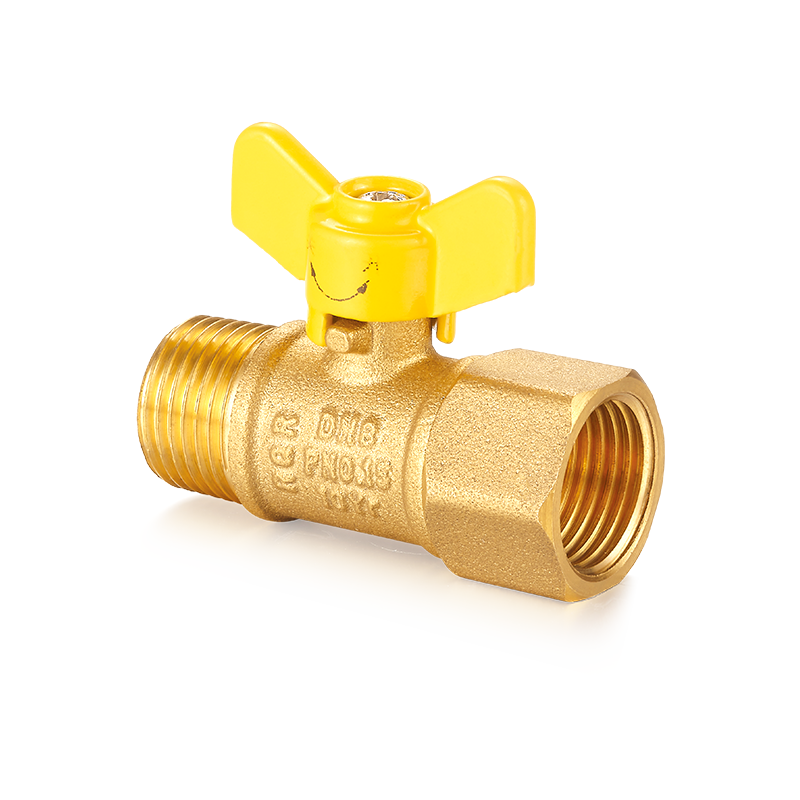
YH-205 Brass Ball Valve with Butterfly Handle(F/M)
-
 View More
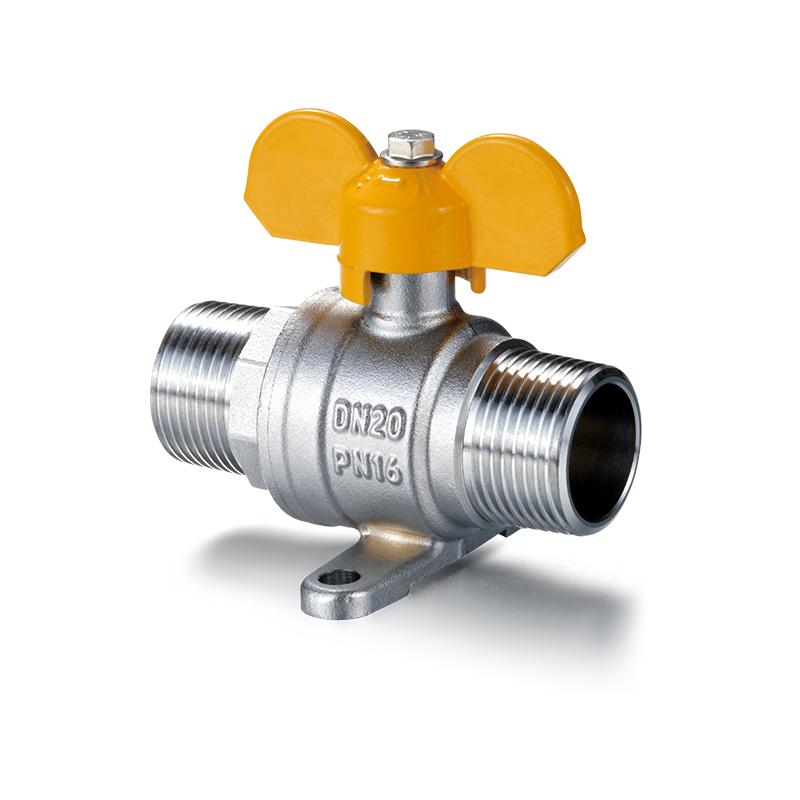
YH-214 Brass Ball Valve with Base& Butterfly Handle(M/M)
-
 View More
YH-221 Brass Ball Valve with Long Handle(M/M)
Related News
Contact Us
-

-
 +86-0574-63742169
 -
 No.104-128, Cizhang East Road, Zhangqi Town, Cixi City, Ningbo, Zhejiang Province, China


Message Us Now !
