


 English
  русский
  عربى
عربى  Español
High-Performance Hose Connector for Reliable Fluid and Gas Connections
Content
- 1 Understanding the Role of a Hose Connector in Fluid Control Systems
- 2 Product Overview: Hose Connector for Practical and Reliable Connections
- 3 Key Advantages Over Ordinary Hose Connectors
- 4 Material and Structural Considerations
- 5 Manufacturing Strength: From Precision Machining to Testing
- 6 Performance Table: Hose Connector Evaluation Factors
- 7 Application Scenarios
- 8 Why Precision Matters in a Small Component
- 9 Competitive Comparison: Professional Connector Versus Generic Alternatives
- 10 Quality Control Philosophy
- 11 Customization and Buyer Support
- 12 Connection Safety and Installation Considerations
- 13 Environmental and Operational Efficiency
- 14 The Company Behind the Product
- 15 How the Hose Connector Supports the Broader Product Portfolio
- 16 Procurement Considerations for Professional Buyers
- 17 Frequently Asked Questions
- 17.1 Q1: What is the main function of a hose connector?
- 17.2 Q2: Why is manufacturing precision important for a hose connector?
- 17.3 Q3: What makes this hose connector different from ordinary low-cost alternatives?
- 17.4 Q4: Can the hose connector be used with valve products?
- 17.5 Q5: Is customization available for different market requirements?
- 17.6 Q6: What should users check before installing a hose connector?
- 17.7 Q7: Why should distributors choose a professional manufacturer for hose connectors?
- 18 Conclusion
- 19 References
- 20 Product: Hose Connector
In modern fluid handling, gas distribution, water supply, irrigation, equipment maintenance, and hardware accessory applications, a hose connector may appear to be a small component, but its function is critical. A well-designed hose connector determines whether a system can operate safely, efficiently, and consistently under changing pressure, temperature, vibration, and installation conditions. When the connection between a hose and a valve, pipe, appliance, tool, or distribution line is weak, the entire system becomes vulnerable to leakage, pressure loss, contamination, or unexpected downtime. For this reason, professional buyers, distributors, installers, and equipment manufacturers increasingly evaluate hose connectors not only by price, but also by material integrity, machining accuracy, sealing reliability, compatibility, and manufacturing traceability.
The hose connector supplied by Ningbo Yunhua Valve Co., Ltd. is positioned as a practical, durable, and precision-manufactured hardware accessory for fluid and gas connection needs. Backed by the company’s experience in gas and fluid valves, water supply valves, and hardware accessories, the product benefits from the same manufacturing philosophy applied to valve components: stable structure, reliable sealing, accurate threading or connection geometry, and strict quality control. In a competitive market where many generic connectors are produced with inconsistent tolerances and limited inspection, this hose connector stands out through its combination of production scale, automated machining, quality testing, and application-oriented design.
Understanding the Role of a Hose Connector in Fluid Control Systems
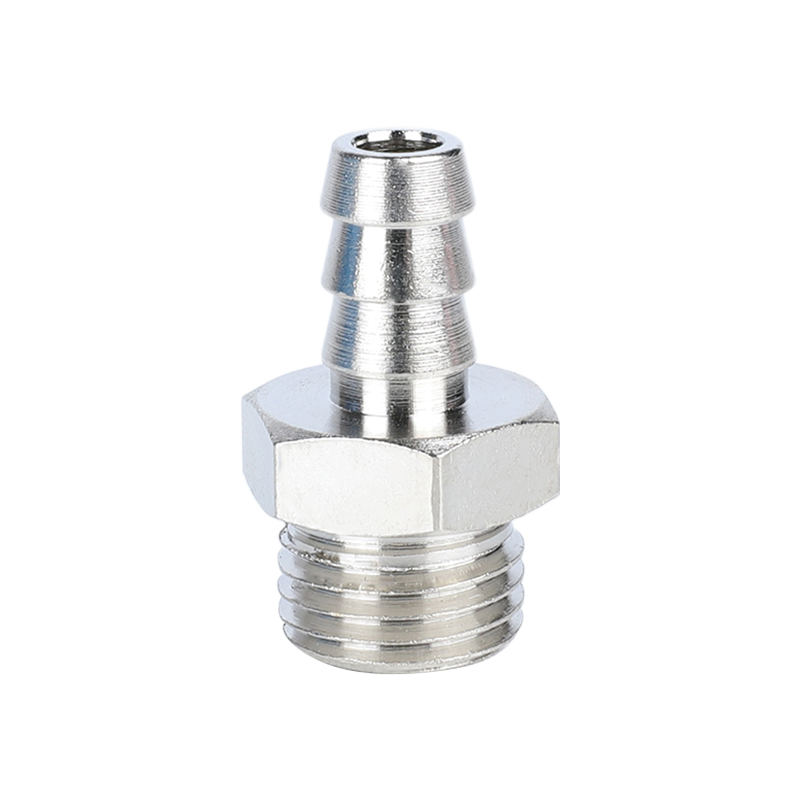
A hose connector is used to join a flexible hose to another component, such as a tap, valve, manifold, pipe fitting, nozzle, regulator, appliance, or industrial device. Its purpose is to create a secure connection that allows the controlled passage of water, air, gas, or other compatible fluids. Depending on the system, the connector may need to resist internal pressure, withstand repeated assembly and disassembly, provide a stable grip on the hose, prevent leakage at the joint, and maintain performance in outdoor or indoor environments.
Although the product category may seem simple, the actual engineering requirements are demanding. A hose connector must align properly with the mating part, fit tightly without damaging the hose, and maintain a consistent seal during use. If the connector is threaded, the thread form must be accurate. If it relies on a barb, clamp, or compression interface, the surface profile must hold the hose securely while avoiding excessive stress concentration. If it is used near valves or gas-related hardware, dimensional precision and sealing performance become even more important.
In many applications, hose connectors are exposed to repeated bending force from hoses. They may be installed in gardens, kitchens, workshops, factory equipment, water supply systems, maintenance tools, and gas-related accessory environments. Poor-quality connectors can crack, loosen, corrode, deform, or fail at the sealing area. A high-quality connector, by contrast, reduces maintenance frequency, protects downstream equipment, and improves user confidence.
Ningbo Yunhua Valve Co., Ltd. applies its background in fluid control manufacturing to the production of this hose connector. Because the company also manufactures and supplies products associated with Threaded Globe Valve, Forged Steel Valve, and Brass Gas Ball Valve applications, it understands that connection reliability is not optional. A connector must be treated as part of the system, not merely as an accessory.
Product Overview: Hose Connector for Practical and Reliable Connections
The hose connector is designed for users who require a dependable joining component for hose-based systems. Its structure can support a variety of common connection environments where stable fluid transfer is required. The product is suitable for hardware accessory channels, valve accessory distribution, water supply support systems, maintenance replacement markets, and OEM or customized production requirements.
One of the defining strengths of this hose connector is its balance between practicality and manufacturing precision. Many users choose hose connectors based on external appearance or low cost, but professional users know that the hidden details determine service life. Thread accuracy, internal passage smoothness, sealing surface finish, wall thickness consistency, and material quality all contribute to performance. Ningbo Yunhua Valve Co., Ltd. integrates these factors into production through precision machining, controlled assembly methods, and quality verification.
The company’s facility covers 20,000 square meters and includes automated precision machining workshops, assembly lines, and testing workshops. These resources allow the hose connector to be produced with consistent quality rather than relying on unstable manual processes. Advanced CNC machine tools and automated testing equipment support dimensional stability and repeatability, helping each batch meet the requirements expected by industrial and commercial buyers.
For distributors and procurement teams, consistency is one of the most important purchasing factors. A sample connector may perform well, but a large-volume order must maintain the same tolerances, surface quality, and sealing performance. The company’s annual production capacity of 10 million sets of hardware accessories demonstrates its ability to support both stable supply and scalable demand. This is particularly valuable for buyers serving regional hardware markets, plumbing supply chains, OEM assembly lines, or maintenance networks.
Key Advantages Over Ordinary Hose Connectors
The hose connector offers several advantages when compared with many ordinary market alternatives. These advantages are not based on a single feature, but on the complete relationship between design, production, inspection, and application support.
1. Stronger Manufacturing Consistency
Low-cost hose connectors often vary from batch to batch because they are produced using inconsistent tooling, limited machining control, or insufficient inspection. Even small deviations in thread pitch, outer diameter, inner diameter, or sealing surface flatness can affect installation. A connector that is too loose may leak, while a connector that is too tight may damage the hose or mating component. The hose connector from Ningbo Yunhua Valve Co., Ltd. benefits from precision machining and controlled production procedures, supporting more stable dimensional performance.
2. Better Sealing Reliability
The main purpose of any hose connector is to prevent leakage. Leakage wastes water or gas, reduces pressure, creates safety risks, and increases maintenance costs. The connector is manufactured with attention to connection geometry and surface condition. When combined with appropriate hoses, clamps, seals, or mating parts, it can help create a dependable connection. This advantage is especially important in systems connected to valves, where leakage at a small accessory can compromise the reputation of the entire installation.
3. Improved Durability in Repeated Use
Many hose connectors are removed and reinstalled multiple times during their service life. Repeated tightening, pulling, twisting, or bending may weaken poor-quality products. A well-made connector is designed to resist deformation and maintain connection stability over time. The company’s experience in valve-related manufacturing supports a practical understanding of mechanical stress, sealing pressure, and user handling conditions.
4. Professional Production Backed by Valve Industry Experience
A manufacturer that produces only low-grade accessories may not apply strict fluid control standards. Ningbo Yunhua Valve Co., Ltd. specializes in gas and fluid valves, water supply valves, and hardware accessories. This broader product experience gives the company a deeper understanding of pressure systems, sealing requirements, and installation environments. The same manufacturing culture that supports Threaded Globe Valve, Forged Steel Valve, and Brass Gas Ball Valve supply can also enhance the quality mindset behind hose connector production.
5. Scalable Supply for Wholesale and OEM Needs
Large buyers need more than a good product; they need stable supply. With a production capacity of 2 million sets of valves and 10 million sets of hardware accessories annually, the company is positioned to support bulk procurement, customized requirements, and long-term cooperation. This is a major advantage over small workshops that may struggle with delivery time, production consistency, and order flexibility.
Material and Structural Considerations
A hose connector must be manufactured from materials suitable for its intended application. Depending on usage requirements, hose connectors may be made from brass, steel, stainless steel, plastic, or other engineered materials. For valve-related and hardware accessory markets, metal connectors are often preferred because they provide strength, durability, and resistance to mechanical wear. Brass-based connectors are commonly used in water and gas accessory environments because brass offers good machinability, corrosion resistance, and stable sealing performance when properly produced.
The structural design of a hose connector typically includes a connection end for the hose and another end for the mating part. The hose side may include a barbed profile, a stepped grip, a threaded coupling, or another retention structure. The mating side may include external threads, internal threads, quick-connect geometry, or a custom interface. The exact design depends on the intended market and customer requirements.
Even if the connector has a simple appearance, its internal structure must be carefully controlled. A rough internal passage can create turbulence, reduce flow efficiency, and collect impurities. A poorly formed thread can cause cross-threading or incomplete engagement. An uneven sealing surface can cause leakage even when the connector appears fully tightened. These details explain why precision machining and inspection are essential.
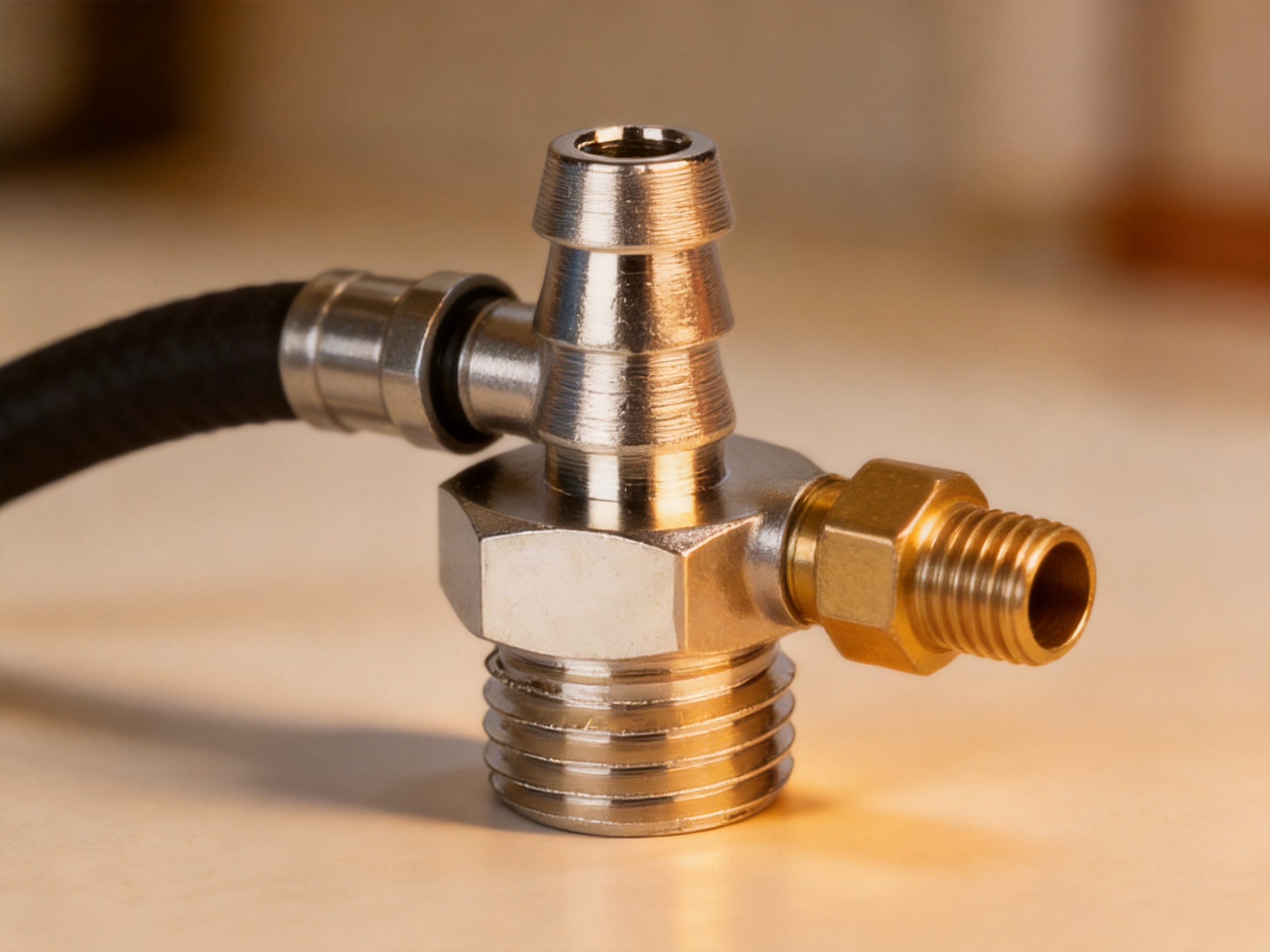
Ningbo Yunhua Valve Co., Ltd. uses advanced CNC machine tools and professional automated equipment to control such details. CNC machining allows repeatable processing of critical geometries, while automated assembly and testing reduce the uncertainty associated with manual production. This is especially important for hose connectors used as accessories with valves or in fluid distribution systems where reliability must be repeatable across thousands or millions of units.
Manufacturing Strength: From Precision Machining to Testing
The quality of a hose connector is created through manufacturing discipline. A company may advertise quality, but the real proof is found in its production system. Ningbo Yunhua Valve Co., Ltd. has developed a professional, fully automated precision machining workshop, assembly line, and testing workshop. This production environment supports the hose connector from raw material handling to final inspection.
Precision Machining
Precision machining is the foundation of connector performance. The machining process forms threads, sealing surfaces, hose retention profiles, internal flow passages, and external dimensions. If the connector is machined inaccurately, no later process can fully correct the problem. CNC equipment allows the company to maintain tight dimensional control and produce consistent shapes over large production quantities.
For hose connectors, important machining factors include thread accuracy, concentricity, surface roughness, wall thickness, and transition radius. Accurate threads allow smooth installation and better sealing with the mating part. Concentric geometry helps prevent uneven stress during tightening. Proper surface finish improves sealing and reduces the likelihood of abrasion or contamination. Consistent wall thickness provides mechanical strength without unnecessary weight or material waste.
Automated Assembly
Some hose connector types may include sealing rings, nuts, sleeves, inserts, or other components. Automated assembly helps ensure that these parts are installed correctly and consistently. Manual assembly can be effective in small quantities, but it can introduce variation in high-volume production. Automation improves repeatability, reduces missed components, and supports efficient production schedules.
Testing and Inspection
Testing is essential because a connector’s failure may not be visible from the outside. A product can look smooth and polished but still fail under pressure or installation stress. Ningbo Yunhua Valve Co., Ltd. has established a testing workshop equipped with professional testing equipment. Inspection may include dimensional checks, appearance inspection, thread verification, sealing performance tests, pressure-related checks, and batch sampling procedures depending on product specification.
The company’s commitment to quality is also supported by its management system and professional management team. Over the past ten years, it has developed a corporate culture focused on improvement, production responsibility, and customer service. These organizational strengths help transform manufacturing equipment into reliable product outcomes.
Performance Table: Hose Connector Evaluation Factors
| Evaluation Factor | Importance for Users | How the Product Addresses It |
|---|---|---|
| Dimensional Accuracy | Supports correct installation and reduces leakage risk | Produced with precision machining and controlled tolerances |
| Sealing Reliability | Prevents fluid or gas loss and improves system safety | Manufactured with attention to sealing surfaces and connection geometry |
| Mechanical Strength | Resists cracking, deformation, and hose pulling forces | Designed for practical use in hardware and valve accessory applications |
| Surface Finish | Improves assembly feel, appearance, and sealing contact | Controlled through machining and inspection processes |
| Batch Consistency | Important for distributors, OEMs, and maintenance suppliers | Supported by automated production and large-scale capacity |
| Application Compatibility | Allows use in water supply, fluid control, and hardware systems | Based on the company’s experience in valves and accessories |
| Supply Stability | Reduces procurement risk and supports long-term cooperation | Backed by annual capacity of millions of valves and hardware accessories |
Application Scenarios
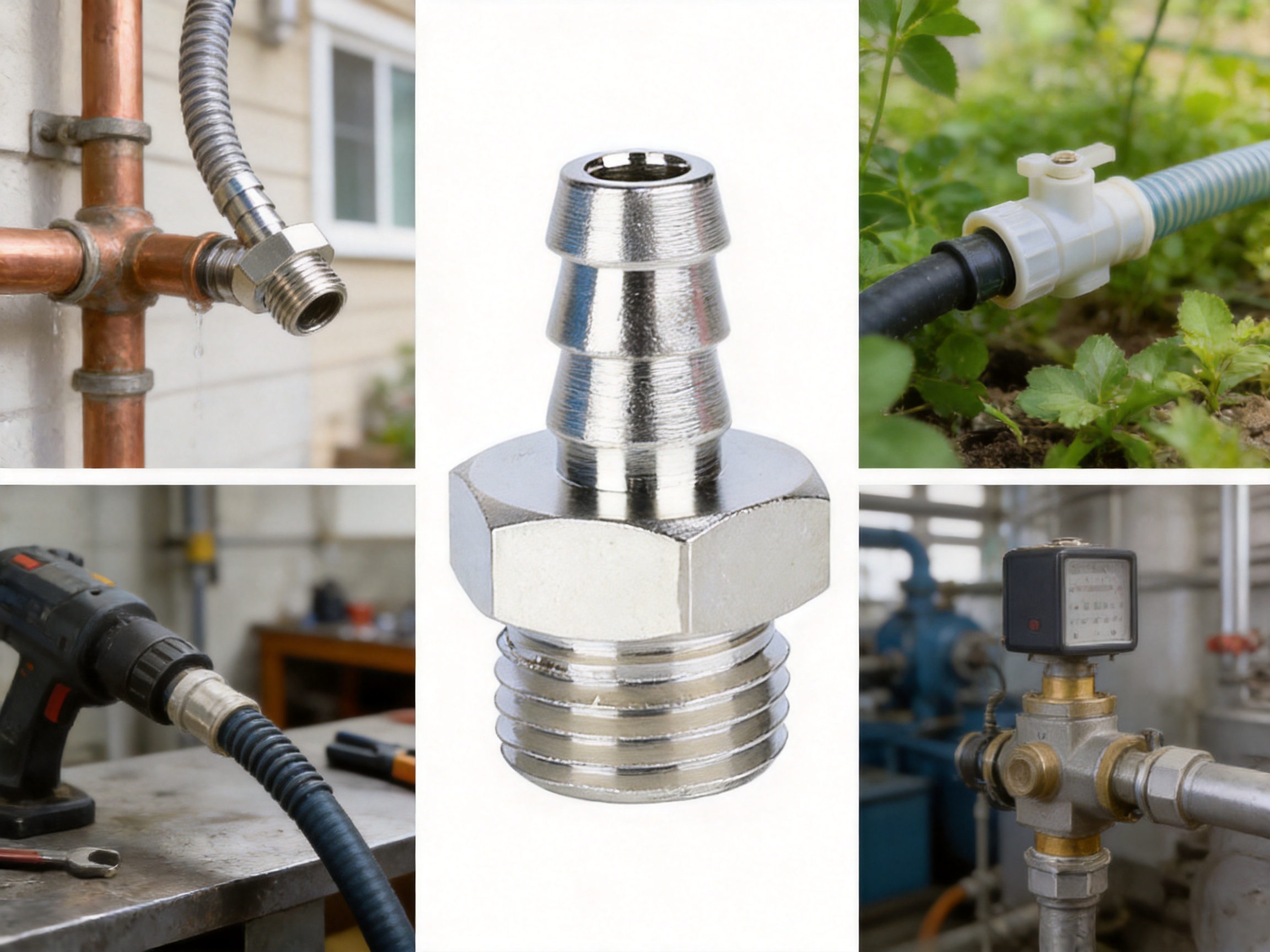
The hose connector can be used across a broad range of practical environments. Its value is especially clear wherever a flexible hose needs to connect to a fixed or semi-fixed fluid control component. Because hoses are commonly used in both temporary and permanent systems, a reliable connector improves convenience and safety.
Water Supply and Plumbing Support
In water supply applications, hose connectors are used to connect hoses to taps, valves, filters, washing equipment, cleaning devices, and distribution points. Leakage in these systems can waste water and damage surrounding materials. A high-quality connector helps maintain a stable connection and reduces the chance of dripping or spraying at the joint.
Garden and Irrigation Systems
Outdoor watering and irrigation systems often expose connectors to frequent movement, sunlight, moisture, and repeated attachment. A durable hose connector can improve user experience by allowing quick, secure, and repeatable installation. While garden applications may seem less demanding than industrial systems, repeated use often reveals the weakness of low-quality connectors.
Industrial Maintenance and Workshop Use
Workshops and factories use hoses for compressed air, water, coolant, cleaning, and process support. In these environments, connectors must withstand handling, vibration, and pressure variation. A connector that loosens during use can interrupt work and create safety issues. The manufacturing accuracy and structural reliability of the hose connector make it suitable for buyers who need more dependable accessory components.
Valve Accessory Systems
Because Ningbo Yunhua Valve Co., Ltd. manufactures gas and fluid valves as well as water supply valves, the hose connector can complement valve-related installations. Connections near valves must be reliable because valves regulate flow and pressure. If the connector fails, the valve system cannot perform as intended. This relationship makes the connector an important accessory in fluid control networks.
OEM and Customized Hardware Applications
Original equipment manufacturers may need hose connectors as part of machines, appliances, fluid handling devices, or packaged systems. OEM buyers often require consistent dimensions, stable quality, and reliable supply. The company’s automated machining and testing capabilities provide a foundation for cooperation with customers who need customized specifications or repeat orders.
Why Precision Matters in a Small Component
A hose connector is often inexpensive compared with the equipment it supports, but its impact can be significant. A single leaking connector can cause system inefficiency, user dissatisfaction, warranty claims, or safety hazards. This is why professional buyers should pay attention to precision rather than treating all connectors as interchangeable.
Threaded areas are a good example. If a thread is too shallow, too rough, or slightly misaligned, it may not engage correctly. Users may apply extra force to tighten the connector, which can damage the mating part or create stress cracks. If the thread is too loose, sealing tape or gaskets may not compensate for the mismatch. Precision machining reduces these risks.
The hose retention area is another important detail. A barb or stepped structure must grip the hose securely. If the profile is too smooth, the hose may slip under pressure. If it is too sharp, it may cut or weaken the hose. Good design balances retention force with hose protection. This kind of practical engineering separates professional connectors from low-grade products.
Internal passage design also matters. A connector should allow smooth flow and avoid unnecessary restriction. Excessive internal burrs or rough edges can disturb flow, trap debris, or damage seals. Professional machining and deburring improve flow performance and cleanliness. For water supply and valve-related applications, this can help maintain long-term system reliability.
Competitive Comparison: Professional Connector Versus Generic Alternatives
In the hardware accessory market, buyers often encounter products that look similar but perform very differently. Generic hose connectors may be produced with limited process control, cheaper raw materials, inconsistent plating, weak threads, or minimal testing. They may function during initial installation but fail after repeated use or pressure exposure.
The hose connector from Ningbo Yunhua Valve Co., Ltd. offers a more dependable alternative because it is supported by an industrial production system rather than informal manufacturing. The company’s large workshop, advanced CNC equipment, automated assembly line, and testing capacity all contribute to product reliability. This does not only improve the connector itself; it also reduces purchasing uncertainty for customers.
For distributors, a reliable connector helps protect reputation. If customers return products due to leakage or poor fit, the distributor loses time and trust. For installers, a dependable connector reduces rework. For OEMs, consistent connectors reduce assembly problems and warranty risk. For end users, a better connector provides convenience and confidence.
Another competitive advantage is the company’s integrated knowledge of valves and accessories. A manufacturer that understands Brass Gas Ball Valve, Threaded Globe Valve, and Forged Steel Valve applications is more likely to recognize how small connection components influence overall system performance. This experience supports better product thinking and stronger quality standards.
Quality Control Philosophy
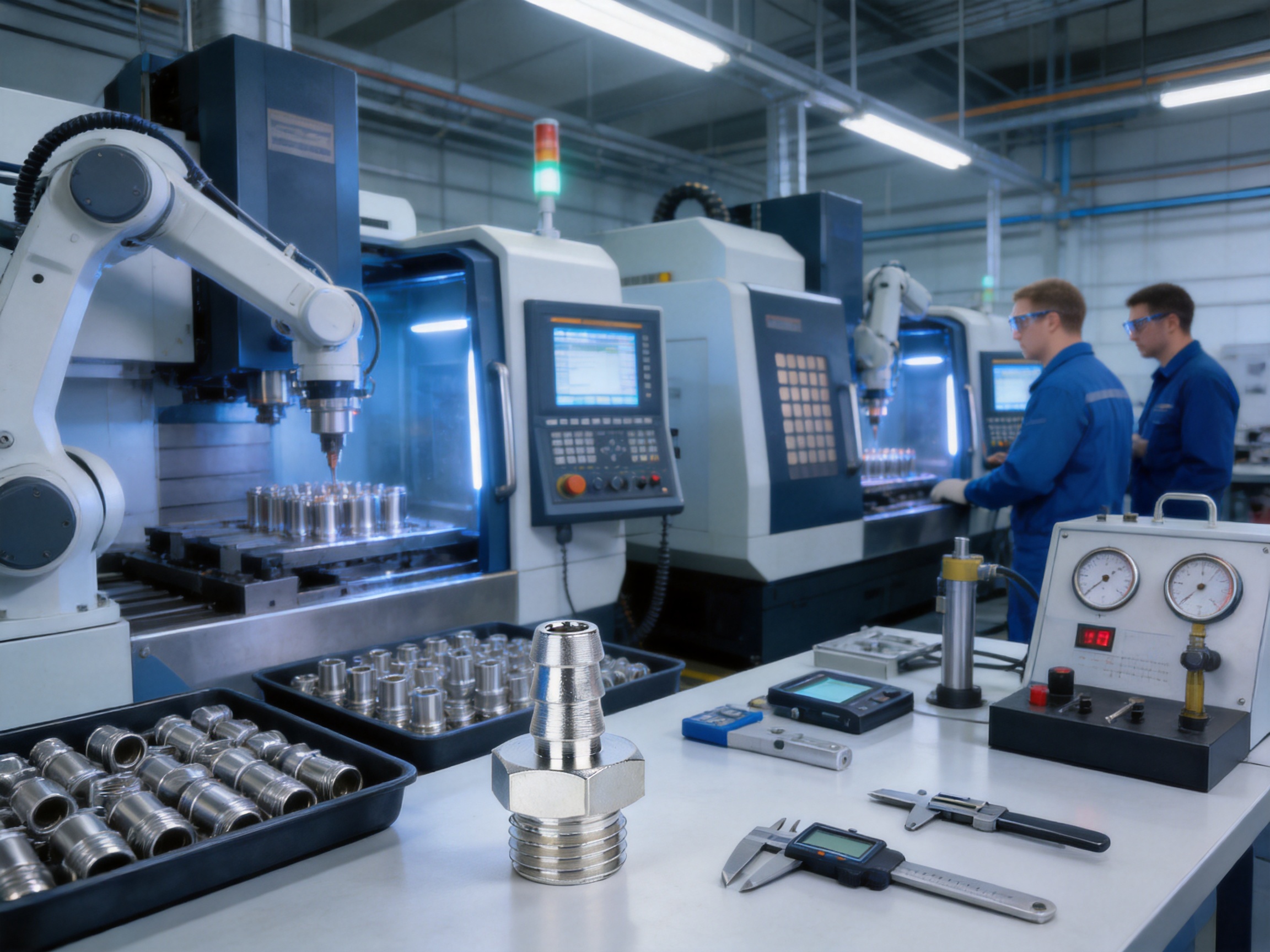
Quality control is not a single inspection step at the end of production. It is a complete approach that begins with product design and continues through material selection, machining, assembly, testing, packaging, and delivery. Ningbo Yunhua Valve Co., Ltd. has developed its management system over years of manufacturing experience, building a professional team that understands both production efficiency and product responsibility.
For hose connectors, quality control may include checking raw material consistency, verifying machining dimensions, inspecting surface finish, confirming thread quality, testing sealing performance, and ensuring proper packaging. Each step reduces the possibility of defects reaching the customer. In high-volume accessory production, even a small defect rate can create significant problems, so systematic control is essential.
Automated production helps reduce human variation, but skilled management remains important. Machines must be programmed, maintained, calibrated, and monitored. Tool wear must be controlled. Test equipment must be accurate. Operators and quality personnel must understand the standards expected by customers. The company’s investment in professional workshops and testing equipment shows its commitment to these requirements.
The result is a hose connector that can meet the expectations of demanding markets. Whether supplied as a standard product or adapted for specific customer needs, the connector benefits from a production culture built around safety, reliability, and long-term cooperation.
Customization and Buyer Support
Different markets may require different hose connector specifications. Thread types, dimensions, material choices, surface treatments, packaging methods, and connection structures can vary according to region and application. A supplier with strong production capabilities can provide better support for customized orders than a limited workshop.
Ningbo Yunhua Valve Co., Ltd. offers custom valve and hardware accessory solutions, and its experience can support customers who require specific hose connector designs. Customization may involve adapting the connector to a particular hose diameter, modifying thread specifications, adjusting wall thickness, changing surface treatment, or developing a connector for a specialized assembly. The company’s machining capacity and technical knowledge provide a practical foundation for these services.
For buyers, customization is not only about changing a drawing. It requires communication, sample confirmation, process planning, production control, and quality verification. The company’s professional management team and manufacturing system help make this process more reliable. This is particularly useful for OEM customers who need components that fit seamlessly into their own products.
Supply support is another important factor. A buyer may require stable delivery schedules, repeatable batches, documentation, and packaging consistency. With its production capacity and established facilities, the company can support long-term procurement plans. This reduces the risk of supply interruption and helps customers maintain their own market commitments.
Connection Safety and Installation Considerations
Even the best hose connector must be installed correctly to achieve optimum performance. Users should select the correct connector type for the hose material, hose size, operating pressure, fluid medium, and mating component. A mismatch between connector and hose can cause leakage or hose separation. Professional procurement should always consider the complete system rather than a single part.
Before installation, the connector should be inspected for visible damage, contamination, or thread defects. The hose should be cut cleanly and fitted fully onto the connector if a hose barb or insert is used. If a clamp is required, it should be positioned correctly and tightened evenly. For threaded connections, the user should ensure proper alignment before tightening to avoid cross-threading. Sealing tape, gaskets, or O-rings should be used according to the connection design and application requirements.
After installation, the system should be tested gradually. Applying full pressure immediately without checking the joint can be risky, especially in gas-related or high-pressure fluid environments. A controlled test helps confirm that the connector is properly installed and that no leakage occurs. Routine inspection is also recommended for systems exposed to vibration, outdoor conditions, or frequent movement.
By combining proper installation with a precision-manufactured connector, users can achieve better long-term performance. This reinforces the importance of choosing a supplier that understands both product manufacturing and real-world application conditions.
Environmental and Operational Efficiency
A reliable hose connector contributes to environmental and operational efficiency by reducing leakage, waste, and replacement frequency. Water leakage can be costly in large facilities and environmentally undesirable in irrigation or plumbing systems. Gas leakage can create safety risks and must be prevented through reliable components and proper installation. Even small leaks can accumulate into significant losses over time.
Durability also supports sustainability. A connector that lasts longer reduces the need for frequent replacement, packaging, shipping, and disposal. Precision production can also reduce scrap during manufacturing by improving process stability. The company’s automated machining and assembly systems support efficient manufacturing, while quality testing reduces the likelihood of defective products entering the market.
Operational efficiency is equally important. Installers and maintenance personnel value components that fit correctly and perform reliably. A low-quality connector may require repeated adjustment, extra sealing material, or replacement. These hidden labor costs often exceed the small initial price difference between a generic connector and a professionally manufactured one. Choosing a better connector can therefore reduce total cost of ownership.
The Company Behind the Product
Ningbo Yunhua Valve Co., Ltd. is an innovative enterprise specializing in the research, development, production, sales, and service of gas and fluid valves, water supply valves, and hardware accessories. Located at No.104-128, Cizhang East Road, Zhangqi Town, Cixi City, Ningbo, Zhejiang Province, China, the company has developed a strong manufacturing foundation over the past decade.
The company covers an area of 20,000 square meters and has established a professional, fully automated precision machining workshop, assembly line, and testing workshop. It is equipped with advanced domestic and international CNC machine tools as well as professional automated assembly and testing equipment. These resources help ensure that product quality meets relevant standards and customer expectations.
The company’s annual production capacity includes 2 million sets of valves and 10 million sets of hardware accessories. This scale reflects not only production capability but also organizational maturity. Large-capacity production requires planning, quality systems, supply chain coordination, equipment management, and skilled personnel. These strengths directly support the hose connector and other hardware accessory products.
The company’s vision is to become a leading enterprise in the global fluid control industry, and its mission is to build a safe fluid ecosystem with high-quality valves. This mission is closely connected to the hose connector because every safe fluid ecosystem depends on reliable connections. A valve may control flow, but the connector ensures that the controlled fluid reaches its destination without leakage or instability.
How the Hose Connector Supports the Broader Product Portfolio
The hose connector is part of a broader hardware accessory and valve ecosystem. Products such as Threaded Globe Valve, Forged Steel Valve, and Brass Gas Ball Valve are used in systems that require controlled flow, dependable sealing, and durable operation. Hose connectors support these systems by creating flexible connection points between fixed components and hoses.
In many installations, valves and connectors are purchased together or used in related environments. A customer who needs a brass gas ball valve may also require connection accessories. A user installing a water supply valve may need a connector to attach a hose. A maintenance technician working on a fluid line may replace both a valve and a connector to restore system performance. Supplying both valves and hardware accessories allows the company to serve customers more comprehensively.
This integrated product understanding can also improve compatibility. When a supplier understands the needs of valve systems, it can design and produce connectors that better match practical installation requirements. The result is improved convenience for customers and better performance in the field.
Procurement Considerations for Professional Buyers
Professional buyers should evaluate hose connectors using more than unit price. The lowest-priced connector may become expensive if it causes leakage, customer complaints, rework, or supply problems. A more complete evaluation includes material quality, machining precision, testing capability, supplier experience, customization support, delivery reliability, and after-sales communication.
Buyers should also consider the intended application. A connector used for garden watering may have different requirements from one used in an industrial maintenance system. A connector used near gas equipment must be treated with greater caution than one used for low-pressure water. Selecting the correct product specification is essential for safety and performance.
Supplier capacity is another key factor. Large buyers need reliable batch production and delivery. A supplier with advanced workshops and high annual output is better positioned to support stable procurement. Ningbo Yunhua Valve Co., Ltd. offers this advantage through its established production base and experience in both valves and hardware accessories.
Communication is also important. When buyers need custom specifications, samples, or technical confirmation, they benefit from working with a company that has a professional management team and clear production process. This can reduce misunderstandings and improve order success.
Frequently Asked Questions
Q1: What is the main function of a hose connector?
A hose connector joins a flexible hose to another component, such as a valve, tap, pipe fitting, nozzle, appliance, or fluid control device. Its main function is to provide a stable and sealed passage for water, air, gas, or other compatible fluids.
Q2: Why is manufacturing precision important for a hose connector?
Manufacturing precision affects thread fit, sealing performance, hose retention, flow stability, and installation convenience. Even small dimensional errors can cause leakage, loose connections, or damage to mating parts. Precision machining helps ensure that the connector performs consistently.
Q3: What makes this hose connector different from ordinary low-cost alternatives?
The connector is supported by advanced CNC machining, automated assembly, professional testing, and the manufacturer’s experience in valves and hardware accessories. This provides better consistency, sealing reliability, durability, and supply stability compared with many generic products.
Q4: Can the hose connector be used with valve products?
Yes, hose connectors are often used with valve systems where a hose must connect to a fluid control component. The manufacturer’s experience with gas and fluid valves, water supply valves, Threaded Globe Valve, Forged Steel Valve, and Brass Gas Ball Valve products supports a strong understanding of connector requirements.
Q5: Is customization available for different market requirements?
Customization may be available depending on order requirements, specifications, material needs, connection type, thread standard, surface treatment, and packaging expectations. Buyers can communicate their drawings, samples, or application requirements for evaluation.
Q6: What should users check before installing a hose connector?
Users should confirm that the connector matches the hose size, hose material, pressure requirement, fluid medium, and mating component. They should also inspect the connector for damage, align threaded parts correctly, use proper seals if needed, and test the system after installation.
Q7: Why should distributors choose a professional manufacturer for hose connectors?
Distributors need consistent quality, stable supply, and products that reduce customer complaints. A professional manufacturer with automated production, testing equipment, and large-scale capacity can better support repeat orders and long-term market development.
Conclusion
A hose connector may be small, but it plays a vital role in fluid and gas connection systems. Its quality directly influences sealing performance, installation efficiency, safety, durability, and user satisfaction. In a market filled with visually similar products, the real difference lies in manufacturing precision, material control, testing discipline, and supplier capability.
The hose connector from Ningbo Yunhua Valve Co., Ltd. is supported by the company’s strong background in gas and fluid valves, water supply valves, and hardware accessories. With a 20,000-square-meter production base, automated precision machining workshops, assembly lines, testing workshops, advanced CNC machine tools, and large annual production capacity, the company provides a dependable foundation for high-quality connector production.
For buyers seeking a reliable hose connector for water supply, hardware accessories, valve support, maintenance, distribution, or OEM applications, this product offers clear advantages over ordinary alternatives. It combines practical design, stable manufacturing, quality-focused inspection, and scalable supply. As fluid control systems continue to demand safer and more efficient connections, choosing a professionally manufactured hose connector becomes an investment in system reliability.
References
1. Smith, R. J. Fluid Power Systems: Principles and Maintenance Practices. Industrial Engineering Press.
2. Miller, T. Mechanical Joining and Sealing Technology for Fluid Handling Components. Technical Manufacturing Publications.
3. Brown, A. Valve and Fitting Design Fundamentals for Water and Gas Applications. Engineering Components Review.
4. Johnson, M. Quality Control in CNC Machining and Automated Assembly. Manufacturing Process Journal.
5. Wilson, D. Practical Guide to Hose, Coupling, and Connector Selection. Fluid Transfer Handbook Series.
Product: Hose Connector

Related Products
-
 View More
-
 View More
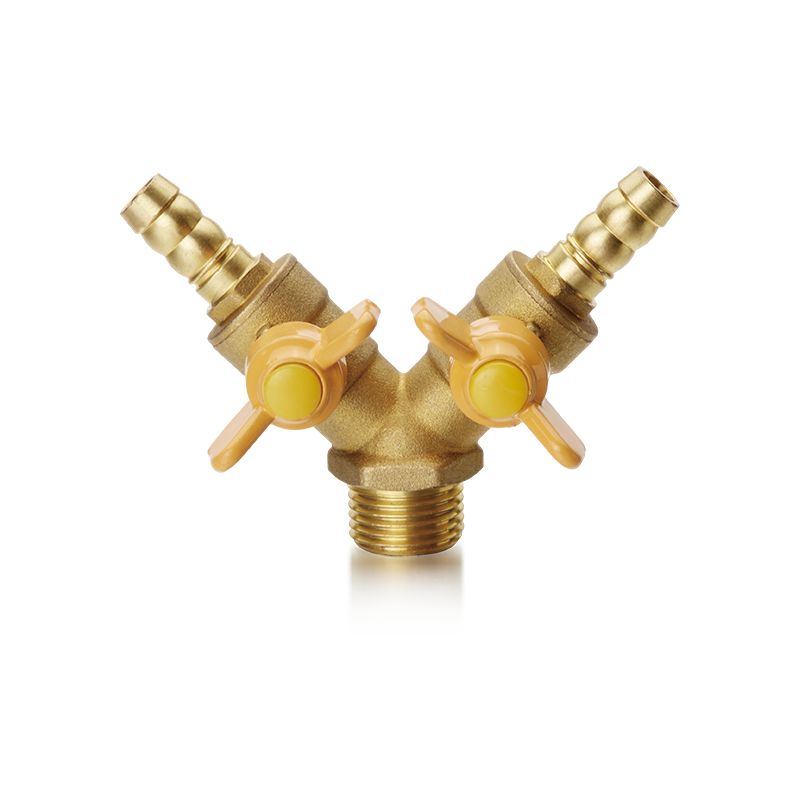
YH-208 Brass Ball Valve(M/Double Hose Connector)
-
 View More
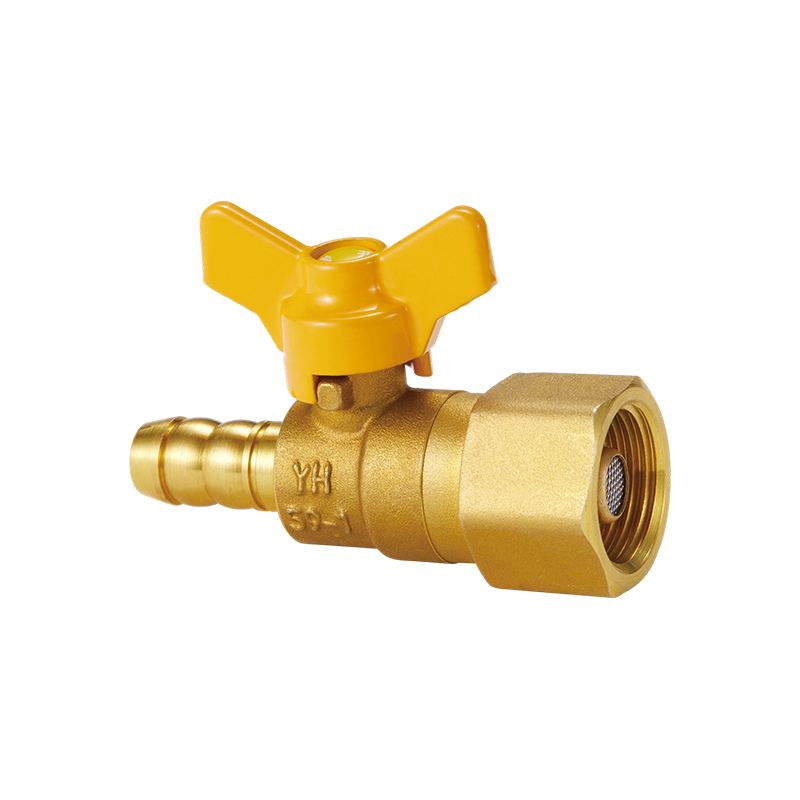
YH-216A Brass Excess Flow Shut-Off Valve(F/Hose Connector)
-
 View More
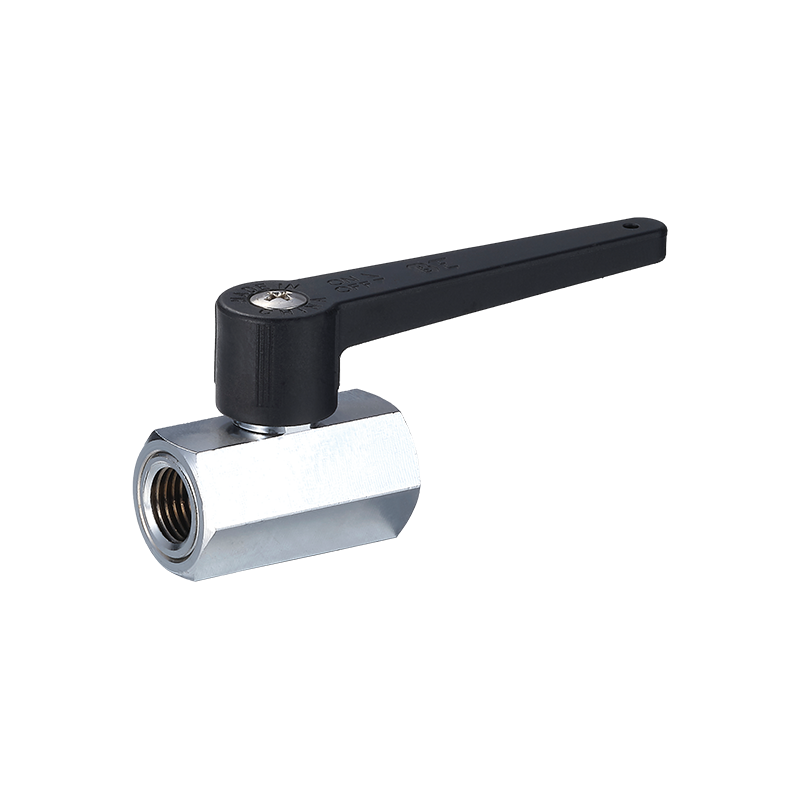
MINI-1 Mini Long Handle Ball Valve(F/F)
-
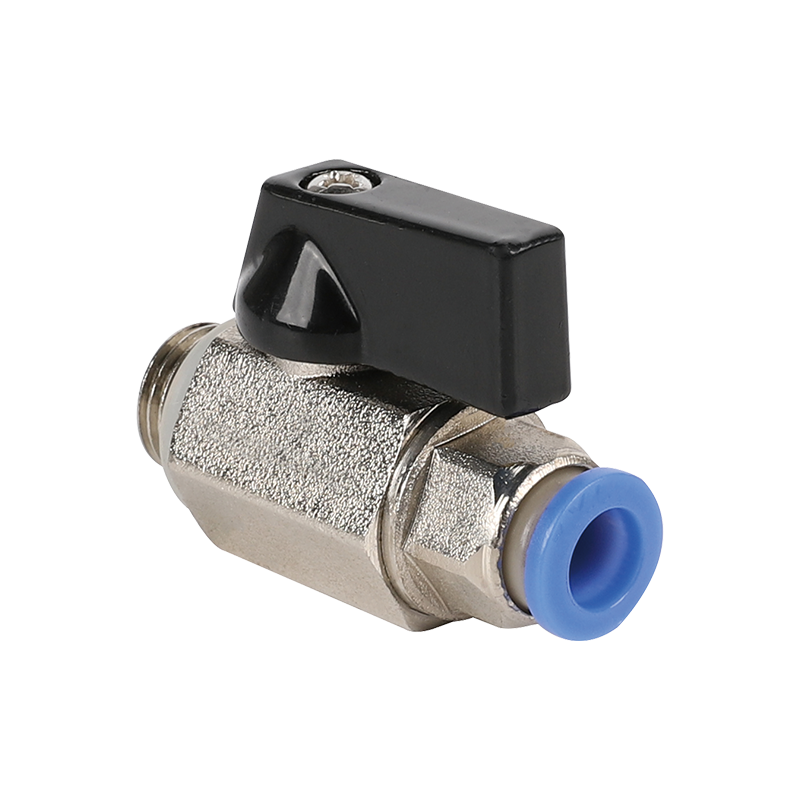 View More
MINI-2 Mini Short-Handle Ball Valve(M/M)
-
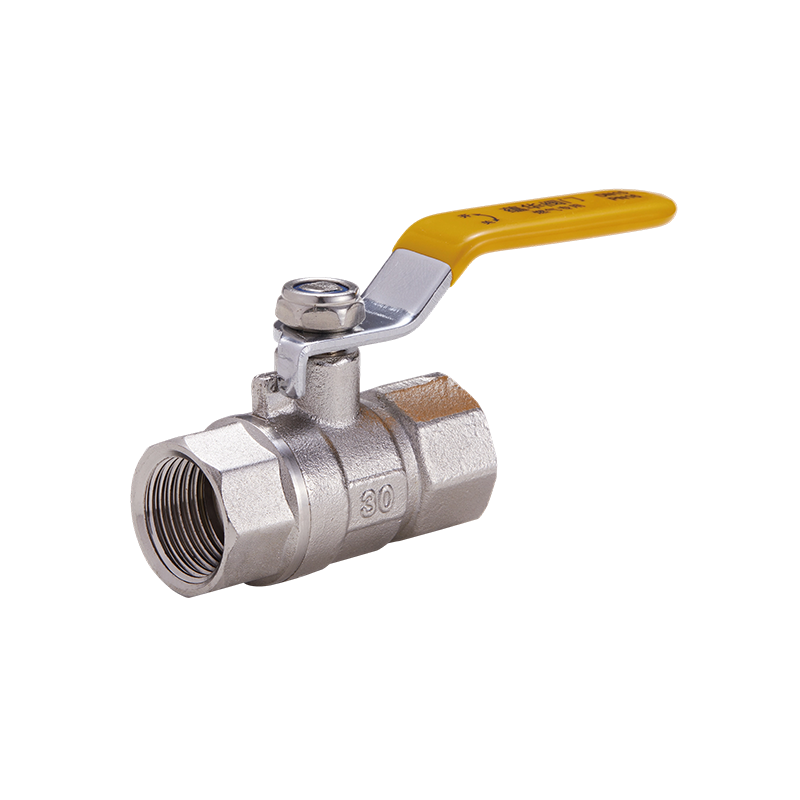 View More
YH-2210 Forged Steel Ball Valve with Long Handle (F/F)
Related News
Contact Us
-

-
 +86-0574-63742169
 -
 No.104-128, Cizhang East Road, Zhangqi Town, Cixi City, Ningbo, Zhejiang Province, China


Message Us Now !
