


 English
  русский
  عربى
عربى  Español
Brass Male Thread Ball Valve with Long Handle for Reliable Gas and Fluid Control
Content
- 1 1. Product Overview
- 2 2. Key Technical Specifications
- 3 3. Full Male Thread Integrated Design
- 4 4. Long Handle Operation and User Convenience
- 5 5. Forged Brass Construction for Long-Term Durability
- 6 6. Flow Efficiency and Pressure Loss Reduction
- 7 7. Rapid On/Off Control for Safety and Maintenance
- 8 8. Application Scenarios
- 9 9. Competitive Advantages Compared with Ordinary Valves
- 10 10. Manufacturing Strength Behind the Product
- 11 11. Precision Machining and Thread Quality
- 12 12. Assembly Control and Functional Testing
- 13 13. Quality Culture and Management System
- 14 14. Design Details That Improve Field Performance
- 15 15. Installation Considerations
- 16 16. Maintenance and Service Life
- 17 17. Value for Distributors, Contractors, and Project Buyers
- 18 18. Why This Valve Stands Out in the Market
- 19 19. Practical Selection Checklist
- 20 20. Q&A Section
- 20.1 Q1: What is the main purpose of this brass male thread ball valve?
- 20.2 Q2: Why does the valve use male threads on both ends?
- 20.3 Q3: What is the advantage of the long handle?
- 20.4 Q4: Why is forged brass used for the valve body?
- 20.5 Q5: What does ISO 228 thread compatibility mean?
- 20.6 Q6: Can the valve be used for high-pressure systems?
- 20.7 Q7: Is the valve suitable for outdoor use?
- 20.8 Q8: How does this valve compare with ordinary short-handle valves?
- 20.9 Q9: What quality advantages come from advanced manufacturing?
- 20.10 Q10: What should be checked after installation?
- 21 21. Conclusion
- 22 References
- 23 Product: YH-221 Brass Ball Valve with Long Handle(M/M)
In gas and fluid distribution systems, a valve is not merely a small accessory installed between pipes. It is a control point, a safety component, a maintenance aid, and a long-term guarantee of flow reliability. A well-designed brass male thread ball valve with a long handle provides fast shutoff, stable sealing, practical installation, and dependable service across residential, commercial, and light industrial pipeline environments. The product discussed in this article is a brass ball valve featuring male threads on both ends, a long operating handle, forged brass construction, and specifications suitable for gas applications, including natural gas, artificial gas, and liquefied petroleum gas.
This article explains the product’s technical value, practical advantages, installation benefits, competitive strengths, manufacturing background, and recommended application scenarios. It also explores how advanced production facilities, automated machining, assembly systems, and strict testing methods contribute to consistent quality and long-term performance.
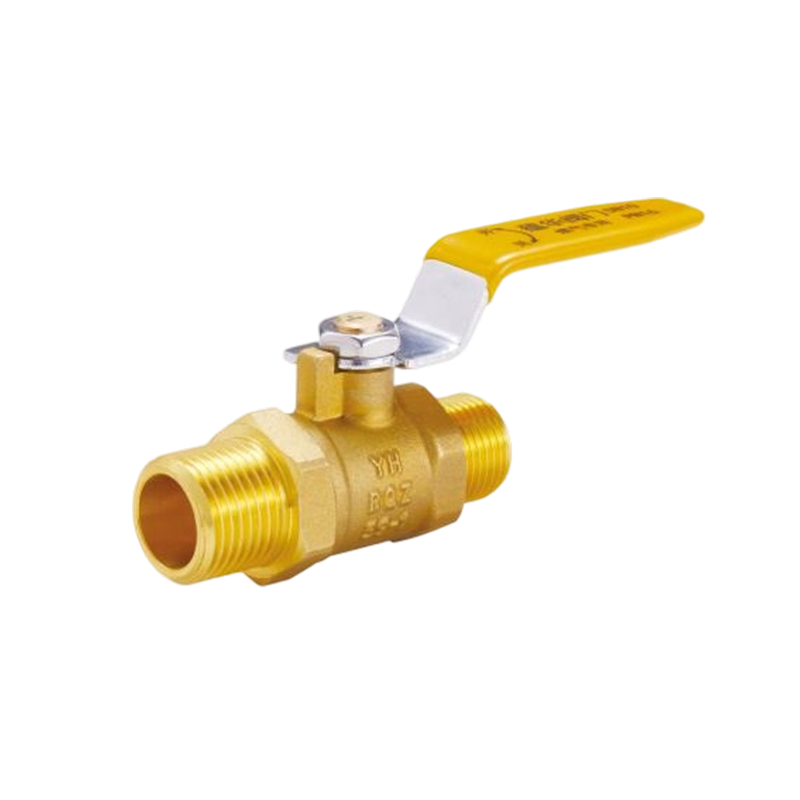
YH-221 Brass Ball Valve with Long Handle(M/M)
1. Product Overview
The brass male thread ball valve with long handle is designed for straightforward on/off control in piping systems. It uses a ball with an internal bore to control the passage of media. When the handle is aligned with the pipe, the bore aligns with the flow path and the valve is open. When the handle is turned 90 degrees, the bore is perpendicular to the flow path and the valve is closed. This simple quarter-turn mechanism is one of the main reasons ball valves are widely used in modern fluid control systems.
The valve uses a male-to-male threaded configuration, often described as M/M. Both ends of the valve body are designed with external pipe threads, allowing direct connection to compatible female threaded fittings or pipeline interfaces. This integrated thread structure helps simplify installation because it reduces the need for additional adapters. Fewer adapters generally mean fewer potential leak points, less installation time, and improved overall system compactness.
The long handle is another defining feature. Compared with short-handle valves, the extended handle provides better leverage and torque transmission. This makes operation easier, especially in locations where valves are operated frequently or where access is limited. The handle gives the operator a clear visual indication of whether the valve is open or closed, which is valuable for maintenance, inspection, and emergency shutoff situations.
The valve body is made from quality forged brass. Brass is widely used in gas and fluid control components because it offers a strong balance of machinability, corrosion resistance, mechanical strength, and dimensional stability. Forging further improves material density and structural integrity, making the valve body more resistant to stress and deformation than many low-grade cast alternatives.
2. Key Technical Specifications
The following table summarizes the principal product parameters and their practical significance in pipeline use.
| Item | Specification | Practical Meaning |
|---|---|---|
| Valve Type | Brass ball valve with long handle | Quarter-turn on/off control with easy manual operation |
| Connection Type | Male thread to male thread, M/M | Direct installation into compatible threaded piping systems |
| Main Material | Forged brass | Good strength, corrosion resistance, and long-term durability |
| Nominal Pressure | 0.015 MPa | Designed for specified low-pressure gas service conditions |
| Working Media | Natural gas, artificial gas, liquefied petroleum gas | Suitable for common gas pipeline applications within stated limits |
| Working Temperature | -20°C to 80°C | Reliable operation across typical indoor and outdoor service conditions |
| Thread Standard | Parallel pipe thread to ISO 228 | Improved compatibility with internationally recognized pipe thread systems |
| Operation | Manual long handle, quarter-turn | Fast opening and closing with enhanced leverage |
3. Full Male Thread Integrated Design
One of the most important advantages of this valve is its full male thread integrated design. In many pipeline installations, installers must connect multiple fittings to adapt one interface to another. Each added fitting increases material cost, labor time, and sealing risk. A valve with male threads on both ends can be directly matched with female threaded pipeline components, reducing unnecessary transition connections.
This design is especially useful in compact gas pipeline layouts. In residential kitchens, utility rooms, meter connections, appliance lines, and distribution branches, space is often limited. A compact valve that does not require extra adapters can make the whole pipeline more orderly and easier to inspect. The result is a cleaner installation with fewer joints and improved maintainability.
The use of parallel pipe threads according to ISO 228 supports dimensional consistency and practical compatibility. Thread quality is particularly important for gas valves because the threaded interface must maintain tightness under service conditions. Accurate thread machining helps ensure that sealing materials can be applied evenly and that the connection can be tightened securely without damaging the valve body or the mating fitting.
Compared with competitor products that rely on rough threads, inconsistent profiles, or non-standard dimensions, a precisely manufactured ISO 228 thread can reduce installation difficulty. It also helps distributors and contractors maintain confidence when using valves across different projects and markets where international thread standards are required.
4. Long Handle Operation and User Convenience
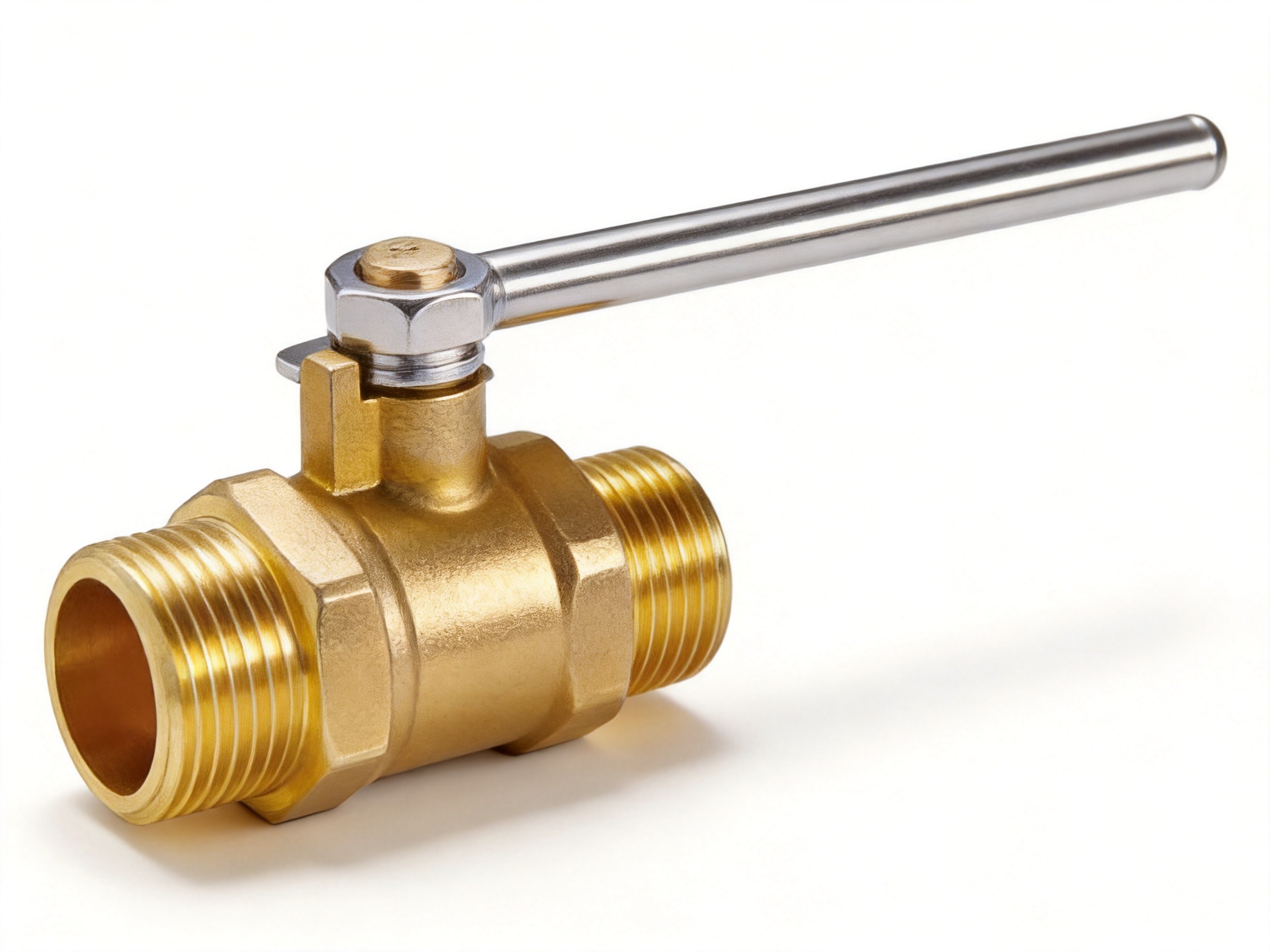
The long handle gives the valve a significant operational advantage. A ball valve is valued for quick quarter-turn action, but the quality of the handle greatly affects the user experience. A short, thin, or poorly shaped handle can require excessive force, especially after long service periods, in cold conditions, or in installations where the operator cannot apply force from an ideal angle.
An extended handle improves leverage. This means the operator can open or close the valve using less effort. For gas safety, quick shutoff is essential. When a gas appliance must be isolated, when maintenance is required, or when abnormal conditions are detected, a handle that can be operated quickly and confidently becomes a meaningful safety feature.
The long handle also improves visibility. In many valve designs, the position of the handle indicates the flow status. When the handle is parallel to the pipe, the valve is open. When it is perpendicular, the valve is closed. A longer handle makes this status easier to recognize from a distance, reducing confusion during inspection or emergency response.
In high-frequency operation scenarios, the handle’s ergonomic value becomes even clearer. Contractors, maintenance personnel, and facility managers often operate valves repeatedly during testing, servicing, system purging, and equipment replacement. A comfortable and efficient handle reduces fatigue and supports smoother workflow.
5. Forged Brass Construction for Long-Term Durability
Material choice is central to valve performance. The product uses premium forged brass, a material known for strength, corrosion resistance, wear resistance, and reliable machining behavior. Forging compresses and shapes the brass under high pressure, improving density and grain structure. This can provide better mechanical performance than components made by less controlled forming methods.
In gas and fluid systems, the valve body must withstand repeated mechanical stress from installation torque, temperature variation, pressure cycles, and vibration. A stronger body reduces the risk of cracking, deformation, or thread damage. Brass also resists many common forms of corrosion encountered in normal gas and water-related environments, helping the valve maintain dimensional stability over time.
Low-quality valves may use inferior alloys or inconsistent material composition. Such products may appear similar externally, but differences become visible during installation and service. Poor material can lead to thread stripping, body weakness, premature leakage, handle looseness, or reduced sealing performance. A forged brass body provides a more dependable foundation for the entire valve assembly.
The durability of brass also supports lifecycle value. A slightly cheaper valve that fails early can become far more expensive after considering replacement labor, downtime, leakage risk, and customer dissatisfaction. A robust forged brass valve reduces the likelihood of these hidden costs.
6. Flow Efficiency and Pressure Loss Reduction
Ball valves are favored because their internal flow path can be relatively unobstructed when fully open. In this product, the M/M through-flow structure helps maintain efficient media passage. Reduced flow restriction is beneficial because it helps minimize pressure loss across the valve.
In gas systems, maintaining stable flow is important for appliance performance and system reliability. Excessive restriction can reduce supply efficiency and affect downstream equipment. A valve with a smooth and properly aligned internal passage helps preserve flow capacity, making it a practical choice for applications where predictable gas delivery is required.
Some competitive valves use smaller internal bores, rough internal surfaces, or poorly aligned seats. These issues can create turbulence and pressure drop. While such differences may not always be obvious during visual inspection, they can affect real system performance. A carefully manufactured brass ball valve with clean internal geometry offers a stronger balance between compact size, sealing reliability, and flow efficiency.
For installers and system designers, flow performance is not only about immediate operation. It also affects long-term service consistency. A smooth internal flow path is easier to maintain and less likely to collect unnecessary deposits in appropriate service conditions. This contributes to more stable performance over time.
7. Rapid On/Off Control for Safety and Maintenance
The quarter-turn operation of a ball valve is simple and effective. Unlike multi-turn valves that require repeated rotation to open or close, this valve can be operated with a 90-degree movement. In everyday use, that means less time and less effort. In emergency situations, it can mean faster isolation of a line.
Gas applications demand responsive control. A valve used for natural gas, artificial gas, or liquefied petroleum gas must be easy to identify and easy to operate. The long handle supports this by providing clear movement and firm grip. Maintenance personnel can quickly shut off a branch line before replacing equipment, inspecting connections, or performing leak checks.
Rapid shutoff is also valuable during installation and commissioning. Contractors often need to test sections of piping, isolate parts of a system, and confirm sealing performance. A reliable quarter-turn ball valve reduces the complexity of these tasks and supports efficient field operation.
Compared with low-end valves that become stiff, loose, or uncertain after repeated use, a well-made ball valve maintains operational confidence. Smooth rotation, firm stop positions, and stable sealing all contribute to a better user experience.
8. Application Scenarios
The valve is suitable for specified low-pressure gas systems using natural gas, artificial gas, and liquefied petroleum gas within the stated pressure and temperature ranges. It can be used in residential, commercial, and industrial-support environments where compatible pipe threads and working conditions apply.
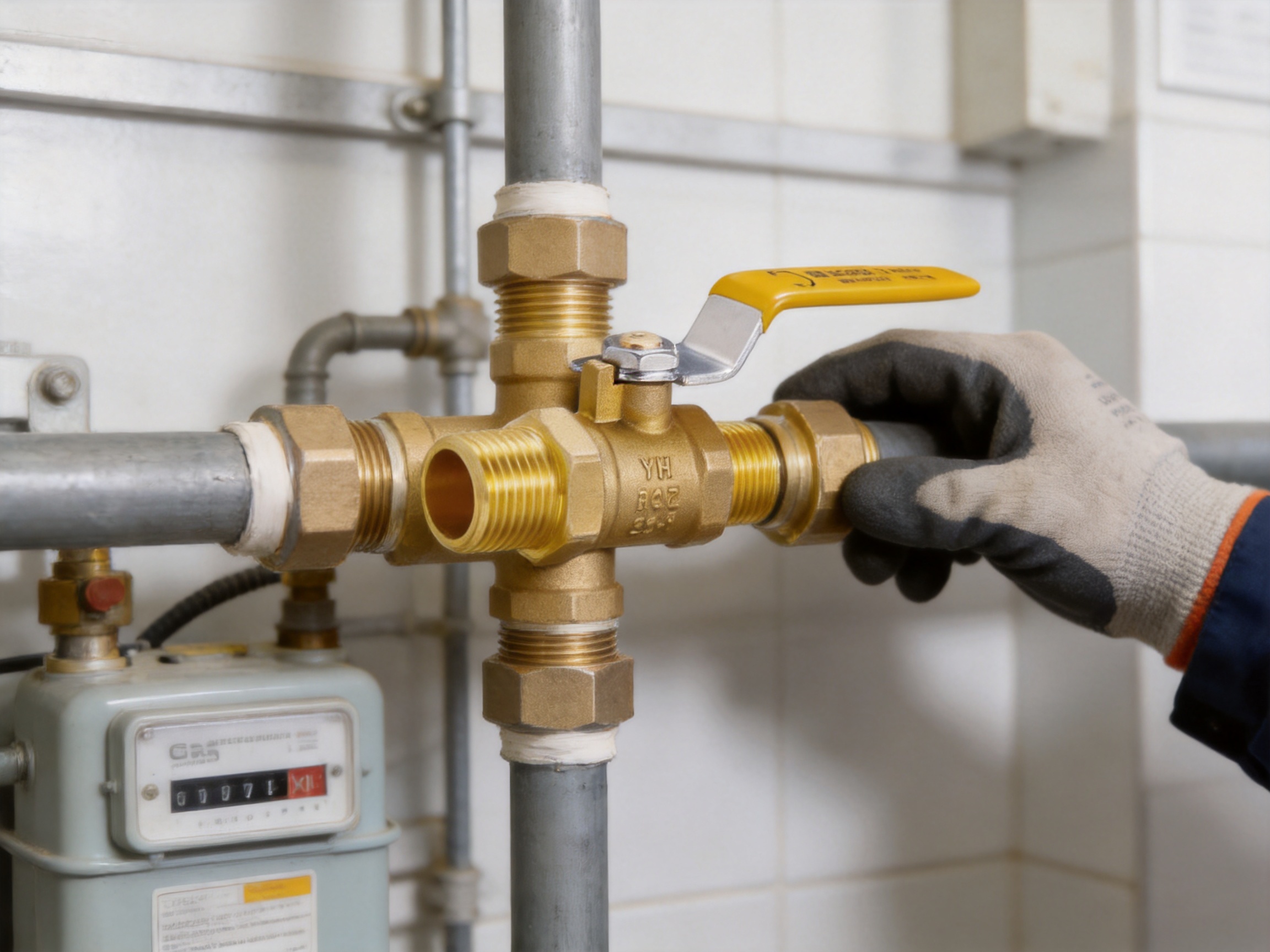
In residential settings, valves of this type are commonly needed near gas meters, kitchen appliances, branch connections, and service points. Homeowners and service technicians benefit from visible handle position, easy shutoff, and compact installation.
In commercial buildings, restaurants, workshops, and utility rooms, gas control points must be reliable and easy to operate. A long-handle brass ball valve helps staff and maintenance teams isolate lines when necessary. Its forged brass body and precise threads support repeated inspections and service activities.
In industrial-support applications, valves may be used in auxiliary gas or fluid lines where the specified pressure, temperature, medium, and standard requirements are met. The valve’s durable body and efficient flow path make it suitable for controlled environments requiring dependable manual shutoff.
Although the product description emphasizes gas media, brass ball valves with similar structural features are also widely valued in compatible water and oil service. However, actual selection should always follow system design requirements, material compatibility, local codes, and manufacturer guidance.
9. Competitive Advantages Compared with Ordinary Valves
The valve offers several advantages over ordinary competing products in the same category. These advantages are not limited to one feature; they come from the combination of material, structure, machining accuracy, handle design, and production control.
First, the M/M integrated design simplifies installation. Competing valves that require adapters can increase cost and create more sealing interfaces. In gas pipelines, reducing unnecessary joints is always beneficial because every joint requires careful sealing and inspection. A direct male-thread configuration supports cleaner installation and more reliable assembly.
Second, the long handle improves operation. Some valves use compact handles that save space but compromise torque and comfort. The long handle provides a better balance between accessibility and force transmission. It is particularly useful for frequent operation and hard-to-reach locations.
Third, forged brass construction improves durability. Low-cost products may use lighter material, inconsistent alloy composition, or less precise forming. Such differences can lead to reduced mechanical strength or shorter service life. A forged brass body provides better confidence in demanding installation and service conditions.
Fourth, precision thread machining improves connection reliability. Threads that are too rough, too shallow, or dimensionally inconsistent can make installation difficult and increase leakage risk. Parallel pipe threads manufactured according to ISO 228 provide an important technical foundation for compatibility and sealing quality.
Fifth, the valve supports high flow efficiency. A clean internal passage and reliable ball mechanism help reduce pressure loss. In gas distribution, efficient flow control supports downstream equipment performance and system stability.
Finally, the valve benefits from advanced manufacturing capability. Product quality depends not only on design but also on how consistently that design is produced. A manufacturer with automated machining, assembly, and testing capabilities can deliver stable quality at scale.
10. Manufacturing Strength Behind the Product
A reliable valve is created through more than a drawing and a material specification. It requires disciplined manufacturing, skilled management, controlled processes, and strict quality inspection. Ningbo Yunhua Valve Co., Ltd. is an enterprise focused on research, development, production, sales, and service of gas and fluid valves, water supply valves, and hardware accessories. Its manufacturing strengths provide an important foundation for the performance of this brass long-handle ball valve.
The company operates on a production area of approximately 20,000 square meters and has established professional facilities for precision machining, assembly, and testing. A large, organized production base allows different stages of manufacturing to be coordinated efficiently. Material preparation, machining, assembly, inspection, packaging, and logistics can be managed through standardized procedures.
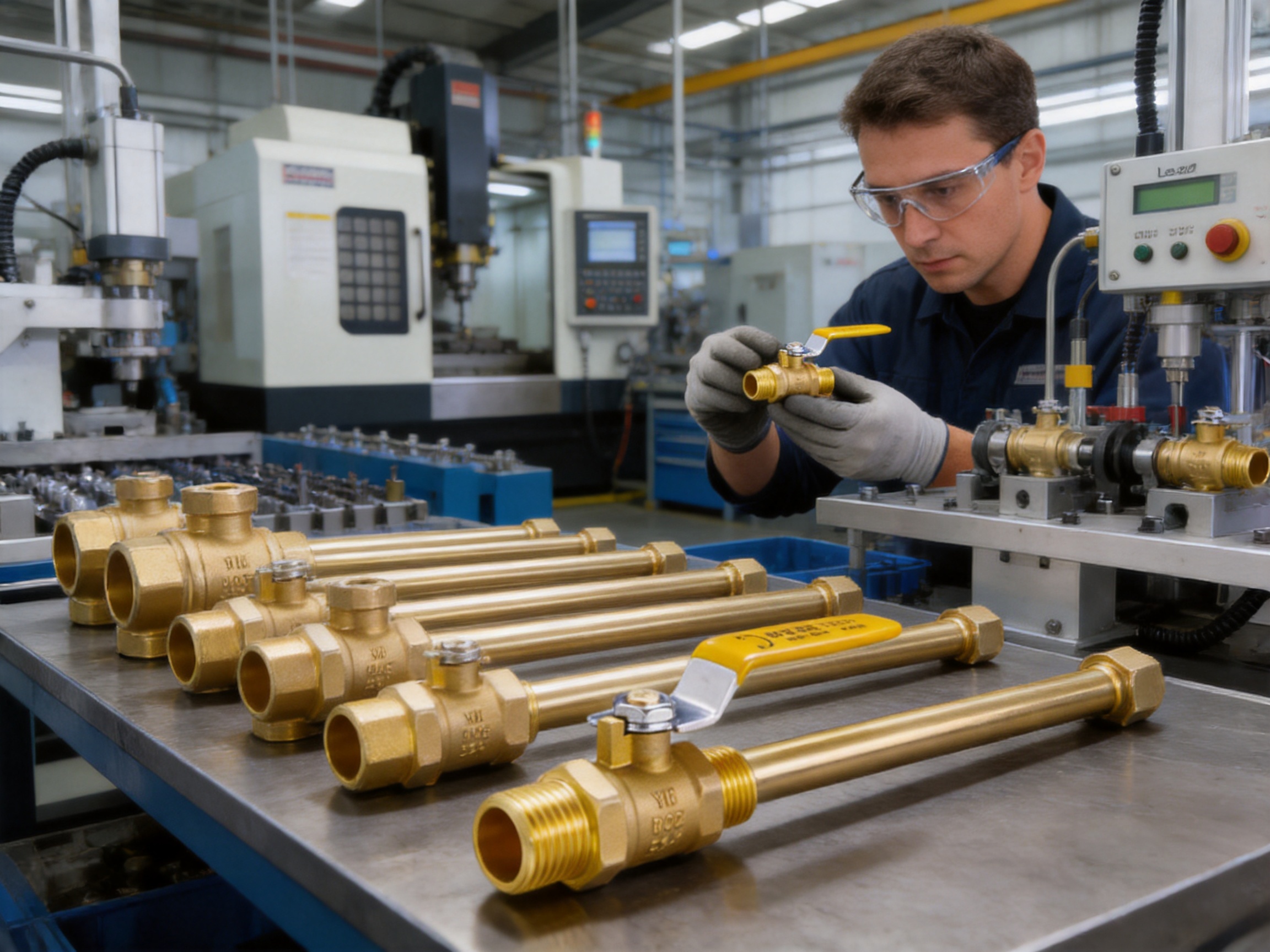
The company uses advanced domestic and international CNC machine tools. CNC machining is critical for valve production because small dimensional differences can affect sealing, thread connection, handle alignment, and operating torque. Computer-controlled machining improves repeatability and helps maintain tight tolerances across large production batches.
Automated assembly and testing equipment further strengthen production consistency. Manual assembly skill remains important, but automation reduces variation in repetitive tasks. Consistent torque, alignment, and inspection procedures help ensure that each valve meets expected performance requirements before shipment.
The company has built annual production capacity of approximately 2 million sets of valves and 10 million sets of hardware accessories. This capacity reflects not only scale but also process maturity. A manufacturer capable of producing at this level must manage supply chains, quality systems, equipment maintenance, workforce training, and production scheduling with discipline.
For customers, manufacturing strength translates into stable supply, consistent quality, and better customization support. Contractors, distributors, and equipment manufacturers need products that perform the same from one batch to the next. Advanced production capability helps reduce variation and supports long-term cooperation.
11. Precision Machining and Thread Quality
Threaded valves depend heavily on machining accuracy. The male threads at both ends must be formed with stable dimensions, clean profiles, and consistent surface quality. Poorly machined threads can damage mating fittings, cause assembly difficulty, or create sealing uncertainty. In a gas valve, these issues are unacceptable.
CNC machining allows thread dimensions to be controlled with high repeatability. Cutting tools, feed rates, spindle speeds, and inspection standards can be managed according to process requirements. The result is a thread interface that supports efficient installation and dependable tightening.
The use of parallel pipe thread to ISO 228 also indicates a focus on standardization. Standardized threads help products enter diverse markets and match commonly used piping components. For distributors and installers, this reduces uncertainty and simplifies inventory planning.
Precision machining also affects internal components. The ball, seat contact area, stem hole, and body cavity must work together to provide smooth rotation and sealing. If machining tolerances are poor, the handle may feel too tight, too loose, or uneven. Consistent machining helps create a predictable operating feel and stable shutoff performance.
12. Assembly Control and Functional Testing
Assembly is where individual components become a functional valve. Even high-quality parts can fail if assembled incorrectly. Seat placement, stem installation, sealing component positioning, handle fastening, and final tightening must all be controlled carefully.
Automated and semi-automated assembly systems can improve repeatability in these steps. They help ensure that components are positioned correctly and that tightening values remain within appropriate ranges. This supports consistent torque and sealing performance.
Testing is equally important. Gas valves require confidence before use, and each product should meet the relevant performance criteria for its intended application. Testing may include visual inspection, dimensional checking, operating torque evaluation, and sealing verification. A dedicated testing workshop allows inspection to be integrated into production rather than treated as an afterthought.
Advanced testing equipment helps detect defects that may not be visible externally. A valve may look acceptable but still have internal leakage, thread defects, or assembly inconsistencies. Systematic testing reduces this risk and protects the customer’s installation quality.
13. Quality Culture and Management System
Long-term product reliability is strongly influenced by company culture. Over more than ten years of development, the manufacturer has cultivated a management system and professional team focused on valve and hardware accessory production. This background matters because quality is not achieved by inspection alone; it is created through habits, training, process discipline, and continuous improvement.
A professional management team helps coordinate engineering, procurement, production, quality control, sales, and service. When these departments work together, customer requirements can be translated into product specifications, production plans, and inspection methods. This reduces communication gaps and improves customer satisfaction.
The company’s mission of building a safe fluid ecosystem with high-quality valves aligns with the practical requirements of gas and fluid control. In this field, safety and reliability cannot be separated from commercial value. A valve that performs dependably protects users, installations, property, and brand reputation.
The company’s vision of becoming a leading enterprise in global fluid control also supports continued investment in equipment, process improvement, and product development. For customers, this means the supplier is not only producing existing products but also building capabilities for future market requirements.
14. Design Details That Improve Field Performance
Field performance depends on many small design choices. The long handle improves torque and visibility. The forged brass body provides strength. The M/M thread design simplifies connection. The ISO 228 thread standard supports compatibility. The quarter-turn mechanism provides rapid control. The working temperature range from -20°C to 80°C supports use in common environmental conditions.
The ball valve structure is particularly suitable for on/off control. It is not primarily designed for fine throttling, but for full opening or full closing. In this role, it performs efficiently. The sealing seats grip the ball to stop flow when closed, while the bore allows passage when open.
The valve’s compact body reduces installation space. A compact valve is easier to use in cabinets, behind appliances, near meters, or along crowded pipe runs. At the same time, the long handle maintains usability even when the body itself is compact.
The brass surface also provides a professional appearance. In many installations, valves remain visible to inspectors, technicians, or users. A well-machined brass valve communicates quality and makes system layouts look orderly and dependable.
15. Installation Considerations
Correct installation is essential for valve performance. Before installation, the pipeline should be checked for compatibility with the valve’s thread type, pressure rating, temperature range, and media suitability. The installer should confirm that the system conditions match the valve specification, including nominal pressure and working medium.
The male threads should be clean and free of damage. Appropriate sealing material should be applied according to local standards, gas installation practices, and professional requirements. The valve should be tightened using proper tools, avoiding excessive force that could damage the body or thread interface.
The handle should be positioned so that it can be operated easily after installation. Installers should avoid locations where the handle movement is blocked by walls, equipment, or adjacent pipes. Since the long handle is a functional advantage, enough clearance should be preserved for full 90-degree operation.
After installation, the pipeline should be tested according to applicable regulations and project procedures. Leakage inspection is especially important in gas systems. The valve should be operated several times to confirm smooth opening and closing before the system is placed into service.
16. Maintenance and Service Life
A brass ball valve of this type is generally designed for reliable service with minimal maintenance when installed and used correctly. However, periodic inspection is still recommended. Users or maintenance personnel should check for signs of leakage, corrosion, mechanical damage, handle looseness, or abnormal operating resistance.
The valve should be kept accessible. Covering or blocking a gas shutoff valve can create safety risks and make maintenance difficult. The long handle is designed for easy operation, but it must remain visible and reachable.
If the valve becomes difficult to turn, the system should be inspected by qualified personnel. Excessive force should not be used because it may damage the handle, stem, or connected piping. In gas applications, any suspected leakage or malfunction should be handled according to professional safety procedures.
Long service life depends on proper product selection, correct installation, compatible media, environmental conditions, and periodic inspection. The forged brass structure and precise machining support durability, but all valves must be used within their stated limits.
17. Value for Distributors, Contractors, and Project Buyers
For distributors, the valve offers a practical product profile: standardized thread connection, broad gas application relevance, durable brass construction, and clear user benefits. Products with these characteristics are easier to explain to customers and easier to position in catalogs, retail channels, and project supply programs.
For contractors, installation efficiency is a major advantage. The M/M design reduces adapter needs, while precise threads support faster assembly. The long handle improves usability during commissioning and maintenance. These benefits can save time on site and reduce callbacks related to difficult operation or connection issues.
For project buyers, consistent manufacturing quality is essential. A single defective valve can create delays, inspection problems, or safety concerns. The manufacturer’s automated machining, assembly, and testing capabilities help support stable batch quality, which is especially important for large orders and repeat procurement.
For OEM and customized supply needs, the company’s experience in valves and hardware accessories provides a foundation for communication and product adaptation. With established production capacity and technical facilities, the company can better support customers seeking dependable long-term supply relationships.
18. Why This Valve Stands Out in the Market
The market for brass ball valves includes many products that look similar at first glance. However, true performance is determined by details that are not always visible: material density, thread accuracy, machining tolerances, assembly control, sealing stability, and production testing. This valve stands out because it combines practical design with manufacturing strength.
The M/M integrated structure is simple but valuable. It reduces unnecessary installation complexity. The long handle is not just a convenience; it improves safety, visibility, and operating confidence. The forged brass body offers strength that supports long-term use. The ISO 228 parallel pipe thread supports compatibility and professional installation. The specified gas media and temperature range give users clear selection guidance.
Compared with lower-cost alternatives that focus only on appearance, this product emphasizes functional reliability. It is suitable for customers who understand that valves are safety-critical components and that long-term value is more important than the lowest purchase price.
When supported by a manufacturer with advanced CNC machining, automated assembly, testing workshops, and large-scale capacity, the valve becomes more than an individual component. It becomes part of a dependable supply system designed to serve modern fluid control needs.
19. Practical Selection Checklist
Before selecting this valve for a project, buyers and installers should confirm the following points:
1. The working medium is compatible with the stated application range, including natural gas, artificial gas, or liquefied petroleum gas.
2. The system pressure does not exceed the valve’s nominal pressure specification.
3. The working temperature remains within -20°C to 80°C.
4. The pipeline interface is compatible with male parallel pipe threads to ISO 228.
5. The installation location provides enough space for long-handle operation.
6. Local codes and professional installation requirements are followed.
7. Leakage testing and functional inspection are completed after installation.
This checklist helps ensure that the valve is used in the correct environment and that its advantages are fully realized.
20. Q&A Section
Q1: What is the main purpose of this brass male thread ball valve?
Its main purpose is to provide fast manual on/off control in compatible gas and fluid pipeline systems. It is especially suitable for low-pressure gas applications using natural gas, artificial gas, and liquefied petroleum gas within the specified pressure and temperature limits.
Q2: Why does the valve use male threads on both ends?
The male-to-male threaded design allows direct connection to compatible female threaded pipeline components. This can reduce the need for extra adapter fittings, simplify installation, reduce the number of joints, and improve overall connection stability.
Q3: What is the advantage of the long handle?
The long handle provides better leverage, making the valve easier to open and close. It also improves visibility of the valve position and supports faster shutoff during maintenance, inspection, or emergency situations.
Q4: Why is forged brass used for the valve body?
Forged brass offers good mechanical strength, corrosion resistance, wear resistance, and machining stability. Forging improves material density and structural integrity, helping the valve withstand installation stress and long-term service conditions.
Q5: What does ISO 228 thread compatibility mean?
ISO 228 is an international standard for parallel pipe threads. A valve machined according to this standard offers better compatibility with matching pipeline components and supports more consistent installation quality.
Q6: Can the valve be used for high-pressure systems?
The valve should only be used within its stated nominal pressure of 0.015 MPa and in applications that meet the manufacturer’s specifications. It should not be selected for high-pressure systems unless approved by proper technical evaluation and documentation.
Q7: Is the valve suitable for outdoor use?
The valve can operate within the specified temperature range of -20°C to 80°C, but actual outdoor suitability depends on installation environment, protection from mechanical damage, corrosion exposure, local codes, and system requirements.
Q8: How does this valve compare with ordinary short-handle valves?
Compared with many short-handle valves, this long-handle design offers easier operation, better torque transmission, clearer position indication, and improved convenience in frequent-use or hard-to-reach locations.
Q9: What quality advantages come from advanced manufacturing?
Advanced CNC machining improves dimensional consistency, automated assembly supports stable production quality, and testing equipment helps verify function and sealing performance. Together, these processes reduce variation and improve reliability.
Q10: What should be checked after installation?
After installation, the valve and pipeline connection should be checked for leakage according to applicable gas safety procedures. The handle should also be operated to confirm smooth opening and closing, and the valve position should remain accessible for future use.
21. Conclusion
A brass male thread ball valve with a long handle is a small component with major importance in gas and fluid control systems. Its value lies in the combination of direct M/M threaded installation, forged brass durability, easy long-handle operation, efficient flow design, and reliable quarter-turn shutoff. These characteristics make it a strong choice for installers, contractors, distributors, and project buyers seeking dependable performance.
Compared with ordinary competing valves, this product offers clearer advantages in installation convenience, operating comfort, structural strength, thread compatibility, and flow efficiency. Its design reduces unnecessary adapters, supports quick manual shutoff, and provides a durable brass body suitable for long-term use within specified conditions.
The product’s reliability is further strengthened by the manufacturer’s advanced production capabilities. Precision machining workshops, automated assembly lines, testing facilities, modern CNC equipment, and large-scale production capacity all contribute to consistent quality. In the valve industry, this manufacturing foundation is as important as the design itself.
For customers who prioritize safety, efficiency, and long-term value, this brass long-handle M/M ball valve represents a practical and professionally manufactured solution for modern gas and fluid control applications.
References
1. International Organization for Standardization. ISO 228 Pipe Threads Where Pressure-Tight Joints Are Not Made on the Threads.
2. Crane Co. Flow of Fluids Through Valves, Fittings, and Pipe.
3. American Society of Mechanical Engineers. Valve Standards and Recommended Practices for Piping Systems.
4. European Committee for Standardization. Industrial Valves: Terminology, Design, and Testing Principles.
5. Copper Development Association. Brass Materials for Plumbing, Gas, and Fluid Control Applications.
Product: YH-221 Brass Ball Valve with Long Handle(M/M)

Related Products
-
View More
-
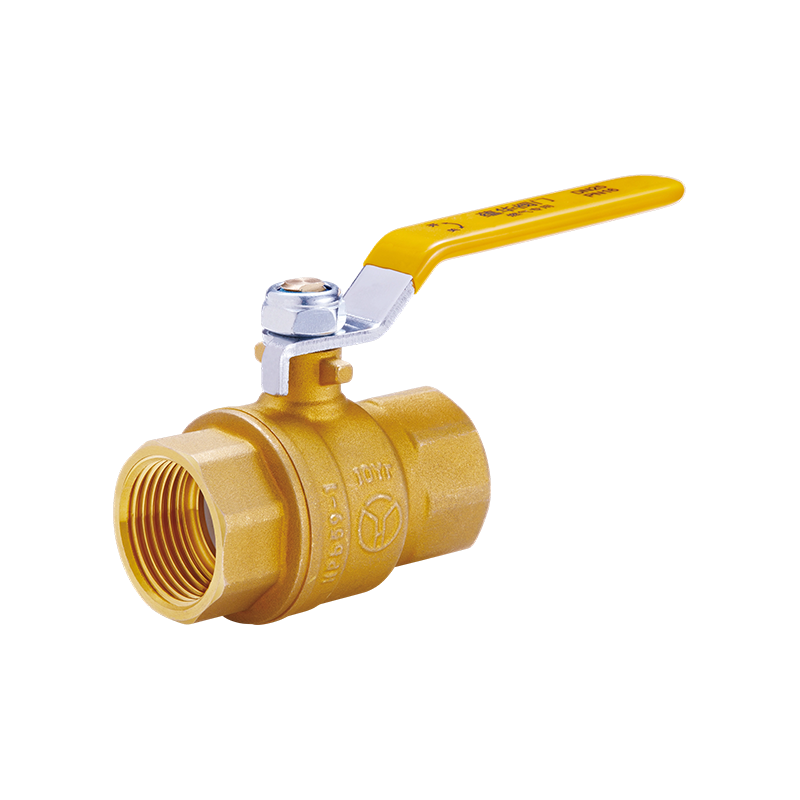 View More
YH-220 Full Port Brass Ball Valve with Long Handle(F/F)
-
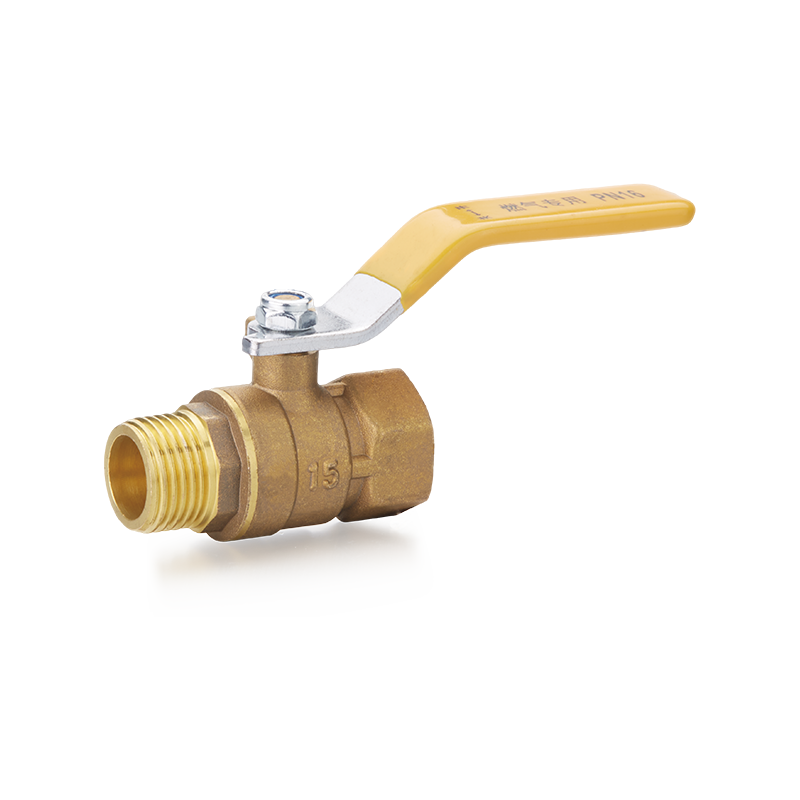 View More
YH-202 Brass Ball Valve with Long Handle(F/M)
-
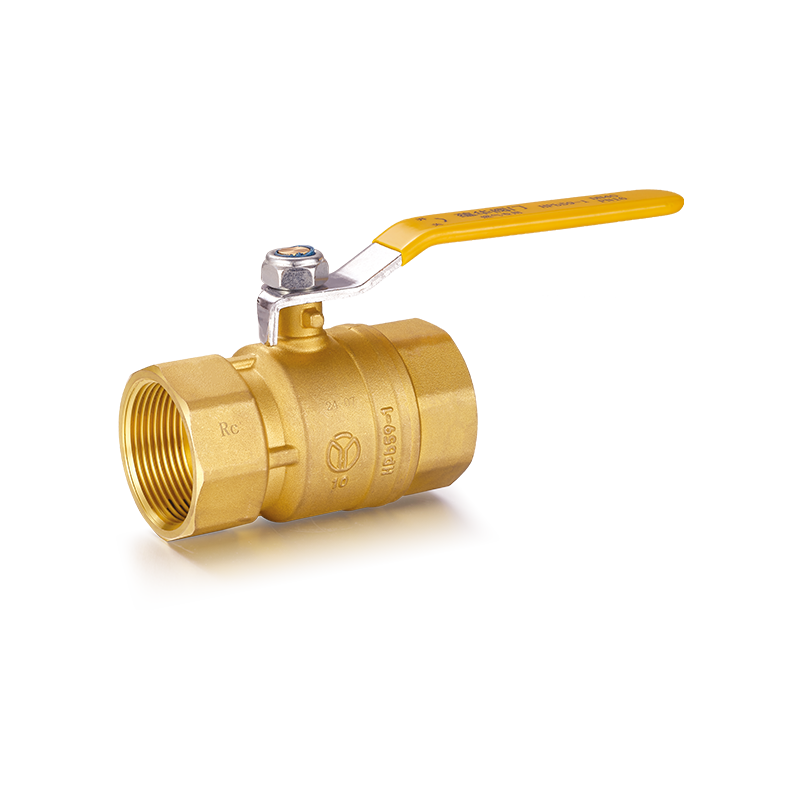 View More
YH-201 Brass Ball Valve with Long Handle(F/F)
-
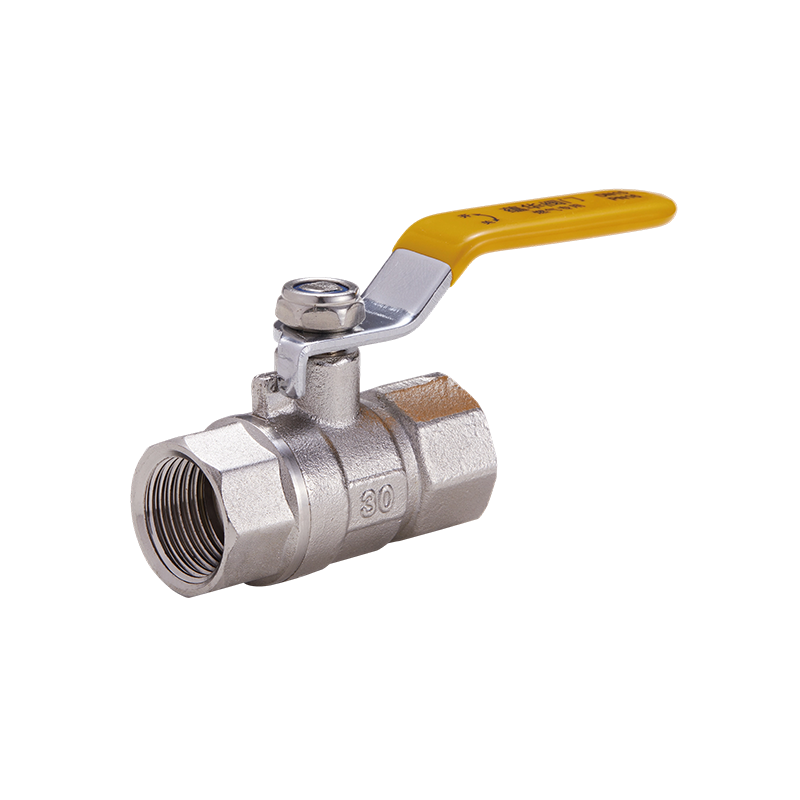 View More
YH-2210 Forged Steel Ball Valve with Long Handle (F/F)
-
 View More
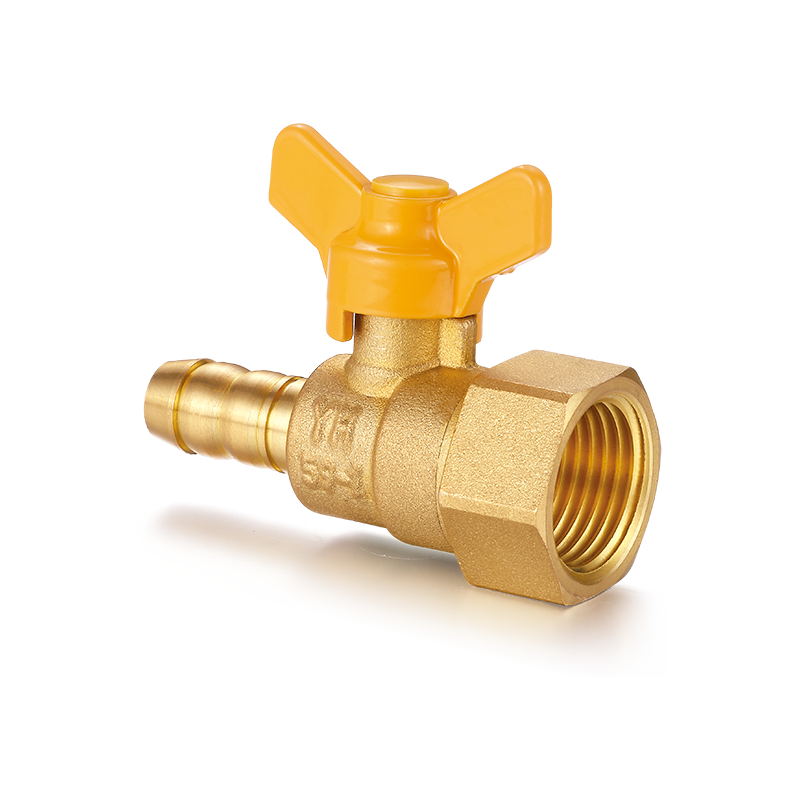
YH-216 Brass Ball Valve with Butterfly Handle(F/Hose Connector)
Related News
Contact Us
-

-
 +86-0574-63742169
 -
 No.104-128, Cizhang East Road, Zhangqi Town, Cixi City, Ningbo, Zhejiang Province, China


Message Us Now !
