


 English
  русский
  عربى
عربى  Español
Pipe Fittings for Reliable Fluid Control and Industrial Connection Systems
Content
- 1 Understanding the Function of Pipe Fittings
- 2 Common Types of Pipe Fittings
- 3 Connection Methods and Selection Considerations
- 4 Material Selection for Pipe Fittings
- 5 How Pipe Fittings Support Valve Systems
- 6 Manufacturing Process for Precision Pipe Fittings
- 7 Assembly, Cleaning, and Surface Treatment
- 8 Testing and Quality Assurance
- 9 Advantages of Selecting a Specialized Manufacturer
- 10 Pipe Fitting Advantages Compared with Inconsistent or Low-Quality Alternatives
- 11 Applications Across Different Industries
- 12 Installation Best Practices
- 13 Maintenance and Service Life
- 14 How to Choose a Pipe Fitting Supplier
- 15 Why Manufacturing Infrastructure Matters
- 16 Q&A About Pipe Fittings
- 16.1 What are pipe fittings used for?
- 16.2 How do I select the correct pipe fitting?
- 16.3 Are threaded fittings suitable for gas applications?
- 16.4 What is the advantage of brass pipe fittings?
- 16.5 When should forged steel fittings be considered?
- 16.6 What is the difference between a coupling and a union?
- 16.7 Why is thread accuracy important?
- 16.8 Can pipe fittings be customized?
- 16.9 How are pipe fittings tested?
- 16.10 How can I reduce fitting-related maintenance?
- 16.11 Why purchase fittings from a valve manufacturer?
- 17 Conclusion
- 18 References
- 19 Product: Pipe Fittings
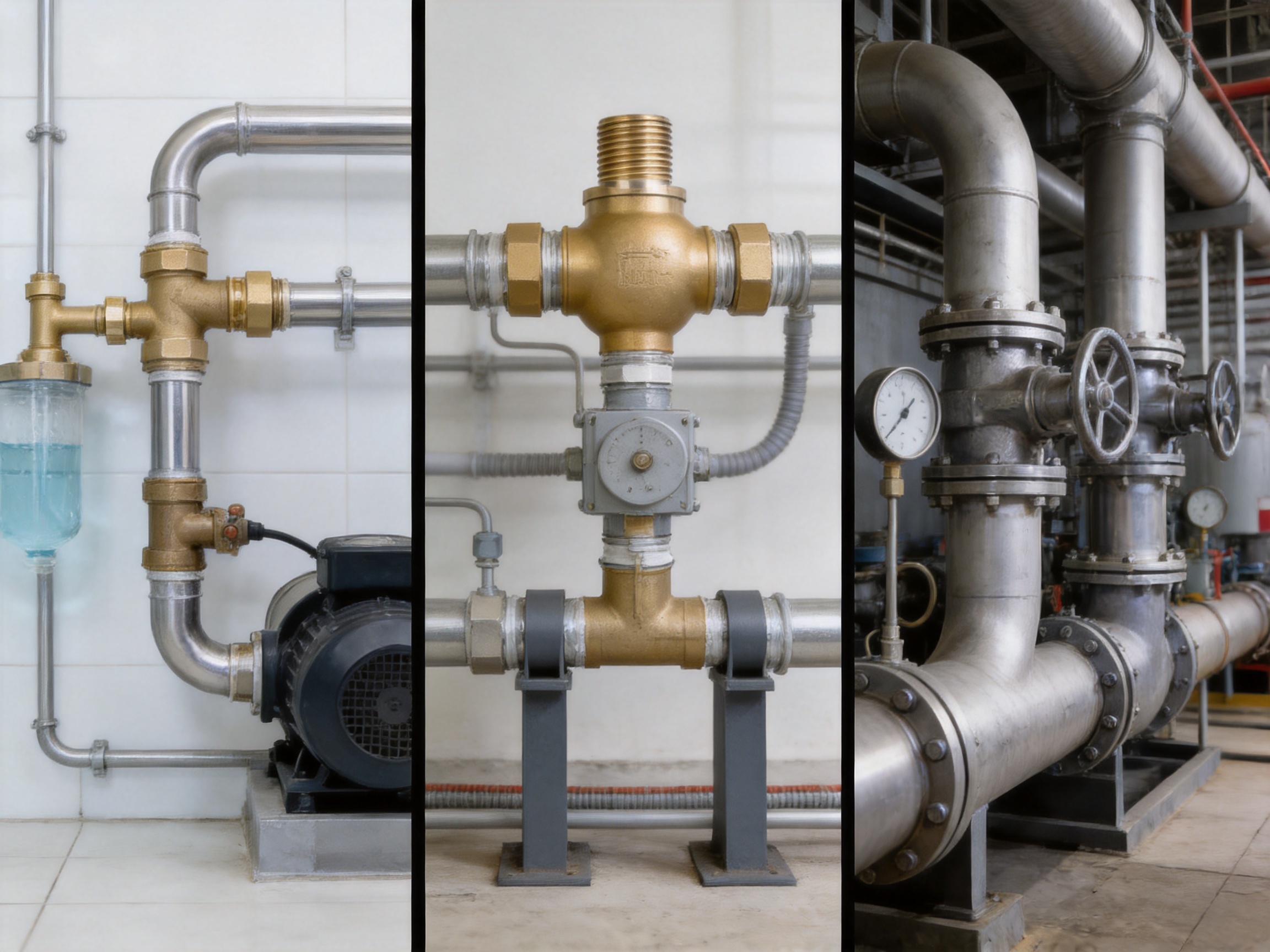
Pipe fittings are essential components in almost every fluid-handling installation. They connect pipes, redirect flow, change line size, create branches, provide service access, and support the safe distribution of water, gas, air, oil, and other compatible media. Although fittings are often smaller than valves, pumps, or storage equipment, their performance has a direct influence on the reliability, efficiency, and service life of the entire piping system.
Choosing the right pipe fittings requires more than selecting a component with the correct nominal size. Engineers, contractors, wholesalers, and maintenance professionals must consider connection type, material, pressure rating, temperature range, media compatibility, installation conditions, dimensional accuracy, corrosion resistance, and long-term sealing performance. A fitting that appears suitable during installation may become a source of leakage, vibration, corrosion, or premature maintenance if its design and manufacturing quality are inadequate.
Ningbo Yunhua Valve Co., Ltd. provides pipe fittings and related hardware accessories for fluid-control applications. Supported by experience in gas and fluid valves, water supply valves, and precision hardware components, the company combines product development, machining, assembly, inspection, and customer service within an integrated manufacturing system. Its facilities include a precision machining workshop, assembly line, and testing workshop, supported by domestic and international CNC machine tools and automated assembly and testing equipment.
This article explains the role of pipe fittings, the main types and applications, the manufacturing processes that influence quality, and the advantages of selecting a specialized supplier with an established production system. It also discusses how pipe fittings work together with threaded globe valves, forged steel valves, brass gas ball valves, and other fluid-control products in complete piping solutions.
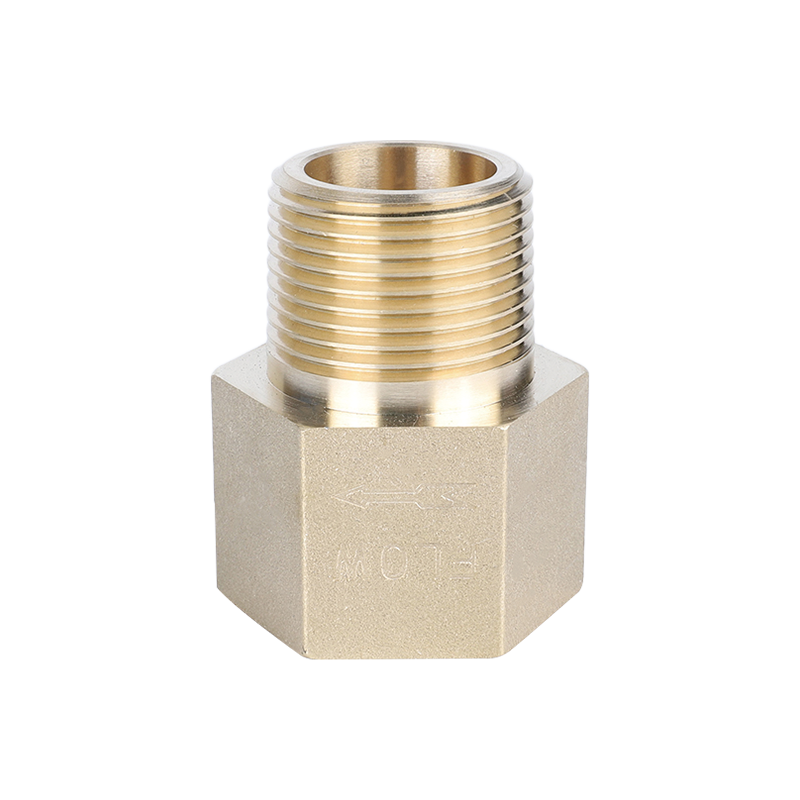
Pipe Fittings
Understanding the Function of Pipe Fittings
A pipe fitting is a mechanical component used to join, connect, support, redirect, divide, reduce, or terminate piping. Fittings are used in both permanent and serviceable installations. Some are designed for threaded connections, while others use welding, compression, brazing, flaring, press-fit, or other joining methods. The correct fitting allows a piping network to follow the layout of a building, plant, machine, or utility system without compromising flow or structural integrity.
In a simple water line, fittings may connect a pipe to a valve, turn the line around an obstacle, reduce the diameter before a fixture, or create a branch for a separate outlet. In a gas distribution system, the fitting must also help preserve gas tightness and resist the stresses caused by pressure, temperature changes, vibration, and installation movement. In industrial environments, fittings can be exposed to chemicals, high temperatures, repeated cycling, or demanding mechanical loads.
The effectiveness of a fitting depends on several design details. Thread geometry must be consistent and accurately formed. Internal passages should be sufficiently smooth and correctly aligned. Sealing surfaces must be free from dents, cracks, burrs, and machining defects. Wall thickness must be appropriate for the intended pressure and service condition. External surfaces should provide resistance to corrosion or accept protective finishing when required.
Good fittings also contribute to efficient installation. Correct dimensions reduce the need for excessive adjustment or forced alignment. Clean and consistent threads make assembly more predictable. Accurate connection faces reduce the likelihood of uneven sealing. These benefits are particularly important when many fittings are installed in the same project, because a small dimensional inconsistency repeated across a system can create significant labor, leakage, and maintenance problems.
Common Types of Pipe Fittings
Elbows
Elbows change the direction of a pipeline. The most common configurations are 45-degree and 90-degree elbows, although other angles are available for specialized layouts. An elbow may connect pipes of the same size or combine direction change with size reduction. The internal shape of an elbow affects flow resistance, turbulence, and pressure loss, so the fitting should be selected according to the requirements of the system.
Threaded elbows are widely used in smaller water, gas, air, and equipment connection lines. They can be installed without welding equipment and are convenient for maintenance or modification. In applications involving repeated disassembly, thread quality and sealing compatibility are especially important. A well-manufactured threaded elbow allows the installer to achieve a firm connection without damaging the pipe or fitting.
Tees
A tee creates a branch in a piping network. It normally has one inlet and two outlets, or two inlets and one outlet, depending on the direction of flow and system arrangement. Equal tees have openings of the same nominal size, while reducing tees include a smaller branch. Tees are used in water distribution, gas supply, compressed-air systems, heating installations, and process piping.
The strength of a tee depends on its body design, wall thickness, material, and connection accuracy. The branch area experiences changes in flow direction and may be exposed to additional mechanical stress. For that reason, tees should be manufactured with consistent geometry and carefully controlled dimensions. Internal burrs or abrupt transitions can affect flow and may create areas where contaminants collect.
Reducers
Reducers connect pipes with different diameters. A concentric reducer maintains a central alignment, while an eccentric reducer offsets the centerline. The appropriate design depends on the installation, flow direction, drainage requirements, and available space. Reducing the pipe size can help connect equipment with different ports, control velocity, or match a branch line to a main line.
A high-quality reducer should provide a gradual and stable transition. Poorly formed transitions can cause unnecessary turbulence, vibration, or pressure loss. The fitting must also maintain adequate wall thickness around the smaller opening and connection area. Accurate machining is valuable because it helps the reducer mate correctly with both the larger and smaller pipes.
Couplings and Sockets
Couplings connect two pipe sections, usually in a straight line. They are useful when extending an existing line, repairing damaged pipe, or joining prefabricated sections. Full couplings commonly connect pipes of the same size, while reducing couplings connect different sizes.
Couplings are frequently used in threaded systems because they provide a compact, serviceable connection. Their internal threads must be accurately produced, and the fitting should have sufficient engagement length for the intended application. A coupling that is too short may not provide adequate thread engagement, while a poorly machined coupling can create misalignment or sealing difficulties.
Unions
A union allows a pipe connection to be disconnected without rotating the entire pipe assembly. This feature is useful near valves, pumps, filters, meters, boilers, and other equipment that may require maintenance. A union normally consists of multiple sections joined by a central nut or mechanical connection.
The principal advantage of a union is serviceability. It can reduce maintenance time and help prevent damage to connected equipment. However, the sealing face, threads, and alignment surfaces must be produced accurately. Any distortion can lead to leakage when the union is reassembled. For demanding installations, material compatibility and temperature resistance should also be reviewed.
Adapters
Adapters provide a transition between different connection types, such as threaded-to-threaded, threaded-to-flanged, or pipe-to-equipment connections. They are useful when components from different systems must be integrated. An adapter may also allow a metric pipe system to connect with a system using another dimensional standard, subject to project requirements.
Because an adapter combines two connection principles, its geometry must be carefully controlled. The transition area should have appropriate strength, and both ends must meet their respective dimensional and sealing requirements. A specialized manufacturer can help customers select suitable adapters for the media, pressure, temperature, and installation environment.
Caps and Plugs
Caps close the end of a pipe, while plugs usually close an opening in a fitting, valve, vessel, or component. They may be installed temporarily during construction or permanently in a completed system. Removable plugs provide convenient access for inspection, draining, or future expansion.
Caps and plugs are small components, but their sealing performance can be critical. They must resist the internal pressure of the line and remain secure under vibration or thermal cycling. Threaded versions should have clean threads and a suitable sealing method. Protective surface treatment may be appropriate when the components are exposed to moisture or aggressive surroundings.
Connection Methods and Selection Considerations
Threaded Connections
Threaded pipe fittings are popular because they are practical, compact, and relatively easy to install. They are suitable for many small and medium-sized piping systems, including water lines, gas lines, equipment connections, and general utility services. Threaded connections can often be assembled using ordinary hand tools, making them convenient for field work and maintenance.
The quality of a threaded connection depends on thread profile, pitch, concentricity, surface finish, and engagement length. Threads must be formed according to the applicable dimensional standard. The installer must also use a compatible sealing material and avoid excessive tightening, which can damage the fitting or pipe. A fitting manufacturer should provide products with consistent thread dimensions to support reliable assembly across large quantities.
Welded Connections
Welded fittings are joined to pipes through a permanent welding process. They are commonly used in larger industrial systems or applications requiring high structural continuity. Welded connections can provide strong and compact joints, but they require qualified procedures, suitable equipment, and careful inspection.
The fitting design must support proper welding access and alignment. Material composition is also important because the pipe and fitting must be compatible with the welding process. Although welded fittings are not typically removed as easily as threaded fittings, they can be appropriate for systems where long-term permanence and high mechanical strength are priorities.
Compression Connections
Compression fittings use a nut, ferrule, or ring to create a mechanical seal around the pipe. They are useful where welding or threading is impractical, including certain small-diameter tubing systems and equipment connections. Compression fittings can simplify installation, but correct preparation and tightening are essential.
The tube must be cut squarely and kept free of scratches or deformation. The fitting must be tightened according to the manufacturer’s guidance. Repeated disassembly may affect the ferrule or sealing surface, so replacement practices should be considered during maintenance planning.
Flanged Connections
Flanged connections use two mating faces secured by bolts, normally with a gasket between them. They are common around pumps, large valves, filters, tanks, and industrial equipment. Flanges allow components to be removed for maintenance and inspection, although they require more space than threaded or welded connections.
Correct bolt tightening and gasket selection are essential for flange performance. Misalignment, uneven compression, or damaged faces can result in leakage. Pipe fittings used in flanged systems should be dimensionally consistent and compatible with the selected flange standard.
| Fitting Type | Primary Function | Common Applications | Important Selection Factors |
|---|---|---|---|
| Elbow | Changes flow direction | Water, gas, air, equipment piping | Angle, size, pressure, flow resistance |
| Tee | Creates a branch connection | Distribution networks and process lines | Branch size, wall thickness, alignment |
| Reducer | Connects different pipe sizes | Equipment transitions and branch lines | Concentric or eccentric design, flow conditions |
| Coupling | Joins two pipe sections | Extensions, repairs, straight-line connections | Thread engagement, internal diameter, material |
| Union | Provides a detachable connection | Valves, meters, pumps, service equipment | Sealing faces, alignment, maintenance access |
| Adapter | Transitions between connection types | Equipment and mixed-system integration | End standards, pressure, media compatibility |
| Cap or plug | Closes an opening or pipe end | Isolation, protection, maintenance, expansion | Sealing method, pressure, corrosion resistance |
Material Selection for Pipe Fittings
Material selection should reflect the fluid, pressure, temperature, installation environment, and expected service life. Common materials include brass, stainless steel, carbon steel, alloy steel, ductile iron, plastic, and engineered polymers. Each material offers different combinations of strength, corrosion resistance, weight, machinability, and cost.
Brass is frequently selected for water, gas, and general hardware applications because it offers good machinability, useful corrosion resistance, and a practical balance between strength and cost. Brass fittings can be produced with accurate threaded connections and are often suitable for compact installations. When used in gas applications, the material grade, sealing design, and applicable safety requirements must be verified for the intended service.
Forged steel is valued for strength and durability. Forging can produce a dense and robust component structure, making forged steel fittings suitable for demanding pressure and temperature conditions when the correct grade and design are selected. They may be used with forged steel valves and other industrial components in systems where mechanical reliability is essential.
Stainless steel provides strong resistance to many corrosive environments. It may be considered for chemical processing, food-related systems, marine environments, and other applications where surface durability and corrosion performance are important. However, the appropriate stainless-steel grade must be chosen according to the media and operating conditions.
Plastic fittings are lightweight and can provide excellent resistance to selected chemicals. They are often used in water treatment, drainage, irrigation, and low-temperature utility systems. Their pressure and temperature limitations must be carefully observed, particularly where thermal expansion or mechanical impact may occur.
The material is only one part of product performance. A high-quality raw material can still produce an unreliable fitting if machining, forming, assembly, cleaning, or inspection is poorly controlled. For this reason, customers should evaluate both the material specification and the supplier’s manufacturing system.
How Pipe Fittings Support Valve Systems
Pipe fittings and valves perform different functions but must work together as a complete system. A valve controls, isolates, regulates, or redirects flow, while fittings establish the physical route between the valve and the rest of the pipeline. The interface between a fitting and a valve must be dimensionally accurate and capable of maintaining a secure seal throughout the operating cycle.
A threaded globe valve, for example, may be installed with threaded elbows, couplings, adapters, or unions. The fitting arrangement must provide adequate access to the handwheel or operating mechanism. It should also allow the valve to be removed without unnecessarily dismantling a large section of piping. Unions or strategically positioned couplings can improve future serviceability.
Forged steel valves are often used in applications that require robust pressure containment and durable connections. Compatible forged fittings or high-strength threaded components may be selected to create a balanced connection system. Using a fitting with insufficient pressure capability can undermine the performance of an otherwise strong valve.
Brass gas ball valves are commonly integrated into gas piping arrangements where quick shutoff and compact installation are important. The surrounding fittings should be suitable for gas service and should not introduce weak points. Accurate threads, clean sealing surfaces, and appropriate sealing materials help support a gas-tight system.
When selecting fittings for a valve installation, the user should confirm nominal size, connection standard, pressure rating, material, temperature range, media compatibility, installation orientation, and maintenance requirements. Compatibility should be evaluated across the complete assembly rather than by looking at each individual component in isolation.
Manufacturing Process for Precision Pipe Fittings
Product Development and Engineering Review
Manufacturing begins with product development and engineering review. The supplier evaluates the intended application, connection dimensions, material requirements, manufacturing method, and inspection criteria. Drawings and technical specifications define the body geometry, openings, thread profiles, sealing faces, tolerances, and surface requirements.
A careful engineering review can identify potential problems before production begins. For example, a fitting may require sufficient tool access for machining, a suitable transition between different wall thicknesses, or a modified geometry to prevent stress concentration. Engineering teams may also review how a fitting will be assembled with valves, pipes, gaskets, or other hardware accessories.
For custom products, communication between the customer and manufacturer is especially important. Drawings, samples, operating data, annual demand, packaging requirements, and inspection expectations should be confirmed before mass production. This process helps ensure that the final product meets the actual application rather than only a general category description.
Raw Material Control
Raw material control influences strength, machinability, corrosion resistance, and dimensional stability. Materials should be identified, stored appropriately, and verified against the required specification. Proper material handling reduces the risk of mixing different grades or introducing contamination into the manufacturing process.
For brass fittings, the chemical composition and physical condition of the material can affect thread quality, machining behavior, and service performance. For steel fittings, material grade, heat treatment, and mechanical properties may be important. The supplier’s control system should establish traceability appropriate to the product and application.
Forming, Forging, or Casting
Depending on the product design and material, a fitting body may be formed through forging, casting, extrusion, or machining from bar or other stock. Forging uses controlled pressure to shape the material and can produce strong components with favorable grain flow. Casting allows more complex shapes but requires careful control of mold filling, solidification, and internal quality.
The manufacturing method should be selected according to the required geometry, production volume, material, pressure class, and cost objectives. A specialized manufacturer can balance these factors to produce a fitting that is both reliable and commercially practical. The selected process must also allow sufficient machining allowance for the final connection surfaces and dimensions.
CNC Machining
CNC machining is central to the production of precision pipe fittings. Computer-controlled equipment can produce threads, bores, shoulders, sealing faces, grooves, and external profiles with repeatable accuracy. This is particularly important when fittings must connect with valves, pipes, meters, or other components manufactured to recognized dimensional standards.
The company operates a professional precision machining workshop equipped with advanced domestic and international CNC machine tools. This equipment supports consistent production and helps control variation between batches. CNC machining also allows efficient production of complex or customized geometries once the appropriate programs and fixtures have been prepared.
Machining parameters must be matched to the material and tool type. Cutting speed, feed rate, depth of cut, tool condition, coolant, and workholding can all affect surface quality and dimensional accuracy. Regular tool monitoring is important because worn tools may produce poor threads, oversized bores, rough surfaces, or inconsistent sealing faces.
Thread Production
Thread production is one of the most important steps for threaded fittings. Internal and external threads must match the specified standard and provide sufficient engagement. The pitch diameter, major diameter, minor diameter, flank angle, crest, root, and lead must be controlled within the relevant tolerances.
Threads may be produced by tapping, threading, thread milling, or other suitable machining methods. The chosen method depends on the material, fitting size, production volume, and required accuracy. After machining, threads should be checked for damage, burrs, contamination, and dimensional conformity.
Thread quality affects both mechanical assembly and sealing performance. A thread that is too tight can cause installation problems or damage during tightening. A thread that is too loose may not provide adequate engagement or may allow movement under pressure. Consistent production helps installers achieve predictable results across multiple fittings.
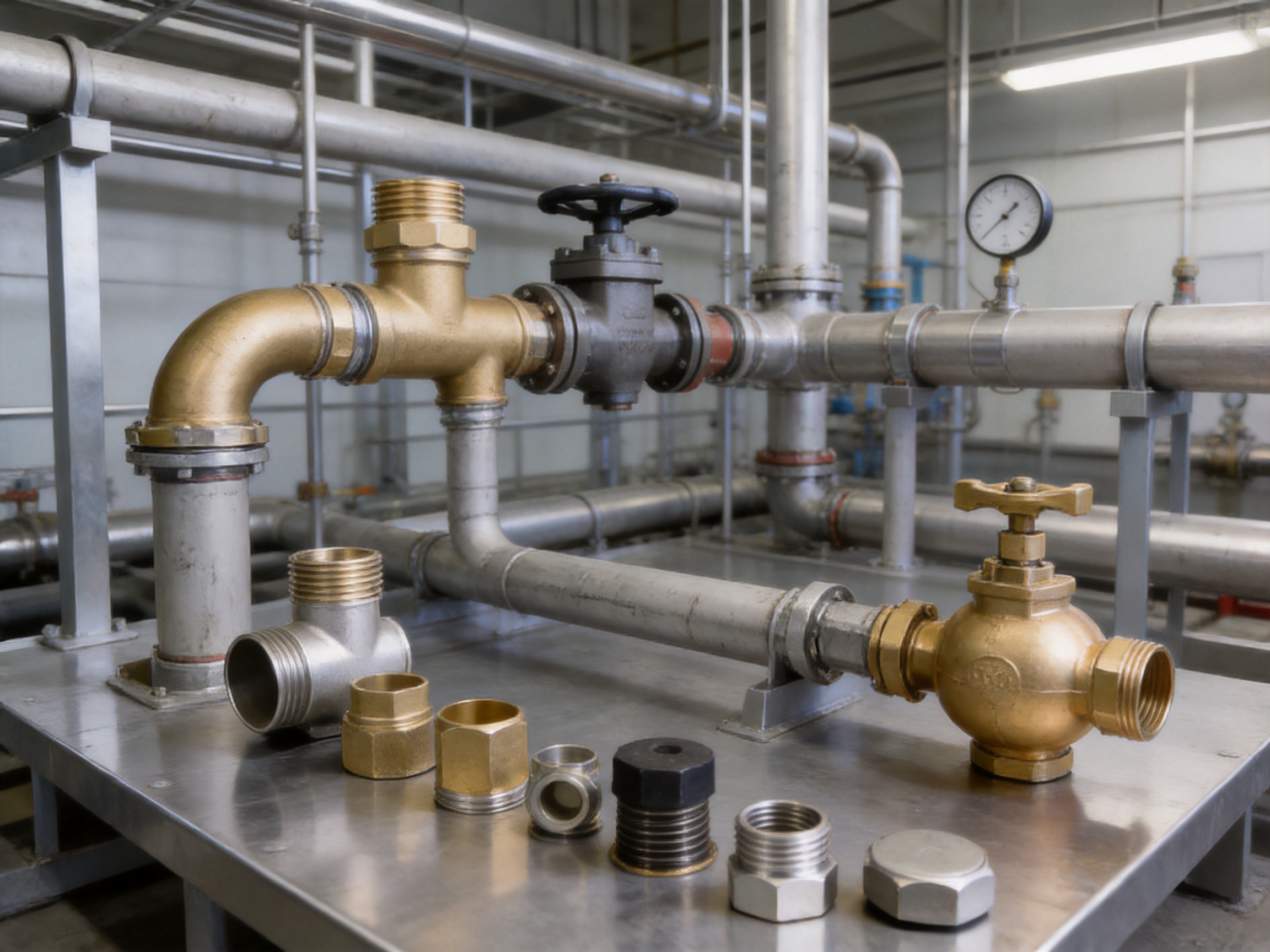
Assembly, Cleaning, and Surface Treatment
Some pipe fittings are supplied as single-piece components, while others include sealing elements, nuts, washers, inserts, or other hardware. During assembly, components must be correctly oriented and installed without damage. Automated assembly equipment can improve repeatability and reduce variation in high-volume production.
Ningbo Yunhua Valve Co., Ltd. has established an assembly line supported by automated assembly and testing equipment. Automation can help maintain consistent operating procedures, improve production efficiency, and reduce the risk of manual assembly errors. It also allows production personnel to focus on process supervision, verification, and quality control.
Cleaning is an important but sometimes overlooked stage. Machining chips, cutting fluid, dust, polishing residue, and other contaminants should be removed before packaging. Clean fittings are easier to inspect and less likely to introduce debris into a valve or pipeline. Gas-related products may require particularly careful cleaning because contamination can affect sealing components or downstream equipment.
Surface treatment may include polishing, plating, coating, passivation, protective oil, or other processes selected for the material and application. Surface treatment can improve appearance, corrosion resistance, cleanability, or resistance to handling damage. The treatment must be compatible with the fluid and operating environment, and it should not interfere with threads or sealing faces.
Testing and Quality Assurance
Quality assurance should cover the entire manufacturing process rather than relying only on a final visual inspection. Incoming material checks, process inspections, dimensional verification, thread inspection, assembly checks, pressure testing, leakage testing, and final packaging review may all be included according to the product type and customer requirements.
Dimensional inspection verifies critical features such as overall length, outside diameter, inside diameter, thread dimensions, center-to-center distance, wall thickness, and sealing-face geometry. Measuring tools may include gauges, calipers, micrometers, coordinate measurement equipment, optical instruments, or dedicated fixtures. The selected inspection method should be suitable for the tolerance and production volume.
Pressure testing evaluates whether the fitting or assembled component can withstand the required pressure without leakage or permanent deformation. Hydrostatic testing uses a liquid medium, while pneumatic testing uses air or gas under controlled procedures. The test method must be selected carefully because pneumatic testing can store more energy and may require additional safety precautions.
Leakage testing is particularly important for gas fittings and valve connections. The test can confirm the integrity of threaded joints, sealing faces, plugs, unions, and other potential leakage paths. Test results should be recorded when required by the project or quality system.
The company operates a professional testing workshop with automated testing equipment. A dedicated testing area helps separate inspection activities from machining and assembly operations. It also supports a systematic approach to confirming that finished products meet relevant standards and customer expectations.
Quality consistency is one of the most significant advantages of a specialized manufacturer. A supplier with production, assembly, and testing capabilities can identify process issues more quickly than a company that simply trades finished components. Integrated control can also improve communication between engineering, manufacturing, inspection, and customer service teams.
Advantages of Selecting a Specialized Manufacturer
Integrated Production Capability
An integrated manufacturer can manage more stages of the product lifecycle internally. Product development, raw material preparation, precision machining, assembly, testing, packaging, and technical communication can be coordinated within one organization. This may reduce delays caused by multiple subcontractors and make it easier to trace and resolve quality issues.
Ningbo Yunhua Valve Co., Ltd. combines valve and hardware accessory production with pipe fitting capabilities. This product relationship is valuable because customers often need compatible fittings and valves from the same source. It can simplify product selection and support the development of complete fluid-control assemblies.
Precision and Repeatability
Modern CNC machine tools support repeatable production of threads, bores, and connection surfaces. Repeatability is particularly important for distributors and project contractors who purchase the same product over multiple orders. Consistent dimensions help ensure that replacement fittings can be installed without modifying the original piping arrangement.
Precision also supports interchangeability. When a fitting is manufactured consistently, it is more likely to connect properly with standard pipes and related components. This can reduce installation time, rework, and the risk of field improvisation.
Production Capacity
The company has an annual production capacity of approximately 2 million valve sets and 10 million hardware accessory sets. This capacity indicates an established manufacturing base suitable for both regular supply and larger procurement programs, subject to product type, specifications, and production scheduling.
Capacity is not simply a measure of quantity. It also reflects the supplier’s ability to organize materials, production planning, equipment utilization, quality inspection, and delivery coordination. Customers should still confirm lead times and order requirements, but a developed production system can provide stronger support for recurring demand.
Customization Support
Different markets and applications may require customized dimensions, branding, packaging, materials, surface finishes, or connection standards. A manufacturer with engineering and CNC machining capability can often evaluate these requirements more effectively than a general trading company.
Customization should be approached through a controlled process. The customer and supplier should confirm technical drawings, tolerances, testing requirements, minimum order quantities, sample approval, and production release procedures. Clear documentation helps protect both sides and reduces the risk of misunderstanding.
Product and Application Knowledge
A supplier experienced in valves and fluid-control hardware understands how fittings function within real systems. This knowledge can help customers choose appropriate combinations of pipe fittings, threaded globe valves, forged steel valves, brass gas ball valves, and other components.
Application knowledge is especially valuable when a customer is replacing an existing component or developing a new assembly. The supplier can review connection size, operating pressure, media, temperature, installation space, and maintenance requirements before recommending a product configuration.
Pipe Fitting Advantages Compared with Inconsistent or Low-Quality Alternatives
Customers often compare products based on purchase price, but the initial unit cost does not represent the complete cost of ownership. An inexpensive fitting may require additional installation labor, more sealant, repeated adjustment, early replacement, or emergency maintenance. A fitting produced with controlled materials and accurate machining can provide greater value over the full service period.
Dimensional consistency is a major advantage. Precisely produced fittings are easier to align and assemble. They are less likely to require excessive force, field modification, or corrective machining. This is especially important in large projects where many connection points must be installed under time pressure.
Reliable sealing surfaces are another advantage. Clean, smooth, and correctly formed surfaces support effective gaskets, sealants, ferrules, or mechanical seals. Reducing leakage risk helps protect equipment, prevent fluid loss, and improve workplace safety.
Appropriate material selection improves service life. A fitting made from a material compatible with the fluid and environment is less likely to suffer from corrosion, embrittlement, swelling, or chemical attack. The best choice may not always be the most expensive material; it is the material that satisfies the actual operating conditions with a suitable safety margin.
Controlled testing provides additional confidence. When a manufacturer verifies dimensions, pressure resistance, and leakage performance, customers receive more than an appearance-based product. They receive a component that has passed defined checks within the supplier’s quality system.
Applications Across Different Industries
Water Supply and Plumbing
Pipe fittings are used throughout residential, commercial, municipal, and industrial water systems. They connect supply lines, route water around structures, create branches, and join valves, meters, pumps, and fixtures. Brass fittings are often considered for many water-related applications because of their machinability and corrosion performance, subject to applicable regulations and material requirements.
Fittings in drinking-water systems must be selected with attention to the relevant safety requirements. The material, surface treatment, cleaning method, and sealing compounds should be appropriate for potable-water contact where applicable.
Gas Distribution
Gas piping systems require dependable connections and careful installation. Pipe fittings may be used with brass gas ball valves, regulators, meters, appliances, and distribution lines. Thread quality, sealing materials, pressure rating, and leakage testing are important considerations.
Gas service requires strict compliance with local codes and installation procedures. Components should be selected for the specific gas, pressure, temperature, and regulatory environment. Professional installation and testing are essential, and fittings should never be used outside their approved service conditions.
Heating and Cooling Systems
Heating, ventilation, and air-conditioning systems use fittings to connect pumps, coils, boilers, radiators, chillers, expansion tanks, and control valves. Thermal cycling can cause repeated expansion and contraction, so fittings must be compatible with the operating temperature and installation stress.
Serviceability is important in these systems. Unions, adapters, and strategically placed couplings can make it easier to replace pumps, control valves, filters, or other equipment. Proper fitting selection can reduce downtime during seasonal maintenance.
Compressed Air
Compressed-air systems use pipe fittings for distribution headers, branch lines, drains, filters, regulators, and pneumatic equipment. Pressure losses and leakage can reduce system efficiency, making connection quality important. Fittings should have suitable pressure capability and internal dimensions for the planned airflow.
Cleanliness is also relevant. Oil, moisture, and machining debris can affect pneumatic components. The piping system should be cleaned and prepared according to the requirements of the compressed-air application.
Industrial Fluid Systems
Industrial plants may use fittings in process water, lubrication, cooling, hydraulic, chemical, and utility systems. The correct material and connection method depend on fluid composition, pressure, temperature, flow rate, vibration, and maintenance requirements.
Forged steel fittings and valves may be appropriate for demanding mechanical conditions, while stainless steel or specialized alloys may be considered for corrosive services. Engineering review is recommended whenever the media is hazardous, the pressure is high, or failure could create significant safety or environmental consequences.
Hardware and Equipment Manufacturing
Equipment manufacturers use fittings as part of packaged machines, control panels, pumps, boilers, compressors, water treatment units, and gas appliances. In these applications, compact dimensions, repeatable connections, appearance, and reliable assembly are often important.
A manufacturer that can supply both fittings and valves may help equipment builders simplify their bill of materials. Consistent products can also support assembly-line production and reduce the need for separate incoming inspection procedures, subject to the customer’s quality policy.
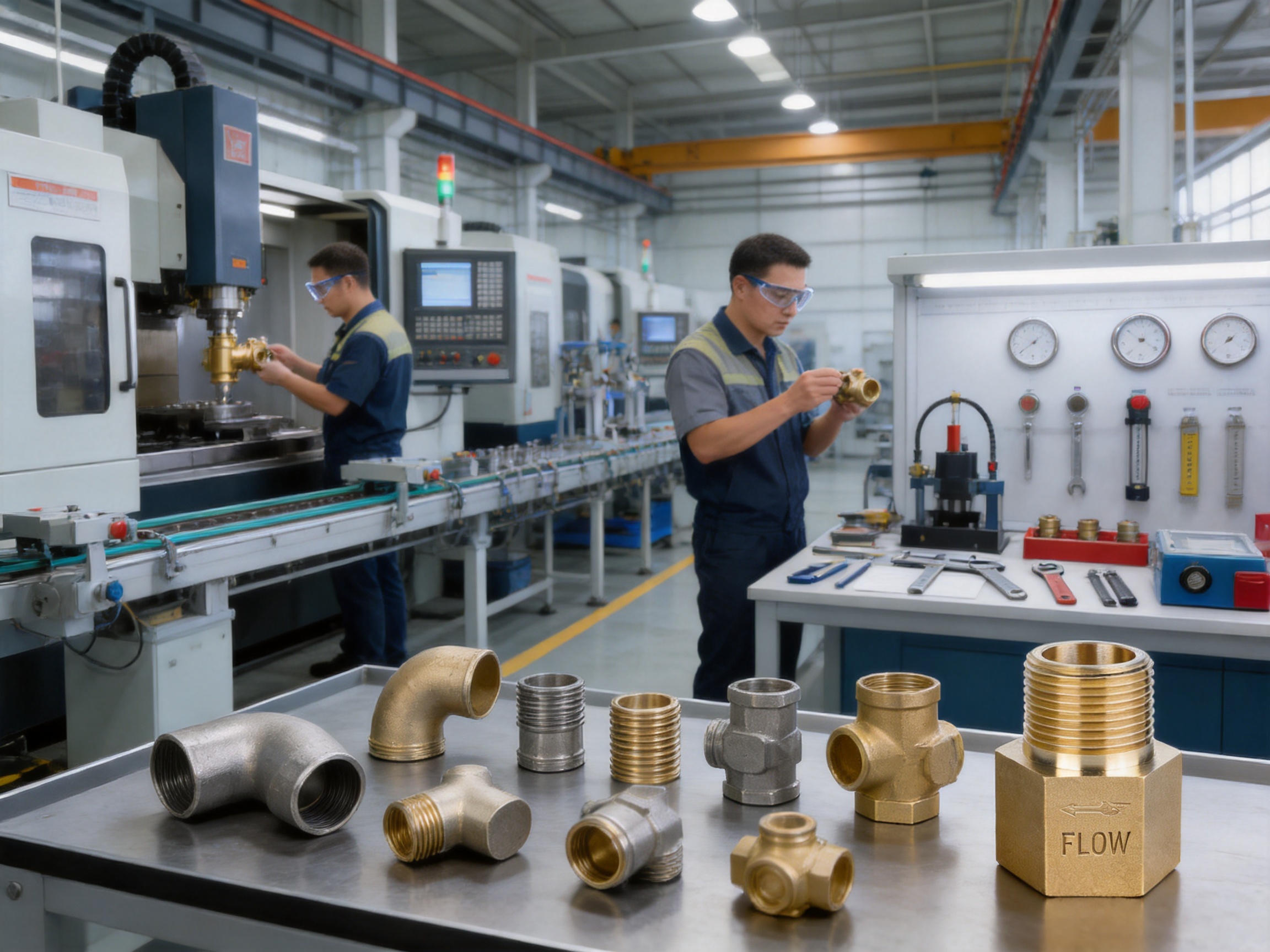
Installation Best Practices
Before installation, verify the fitting type, size, material, connection standard, pressure rating, and intended service. Inspect the product for cracks, dents, corrosion, damaged threads, contamination, or other visible defects. Do not install a fitting that has been dropped, altered, or exposed to conditions that may affect its integrity.
Prepare the pipe ends carefully. Cut pipes squarely where required, remove burrs, clean the surfaces, and confirm that the pipe is not distorted. Damaged or contaminated threads can prevent proper engagement and may lead to leakage. The fitting and pipe should be aligned naturally rather than forced into position.
Use a sealing method compatible with the fitting material and fluid. Thread sealant, tape, gasket, ferrule, or other sealing products should be selected according to the application and applicable regulations. Excess sealant should not enter the internal flow passage, where it could damage valves or restrict flow.
Tighten the fitting using appropriate tools and technique. Excessive torque can split a fitting, deform threads, or create stress concentration. Insufficient torque may result in movement or leakage. Where torque requirements are provided, follow them. Do not use a valve handle or delicate component as a lever for tightening a connected fitting.
After installation, inspect the complete assembly and conduct the required pressure or leakage test. Testing should be performed using safe procedures and suitable equipment. If leakage is detected, depressurize the system before attempting adjustment or disassembly.
For systems carrying gas, hazardous chemicals, high-temperature fluids, or high-pressure media, installation should be performed by qualified personnel. Local codes, equipment instructions, and project specifications take priority over general guidance.
Maintenance and Service Life
Regular inspection can identify leaks, corrosion, vibration, damaged supports, or changes in operating conditions before they become serious problems. The inspection frequency should reflect the risk and duty of the system. Gas, chemical, high-pressure, and outdoor installations may require more frequent attention than low-risk indoor utility lines.
Threaded connections should be checked for signs of movement or leakage. Repeated tightening is not a substitute for correcting the root cause. If a fitting continues to leak, the system should be depressurized and the connection inspected for damaged threads, misalignment, unsuitable sealant, excessive stress, or material deterioration.
Corrosion should be evaluated according to its depth, location, and effect on wall thickness. Surface discoloration may not indicate serious damage, while localized pitting can be more significant. When the integrity of a pressure-containing component is uncertain, replacement is generally safer than continued use.
Fittings connected to vibrating equipment may require additional support or flexible connection design. Vibration can gradually loosen threaded joints and fatigue rigid components. Proper pipe supports, alignment, and equipment installation help reduce these stresses.
When replacing a fitting, use a product with compatible dimensions, pressure rating, material, and connection type. Replacing one component with a visually similar but technically different fitting can create an unsafe mismatch. Keep records of product specifications and installation locations where traceability is important.
How to Choose a Pipe Fitting Supplier
A reliable supplier should be evaluated on more than catalog range. Customers should review manufacturing capability, material control, machining equipment, testing resources, quality documentation, customization support, production capacity, and responsiveness to technical questions.
Ask whether the supplier can provide dimensional drawings, material information, pressure data, inspection records, samples, and packaging details. The level of documentation required depends on the application, but clear technical information helps prevent incorrect selection.
Consider whether the supplier has experience with related products. A company manufacturing valves, water supply products, gas components, and hardware accessories may understand the compatibility issues that arise in complete piping assemblies. This can be useful for distributors and original equipment manufacturers who want a coordinated product range.
Production location and communication capability can also affect project success. A supplier should be able to confirm specifications, production schedules, quality expectations, and shipping arrangements in a clear and timely manner. Long-term cooperation is easier when technical and commercial communication is consistent.
Ningbo Yunhua Valve Co., Ltd. is located in Cixi City, Ningbo, Zhejiang Province, China. The company covers approximately 20,000 square meters and has developed a professional management team and structured production system. Its focus on research, development, production, sales, and service supports customers seeking fluid-control products and hardware accessories from an experienced manufacturing partner.
Why Manufacturing Infrastructure Matters
Manufacturing infrastructure affects the supplier’s ability to control quality and respond to demand. A precision machining workshop supports accurate dimensions. An assembly line supports repeatable product completion. A testing workshop supports verification. Automated equipment helps reduce variation, improve productivity, and establish consistent process steps.
These capabilities are especially valuable for pipe fittings because the products often look simple while containing many critical details. A small difference in thread dimensions, bore alignment, or sealing-face geometry can affect installation and performance. Controlled manufacturing converts design specifications into repeatable physical products.
Infrastructure also supports continuous improvement. Production data, inspection results, customer feedback, and equipment performance can be reviewed to identify recurring issues. Process improvements may involve revised tooling, updated work instructions, enhanced cleaning, improved packaging, or additional inspection points.
A supplier’s manufacturing system should ultimately provide confidence that the product will perform consistently, not only that one sample appears acceptable. This is one reason experienced customers examine the supplier’s factory, equipment, process controls, and testing capability when developing a long-term sourcing relationship.
Q&A About Pipe Fittings
What are pipe fittings used for?
Pipe fittings are used to connect, redirect, branch, reduce, expand, terminate, or transition piping systems. They help connect pipes to valves, pumps, meters, tanks, appliances, and other equipment. The correct fitting allows the piping route to match the installation layout while maintaining a secure and serviceable connection.
How do I select the correct pipe fitting?
Consider the pipe size, connection type, material, pressure rating, temperature, fluid compatibility, flow requirements, installation space, and maintenance needs. You should also confirm the applicable dimensional standard and whether the fitting is approved for the intended service. For demanding applications, consult a qualified engineer or technical supplier.
Are threaded fittings suitable for gas applications?
Threaded fittings may be suitable for certain gas applications when they are specifically designed, rated, and approved for the gas service. The fitting material, thread standard, sealing method, pressure, and local regulations must be checked. Gas installation and leakage testing should be performed by qualified personnel.
What is the advantage of brass pipe fittings?
Brass offers good machinability, useful corrosion resistance, and a practical balance between strength and cost. It is commonly used in water, gas, and general hardware applications. The exact brass grade and product approval must be confirmed for the intended media and regulatory environment.
When should forged steel fittings be considered?
Forged steel fittings may be considered for applications requiring high mechanical strength, robust pressure containment, or resistance to demanding operating conditions. The correct steel grade, pressure class, temperature range, connection type, and applicable standards must be confirmed before selection.
What is the difference between a coupling and a union?
A coupling normally joins two pipe sections in a relatively straightforward connection. A union is designed to allow easier disconnection, often without rotating the connected pipes. Unions are useful near equipment that may need to be removed for service, such as valves, pumps, filters, and meters.
Why is thread accuracy important?
Accurate threads provide proper mechanical engagement and support reliable sealing. Poorly formed threads may be too tight, too loose, misaligned, damaged, or unable to achieve sufficient engagement. Accurate CNC machining and thread inspection help improve assembly consistency and reduce leakage risk.
Can pipe fittings be customized?
Many fittings can be customized in dimensions, materials, surface treatment, packaging, marking, or connection configuration, depending on production capability and order requirements. Custom projects should be based on approved drawings, samples, technical specifications, inspection criteria, and production quantities.
How are pipe fittings tested?
Testing may include visual inspection, dimensional inspection, thread gauging, material verification, pressure testing, leakage testing, and functional checks for assembled products. The specific test plan depends on the fitting design, application, customer requirements, and applicable standards.
Select fittings with suitable materials and pressure ratings, install them using correct alignment and sealing procedures, support vibrating or heavy piping, and inspect the system regularly. Avoid over-tightening and do not ignore repeated leakage. Replacing a damaged fitting promptly is usually safer and less costly than continuing to adjust it.
Why purchase fittings from a valve manufacturer?
A valve manufacturer may have useful knowledge of connection compatibility, fluid control, pressure containment, sealing, and system integration. When the same supplier provides valves and fittings, customers may simplify sourcing and improve compatibility across a complete assembly. The supplier’s actual manufacturing and testing capabilities should still be evaluated.
Conclusion
Pipe fittings are fundamental to safe, efficient, and maintainable fluid-control systems. Their responsibilities include much more than joining two pipes. They manage direction changes, branches, size transitions, equipment interfaces, isolation points, service access, and line termination. Their performance affects leakage control, pressure stability, installation efficiency, equipment protection, and long-term operating cost.
The best fitting is selected according to the complete application: fluid, pressure, temperature, material, connection method, dimensional standard, installation environment, and maintenance plan. Threaded fittings provide practical installation for many systems, while forged steel, brass, stainless steel, plastic, welded, compression, and flanged products serve different operating requirements.
Manufacturing quality is equally important. Accurate engineering, controlled raw materials, precision CNC machining, consistent thread production, automated assembly, careful cleaning, and professional testing all contribute to dependable products. A supplier with an established factory, experienced management team, production capacity, and integrated valve and hardware expertise can provide stronger support than a source focused only on low initial price.
Ningbo Yunhua Valve Co., Ltd. combines research, development, manufacturing, sales, and service in the fluid-control field. Its precision machining workshop, assembly line, testing workshop, automated equipment, and annual production capacity support the production of valves and hardware accessories for diverse applications. For customers seeking reliable pipe fittings and compatible fluid-control components, a structured manufacturing partner can help turn individual parts into safer and more effective piping systems.
References
1. International Organization for Standardization. General principles for the selection and use of metallic piping components.
2. American Society of Mechanical Engineers. Piping and pipeline component design and pressure-rating guidance.
3. American Society for Testing and Materials. Standards for metallic materials, pipe fittings, threaded connections, and pressure testing.
4. International Association of Plumbing and Mechanical Officials. Plumbing product, installation, and connection guidance.
5. American Society of Sanitary Engineering. Safety and performance considerations for water and gas system components.
6. Manufacturer technical documentation for threaded globe valves, forged steel valves, brass gas ball valves, and pipe fittings.
7. Industrial maintenance manuals covering pipe alignment, threaded joint sealing, pressure testing, and leakage prevention.
Product: Pipe Fittings

Related Products
-
 View More
-
 View More
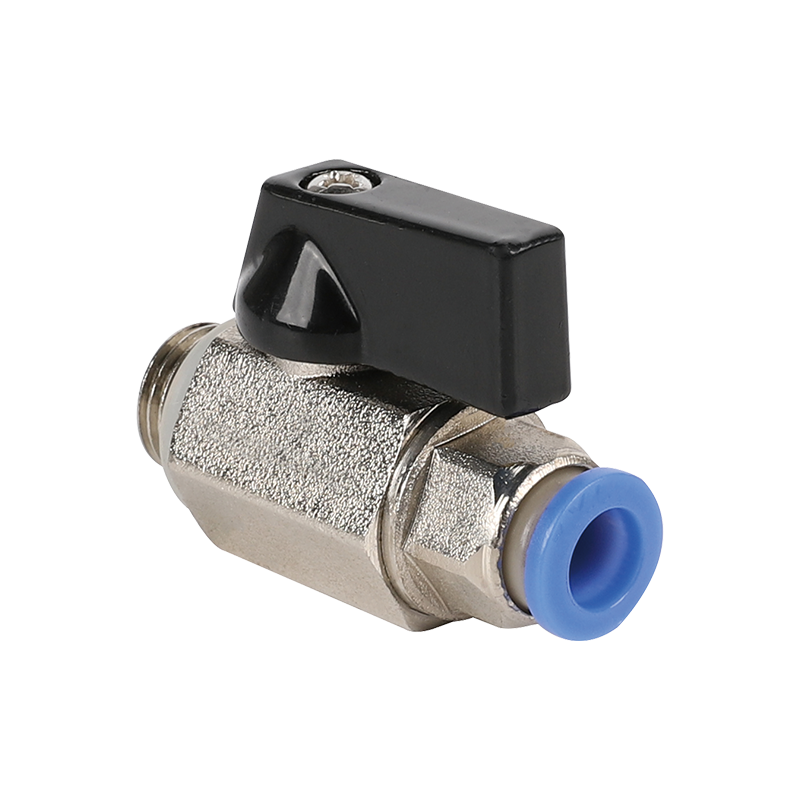
MINI-2 Mini Short-Handle Ball Valve(M/M)
-
 View More
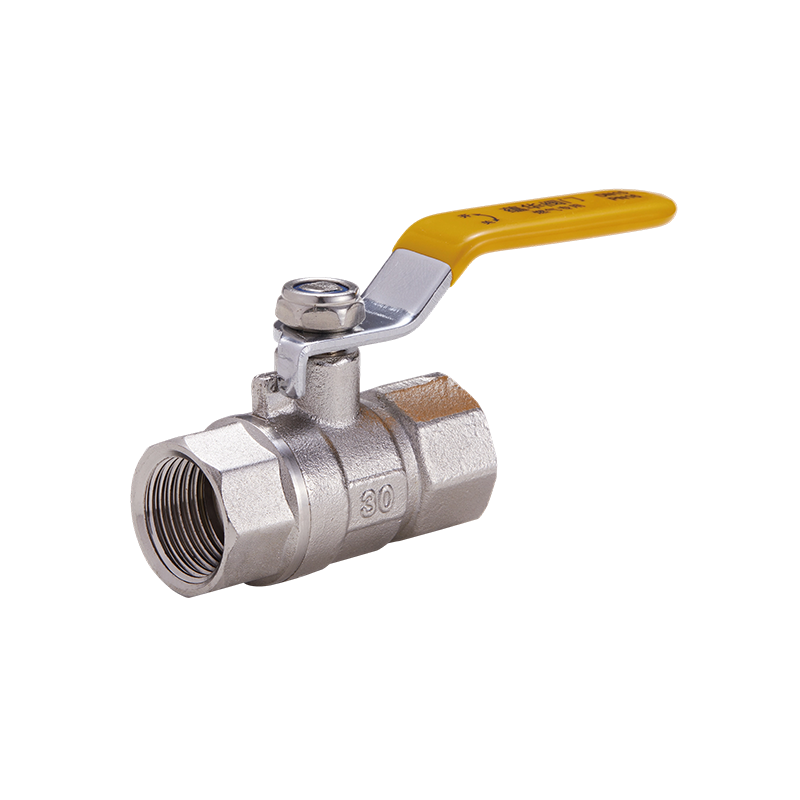
YH-2210 Forged Steel Ball Valve with Long Handle (F/F)
-
 View More
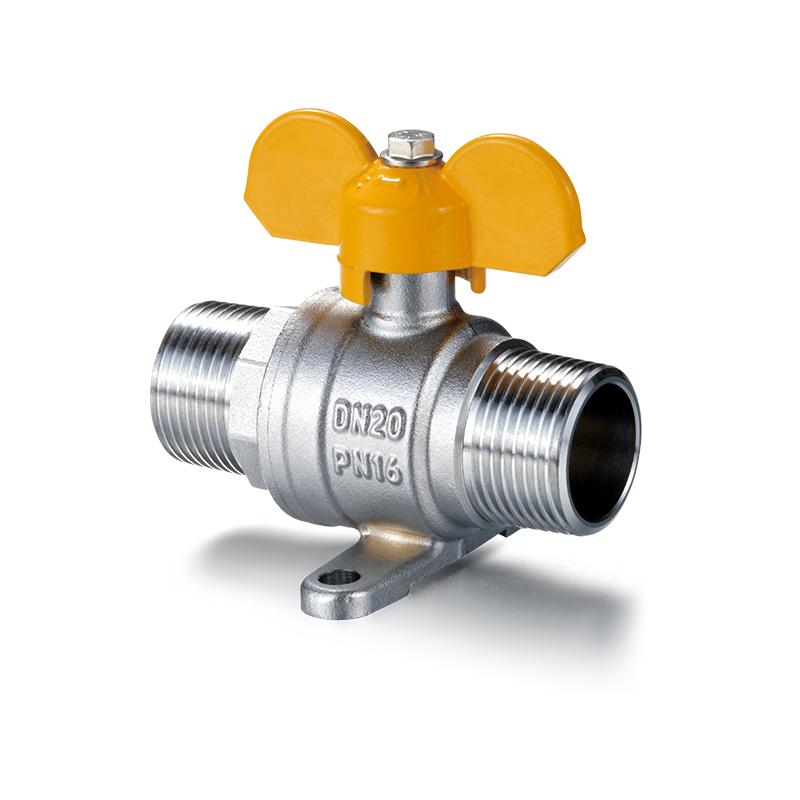
YH-214 Brass Ball Valve with Base& Butterfly Handle(M/M)
-
 View More
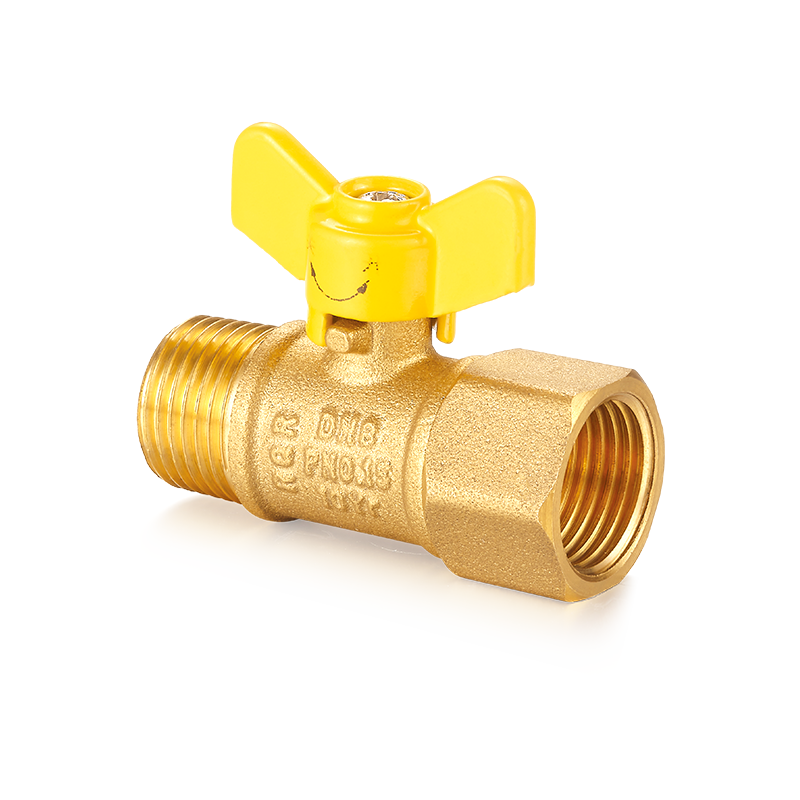
YH-205 Brass Ball Valve with Butterfly Handle(F/M)
-
 View More
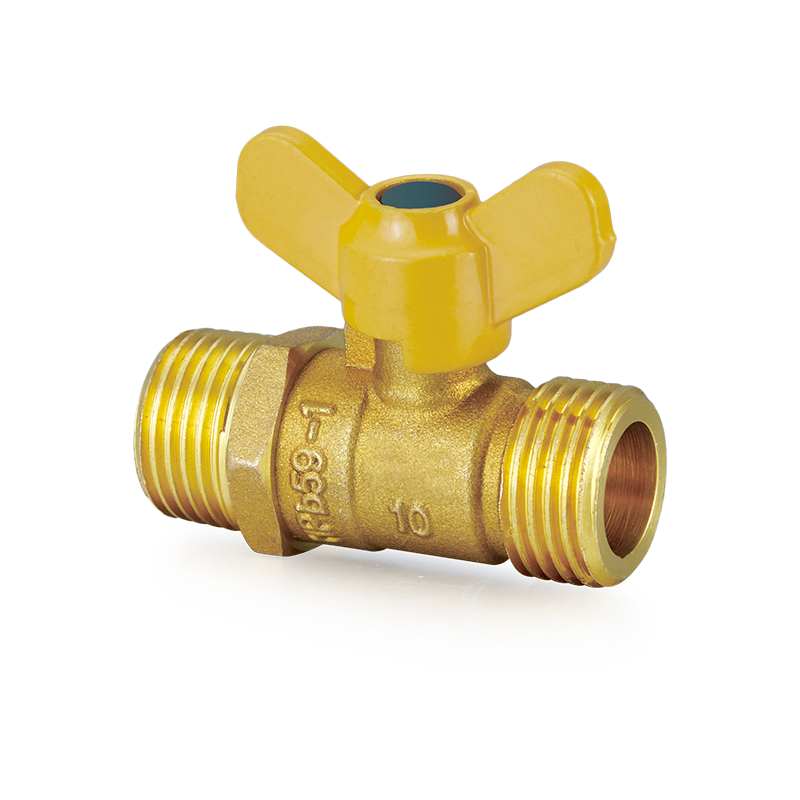
YH-206 Brass Ball Valve with Butterfly Handle(M/M)
Related News
Contact Us
-

-
 +86-0574-63742169
 -
 No.104-128, Cizhang East Road, Zhangqi Town, Cixi City, Ningbo, Zhejiang Province, China


Message Us Now !
