


 English
  русский
  عربى
عربى  Español
High-Performance Hose Connectors for Reliable Fluid and Gas Connections
Content
- 1 Product Overview: What a Hose Connector Does
- 2 Why Connector Quality Matters in Fluid Control
- 3 Key Advantages Over Ordinary Hose Connectors
- 4 Manufacturing Strength Behind the Product
- 5 Material and Structural Considerations
- 6 Application Scenarios
- 7 Technical Comparison Table
- 8 How Advanced Manufacturing Improves User Experience
- 9 Quality Control from Raw Material to Shipment
- 10 Design for Practical Installation
- 11 Role in Safe Fluid Ecosystems
- 12 Competitive Value for Buyers
- 13 Connection with Valve Product Expertise
- 14 Recommended Selection Considerations
- 15 Maintenance and Usage Guidance
- 16 Sustainability and Efficient Production
- 17 Service and Cooperation Potential
- 18 Frequently Asked Questions
- 18.1 What is the main function of a hose connector?
- 18.2 Why is precision machining important for a hose connector?
- 18.3 How does this hose connector compare with ordinary low-cost connectors?
- 18.4 Can the hose connector be used with valves?
- 18.5 Is the connector suitable for gas applications?
- 18.6 What manufacturing strengths support the product quality?
- 18.7 Why is batch consistency important for distributors and OEM customers?
- 18.8 How should a hose connector be maintained?
- 18.9 What information should buyers provide when requesting a hose connector?
- 18.10 What makes the supplier suitable for long-term cooperation?
- 19 Conclusion
- 20 References
- 21 Product: Hose Connector
In modern fluid control systems, a hose connector may appear to be a small accessory, yet it plays a decisive role in safety, sealing performance, installation efficiency, and long-term system stability. Whether used in water supply equipment, gas-related assemblies, household hardware, industrial maintenance, irrigation systems, or general fluid transfer applications, the quality of the connector directly affects how securely a hose can be joined, extended, repaired, or integrated with valves and pipelines.
The hose connector discussed in this article is designed for users who require dependable connection performance, consistent machining quality, and practical compatibility with a wide range of fluid control scenarios. It belongs to the hardware accessories and valve-related product category, making it suitable for customers who source not only standalone fittings but also complete valve and connector solutions. Compared with ordinary connectors that may prioritize low cost over accuracy, this product emphasizes structural reliability, stable sealing, clean machining, convenient operation, and durable service.
A high-quality hose connector is not simply a piece of metal or plastic shaped to join two ends. It is a precision component that must withstand repeated tightening, hose movement, pressure changes, environmental exposure, and installation variations. If the connector is poorly designed or manufactured, leakage, hose slipping, corrosion, thread damage, or premature failure may occur. For this reason, the manufacturing strength behind the product is just as important as the visible product itself.
Ningbo Yunhua Valve Co., Ltd. is an enterprise specializing in the research, development, production, sales, and service of gas and fluid valves, water supply valves, and hardware accessories. With years of experience in fluid control components, the company has built advanced precision machining workshops, automated assembly lines, and dedicated testing facilities. This background allows the hose connector to benefit from the same manufacturing discipline applied to valve products such as threaded globe valves, forged steel valves, and brass gas ball valves.
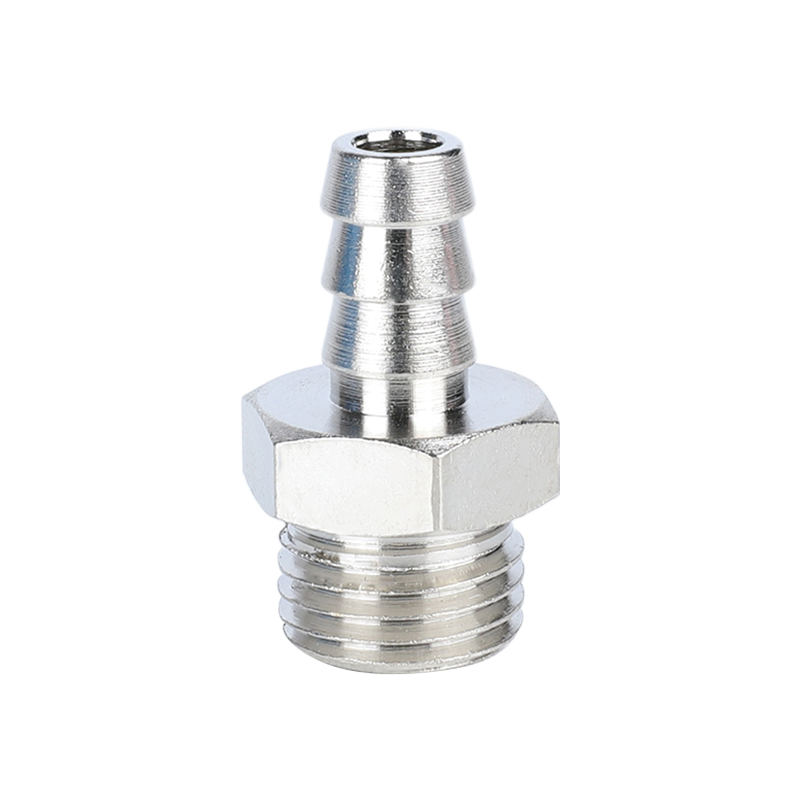
Hose Connector
Product Overview: What a Hose Connector Does
A hose connector is used to connect hoses to valves, faucets, pipelines, equipment outlets, or other hose sections. Its purpose is to create a stable passage for fluid or gas while maintaining a secure mechanical connection. Depending on the system design, a hose connector may be used for extension, conversion, repair, distribution, or quick connection.
The key value of a hose connector lies in three basic functions: holding, sealing, and transmitting. Holding means the connector must keep the hose fixed without loosening under normal operation. Sealing means the connector must reduce the possibility of leakage at the contact point. Transmitting means the connector must allow the medium to pass smoothly with minimal obstruction, pressure loss, or turbulence.
In real applications, these functions become more demanding than they appear. A connector may face vibration, repeated bending, thermal expansion, outdoor humidity, chemical exposure, pressure fluctuation, and different installation habits from different users. The product must therefore be designed not only for ideal laboratory conditions but also for practical use in varied environments.
This hose connector is positioned as a practical and durable accessory for fluid connection systems. Its design supports efficient installation, reliable engagement, and stable service. It is suitable for users who value precision manufacturing and consistent quality, including wholesalers, project contractors, hardware distributors, valve buyers, equipment assemblers, and maintenance professionals.
Why Connector Quality Matters in Fluid Control
In a complete fluid control system, valves often receive the most attention because they regulate flow, pressure, and shut-off functions. However, connectors are the points where systems are most commonly assembled, adjusted, or repaired. Every joint is a potential weak point. If a connector does not match the required quality level, even an excellent valve or hose cannot perform properly.
Leaks can lead to water loss, gas hazards, contamination, property damage, system downtime, and customer complaints. Loose connections can create safety risks and increase maintenance costs. Poor thread quality can cause cross-threading or insufficient tightening. Rough machining can damage sealing surfaces. Inconsistent dimensions can make batch installation slow and unpredictable.
A reliable hose connector helps prevent these issues by delivering stable size control, appropriate material strength, clean surfaces, and proper connection geometry. It enables installers to work faster and with greater confidence. It also reduces the probability of after-sales problems, which is especially important for distributors and project suppliers who need stable product reputation in the market.
For businesses purchasing in bulk, product consistency is as important as individual product quality. A connector that performs well in one sample but varies across production batches can still create problems. Advanced manufacturing and inspection systems are therefore essential for ensuring that every connector meets the same functional requirements.
Key Advantages Over Ordinary Hose Connectors
This hose connector offers several advantages when compared with general low-grade connectors commonly found in the market. These advantages come from product design, machining accuracy, quality control, and the manufacturer’s experience in valve and fluid control production.
Reliable Sealing Performance
Sealing is the primary expectation for any hose connector. A well-designed connector should create close contact between connected parts and support the use of suitable sealing elements when required. The product is manufactured with attention to interface accuracy, surface finish, and dimensional stability, all of which help improve sealing reliability.
In contrast, ordinary connectors with uneven surfaces, inaccurate dimensions, or poorly controlled thread profiles may leak even when tightly installed. Excessive tightening may temporarily reduce leakage, but it can also damage threads, deform hoses, or shorten service life. A precision connector reduces the need for over-tightening and supports a more stable seal.
Strong Mechanical Engagement
A hose connector must hold firmly during use. Mechanical engagement depends on the accuracy of the connection structure, the strength of the material, and the smoothness of assembly. This product is designed to provide dependable holding force while allowing practical installation. It supports a secure connection without unnecessary complexity.
Lower-quality alternatives may loosen under vibration or movement. Some may have shallow engagement areas or inconsistent thread depth, resulting in weak holding force. By contrast, a connector produced under controlled machining standards is better able to maintain stable engagement over time.
Consistent Dimensional Accuracy
Dimensional accuracy is especially important when connectors are used with standardized hoses, valves, or pipeline accessories. If the product is too loose, leakage or separation may occur. If it is too tight, installation becomes difficult and parts may be damaged. Consistent dimensions help installers complete work quickly and reduce wasted parts.
The manufacturer’s precision machining capabilities support stable dimensional control. Automated and CNC-based production processes reduce the risk of human variation and help maintain repeatability across batches. For customers ordering large quantities, this consistency is a major advantage.
Clean Surface Finish
Surface finish affects both appearance and function. A clean surface reduces friction during assembly, improves sealing contact, and reflects professional manufacturing standards. For hardware accessories displayed in retail or used in visible equipment assemblies, appearance also influences customer perception.
Rough or poorly finished connectors may have burrs, scratches, oxidation marks, or sharp edges. These defects can damage hoses or sealing materials and create safety concerns during handling. A refined connector offers better usability and a more professional finish.
Durable Performance in Repeated Use
Many hose connectors are installed once and used for a long time, while others may be disconnected, moved, or adjusted repeatedly. Durability therefore matters. The connector should withstand tightening cycles, hose pressure, and normal mechanical handling without rapid wear or deformation.
Because the company has long-term experience in valves and fluid control accessories, the product benefits from an understanding of pressure, sealing, assembly, and service life requirements. This helps the connector perform more reliably than products made with minimal engineering consideration.
Integration with Valve and Hardware Systems
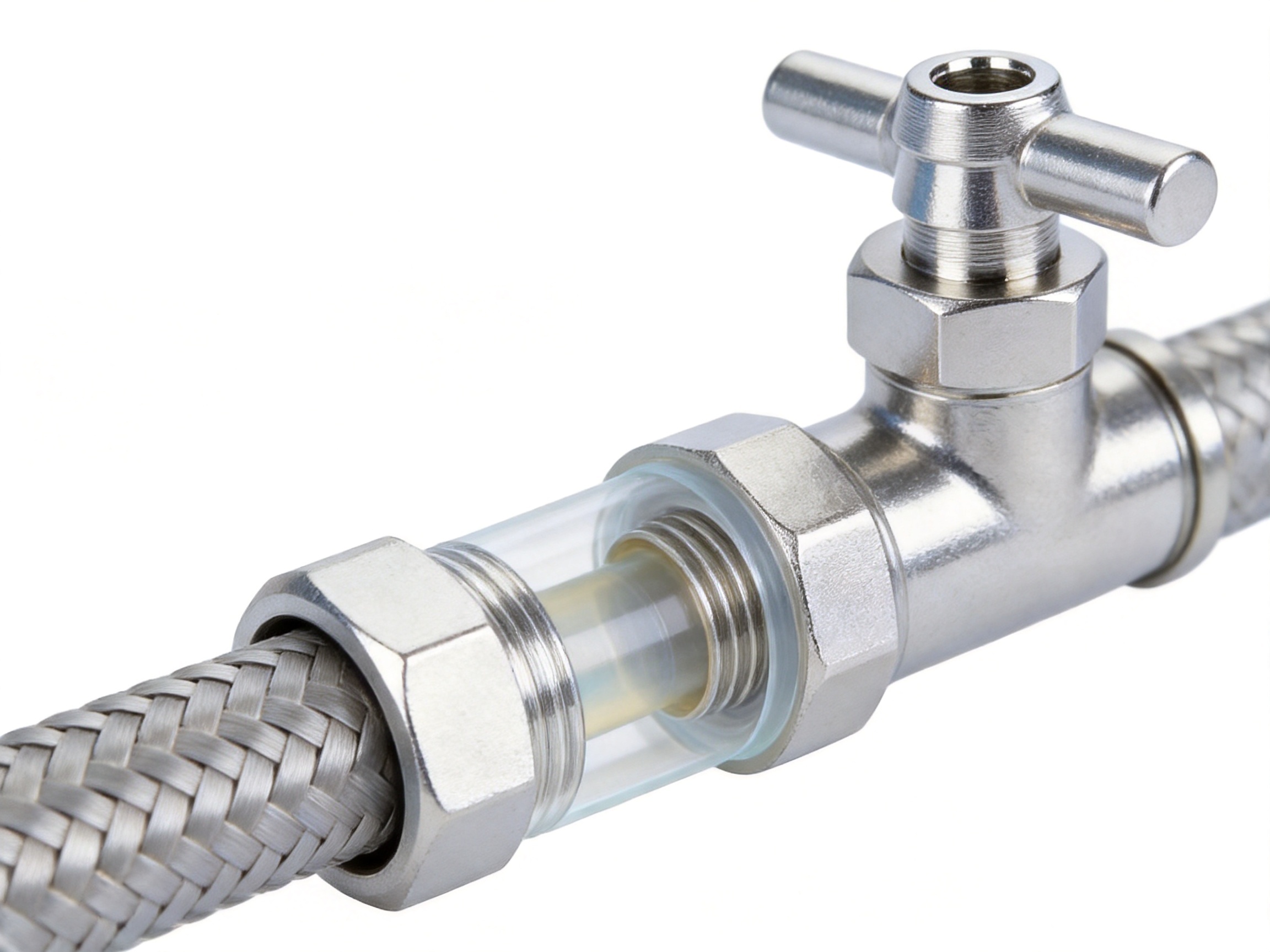
A major advantage of sourcing from a manufacturer involved in both valves and hardware accessories is system compatibility. Hose connectors are often used together with brass gas ball valves, water supply valves, threaded globe valves, forged steel valves, and other fluid control components. A producer familiar with these products can better understand how connectors function within a complete system.
This integrated manufacturing perspective helps customers simplify procurement. Instead of buying connectors from one supplier and valves from another without coordination, buyers can source related components from a company that understands the broader fluid control ecosystem.
Manufacturing Strength Behind the Product
The performance of a hose connector depends heavily on how it is manufactured. Precision, stability, and quality assurance cannot be achieved only through final inspection. They must be built into every production stage, from material selection and machining to assembly, testing, and packaging.
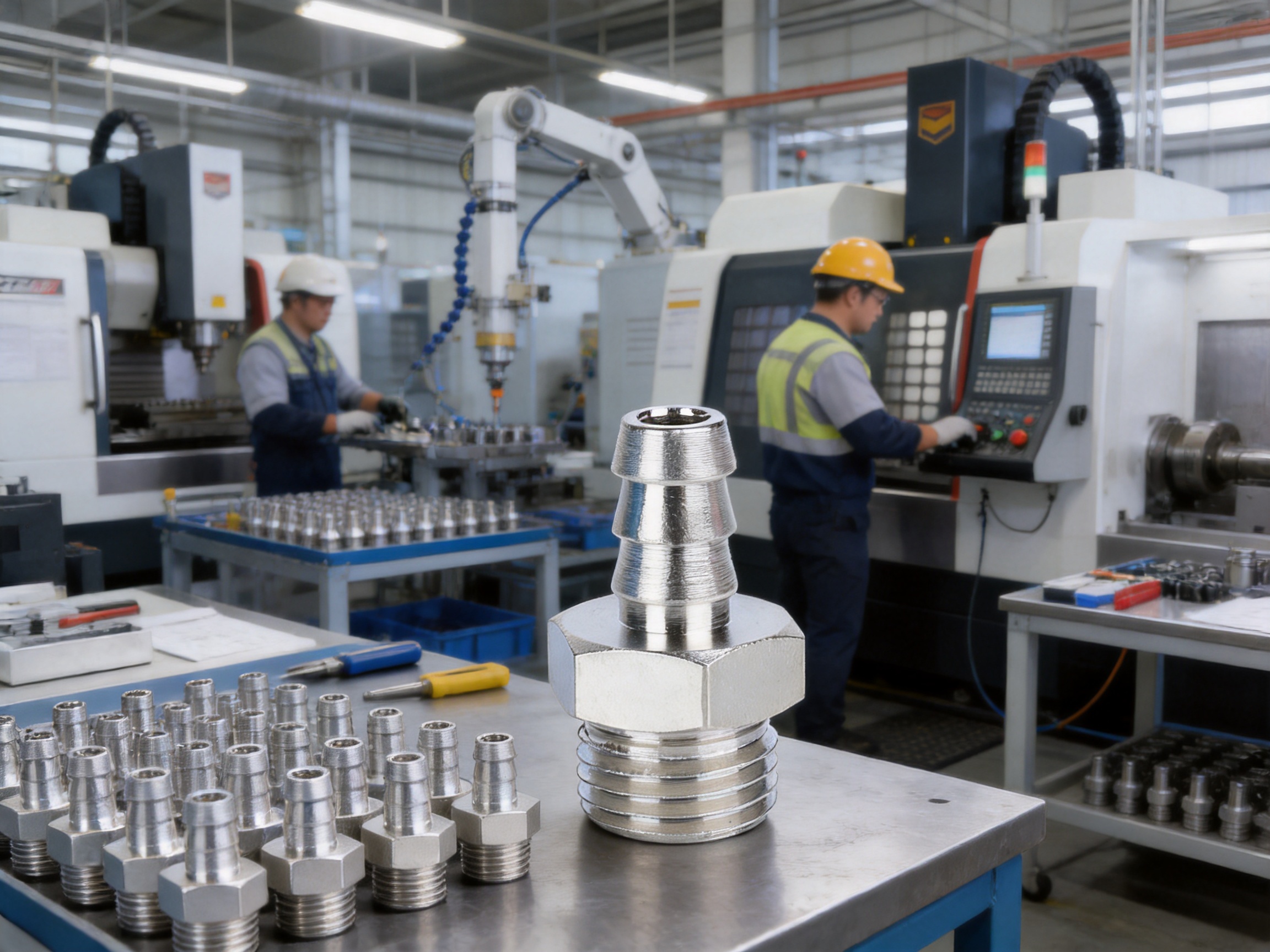
Ningbo Yunhua Valve Co., Ltd. covers an area of approximately 20,000 square meters and has established a professional, fully automated precision machining workshop, assembly line, and testing workshop. The company is equipped with advanced domestic and international CNC machine tools as well as automated assembly and testing equipment. These capabilities provide a strong foundation for producing reliable hose connectors and other fluid control accessories.
Precision Machining Capability
Precision machining is one of the most important factors in connector quality. Threads, sealing surfaces, connection shoulders, grooves, and internal passages must be processed accurately. Even small deviations can affect installation smoothness or sealing performance.
CNC machining offers high repeatability and enables stable control over critical dimensions. Compared with manual or semi-manual processing, CNC equipment reduces variation and improves batch consistency. It also allows complex geometries to be produced more efficiently and accurately.
For a hose connector, this means the finished product is more likely to fit correctly, tighten smoothly, and maintain consistent flow passage. It also supports cleaner edges and better surface quality, reducing the risk of burrs that could interfere with sealing or handling.
Automated Production and Assembly
Automation is not only about speed; it is also about stability. Automated production helps standardize process parameters, reduce human error, and improve production efficiency. In high-volume manufacturing, even small inconsistencies can become serious quality problems if not controlled.
The company’s automated assembly line supports efficient handling and stable assembly of hardware accessories and valve-related products. This improves production capacity while maintaining consistent quality. Customers benefit from dependable lead times and predictable product performance.
Dedicated Testing Workshop
Testing is essential for fluid control components. A connector must be inspected for dimensional accuracy, appearance, assembly function, and sealing-related performance according to applicable product requirements. The company’s testing workshop provides a structured environment for verifying quality before products reach customers.
Professional testing equipment helps identify defects that may not be visible during casual inspection. By controlling quality before shipment, the manufacturer helps customers reduce installation failures, returns, and maintenance complaints.
Large-Scale Production Capacity
The company currently has an annual production capacity of approximately 2 million sets of valves and 10 million sets of hardware accessories. This scale demonstrates not only production strength but also experience in managing supply chains, quality systems, workforce organization, equipment operation, and customer delivery schedules.
For buyers, large-scale capacity brings practical advantages. It supports stable supply for distributors, OEM projects, retail channels, and engineering procurement. It also allows the company to respond to market demand with greater flexibility.
Professional Management and Corporate Culture
Over years of development, the company has formed a professional management team and improved its management system. This matters because quality manufacturing requires more than machines. It requires process discipline, training, traceability, continuous improvement, and customer-oriented service.
A strong management system helps ensure that production standards are followed consistently. It also supports communication between departments such as research and development, production, inspection, sales, and after-sales service. As a result, customer requirements can be understood more clearly and translated into reliable products.
Material and Structural Considerations
The exact material requirements for a hose connector may vary depending on application, medium, pressure, environment, and customer specification. However, several general principles apply to high-quality connector design. The material should offer appropriate mechanical strength, corrosion resistance, machinability, and compatibility with the fluid or gas being transmitted.
For valve-related accessories, brass, steel, stainless steel, and engineered materials may be selected according to use conditions. Brass is widely valued in many fluid control applications because of its machinability, corrosion resistance, and suitability for water and gas-related components when designed and applied correctly. Steel and forged materials may be used where higher mechanical strength is needed. The manufacturer’s experience with forged steel valves, brass gas ball valves, and threaded globe valves provides useful knowledge for selecting and processing materials for connected accessories.
Structural design also influences performance. A connector should allow smooth internal flow, adequate wall thickness, stable sealing contact, and convenient installation. It should avoid unnecessary sharp corners or weak areas that could concentrate stress. The connection profile should be practical for hoses and compatible with the intended assembly method.
In competitive markets, some low-cost products reduce material thickness or simplify processing to save cost. This may lower the purchase price but can increase risk during use. A more reliable connector balances economy with safety, ensuring that cost control does not compromise essential performance.
Application Scenarios
The hose connector can be used across a variety of hardware, valve, water supply, and fluid transfer applications. Its practical design makes it suitable for both professional and general use, depending on the final specification selected by the buyer.
Water Supply and Plumbing Connections
In water supply systems, connectors are frequently used to join hoses, valves, faucets, filters, and auxiliary equipment. A dependable connector helps prevent dripping and supports stable flow. For installers and maintenance workers, easy installation and consistent fit are valuable because they reduce labor time and avoid repeated adjustments.
Gas and Fluid Valve Assemblies
In gas and fluid control assemblies, connection reliability is especially important. Although every gas-related application must follow applicable standards and use certified products suitable for the medium, the manufacturer’s background in gas valves and fluid valves provides a strong foundation for producing precise accessories. A connector used in such systems must be selected carefully according to pressure, medium, sealing method, and regulatory requirements.
Garden, Irrigation, and Outdoor Use
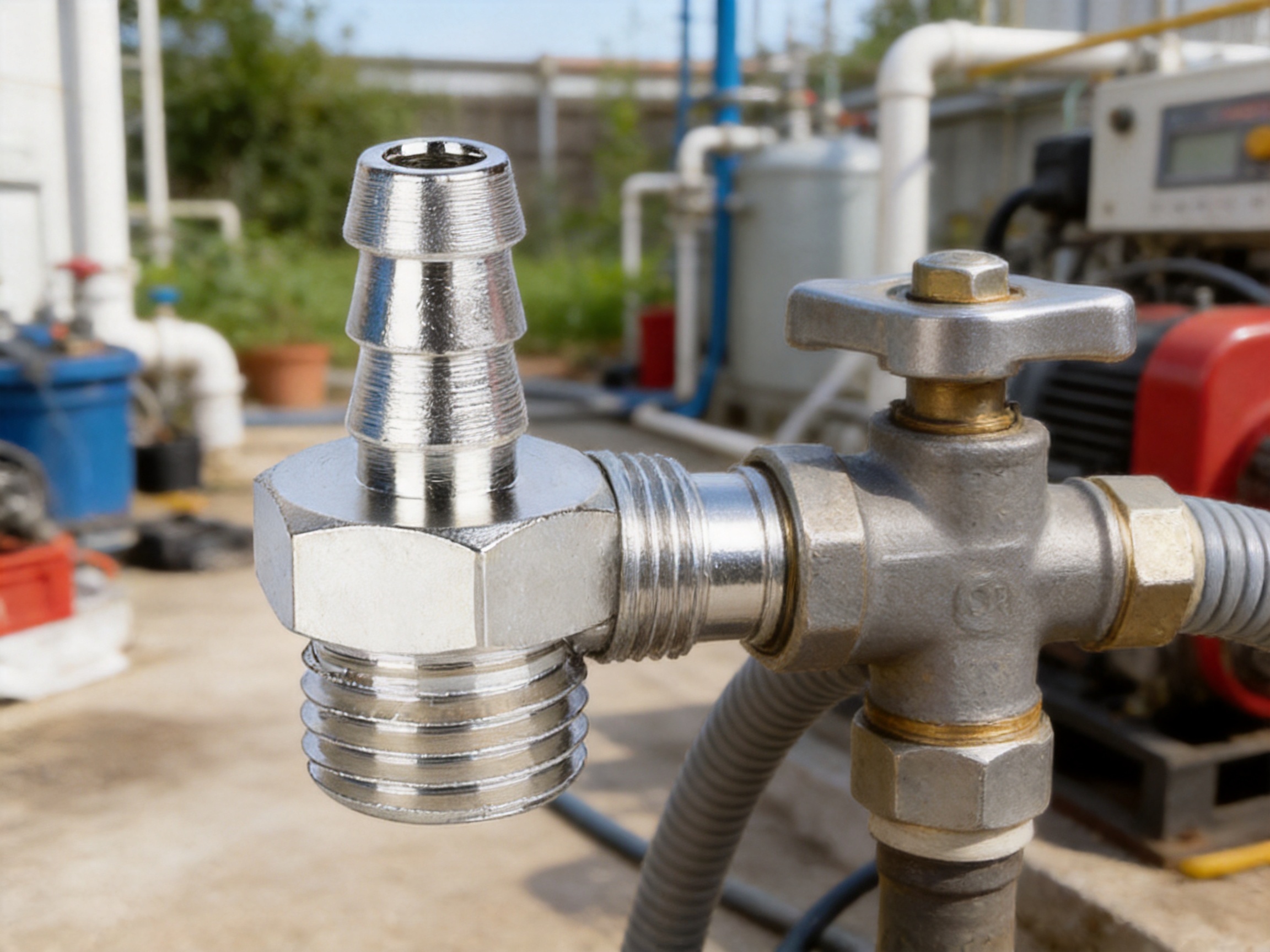
Hose connectors are widely used in garden watering, irrigation equipment, cleaning systems, and outdoor water transfer. Outdoor environments can expose connectors to moisture, sunlight, soil, and frequent handling. A durable connector with stable machining and reliable engagement can provide longer service life than lightweight low-grade alternatives.
Industrial Maintenance and Equipment Repair
Factories, workshops, and maintenance teams often use hose connectors for temporary or permanent fluid connections. In these environments, reliability and availability are important. A connector that installs easily and performs consistently helps reduce downtime and improves maintenance efficiency.
OEM and Distribution Channels
For OEM customers and distributors, the connector can serve as part of a larger product portfolio. Consistent quality, stable packaging, repeatable dimensions, and dependable supply are crucial for business growth. A manufacturer with large-scale production capacity and professional quality control can support long-term cooperation better than small suppliers with unstable processes.
Technical Comparison Table
| Evaluation Area | High-Performance Hose Connector | Ordinary Low-Grade Connector | Customer Benefit |
|---|---|---|---|
| Dimensional Control | Produced with precision machining and controlled process standards | May vary between batches or suppliers | More predictable installation and fewer fitting problems |
| Sealing Reliability | Designed with attention to contact surfaces and connection accuracy | May leak due to rough surfaces or poor tolerance | Lower risk of water loss, gas leakage, or system failure |
| Surface Finish | Clean finish with reduced burrs and improved handling quality | May have sharp edges, scratches, or uneven machining | Safer installation and more professional appearance |
| Mechanical Strength | Balanced structure and suitable material selection for stable use | May reduce wall thickness or use inconsistent materials | Longer service life and stronger connection security |
| Batch Consistency | Supported by automated production and inspection systems | Quality may depend heavily on manual work | Better for bulk purchasing, OEM supply, and distribution |
| Manufacturing Support | Backed by valve and hardware accessory production experience | Often produced as a simple commodity item | Improved compatibility with complete fluid control systems |
How Advanced Manufacturing Improves User Experience
Users often judge a connector by how it feels during installation. If the threads engage smoothly, the hose fits securely, and the connection seals without excessive force, the user experiences the product as reliable. This positive experience is the result of careful manufacturing.
Accurate machining prevents loose or overly tight fits. Proper surface treatment reduces friction and helps prevent damage to hoses and sealing parts. Consistent geometry makes batch installation faster because workers do not need to check or adjust every single connector repeatedly. Testing helps ensure that defective products are removed before reaching the customer.
For professional installers, these details translate into lower labor costs and fewer callbacks. For distributors, they reduce customer complaints and protect brand reputation. For end users, they provide confidence that the system will work as expected.
The manufacturer’s investment in automated equipment and precision production also supports product improvement over time. When production data, inspection results, and customer feedback are managed effectively, the company can refine design details and process parameters. This continuous improvement mindset is important in a competitive global market.
Quality Control from Raw Material to Shipment
A reliable hose connector requires quality control at multiple stages. The process begins with raw material inspection. Materials must meet required specifications for composition, mechanical properties, and surface condition. If the material is inconsistent, machining and final performance may also become inconsistent.
During machining, critical dimensions should be monitored to ensure tolerance compliance. Tools must be maintained or replaced at proper intervals because worn tools can create poor surfaces or inaccurate dimensions. CNC programs and fixtures should be controlled to maintain repeatability.
After machining, parts may undergo cleaning, finishing, or additional processing depending on product requirements. Appearance inspection helps identify scratches, burrs, deformation, or surface defects. Functional checks verify that the connector can be assembled correctly with matching components.
Before shipment, packaging also matters. Connectors should be protected from impact, contamination, and corrosion during storage and transportation. Proper labeling and batch management help customers track goods and manage inventory efficiently.
The company’s professional testing workshop and management system support this complete quality-control chain. Rather than relying on final inspection alone, the manufacturing approach emphasizes process control, which is more effective for preventing defects.
Design for Practical Installation
A good hose connector should be strong, but it should also be practical. Installers prefer connectors that are easy to grip, align, and tighten. The product should reduce unnecessary complexity and support efficient work in real jobsite conditions.
Practical installation depends on shape, size, thread quality, surface smoothness, and compatibility with common tools or hand operation. If a connector is difficult to align, users may force it into position and damage threads. If edges are sharp, handling becomes uncomfortable or unsafe. If the sealing surface is uneven, installers may overtighten to compensate.
This hose connector is designed with user convenience in mind. Its manufacturing quality supports smoother assembly, while its functional structure helps maintain stable connection performance. For bulk users, easier installation can create measurable savings because thousands of connections may be installed across multiple projects or products.
Role in Safe Fluid Ecosystems
The company’s mission is to build a safe fluid ecosystem with high-quality valves. Although a hose connector is a smaller product than a valve, it contributes directly to that ecosystem. Every secure connection supports safer fluid control. Every well-machined fitting reduces the chance of leakage. Every tested accessory helps protect the integrity of the complete system.
In fluid control, safety is achieved through the combination of many components. Valves regulate flow, hoses transport media, connectors join parts, and seals prevent leakage. If one element fails, the system can fail. Therefore, attention to connector quality is a practical expression of system-level safety thinking.
This is especially important as global customers demand more reliable, standardized, and efficient products. Buyers increasingly look beyond the lowest price and evaluate manufacturing capability, quality systems, production capacity, and long-term cooperation potential. A hose connector backed by a professional valve and hardware accessory manufacturer is well aligned with these expectations.
Competitive Value for Buyers
When buyers compare hose connectors, the initial unit price is only one factor. A cheaper connector may cost more in the long run if it causes leaks, installation delays, customer complaints, or replacement expenses. Total value should include product life, consistency, supply stability, technical support, and compatibility with other components.
This hose connector offers competitive value by combining practical product performance with strong manufacturing support. The company’s annual capacity for hardware accessories enables stable supply for customers who need repeat orders. Its experience in valve production provides technical understanding of sealing, machining, pressure control, and fluid safety. Its automated equipment and testing workshop support consistent quality.
For distributors, the product can strengthen a catalog of valve and hardware accessories. For OEM customers, it can support assembly efficiency and quality consistency. For project buyers, it can reduce procurement risk by coming from a supplier with substantial production infrastructure.
Another competitive advantage is the company’s location in Ningbo, Zhejiang Province, China, an area known for manufacturing, industrial supply chains, and export-oriented production. Efficient access to manufacturing resources and logistics networks can support international trade and stable delivery planning.
Connection with Valve Product Expertise
The company is also associated with products such as threaded globe valves, forged steel valves, and brass gas ball valves. These products require strict attention to sealing, pressure resistance, material performance, and machining precision. The knowledge gained from producing valves can be applied to hardware accessories such as hose connectors.
A threaded globe valve requires accurate threads and sealing surfaces. A forged steel valve requires material strength and robust processing. A brass gas ball valve requires smooth operation, leak prevention, and reliable assembly. These competencies are directly relevant to producing connectors that must join components securely and prevent leakage.
This cross-product expertise gives the hose connector an advantage over accessories made by suppliers that focus only on simple commodity fittings. A connector made within a broader valve manufacturing environment benefits from deeper understanding of how fluid systems operate and fail.
Recommended Selection Considerations
Choosing the right hose connector requires attention to application conditions. Buyers should consider hose size, connection type, medium, pressure, temperature, material compatibility, installation environment, and applicable standards. For gas-related use, proper certification and specification matching are especially important.
The connector should match the hose diameter and connection interface accurately. If the size is wrong, leakage or hose separation may occur. The material should be suitable for the medium being transported. Water, gas, oil, air, and chemical media may require different materials and sealing methods.
Pressure and temperature should also be considered. A connector used in low-pressure garden watering may not be suitable for demanding industrial or gas systems. Outdoor use may require stronger corrosion resistance. Frequent disconnection may require a structure designed for repeated operation.
For bulk purchasing, buyers should request appropriate product specifications, samples, quality documentation, and packaging information. Clear communication with the manufacturer helps ensure that the selected connector matches the intended use.
Maintenance and Usage Guidance
Proper installation and maintenance help extend connector service life. Before installation, users should check whether the connector, hose, valve, and sealing components are clean and undamaged. Dirt or debris on sealing surfaces can cause leakage. Damaged threads or deformed hose ends should not be forced into use.
During installation, the connector should be aligned correctly. Cross-threading should be avoided. Tightening should be firm but not excessive unless the product specification requires a defined torque. Over-tightening may damage threads, crush sealing components, or deform the hose.
After installation, the system should be tested gradually. Users should check for leakage under operating conditions. If leakage occurs, the system should be depressurized before adjustment. For gas applications, appropriate safety procedures and professional inspection are essential.
Periodic inspection is recommended in systems exposed to vibration, outdoor conditions, pressure cycling, or frequent handling. Users should look for signs of loosening, corrosion, wear, cracking, or leakage. Replacing a worn connector in time is far less costly than repairing system damage caused by failure.
Sustainability and Efficient Production
Modern manufacturing is increasingly judged by efficiency, resource use, and waste reduction. Precision machining and automated production can support sustainability by improving material utilization, reducing defect rates, and increasing production consistency. Fewer defective products mean less scrap, less rework, and more efficient use of energy and labor.
Durable connectors also contribute to sustainability through longer service life. A product that performs reliably for an extended period reduces the need for frequent replacement. In fluid systems, leak prevention also saves water, gas, or other media, reducing waste and improving operational efficiency.
The company’s long-term vision is to become a leading enterprise in the global fluid control industry. Achieving this vision requires not only production capacity but also responsible quality management and continuous improvement. A well-made hose connector is a small but meaningful part of this broader direction.
Service and Cooperation Potential
For international and domestic buyers, service capability is a critical part of supplier selection. A manufacturer that integrates research, development, production, sales, and service can respond more effectively to customer requirements. This is valuable for standard products as well as customized specifications.
Customers may need different sizes, packaging styles, order quantities, or compatibility requirements. A professional manufacturer can evaluate these requests based on production capability and technical feasibility. The company’s experience with valves and hardware accessories supports communication with buyers who require complete fluid control solutions.
Reliable service also includes stable contact channels, clear order follow-up, and practical after-sales support. The company can be contacted by email at [email protected] or by phone at +86-0574-63742169. Its address is No.104-128, Cizhang East Road, Zhangqi Town, Cixi City, Ningbo, Zhejiang Province, China.
Frequently Asked Questions
What is the main function of a hose connector?
A hose connector joins a hose to another hose, valve, faucet, pipe, or equipment outlet. Its main functions are to hold the connection securely, help prevent leakage, and allow fluid or gas to pass through the connection efficiently.
Why is precision machining important for a hose connector?
Precision machining helps ensure accurate dimensions, clean threads, smooth sealing surfaces, and stable batch consistency. These qualities make installation easier and reduce the risk of leakage or poor fit.
How does this hose connector compare with ordinary low-cost connectors?
This connector is supported by advanced machining, automated production, and professional testing. Compared with ordinary low-cost products, it offers better dimensional consistency, smoother installation, more reliable sealing potential, cleaner finish, and stronger support from an experienced valve and hardware accessory manufacturer.
Can the hose connector be used with valves?
Yes, hose connectors are commonly used with valves and fluid control assemblies. The correct model and specification should be selected according to hose size, valve interface, medium, pressure, and operating conditions.
Is the connector suitable for gas applications?
Gas applications require careful product selection, suitable materials, correct sealing methods, and compliance with applicable safety standards. Buyers should confirm the exact specification and intended use with the manufacturer before using any connector in a gas system.
What manufacturing strengths support the product quality?
The manufacturer operates a 20,000-square-meter facility with precision machining workshops, automated assembly lines, testing workshops, advanced CNC machine tools, and automated testing equipment. These strengths support consistent product quality and stable supply.
Why is batch consistency important for distributors and OEM customers?
Batch consistency reduces installation problems, customer complaints, and assembly delays. For distributors and OEM customers handling large quantities, consistent dimensions and quality are essential for efficient operations and brand reputation.
How should a hose connector be maintained?
Users should inspect the connector before installation, keep sealing surfaces clean, avoid cross-threading, tighten properly, test for leakage, and periodically check for wear, corrosion, or loosening during service.
What information should buyers provide when requesting a hose connector?
Buyers should provide hose size, connection type, material preference, medium, pressure, temperature, application environment, quantity, packaging requirements, and any relevant standard or certification requirements.
What makes the supplier suitable for long-term cooperation?
The supplier combines valve manufacturing experience, hardware accessory capacity, automated production, professional testing, and a management system developed through years of industry practice. This combination supports stable quality, reliable delivery, and broad product compatibility.
Conclusion
A hose connector may be small, but it performs a vital role in fluid and gas connection systems. Its quality affects sealing reliability, installation efficiency, safety, maintenance cost, and user satisfaction. Selecting a connector based only on low price can create hidden risks, while choosing a precision-manufactured connector can improve long-term system performance.
This hose connector stands out because it is supported by professional manufacturing strength, advanced CNC machining, automated assembly, dedicated testing, and extensive experience in valves and hardware accessories. Its advantages include consistent dimensions, reliable connection performance, clean surface quality, practical installation, and strong suitability for integration with broader fluid control systems.
For buyers seeking dependable hose connector solutions, the product offers a strong balance of performance, supply capacity, and manufacturing credibility. It is especially valuable for distributors, OEM customers, project suppliers, and users who require stable quality across repeated orders. Backed by a company committed to safe fluid ecosystems and high-quality valve solutions, the connector represents more than a simple accessory; it is a reliable link in the chain of modern fluid control.
References
Crane Co. Flow of Fluids Through Valves, Fittings, and Pipe. Technical Paper No. 410.
International Organization for Standardization. ISO 7-1: Pipe Threads Where Pressure-Tight Joints Are Made on the Threads.
International Organization for Standardization. ISO 228-1: Pipe Threads Where Pressure-Tight Joints Are Not Made on the Threads.
American Society of Mechanical Engineers. ASME B1.20.1: Pipe Threads, General Purpose.
American Society of Mechanical Engineers. ASME B16 Standards for Valves, Flanges, Fittings, and Gaskets.
Industrial Press. Machinery’s Handbook: Guide to Threading, Materials, Fits, and Machining Practice.
Fluid Sealing Association. Technical Handbook on Sealing Practices for Fluid Systems.
Product: Hose Connector

Related Products
-
 View More
-
 View More
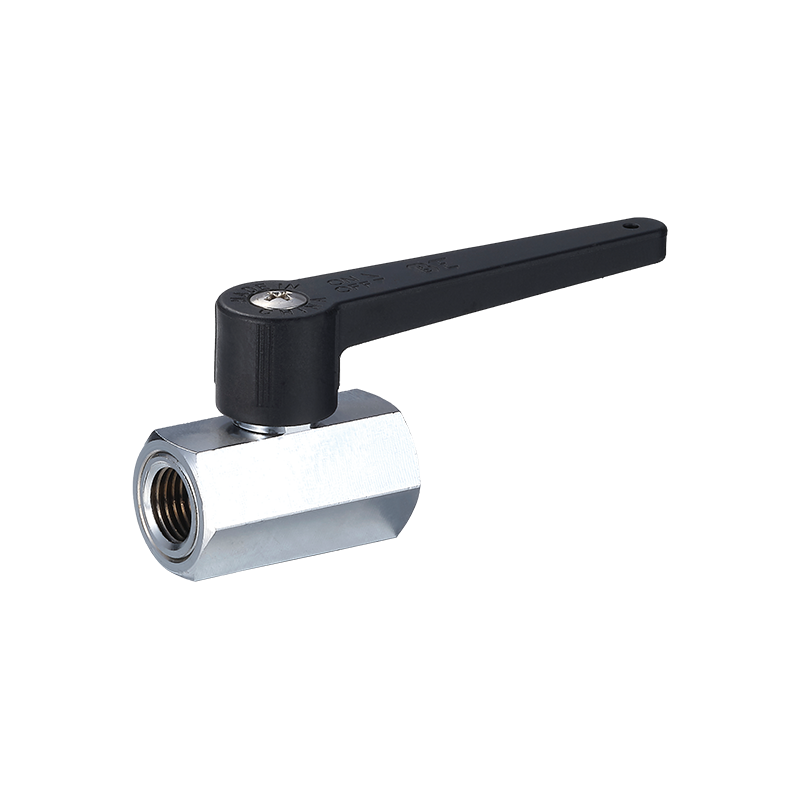
MINI-1 Mini Long Handle Ball Valve(F/F)
-
 View More
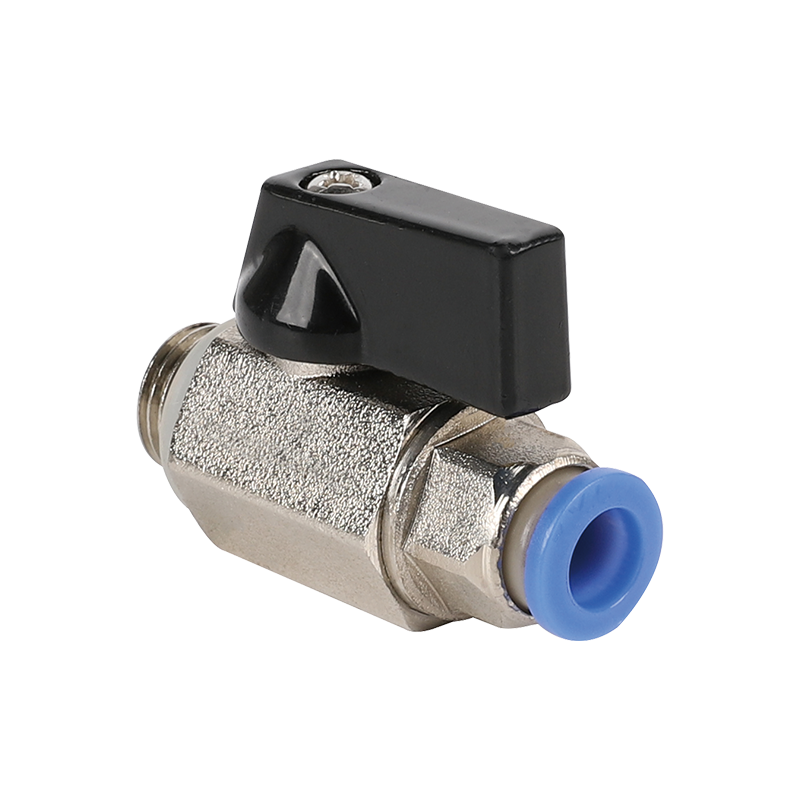
MINI-2 Mini Short-Handle Ball Valve(M/M)
-
 View More
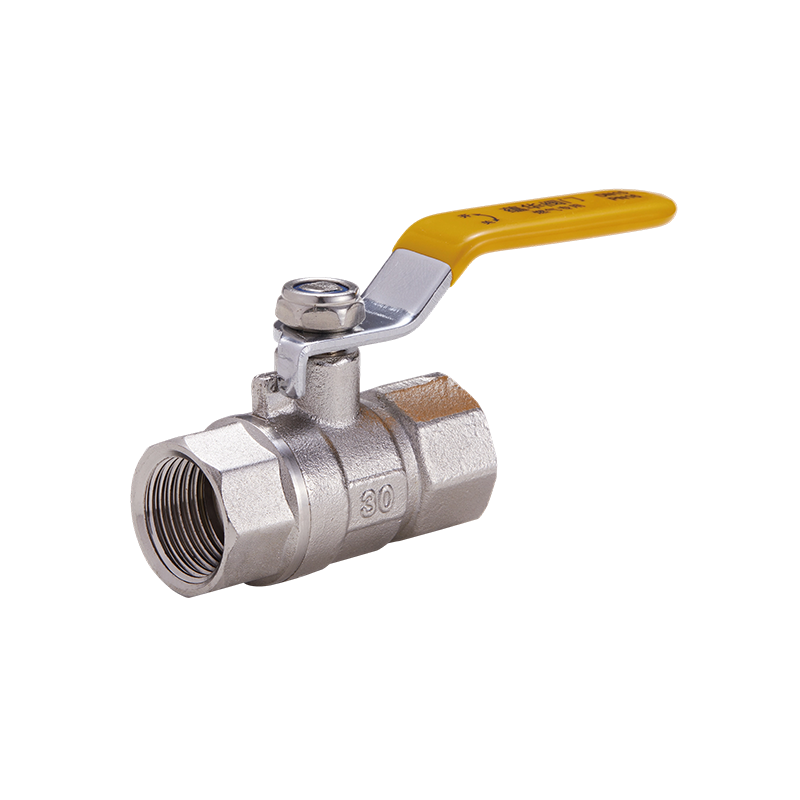
YH-2210 Forged Steel Ball Valve with Long Handle (F/F)
-
 View More
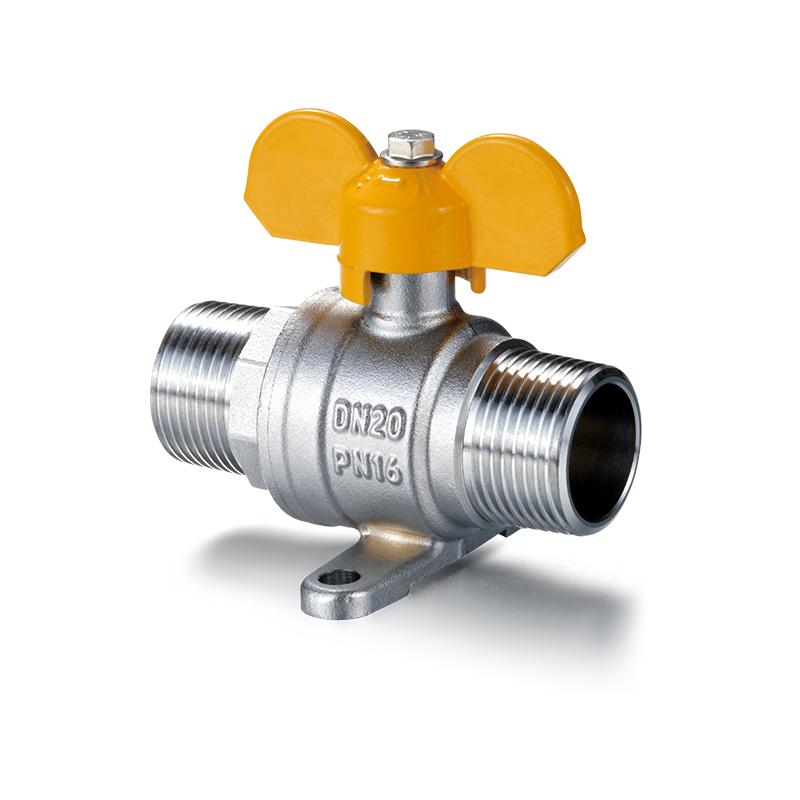
YH-214 Brass Ball Valve with Base& Butterfly Handle(M/M)
-
 View More
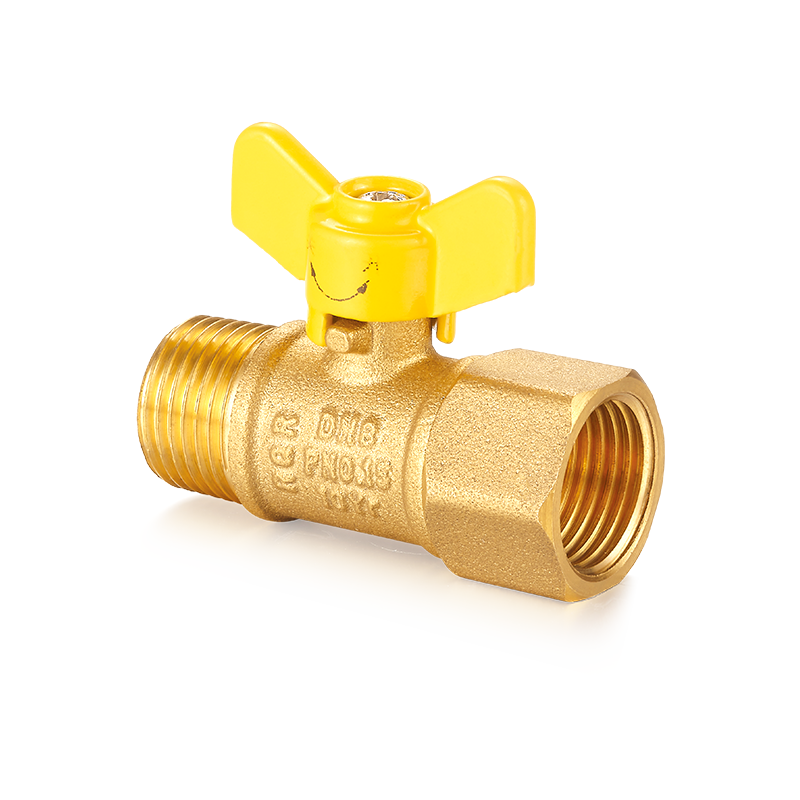
YH-205 Brass Ball Valve with Butterfly Handle(F/M)
Related News
Contact Us
-

-
 +86-0574-63742169
 -
 No.104-128, Cizhang East Road, Zhangqi Town, Cixi City, Ningbo, Zhejiang Province, China


Message Us Now !
