

 English
 русский
 عربى
 Español

Hose Connectors for Reliable Fluid Handling: Design, Manufacturing, and Application Guide
Content
- 1 What Is a Hose Connector?
- 2 Why Hose Connector Quality Matters
- 3 Design Features of an Effective Hose Connector
- 4 Material Selection for Hose Connectors
- 5 Manufacturing Process for Hose Connectors
- 6 Advantages of a Specialized Valve and Hardware Manufacturer
- 7 Hose Connectors Compared with Less Specialized Alternatives
- 8 Applications of Hose Connectors
- 9 How to Select the Correct Hose Connector
- 10 Installation and Maintenance Recommendations
- 11 Customization and OEM Support
- 12 Quality Assurance and Customer Confidence
- 13 Environmental and Operational Considerations
- 14 Why Choose a Reliable Supply Partner?
- 15 Frequently Asked Questions
- 15.1 What is the main purpose of a hose connector?
- 15.2 Are all hose connectors interchangeable?
- 15.3 Can a water hose connector be used for gas?
- 15.4 Why is brass commonly used for hose connectors?
- 15.5 When should stainless steel be selected?
- 15.6 Do barbed connectors require clamps?
- 15.7 What causes a hose connector to leak?
- 15.8 How does CNC machining improve hose connector quality?
- 15.9 Can hose connectors be customized?
- 15.10 What information should be supplied when requesting a quotation?
- 15.11 How should connectors be stored?
- 15.12 Why purchase hose connectors from a valve manufacturer?
- 16 Conclusion
- 17 References
- 18 Product: Hose Connector
Hose Connectors for Reliable Fluid Handling
Hose connectors are essential components in fluid-handling systems. They create a practical transition between flexible hoses, rigid pipes, valves, equipment, tanks, pumps, and other connection points. Although a hose connector is often a relatively small component, its design and manufacturing quality can have a major effect on system safety, sealing performance, maintenance requirements, and service life.
A well-designed hose connector must do more than join two parts. It must maintain a stable connection under pressure, accommodate the selected hose size, resist corrosion, tolerate repeated installation and removal, and remain compatible with the fluid being transferred. In many applications, it must also work alongside gas valves, water supply valves, brass ball valves, threaded globe valves, forged steel valves, regulators, filters, and other hardware accessories.
Ningbo Yunhua Valve Co., Ltd. develops and manufactures gas and fluid valves, water supply valves, and hardware accessories, including hose connector products. With a professional precision machining workshop, automated assembly lines, testing facilities, CNC equipment, and a substantial annual production capacity, the company is positioned to support both standard and customized fluid-control requirements.
This article explains the structure, materials, manufacturing process, quality considerations, application value, and purchasing criteria associated with hose connectors. It also examines how an experienced valve and hardware manufacturer can provide advantages over less specialized suppliers.
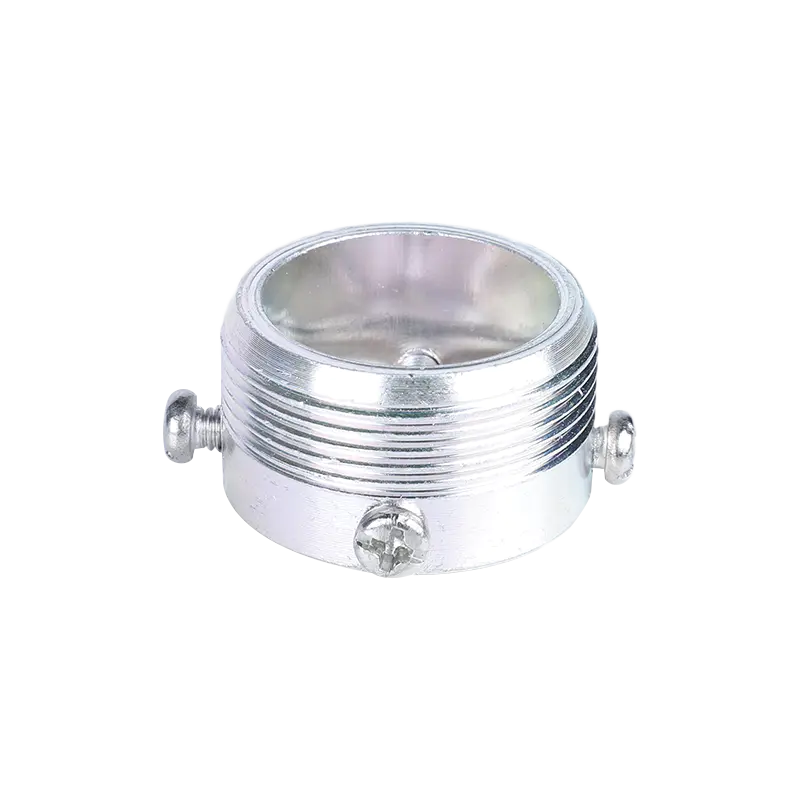
Hose Connector
What Is a Hose Connector?
A hose connector is a mechanical fitting used to connect a flexible hose to another hose, a pipe, a valve, an appliance, or a fluid-control device. Depending on its construction, the connector may use a threaded end, a barbed end, a compression structure, a quick-connect mechanism, a flange, or a combination of these connection methods.
The connector forms part of the complete fluid pathway. It must provide a secure mechanical joint while minimizing leakage, pressure loss, flow restriction, and installation difficulty. The correct connector is selected according to hose dimensions, connection type, working pressure, temperature, fluid characteristics, environmental conditions, and maintenance requirements.
Hose connectors are used in many areas, including domestic water systems, agricultural irrigation, industrial equipment, gas-related assemblies, plumbing installations, heating and cooling systems, pneumatic equipment, and general hardware applications. Their compact size makes them convenient, but their performance depends on precise dimensions and proper material selection.
Common hose connector configurations include:
Threaded hose connectors, which attach to internal or external pipe threads on valves, manifolds, appliances, or other fittings.
Barbed hose connectors, which use raised ridges to grip the inside of a flexible hose. A clamp is often used to improve retention and sealing.
Male-to-female adapters, which allow components with different thread genders to be connected.
Hose-to-hose connectors, which join two flexible hoses of the same or different nominal sizes.
Elbow connectors, which change the direction of a hose run and can help reduce bending stress.
Reducing connectors, which join hoses or fittings with different diameters.
Special-purpose connectors designed for gas, water, lubrication, drainage, chemical transfer, or equipment-specific applications.
Why Hose Connector Quality Matters
A hose connector may be installed in a system that operates continuously for many hours or under changing pressure conditions. A poorly made fitting can create problems that are difficult to identify at first. Small dimensional errors may result in an incomplete seal, while rough surfaces, damaged threads, or inconsistent barbs may cause gradual leakage.
Connector failure can have consequences beyond fluid loss. Water leakage may damage equipment or building materials. Gas leakage can create a serious safety hazard. In industrial equipment, a failed connector may interrupt production, contaminate a process, or cause unplanned maintenance. A connection that loosens under vibration can also place stress on nearby valves, hoses, and pipes.
High-quality hose connectors provide several important benefits:
They support consistent sealing when assembled according to the application requirements.
They reduce the risk of thread damage during installation.
They improve compatibility between hoses, valves, and other fittings.
They help maintain stable flow through the fluid system.
They resist corrosion and wear when the correct material and surface treatment are selected.
They reduce replacement frequency and maintenance costs.
They make production and installation more efficient through consistent dimensions.
These benefits are particularly important for suppliers serving multiple industries. A connector that performs adequately in a low-pressure water application may not be suitable for gas service or demanding industrial conditions. Therefore, product selection should always be based on the complete operating environment rather than on appearance or nominal size alone.
Design Features of an Effective Hose Connector
Connection Geometry
The geometry of a hose connector determines how it interfaces with the hose and the mating component. Thread pitch, thread diameter, sealing surface, barb profile, insertion depth, shoulder dimensions, and overall length must be controlled carefully.
For threaded designs, the threads must be formed accurately enough to engage smoothly without excessive looseness. The sealing method may rely on a gasket, an O-ring, a tapered thread, a flat seat, or another engineered sealing surface. The correct design depends on the connection standard and the service conditions.
For barbed designs, the barb profile must provide sufficient grip without cutting or excessively damaging the hose. A hose that is too soft, too thin, or chemically incompatible may not remain secure even when the connector is correctly manufactured. In many installations, a suitable clamp is needed to maintain retention and sealing performance.
Flow Passage
The internal passage affects pressure drop and flow efficiency. A connector with an unnecessarily narrow passage can restrict flow and increase turbulence. This may be especially important in water supply, irrigation, pumping, and equipment-cooling applications.
At the same time, the internal passage must be balanced with the external connection dimensions and structural strength. Increasing the internal diameter may reduce wall thickness, while increasing the outside diameter may affect installation space. A professional design process considers flow, pressure, material strength, machining requirements, and application conditions together.
Sealing Surfaces
Reliable sealing requires suitable contact surfaces and compatible sealing materials. Machined surfaces should be free from harmful burrs, deep scratches, deformation, and excessive roughness. The sealing area must be consistent across production batches.
Where a gasket or O-ring is used, the groove or seating area must be dimensionally controlled. An incorrectly sized groove can cause the seal to be compressed too much or too little. Both conditions may lead to leakage, premature wear, or installation difficulty.
Mechanical Strength
A hose connector must withstand the forces created by pressure, hose movement, vibration, thermal expansion, and installation torque. The material and wall thickness should be selected according to the expected load. Threaded portions require special attention because excessive tightening can damage the connector or the mating component.
For flexible hose systems, the connector should also be considered together with the hose bend radius and support arrangement. A connector cannot compensate for an installation that repeatedly bends or pulls the hose beyond its intended limits.
Compatibility with Valves and Hardware
In practical systems, hose connectors are rarely used alone. They may be installed with brass gas ball valves, water supply valves, threaded globe valves, forged steel valves, filters, pressure regulators, meters, pumps, and other components. Compatibility includes thread standard, nominal size, fluid service, temperature range, pressure rating, and sealing method.
A supplier with experience in valve manufacturing can understand these relationships more effectively than a supplier focused only on isolated fittings. Knowledge of valve bodies, machining tolerances, assembly processes, and testing requirements helps ensure that the connector functions as part of a complete system.
Material Selection for Hose Connectors
Material selection has a direct effect on strength, corrosion resistance, machinability, weight, cost, and fluid compatibility. No single material is ideal for every application. The choice should be made according to the medium, operating environment, required service life, and applicable standards.
Brass
Brass is widely used for fluid fittings because it combines good machinability, practical strength, corrosion resistance, and a relatively stable surface. Brass connectors are commonly found in water supply systems, plumbing assemblies, gas-related hardware, irrigation systems, and general-purpose equipment.
Brass is also suitable for precision machining. Its workability allows manufacturers to produce accurate threads, shoulders, seats, and internal passages efficiently. When produced with suitable raw materials and controlled processing, brass hose connectors can provide a strong balance between performance and cost.
For gas applications, the specific brass grade, design, sealing method, and applicable requirements must be confirmed before use. A product suitable for water may not automatically be approved for gas service.
Stainless Steel
Stainless steel may be selected for applications requiring stronger corrosion resistance, higher mechanical strength, or improved performance in demanding environments. It can be suitable for industrial equipment, outdoor installations, food-related systems, chemical service, and areas exposed to moisture or aggressive atmospheres.
Stainless steel usually requires careful machining because it can generate more cutting heat and work hardening than some copper alloys. Proper tooling, processing parameters, and inspection are important for maintaining thread quality and dimensional accuracy.
Carbon Steel and Forged Steel
Steel-based materials may be selected where strength and pressure resistance are key priorities. Forged steel valves and associated fittings are commonly considered for demanding industrial conditions. A forged component can offer a dense material structure and reliable mechanical performance when produced and inspected correctly.
Steel connectors generally require suitable surface protection when corrosion exposure is expected. Coating, plating, painting, or other treatments may be selected according to the application and environmental conditions.
Engineering Plastics
Engineering plastics can be useful where low weight, electrical insulation, chemical resistance, or cost control is important. Plastic hose connectors are often used in irrigation, drainage, low-pressure water systems, and selected equipment applications.
However, plastic performance is strongly affected by temperature, ultraviolet exposure, chemical compatibility, and mechanical loading. Plastic connectors should not be used outside their rated conditions simply because they are visually similar to metal fittings.
Manufacturing Process for Hose Connectors
The manufacturing process directly influences the reliability and consistency of a hose connector. A professional production system begins with material control and continues through machining, cleaning, assembly, inspection, testing, packaging, and traceability.
Engineering and Product Development
The process begins with product specifications, application requirements, drawings, and technical review. Important parameters may include nominal size, thread type, hose compatibility, pressure range, temperature range, material grade, surface treatment, sealing design, and packaging requirements.
During development, the design should be reviewed for manufacturability. A component may appear functional in a drawing but create difficulties during machining or assembly if it includes inaccessible surfaces, weak wall sections, unnecessary complexity, or unclear tolerances. Design-for-manufacturing principles help improve consistency and reduce avoidable production costs.
Raw Material Control
Raw material quality affects the final product. Materials should be selected according to the approved specification and checked for dimensions, surface condition, composition, and other relevant characteristics. Reliable material control helps prevent problems such as porosity, cracking, inconsistent hardness, poor machinability, and corrosion performance below expectations.
For a manufacturer producing both valves and hardware accessories, material management is particularly important because different products may require different alloys, dimensions, and processing routes. Organized storage and identification reduce the risk of material mixing.
CNC Precision Machining
CNC machine tools are used to produce accurate external profiles, internal passages, threads, sealing seats, grooves, and other features. Automated or semi-automated machining improves repeatability and allows production parameters to be documented and controlled.
Precision machining is especially valuable for hose connectors because small deviations can affect thread engagement, sealing, insertion force, and flow. A professional CNC process may include turning, drilling, tapping, threading, milling, deburring, and other operations depending on the product design.
Machining parameters must be selected according to the material. Brass, stainless steel, carbon steel, and engineering plastics behave differently during cutting. Tool selection, feed rate, spindle speed, coolant use, and tool-life monitoring all contribute to surface quality and dimensional stability.
Deburring and Surface Preparation
After machining, sharp edges and burrs must be removed. Burrs inside a fluid passage can disturb flow, damage seals, or become loose particles in the system. Burrs around threads can interfere with assembly and cause cross-threading.
Surface preparation may include cleaning, polishing, passivation, plating, coating, or other treatments, depending on the material and product specification. The objective is not only visual quality. A clean and properly finished surface can improve corrosion resistance, sealing reliability, handling safety, and customer installation efficiency.
Automated Assembly
Where a connector includes seals, washers, inserts, clamps, or other components, assembly must be performed consistently. Automated assembly equipment can help control component orientation, insertion depth, tightening force, and production speed.
Automation is particularly useful for large-volume production because it reduces variation caused by manual operations. However, automation must be supported by suitable fixtures, sensors, process instructions, and inspection procedures. Automation alone does not guarantee quality unless the process is properly designed and monitored.
Testing and Inspection
Testing verifies that the finished connector meets the required functional criteria. Depending on the product and application, testing may include dimensional inspection, thread gauging, visual inspection, pressure testing, leakage testing, torque testing, material verification, and surface inspection.
Pressure and leakage tests are especially important for fluid connectors. The test method, test pressure, holding time, and acceptance criteria should be defined according to the product specification and intended service. Test results should be recorded when traceability or customer documentation is required.
The company’s professional testing workshop supports the inspection of valves and hardware accessories. This capability is important because hose connectors often operate as part of a valve assembly or fluid-control system rather than as independent components.
Advantages of a Specialized Valve and Hardware Manufacturer
Purchasing hose connectors from a company that also manufactures valves can provide several practical advantages. The supplier is more likely to understand how fittings interact with valve bodies, pipework, flexible hoses, pressure-control devices, and fluid-system requirements.
Integrated Product Knowledge
A specialized manufacturer can evaluate a connector from both a component perspective and a system perspective. This may help identify unsuitable thread combinations, incompatible materials, insufficient flow passages, or sealing arrangements that do not match the connected valve.
For example, a connector used with a brass gas ball valve may require different material and sealing considerations from one used in a low-pressure garden irrigation system. Experience with gas and fluid valves helps the manufacturer recognize these distinctions during product development and technical communication.
Precision Equipment
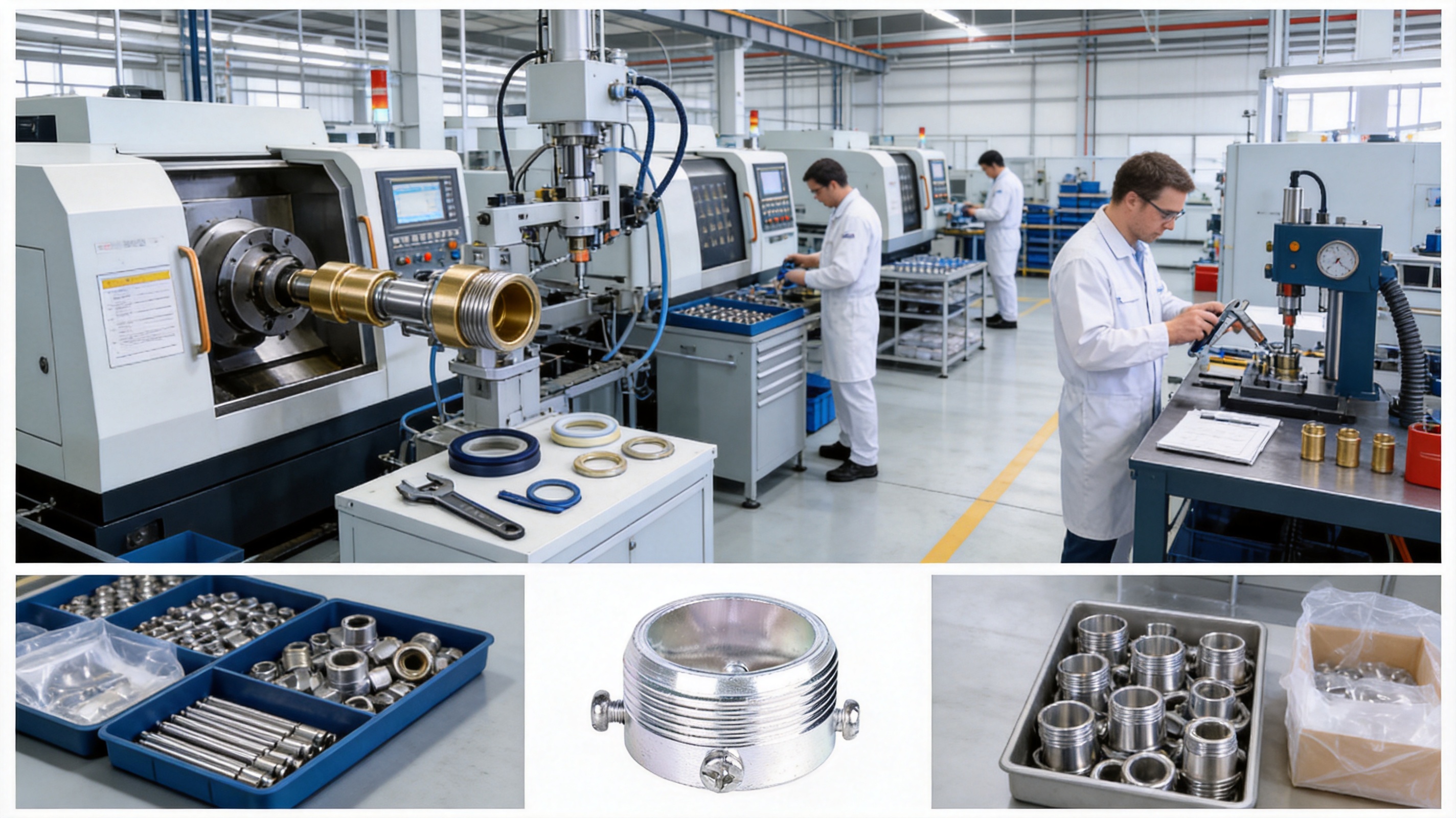
The company operates a professional precision machining workshop equipped with advanced domestic and international CNC machine tools. This equipment supports the production of repeatable and accurately machined components.
Precision equipment is valuable for maintaining consistent thread dimensions, connector profiles, internal passages, and sealing surfaces. Consistency is important for customers who install large quantities of fittings or combine connectors with components from multiple production batches.
Automated Production Capacity
The company has established automated assembly and testing facilities. Automation can improve production efficiency, reduce process variation, and support stable delivery for recurring orders. It is also useful for customers who require consistent products across large projects or distribution channels.
The stated annual production capacity includes approximately 2 million sets of valves and 10 million sets of hardware accessories. This capacity indicates that the company has developed production systems capable of supporting both valve products and high-volume accessory requirements.
Complete Manufacturing Support
The company provides research and development, production, sales, and service. This integrated structure can simplify communication for customers seeking multiple related products. Instead of coordinating separate suppliers for connectors, valves, and other hardware, customers may be able to consolidate sourcing through one experienced manufacturer.
Centralized sourcing may help reduce administrative workload, simplify quality coordination, and improve compatibility between related products. It can also make it easier to discuss custom dimensions, packaging, surface treatments, labeling, and delivery schedules.
Quality-Oriented Corporate Development
The company has spent more than ten years developing its management system, professional team, and production infrastructure. Long-term investment in facilities and process organization can support more stable manufacturing than short-term trading operations that rely entirely on external sources.
A manufacturer with its own machining, assembly, and testing resources can respond more directly to technical questions and production issues. This is valuable when a customer requires a drawing adjustment, a special thread, a modified hose end, or a product intended for a specific equipment assembly.
Hose Connectors Compared with Less Specialized Alternatives
Not all hose connector suppliers offer the same level of technical control. Some companies primarily resell general-purpose fittings purchased from different factories. This model may provide a wide catalog, but it can make product consistency, material traceability, and technical support more difficult to control.
A specialized manufacturer offers potential advantages in several areas:
| Evaluation Area | Specialized Manufacturer | Less Specialized Supply Source |
|---|---|---|
| Product development | Can design or modify products using in-house engineering and manufacturing knowledge. | May depend on existing catalog items or external factories. |
| Dimensional consistency | Supported by controlled CNC machining, fixtures, gauges, and process inspection. | May vary between factories, batches, or undisclosed sources. |
| Valve compatibility | Experience with valves, fittings, seals, and fluid-control assemblies. | May focus mainly on product appearance and nominal size. |
| Customization | Can review material, thread, size, surface, packaging, and assembly requirements. | Customization may be limited or require another supplier. |
| Testing | Access to professional testing facilities for leakage, pressure, and dimensional checks. | Testing arrangements may be less transparent or inconsistent. |
| Production capacity | Established machining and automated assembly systems for repeat orders. | Delivery may depend on external inventory or subcontractors. |
| Technical communication | Can discuss product design, process limits, and application compatibility. | May provide only basic catalog information. |
This comparison does not mean that every trading company is unsuitable or that every manufacturer provides identical performance. Customers should verify claims through drawings, samples, inspection reports, test records, and production audits where appropriate. However, direct manufacturing capability is generally a strong basis for stable quality and technical cooperation.
Applications of Hose Connectors
Water Supply Systems
Hose connectors are used in water supply assemblies for residential, commercial, agricultural, and industrial purposes. They may connect flexible supply hoses to taps, valves, filters, pumps, water meters, tanks, and appliances.
Water applications require attention to corrosion resistance, sealing reliability, potable-water suitability where relevant, and compatibility with the selected hose. Brass connectors are widely used in general water systems, while plastic or stainless-steel options may be selected for specific conditions.
Irrigation and Agricultural Equipment
Irrigation systems often require many connectors, adapters, elbows, reducers, and valves. The fittings may be exposed to outdoor moisture, soil, fertilizer residues, ultraviolet radiation, and repeated seasonal assembly.
For these systems, easy installation and replacement are important. Connector dimensions should remain consistent so that hoses and accessories can be assembled without excessive force. A suitable design can also reduce leakage at field connections and improve the efficiency of maintenance work.
Gas-Related Assemblies
Gas systems require especially careful product selection. A connector used with a gas valve must be made from suitable materials and designed for the applicable gas, pressure, temperature, connection standard, and safety requirements.
Brass gas ball valves and related connectors are common in selected gas-control assemblies, but the connector must be approved or specified for the intended service. Users should never assume that a general water fitting is suitable for gas merely because the thread appears to match.
Industrial Equipment
Industrial machinery may use hose connectors for cooling water, compressed air, lubrication, hydraulic fluids, drainage, cleaning systems, and process fluids. These environments can involve vibration, temperature changes, chemical exposure, and continuous operation.
Industrial buyers should consider pressure drop, mechanical loading, maintenance access, fluid compatibility, and replacement availability. Where equipment downtime is expensive, durable connectors and consistent spare parts can provide significant operational value.
Plumbing and Building Services
In plumbing and building-service installations, hose connectors may be installed behind equipment, under sinks, near boilers, at water heaters, or within service cabinets. Compact dimensions, reliable sealing, and resistance to accidental movement are important in these locations.
Connectors should be installed with adequate access for inspection and replacement. Where vibration or movement is expected, the hose should be supported so that the connector is not used as the sole structural support.
How to Select the Correct Hose Connector
Correct selection begins with a complete understanding of the application. The following questions should be answered before ordering:
What fluid will pass through the connector?
What are the normal and maximum operating pressures?
What temperatures will the connector experience?
What is the inside diameter and outside diameter of the hose?
What thread standard and nominal size are required?
Is the connection threaded, barbed, compression-based, quick-connect, or a combination?
Is the application exposed to water, salt, chemicals, soil, ultraviolet radiation, or industrial contamination?
Will the connector experience vibration, movement, impact, or repeated disassembly?
Is a gasket, O-ring, thread sealant, or hose clamp required?
Are there industry, project, or regulatory requirements that must be satisfied?
The answers should be communicated clearly to the supplier. A drawing or sample can be especially useful when the product must match an existing valve, appliance, or hose assembly.
Pressure and Temperature
Pressure ratings must be considered together with temperature. Some materials lose strength as temperature increases. Sealing materials may also harden, soften, swell, or degrade depending on the operating temperature and fluid.
Users should distinguish between working pressure, test pressure, and burst pressure. A product should be operated within its specified working conditions, not at its test or theoretical maximum value.
Thread Standards
Thread appearance alone is not sufficient for identification. Threads may differ in diameter, pitch, angle, taper, and sealing method. Common standards may include metric, pipe, national, or other regional systems.
Attempting to force mismatched threads together can damage both components and create an unsafe connection. Buyers should provide accurate thread information or request supplier confirmation before placing an order.
Hose Compatibility
The hose material, hardness, wall thickness, reinforcement, and internal diameter affect connector performance. A barb designed for one hose type may not work correctly with another. The insertion force should be practical, while the final grip must be strong enough for the application.
Hose clamps should be selected according to the hose and connector design. Over-tightening can damage the hose, while under-tightening may permit leakage or pull-off.
Installation Space
Available space can determine whether a straight connector, elbow, swivel fitting, or compact adapter is most suitable. A connector that is technically compatible may still be difficult to install if there is insufficient room for tools or hose bending.
Designers should also consider future maintenance. A connection that cannot be accessed easily may increase labor costs and extend equipment downtime.
Installation and Maintenance Recommendations
Even a high-quality hose connector can fail if it is installed incorrectly. Installation should follow the product instructions and the requirements of the complete system.
Inspect the connector, hose, threads, seals, and mating components before assembly. Do not use parts with visible cracks, damaged threads, deep scratches, contamination, or deformation.
Confirm that the connector and hose are correctly matched. For barbed connectors, push the hose fully over the barb to the intended insertion point. Use a suitable clamp where required. The clamp should be positioned correctly and tightened evenly without cutting into the hose.
For threaded connections, align the components carefully to prevent cross-threading. Use the specified sealing method. Thread sealant should not be applied in a way that contaminates the internal passage or interferes with the valve mechanism.
Do not use excessive torque. Over-tightening may crack a fitting, distort a seal, damage a valve body, or make later maintenance difficult. If a connection continues to leak after correct assembly, the issue should be investigated rather than solved by unlimited tightening.
After installation, perform a suitable leakage and operational check. The system should be pressurized gradually when possible. Connections should be inspected for movement, seepage, unusual noise, or pressure loss.
Routine maintenance may include visual inspection, checking for corrosion, confirming clamp condition, examining hose wear, and testing the system after modifications. In gas applications, inspection and testing should follow the relevant safety procedures and regulations.
Customization and OEM Support
Different equipment manufacturers may require hose connectors with special dimensions or combinations of connection types. Custom requirements can include a non-standard length, a modified thread, a particular hose barb, a special internal passage, a reduced or enlarged outlet, a surface finish, a logo or marking, or a customer-specific package.
Customization should begin with clear technical information. Useful documents include drawings, three-dimensional models, samples, material requirements, pressure data, testing requirements, annual demand, and packaging instructions.
A manufacturer with CNC machining and automated production capability can often evaluate whether a requested modification is practical. The supplier may recommend changes that improve strength, simplify machining, reduce material waste, or improve assembly efficiency while preserving the required function.
For OEM projects, consistency is as important as the initial sample. Production approval should be supported by documented specifications, inspection plans, approved materials, and change-control procedures. If the product is used in a larger valve or equipment assembly, the connector should be tested as part of that assembly whenever possible.
Quality Assurance and Customer Confidence
Quality assurance is a continuous process rather than a final visual inspection. It includes design review, supplier management, raw material control, equipment maintenance, production monitoring, inspection, testing, packaging, and customer feedback.
A professional quality system should define which characteristics are critical to function. For hose connectors, these may include thread dimensions, sealing surfaces, internal passage, barb profile, wall thickness, material, surface condition, and leakage performance.
Production records and inspection data help identify trends. For example, a gradual change in thread dimensions may indicate tool wear. A rise in leakage failures may indicate a machining, cleaning, assembly, or sealing problem. Early detection allows corrective action before a large quantity is affected.
Packaging is also part of quality assurance. Connectors should be protected from impact, contamination, moisture, and mixing during storage and transport. Correct labeling helps customers identify size, material, batch, quantity, and other relevant information.
Ningbo Yunhua Valve Co., Ltd. combines machining, assembly, and testing resources within a broader valve and hardware manufacturing operation. This integrated structure supports a practical quality approach in which product design, manufacturing, and application requirements can be evaluated together.
Environmental and Operational Considerations
Manufacturing efficiency has both economic and environmental importance. CNC production, automated assembly, and organized process control can reduce material waste, rework, and unnecessary energy consumption. Longer-lasting connectors also reduce the need for frequent replacement and disposal.
Material selection should consider the complete life cycle of the product. A lower-cost material may not be economical if it corrodes quickly or requires frequent replacement. Conversely, a higher-performance material may be unnecessary for a simple low-pressure application. Good engineering balances durability, safety, cost, and resource use.
Customers can support responsible operation by selecting the correct connector for the application, avoiding over-specification, maintaining systems properly, and replacing only components that have reached the end of their useful life. Proper installation also reduces leakage and prevents wasted water, gas, or process fluid.
Why Choose a Reliable Supply Partner?
Hose connectors are often purchased in large quantities and used in products that must operate reliably for years. For this reason, the supplier relationship can be as important as the individual component.
A reliable supply partner should be able to provide clear specifications, consistent products, responsive communication, reasonable production lead times, and appropriate technical support. The supplier should understand that customers may need more than a simple fitting. They may need help with thread identification, material selection, product matching, testing, packaging, or system integration.
Ningbo Yunhua Valve Co., Ltd. has developed its business around gas and fluid valves, water supply valves, and hardware accessories. Its facilities cover approximately 20,000 square meters and include precision machining, assembly, and testing workshops. The company’s production capacity and equipment support both regular products and potential customized requirements.
Its long-term objective is to contribute to safer fluid-control systems through high-quality valves and related products. For customers purchasing hose connectors, this broader fluid-control experience can provide useful assurance that the product is being considered within its intended application rather than as an isolated commodity.
Frequently Asked Questions
What is the main purpose of a hose connector?
A hose connector joins a flexible hose to another hose, pipe, valve, appliance, pump, tank, or equipment connection. It provides a mechanical transition and, when correctly selected and installed, creates a reliable fluid seal.
Are all hose connectors interchangeable?
No. Connectors differ in size, thread standard, connection style, material, pressure rating, temperature rating, and sealing method. A connector should be matched to the hose and mating component rather than selected only by visual similarity.
Can a water hose connector be used for gas?
Not automatically. Gas service requires a connector specifically designed, rated, and approved for the intended gas and operating conditions. Material, sealing method, pressure, and applicable safety requirements must all be confirmed.
Why is brass commonly used for hose connectors?
Brass offers a useful combination of machinability, strength, corrosion resistance, and dimensional stability. It is suitable for many water, plumbing, gas-related, and general hardware applications, provided that the specific alloy and product design meet the service requirements.
When should stainless steel be selected?
Stainless steel may be selected when higher corrosion resistance, greater strength, or improved performance in demanding environments is needed. The correct grade should be chosen according to the fluid and environmental conditions.
Do barbed connectors require clamps?
Many barbed hose connections require a clamp, especially when pressure, vibration, movement, or safety considerations are involved. The need depends on the connector design, hose material, operating conditions, and applicable requirements.
What causes a hose connector to leak?
Common causes include incorrect size, mismatched threads, damaged sealing surfaces, insufficient hose insertion, improper clamp placement, excessive tightening, contaminated threads, unsuitable seal material, vibration, and pressure or temperature outside the design range.
How does CNC machining improve hose connector quality?
CNC machining provides controlled and repeatable production of threads, internal passages, sealing seats, grooves, and external profiles. When supported by inspection and proper tool management, it helps reduce dimensional variation between parts.
Can hose connectors be customized?
Yes. Depending on the manufacturer’s capabilities, connectors may be customized in size, length, thread, barb profile, material, surface treatment, internal passage, marking, packaging, or assembly configuration. Technical drawings and application information are recommended for evaluation.
What information should be supplied when requesting a quotation?
Useful information includes product drawings or samples, hose dimensions, connection type, thread standard, material, fluid, pressure, temperature, quantity, testing requirements, surface treatment, packaging, and delivery expectations.
How should connectors be stored?
Connectors should be stored in a clean, dry location and protected from impact, contamination, excessive humidity, and corrosive materials. Seals and plastic components may require additional protection from heat, ultraviolet exposure, and chemicals.
Why purchase hose connectors from a valve manufacturer?
A valve manufacturer typically understands fluid pathways, pressure control, sealing systems, machining tolerances, and component compatibility. This experience can support better product matching and more effective technical communication, particularly when connectors are used with valves or complete fluid-control assemblies.
Conclusion
Hose connectors are small but essential components in water, gas, industrial, agricultural, plumbing, and equipment applications. Their performance depends on accurate design, suitable material selection, precise machining, reliable assembly, effective testing, and correct installation.
The key advantages of a professionally manufactured connector include dependable sealing, consistent dimensions, strong mechanical performance, compatible materials, efficient installation, and stable long-term supply. These benefits become even more valuable when the connector is used alongside valves and other fluid-control hardware.
Ningbo Yunhua Valve Co., Ltd. combines experience in gas and fluid valves, water supply valves, and hardware accessories with precision machining, automated assembly, professional testing, and substantial production capacity. Its integrated manufacturing resources provide a foundation for standard hose connector supply, customized development, and coordinated valve-and-fitting projects.
When selecting a hose connector, buyers should evaluate the complete application rather than focusing only on price or appearance. Fluid type, pressure, temperature, hose compatibility, thread standard, environmental exposure, installation method, testing, and future maintenance should all be considered. With the right product and a capable manufacturing partner, hose connections can contribute to safer, more efficient, and more durable fluid-control systems.
References
American Society of Mechanical Engineers. Piping and pressure equipment design principles.
International Organization for Standardization. General principles for industrial quality management and conformity assessment.
International Organization for Standardization. Pipe threads and mechanical connection terminology.
American Society for Testing and Materials. Standard practices for metallic material testing and dimensional inspection.
Industrial valve engineering references covering fluid control, sealing systems, pressure testing, and valve manufacturing.
Manufacturer technical information regarding hose connectors, water supply valves, gas valves, forged steel valves, brass fittings, CNC machining, automated assembly, and product testing.
Product: Hose Connector

Related Products
-
 View More
-
 View More
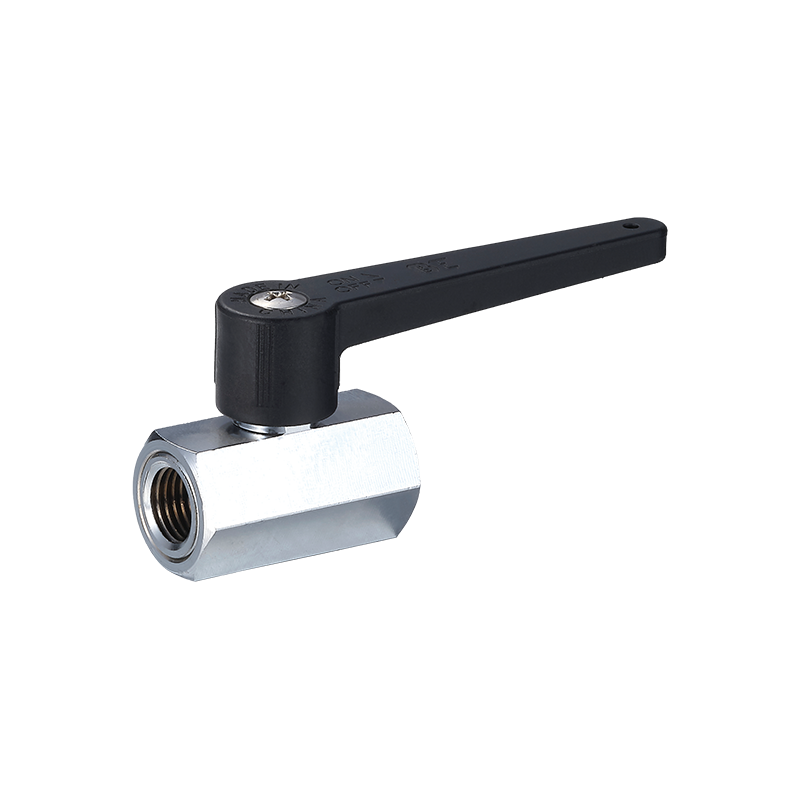
MINI-1 Mini Long Handle Ball Valve(F/F)
-
 View More
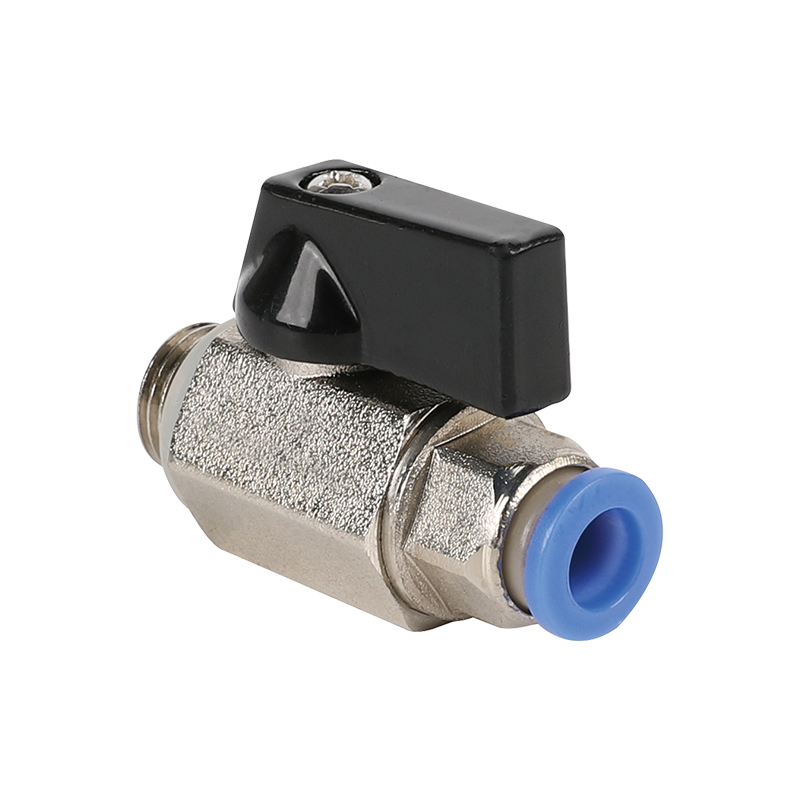
MINI-2 Mini Short-Handle Ball Valve(M/M)
-
 View More
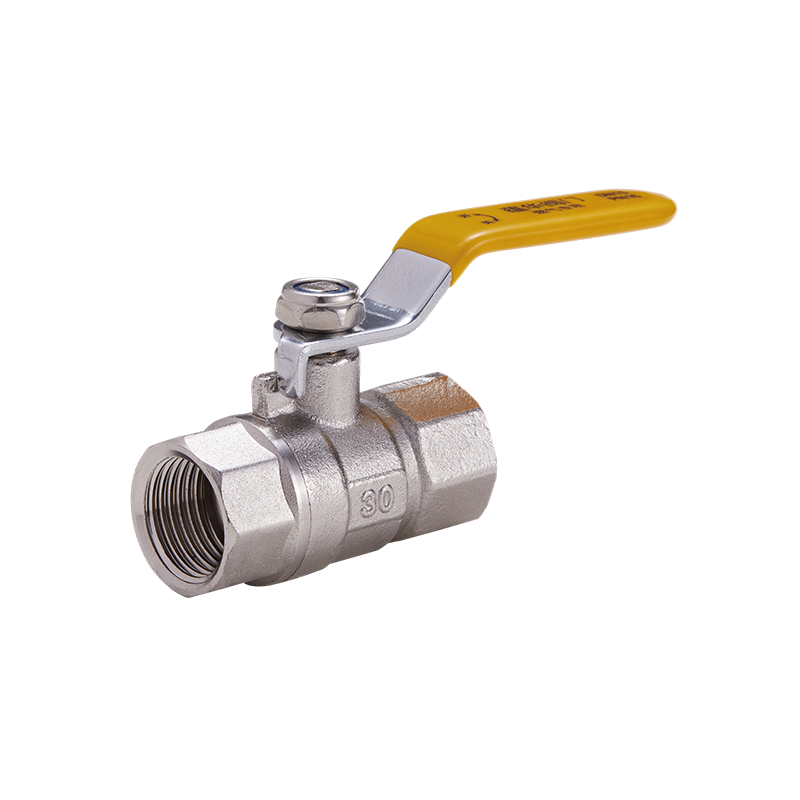
YH-2210 Forged Steel Ball Valve with Long Handle (F/F)
-
 View More
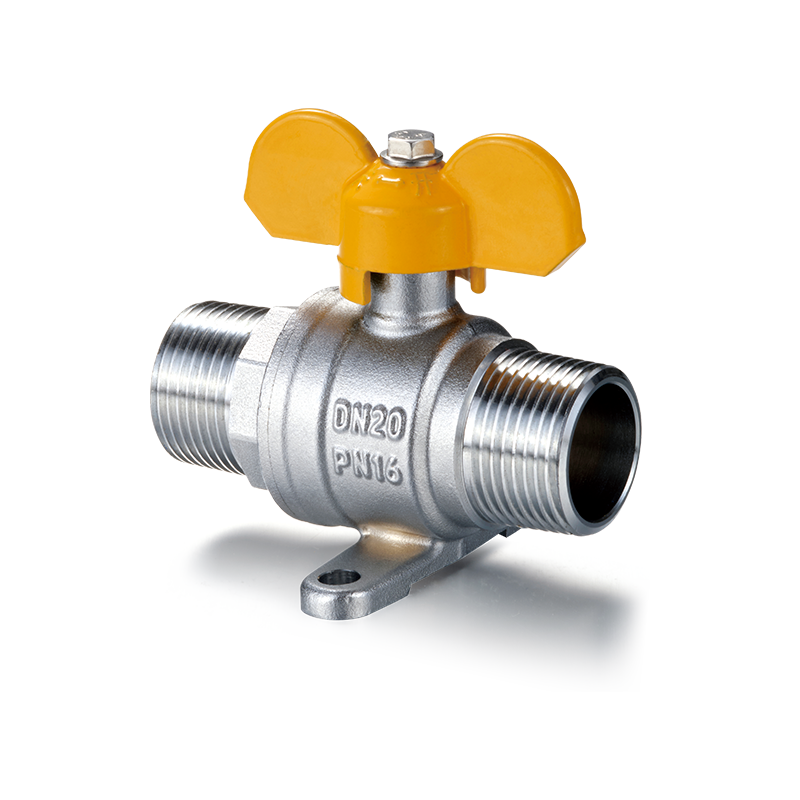
YH-214 Brass Ball Valve with Base& Butterfly Handle(M/M)
-
 View More
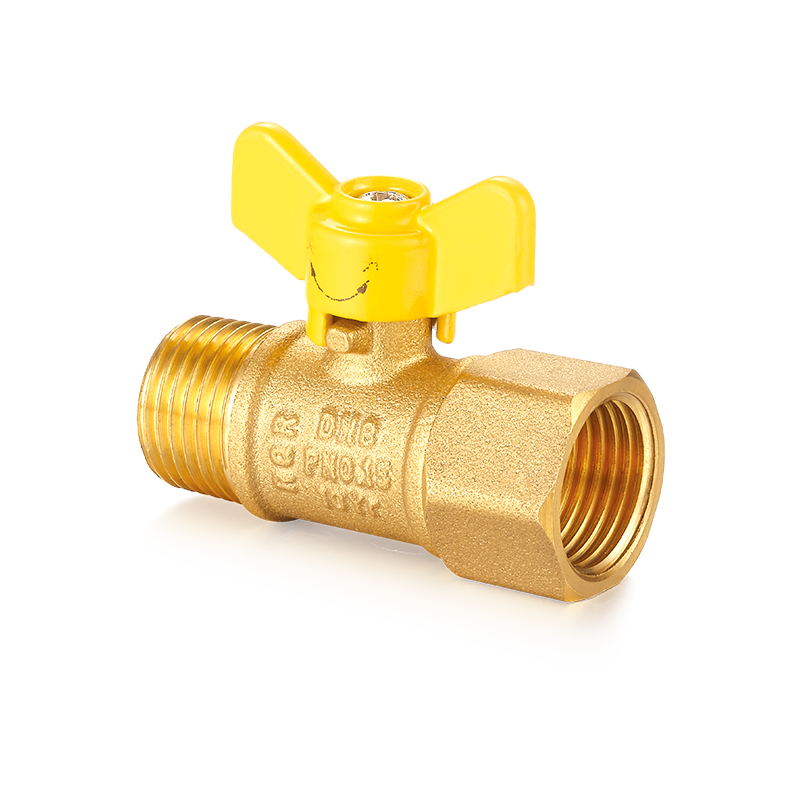
YH-205 Brass Ball Valve with Butterfly Handle(F/M)
Related News
Contact Us
-

-
 +86-0574-63742169
-
 No.104-128, Cizhang East Road, Zhangqi Town, Cixi City, Ningbo, Zhejiang Province, China


Message Us Now !
