


 English
  русский
  عربى
عربى  Español
Brass Ball Valve with Base and Butterfly Handle for Compact Fluid Control
Content
- 1 Product Overview
- 2 Key Technical Characteristics
- 3 One-Piece Forged Body for Higher Strength
- 4 Ultra-Compact Design for Confined Spaces
- 5 Bi-Directional Sealing for Flexible Installation
- 6 Low-Resistance Flow Path for Efficient Operation
- 7 Butterfly Handle for Practical Manual Control
- 8 Base-Mounted Structure for Installation Stability
- 9 Male-to-Male Threaded Connection
- 10 Application Scenario: Cabinet Gas and Water Pipeline Control
- 11 Application Scenario: Wall-Mounted Heater and Boiler Interfaces
- 12 Application Scenario: Laboratory Precision Pipelines
- 13 Application Scenario: Small Equipment Cooling Systems
- 14 Advantages Over Ordinary Competing Valves
- 15 Material Benefits of Brass in Valve Construction
- 16 Manufacturing Strength Behind the Product
- 17 Precision Machining and Dimensional Control
- 18 Automated Assembly for Consistency
- 19 Testing and Quality Verification
- 20 Production Capacity and Supply Reliability
- 21 Quality Culture and Continuous Improvement
- 22 Installation Considerations
- 23 Maintenance and Service Life
- 24 Buyer Value for Distributors and OEM Customers
- 25 Why This Valve Supports Safer Fluid Control
- 26 Frequently Asked Questions
- 26.1 What is the main purpose of the YH-214 brass ball valve?
- 26.2 What makes the one-piece forged body important?
- 26.3 Why is the compact design valuable?
- 26.4 Can the valve be installed in either flow direction?
- 26.5 What media can the valve handle?
- 26.6 What is the working temperature range?
- 26.7 What thread standard does the valve use?
- 26.8 What sizes are available?
- 26.9 Why is the butterfly handle useful?
- 26.10 How does the base improve installation?
- 26.11 How does the valve reduce flow loss?
- 26.12 What manufacturing strengths support the product?
- 27 Conclusion
- 28 References
- 29 Product: YH-214 Brass Ball Valve with Base& Butterfly Handle(M/M)
Modern fluid control systems require valves that are compact, strong, easy to install, and stable under repeated operation. In applications such as cabinet water lines, gas control points, boiler interface connections, laboratory pipelines, and small equipment cooling circuits, the choice of valve directly affects safety, convenience, service life, and system efficiency. The YH-214 brass ball valve with base and butterfly handle is designed for these exact requirements, combining a one-piece forged brass body, a space-saving structure, bi-directional sealing, and a low-resistance flow path in a practical male-to-male threaded configuration.
This article presents a detailed product-focused overview of the YH-214 brass ball valve with base and butterfly handle, including its structural advantages, technical specifications, installation benefits, application scenarios, and competitive strengths. It also explains how advanced manufacturing processes, automated machining, assembly, and testing support consistent valve quality. The product is especially suitable for buyers, distributors, engineering contractors, and equipment manufacturers who need a compact brass valve for reliable control of water, non-corrosive fluids, and gas within standard operating conditions.
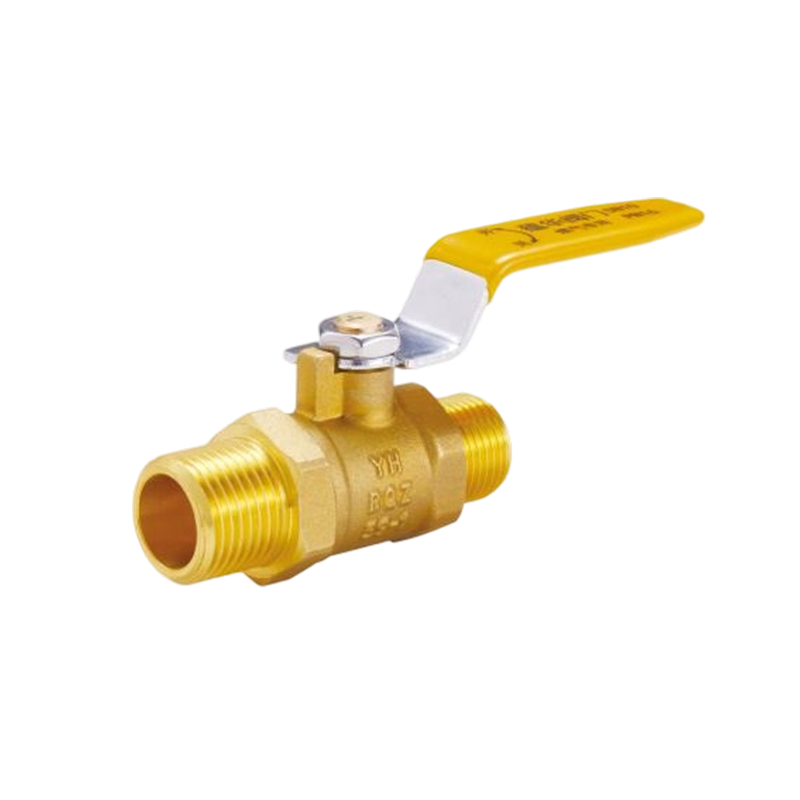
YH-214 Brass Ball Valve with Base& Butterfly Handle(M/M)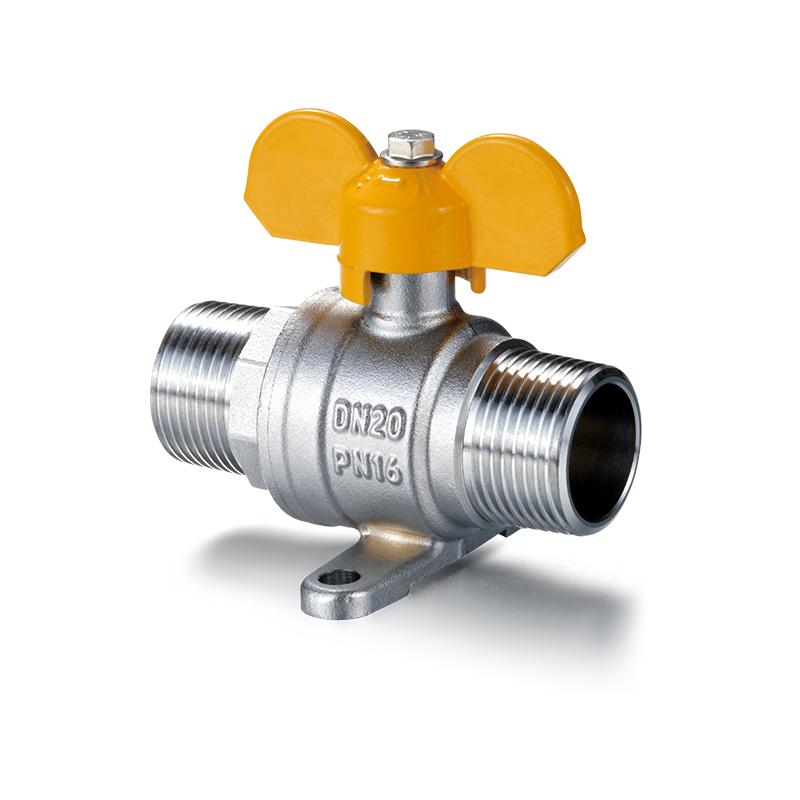
Product Overview
The YH-214 is a brass ball valve with a fixed base and butterfly handle. It is built for compact installations where stability, accessibility, and reliable shut-off performance are essential. The male-to-male threaded design supports direct connection into piping systems, while the base provides an additional mounting advantage for applications that require the valve to remain secure against vibration, torque, or movement during operation.
Unlike ordinary straight valves that may occupy more installation length and require extra clearance around the handle, this valve uses an ultra-compact arrangement that reduces overall volume by approximately 30% compared with conventional straight valve designs. This reduction is particularly valuable in cabinets, wall-mounted equipment, compact mechanical rooms, laboratory benches, and appliance interfaces where every millimeter matters.
The butterfly handle is another practical feature. It offers easy manual operation in limited spaces and reduces the chance of accidental interference compared with longer lever handles. For installers and end users, the handle provides quick visual confirmation of valve position while remaining convenient to grip and rotate.
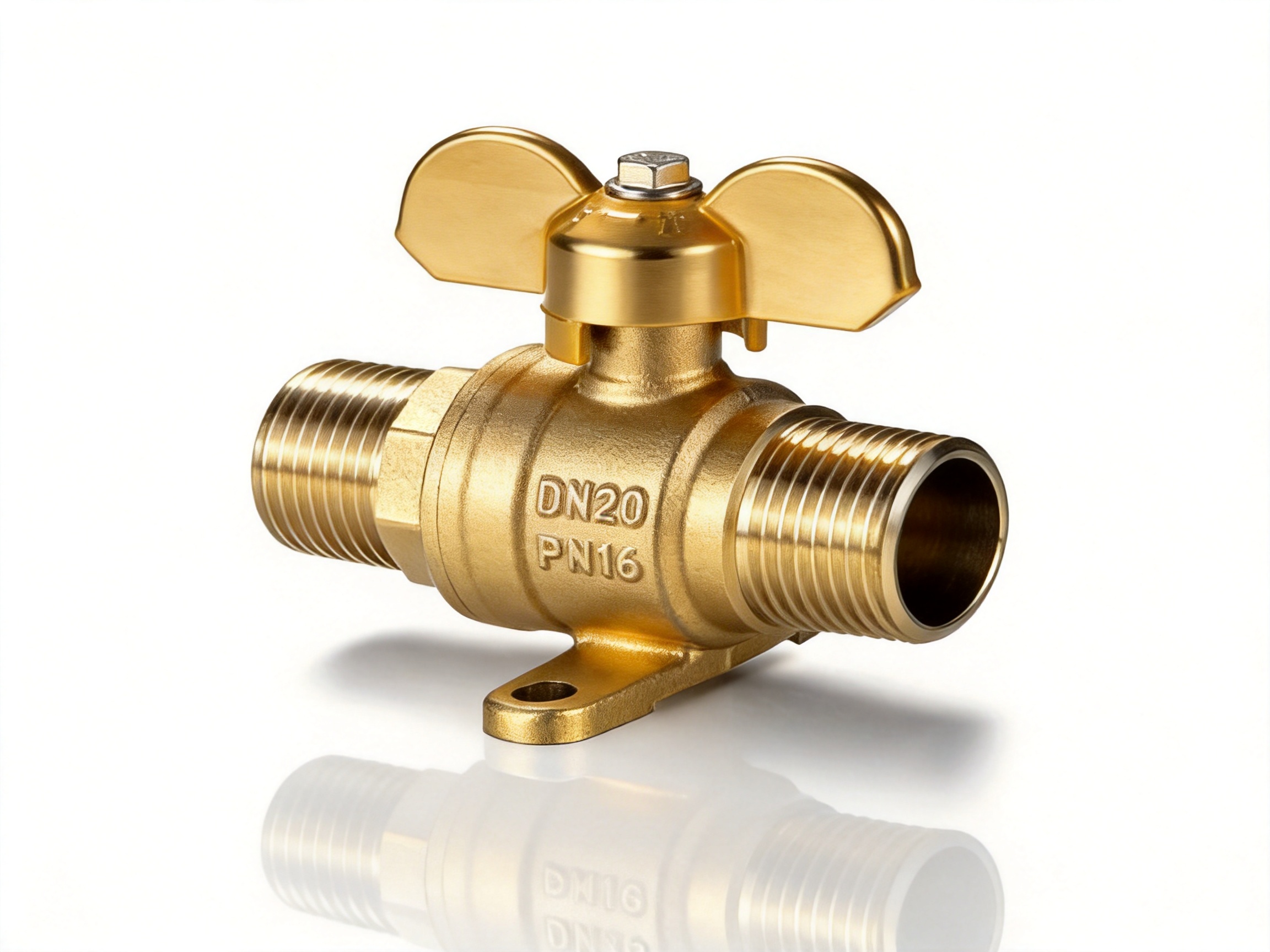
At its core, the valve uses a one-piece forged body. Integral forging eliminates welded joints and helps improve pressure resistance, dimensional consistency, and structural integrity. According to the product’s stated advantages, this forged construction increases burst pressure resistance by 40% compared with weaker multi-piece or welded alternatives. In fluid control products, fewer structural weak points mean a lower risk of cracking, leakage, or premature failure.
Key Technical Characteristics
The YH-214 brass ball valve is specified for nominal pressure 1.6, working media including water, non-corrosive fluids, and gas, and working temperature from above -20°C to below 80°C. It uses parallel pipe thread in accordance with ISO 228, supporting compatibility with common threaded piping systems used in many fluid and gas distribution installations.
The valve is available in DN15 and DN20 sizes. DN15 is suitable for smaller household, laboratory, appliance, and control-line applications, while DN20 provides higher flow capacity for slightly larger branch pipelines or equipment connections. Both versions preserve the compact form factor and the operational advantages of the butterfly handle and base-mounted design.
| Specification | L | A | D | Recommended Use |
| DN15 | 58.5 | R1/2 | 12 | Compact cabinet lines, small equipment interfaces, laboratory pipelines |
| DN20 | 73.5 | R3/4 | 18 | Boiler interfaces, larger branch lines, water or gas control points |
The compact dimensions shown above demonstrate why the valve is useful for narrow installations. A smaller valve envelope reduces conflict with surrounding equipment, pipe bends, wall panels, covers, or control boxes. The design also helps simplify piping layout because the valve does not impose a strict flow direction requirement.
One-Piece Forged Body for Higher Strength
One of the most important advantages of the YH-214 is its one-piece forged brass body. Forging is a pressure-forming process that compresses heated brass material into a controlled shape, improving grain structure and mechanical density. Compared with casting or welded assembly, forging can produce stronger and more reliable valve bodies when properly controlled.
In a welded valve body, the weld zone can become a structural weak point if the welding process, material preparation, heat control, or inspection is not carefully managed. Even when welds are acceptable at the time of manufacture, repeated thermal cycling, vibration, or pressure fluctuation can increase long-term stress at joints. The one-piece forged structure of the YH-214 avoids this problem by eliminating welds from the main pressure-bearing body.
The result is a stronger body with improved resistance to cracking and deformation. The product’s stated 40% higher burst pressure resistance is a major competitive advantage, especially for systems where safety margins are important. Although the valve is designed for normal working conditions, stronger construction provides extra confidence during pressure fluctuations, installation stress, and long-term service.
For buyers comparing different brass ball valves, the difference between an ordinary assembled body and an integral forged body should not be underestimated. A ball valve may look simple from the outside, but its performance depends on the quality of the pressure boundary. A strong forged body supports stable sealing, proper alignment, and safer operation over time.
Ultra-Compact Design for Confined Spaces
Many valve failures or installation problems are not caused by the valve’s internal mechanism, but by poor space planning. When a valve is too large for its location, installers may force the piping into position, create unnecessary stress, or leave insufficient clearance for operation and maintenance. A compact valve solves these problems before they occur.
The YH-214 is designed to be approximately 30% smaller in volume than comparable straight valves. This compactness makes it especially valuable for cabinet gas and water pipelines, heater and boiler connections, small machine cooling systems, and laboratory installations where multiple pipelines may be arranged closely together. The compact body and butterfly handle allow users to operate the valve even when access is limited.
In cabinet systems, valves are often located behind panels, near corners, or adjacent to meters, filters, regulators, or manifolds. A large valve may obstruct service access or prevent a cabinet door from closing properly. The YH-214’s smaller profile helps create a cleaner and more serviceable installation.
The compact design also supports better visual organization of piping systems. When valves are neat, accessible, and consistently positioned, maintenance personnel can identify shut-off points faster. In emergency or service situations, quick identification and operation can prevent damage and reduce downtime.
Bi-Directional Sealing for Flexible Installation
Another important product advantage is bi-directional sealing. Some valves require flow to enter from a specific direction for best sealing performance or pressure stability. When such valves are installed incorrectly, system performance can be affected, and rework may be required. The YH-214 removes this concern by allowing flow in either direction.
Bi-directional sealing is particularly useful in complex piping layouts. Installers can focus on the most efficient arrangement without worrying about valve orientation relative to the flow direction. This simplifies installation, reduces error risk, and can shorten construction time.
For distributors and contractors, this feature is also beneficial for inventory management. A valve that can be installed in either direction is more versatile across different projects. It reduces confusion during installation and makes the product easier to recommend for a wider range of applications.
In systems that may experience reverse flow, draining, flushing, or maintenance backflow, bi-directional sealing adds further value. The valve remains useful in both normal and reverse flow conditions, supporting practical field requirements.
Low-Resistance Flow Path for Efficient Operation
The YH-214 includes a smooth internal flow path designed to reduce pressure drop and minimize flow loss. For a ball valve, internal passage geometry matters because turbulence, sudden restrictions, rough surfaces, or misalignment can increase resistance. Excess resistance can reduce system efficiency, affect equipment performance, or require higher pumping energy.
In pressure-sensitive systems, a low-resistance valve helps maintain stable downstream conditions. This is important in small equipment cooling circuits, laboratory fluid lines, water supply interfaces, and gas distribution branches where predictable flow is necessary. A smoother flow path also reduces noise and helps prevent localized turbulence that may contribute to wear or instability.
Compared with ordinary low-cost valves that may have rougher internal surfaces or inconsistent machining, the YH-214’s low-resistance design supports better operating efficiency. For OEM equipment manufacturers, stable flow behavior can make system design more reliable and reduce performance variation between units.
Butterfly Handle for Practical Manual Control
The butterfly handle is a compact and ergonomic solution for manual shut-off control. It is smaller than a long lever handle and therefore more suitable for tight spaces. It also reduces the possibility of accidental contact in cabinets or small equipment compartments.
From an operational standpoint, a butterfly handle offers quick quarter-turn control. Users can open or close the valve without requiring tools. The handle shape provides enough grip for routine operation while keeping the overall valve envelope small. In installations where multiple valves are positioned close together, butterfly handles allow better spacing and easier access.
The handle also improves the product’s suitability for visible interface points such as wall-mounted heater connections, boiler water lines, and cabinet control valves. A neat handle design contributes to a cleaner and more professional installation appearance.
Base-Mounted Structure for Installation Stability
The base is a defining feature of this product category. A valve with a base can be mounted or supported more securely than a simple inline valve. This is useful where piping may be exposed to movement, vibration, user contact, or service operations. By helping anchor the valve, the base reduces stress transfer to threaded connections and surrounding pipework.
In many real-world installations, the valve is not only a flow control component but also a point of interaction. Users may open and close it repeatedly, technicians may connect tools or inspect nearby components, and equipment vibration may transmit through the piping. A fixed base improves mechanical stability in these situations.
The base also supports orderly pipe layout. It allows the valve to be positioned consistently against a panel, wall, bracket, or equipment frame. This is valuable for equipment manufacturers who need repeatable assembly and for installers who want a neat final appearance.
Male-to-Male Threaded Connection
The male-to-male threaded configuration is practical for direct connection to compatible female-threaded components, fittings, hoses, manifolds, or pipe adapters. Threaded valves remain widely used because they are easy to install, replace, and maintain without specialized welding or brazing equipment.
The product information references parallel pipe thread to ISO 228. Thread standard compatibility is important because poor thread matching can lead to leakage, installation difficulty, or damage. By following recognized threading standards, the valve supports predictable integration into common piping systems.
Installers should always use appropriate sealing methods and torque control according to the piping material, medium, pressure, and project requirements. Proper installation protects the valve body and ensures reliable threaded joint sealing.
Application Scenario: Cabinet Gas and Water Pipeline Control
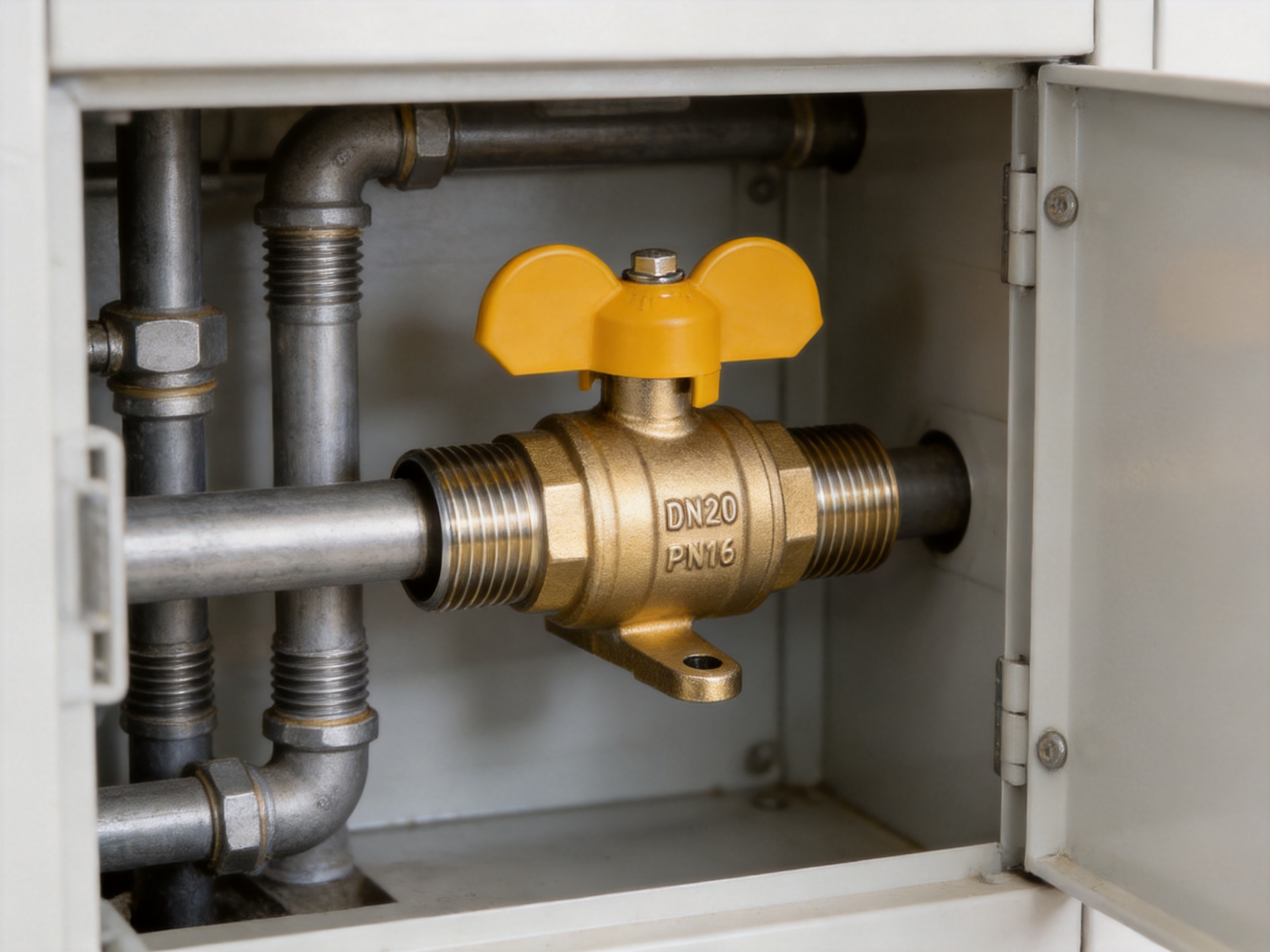
Cabinet pipelines often have limited space and require a clean, secure shut-off point. The YH-214 is well suited for cabinet gas and water line corner control because it combines compact dimensions, a short operating handle, and a stable base. It can be positioned where a standard straight valve might be too bulky or inconvenient.
For gas cabinet installations, reliability and easy shut-off access are critical. A valve must be simple to identify and operate, while also resisting mechanical stress and leakage. The forged brass body and bi-directional sealing design support dependable performance when used within the specified working medium and temperature range.
For water cabinet installations, the low-resistance flow path helps maintain stable flow, while the compact body makes maintenance access easier. The base can help secure the valve against repeated use and reduce unwanted movement.
Application Scenario: Wall-Mounted Heater and Boiler Interfaces
Wall-mounted heaters and boilers require dependable shut-off valves at water or gas interface points. These installations often have strict space limits, and the valve must be easy to operate during commissioning, maintenance, or emergency shut-off. The YH-214’s compact form and butterfly handle provide a strong advantage in this environment.
A boiler interface valve must also withstand repeated temperature changes within its allowed working range. The YH-214 is rated for working temperatures from above -20°C to below 80°C, making it suitable for many standard water, non-corrosive fluid, and gas applications where the medium remains within these limits.
The base-mounted structure can improve installation neatness around wall-mounted equipment. This is especially helpful where multiple service valves are arranged below a heater or boiler and where a professional appearance is expected.
Application Scenario: Laboratory Precision Pipelines
Laboratory pipelines require clean organization, predictable operation, and compact components. Space around benches, instruments, and testing systems is often limited. The YH-214 is suitable for precision laboratory pipelines carrying water, non-corrosive fluids, or compatible gases within specified conditions.
The bi-directional sealing feature is useful in laboratory systems that may be reconfigured, flushed, or operated in different flow directions during testing. The low-resistance passage helps reduce flow disruption, which is important when consistent pressure and flow conditions are required.
The butterfly handle makes operation convenient without protruding excessively from the pipeline. This can reduce accidental bumping in busy laboratory workspaces and helps keep installations orderly.
Application Scenario: Small Equipment Cooling Systems
Small machines, instruments, and process devices often require cooling circuits. These circuits need compact shut-off valves for maintenance, flow isolation, component replacement, or system balancing. The YH-214 fits this role well because it minimizes space requirements while offering reliable shut-off performance.
Cooling systems can be sensitive to pressure drop, especially when pumps are small or flow paths are long. The valve’s smooth internal passage helps reduce unnecessary resistance. This supports more stable cooling performance and can help equipment operate closer to design conditions.
The forged brass body also provides mechanical durability, which is important in equipment that may experience vibration or frequent service access. The base further improves mounting security, making the valve practical for OEM integration.
Advantages Over Ordinary Competing Valves
When compared with typical low-cost brass valves, the YH-214 offers several clear advantages. First, its one-piece forged body provides stronger structural integrity than bodies that rely on weaker construction methods or additional welded sections. This reduces risk under pressure fluctuation and helps improve safety margins.
Second, its compact design reduces installation problems. Many ordinary valves may function adequately in open pipe runs but become inconvenient in cabinets, corners, boiler interfaces, or equipment compartments. The YH-214 is built specifically for these restricted environments.
Third, bi-directional sealing makes installation more flexible. Direction-dependent valves increase the risk of installation errors, especially when workers are under time pressure or when piping layouts are complex. The YH-214 simplifies the process and reduces rework risk.
Fourth, the low-resistance flow path provides practical efficiency benefits. Some competing valves may restrict flow more severely due to internal geometry or poor finishing. By reducing pressure drop, the YH-214 is better suited for pressure-sensitive systems.
Fifth, the base-mounted design creates greater stability than simple inline valves. In real installations, mechanical stability affects sealing reliability, handle operation, and long-term maintenance convenience. A valve that can be mounted securely is often a better solution for equipment and cabinet applications.
Material Benefits of Brass in Valve Construction
Brass is widely used in valves because it offers a strong balance of machinability, corrosion resistance in suitable media, mechanical strength, and sealing compatibility. For water, non-corrosive fluids, and gas applications, brass provides practical reliability when properly manufactured and used within specifications.
In forged brass components, the material benefits are enhanced by improved density and grain flow. Forging can reduce internal defects associated with less controlled forming processes and can help produce a durable pressure-bearing structure. This makes forged brass especially suitable for compact valves where strength must be achieved in a smaller body.
Brass also supports precise threading and surface machining. Accurate threads are essential for reliable installation, while smooth internal and sealing surfaces help maintain valve performance. The YH-214 benefits from these material characteristics as well as from controlled manufacturing processes.
Manufacturing Strength Behind the Product
High-quality valve performance depends not only on design but also on manufacturing discipline. Ningbo Yunhua Valve Co., Ltd. specializes in the research, development, production, sales, and service of gas and fluid valves, water supply valves, and hardware accessories. The company has developed a strong production foundation with professional management, advanced equipment, and a focus on quality control.
The company operates on a manufacturing site covering approximately 20,000 square meters. This scale supports organized production areas, including precision machining, assembly, and testing workshops. A well-planned factory layout helps improve production efficiency, material flow, process control, and final inspection reliability.
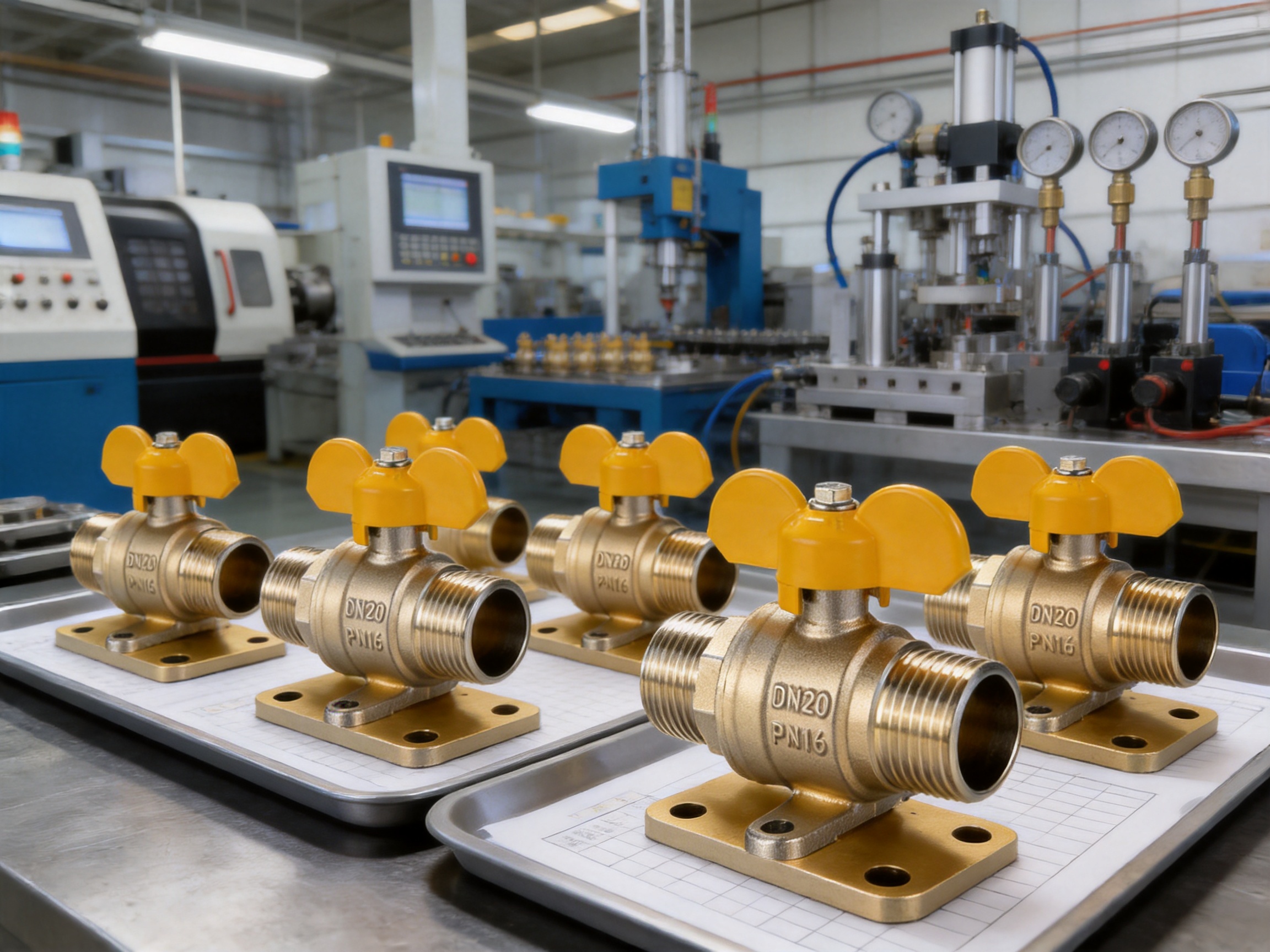
Advanced domestic and international CNC machine tools are used to support accurate machining of valve bodies, threads, sealing surfaces, and internal passages. CNC machining is especially important for ball valves because dimensional precision affects sealing, handle torque, flow performance, and assembly consistency.
Automated assembly and testing equipment further strengthens product reliability. Automation reduces variation caused by inconsistent manual operations and supports repeatable torque, positioning, and inspection procedures. For buyers, this means more consistent product quality across large batches.
Precision Machining and Dimensional Control
The performance of a compact ball valve depends on very small dimensional relationships. The ball, seats, stem, body cavity, threads, and handle mechanism must all align correctly. If machining tolerances are poor, the valve may leak, feel too tight, operate unevenly, or wear prematurely.
Precision CNC machining helps control these critical features. Thread accuracy ensures proper connection to piping systems. Seat contact surfaces must be smooth and correctly positioned to support reliable sealing. The internal flow channel must be machined to minimize resistance and avoid unnecessary turbulence.
For the YH-214, dimensional control is especially important because the product is compact. Smaller valves leave less room for manufacturing error. A strong production system allows the valve to remain small without sacrificing reliability.
Automated Assembly for Consistency
Assembly is a key stage in ball valve manufacturing. Even high-quality components can perform poorly if assembly torque, seat placement, stem installation, or handle alignment is inconsistent. Automated and semi-automated assembly equipment helps standardize these operations.
Consistent assembly improves opening and closing feel, sealing reliability, and batch-to-batch uniformity. This is valuable for distributors who need stable product quality and for equipment manufacturers who install valves into larger systems. When every valve behaves consistently, downstream assembly and quality verification become easier.
For the YH-214, consistent assembly supports the valve’s bi-directional sealing capability and smooth handle operation. The butterfly handle should rotate cleanly and stop accurately in the open and closed positions. Good assembly practices help ensure that users experience dependable operation throughout service life.
Testing and Quality Verification
Valve testing is essential because external appearance alone cannot confirm sealing performance or pressure integrity. Professional testing workshops and equipment allow each production batch to be inspected according to relevant standards and customer requirements.
For brass ball valves used with water, non-corrosive fluids, and gas, testing may include pressure tests, leak tests, dimensional checks, thread inspections, torque verification, and visual inspection. These procedures help identify defects before shipment and protect customers from field failures.
The company’s investment in automated testing equipment reflects a commitment to quality assurance. Automated testing supports repeatable test conditions and reliable data, helping maintain consistent production standards. For international buyers and OEM customers, this capability is a significant advantage.
Production Capacity and Supply Reliability
Supply reliability matters for distributors, contractors, and equipment manufacturers. A technically strong valve is only useful if it can be delivered consistently and in sufficient quantities. The company has an annual production capacity of approximately 2 million sets of valves and 10 million sets of hardware accessories, supporting both regular orders and larger procurement programs.
This production capacity indicates mature manufacturing organization and the ability to serve a broad range of customers. It also supports product continuity, which is important for buyers who need repeat orders over multiple project cycles. A stable supplier reduces sourcing risk and helps customers maintain consistent product standards in their own systems.
For the YH-214, supply reliability is particularly important because the valve can be used across multiple application categories. A distributor may sell it into residential utility systems, laboratory equipment, heating interfaces, and small industrial systems. Consistent availability helps build market confidence.
Quality Culture and Continuous Improvement
Over more than ten years of development, the company has cultivated a corporate culture focused on innovation, management improvement, and professional service. In valve manufacturing, quality culture is just as important as equipment. Machines can produce precise parts, but people and systems determine whether standards are maintained every day.
A professional management team supports process discipline, worker training, supplier control, production scheduling, inspection planning, and customer service. Continuous improvement helps the company respond to market requirements, optimize product structure, and improve manufacturing efficiency.
The company’s mission to build a safe fluid ecosystem with high-quality valves aligns directly with the purpose of the YH-214. A compact valve used in gas, water, and fluid systems must support safety, reliability, and long-term trust. Manufacturing culture and technical execution together make that possible.
Installation Considerations
Although the YH-214 is designed for flexible installation, correct installation practices remain essential. Installers should confirm that the working medium is compatible with brass and with the valve’s intended service conditions. The valve is suitable for water, non-corrosive fluids, and gas within the specified temperature range.
Thread compatibility should be checked before installation. The product references ISO 228 parallel pipe thread, and appropriate sealing material should be selected according to project requirements. Excessive tightening should be avoided because over-torque can damage threads, fittings, or the valve body.
The valve should be installed where the butterfly handle remains accessible. Even though the product is compact, sufficient clearance should be provided for full operation. When the base is used for mounting, the support surface should be stable and aligned so that the valve is not forced into an unnatural position.
Before commissioning, the system should be pressure-tested according to applicable standards and project procedures. The valve should be opened and closed to confirm smooth operation and correct shut-off performance.
Maintenance and Service Life
Ball valves are generally low-maintenance components, but proper usage helps extend service life. The YH-214 should be operated periodically in systems where it remains in one position for long periods. Periodic operation helps prevent sticking and confirms that the valve remains functional.
The valve should not be used outside its specified pressure, temperature, or medium limits. Exposure to corrosive fluids, incompatible chemicals, excessive temperature, or improper mechanical loading may reduce service life. In gas applications, professional installation and inspection requirements should always be followed.
During routine inspection, users should check for external leakage, handle condition, thread joint integrity, and secure mounting. If the valve is installed in equipment or cabinets, surrounding components should not place stress on the valve body or handle.
Buyer Value for Distributors and OEM Customers
For distributors, the YH-214 offers a strong selling proposition because it combines multiple practical advantages in one product. Customers looking for compact valves often need more than a standard shut-off function. They need reliable sealing, easy installation, space-saving dimensions, and stable mounting. The YH-214 addresses these needs directly.
For OEM customers, the valve’s compact design and consistent manufacturing quality can support equipment design and assembly efficiency. A stable base-mounted valve can be integrated into machines, cooling units, laboratory devices, or heating equipment with repeatable positioning. Bi-directional sealing simplifies design flexibility and reduces assembly errors.
For engineering contractors, the valve helps solve field installation problems. Its smaller body, butterfly handle, and flexible flow direction make it easier to adapt to confined layouts. The forged body provides added confidence in demanding practical environments.
For end users, the product provides simple, dependable manual control. The handle is easy to use, the body is strong, and the compact profile keeps installations neat. These benefits create long-term value beyond the initial purchase price.
Why This Valve Supports Safer Fluid Control
Safety in fluid control depends on design, material, manufacturing, installation, and maintenance. The YH-214 supports safety through its forged one-piece body, which eliminates weld-related weaknesses and improves pressure resistance. Its bi-directional sealing reduces the chance of incorrect installation. Its compact design minimizes forced piping arrangements that could create mechanical stress.
The base-mounted structure also contributes to safety by improving stability. A valve that moves during operation can gradually loosen threaded joints or stress surrounding components. A stable valve is easier to operate correctly and inspect regularly.
Manufacturing quality further supports safety. Precision machining, automated assembly, and testing reduce the likelihood of hidden defects. When these factors are combined, the result is a compact valve that is well suited to practical water, non-corrosive fluid, and gas control applications.
Frequently Asked Questions
What is the main purpose of the YH-214 brass ball valve?
The YH-214 is designed for compact shut-off and flow control applications involving water, non-corrosive fluids, and gas. It is especially suitable for cabinet pipelines, heater and boiler interfaces, laboratory pipelines, and small equipment cooling systems.
What makes the one-piece forged body important?
The one-piece forged body eliminates welds and improves structural integrity. This helps increase burst pressure resistance by approximately 40% and reduces the risk of cracking compared with weaker welded or less robust alternatives.
Why is the compact design valuable?
The compact design reduces valve volume by approximately 30% compared with ordinary straight valves. This makes the valve easier to install in cabinets, corners, appliance interfaces, and equipment compartments where space is limited.
Can the valve be installed in either flow direction?
Yes. The valve is designed with bi-directional sealing, so it does not require a specific flow direction. This simplifies installation and reduces the risk of orientation mistakes.
What media can the valve handle?
The valve is intended for water, non-corrosive fluids, and gas within the stated working conditions. Users should confirm compatibility with the specific medium before installation.
What is the working temperature range?
The working temperature range is above -20°C and below 80°C. The valve should not be used outside this range unless confirmed by technical evaluation.
What thread standard does the valve use?
The product information specifies parallel pipe thread to ISO 228. Correct thread matching and proper sealing methods are important for safe installation.
What sizes are available?
The available specifications include DN15 and DN20. DN15 has an L dimension of 58.5, R1/2 thread, and D dimension of 12. DN20 has an L dimension of 73.5, R3/4 thread, and D dimension of 18.
Why is the butterfly handle useful?
The butterfly handle is compact, easy to operate, and suitable for tight spaces. It provides quick manual control without requiring the clearance needed by a longer lever handle.
How does the base improve installation?
The base allows more stable mounting and helps reduce movement during operation. This is useful in cabinets, equipment frames, wall-mounted systems, and applications where vibration or repeated manual operation may occur.
How does the valve reduce flow loss?
The valve uses a smooth, low-resistance internal flow path. This reduces pressure drop and helps maintain efficient flow in pressure-sensitive systems.
What manufacturing strengths support the product?
The product is supported by advanced CNC machining, professional automated assembly, testing workshops, and a large-scale production system. These capabilities help ensure dimensional accuracy, sealing reliability, and consistent quality.
Conclusion
The YH-214 brass ball valve with base and butterfly handle is a compact, strong, and practical solution for modern fluid control applications. Its one-piece forged brass body provides a major strength advantage by eliminating welds and increasing burst pressure resistance. Its 30% smaller volume makes it ideal for confined spaces, while its bi-directional sealing simplifies installation and reduces orientation errors.
The valve’s low-resistance flow path supports efficient operation in pressure-sensitive systems, and the butterfly handle improves usability in narrow locations. The base-mounted structure adds stability, making the valve suitable for cabinets, wall-mounted heaters, boilers, laboratory pipelines, and small equipment cooling circuits.
Behind the product is a manufacturing system supported by precision CNC machining, automated assembly, professional testing, large production capacity, and long-term experience in gas and fluid valve production. For distributors, OEM customers, contractors, and end users, the YH-214 offers a strong combination of safety, space efficiency, installation flexibility, and dependable performance.
In a market where many valves may appear similar at first glance, the differences in body construction, sealing design, machining quality, installation stability, and manufacturing control determine real long-term value. The YH-214 stands out as a compact forged brass valve engineered for reliable fluid control in demanding practical spaces.
References
International Organization for Standardization. ISO 228 Pipe Threads Where Pressure-Tight Joints Are Not Made on the Threads.
Crane Co. Flow of Fluids Through Valves, Fittings, and Pipe.
American Society of Mechanical Engineers. Valve Design and Pressure Boundary Guidelines.
Smith, P. Valve Selection Handbook: Engineering Fundamentals for Industrial Applications.
Idelchik, I. E. Handbook of Hydraulic Resistance.
Manufacturer technical data for YH-214 brass ball valve with base and butterfly handle.
Product: YH-214 Brass Ball Valve with Base& Butterfly Handle(M/M)

Related Products
-
View More
-
 View More
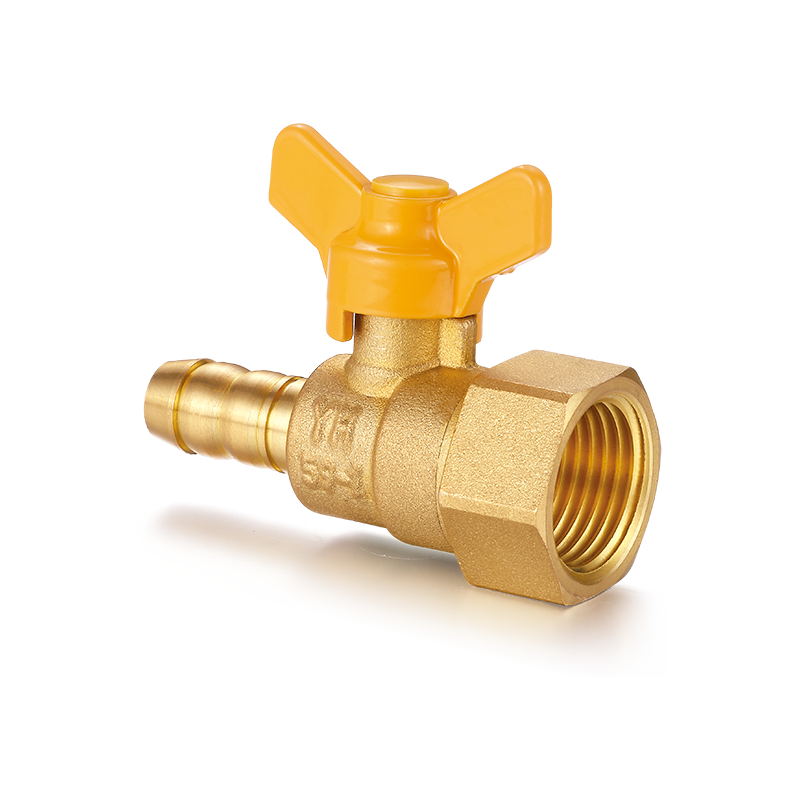
YH-216 Brass Ball Valve with Butterfly Handle(F/Hose Connector)
-
 View More
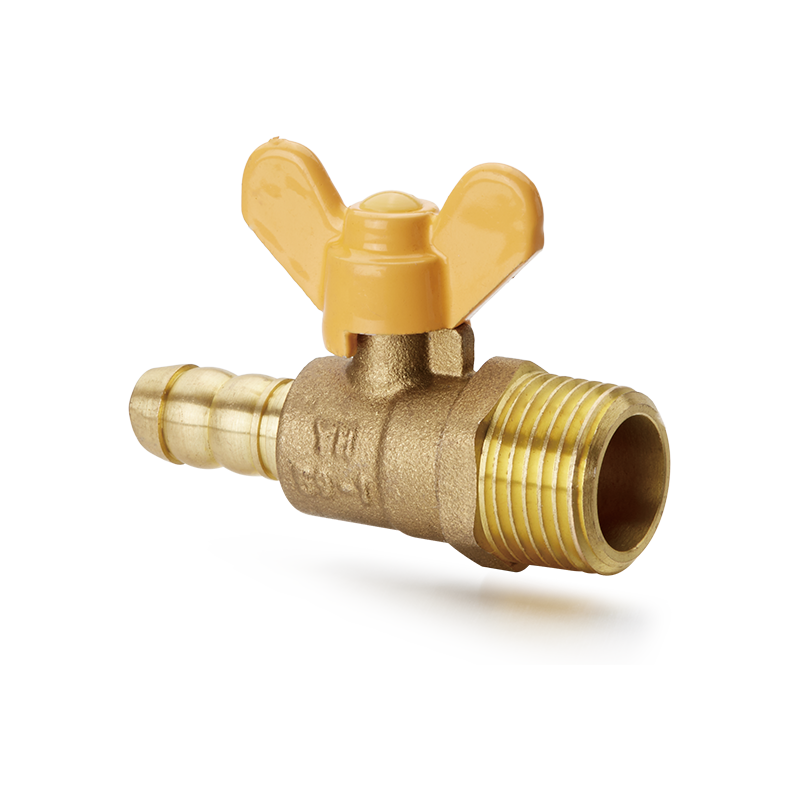
YH-207 Brass Ball Valve with Butterfly Handle(M/hose connector)
-
 View More
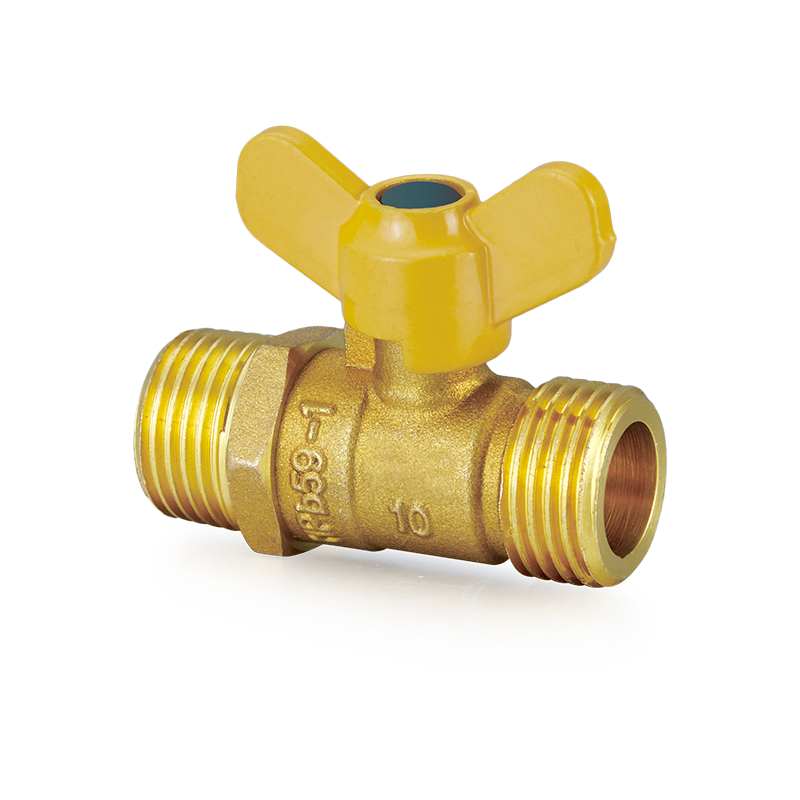
YH-206 Brass Ball Valve with Butterfly Handle(M/M)
-
 View More
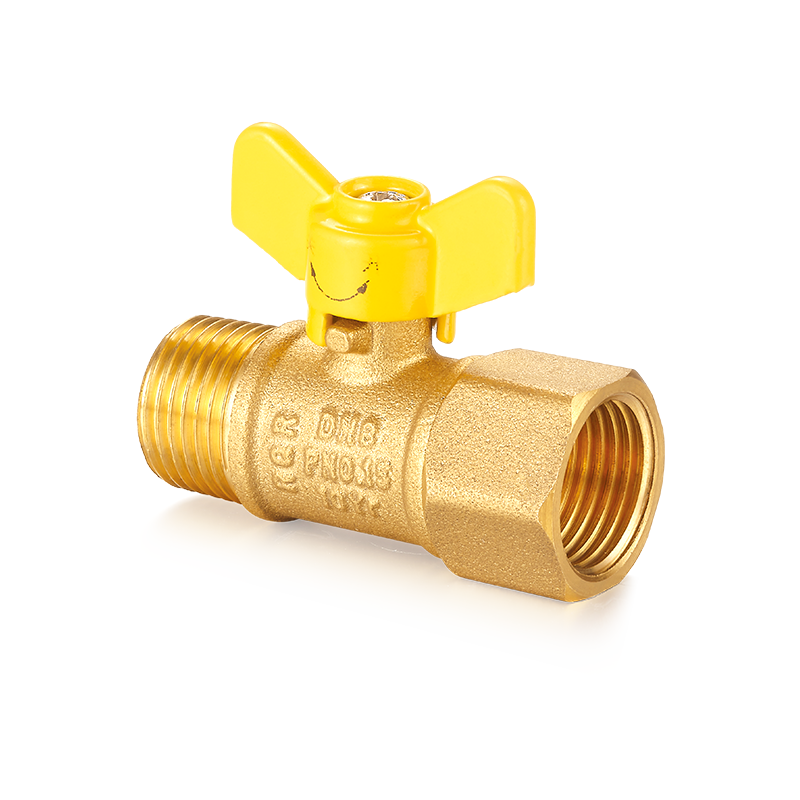
YH-205 Brass Ball Valve with Butterfly Handle(F/M)
-
 View More
YH-221 Brass Ball Valve with Long Handle(M/M)
Related News
Contact Us
-

-
 +86-0574-63742169
 -
 No.104-128, Cizhang East Road, Zhangqi Town, Cixi City, Ningbo, Zhejiang Province, China


Message Us Now !
