


 English
  русский
  عربى
عربى  Español
Precision Pipe Fittings for Reliable Fluid and Gas Control Systems
Content
- 1 Product Overview: What Pipe Fittings Do in a Fluid System
- 2 Why Precision Matters More Than Appearance
- 3 Manufacturing Strength Behind Consistent Pipe Fittings
- 4 Advanced CNC Machining and Dimensional Control
- 5 Material Selection for Strength and Compatibility
- 6 Process Flow from Raw Material to Finished Product
- 7 Key Advantages Over Ordinary Pipe Fitting Suppliers
- 8 Applications in Gas, Water, Valve, and Hardware Systems
- 9 Quality Testing and Inspection Priorities
- 10 Design Details That Improve Installation
- 11 Customization for Different Markets and Standards
- 12 Role in Safe Fluid Ecosystems
- 13 Packaging, Logistics, and Supply Stability
- 14 Environmental and Efficiency Considerations
- 15 How to Select the Right Pipe Fitting
- 16 Why Manufacturing Experience in Valves Matters
- 17 Frequently Asked Questions
- 17.1 What are pipe fittings used for?
- 17.2 Why is thread accuracy important in pipe fittings?
- 17.3 Can pipe fittings be used with gas valves?
- 17.4 What makes precision pipe fittings better than ordinary fittings?
- 17.5 Are customized pipe fittings available?
- 17.6 How should buyers choose a pipe fitting supplier?
- 17.7 Do pipe fittings affect the performance of valves?
- 17.8 What industries commonly use pipe fittings?
- 18 Conclusion: Reliable Connections Begin with Precision
- 19 References
- 20 Product: Pipe Fittings
In modern fluid control, pipe fittings are often small in size but decisive in performance. They connect pipelines, redirect flow, adapt thread types, support valves, simplify maintenance, and help create sealed systems that can operate safely under demanding conditions. Whether a project involves water supply, gas distribution, industrial utilities, heating lines, compressed air, or general hardware assemblies, the quality of the fitting influences the reliability of the entire installation. A well-made fitting reduces leakage risk, improves assembly efficiency, protects downstream components, and extends service life. For buyers who need stable supply, consistent dimensions, dependable sealing surfaces, and manufacturing traceability, precision pipe fittings provide a practical and cost-effective foundation for long-term system safety.
Pipe fittings are not merely connectors. They are engineered components designed to manage pressure, temperature, vibration, fluid compatibility, thread engagement, and installation stress. In valve and hardware accessory applications, fittings may be used with threaded globe valve assemblies, forged steel valve systems, brass gas ball valve connections, pressure instruments, distribution manifolds, household water systems, gas lines, and machinery. Their performance depends on material selection, machining accuracy, surface finish, sealing design, inspection standards, and packaging protection. A fitting that appears simple from the outside may require multiple stages of precision manufacturing before it is ready for use. This is where advanced production capability becomes a measurable advantage over ordinary suppliers.
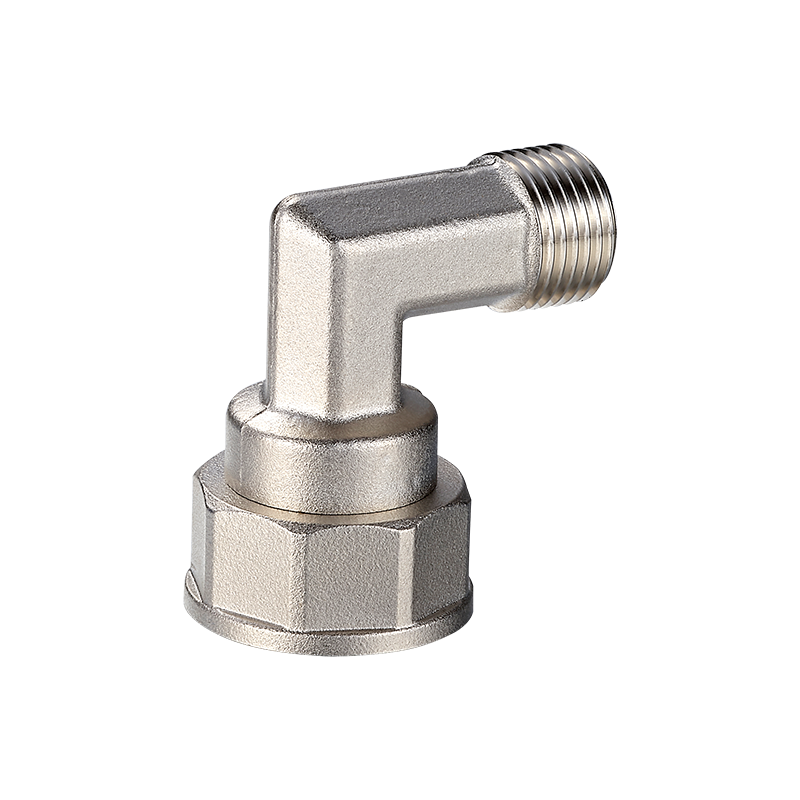
Product Overview: What Pipe Fittings Do in a Fluid System
Pipe fittings serve several essential functions in piping networks. They connect two or more pipe sections, change direction, branch a line, reduce or enlarge the pipe diameter, cap an end, convert thread specifications, or provide an interface between a pipe and a valve. Typical fitting styles may include elbows, tees, couplings, nipples, unions, adapters, plugs, caps, reducers, bushings, and specialized connectors for gas or water service. In valve-related systems, fittings help ensure that valves can be installed securely and positioned correctly. They also make maintenance easier by allowing parts of a pipeline to be removed, replaced, or adjusted without rebuilding the entire system.
Because pipe fittings are used at connection points, they are exposed to concentrated mechanical stress. During installation, torque is applied to threads or compression areas. During operation, pressure pushes against sealing surfaces. Thermal changes can expand or contract the connected components. Vibration may loosen weak connections. Corrosive fluids can attack exposed surfaces. For these reasons, a high-quality pipe fitting must maintain accurate geometry and stable material properties. It must also offer repeatable fit from batch to batch, because installers and equipment manufacturers depend on interchangeability. When every piece performs consistently, assembly lines run faster, field installation becomes simpler, and after-sales service is easier to control.
Why Precision Matters More Than Appearance
Many pipe fittings look similar at first glance, but differences in performance become clear during installation and long-term use. A fitting with poor thread accuracy may feel loose, require excessive sealant, or damage the mating part. A rough internal surface can increase pressure loss, trap impurities, or accelerate corrosion. An uneven sealing face can create leakage even when the fitting is tightened properly. Inconsistent wall thickness can reduce pressure resistance and increase the chance of cracking. Poorly controlled material composition can compromise strength, corrosion resistance, or compatibility with gas and water media. Therefore, the real value of a pipe fitting is hidden in precision, process discipline, and inspection.
Compared with low-cost competitors that rely on basic machining and limited inspection, precision-focused pipe fittings provide better dimensional stability and improved installation confidence. This advantage is especially important for OEM customers, wholesalers, engineering contractors, and valve manufacturers who require stable quality across repeated orders. If one batch has a different thread feel or sealing performance from the next, production planning and field reliability suffer. High consistency reduces customer complaints, lowers replacement costs, and protects brand reputation. In competitive markets, the supplier that can provide reliable fittings at scale, with controlled tolerances and systematic testing, offers value beyond the unit price.
Manufacturing Strength Behind Consistent Pipe Fittings
A strong manufacturing base is essential for high-quality pipe fittings. Ningbo Yunhua Valve Co., Ltd. operates as an innovative enterprise specializing in gas and fluid valves, water supply valves, and hardware accessories. Its product background gives it practical knowledge of how fittings interact with valves, pipelines, and control systems. This experience is valuable because fittings are not manufactured in isolation; they must perform as part of a complete fluid ecosystem. The company has built professional production, assembly, and testing capabilities to support stable output and reliable product performance.
The manufacturing facility covers approximately 20,000 square meters and includes a fully automated precision machining workshop, assembly line, and testing workshop. Such a layout allows production steps to be controlled more efficiently from raw material processing to final inspection. Advanced CNC machine tools, automated assembly equipment, and professional testing devices help ensure that parts meet relevant standards before shipment. With annual production capacity reaching millions of valve sets and tens of millions of hardware accessories, the company can support both customized requirements and large-volume orders. This scale is particularly important for buyers who need dependable delivery schedules and long-term cooperation.
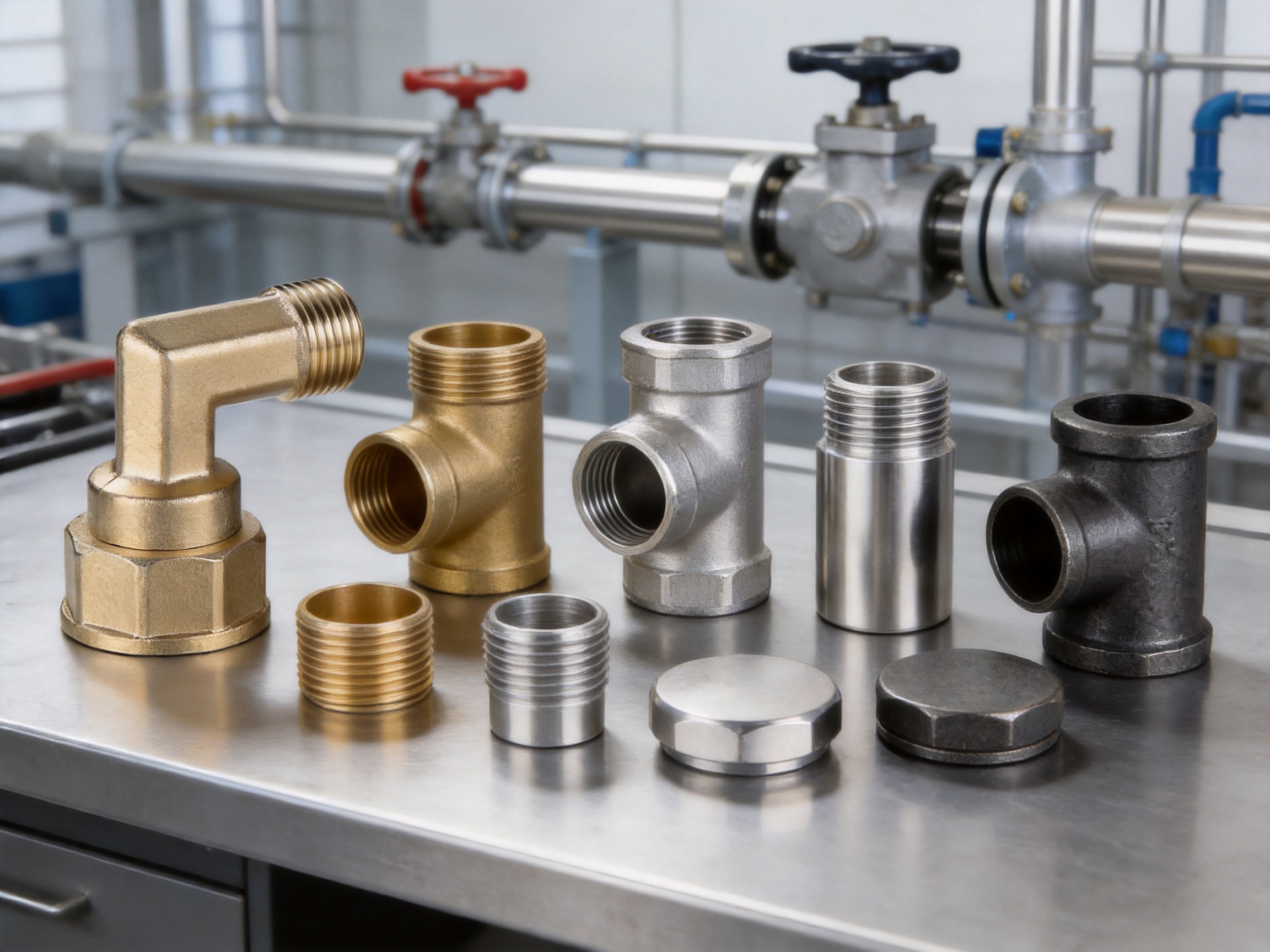
Advanced CNC Machining and Dimensional Control
CNC machining is one of the most important processes in precision pipe fitting production. Unlike manual or low-automation machining, CNC equipment can maintain repeatable tool paths, controlled cutting parameters, and stable dimensional accuracy. For fittings, this directly affects thread quality, sealing face flatness, concentricity, bore diameter, chamfer shape, and overall fit. Automated machining also reduces the variability that can occur when different operators use different methods. When combined with skilled process engineering, CNC production helps maintain consistent product quality across large batches.
Dimensional control begins with accurate process design. Engineers consider the material properties, cutting allowance, tool selection, clamping method, tolerance requirements, and inspection points. Threaded areas must be cut or formed to precise specifications so that they engage smoothly with pipes, valves, and related components. Sealing surfaces must be smooth enough to prevent leakage while maintaining the correct geometry for the intended sealing method. Internal passages should be shaped to reduce flow restriction and avoid sharp burrs. External surfaces may require clean edges and uniform finishing to support easy handling, attractive appearance, and safe installation.
Competitors with less advanced equipment may be able to produce visually similar fittings, but their output often depends heavily on manual correction. This can result in wider variation, higher defect rates, and inconsistent customer experience. By contrast, a CNC-based manufacturing system supports repeatable quality and process traceability. If an issue is detected, production data, tooling conditions, and inspection records can be reviewed more easily. This enables continuous improvement and helps prevent recurring defects. For customers purchasing pipe fittings for professional applications, this manufacturing discipline is a major advantage.
Material Selection for Strength and Compatibility
The performance of pipe fittings depends strongly on material selection. Different applications may require brass, stainless steel, forged steel, carbon steel, or other materials depending on pressure, medium, environment, temperature, and cost considerations. Brass fittings are commonly valued for corrosion resistance, machinability, and suitability in water and gas-related hardware applications. Forged steel fittings may be used when higher mechanical strength is required. Stainless steel can provide excellent resistance in corrosive environments. The correct material must match the function of the system and the expectations of the end user.
For valve-related accessories, compatibility is especially important. A pipe fitting connected to a brass gas ball valve must support gas-tight sealing and maintain stable mechanical engagement. A fitting used near a forged steel valve may need higher strength and pressure resistance. A threaded connection associated with a threaded globe valve requires thread accuracy and reliable alignment to avoid stress concentration. In every case, the material must be selected and processed to meet the operating conditions. High-quality manufacturers pay attention not only to the material name, but also to its composition, structure, machining behavior, and final inspection results.
Material quality also influences long-term maintenance costs. Poor materials can crack, corrode, deform, or react with the fluid medium. Even a small failure at a fitting can interrupt production, damage nearby equipment, or create safety hazards. Buyers who focus only on initial purchase price may later face higher costs from leakage, replacement labor, warranty claims, or customer dissatisfaction. Precision fittings made from suitable materials offer better lifecycle value. They help the whole system remain stable, which is especially important for gas, water supply, and industrial fluid control.
Process Flow from Raw Material to Finished Product
A professional pipe fitting production process usually begins with raw material inspection. Material certificates, dimensions, surface condition, and batch information may be checked before processing. The material is then cut or prepared according to the fitting type. Forging, casting, bar stock machining, or other forming methods may be selected depending on design requirements. After the initial shape is prepared, precision machining creates the critical features such as threads, internal bores, sealing faces, shoulders, and wrench flats. Deburring and cleaning remove sharp edges and loose particles that could interfere with assembly or contaminate the fluid system.
After machining, fittings may undergo surface treatment, polishing, plating, passivation, marking, or other finishing processes according to customer requirements and material type. These steps improve appearance, corrosion resistance, identification, or handling performance. The fittings are then inspected for critical dimensions and functional characteristics. Thread gauges, calipers, micrometers, leak testing equipment, pressure testing devices, and visual inspection methods may be used. Qualified products are packaged to protect threads and surfaces during transportation. For export and wholesale supply, packaging consistency is important because fittings may pass through multiple handling stages before installation.
The advantage of an integrated manufacturing environment is that each stage can be coordinated. When machining, assembly, and testing are managed under a structured system, communication between departments becomes faster. Production feedback can be used to improve tooling, reduce waste, and refine inspection standards. This improves quality while supporting competitive pricing. It also enables customization, because customer drawings or samples can be evaluated by technical teams and converted into controlled production processes. For buyers seeking custom pipe fittings or related valve accessories, such manufacturing flexibility is highly valuable.
Key Advantages Over Ordinary Pipe Fitting Suppliers
Precision pipe fittings offer several advantages when compared with general-purpose, low-inspection alternatives. The first advantage is sealing reliability. Accurate threads and well-finished sealing surfaces reduce the possibility of leakage and improve installer confidence. The second advantage is assembly efficiency. Consistent fittings require less rework and reduce the time spent matching, correcting, or rejecting parts. The third advantage is system compatibility. Products designed with practical valve and fluid control experience can better match common installation needs. The fourth advantage is batch stability. Large customers need repeatable results, not only good samples.
The fifth advantage is manufacturing capacity. A supplier with automated precision machining and testing workshops can deliver large quantities while maintaining quality control. The sixth advantage is customization. When a manufacturer understands both fittings and valves, it can develop specialized adapters, thread forms, and connection solutions according to customer requirements. The seventh advantage is quality assurance. Inspection equipment and professional testing methods reduce uncertainty before shipment. The eighth advantage is long-term cooperation potential. A company with a stable management system, professional production team, and clear mission is more likely to support buyers over many years.
| Evaluation Area | Precision Pipe Fittings | Ordinary Low-Control Fittings |
|---|---|---|
| Thread Accuracy | Controlled by precision machining and gauge inspection | May vary between batches and cause installation difficulty |
| Sealing Performance | Improved by smooth sealing faces and consistent geometry | Higher risk of leakage from rough or uneven surfaces |
| Batch Consistency | Supported by CNC production and systematic process control | Often dependent on manual adjustment and variable methods |
| Customization | Can be developed for valve, water, gas, and hardware applications | Usually limited to standard products with low engineering support |
| Inspection | Includes dimensional, visual, and functional checks as needed | May rely on basic visual inspection only |
| Lifecycle Value | Lower leakage risk, reduced rework, and stable service | Lower initial price but higher potential maintenance cost |
Applications in Gas, Water, Valve, and Hardware Systems
Pipe fittings are widely used in water supply systems, gas distribution lines, industrial fluid pipelines, heating systems, plumbing assemblies, air compression lines, agricultural equipment, machinery, and hardware products. In water applications, they must resist corrosion and maintain clean flow. In gas applications, sealing reliability is especially critical because leakage can create safety risks. In industrial systems, fittings may need to withstand pressure, vibration, and frequent maintenance cycles. In hardware accessories, appearance, dimensional repeatability, and ease of assembly are often important for efficient production.
In valve systems, pipe fittings are used before, after, or directly with the valve body. For example, a brass gas ball valve may require a precisely threaded adapter to connect with the pipeline. A threaded globe valve may need fittings that maintain alignment and reduce installation stress. A forged steel valve may be installed in a higher-pressure environment where fitting strength is essential. When fittings and valves are designed with compatible standards and manufacturing quality, the completed assembly becomes more reliable. A weak fitting can compromise even a high-quality valve, which is why professional buyers treat fittings as critical components rather than secondary accessories.
For OEM customers, fittings may be incorporated into finished products or packaged as replacement components. In such cases, consistency affects not only technical function but also production scheduling. If fittings arrive with unstable dimensions, assembly workers lose time, inventory control becomes difficult, and finished goods may fail inspection. By choosing a supplier with strong production management, customers reduce uncertainty. This is particularly beneficial for companies that sell valves, gas hardware, water fittings, or fluid control devices under their own brands and need to protect market reputation.
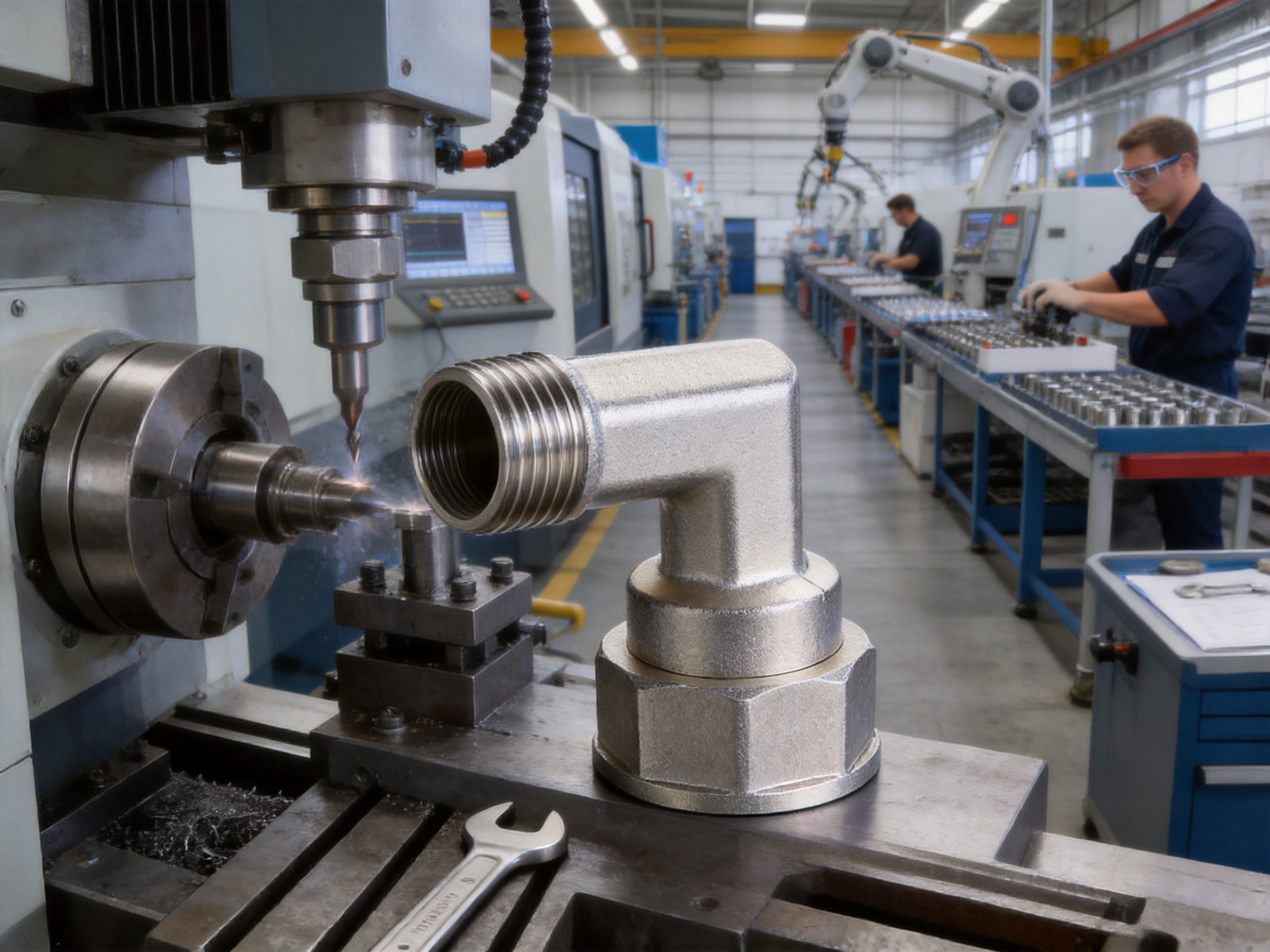
Quality Testing and Inspection Priorities
Testing is essential because pipe fitting defects are not always visible. A fitting may look acceptable but fail due to thread deviation, micro-cracks, porosity, poor sealing surface finish, or incorrect dimensions. Professional inspection checks both appearance and function. Thread gauges confirm compatibility. Dimensional instruments verify critical measurements. Surface inspection identifies burrs, dents, contamination, or coating problems. Pressure or leakage testing may be performed according to the product type and customer requirements. By combining different inspection methods, manufacturers can detect problems before products reach customers.
The testing workshop of a capable manufacturer plays a central role in quality assurance. It supports product development, production monitoring, and final release. When testing is integrated with production, quality feedback can be rapidly applied. If a thread dimension begins to drift, tooling can be adjusted. If a surface defect appears, the root cause can be investigated. If packaging damage occurs, protective methods can be improved. This closed-loop approach is superior to simple end-of-line sorting because it prevents defects instead of only removing them after production.
For buyers, quality testing provides confidence. It reduces the need for incoming inspection and helps maintain stable assembly schedules. It also supports compliance with project requirements and customer specifications. In competitive markets, documented quality control can become a selling point for distributors and OEM partners. End users may not see the testing process, but they experience its benefits through easier installation, fewer leaks, and longer service life. A fitting that passes professional inspection is more than a metal connector; it is a verified part of a safer fluid system.
Design Details That Improve Installation
Good pipe fitting design considers how the part will be installed in real conditions. Installers often work in limited spaces, with different tools, under time pressure, and with varying pipe alignment. Features such as accurate wrench flats, clean chamfers, smooth thread starts, and consistent shoulder dimensions can make installation easier. A properly designed thread begins smoothly and reduces cross-threading risk. A clean internal bore reduces obstruction and avoids debris accumulation. A well-controlled exterior finish improves handling and appearance. These details may seem small, but they affect user satisfaction.
Another important design factor is tolerance balance. If tolerances are too loose, leakage and poor fit can occur. If tolerances are unnecessarily tight, production cost rises and installation may become difficult. Professional manufacturers balance technical requirements, application needs, and cost efficiency. They understand where precision is critical and where practical manufacturing flexibility is acceptable. This engineering judgment helps create pipe fittings that are reliable, economical, and suitable for large-scale use. It also allows customers to request custom designs without overpaying for unnecessary complexity.
For fittings connected to valves, alignment is especially important. Misalignment can place bending stress on valve bodies, stems, or seats. In systems involving a threaded globe valve or brass gas ball valve, poor alignment may affect operation or sealing. High-quality fittings support stable positioning and reduce installation stress. In repeated production environments, this translates into fewer assembly issues and a smoother workflow. Therefore, design quality directly supports both technical performance and manufacturing efficiency.
Customization for Different Markets and Standards
Different markets may require different thread standards, materials, finishes, pressure ratings, packaging styles, or markings. Some customers need standard fittings for general distribution, while others require custom pipe fittings for specific equipment. Customization may include non-standard dimensions, special adapters, unique thread combinations, branding marks, special surface treatment, or packaging suited to retail and wholesale channels. A manufacturer with broad valve and hardware experience can support these needs more effectively than a supplier focused only on commodity parts.
Customization begins with communication. Customers may provide drawings, samples, performance requirements, installation conditions, or target markets. Engineers review the information and evaluate manufacturability. Material and process options are selected. Samples may be produced and tested before mass production. Once the design is confirmed, production parameters and inspection standards are established. This structured development process helps avoid mistakes and ensures that custom parts can be repeated consistently in future orders. For customers building long-term product lines, repeatability is as important as initial design success.
Custom fittings also help customers differentiate themselves from competitors. Instead of selling the same generic products, distributors and OEMs can offer connection solutions tailored to local applications. A custom adapter can reduce installation steps, improve compatibility, or solve a common field problem. A special surface finish can improve appearance and corrosion resistance. A dedicated packaging system can support retail presentation. When the manufacturing partner has strong capacity and engineering support, customization becomes a strategic advantage rather than a production risk.
Role in Safe Fluid Ecosystems
A safe fluid ecosystem depends on many components working together. Valves control flow, pipes transport media, fittings connect and adapt the network, instruments monitor conditions, and seals prevent leakage. If one component fails, the entire system can be affected. Pipe fittings play a central role because they create many of the joints in a pipeline. Every joint is a potential leakage point if quality is poor. Therefore, precision fittings contribute directly to system safety.
The mission of building safe fluid systems aligns with the need for high-quality valves and accessories. In gas applications, safety is particularly important because leaks can be dangerous. In water supply systems, leakage wastes resources and may damage property. In industrial applications, fluid failure can stop production or create environmental concerns. Reliable fittings reduce these risks. By using controlled materials, precision machining, and thorough inspection, manufacturers support safer installations and more dependable operation.
This safety-oriented approach also benefits distributors and contractors. When products perform reliably, customers trust the supplier. Repeat business grows, warranty issues decline, and project reputation improves. Safety is not only a technical requirement; it is also a commercial advantage. A product line known for dependable performance can compete successfully against low-cost alternatives because professional customers understand the cost of failure. Pipe fittings that support safe fluid ecosystems therefore create value for every participant in the supply chain.
Packaging, Logistics, and Supply Stability
Packaging is often overlooked, but it is important for pipe fittings. Threads and sealing surfaces can be damaged during transport if packaging is inadequate. Surface scratches may reduce appearance and customer satisfaction. Mixed specifications can cause warehouse confusion. Professional packaging protects parts, separates sizes, supports identification, and improves handling efficiency. For export orders, packaging must also withstand longer transport routes and multiple loading stages. A reliable supplier treats packaging as part of product quality, not as an afterthought.
Supply stability is another important advantage. Buyers who purchase pipe fittings for distribution or manufacturing need predictable delivery. Delays can interrupt production, reduce inventory availability, and affect customer commitments. A company with large production capacity, automated equipment, and an organized management system can better support regular orders and urgent demand. Annual capacity in valves and hardware accessories indicates a mature production structure capable of serving different customer scales. This gives buyers confidence when planning seasonal inventory, project supply, or long-term procurement.
Stable supply also depends on communication and service. Professional teams can confirm specifications, coordinate sample development, arrange production schedules, and respond to after-sales questions. When technical and commercial teams work together, customers receive smoother support. This is especially useful for international buyers who must manage standards, documentation, packaging, and delivery timelines. A pipe fitting supplier with both manufacturing strength and service awareness becomes a partner rather than merely a source of parts.
Environmental and Efficiency Considerations
Modern manufacturing increasingly emphasizes efficiency, waste reduction, and responsible resource use. Precision machining helps reduce scrap by controlling process parameters and improving first-pass yield. Automated equipment can improve consistency and reduce unnecessary rework. Good tooling management extends tool life and maintains machining quality. Proper cleaning and handling reduce contamination and avoid repeated processing. These practices contribute to lower waste and more efficient production, which can also help maintain competitive pricing.
From the user’s perspective, efficient pipe fittings support resource conservation by reducing leakage. Water leakage wastes a valuable resource, while gas leakage can create safety and energy problems. A fitting that seals correctly and lasts longer reduces replacement frequency and maintenance travel. In industrial systems, reliable fittings help keep equipment operating efficiently. Therefore, quality manufacturing contributes indirectly to sustainability throughout the product lifecycle. Customers increasingly recognize that durable components can be more responsible than disposable low-quality alternatives.
Efficiency also applies to installation. Fittings with accurate threads and clean finishes reduce labor time. Installers can complete work faster, and assembly lines can maintain stable productivity. Reduced rework means less wasted sealant, fewer rejected parts, and fewer delays. In large projects, small time savings per fitting can become significant. For OEM production, consistent fittings help maintain takt time and reduce quality interruptions. This practical efficiency is one of the strongest reasons to choose precision pipe fittings over inconsistent alternatives.
How to Select the Right Pipe Fitting
Selecting the right pipe fitting requires attention to application details. Buyers should identify the medium, pressure, temperature, pipe size, thread standard, installation environment, material compatibility, and required certifications or testing standards. They should also consider whether the fitting will be used with valves, instruments, hoses, rigid pipes, or machinery. For gas-related systems, sealing reliability and material suitability are critical. For water systems, corrosion resistance and clean internal flow may be priorities. For industrial systems, strength and durability may be more important.
Customers should also evaluate the supplier, not only the product sample. A good sample is useful, but batch stability is more important for long-term purchasing. Buyers should ask about production equipment, inspection methods, customization capability, capacity, packaging, and quality management. They should confirm whether the manufacturer understands related products such as threaded globe valve assemblies, forged steel valve connections, and brass gas ball valve applications. A supplier with this broader knowledge can provide better recommendations and avoid compatibility problems.
Price should be evaluated together with lifecycle value. A cheaper fitting that causes leakage or rework may become expensive in the long run. Professional buyers often compare total cost, including installation time, defect rate, maintenance, customer complaints, and replacement cost. Precision fittings may not always be the lowest-priced option, but they offer strong value when reliability matters. The best choice is a fitting that meets technical requirements, supports efficient installation, and comes from a manufacturer capable of stable long-term supply.
Why Manufacturing Experience in Valves Matters
A manufacturer with valve experience understands fluid control more deeply than a general hardware producer. Valves and fittings must work together under pressure, with proper sealing, alignment, and thread compatibility. Knowledge gained from producing gas and fluid valves, water supply valves, and hardware accessories can improve fitting design and production decisions. For example, understanding how installers connect valves in real systems helps engineers refine thread starts, wrench areas, and sealing interfaces. Experience with testing valves also strengthens awareness of leakage prevention and pressure behavior.
This background is particularly valuable for customers purchasing multiple product categories. A distributor may need pipe fittings, brass gas ball valves, threaded globe valves, and related accessories from a coordinated supplier. An OEM may require fittings that match a custom valve assembly. A project buyer may need consistent quality across several components. When the supplier has broad manufacturing capability, communication becomes easier and compatibility improves. Integrated knowledge reduces the risk of mismatched components and helps customers build a more complete product portfolio.
Manufacturing experience also supports innovation. As market requirements change, customers may request more compact designs, better sealing methods, improved surface finishes, or customized connections. A company that invests in research, development, production, sales, and service can respond more effectively. Instead of simply copying standard fittings, it can improve process methods and develop products based on application needs. This innovation mindset helps pipe fittings remain competitive in a market where safety, efficiency, and customization are increasingly important.
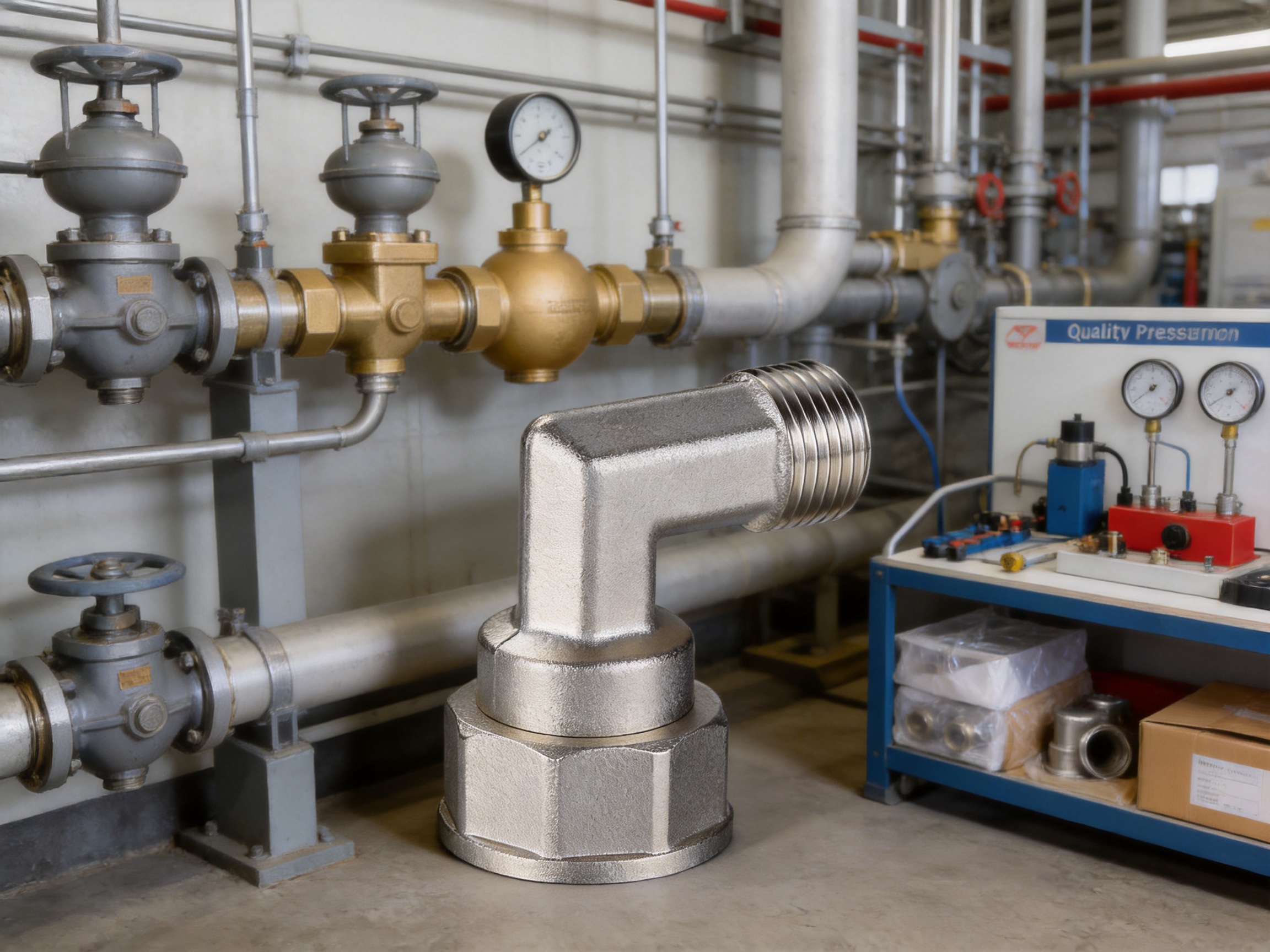
Frequently Asked Questions
What are pipe fittings used for?
Pipe fittings are used to connect, redirect, branch, reduce, extend, or close pipeline sections. They are also used to connect pipes with valves, instruments, equipment, and hardware assemblies. Their main purpose is to create a reliable path for fluids or gases while maintaining secure sealing and mechanical stability.
Why is thread accuracy important in pipe fittings?
Thread accuracy affects installation ease, sealing performance, and connection strength. Poor threads may cause leakage, cross-threading, looseness, or damage to mating components. Precision-machined threads help fittings connect smoothly and consistently with pipes, valves, and accessories.
Can pipe fittings be used with gas valves?
Yes, properly designed and manufactured pipe fittings can be used with gas valve systems, including applications involving brass gas ball valve assemblies. For gas use, material suitability, thread quality, sealing design, and testing are especially important because leakage can create safety hazards.
What makes precision pipe fittings better than ordinary fittings?
Precision pipe fittings offer better dimensional consistency, smoother sealing surfaces, controlled thread engagement, improved batch stability, and stronger quality assurance. These advantages reduce installation problems, leakage risk, rework, and long-term maintenance costs.
Are customized pipe fittings available?
Yes, custom pipe fittings can be developed according to drawings, samples, thread standards, material requirements, surface treatments, markings, and packaging needs. Customization is especially useful for OEM products, valve assemblies, regional standards, and specialized installation requirements.
How should buyers choose a pipe fitting supplier?
Buyers should evaluate manufacturing equipment, quality inspection capability, material control, production capacity, customization support, experience with valve applications, and delivery stability. A supplier with automated precision machining and testing capability is generally more reliable for long-term cooperation.
Do pipe fittings affect the performance of valves?
Yes, fittings can affect valve performance by influencing alignment, sealing, installation stress, and connection stability. A high-quality valve may still experience problems if connected with poor fittings. Matching reliable fittings with valves helps create a safer and more stable fluid control system.
What industries commonly use pipe fittings?
Pipe fittings are widely used in plumbing, water supply, gas distribution, industrial fluid control, heating systems, compressed air systems, machinery, agricultural equipment, valve manufacturing, and hardware accessory production.
Conclusion: Reliable Connections Begin with Precision
Pipe fittings are essential components in fluid and gas systems, and their importance should not be underestimated. They connect pipelines, support valves, enable system layout, and protect overall sealing performance. Although many fittings appear similar, their actual value depends on material quality, precision machining, dimensional consistency, surface finish, testing, and manufacturing discipline. A well-made fitting reduces leakage risk, improves installation efficiency, supports long-term durability, and protects the performance of connected valves and equipment.
Advanced manufacturing capability creates a clear advantage. With professional precision machining workshops, automated assembly lines, testing facilities, experienced management, and large-scale production capacity, a strong manufacturer can deliver pipe fittings that meet the expectations of OEM buyers, distributors, contractors, and industrial users. The ability to support custom requirements further increases product value, especially for customers who need specialized valve connections, regional thread standards, or unique hardware solutions.
In markets where safety, efficiency, and reliability matter, pipe fittings should be chosen with care. Low-cost alternatives may appear attractive, but inconsistent quality can lead to leakage, rework, delays, and higher lifecycle costs. Precision pipe fittings provide a better balance of performance and value. They support secure connections for water, gas, industrial fluids, and hardware systems, while helping customers build dependable products and safe fluid ecosystems. For every pipeline and valve assembly, reliable performance begins at the connection point.
References
American Society of Mechanical Engineers. Standards for Pipe Threads, Flanges, Fittings, and Valves.
International Organization for Standardization. Industrial Valve and Piping Component Quality Management Guidelines.
Crane Co. Flow of Fluids Through Valves, Fittings, and Pipe.
Smith, Peter. Piping Materials Guide: Selection and Applications.
Brown, R. N. Practical Handbook of Fluid System Components and Sealing Methods.
Manufacturing Engineering Society. CNC Machining Practices for Precision Metal Components.
Product: Pipe Fittings

Related Products
-
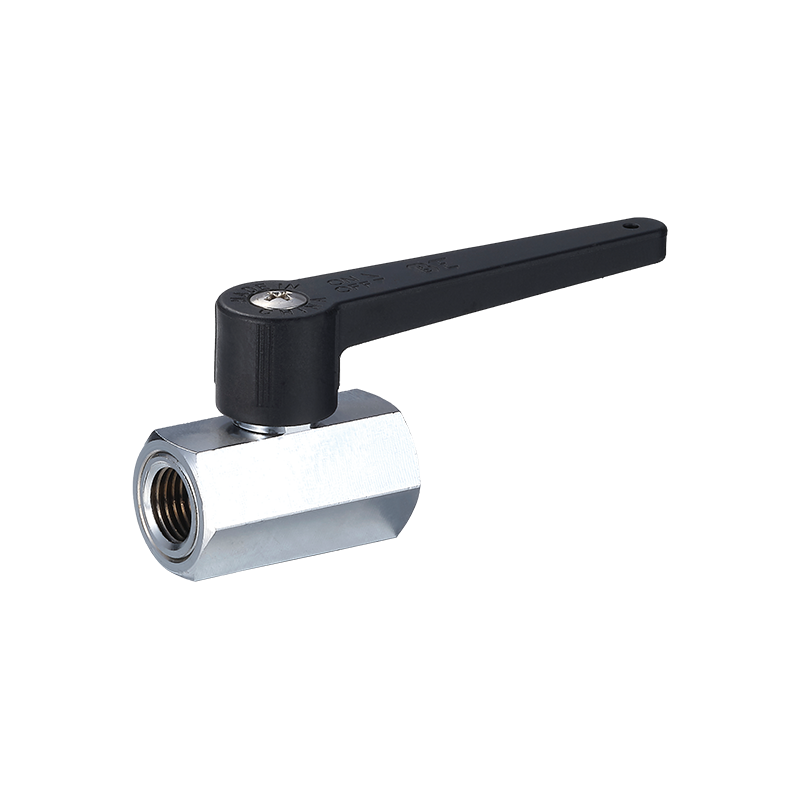 View More
-
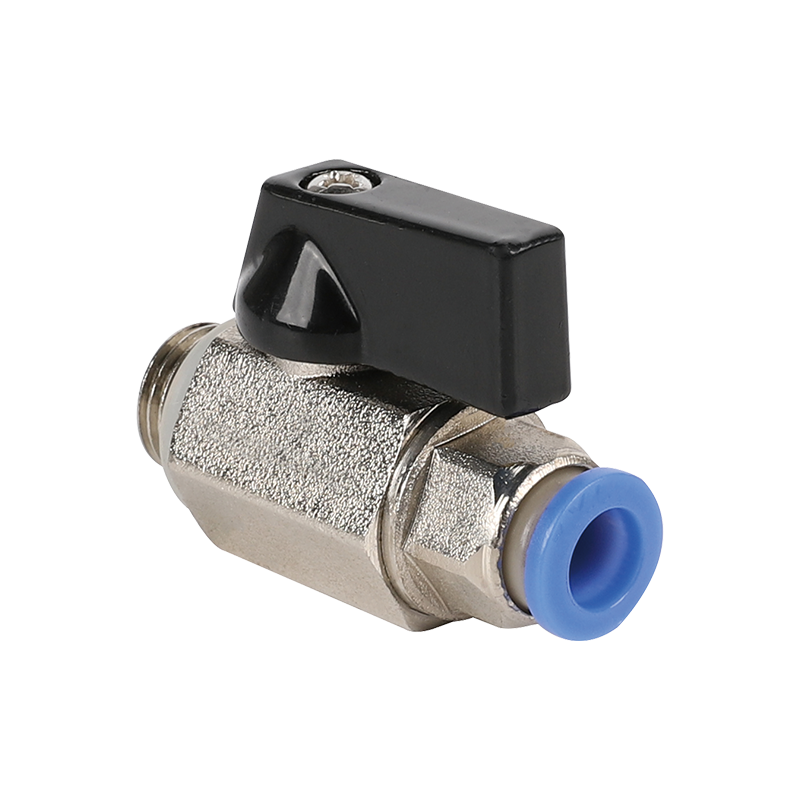 View More
MINI-2 Mini Short-Handle Ball Valve(M/M)
-
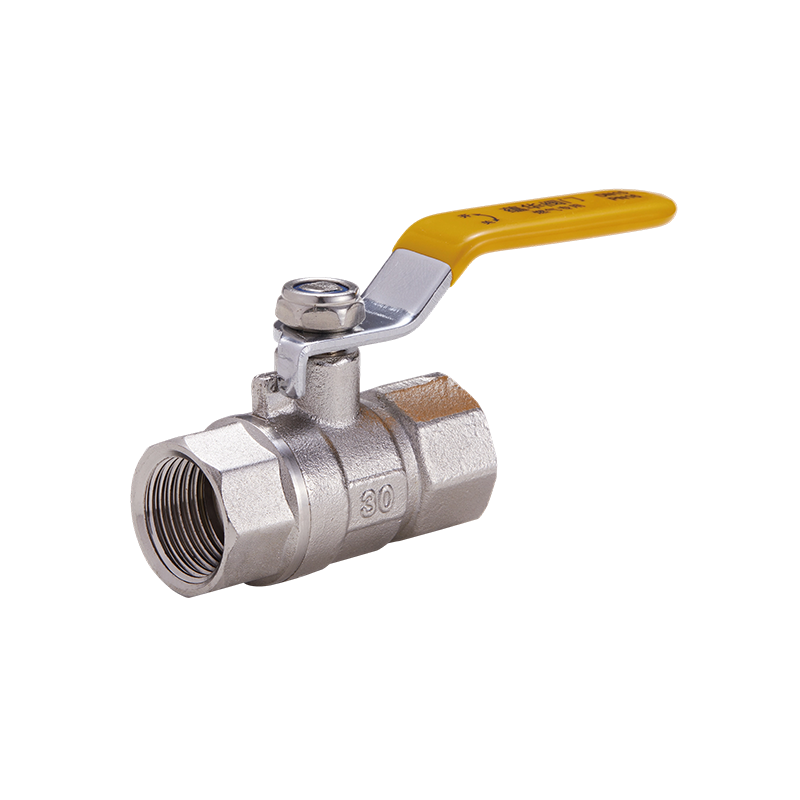 View More
YH-2210 Forged Steel Ball Valve with Long Handle (F/F)
-
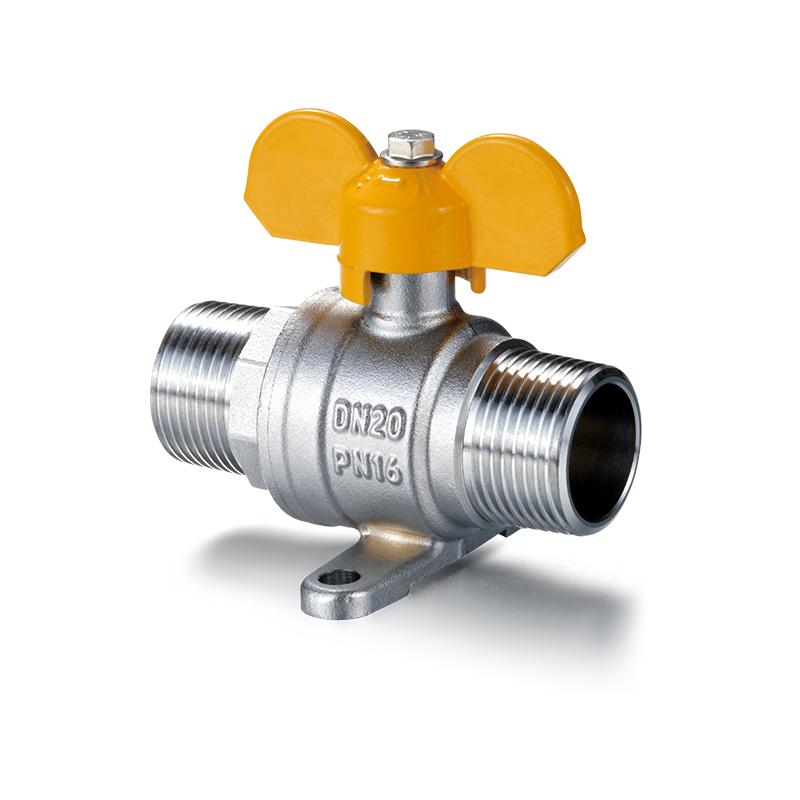 View More
YH-214 Brass Ball Valve with Base& Butterfly Handle(M/M)
-
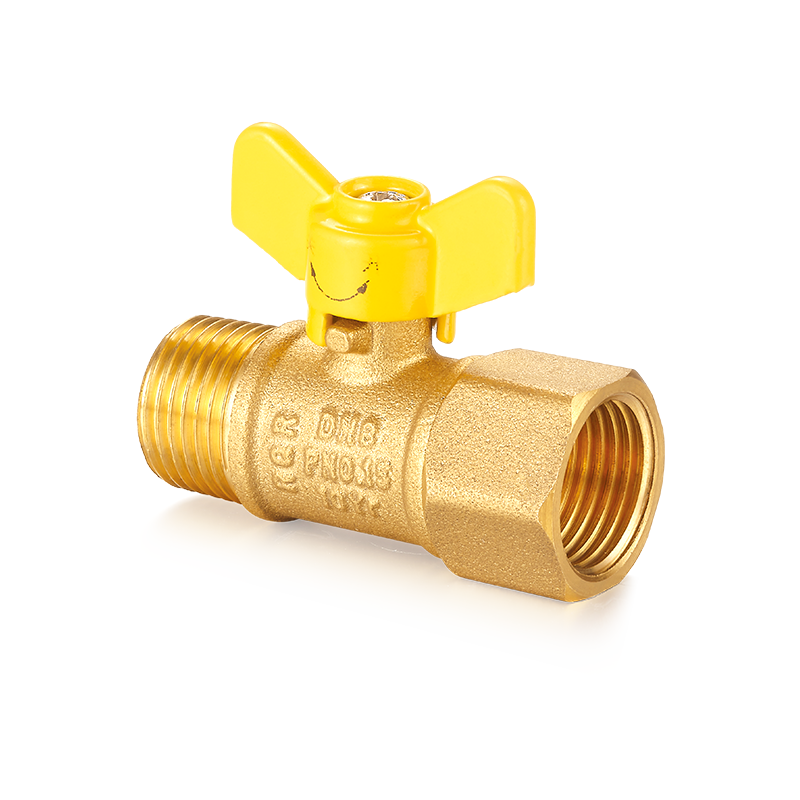 View More
YH-205 Brass Ball Valve with Butterfly Handle(F/M)
-
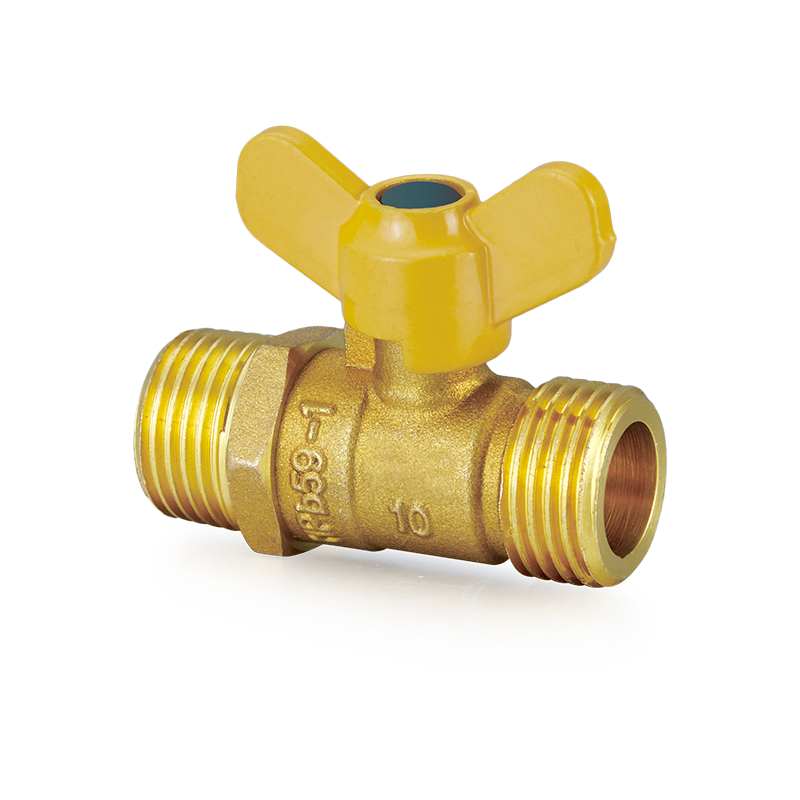 View More
YH-206 Brass Ball Valve with Butterfly Handle(M/M)
Related News
Contact Us
-

-
 +86-0574-63742169
 -
 No.104-128, Cizhang East Road, Zhangqi Town, Cixi City, Ningbo, Zhejiang Province, China


Message Us Now !
