


 English
  русский
  عربى
عربى  Español
Irregular-Shaped Pipe Fittings: Precision Components for Reliable Fluid Control Systems
Content
- 1 Understanding Irregular-Shaped Pipe Fittings
- 2 Why Special Geometries Are Needed
- 3 Key Product Advantages
- 4 Applications Across Fluid and Hardware Systems
- 5 Material Selection and Performance Considerations
- 6 Precision Manufacturing Process
- 6.1 Engineering Review and Drawing Analysis
- 6.2 Material Preparation
- 6.3 Forming, Forging, or Blank Production
- 6.4 CNC Precision Machining
- 6.5 Internal Passage Machining
- 6.6 Threading and Connection Formation
- 6.7 Deburring and Cleaning
- 6.8 Assembly and Automated Operations
- 6.9 Testing and Quality Verification
- 7 Manufacturing Strengths and Production Capacity
- 8 Advantages Compared with Multi-Fitting Assemblies
- 9 Quality Control Priorities
- 10 Customization Process for Special Fittings
- 11 Installation and Service Recommendations
- 12 How to Select the Correct Product
- 13 Why Integrated Manufacturing Matters
- 14 Q&A: Irregular-Shaped Pipe Fittings
- 14.1 What is an irregular-shaped pipe fitting?
- 14.2 Can an irregular-shaped fitting replace several standard fittings?
- 14.3 What materials are available?
- 14.4 Are these fittings suitable for gas systems?
- 14.5 How does CNC machining improve the product?
- 14.6 Can the fitting be customized from a sample?
- 14.7 What information should be provided when requesting a quotation?
- 14.8 How can leakage be prevented?
- 14.9 Why choose a special fitting instead of modifying standard fittings on site?
- 14.10 What makes a supplier suitable for irregular fittings?
- 15 Conclusion
- 16 References
- 17 Product: Irregular-Shaped Pipe Fittings
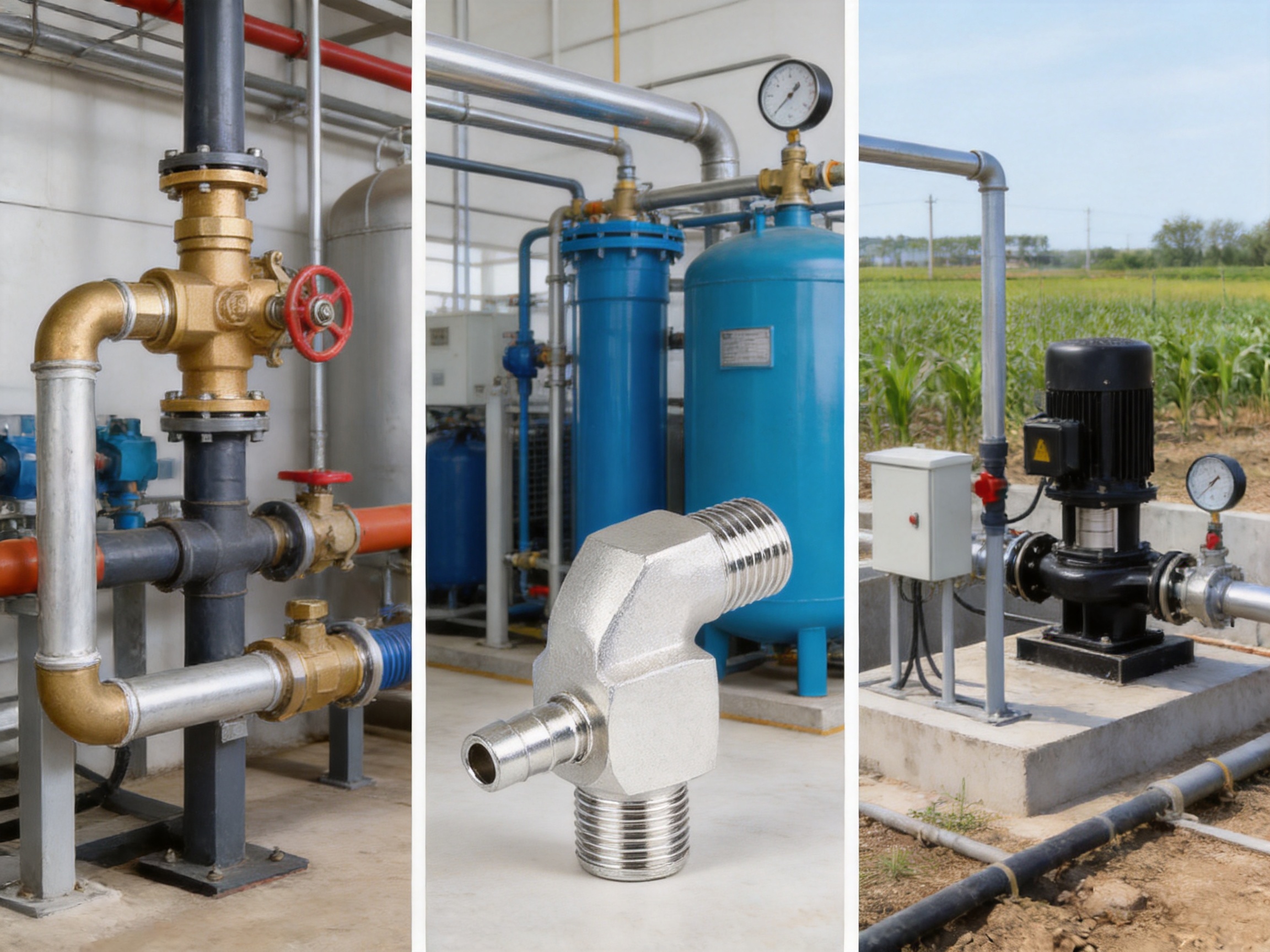
Irregular-shaped pipe fittings are essential components in fluid control systems where standard elbows, tees, reducers, and couplings cannot provide the required connection geometry. Unlike conventional fittings with uniform and predictable profiles, irregular fittings are designed around special routing requirements, limited installation space, unusual port arrangements, equipment interfaces, or integrated connection functions. Their shape may include offset passages, unequal outlets, non-symmetrical bodies, stepped sections, custom bends, special bosses, or multiple connection points.
In modern industrial, commercial, agricultural, and residential systems, pipework is rarely installed in a completely open and uncomplicated environment. Pipes must often pass around structural members, machinery, tanks, valves, electrical equipment, walls, and existing services. When space is restricted or the system requires a specialized transition, an irregular-shaped pipe fitting can provide a more practical and reliable solution than assembling several standard fittings.
Ningbo Yunhua Valve Co., Ltd. supplies hardware accessories and fluid-control components, including irregular-shaped pipe fittings, for applications that require dependable connections and consistent manufacturing quality. The company combines product development, precision machining, assembly, testing, and customer service within one organized production system. Its facilities include a precision machining workshop, assembly lines, and a testing workshop supported by CNC machine tools and automated equipment.
This integrated approach is particularly valuable for irregular-shaped fittings. Special geometries require more than a basic molding or machining operation. They demand accurate interpretation of drawings, stable material control, careful machining, reliable dimensional inspection, and effective quality management. A fitting that appears simple externally may contain complex internal passages or sealing surfaces that directly influence system performance.
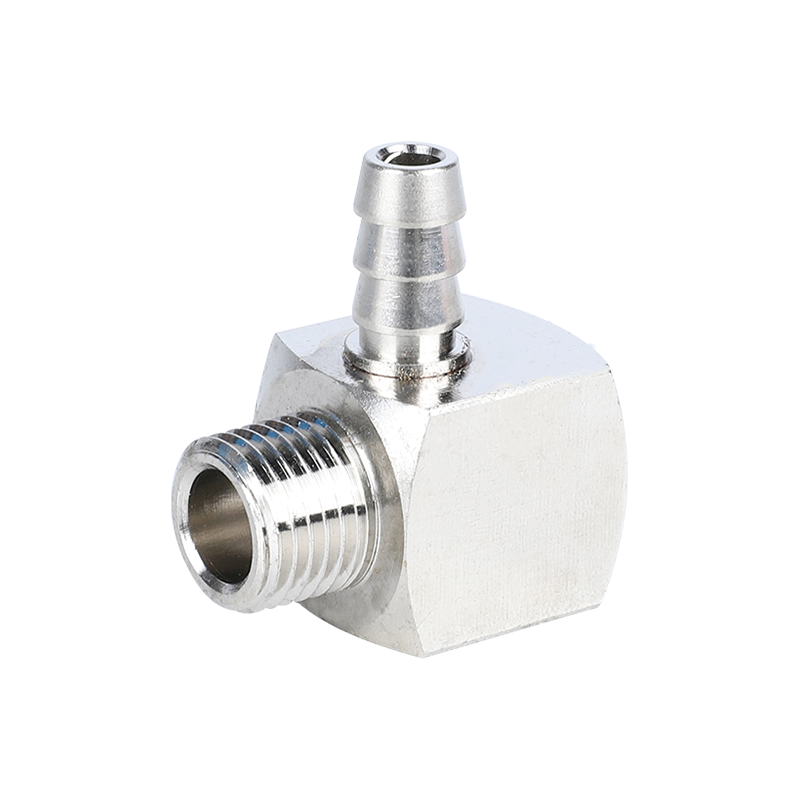
Irregular-Shaped Pipe Fittings
Understanding Irregular-Shaped Pipe Fittings
An irregular-shaped pipe fitting is a connection component whose external or internal configuration differs from the standard symmetrical forms commonly used in piping systems. It may be developed for a specific installation condition, a particular valve or equipment interface, or a customized connection requirement. The fitting can be produced with different port sizes, angles, thread arrangements, wall profiles, mounting sections, or flow paths.
Common examples include offset connectors, unusual-angle elbows, multi-directional adapters, unequal branch fittings, stepped connectors, special threaded bodies, equipment transition fittings, and fittings with integrated mounting or support features. Some designs connect two pipes that are not aligned on the same centerline. Others connect a pipe to a valve, pump, meter, tank, regulator, or specialized piece of equipment.
The term “irregular” does not mean uncontrolled or inconsistent. In a professional manufacturing environment, the shape is irregular only in relation to standard catalog geometry. The product itself must still be controlled by engineering drawings, tolerances, inspection procedures, and performance requirements. A well-designed irregular fitting should provide the same fundamental qualities expected from a conventional fitting: dimensional accuracy, mechanical strength, leak resistance, corrosion suitability, and dependable service life.
Irregular fittings may be manufactured from brass, stainless steel, carbon steel, alloy steel, ductile iron, or other materials selected according to the application. Material selection depends on the operating medium, pressure, temperature, corrosion environment, connection method, and required mechanical properties. For gas and water-related applications, brass and steel are commonly considered because they can offer a useful balance of machinability, strength, durability, and compatibility.
In a fluid-control system, a fitting is not an isolated accessory. It affects the alignment of connected components, the quality of the sealing joint, the available installation space, the behavior of the flow path, and the ease of maintenance. This is why special fittings should be treated as engineered components rather than simple pieces of hardware.
Why Special Geometries Are Needed
Standard fittings are economical and convenient, but they cannot solve every installation challenge. A standard elbow may produce too large a turning radius. A conventional tee may place the branch in the wrong direction. A reducer may not provide the required offset. Several standard fittings connected together may occupy excessive space and create additional joints.
Irregular-shaped fittings address these limitations by combining several functions into a single controlled component. For example, one special fitting may provide a change in direction, a diameter transition, and an equipment connection at the same time. This can reduce the number of separate joints and simplify the layout of the overall system.
Special geometries are especially useful in compact equipment, utility cabinets, gas distribution assemblies, water treatment units, boiler systems, irrigation installations, and industrial machinery. They are also valuable when a replacement component must match an existing pipe arrangement that was not designed around standard dimensions.
Typical reasons for selecting an irregular-shaped fitting include:
• Connecting pipes with different centerlines or elevations.
• Routing pipework through a narrow or obstructed installation area.
• Matching a non-standard equipment port or valve body.
• Combining multiple connection functions in one component.
• Reducing the number of joints and potential leakage points.
• Improving the appearance and organization of exposed pipework.
• Supporting a custom assembly or replacement project.
• Providing a transition between different thread, size, or connection standards.
When these requirements are considered during the design stage, the fitting can improve both the technical performance and the practical installation efficiency of the system.
Key Product Advantages
Design Flexibility
The primary advantage of an irregular-shaped pipe fitting is design flexibility. Standard components force the pipe layout to adapt to the available catalog geometry. A custom or special-shape fitting allows the component to be developed around the actual requirements of the installation.
This flexibility can include non-standard angles, unequal ports, eccentric transitions, offset outlets, special lengths, unique thread positions, and integrated mounting sections. The fitting can be designed to work with existing equipment rather than requiring extensive modification of the surrounding pipework.
For engineers and installers, this means that difficult layouts can be solved with fewer compromises. The result may be a more direct flow path, a cleaner installation, or a more compact assembly.
Reduced Number of Joints
Using multiple standard fittings to imitate a special shape can create a chain of joints. Every additional joint introduces another sealing interface, another point that must be tightened correctly, and another location that may require future inspection. A single irregular-shaped fitting can often combine several of these functions.
Reducing the number of joints may improve system reliability by lowering the number of potential leakage points. It can also reduce installation time and simplify maintenance. In gas and fluid systems, fewer connections can be especially valuable because sealing performance is a critical safety and operational consideration.
Fewer components may also reduce the total assembly length. This is helpful in compact equipment where every millimeter of available space matters.
Improved Installation Efficiency
A fitting that matches the required route can be installed more quickly than a collection of standard components that must be carefully aligned. Installers can spend less time adjusting multiple elbows, adapters, and short pipe sections. A purpose-designed component can also reduce the need for on-site cutting, threading, or rework.
Improved installation efficiency does not mean that technical procedures can be ignored. Correct tools, compatible sealing materials, appropriate tightening practices, and final inspection remain necessary. However, a better-fitting component can make those procedures more straightforward and repeatable.
Better Alignment with Connected Equipment
Misalignment can place unwanted stress on pipes, valve bodies, pumps, regulators, and other equipment. When a rigid connection is forced into position, the resulting mechanical load may affect sealing surfaces or shorten component life. An irregular-shaped fitting can be designed to provide the required offset or orientation before the connection is tightened.
Proper alignment supports a more stable assembly and can make future removal easier. It may also protect connected equipment from excessive bending or twisting forces during installation.
Reliable Sealing Performance
Sealing reliability depends on many factors, including material, thread quality, surface finish, dimensional accuracy, sealing design, and installation technique. A precision-produced irregular fitting can provide controlled sealing surfaces and accurate connection dimensions, helping the installer achieve a dependable joint.
Where threaded connections are used, clean and accurately formed threads are essential. Where compression, gasket, brazed, welded, or other connection methods are used, the relevant contact surfaces must be manufactured to the required specifications. The special shape of the body should never compromise the basic quality of the connection area.
Efficient Use of Space
Space efficiency is one of the most practical benefits of special fittings. In machinery, packaged systems, wall-mounted assemblies, and utility enclosures, standard fittings may create unnecessary projections or interfere with nearby components. A purpose-designed shape can route the connection within the available envelope.
Compact routing can also improve accessibility. If valves, inspection points, and service connections are positioned more logically, technicians may be able to inspect or replace components without dismantling a large section of the system.
Consistent Appearance and Assembly Quality
In visible pipework, a collection of mismatched standard components may look untidy or make the installation appear improvised. An irregular-shaped fitting can provide a cleaner and more professional appearance. More importantly, it can standardize the arrangement of repeated assemblies.
For equipment manufacturers, this repeatability is valuable. The same fitting design can be used across multiple units, helping maintain consistent assembly dimensions, hose or pipe routing, and service access.
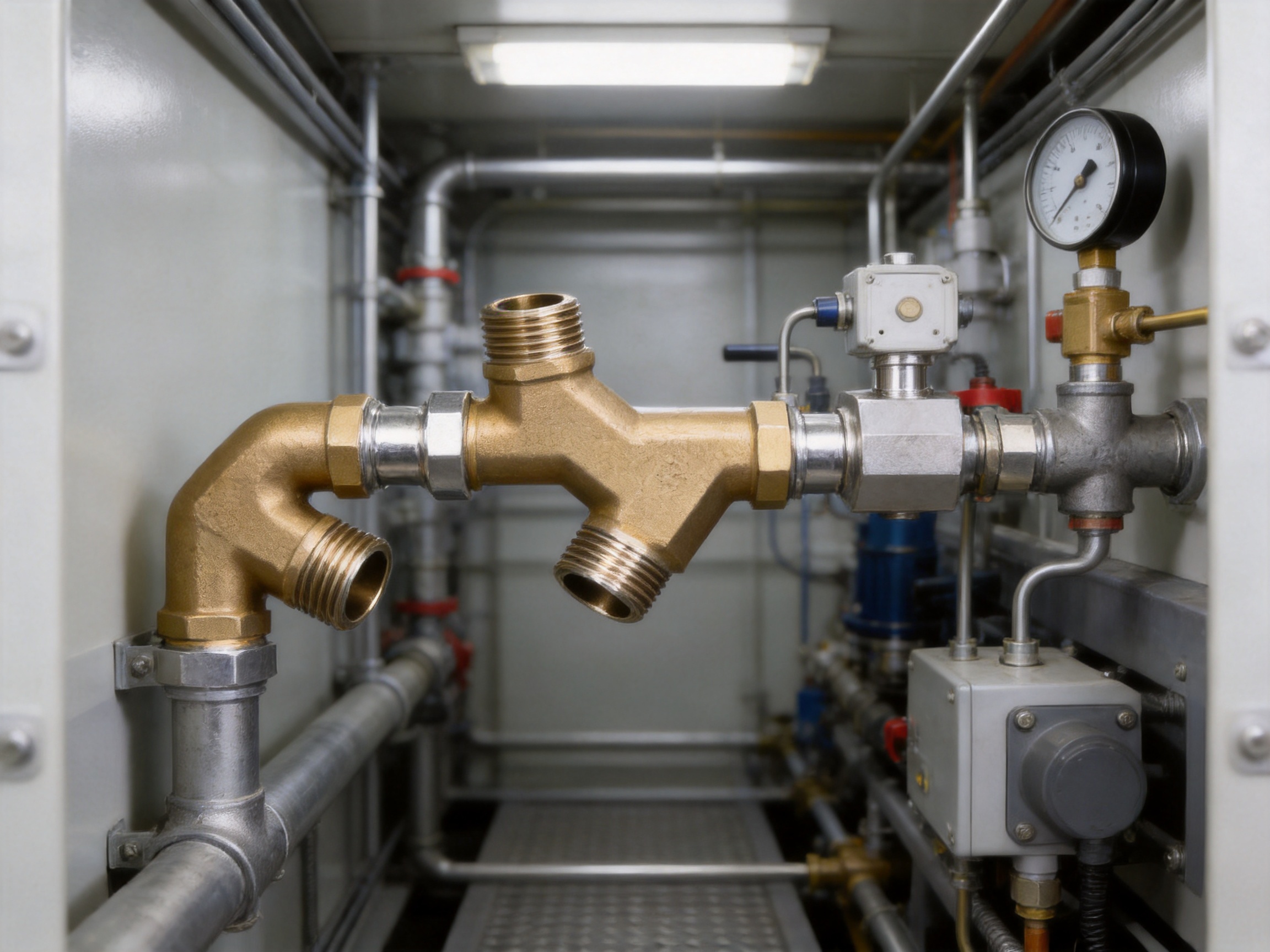
Applications Across Fluid and Hardware Systems
Gas Control and Distribution
Gas systems require careful attention to sealing, material compatibility, mechanical stability, and installation quality. Special-shaped fittings may be used in gas appliance connections, regulators, manifolds, meter assemblies, and distribution equipment where space or port orientation is limited.
For gas applications, the fitting must be selected according to the gas type, pressure, temperature, applicable regulations, and connection standard. The product should be installed by qualified personnel, and the complete system should be tested for leakage before being placed into service.
An irregular fitting can be beneficial in gas assemblies because it may reduce the number of threaded interfaces and help maintain a clear, organized route. It can also assist in matching a valve or regulator port to the position of the incoming or outgoing pipe.
Water Supply Systems
Water supply systems often contain valves, meters, pumps, filters, storage tanks, and different pipe sizes. A special fitting can provide a practical transition between these components, particularly where the equipment ports are not aligned with the building pipework.
In residential and commercial water systems, irregular-shaped fittings may support compact installations beneath sinks, inside utility cabinets, near water heaters, or in plant rooms. In industrial water systems, they can help connect treatment equipment, pressure control devices, and process lines.
Valve Assemblies
Valves frequently require special connection arrangements because their body shape, handle clearance, actuator position, or port orientation may differ from the surrounding pipework. An irregular fitting can help create a more efficient connection between the valve and the rest of the system.
When used near a valve, the fitting should not interfere with handle operation, actuator movement, drainage, inspection, or replacement. The design should also consider whether the valve needs to be removed without dismantling an excessive amount of pipework.
Industrial Equipment
Industrial machines may contain fluid, gas, oil, coolant, steam, or chemical circuits with limited internal space. Special fittings can be developed to connect tubing and pipes to pumps, cylinders, heat exchangers, filters, sensors, and control units.
Because industrial systems can experience vibration, thermal cycling, pressure fluctuations, or corrosive conditions, the fitting material and geometry must be evaluated as part of the complete system. In some situations, the fitting may need additional support, a stronger wall section, or a modified connection arrangement.
Irrigation and Agricultural Equipment
Irrigation systems often combine different pipe sizes, valves, pumps, filters, and distribution branches. Special-shaped fittings can help simplify connections around pump stations, control boxes, and water treatment equipment. Their use may be particularly helpful where temporary or movable equipment must connect to an established pipe network.
Outdoor installations require consideration of moisture, soil contact, ultraviolet exposure, temperature changes, and possible impact. A suitable surface treatment and appropriate material can help improve service performance in these environments.
Heating and Utility Installations
Heating systems and utility networks may require compact connections around boilers, radiators, circulation pumps, expansion vessels, and control valves. An irregular-shaped fitting can help preserve clearance around hot surfaces and moving parts while maintaining an efficient route.
Designers should consider thermal expansion and contraction, as well as the need for insulation and future maintenance. The fitting must be suitable for the operating temperature and fluid used in the system.
Material Selection and Performance Considerations
Material selection is a central part of irregular-fitting design. The material must withstand the mechanical and environmental conditions of the intended application while remaining suitable for the selected manufacturing process.
Brass
Brass is widely used for many water, gas, and hardware accessory applications because it offers good machinability, practical strength, and resistance to many common environments. It is suitable for producing accurate threaded sections and detailed shapes. Different brass grades may be selected according to regulatory requirements, pressure conditions, and the intended medium.
Brass fittings are often valued for their stable machining behavior and attractive appearance. They may be used in valve assemblies, water connections, gas-related hardware, and general plumbing applications when the grade and certification requirements are appropriate.
Steel and Forged Materials
Steel can provide high mechanical strength and durability for demanding applications. Forged steel components are formed from heated metal under controlled pressure, creating a dense structure that can be suitable for high-strength connection requirements. The final performance depends on the selected alloy, forging process, heat treatment, machining accuracy, and inspection program.
Forged materials may be considered where the fitting must tolerate higher mechanical loads, pressure, or severe service conditions. Surface protection, corrosion control, and proper installation remain important factors.
Stainless Steel
Stainless steel may be selected for applications requiring improved corrosion resistance or a clean surface. It is often used in water treatment, food-related equipment, chemical service, and environments where moisture or aggressive media are present.
Stainless steel grades differ significantly in corrosion resistance, strength, and machinability. The selected grade should match the fluid and environmental conditions rather than being chosen only for its general appearance.
Surface Treatment
Surface treatment can improve appearance, corrosion resistance, and service durability. Depending on the material and application, possible treatments include polishing, plating, passivation, coating, or protective finishing. The treatment should be compatible with the operating environment and should not damage threads or sealing surfaces.
For threaded products, excessive coating thickness can affect thread engagement. For sealing faces, surface treatment must be controlled so that the finished component continues to meet dimensional and functional requirements.
Precision Manufacturing Process
The production of a high-quality irregular-shaped pipe fitting begins before machining. Product requirements must be reviewed, the geometry must be clearly defined, and the manufacturing route must be planned. Special shapes may require a combination of forming, forging, casting, turning, milling, drilling, tapping, deburring, cleaning, and inspection.
Engineering Review and Drawing Analysis
The first step is the review of the product drawing or technical specification. Important information includes overall dimensions, port sizes, centerline positions, angles, thread standards, wall thickness, material, tolerances, surface requirements, and any pressure or leakage criteria.
During this stage, engineers can identify potential manufacturing challenges. A narrow internal passage may require specialized tooling. An offset port may require multiple machining operations. A complex external profile may need additional support during processing. Early planning helps prevent unnecessary variation and improves production efficiency.
Material Preparation
Raw material must be selected and prepared according to the product requirements. Bars, forgings, cast blanks, or other semi-finished forms should have suitable dimensions and quality. Material identification and storage controls help maintain traceability and reduce the risk of mixing different grades.
For critical applications, material documentation and incoming inspection may be used to confirm the required grade and condition. The material should be free from defects that could affect machining, pressure integrity, or final performance.
Forming, Forging, or Blank Production
Depending on the geometry and material, the fitting blank may be produced through forging, casting, cutting, or another forming process. The choice depends on volume, shape complexity, strength requirements, dimensional needs, and economic considerations.
Forging can be advantageous for certain high-strength components because it forms the material under pressure and can produce a strong, dense blank. Machined blanks may be suitable for lower-volume special designs or components requiring extensive material removal. Each route must be controlled to ensure that the blank provides enough allowance for subsequent operations.
CNC Precision Machining
CNC machine tools are particularly useful for irregular-shaped fittings because they can repeat complex tool paths with consistent accuracy. Turning operations can create cylindrical sections, shoulders, and external diameters. Milling can produce flats, offsets, slots, or unusual external profiles. Drilling and tapping can create accurate passages and threaded ports.
The use of CNC equipment supports repeatability across production batches. Once the program, tooling, fixtures, and inspection method have been validated, the same design can be reproduced with controlled variation. This is important for customers who require consistent interchangeability in repeated assemblies.
Special fixtures may be used to hold non-symmetrical workpieces securely. Proper workholding prevents movement during machining and helps maintain the relationship between different ports. Tool selection, cutting parameters, coolant management, and tool-wear monitoring also influence surface quality and dimensional stability.
Internal Passage Machining
The internal passage is one of the most important features of a fitting. It must connect the ports correctly and provide sufficient flow capacity without creating unnecessary restrictions. Depending on the shape, the internal passage may be drilled, bored, milled, or produced through a combination of operations.
Internal intersections should be managed carefully. Sharp internal steps, burrs, or excess material can disturb flow and may become a source of contamination. Where practical, the internal design should support smooth flow transitions and effective cleaning.
Threading and Connection Formation
Threads must be formed according to the required standard and checked for profile, pitch, diameter, depth, and engagement. A fitting may have internal threads, external threads, or a combination of different connection types. Thread inspection is essential because even a small dimensional error can affect assembly or sealing performance.
Connection areas should be protected during later operations to prevent damage. Thread cleanliness is also important. Chips, burrs, oil residue, and foreign material should be removed before packaging.
Deburring and Cleaning
After machining, burrs may remain around ports, edges, cross-holes, and internal passages. Deburring improves safety during handling and helps prevent particles from entering the connected system. Cleaning removes chips, cutting fluids, and contaminants from the component surface.
For fluid and gas applications, cleanliness should be appropriate to the final use. Components may require additional washing, drying, or protective treatment before inspection and packaging.
Assembly and Automated Operations
Some irregular-shaped fittings are supplied as individual components, while others form part of an assembled valve or hardware unit. Where assembly is required, controlled procedures help ensure that seals, inserts, caps, stems, or related parts are installed consistently.
Automated assembly equipment can improve repeatability and production efficiency. It can also reduce variation caused by manual operations. However, automation must be supported by correct component feeding, process verification, and final inspection.
Testing and Quality Verification
Testing confirms that the finished product meets its intended requirements. Depending on the product specification, inspection may include dimensional measurement, thread gauging, visual inspection, surface checks, pressure testing, leakage testing, and functional verification.
Pressure and leakage tests are particularly important for fittings used in fluid or gas systems. The test method, pressure, duration, and acceptance criteria should be defined according to the applicable product requirements and customer specifications.
A dedicated testing workshop allows inspection activities to be organized as a formal part of production rather than treated as an afterthought. This supports more reliable release decisions and helps identify process improvements.
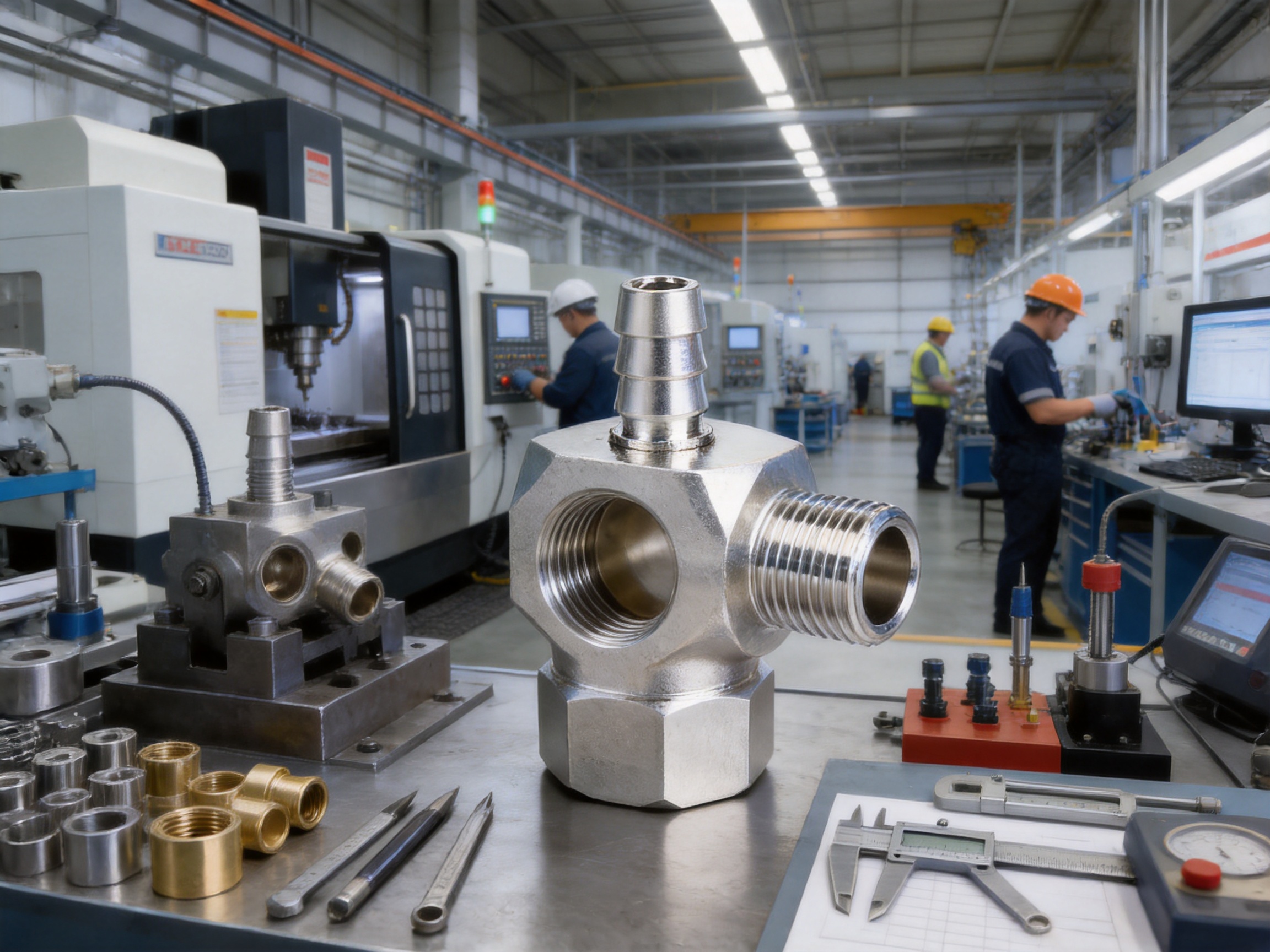
Manufacturing Strengths and Production Capacity
Ningbo Yunhua Valve Co., Ltd. has developed an organized manufacturing base covering approximately 20,000 square meters. The company operates a precision machining workshop, assembly line, and testing workshop, supported by domestic and international CNC machine tools and automated assembly and testing equipment.
This combination of facilities provides several practical advantages for irregular-shaped pipe fittings. First, it supports the controlled production of complex geometries. Second, it allows machining, assembly, and testing to be coordinated within one manufacturing system. Third, it helps the company respond to customer requirements involving different product sizes, connection forms, and application conditions.
The stated annual production capacity includes approximately 2 million valve sets and 10 million hardware accessory sets. Such capacity indicates that the company is equipped to support both regular production and larger-volume supply programs, subject to product design, material, and order requirements.
A professional management team and an established management system also contribute to production stability. For customized fittings, effective communication between sales, engineering, production, quality control, and logistics is essential. Clear communication helps ensure that drawings, samples, revisions, packaging requirements, and delivery details are properly coordinated.
Advantages Compared with Multi-Fitting Assemblies
| Evaluation Area | Irregular-Shaped Fitting | Multiple Standard Fittings |
|---|---|---|
| Connection count | Can combine several functions into one component | Usually requires several joints and adapters |
| Space usage | Designed for the available installation envelope | May require a larger routing area |
| Alignment | Can incorporate a planned offset or special angle | Alignment depends on several separate components |
| Leakage exposure | Fewer joints may reduce potential leakage locations | Each additional joint requires correct sealing |
| Installation time | Can simplify assembly and reduce adjustment | May require more cutting, threading, and alignment |
| Appearance | Provides a cleaner and more integrated layout | May appear crowded or improvised |
| Maintenance | Fewer parts can simplify inspection | More components may increase service complexity |
| Customization | Can be developed around a specific requirement | Limited to available standard configurations |
The table illustrates why a special fitting may offer value beyond its purchase price. The economic benefit can include reduced installation labor, lower inventory requirements, improved equipment integration, and fewer service interruptions. The correct comparison should consider the total installed cost rather than the cost of one individual component.
Quality Control Priorities
Dimensional Accuracy
Dimensional accuracy ensures that the fitting connects correctly with mating pipes and equipment. Important dimensions may include port centers, overall length, angle, wall thickness, thread position, shoulder height, and mounting features.
For irregular geometries, the relationship between features is often more important than any single measurement. Two ports may individually meet their dimensions but still be misaligned relative to each other. Inspection procedures should therefore evaluate the complete geometry where necessary.
Thread and Sealing Inspection
Threads should be checked with suitable gauges or measurement equipment. Sealing surfaces should be inspected for scratches, dents, machining marks, and contamination. A fitting that passes a general visual inspection may still fail if its threads or sealing area are not properly controlled.
Pressure and Leakage Control
A fitting used in a pressurized system must be capable of containing the working medium under the specified conditions. Leakage testing provides direct evidence of sealing integrity. Testing should be performed using a controlled method and recorded according to the quality system.
Surface and Internal Cleanliness
Cleanliness affects both appearance and performance. External contamination may interfere with coating or assembly. Internal chips or burrs may enter the piping system and damage valves, meters, pumps, or other sensitive components.
Batch Consistency
Customers often require fittings to remain interchangeable across different deliveries. Batch consistency depends on stable material, controlled CNC programs, reliable fixtures, effective tool management, and regular inspection. A strong production system should identify variation before it affects a large quantity of products.
Customization Process for Special Fittings
Customization typically begins with the customer’s drawing, sample, application description, or installation photograph. The most useful information includes the medium being transported, operating pressure, operating temperature, connection standard, material preference, required quantity, surface treatment, and inspection requirements.
The technical team can then review the proposed geometry and identify production considerations. If the drawing is incomplete, clarification may be needed regarding tolerances, thread type, port orientation, or critical sealing features. A clear design review helps reduce misunderstandings before production begins.
For new or highly specialized products, a sample or prototype may be produced for dimensional confirmation and installation testing. Feedback from the customer can then be incorporated into the final design. Once the product is approved, the manufacturing process can be standardized for repeat orders.
Customization does not always require a completely new product. In many cases, an existing design can be modified through a different port direction, length, thread combination, material, or surface treatment. This can provide a practical balance between development speed and application-specific performance.
Installation and Service Recommendations
Before installation, confirm that the fitting matches the pipe size, connection standard, material requirements, and intended medium. Inspect the component for damage, contamination, or thread deformation. The mating pipes should be properly aligned and supported so that the fitting is not used to force misaligned pipework into position.
Use a compatible sealing method for the connection type. Thread sealant, gasket, compression element, or other sealing material should be selected according to the system specification. Sealant should not be allowed to enter the internal passage, where it could restrict flow or contaminate downstream equipment.
Use suitable tools on the designated wrench flats or body sections. Do not apply excessive force to delicate areas, valve stems, actuator parts, or thin sections. Over-tightening can damage threads, distort sealing surfaces, or create unnecessary stress in the connected system.
After installation, inspect the assembly and perform the required pressure or leakage test. For gas systems, leakage testing should be completed before operation. During service, check for signs of corrosion, vibration, movement, leakage, or damage, especially in outdoor and high-temperature installations.
Where the fitting is part of a removable equipment assembly, consider future maintenance during the initial installation. Adequate clearance, accessible connection points, and independent pipe supports can reduce the time required for later service.
How to Select the Correct Product
Selection should begin with the function the fitting must perform. Determine whether it must change direction, connect different sizes, provide an offset, divide flow, connect to equipment, or combine several functions. The desired geometry should then be defined by accurate measurements or a technical drawing.
The next consideration is the operating medium. Water, natural gas, compressed air, oil, chemicals, and other fluids may require different materials, seals, surface treatments, and regulatory approvals. The fitting should never be selected only by external shape or nominal size.
Pressure and temperature are equally important. The fitting must be suitable for both normal operating conditions and foreseeable fluctuations. If the system experiences water hammer, vibration, thermal cycling, pulsation, or external loads, these factors should be included in the technical evaluation.
Connection standards must also be confirmed. Similar-looking threads may not be interchangeable. Port dimensions, thread form, pitch, sealing method, and orientation should be clearly specified. If different standards are required on opposite ends of the fitting, this should be stated in the drawing or purchase specification.
Finally, evaluate the supplier’s manufacturing capability. Important factors include CNC machining resources, automated assembly, testing facilities, quality management, production capacity, customization support, communication efficiency, and ability to maintain consistent delivery.
Why Integrated Manufacturing Matters
An integrated manufacturing operation can provide better coordination than a fragmented supply chain in which design, machining, assembly, and testing are handled by unrelated parties. When these functions are organized within one company, technical feedback can move more quickly between departments.
For irregular-shaped fittings, this coordination is particularly useful. A machining issue may affect assembly. An assembly issue may reveal a dimensional problem. A pressure test result may suggest a change in the sealing design. When engineering, production, and quality teams work within a unified system, these connections can be addressed more efficiently.
Integrated production can also help protect delivery schedules. Material preparation, machining, assembly, testing, and packaging can be planned as one sequence. This does not eliminate every supply or production risk, but it can improve visibility and accountability.
The company’s focus on gas and fluid valves, water supply valves, and hardware accessories provides relevant product experience for customers seeking special fittings. A fitting used next to a valve must be understood in relation to flow control, sealing, installation, and service requirements. Experience across related products can support more practical product development.
Q&A: Irregular-Shaped Pipe Fittings
What is an irregular-shaped pipe fitting?
It is a pipe connection component with a special external profile, internal passage, port arrangement, angle, offset, or size transition that differs from standard fitting geometry. It is normally developed for a specific installation or equipment connection requirement.
Can an irregular-shaped fitting replace several standard fittings?
In many applications, it can combine the functions of several standard components. However, the replacement must be evaluated for pressure, flow, material compatibility, connection standards, and installation requirements. A special fitting should not be used as a substitute without confirming technical suitability.
What materials are available?
Material options may include brass, steel, stainless steel, and other suitable alloys. The correct choice depends on the medium, pressure, temperature, corrosion environment, mechanical load, and applicable standards.
Are these fittings suitable for gas systems?
They may be suitable when the material, geometry, sealing method, pressure rating, and applicable approvals meet the gas system requirements. Gas installation and testing should be performed by qualified professionals.
How does CNC machining improve the product?
CNC machining can produce complex profiles and port arrangements with repeatable dimensional control. It is especially useful for non-symmetrical components that require accurate relationships between multiple features.
Can the fitting be customized from a sample?
A sample, drawing, or installation measurement may be used as the starting point for customization. The final design should be reviewed and confirmed before mass production so that critical dimensions, materials, and connection details are clearly defined.
What information should be provided when requesting a quotation?
Provide the drawing or sample, material requirement, pipe sizes, connection standards, port orientation, operating medium, pressure, temperature, surface treatment, estimated quantity, packaging requirements, and inspection expectations. Photographs and installation dimensions can also be helpful.
How can leakage be prevented?
Leakage prevention requires accurate threads or sealing surfaces, compatible sealing materials, clean components, correct alignment, proper tightening, and final pressure or leakage testing. The fitting is only one part of the complete sealing system.
Why choose a special fitting instead of modifying standard fittings on site?
A purpose-designed fitting can reduce field cutting, threading, welding, alignment, and rework. It may also reduce the number of joints and provide more consistent results across repeated installations. On-site modification may be practical in some situations, but it can introduce variability and should follow appropriate technical procedures.
What makes a supplier suitable for irregular fittings?
A suitable supplier should have product development capability, precision machining equipment, experienced production personnel, assembly resources, testing facilities, quality control, and the ability to communicate clearly about drawings and specifications. Reliable capacity and after-sales support are also important for long-term projects.
Conclusion
Irregular-shaped pipe fittings provide an effective solution when standard components cannot deliver the required alignment, compactness, connection arrangement, or equipment compatibility. By combining several functions into one engineered component, they can reduce joints, simplify installation, improve space utilization, and support more organized fluid-control systems.
The performance of a special fitting depends on much more than its external appearance. Material selection, internal passage design, thread accuracy, sealing surfaces, dimensional control, machining quality, cleanliness, and testing all contribute to its reliability. A fitting must be designed and manufactured as a complete functional component.
Ningbo Yunhua Valve Co., Ltd. supports the production of valves, water supply components, gas and fluid-control products, and hardware accessories through a manufacturing system that includes precision machining, automated assembly, and testing operations. Its approximately 20,000-square-meter production base and stated annual capacity of 2 million valve sets and 10 million hardware accessory sets provide a foundation for both standard and customized supply requirements.
For customers developing a new assembly, improving an existing pipe layout, or replacing a difficult-to-source component, irregular-shaped pipe fittings can offer a practical combination of flexibility and reliability. With accurate specifications and cooperation between the customer and manufacturer, a special fitting can be produced to support safer, cleaner, and more efficient fluid-control installations.
References
1. General principles of industrial piping design, component selection, and installation practice.
2. Manufacturing engineering references for CNC machining, threading, deburring, and dimensional inspection.
3. Quality management principles for metal components, valve assemblies, and hardware accessories.
4. Technical guidance on pressure testing and leakage testing for fluid and gas connection components.
5. Materials engineering references for brass, carbon steel, stainless steel, and forged metal products.
6. Industrial maintenance guidance for threaded connections, pipe supports, alignment, and sealing systems.
Product: Irregular-Shaped Pipe Fittings

Related Products
Related News
Contact Us
-

-
 +86-0574-63742169
 -
 No.104-128, Cizhang East Road, Zhangqi Town, Cixi City, Ningbo, Zhejiang Province, China


Message Us Now !
