


 English
  русский
  عربى
عربى  Español
Irregular-Shaped Pipe Fittings: Precision Solutions for Complex Fluid Systems
Content
- 1 What Are Irregular-Shaped Pipe Fittings?
- 2 Why Complex Piping Systems Need Special Fittings
- 3 Key Advantages Over Multiple Standard Fittings
- 4 Product Design Considerations
- 5 Materials Used for Irregular-Shaped Pipe Fittings
- 6 Advanced Manufacturing Process
- 7 Quality Control Advantages
- 8 Applications Across Multiple Industries
- 9 Advantages for OEM and Project Buyers
- 10 Information Required for Customization
- 11 Comparison of Standard and Irregular-Shaped Solutions
- 12 Why Manufacturing Capability Matters
- 13 Designing for Reliability and Service Life
- 14 Cost and Supply Considerations
- 15 Practical Selection Checklist
- 16 Role of a Professional Manufacturer
- 17 Environmental and Operational Benefits
- 18 Q&A About Irregular-Shaped Pipe Fittings
- 18.1 What is an irregular-shaped pipe fitting?
- 18.2 Can irregular-shaped fittings be made according to a drawing?
- 18.3 Are these fittings suitable for gas applications?
- 18.4 Which materials are available?
- 18.5 Can a special fitting replace several standard fittings?
- 18.6 Are irregular fittings more expensive than standard fittings?
- 18.7 What information should be included in a quotation request?
- 18.8 How does CNC machining benefit production?
- 18.9 How are irregular-shaped fittings tested?
- 18.10 Can the manufacturer provide repeat orders?
- 18.11 How should fittings be installed?
- 18.12 What makes one manufacturer more reliable than another?
- 19 Conclusion
- 20 References
- 21 Product: Irregular-Shaped Pipe Fittings
Irregular-shaped pipe fittings are essential components in fluid systems where standard elbows, tees, couplings, and reducers cannot provide the required connection geometry. Unlike conventional fittings with uniform and predictable shapes, irregular fittings are designed to solve complex routing, transition, installation, and space-management problems. They may include offset connectors, special adapters, multi-directional branches, non-symmetrical elbows, customized reducers, and other engineered components manufactured for a particular piping arrangement.
In modern gas, water, industrial, agricultural, construction, and equipment applications, piping systems are often installed in restricted spaces or around existing structures. Pumps, valves, meters, filters, brackets, walls, support frames, and other machinery can create obstacles that make conventional connections impractical. An irregular-shaped pipe fitting provides a reliable way to connect pipes while maintaining system integrity, installation efficiency, and serviceability.
For buyers, the value of an irregular-shaped fitting is not determined only by its outside appearance. Its performance depends on dimensional accuracy, material selection, thread or connection quality, sealing reliability, pressure resistance, corrosion protection, surface finish, and production consistency. These requirements make the manufacturing process particularly important. A fitting with a complex shape must be engineered and produced with greater attention than a simple, standard component.
Ningbo Yunhua Valve Co., Ltd. supplies hardware accessories and fluid-control products for professional applications. With experience in gas and fluid valves, water supply valves, and hardware accessories, the company provides a manufacturing environment suited to precision components and customized fitting requirements. Its facilities include a fully automated precision machining workshop, assembly lines, and testing workshops supported by domestic and international CNC machine tools and automated assembly and testing equipment.
This article explains the design characteristics, application advantages, material considerations, manufacturing process, inspection requirements, and purchasing factors associated with irregular-shaped pipe fittings. It also examines how a professional manufacturer can help customers achieve a safer, more efficient, and more economical piping solution.
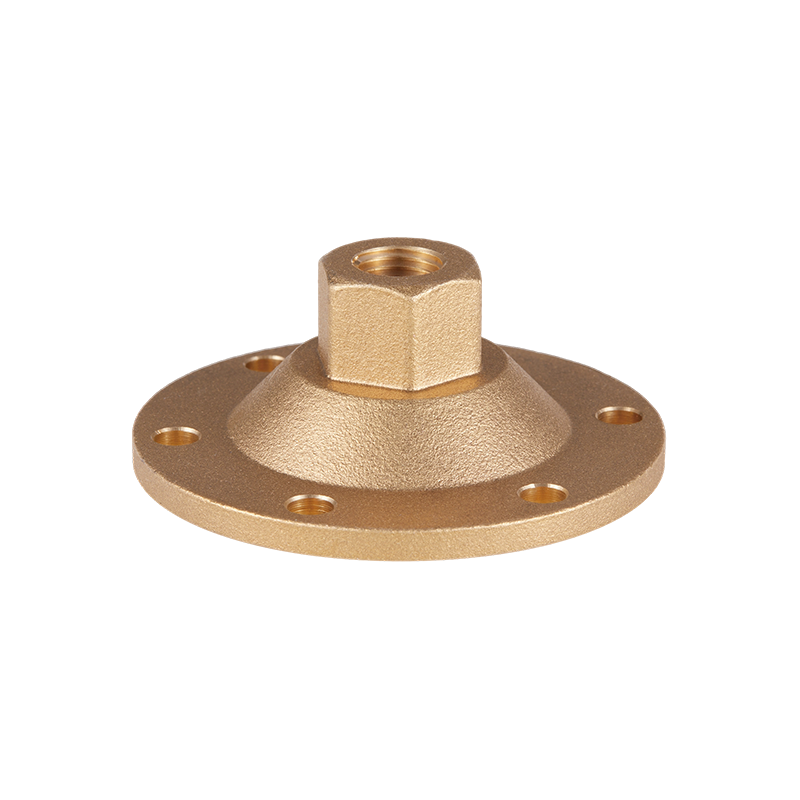
Irregular-Shaped Pipe Fittings
What Are Irregular-Shaped Pipe Fittings?
Irregular-shaped pipe fittings are connection components whose geometry differs from common standardized forms. A conventional fitting generally follows a simple rotational or symmetrical design. An irregular fitting, by contrast, may contain a combination of angles, offsets, branch directions, connection sizes, wall thicknesses, or transition profiles that are not available in an ordinary catalog item.
The term does not refer to a random or poorly defined shape. In professional manufacturing, an irregular shape is developed from engineering requirements. The fitting must correspond to a specific installation layout, pipe centerline, equipment connection, or space limitation. Its geometry may be based on a drawing, sample, three-dimensional model, dimensional schedule, or technical specification supplied by the customer.
Common examples may include:
• Offset pipe connectors designed to move a pipe centerline around an obstruction.
• Special-angle elbows used when standard 45-degree or 90-degree elbows are unsuitable.
• Eccentric reducers that change pipe diameter while keeping one side aligned.
• Multi-port adapters that connect pipes of different sizes or directions.
• Custom branch fittings for connecting auxiliary lines to a main pipeline.
• Transition fittings between different connection standards.
• Compact fittings for equipment with limited installation clearance.
• Special threaded fittings used with valves, meters, regulators, and other fluid-control devices.
Depending on the application, irregular fittings may be manufactured from brass, stainless steel, carbon steel, forged steel, ductile iron, or other appropriate materials. The available material depends on pressure, temperature, fluid type, corrosion conditions, connection method, and customer requirements.
Why Complex Piping Systems Need Special Fittings
In a simple pipeline, standard components can often be arranged in a straightforward sequence. However, real installation environments frequently contain unexpected limitations. A pipe may need to pass around a column, align with a valve body, connect to a machine with an unusual inlet position, or adapt from one pipe size to another within a very short distance.
Using several standard fittings to imitate a special shape may appear to be a convenient solution, but it can create additional joints, increase pressure loss, consume more installation space, and introduce more potential leakage points. It may also require extra supports and increase assembly time. In contrast, a single irregular-shaped fitting can combine multiple geometric functions into one carefully manufactured component.
Special fittings are particularly useful when:
• The available installation area is narrow or crowded.
• The pipe must maintain a precise centerline or elevation.
• The equipment connection is not aligned with the main pipeline.
• Different nominal sizes must be connected within a compact distance.
• The system must minimize the number of threaded or sealed joints.
• A standard fitting would cause interference with nearby components.
• The pipeline requires a custom branch, offset, or directional transition.
• Maintenance access must be preserved after installation.
By solving the geometry at the component level, irregular fittings can simplify the entire system. This approach may improve the appearance of the installation, reduce assembly complexity, and support more predictable long-term operation.
Key Advantages Over Multiple Standard Fittings
Better Use of Available Space
The most obvious benefit of an irregular-shaped pipe fitting is its ability to work within a restricted space. A custom offset or angled component can often replace a series of elbows and short pipe sections. This reduces the overall footprint of the connection and helps installers work around equipment, structural elements, or existing pipelines.
Compact geometry is especially valuable in control cabinets, water-treatment equipment, gas distribution assemblies, boiler rooms, agricultural machinery, building service systems, and industrial skids. When space is limited, the difference between a custom fitting and a group of standard parts can determine whether the system can be installed without redesigning the surrounding structure.
Fewer Joints and Potential Leakage Points
Every additional joint in a piping system requires sealing, tightening, inspection, and future maintenance. A connection made from multiple standard fittings may contain several threaded interfaces or gasketed surfaces. An irregular-shaped fitting can consolidate these connections into one component, reducing the number of potential leakage points.
Fewer joints do not eliminate the need for correct installation. Thread cleanliness, sealant selection, torque, alignment, and pressure testing remain important. Nevertheless, reducing the total number of interfaces can simplify installation and improve the reliability of the completed assembly.
Improved Alignment
Misalignment can place stress on pipes, valves, pumps, meters, and equipment ports. Standard fittings may force installers to adjust the pipe through excessive tightening, bending, or unsupported movement. A properly designed irregular fitting provides the required direction and position without imposing unnecessary mechanical stress on adjoining components.
Improved alignment can help protect valve bodies, threaded ports, seals, brackets, and equipment housings. It may also make the system easier to dismantle because components are not locked together by excessive angular force.
Reduced Installation Time
A single special fitting can sometimes replace several conventional parts. This reduces the time required to identify, arrange, seal, tighten, and inspect individual components. It can also reduce the number of tools and consumables needed on site.
For volume production, installation efficiency becomes even more significant. When an equipment manufacturer assembles hundreds or thousands of identical units, a custom fitting that saves several minutes per unit can produce substantial labor savings across the entire production run.
More Professional System Appearance
Although appearance is not the primary performance criterion, organized piping can support easier inspection and maintenance. A well-designed irregular fitting can create a clean route with fewer unnecessary loops and connection clusters. This is valuable in visible building services, packaged equipment, commercial installations, and products where compact design contributes to perceived quality.
Potential Reduction in Flow Disturbance
A series of tightly arranged standard fittings can create abrupt changes in direction and internal flow area. A purpose-designed irregular fitting may provide a more controlled transition between connected sections. The actual hydraulic effect depends on the internal profile, flow rate, fluid properties, and design geometry, but a carefully engineered component can be more suitable than an improvised arrangement of multiple parts.
Product Design Considerations
Connection Type
The connection type is one of the first design decisions. Irregular-shaped fittings may use internal threads, external threads, combined male-and-female threads, compression interfaces, flanged connections, socket connections, or other joining methods. The selected connection must match the pipes, valves, equipment, and applicable standards used in the system.
Threaded designs are common in compact fluid assemblies because they are relatively easy to install and do not always require welding equipment. However, the thread profile, pitch, nominal size, engagement length, and sealing method must be specified accurately. A fitting that visually resembles the required product but uses an incompatible thread standard may cause installation failure or leakage.
Dimensional Accuracy
Irregular fittings often have several critical dimensions rather than one simple diameter. These may include center-to-end dimensions, offset distance, branch angle, port spacing, overall length, wall thickness, thread depth, and connection orientation. A small deviation in one dimension can affect the position of the complete assembly.
For this reason, the technical drawing should identify critical tolerances and reference datums. Where the fitting connects to automated equipment, close dimensional control is particularly important. Consistent dimensions allow the fitting to be installed repeatedly without manual correction or forced adjustment.
Internal Passage
The internal passage should be considered together with the external shape. A fitting may have a complex outside profile but still require a smooth, unobstructed fluid path. Internal steps, sharp edges, excessive restrictions, or poorly matched transitions can affect pressure drop and fluid behavior.
The correct internal design depends on the application. Gas systems, water systems, compressed-air lines, chemical service, and hydraulic circuits may have different requirements. Manufacturers should review the nominal flow rate, working pressure, temperature, fluid characteristics, and expected operating cycle before confirming the internal geometry.
Wall Thickness
Wall thickness must provide adequate strength while remaining compatible with the intended machining and connection method. A fitting that is too thin may have insufficient pressure resistance or thread engagement. A fitting that is unnecessarily thick may increase weight, cost, and machining time.
Irregular geometry can create areas where stress is concentrated. Changes in section thickness, sharp external corners, branch intersections, and offset transitions should be reviewed carefully. Appropriate radii, reinforcement, and material selection can improve structural performance.
Sealing Surfaces
Sealing surfaces must be clean, accurate, and free from defects. Depending on the design, the sealing function may be provided by thread interference, a gasket, an O-ring, a washer, a tapered seat, or another sealing element. The fitting should be manufactured to maintain the necessary surface condition and dimensional relationship.
Surface defects such as burrs, scratches, dents, incomplete threads, or machining marks can interfere with sealing. Professional deburring, cleaning, and inspection are therefore important steps in the production process.
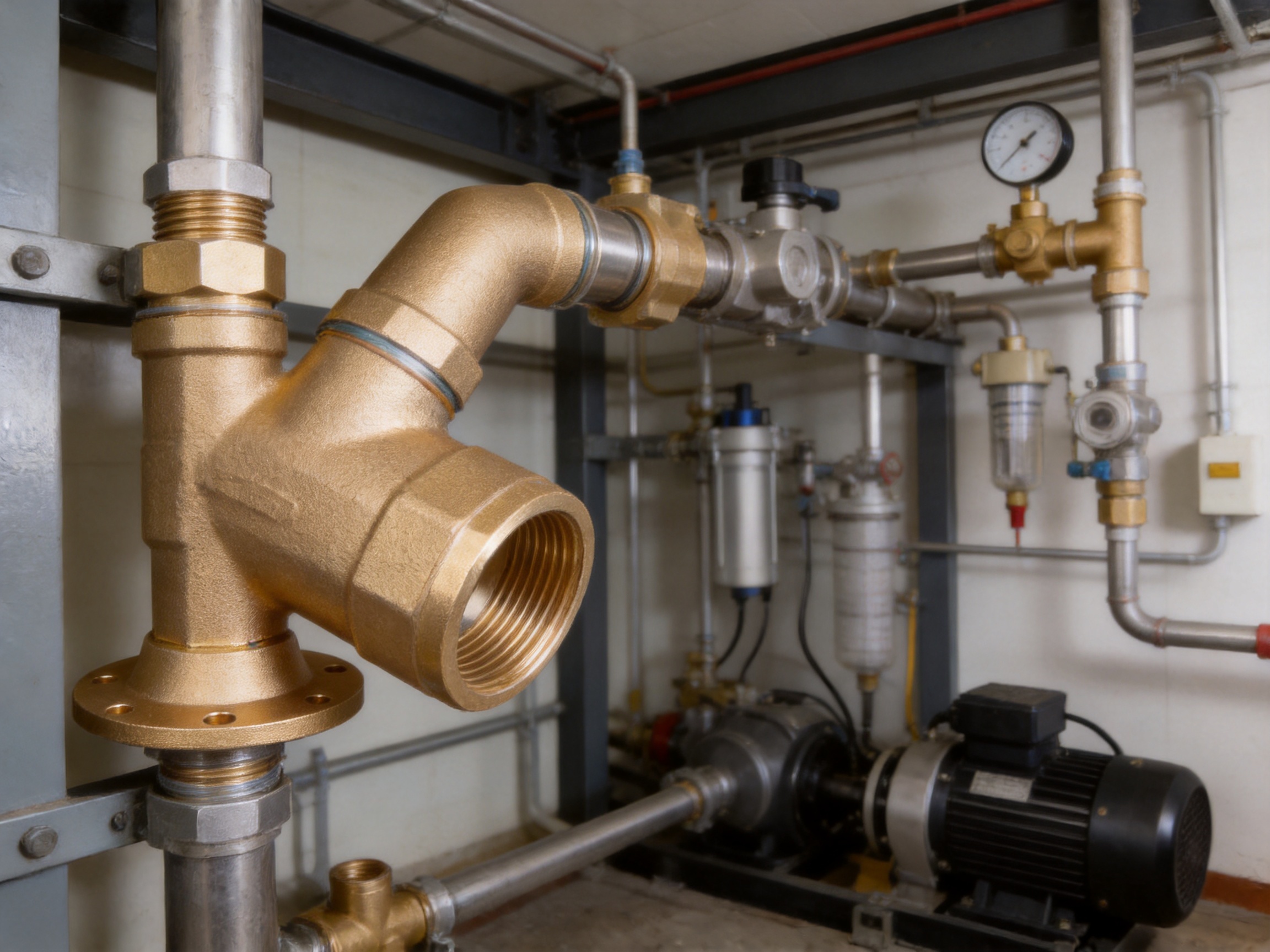
Materials Used for Irregular-Shaped Pipe Fittings
Brass
Brass is widely used in water, gas, heating, plumbing, and general fluid-control applications. It offers a useful combination of machinability, strength, corrosion resistance, and attractive surface quality. Brass is also suitable for precision threaded components because it can be machined into accurate connection profiles.
For gas-related applications, the material grade, product design, pressure rating, and applicable safety requirements must be confirmed before use. Different brass alloys can have different mechanical and corrosion characteristics, so material selection should be based on the operating environment rather than appearance alone.
Stainless Steel
Stainless steel is selected when higher corrosion resistance, mechanical strength, or temperature resistance is needed. It may be appropriate for demanding water systems, industrial environments, food-related equipment, and applications exposed to moisture or aggressive conditions.
Stainless steel is generally more difficult to machine than brass, which makes process control and tool condition important. Proper machining parameters, deburring, cleaning, and inspection help maintain the required quality of complex stainless-steel fittings.
Carbon Steel and Forged Steel
Carbon steel and forged steel may be used for applications requiring high mechanical strength and pressure capability. Forging can create a dense and robust material structure, after which machining establishes the final dimensions and connection details.
Forged steel fittings are often considered for industrial systems, high-pressure service, and applications where strength is a primary requirement. Corrosion protection, coating, surface treatment, and storage conditions should be evaluated because carbon-based materials require suitable protection in humid or corrosive environments.
Ductile Iron and Other Materials
Ductile iron may be used in water supply, municipal, and infrastructure-related systems where its strength and castability are beneficial. Other engineering materials may also be considered depending on chemical compatibility, temperature, pressure, weight, and cost.
The correct material should be determined by the full operating specification. A fitting that performs well in clean water may not be suitable for fuel gas, corrosive fluids, high-temperature media, or abrasive service. Buyers should provide complete application information to the manufacturer before confirming the product.
Advanced Manufacturing Process
Technical Review and Product Definition
The production process begins with a technical review of the required fitting. The manufacturer evaluates the customer drawing, sample, three-dimensional model, connection standards, material specification, surface requirements, expected quantity, and application conditions.
At this stage, the manufacturer may identify potential conflicts between the requested external geometry and the internal passage, wall thickness, tooling access, or machining sequence. Early review helps prevent costly changes after production has started. It also allows the customer and manufacturer to agree on inspection points, packaging requirements, and any special testing needs.
Computer-Aided Design and Process Planning
Computer-aided design supports the development of accurate irregular geometries. The fitting can be modeled with its external profile, internal passage, threaded areas, sealing surfaces, and reference dimensions. The model also helps engineers check the connection orientation and identify possible interference with adjacent components.
Process planning determines how the component will be held, machined, inspected, and transferred between operations. Complex parts may require multiple setups. A well-planned sequence reduces repositioning errors and helps maintain the relationship between different ports and surfaces.
Material Preparation
Material preparation includes selecting the appropriate raw material form and verifying its basic condition. Depending on the product design, the starting material may be a bar, forged blank, casting, tube, or another suitable form. Material traceability can be maintained through batch identification and production records.
Material quality affects machining behavior, surface finish, pressure performance, and service life. For professional production, the raw material should be consistent with the agreed specification and protected from damage before processing.
CNC Machining
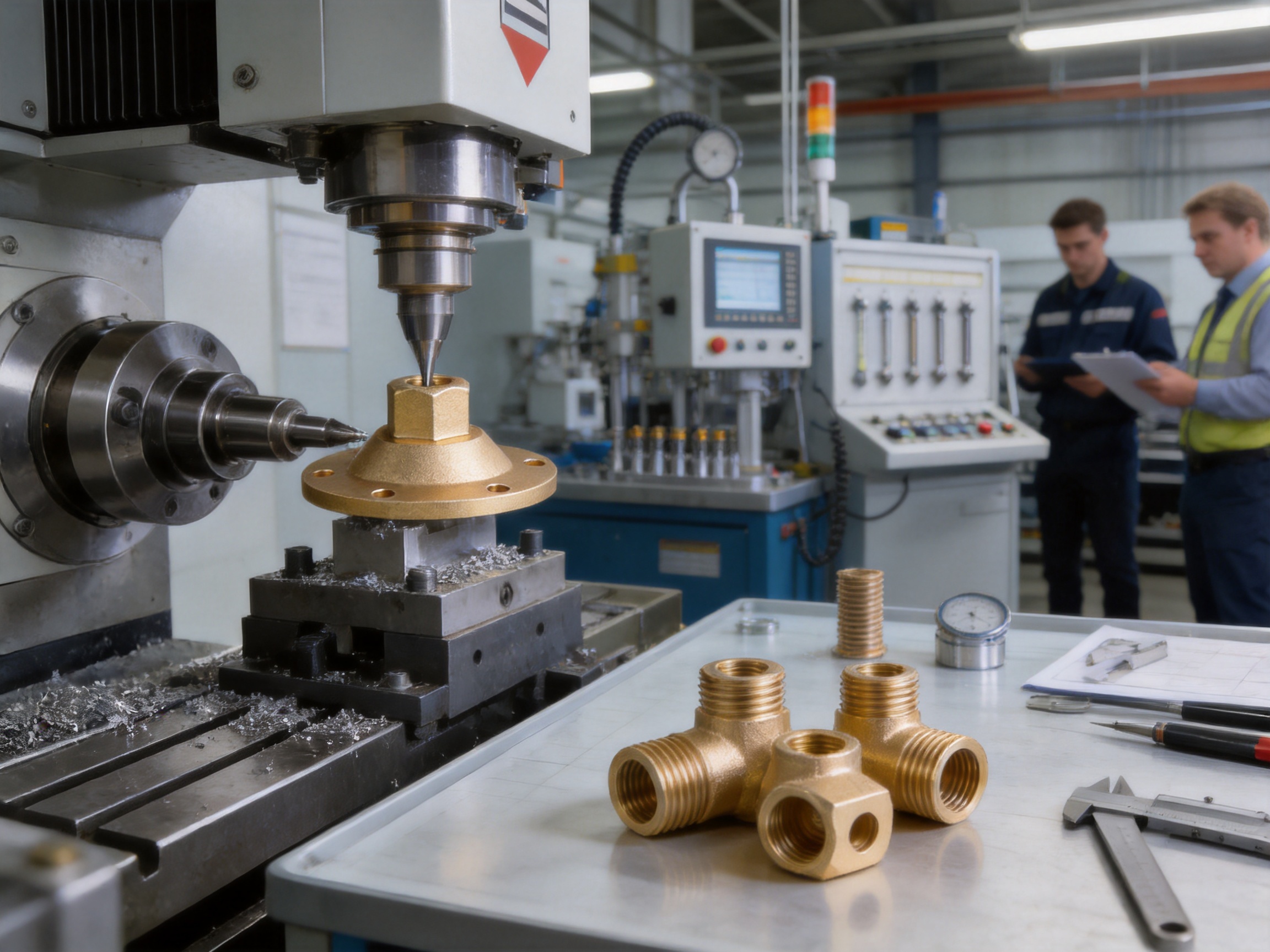
CNC machining is particularly valuable for irregular-shaped fittings because computer-controlled equipment can produce complex profiles with repeatable accuracy. Turning operations may create cylindrical connection areas, while milling, drilling, boring, tapping, and other operations establish the final geometry.
Advanced domestic and international CNC machine tools allow manufacturers to process different materials and geometries efficiently. CNC programs can control tool movement, cutting depth, feed rate, spindle speed, and positional relationships. Once a validated program is established, repeated production can achieve consistent results across a large batch.
For a fitting with multiple ports, accurate workholding is essential. The part must be positioned securely without distortion. Reference surfaces and fixtures help maintain the correct angle and location of each connection. Tool selection is also important because unsuitable tools can produce burrs, vibration, poor surface finish, or dimensional drift.
Threading and Port Formation
Threaded connections require precise control of diameter, pitch, profile, depth, and orientation. Internal and external threads are machined or formed according to the specified standard. Thread gauges and visual inspection are used to identify incomplete, damaged, or out-of-tolerance threads.
Where a fitting contains ports at different angles, the relationship between the threaded sections must be controlled carefully. A port that is correctly machined by itself may still be unsuitable if its orientation relative to another port is incorrect. This is one reason that fixture design and in-process measurement are important for irregular components.
Deburring and Cleaning
Machining can leave small burrs at drilled holes, thread entrances, intersections, and edges. These burrs must be removed because they can affect sealing, restrict flow, damage adjacent components, or become loose inside the fluid system.
After deburring, fittings are cleaned to remove chips, oil, dust, and other contaminants. The cleaning method depends on the material and product requirements. A clean component is easier to inspect and safer to install, particularly in systems where internal contamination could affect valves, meters, regulators, or other precision equipment.
Surface Treatment
Surface treatment may be used to improve corrosion protection, appearance, wear resistance, or compatibility with the installation environment. Depending on the material and product specification, possible treatments may include polishing, plating, coating, passivation, or protective finishing.
The treatment must not compromise critical threads, sealing surfaces, or dimensional tolerances. Any coating thickness should be considered during the design and machining stages. Proper handling after treatment is also necessary to prevent scratches and contamination.
Assembly and Automated Testing
Some irregular fittings are supplied as individual hardware accessories, while others may be assembled with seals, nuts, adapters, valves, or related components. Automated assembly equipment can help maintain consistent positioning and tightening for repeat orders.
Automated testing equipment supports the verification of leakage resistance and functional performance. The exact test method depends on the product type and intended service. A professional testing process may include dimensional checks, pressure tests, leak tests, thread verification, appearance inspection, and sampling or full inspection according to the agreed quality plan.
Final Inspection and Packaging
Before shipment, finished fittings should be checked against the approved drawing or product specification. Important inspection points may include material, dimensions, connection type, port orientation, surface condition, cleanliness, marking, quantity, and packaging.
Packaging must protect the fittings from impact, moisture, abrasion, and contamination during storage and transportation. Small threaded components should be arranged so that they do not strike one another or experience damage to their sealing surfaces. Appropriate packaging also makes counting and warehouse handling easier for the customer.
Quality Control Advantages
The reliability of an irregular-shaped fitting depends on consistency from raw material to final inspection. A professional manufacturer with a dedicated precision machining workshop, assembly line, and testing workshop can coordinate these stages within an organized production system.
Ningbo Yunhua Valve Co., Ltd. has developed production facilities covering approximately 20,000 square meters. Its equipment includes CNC machine tools and automated assembly and testing equipment. This infrastructure supports the manufacture of fluid-control products and hardware accessories in repeatable volumes.
The company reports an annual production capacity of approximately 2 million sets of valves and 10 million sets of hardware accessories. Such capacity can benefit customers that require stable supply, repeat orders, or coordinated sourcing of fittings and related valve products. Production scale does not replace quality control, but an organized manufacturing system can improve scheduling, process standardization, and supply continuity.
Quality control for irregular-shaped fittings may include the following measures:
• Review of approved technical drawings and samples.
• Verification of raw material specifications.
• Control of CNC machining programs and process parameters.
• Inspection of critical dimensions and port orientation.
• Thread gauges for internal and external connection checks.
• Inspection for burrs, cracks, dents, machining marks, and surface defects.
• Pressure or leakage testing according to the product requirement.
• Confirmation of cleanliness before packaging.
• Batch records and production traceability where required.
• Final quantity and packaging verification.
Customers requiring special documentation should identify those needs before production. Depending on the order and application, documentation may include material information, inspection reports, test records, dimensional reports, or conformity statements.
Applications Across Multiple Industries
Gas Systems
Gas systems require careful attention to sealing, material compatibility, pressure resistance, and installation practice. Irregular-shaped fittings can help connect gas valves, regulators, meters, burners, and distribution pipes where space or alignment is limited.
For gas applications, the fitting must be selected and installed according to applicable local regulations and system requirements. Thread compatibility, sealing materials, pressure ratings, and testing procedures should be confirmed by qualified professionals. A custom geometry is beneficial only when it is produced to an appropriate specification and used in a correctly designed system.
Water Supply and Plumbing
Water supply systems often contain valves, filters, meters, pumps, tanks, and pipe networks installed in compact service areas. Special fittings can simplify transitions between these components and help installers maintain a tidy, accessible arrangement.
Brass fittings are frequently used in water-related applications because of their machinability and corrosion resistance. However, water chemistry, temperature, pressure, and local requirements should be considered when selecting the material and surface treatment.
Heating and HVAC Equipment
Heating and HVAC systems may require compact connections around heat exchangers, circulation pumps, control valves, sensors, and manifolds. The fitting may need to accommodate thermal movement, insulation thickness, access for maintenance, and connections at different elevations.
An irregular fitting can help reduce unnecessary pipe loops and keep the installation within the equipment enclosure. This can be especially useful in packaged heating units, commercial mechanical rooms, and compact air-conditioning equipment.
Industrial Fluid Equipment
Industrial machinery frequently uses customized piping layouts. Pumps, compressors, filters, dosing equipment, pressure regulators, and process vessels may have connection locations determined by the machine structure rather than a standard pipe grid.
Special fittings allow equipment designers to create more compact assemblies while keeping connections aligned. Material and geometry should be selected according to the fluid, pressure, temperature, vibration, and maintenance conditions of the process.
Agricultural and Irrigation Systems
Agricultural equipment and irrigation systems may require fittings that connect pipes around frames, pumps, tanks, filters, and control devices. Outdoor installations can also expose fittings to moisture, soil, fertilizer residue, ultraviolet radiation, and temperature changes.
Durable materials and suitable surface protection are important in these environments. A special fitting can reduce the need for improvised hose bends or multiple adapters, helping the system operate more efficiently and remain easier to service.
Construction and Building Services
Building service systems must often be routed through crowded ceilings, plant rooms, utility shafts, and equipment spaces. Structural beams, fire-protection systems, electrical trays, and ventilation ducts can restrict the available route.
Irregular-shaped fittings may help installers maintain required clearances and coordinate multiple building systems. Their compact design can be useful in renovation projects where existing structures cannot easily be changed.
Advantages for OEM and Project Buyers
Original equipment manufacturers and project contractors often need more than a one-time fitting purchase. They require reliable dimensions, consistent batches, responsive technical communication, and the ability to repeat a design over time.
A professional custom-fitting supplier can support OEM buyers by reviewing drawings, preparing prototypes, establishing manufacturing processes, and maintaining consistent production for subsequent orders. Once the design is approved, the manufacturer can use controlled CNC programs and fixtures to reproduce the product more efficiently.
For project buyers, the main benefits may include consolidated sourcing, reduced installation complexity, and better coordination with valves and other hardware accessories. When the same manufacturer can provide related fluid-control products, it may be easier to align materials, connection standards, packaging, and delivery schedules.
Before requesting a quotation, buyers should prepare as much technical information as possible. A clear drawing or sample reduces the risk of misunderstanding and allows the manufacturer to assess tooling, material, machining, testing, and packaging requirements accurately.
Information Required for Customization
To develop an irregular-shaped pipe fitting efficiently, the customer should provide the following information where available:
• Two-dimensional engineering drawing or three-dimensional model.
• Connection type and thread standard.
• Nominal pipe sizes and outside or inside diameters.
• Overall length, center-to-center dimensions, and offset requirements.
• Port angles and orientation references.
• Material or alloy requirement.
• Working pressure and test pressure.
• Operating temperature.
• Fluid or gas being conveyed.
• Required surface treatment and appearance.
• Sealing method and seal material, if applicable.
• Annual volume, order quantity, and forecast.
• Inspection, marking, packaging, and documentation requirements.
If a drawing is not available, a physical sample, photographs with measurements, or a detailed application description may help begin the technical review. However, final production should normally be based on an approved drawing or specification to ensure that all dimensions and responsibilities are clearly defined.
Comparison of Standard and Irregular-Shaped Solutions
| Evaluation Factor | Multiple Standard Fittings | Irregular-Shaped Pipe Fitting |
|---|---|---|
| Space requirement | May require a larger installation envelope | Designed for a specific compact layout |
| Number of joints | Often includes several threaded or sealed interfaces | Can combine several connection functions into one component |
| Alignment | May require adjustment through additional parts | Can provide a predetermined offset or angle |
| Installation time | More components require additional assembly work | Fewer components can simplify installation |
| Customization | Limited to available catalog dimensions | Based on customer geometry and system needs |
| Initial tooling cost | Usually low when catalog items are available | May require engineering, fixtures, or process setup |
| Long-term repeatability | Depends on the consistency of several purchased components | Can be standardized as one dedicated product |
| Maintenance access | Additional joints may increase inspection points | Compact routing can leave more organized access space |
The appropriate choice depends on project volume, installation requirements, pressure conditions, cost targets, and available lead time. A standard fitting may be more economical for a simple, low-volume application. An irregular-shaped fitting becomes increasingly valuable when the layout is constrained, the quantity is repeated, or the cost of installation and maintenance is significant.
Why Manufacturing Capability Matters
Complex fittings cannot be evaluated solely by their final appearance. Two parts may look similar but differ in thread depth, internal passage, material quality, dimensional consistency, and pressure performance. Manufacturing capability determines whether the fitting can meet the requirements repeatedly rather than only in a single prototype.
A manufacturer with CNC machining capacity can produce complex external and internal features with controlled coordinates. Automated assembly and testing equipment can improve repeatability in higher-volume production. Dedicated workshops also help separate machining, assembly, inspection, and testing tasks so that each stage receives appropriate attention.
Ningbo Yunhua Valve Co., Ltd. combines product development, production, sales, and service in the gas and fluid valve and hardware accessory field. Its manufacturing system includes precision machining, assembly, and testing capabilities. The company’s stated production capacity supports both valve products and large-volume hardware accessory orders.
Another important advantage is product knowledge. Irregular-shaped fittings are often used alongside valves, gas ball valves, globe valves, regulators, water supply components, and other fluid-control products. A supplier familiar with these components can better understand connection compatibility, sealing requirements, installation constraints, and the relationship between the fitting and the complete fluid system.
Designing for Reliability and Service Life
Reliable performance begins with correct application data. The fitting should not be designed only around external dimensions. Pressure, temperature, fluid properties, vibration, corrosion, installation method, and expected service frequency all influence the final specification.
Sharp transitions should be reviewed because they can create stress concentrations or machining difficulties. Threaded sections should have sufficient engagement and adequate surrounding wall thickness. Sealing surfaces should be protected from damage during handling. Ports should be arranged to allow tools to reach the connection during installation and maintenance.
Environmental conditions also deserve attention. Outdoor systems may need corrosion-resistant materials or protective finishes. Systems exposed to vibration may require secure supports and appropriate sealing methods. High-temperature installations may need materials and seals that retain their properties during thermal cycling.
Correct installation is equally important. Pipes should be cut squarely, cleaned, and supported. Threads should be free from chips and damage. Sealant should be compatible with the fluid and connection type. Installers should avoid excessive tightening because over-torquing can damage threads, distort sealing surfaces, or place stress on connected equipment.
After assembly, the system should be tested according to the applicable design and safety requirements. Leak testing can help identify installation problems before the system enters service. Where the fitting is part of a regulated gas or pressure system, qualified personnel should complete inspection and commissioning.
Cost and Supply Considerations
The unit price of an irregular-shaped fitting may be higher than that of a simple standard elbow or adapter because it may involve engineering review, programming, special fixtures, multiple machining operations, inspection, and customized packaging. However, unit price is only one part of the total cost.
A complete cost evaluation should also consider the number of standard parts replaced, labor time, sealant consumption, installation tools, support requirements, inventory complexity, leakage risk, maintenance access, and production downtime. For repeated equipment assembly, a special fitting may reduce the total installed cost even when its purchase price is higher.
Order quantity has a major effect on economics. Prototype and small-batch orders may require a higher initial setup cost, while larger and repeated orders allow engineering and tooling expenses to be distributed across more units. Buyers should provide an estimated annual demand so the manufacturer can recommend a suitable production approach.
Supply continuity is another consideration. A manufacturer with substantial production capacity and organized workshops may be better positioned to support repeat orders and larger hardware accessory programs. Clear forecasts, approved specifications, and stable communication can further improve delivery planning.
Practical Selection Checklist
Before selecting an irregular-shaped pipe fitting, confirm the following points:
1. Does the fitting geometry match the actual installation space?
2. Are all connection sizes and thread standards compatible?
3. Is the material suitable for the conveyed fluid or gas?
4. Does the pressure and temperature rating meet the system requirement?
5. Are the internal passage and wall thickness appropriate?
6. Are the sealing method and seal materials clearly defined?
7. Can the fitting be installed with ordinary tools and sufficient access?
8. Is the surface treatment suitable for the operating environment?
9. Has the manufacturer confirmed critical dimensions and tolerances?
10. Are inspection, testing, marking, and packaging requirements documented?
11. Can the supplier support prototype approval and repeat production?
12. Is the requested quantity compatible with the proposed manufacturing process?
This checklist helps transform a general request for a special fitting into a clear technical specification. It also gives the manufacturer the information needed to provide a more accurate quotation and production schedule.
Role of a Professional Manufacturer
A professional manufacturer contributes more than machining capacity. It supports the customer through design communication, material selection, process planning, quality control, production coordination, and after-sales service. This complete approach is particularly important for irregular components because their performance depends on the relationship between geometry, material, connection, and application.
Ningbo Yunhua Valve Co., Ltd. has built its business around gas and fluid valves, water supply valves, and hardware accessories. The company’s management system, professional team, precision machining workshop, assembly line, and testing workshop provide a foundation for customized and repeatable production.
The company also emphasizes high-quality valves and the development of a safe fluid ecosystem. This product philosophy is relevant to irregular-shaped fittings because a fitting is not an isolated decorative accessory. It is part of a fluid-control assembly that must contribute to safe, stable, and maintainable operation.
For international buyers, supplier communication is especially important. Drawings, samples, quality expectations, packaging instructions, and delivery requirements should be confirmed in writing. A supplier able to coordinate engineering and production details can help reduce misunderstandings and shorten the path from concept to finished product.
Environmental and Operational Benefits
Irregular-shaped fittings can contribute to more efficient use of materials and installation space. By replacing several separate components, they may reduce packaging volume, inventory variety, and the amount of sealing material used during assembly. A compact connection can also reduce the length of associated pipework in certain layouts.
Manufacturing efficiency matters as well. CNC machining and automated equipment can improve material utilization, process consistency, and production planning when properly managed. Reusable fixtures and standardized process documentation can support repeat orders and reduce unnecessary setup work.
Operational benefits may include easier inspection, fewer joints to monitor, reduced risk of assembly error, and improved access to surrounding equipment. These benefits depend on proper design and installation, but they demonstrate why a custom fitting should be evaluated as part of the entire system rather than as a single purchase price.
Q&A About Irregular-Shaped Pipe Fittings
What is an irregular-shaped pipe fitting?
An irregular-shaped pipe fitting is a custom or special-geometry component used to connect pipes, valves, equipment, or other fluid-system elements when a standard fitting cannot meet the required shape, angle, offset, size, or connection arrangement.
Can irregular-shaped fittings be made according to a drawing?
Yes. A manufacturer can generally review a two-dimensional drawing, three-dimensional model, physical sample, or detailed dimensional specification. The final production method depends on the material, geometry, quantity, tolerance, and required testing.
Are these fittings suitable for gas applications?
They may be suitable for gas applications when the material, connection, pressure rating, sealing method, design, and testing meet the applicable requirements. Gas systems should be designed, installed, and tested by qualified professionals according to local regulations and relevant standards.
Which materials are available?
Material options may include brass, stainless steel, carbon steel, forged steel, ductile iron, and other engineering materials. The correct selection depends on pressure, temperature, fluid compatibility, corrosion exposure, mechanical loads, and project requirements.
Can a special fitting replace several standard fittings?
In many layouts, it can replace two or more standard components by combining an offset, angle, reduction, branch, or adapter function into one part. An engineering review is necessary to confirm that the replacement provides adequate strength, sealing, flow passage, and installation access.
Are irregular fittings more expensive than standard fittings?
The individual unit price may be higher because of design work, CNC programming, fixtures, special inspection, and lower initial production volume. However, the complete installed cost may be lower when the fitting reduces labor, joints, installation time, inventory, and maintenance requirements.
What information should be included in a quotation request?
A quotation request should include the drawing or sample, material, connection standards, sizes, dimensions, pressure, temperature, fluid type, surface treatment, order quantity, testing requirements, packaging instructions, and expected delivery schedule.
How does CNC machining benefit production?
CNC machining provides controlled tool movement and repeatable positioning. It is useful for complex profiles, accurate ports, threaded connections, and repeated production. It also allows the manufacturing process to be documented and adjusted in a controlled manner.
How are irregular-shaped fittings tested?
Testing may include dimensional inspection, thread verification, visual inspection, cleanliness checks, pressure testing, leakage testing, and functional checks where the fitting is supplied as part of an assembly. The specific test plan should be agreed according to the product and application.
Can the manufacturer provide repeat orders?
A manufacturer with established CNC machining, assembly, testing, and production capacity can generally support repeat orders after the design and process have been approved. Forecasts and stable specifications help improve production planning and supply continuity.
How should fittings be installed?
Installation should follow the approved system design and applicable instructions. Pipes and threads should be clean, sealing materials should be compatible, components should be aligned without force, and tightening should be controlled to avoid damage. Pressure or leak testing should be completed as required.
What makes one manufacturer more reliable than another?
Important factors include technical communication, material control, CNC capability, process documentation, inspection equipment, pressure-testing capacity, production scale, delivery consistency, packaging quality, and experience with related valves and hardware accessories.
Conclusion
Irregular-shaped pipe fittings provide a practical and precise answer to complex piping challenges. They are designed for situations where standard components cannot deliver the necessary alignment, compactness, connection arrangement, or installation efficiency. By combining several functions in one engineered component, they can reduce joints, simplify assembly, improve layout control, and support more reliable fluid-system construction.
The quality of the finished fitting depends on much more than its external shape. Accurate design, suitable material, controlled internal passage, reliable threads, effective sealing surfaces, careful deburring, appropriate surface treatment, and complete inspection are all essential. CNC machining and automated assembly and testing equipment provide the consistency required for professional applications and repeat orders.
Ningbo Yunhua Valve Co., Ltd. offers manufacturing experience in gas and fluid valves, water supply valves, and hardware accessories. Its precision machining workshop, assembly line, testing workshop, CNC equipment, and substantial annual production capacity provide a strong foundation for customized and volume production requirements.
For buyers seeking a dependable solution, the best approach is to provide complete technical information and evaluate the fitting as part of the entire piping system. When geometry, materials, testing, and installation requirements are aligned, an irregular-shaped pipe fitting can become a valuable component in a safe, compact, and efficient fluid-control solution.
References
1. American Society of Mechanical Engineers. Pipe Flanges and Flanged Fittings.
2. American Society of Mechanical Engineers. Process Piping.
3. International Organization for Standardization. Pipe Threads for Tubes and Fittings.
4. International Organization for Standardization. Metallic Materials: Tensile Testing and Mechanical Property Evaluation.
5. American Society for Testing and Materials. Standard Specifications for Copper and Copper-Alloy Materials.
6. American Society for Testing and Materials. Standard Practices for Pressure and Leakage Testing of Piping Components.
7. International Organization for Standardization. Quality Management Systems: Requirements.
8. International Organization for Standardization. Geometrical Product Specifications and Dimensional Tolerancing.
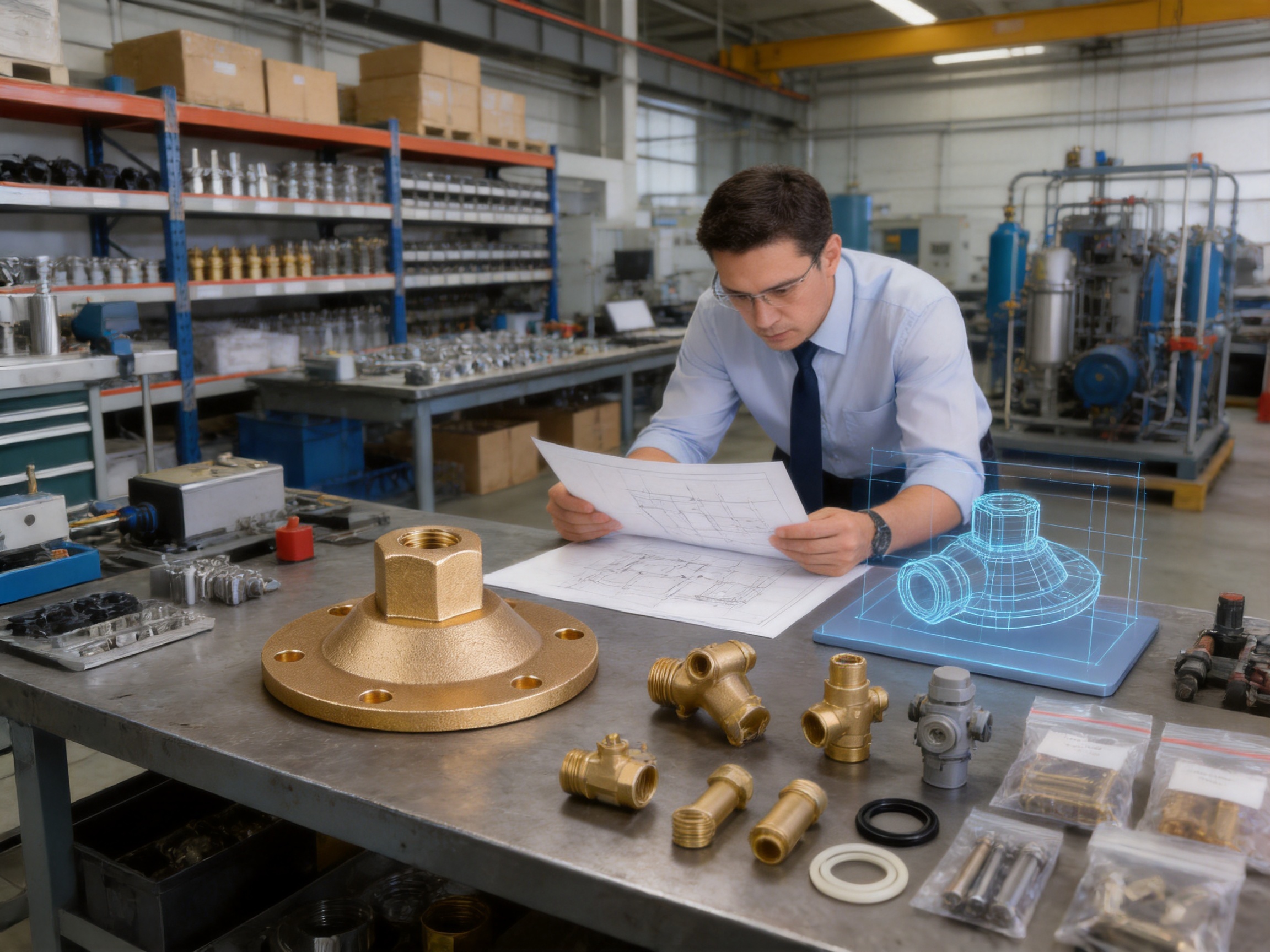
Product: Irregular-Shaped Pipe Fittings

Related Products
Related News
Contact Us
-

-
 +86-0574-63742169
 -
 No.104-128, Cizhang East Road, Zhangqi Town, Cixi City, Ningbo, Zhejiang Province, China


Message Us Now !
