

 English
 русский
 عربى
 Español

Pipe Fittings for Reliable Fluid, Gas, and Water Systems
Content
- 1 Understanding the Role of Pipe Fittings
- 2 Product Scope and Common Pipe-Fitting Configurations
- 3 Material Selection and Performance Considerations
- 4 Advantages of High-Quality Pipe Fittings
- 5 Advanced Manufacturing Capabilities
- 6 Quality Control from Raw Material to Shipment
- 7 Applications in Fluid and Utility Systems
- 8 How These Products Compare with Lower-Quality Alternatives
- 9 Customization and Customer Support
- 10 Selection Guide for Buyers and Engineers
- 11 Recommended Installation Practices
- 12 Maintenance and Service-Life Management
- 13 Production Capacity and Supply Reliability
- 14 Why Choose an Integrated Fluid-Control Manufacturer?
- 15 Environmental and Operational Efficiency
- 16 Frequently Asked Questions
- 16.1 What are pipe fittings used for?
- 16.2 Why is thread accuracy important?
- 16.3 Are threaded fittings suitable for gas systems?
- 16.4 How should buyers choose between brass and steel fittings?
- 16.5 What manufacturing equipment supports reliable fittings?
- 16.6 What should be checked before ordering customized fittings?
- 16.7 How do high-quality fittings reduce total cost?
- 16.8 Can pipe fittings be used with valves from another manufacturer?
- 16.9 Why is final testing important if the fitting has already been machined?
- 16.10 What makes an integrated manufacturer valuable to buyers?
- 17 Conclusion
- 18 References
- 19 Product: Pipe Fittings
Pipe fittings are essential components in almost every fluid-control, water-supply, gas-distribution, industrial, and building-services system. Although fittings are often smaller than valves, pumps, or pipes, their performance has a direct effect on system safety, durability, installation efficiency, and maintenance costs. A fitting must connect pipes securely, preserve the intended flow path, withstand pressure and temperature, and remain stable under vibration, corrosion, and repeated service conditions.
The pipe fittings supplied by Ningbo Yunhua Valve Co., Ltd. are developed as practical connection components for professional piping applications. Supported by experience in valves, gas-control products, water-supply products, and hardware accessories, the company combines component manufacturing knowledge with precision machining, automated assembly, and systematic quality testing. This integrated capability allows the company to serve customers seeking consistent dimensions, dependable materials, efficient production, and flexible support for standard and customized requirements.
Modern pipe-fitting buyers are no longer evaluating products only by purchase price. They also consider dimensional accuracy, thread quality, sealing performance, material stability, production consistency, delivery reliability, and long-term operating cost. A low-cost fitting that causes leakage, difficult installation, or early replacement can create far greater expenses than a properly manufactured component. For this reason, a professional fitting supplier must control every stage from material preparation to final inspection.
This article explains the role of pipe fittings, the principal product advantages that distinguish high-quality components, the manufacturing strengths supporting reliable production, and the factors that should be considered when selecting fittings for fluid, gas, and water systems.
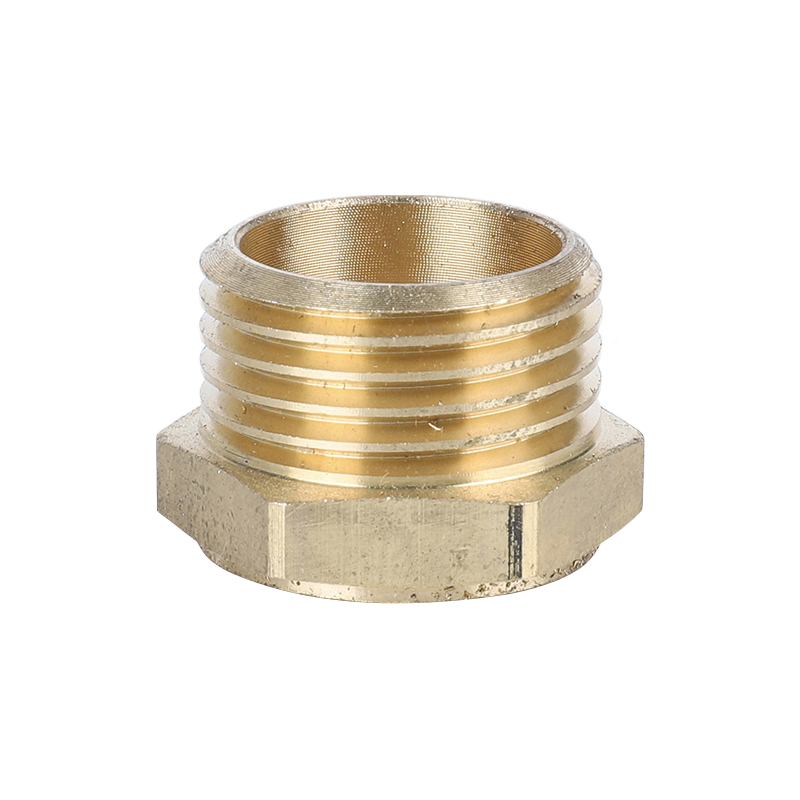
Pipe Fittings
Understanding the Role of Pipe Fittings
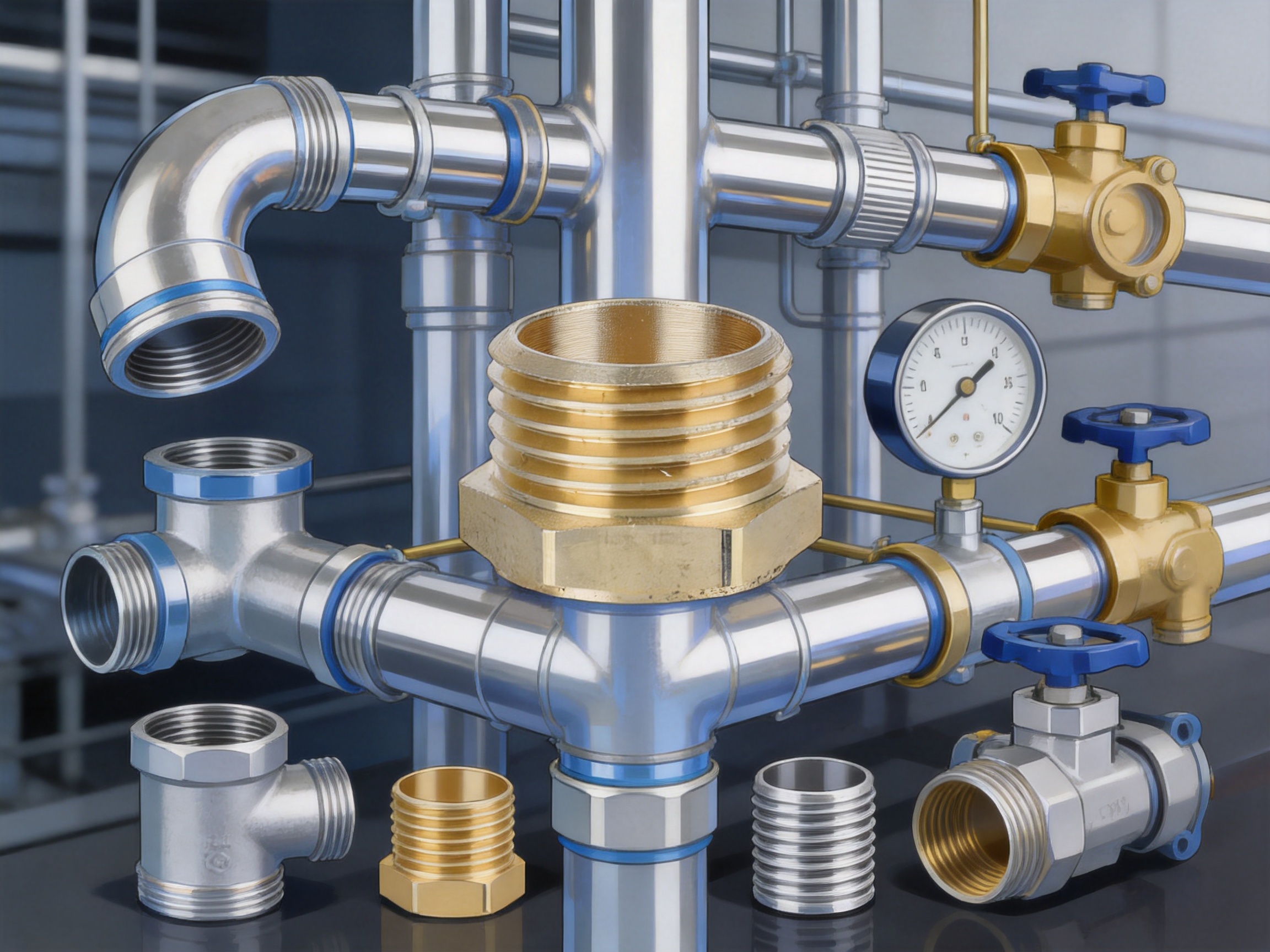
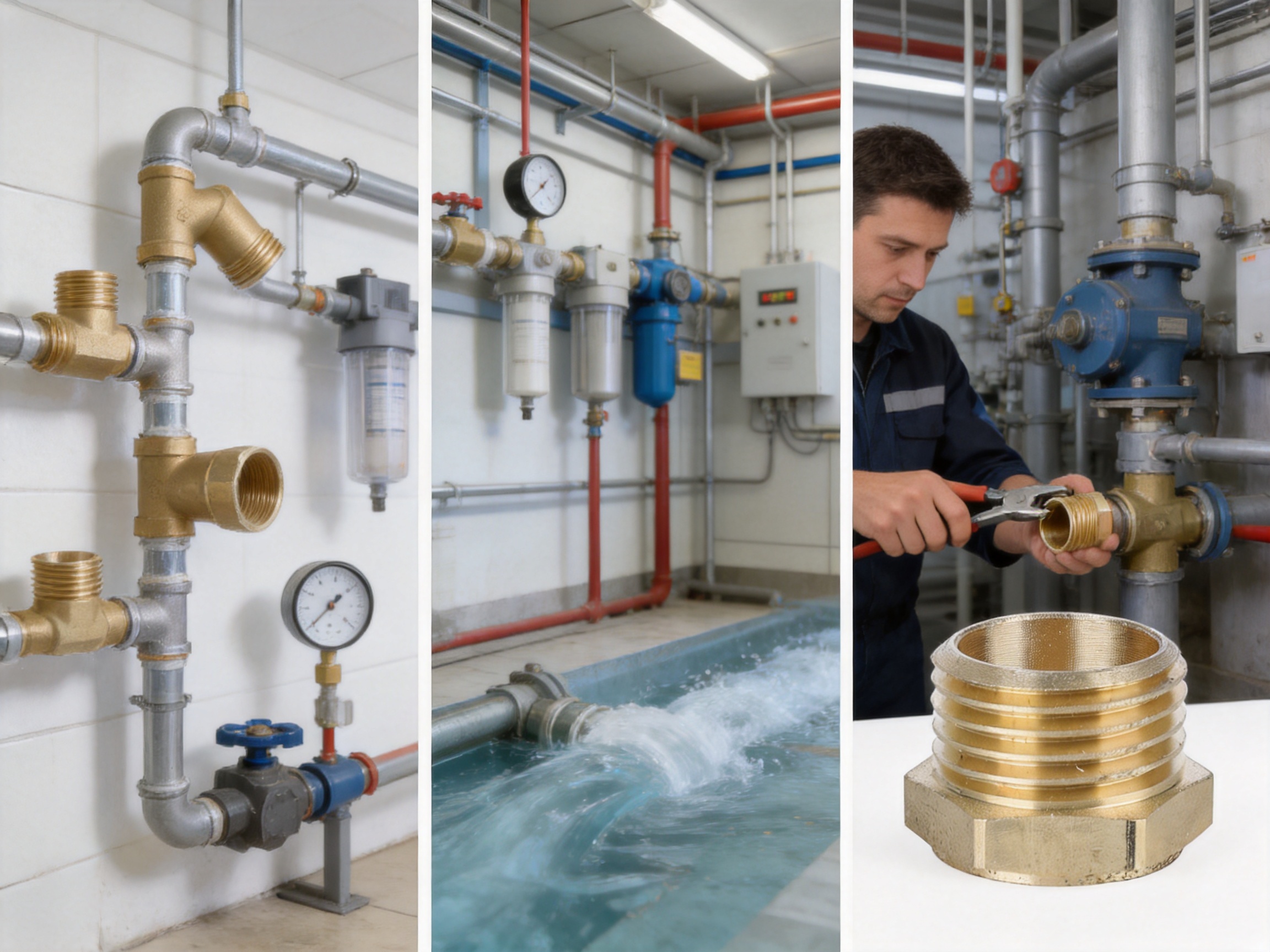
Pipe fittings are mechanical components used to join, redirect, divide, reduce, extend, terminate, or adapt sections of piping. They may be installed in residential plumbing, commercial water systems, industrial process lines, agricultural irrigation, heating systems, compressed-air networks, gas appliances, and many other applications.
A piping system rarely consists of straight pipe alone. Changes in direction require elbows or bends. Branch connections require tees or similar components. Different pipe sizes require reducers or adapters. Equipment connections may require threaded, union, or transition fittings. Maintenance points may need removable connections, caps, plugs, or other end-control components. Each fitting must perform its intended function without weakening the complete system.
In practical service, a fitting is exposed to several forces at the same time. Internal pressure acts on the body and connection area. Installation torque affects threads and sealing surfaces. Thermal expansion and contraction create movement. Vibration can gradually loosen poorly designed connections. Water, gas, chemicals, humidity, and outdoor conditions may contribute to corrosion. A dependable fitting must therefore be designed and manufactured with attention to both geometry and material behavior.
The most important performance objectives generally include:
• Secure mechanical connection between piping components.
• Effective sealing under the intended operating conditions.
• Accurate dimensions for straightforward installation.
• Adequate pressure and temperature resistance.
• Compatibility with the conveyed medium and connected materials.
• Stable performance during repeated operating cycles.
• Resistance to wear, corrosion, and deformation.
• Consistent quality from one production batch to another.
Fittings used together with valves require especially careful dimensional control. A mismatch between the fitting and valve connection can lead to difficult assembly, excessive sealing material, damaged threads, or leakage. For this reason, a manufacturer with experience in both valves and hardware accessories can offer useful advantages when supplying complete connection solutions.
Product Scope and Common Pipe-Fitting Configurations
Pipe fittings may be categorized by their connection method, shape, material, size, pressure class, and application. Threaded fittings are widely used where pipes or equipment need to be assembled without welding. They are particularly practical for smaller and medium-sized lines, maintenance-sensitive installations, and systems requiring field assembly.
Typical configurations may include elbows, tees, sockets, couplings, reducers, adapters, caps, plugs, nipples, and transition components. The exact product range depends on customer requirements, applicable standards, material options, and intended use. A professional supplier should be able to clarify the connection dimensions, thread form, nominal size, working conditions, and inspection requirements before production.
Threaded fittings are valued for several reasons. They can be installed with commonly available tools, do not require welding equipment, and are relatively convenient to remove or replace. Their compact form is useful where installation space is limited. They can also support modular system design, allowing installers to combine pipe sections, valves, meters, filters, and other equipment with less fabrication work.
However, threaded connections demand accurate manufacturing. The thread profile, pitch, diameter, length, and alignment must correspond correctly with the mating component. Poorly formed threads may cross-thread, bind during assembly, or fail to compress the sealing material evenly. Internal burrs can disturb flow and create contamination points. A fitting body with insufficient wall thickness may deform when tightened. These risks make machining quality and final inspection extremely important.
Pipe fittings may also be selected according to the conveyed medium. Water systems generally require corrosion resistance, dimensional stability, and dependable sealing. Gas systems place additional emphasis on leak prevention, material suitability, and safe assembly. Industrial fluids may require special consideration of chemical compatibility, temperature, pressure, and cleanliness. A fitting suitable for one medium should not automatically be assumed suitable for another without reviewing the operating conditions.
Material Selection and Performance Considerations
The material of a pipe fitting affects strength, corrosion resistance, machinability, weight, appearance, cost, and compatibility with the working medium. Common choices in fitting applications include brass, stainless steel, carbon steel, forged steel, ductile iron, and engineering plastics. The appropriate selection depends on system requirements rather than appearance alone.
Brass fittings are widely used in water, gas, heating, and general hardware applications because brass offers a useful combination of machinability, corrosion resistance, dimensional stability, and practical cost. Brass can be accurately machined to produce clean threads and controlled sealing surfaces. It is also suitable for many compact components where reliable installation and moderate mechanical strength are required.
Steel and forged-steel fittings are commonly considered when higher mechanical strength, pressure resistance, or demanding industrial performance is required. Forging can produce a dense and robust component structure, while subsequent machining creates the required connection geometry. Depending on the grade and surface treatment, steel fittings may be used in applications where greater resistance to mechanical loads is necessary.
Stainless-steel fittings are often selected for corrosive or hygienically sensitive environments. Their value may be particularly evident in damp locations, outdoor installations, chemical-service areas, food-related systems, and applications requiring a clean appearance. Nevertheless, material selection should always consider the specific fluid, concentration, temperature, and exposure conditions.
Material quality begins before machining. Properly controlled raw material, traceable purchasing, and suitable storage help reduce the risk of inconsistent chemical composition, surface defects, contamination, or dimensional instability. A professional manufacturing program should establish clear material requirements and inspection procedures appropriate to the product type.
Customers should also consider galvanic compatibility when connecting fittings made from different metals. Contact between dissimilar metals in the presence of moisture can accelerate corrosion under certain conditions. Installation practices, sealing materials, system water chemistry, and environmental exposure may influence the long-term result. A technically responsible supplier can help customers review these factors during product selection.
Advantages of High-Quality Pipe Fittings
Accurate Dimensions and Consistent Interchangeability
Dimensional accuracy is one of the most important advantages of professionally manufactured pipe fittings. A fitting that conforms consistently to its specified dimensions can be assembled with compatible pipes, valves, and accessories without excessive adjustment. Consistency is especially important for distributors and contractors, because products from different production batches should remain interchangeable.
Computer numerical control machining supports repeatable production of external diameters, internal bores, thread dimensions, shoulder positions, and sealing surfaces. When machining parameters are controlled and inspection results are recorded, manufacturers can reduce dimensional variation and improve confidence in assembly performance.
Accurate dimensions also help reduce installation time. Installers can prepare pipe sections more efficiently when the fitting engages smoothly and reaches the intended tightening position. Reduced installation difficulty lowers labor costs and decreases the chance of damaging threads or sealing components.
Reliable Thread and Sealing Performance
Threads are functional sealing and connection surfaces, not merely external patterns. Their form must be clean, continuous, correctly aligned, and compatible with the mating thread. A quality fitting provides sufficient engagement and allows the selected sealing method to perform effectively.
Depending on the design, sealing may be achieved through thread sealant, sealing tape, gaskets, O-rings, tapered surfaces, or specially formed contact areas. The fitting must support the chosen method without sharp burrs, distortion, contamination, or rough damage. Proper surface finishing can improve contact behavior and reduce the possibility of leakage caused by uneven engagement.
Reliable sealing is particularly important in gas and pressurized-water systems. Even a small leak can result in energy loss, corrosion, equipment damage, unsafe conditions, or repeated service calls. High-quality production therefore treats thread and sealing inspection as essential quality-control activities rather than optional cosmetic checks.
Strong Resistance to Mechanical Stress
Pipe fittings must tolerate the mechanical forces created during installation and operation. Tightening torque, pipe weight, vibration, pressure pulses, thermal movement, and accidental impact can all place stress on the component. A well-designed fitting distributes these forces through an appropriate body shape and sufficient wall thickness.
Manufacturing precision contributes to mechanical reliability. Uneven walls, internal flaws, sharp transitions, or excessive machining marks may create stress concentrations. Controlled production helps maintain the intended geometry and reduces the probability of weak points. For applications involving high pressure or significant vibration, customers should select fittings according to verified technical specifications and approved service conditions.
Corrosion Resistance and Long Service Life
Corrosion can reduce wall thickness, damage threads, contaminate fluid, and compromise sealing. The risk depends on the material, the conveyed medium, humidity, temperature, external environment, and maintenance conditions. High-quality fittings use suitable materials and surface conditions for the intended application.
Brass, stainless steel, and treated steel may each provide advantages in different environments. The selection should be guided by technical compatibility rather than a general assumption that one material is always superior. Proper packaging and storage are also important. Fittings should be protected from unnecessary moisture, dirt, impact, and chemical exposure before installation.
Long service life is a major advantage over poorly manufactured alternatives. A fitting that remains dimensionally stable and corrosion-resistant can reduce replacement frequency, system downtime, and maintenance labor. This is particularly valuable in concealed plumbing, industrial installations, commercial buildings, and systems where access is difficult.
Clean Internal Passages
Internal passage quality influences flow resistance, pressure loss, noise, and contamination risk. Excessive burrs, chips, rough machining, or casting residue can obstruct the flow path or become detached during operation. Clean and properly finished passages help the fitting perform as intended.
Internal geometry must also be considered when fittings are used near valves, meters, filters, pumps, or sensitive control equipment. Unnecessary restrictions can affect system efficiency and create pressure differences. Although every fitting creates some resistance, careful design and machining can help maintain a practical flow path.
Installation Efficiency
Installation efficiency is a measurable commercial advantage. A fitting that is easy to identify, handle, align, and tighten helps contractors complete work faster. Clear dimensions, consistent threads, suitable surface finishing, and dependable packaging all contribute to efficient installation.
Threaded products are especially useful in repair and maintenance work because they can often be installed without hot work. This can reduce preparation requirements in occupied buildings, workshops, utility rooms, and areas where welding is undesirable. Removable connections may also simplify future inspection and replacement.
Advanced Manufacturing Capabilities
Ningbo Yunhua Valve Co., Ltd. operates as an innovative manufacturer focused on gas and fluid valves, water-supply valves, and hardware accessories. Its product experience provides a foundation for producing components that must function together in complete fluid-control systems. The company has developed its management structure, professional team, production facilities, and quality processes over more than ten years of business development.
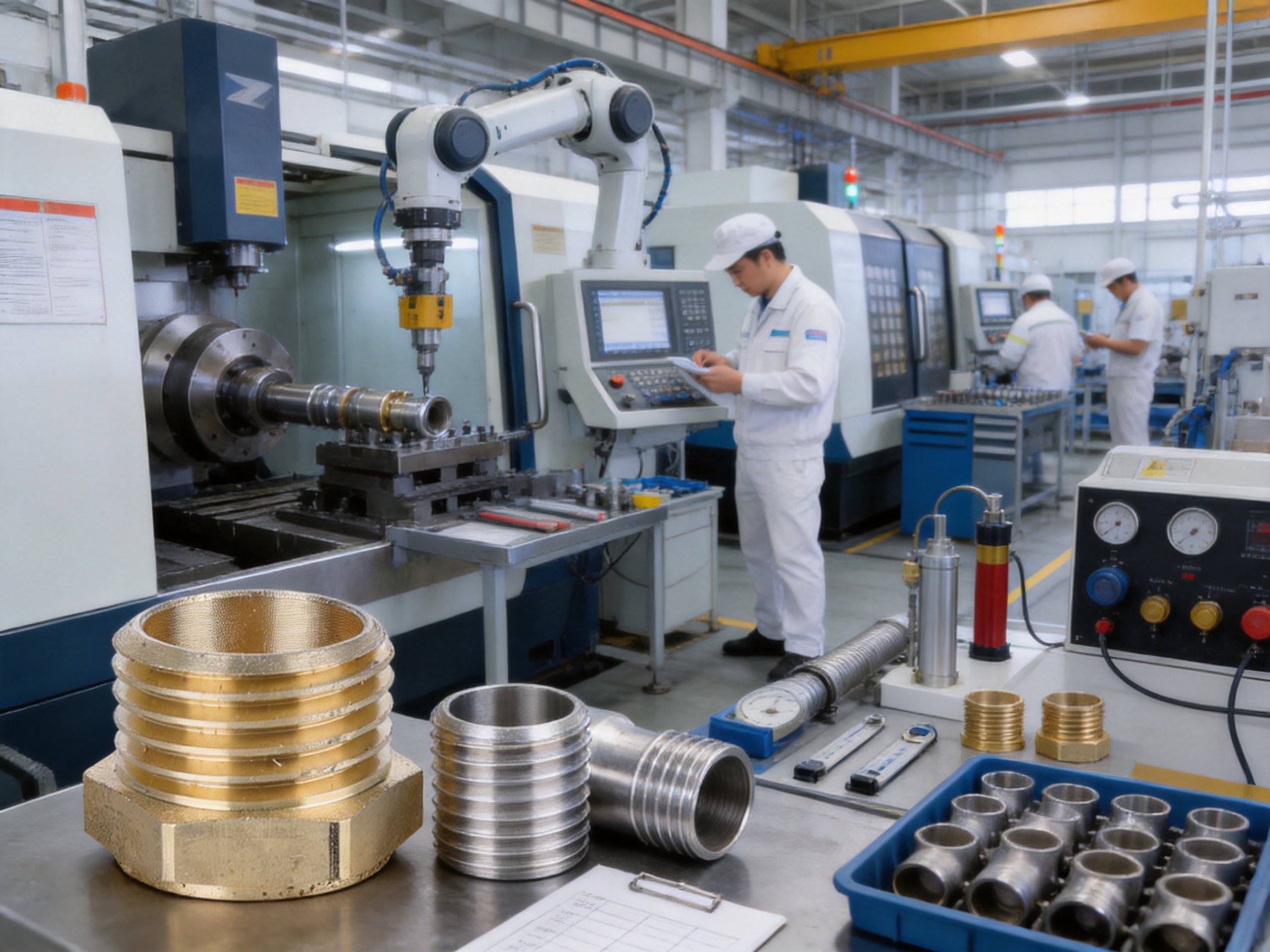
The company covers approximately 20,000 square meters and has established a precision machining workshop, assembly line, and testing workshop. Its production resources include advanced domestic and international CNC machine tools, automated assembly equipment, and professional automated testing equipment. This combination supports the manufacture of fittings and related components with attention to efficiency, repeatability, and quality control.
Precision CNC Machining
CNC machining is central to the production of accurate pipe fittings. Computer-controlled equipment can perform turning, drilling, boring, threading, chamfering, and other operations according to programmed parameters. This helps maintain consistent dimensions across large production quantities and reduces variation associated with manual machining.
For threaded fittings, machining control is particularly important. The equipment must produce the correct thread form and maintain alignment between the thread and internal passage. Chamfers must be sufficient to support installation without weakening the connection. Bore dimensions must remain within the specified range, and the component must be positioned accurately during each operation.
Modern CNC equipment also supports production flexibility. When customers require different sizes, connection types, or component configurations, controlled programming can help manufacturers adjust production while maintaining documented process requirements. This is valuable for distributors, equipment manufacturers, and project customers who may need both standard products and customized designs.
Automated Assembly
Automated assembly can improve consistency in operations that must be repeated across large quantities. It may help control component positioning, tightening behavior, part orientation, and production speed. Automation also reduces dependence on variable manual procedures and supports more stable output.
Automation does not replace technical management. Effective automated assembly requires suitable fixture design, validated operating parameters, trained personnel, regular equipment maintenance, and inspection of assembled products. When these elements work together, automation can improve productivity while maintaining the required quality level.
Dedicated Testing Facilities
A dedicated testing workshop allows products to be evaluated under controlled conditions before shipment. Testing may be adapted to the product design and customer requirements and can include dimensional checks, appearance inspection, thread verification, pressure testing, sealing evaluation, operating checks, and other relevant procedures.
For fittings used with valves and fluid systems, testing helps identify problems that may not be visible during a simple visual inspection. A component may appear acceptable but still have a dimensional mismatch, sealing defect, or internal issue. Appropriate testing provides additional confidence that products meet the intended technical requirements.
Integrated Production Management
A strong manufacturing system depends on more than machinery. It requires coordinated purchasing, material control, process planning, production scheduling, operator training, equipment maintenance, inspection, packaging, and customer communication. The company’s professional management team supports this integrated approach.
Organized management can improve production traceability and make it easier to respond to customer questions. It can also help identify recurring issues, analyze quality data, and introduce corrective actions. Continuous improvement is especially important for products manufactured in large quantities, where a small process variation can affect many components.
Quality Control from Raw Material to Shipment
Reliable pipe-fitting production begins with defined requirements. Before manufacturing starts, the supplier should confirm the material, nominal size, connection standard, pressure or service class, surface requirements, packaging method, and inspection expectations. Clear communication at this stage reduces the risk of producing a technically correct product that does not match the customer’s system.
Incoming Material Control
Raw materials should be checked according to the applicable purchasing and production requirements. Depending on the product, this may include verification of material identification, dimensions, surface condition, supplier documentation, and other characteristics. Proper identification prevents different materials or specifications from being mixed during production.
Material storage should protect components from unnecessary moisture, contamination, impact, and confusion. Organized storage supports efficient production and strengthens traceability. These basic controls can have a meaningful effect on final product consistency.
Process Inspection
Inspection during machining helps detect problems before products reach final assembly or packing. Operators and quality personnel may check critical dimensions, thread condition, surface finish, bore size, and overall appearance. In-process inspection is more efficient than relying only on final inspection because it can identify process drift early.
Measurement tools should be suitable for the dimensions being checked and maintained in usable condition. Gauges, calipers, micrometers, thread gauges, and other instruments must be applied correctly. Where necessary, inspection frequency can be increased for critical dimensions or after equipment adjustment.
Final Inspection and Testing
Final inspection confirms that finished fittings meet the approved requirements. It may include quantity verification, dimensional sampling, thread checks, surface inspection, cleanliness review, and packaging confirmation. For products associated with pressure or fluid control, additional leak or pressure testing may be appropriate.
Final testing is not simply a formality. It protects the customer by reducing the risk that nonconforming products will be shipped. It also provides manufacturing feedback. When inspection data is reviewed over time, the company can identify trends and improve equipment settings, tooling, operator methods, or material handling.
Packaging and Delivery Protection
Even a well-manufactured fitting can be damaged by poor packaging. Threads may be dented, surfaces may be scratched, and small components may be lost or mixed during transportation. Suitable packaging should protect connection areas, separate different specifications, and support accurate quantity control.
For export and long-distance shipments, packaging should also consider humidity, handling, stacking, and storage duration. Clear labels can help customers identify size, material, batch, quantity, and product type. Reliable logistics preparation contributes to the customer’s overall experience and reduces receiving problems.
Applications in Fluid and Utility Systems
Pipe fittings are used in a broad range of systems. In residential water supply, they connect pipe runs, valves, faucets, heaters, filters, and other fixtures. In commercial buildings, they support larger water-distribution networks, heating systems, fire-protection auxiliary lines, and equipment-room installations.
In gas applications, fittings connect regulators, valves, appliances, meters, and supply piping. Gas service requires careful attention to material compatibility, sealing, installation practice, and leak testing. Components should be selected and installed in accordance with applicable local regulations and project specifications.
In industrial systems, fittings may be used for compressed air, process water, lubrication lines, cooling circuits, chemical services, and equipment connections. Industrial environments often involve more demanding pressure, temperature, vibration, or contamination conditions. The correct product must therefore be chosen after reviewing the complete service profile.
In agricultural and irrigation systems, fittings connect pumps, filters, valves, hoses, and distribution pipes. These systems may be exposed to outdoor moisture, soil, ultraviolet radiation, fertilizer residues, and seasonal temperature changes. Material selection, corrosion resistance, and ease of maintenance are important considerations.
In manufacturing equipment, compact fittings help connect control valves, pressure instruments, actuators, and fluid lines. Consistent thread dimensions are particularly valuable in equipment assembly, where many connection points must be completed within a limited space and production schedule.
How These Products Compare with Lower-Quality Alternatives
The main advantage of professionally manufactured pipe fittings is not necessarily a visible feature. It is the combined effect of material control, accurate machining, reliable testing, stable production, and technical support. Lower-quality alternatives may look similar externally while differing significantly in internal quality and long-term performance.
Inconsistent low-cost fittings may have rough or incomplete threads, uneven wall thickness, dimensional variation, burrs, poor surface condition, or insufficient inspection. These problems can increase installation time and create leakage or failure risks. They may also cause incompatibility when products from different batches are combined.
Professionally controlled products provide greater confidence in repeatability. This is particularly important for wholesale buyers and project contractors who need hundreds or thousands of components to perform in a consistent manner. A stable supplier reduces the need for excessive incoming inspection and limits the risk of project delays caused by rejected parts.
Another important difference is production support. A manufacturer with its own machining, assembly, and testing capability can respond more effectively to technical questions, specification adjustments, sampling requirements, and quality feedback. Customers are not limited to selecting from an inflexible catalog; they may be able to discuss practical adaptations for a particular system.
Long-term value should include total cost of ownership. The initial price is only one part of the calculation. Installation labor, sealant consumption, rework, leakage losses, maintenance visits, replacement parts, downtime, and customer complaints may be more expensive than the original fitting. Consistent quality can reduce these secondary costs.
Customization and Customer Support
Different markets may require different dimensions, thread standards, materials, surface finishes, markings, packaging methods, or inspection documents. A capable supplier should review these requirements before confirming production. Customization must be handled carefully because even a small change can affect machining, tooling, testing, packaging, and regulatory suitability.
Effective communication should cover the following information:
• Product type and intended application.
• Nominal size and connection dimensions.
• Thread standard and thread direction.
• Material grade and required surface condition.
• Working pressure and temperature.
• Conveyed medium.
• Applicable standards or project specifications.
• Required quantity and delivery schedule.
• Packaging and labeling requirements.
• Inspection, testing, and documentation expectations.
Samples or technical drawings may be useful when a product must match an existing component. A supplier can review the sample, confirm manufacturability, and identify any issues that could affect performance or cost. This type of early technical discussion helps prevent misunderstandings after mass production begins.
Ningbo Yunhua Valve Co., Ltd. provides communication and product support for customers seeking valves, pipe fittings, and hardware accessories. Its experience across several fluid-control product categories allows it to consider how fittings will function with related components rather than treating each part as an isolated item.
Selection Guide for Buyers and Engineers
Selecting the correct pipe fitting begins with understanding the system. Buyers should identify the medium, pressure, temperature, flow requirements, environmental exposure, connection type, maintenance expectations, and applicable regulations. A fitting should be selected only after these factors have been considered together.
Confirm the Connection Standard
Threaded fittings are available in different thread standards and forms. The nominal size alone is not enough to ensure compatibility. The thread profile, pitch, taper, diameter, and sealing method must correspond to the mating component. Using incompatible threads can damage both parts and prevent reliable sealing.
Review Pressure and Temperature Conditions
Fittings must be suitable for the maximum expected operating pressure and temperature, including possible surges or abnormal conditions. Pressure ratings may vary according to material, size, temperature, connection type, and applicable standard. Customers should rely on verified technical data and should not exceed the supplier’s stated service limits.
Match the Material to the Medium
The material should be compatible with the conveyed fluid or gas and the external environment. Water chemistry, chemical concentration, humidity, salt exposure, and temperature can influence corrosion behavior. When the application is unusual or demanding, technical consultation is advisable.
Consider Installation Conditions
Available space, access for tools, expected maintenance, pipe alignment, and support conditions all affect fitting selection. A compact threaded fitting may be ideal in a restricted space, while a different connection may be better for large industrial lines. Installers should avoid using the fitting to compensate for serious pipe misalignment or unsupported pipe weight.
Evaluate Supplier Capability
Supplier capability should be assessed through more than a product photograph or price quotation. Buyers should ask about manufacturing equipment, material control, inspection methods, testing facilities, production capacity, quality documentation, packaging, and after-sales communication. A supplier with integrated production resources is often better positioned to support consistent long-term supply.
Recommended Installation Practices
Correct installation is essential to achieving the designed performance of a pipe fitting. Before assembly, installers should confirm that the fitting and pipe are clean, undamaged, and compatible. Threads should be inspected for dents, contamination, or deformation. Any damaged component should be replaced rather than forced into service.
The pipe should be properly cut, deburred, and aligned. Excessive force should not be used to bring misaligned pipes together. For threaded connections, the appropriate sealing material should be selected and applied according to the connection design and service medium. Sealant should not enter the internal flow passage in a way that could contaminate equipment or restrict flow.
Tools should be applied to the intended gripping surfaces. Tightening directly across delicate or finished areas may damage the component. Excessive torque can distort threads, crack a fitting, or damage sealing surfaces, while insufficient torque may leave the connection loose. The installation method should follow relevant technical instructions and project requirements.
After installation, the system should be inspected and tested before normal operation. Water, air, or gas testing must be carried out using a safe and approved procedure suitable for the system. Leaks should be corrected before the system is placed into service. For gas installations, local safety regulations and qualified professional requirements must always be followed.
Maintenance and Service-Life Management
Properly selected and installed fittings generally require limited maintenance, but periodic inspection can extend system life. Visible connections should be checked for corrosion, staining, moisture, movement, mechanical damage, or signs of leakage. Concealed or difficult-to-access areas should be reviewed when related maintenance work is performed.
Changes in pressure, unusual noise, reduced flow, odor, unexplained moisture, or repeated seal failure may indicate a connection problem. Early investigation can prevent a minor defect from becoming a major system failure. Replacement fittings should match the original material, size, thread standard, and service requirements.
When a fitting is removed, it should not automatically be reused. Threads and sealing surfaces may have been deformed during the original installation. Reuse is appropriate only when the component remains in suitable condition and the applicable technical practice permits it.
Production Capacity and Supply Reliability
Supply reliability is important for distributors, original equipment manufacturers, contractors, and project-based buyers. Delayed fittings can hold up valve installation, equipment assembly, commissioning, or building construction. A manufacturer with established production facilities and organized management is better prepared to coordinate recurring orders and larger quantities.
Ningbo Yunhua Valve Co., Ltd. has an annual production capacity of approximately 2 million sets of valves and 10 million sets of hardware accessories. This capacity reflects the company’s ability to support substantial production requirements while serving multiple product categories. CNC machining resources, automated assembly, and testing facilities further support orderly production planning.
Capacity alone does not guarantee quality. The most valuable combination is capacity supported by process control, inspection, equipment maintenance, skilled personnel, and customer communication. When these elements are coordinated, customers can obtain products with more predictable lead times and stable performance.
Why Choose an Integrated Fluid-Control Manufacturer?
Pipe fittings are often installed alongside valves, regulators, meters, filters, and other fluid-control components. An integrated manufacturer understands the relationship between these products. This can simplify sourcing, reduce communication gaps, and support more coordinated technical recommendations.
A company experienced in valves and hardware accessories is familiar with the importance of flow paths, pressure control, sealing, actuation, material compatibility, and installation interfaces. This knowledge can be applied to fitting design and production. It also helps the supplier understand the practical concerns of installers and equipment manufacturers.
Integrated manufacturing may provide advantages in several areas:
• More efficient communication between product-development and production teams.
• Better understanding of matching dimensions between fittings and valves.
• Coordinated quality procedures for related components.
• Greater flexibility for combined orders.
• Improved ability to discuss customized requirements.
• More direct feedback from testing and field applications.
For customers seeking a stable supply partner rather than a one-time component source, these advantages can be significant. A supplier’s long-term value is measured by product consistency, technical responsiveness, delivery performance, and the ability to improve with customer requirements.
Environmental and Operational Efficiency
High-quality pipe fittings can contribute to more efficient system operation. Secure connections reduce leakage, which helps conserve water, gas, compressed air, and process fluids. Accurate internal passages can reduce unnecessary pressure loss. Durable materials and stable manufacturing can reduce the frequency of replacement and the resources required for maintenance.
Manufacturing efficiency is also important. CNC production and automated assembly can reduce repeated manual handling, improve material utilization, and support consistent output. Proper process management helps reduce rejected parts, rework, and avoidable waste. Although every manufacturing system has environmental impacts, controlled production can improve resource efficiency.
Customers should evaluate environmental performance across the complete product life cycle. A fitting that lasts longer, performs reliably, and can be replaced less frequently may offer a lower overall environmental burden than a cheaper but short-lived alternative. Packaging, transport efficiency, material recyclability, and maintenance requirements may also be considered.
Frequently Asked Questions
What are pipe fittings used for?
Pipe fittings are used to connect, redirect, divide, reduce, extend, or terminate pipes. They also provide transitions between pipes, valves, meters, equipment, and other system components. Their purpose is to create a secure and functional piping network.
Why is thread accuracy important?
Thread accuracy affects assembly, mechanical engagement, sealing, and compatibility. Incorrect or damaged threads may cross-thread, bind, leak, or fail under pressure. Accurate machining helps ensure that the fitting works properly with its intended mating component.
Are threaded fittings suitable for gas systems?
Threaded fittings may be used in gas systems when they are made from suitable materials, designed for the application, installed correctly, and approved under applicable regulations. Gas installations require careful leak prevention and testing. Product suitability should be confirmed with the supplier and the relevant local requirements.
How should buyers choose between brass and steel fittings?
The choice depends on pressure, temperature, corrosion conditions, mechanical loads, medium compatibility, connection requirements, and project specifications. Brass offers good machinability and corrosion resistance for many general applications, while steel or forged steel may be selected where greater mechanical strength is required. Technical data should guide the final decision.
What manufacturing equipment supports reliable fittings?
Precision CNC machine tools, suitable tooling, controlled assembly equipment, measurement instruments, and dedicated testing facilities all support reliable fitting production. Equipment must be combined with process control, trained personnel, maintenance, and documented inspection procedures.
What should be checked before ordering customized fittings?
Customers should confirm dimensions, thread standard, material, pressure and temperature conditions, conveyed medium, surface requirements, quantity, packaging, marking, inspection, and delivery expectations. Drawings or samples can help prevent misunderstandings and support accurate production planning.
How do high-quality fittings reduce total cost?
They can reduce installation time, leakage, rework, maintenance visits, replacement frequency, and system downtime. Although purchase price remains important, total cost should include the expenses associated with fitting failure or inconsistency.
Can pipe fittings be used with valves from another manufacturer?
They can be used together when the connection dimensions, thread standard, material, pressure rating, sealing method, and service conditions are compatible. The nominal size by itself does not confirm compatibility. Technical specifications should be compared before installation.
Why is final testing important if the fitting has already been machined?
Machining creates the intended geometry, but final testing and inspection help confirm that the finished part is free from defects, correctly dimensioned, clean, properly sealed where applicable, and suitable for shipment. Testing provides an additional safeguard against production or handling problems.
What makes an integrated manufacturer valuable to buyers?
An integrated manufacturer can coordinate product design, precision machining, automated assembly, testing, packaging, and technical communication. Experience with valves and hardware accessories also helps the supplier understand how fittings function within complete fluid-control systems.
Conclusion
Pipe fittings are fundamental to the safety, efficiency, and service life of fluid, gas, and water systems. Their compact size should not obscure their importance. Accurate threads, suitable materials, clean internal passages, reliable sealing, and adequate mechanical strength all contribute to dependable system performance.
The strongest product advantages come from a complete manufacturing approach. Precision CNC machining supports dimensional consistency. Automated assembly improves repeatability and production efficiency. Dedicated testing helps confirm product quality. Organized material control, professional management, and careful packaging provide additional protection throughout the supply process.
Ningbo Yunhua Valve Co., Ltd. combines experience in valves, water-supply products, gas and fluid-control components, and hardware accessories with a 20,000-square-meter production base, precision machining facilities, automated assembly resources, and testing capability. Its annual capacity of approximately 2 million valve sets and 10 million hardware-accessory sets supports customers requiring dependable production and continued supply.
For distributors, contractors, equipment manufacturers, and project buyers, the best fitting supplier is one that can provide more than a basic component. The supplier should offer stable quality, practical technical communication, flexible production support, suitable inspection, and reliable delivery. When these strengths are combined, pipe fittings become more than connection parts: they become an important foundation for a safe, efficient, and durable fluid-control system.
References
1. General principles of industrial piping design and component selection.
2. International practices for threaded pipe connections and sealing methods.
3. Engineering guidance for metallic materials used in water, gas, and fluid-control systems.
4. Quality-management principles for precision machining and automated assembly.
5. Inspection and testing practices for valves, pipe fittings, and pressure-containing components.
6. Installation and maintenance guidance for building water-supply and gas-distribution systems.
7. Material compatibility considerations for piping components exposed to water, gas, chemicals, and outdoor environments.
Product: Pipe Fittings

Related Products
-
 View More
-
 View More
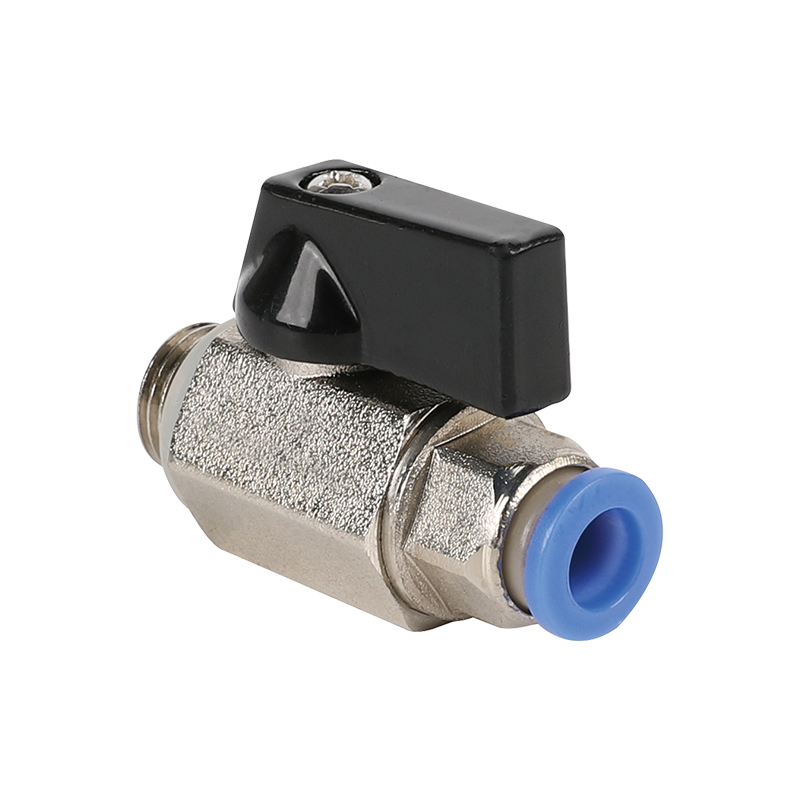
MINI-2 Mini Short-Handle Ball Valve(M/M)
-
 View More
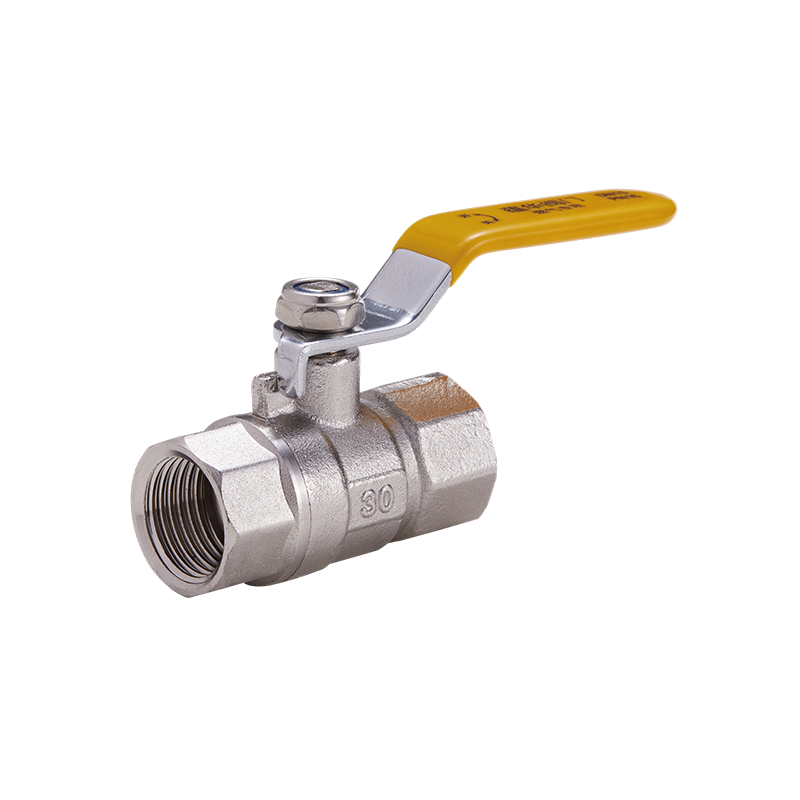
YH-2210 Forged Steel Ball Valve with Long Handle (F/F)
-
 View More
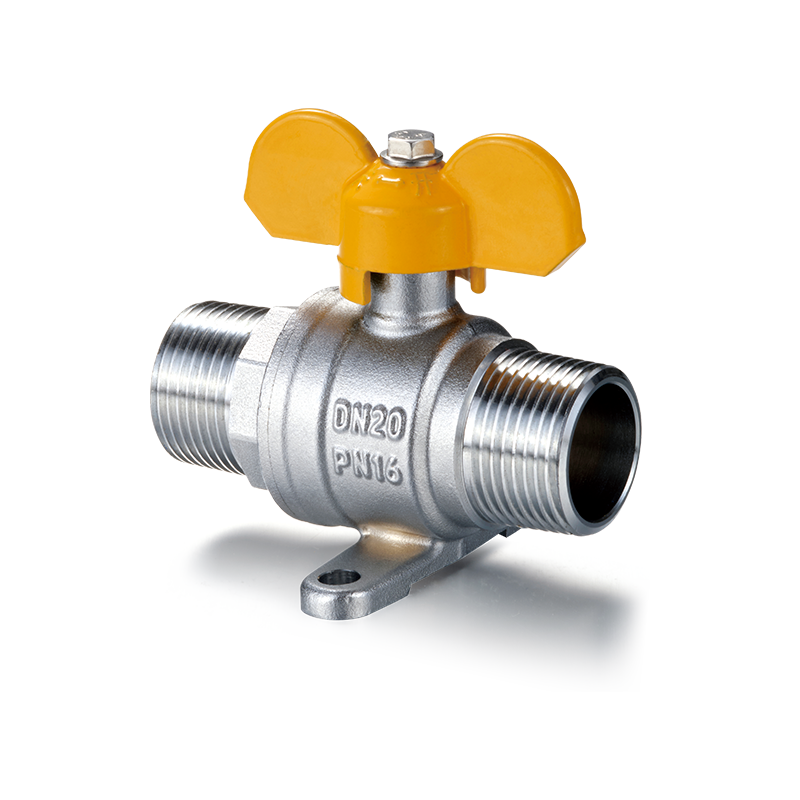
YH-214 Brass Ball Valve with Base& Butterfly Handle(M/M)
-
 View More
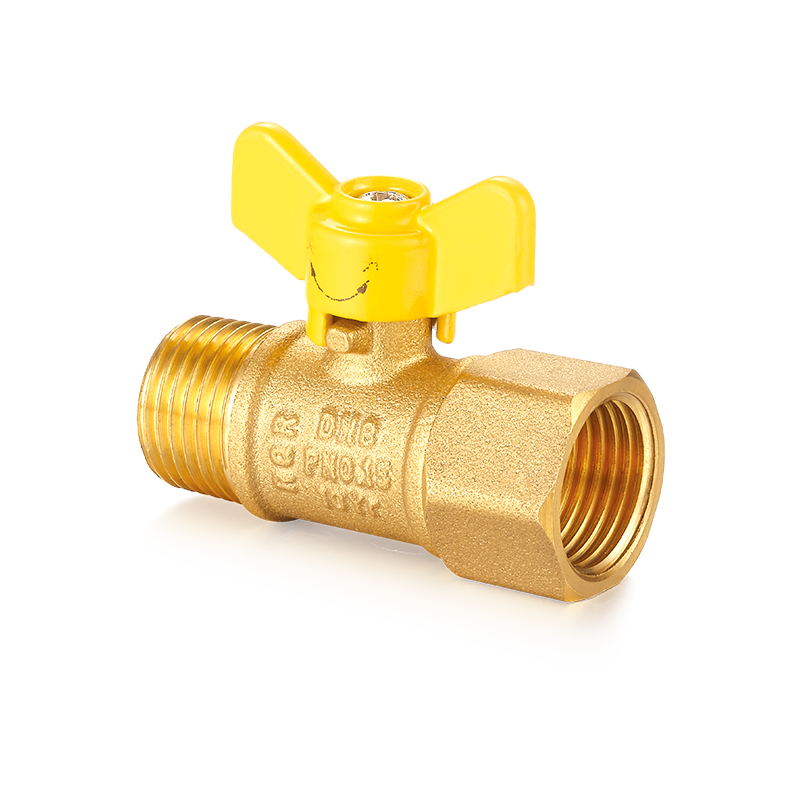
YH-205 Brass Ball Valve with Butterfly Handle(F/M)
-
 View More
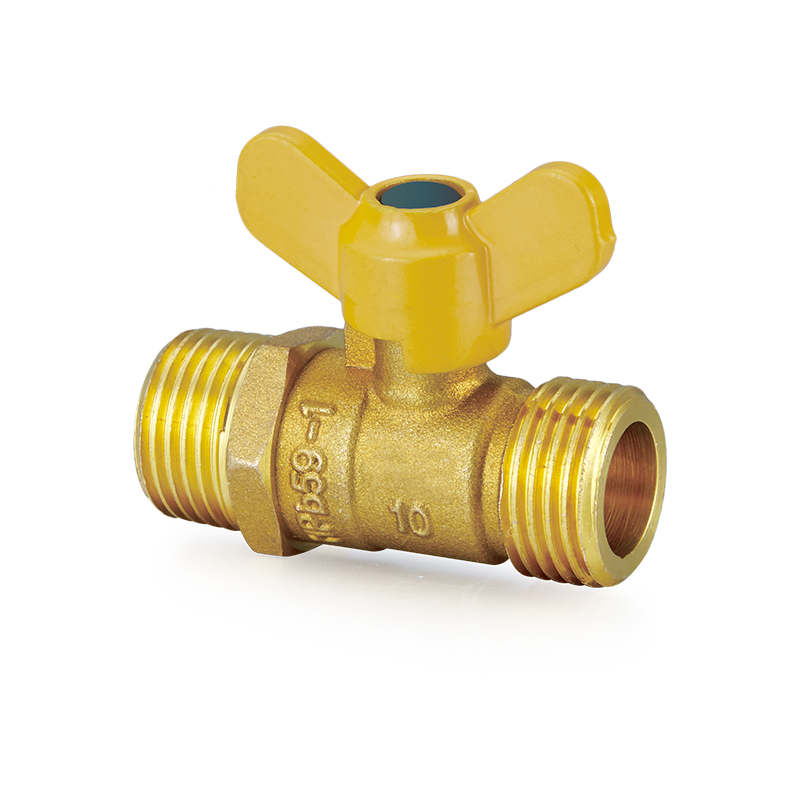
YH-206 Brass Ball Valve with Butterfly Handle(M/M)
Related News
Contact Us
-

-
 +86-0574-63742169
-
 No.104-128, Cizhang East Road, Zhangqi Town, Cixi City, Ningbo, Zhejiang Province, China


Message Us Now !
