


 English
  русский
  عربى
عربى  Español
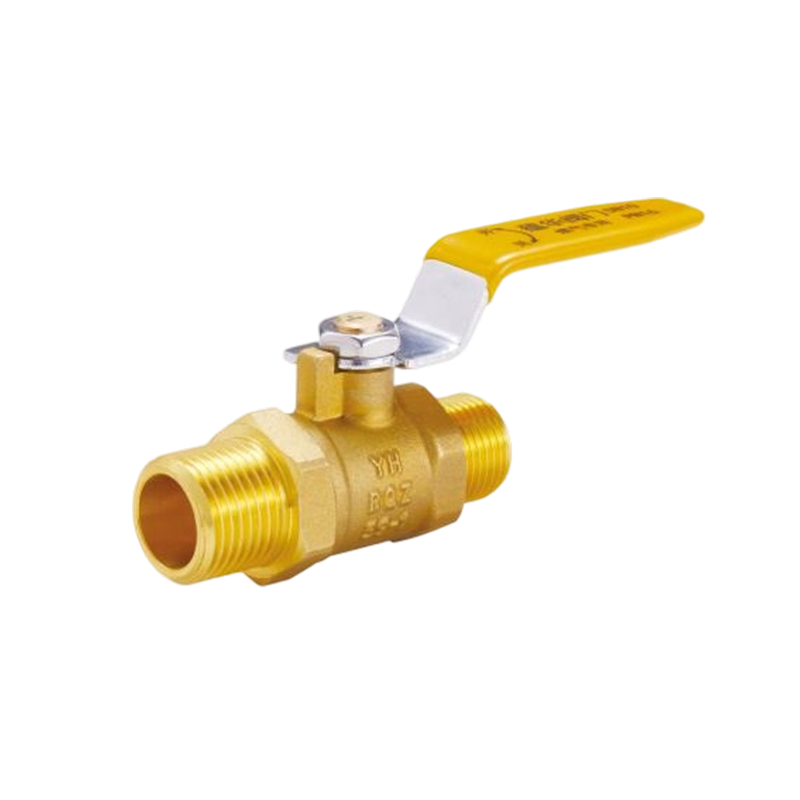
YH-215 Brass Right-Angle Ball Valve (F/M): Compact Flow Control for Modern Piping Systems
Content
- 1 Product Overview
- 2 Why a Right-Angle Ball Valve Matters
- 3 Dual Thread Interface for Flexible Installation
- 4 Brass Construction and Pressure Capability
- 5 Flow Path and Pressure Loss Considerations
- 6 Compact Design for Restricted Spaces
- 7 Application Scenarios
- 8 Advantages Compared with Conventional Alternatives
- 9 Manufacturing Strengths and Production Capabilities
- 10 Quality Control from Machining to Shipment
- 11 Installation Guidance
- 12 Operating and Maintenance Recommendations
- 13 Material and Medium Compatibility
- 14 Value for Distributors and Equipment Manufacturers
- 15 Design Integration in Piping Layouts
- 16 Company Manufacturing and Service Profile
- 17 Selection Checklist for Buyers
- 18 Common Questions and Answers
- 18.1 What is the primary purpose of the YH-215?
- 18.2 What does F/M mean on this valve?
- 18.3 Can the valve eliminate every adapter?
- 18.4 What pressure can the valve handle?
- 18.5 What media are suitable for the YH-215?
- 18.6 What is the specified temperature range?
- 18.7 Does the valve use a tapered thread?
- 18.8 Is the YH-215 intended for flow regulation?
- 18.9 Why is brass used for the valve body?
- 18.10 What makes the right-angle design useful in a cabinet?
- 18.11 How should the valve be installed?
- 18.12 What manufacturing capabilities support this product?
- 18.13 Is the valve suitable for every gas application?
- 18.14 How does the product help retrofit projects?
- 18.15 What should be checked before ordering?
- 19 Conclusion
- 20 References
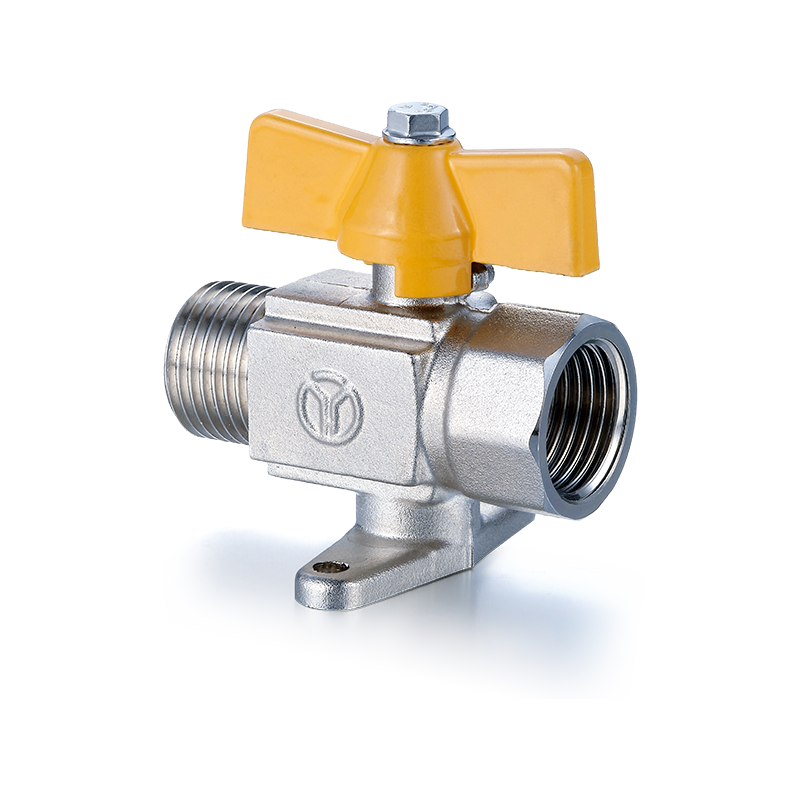
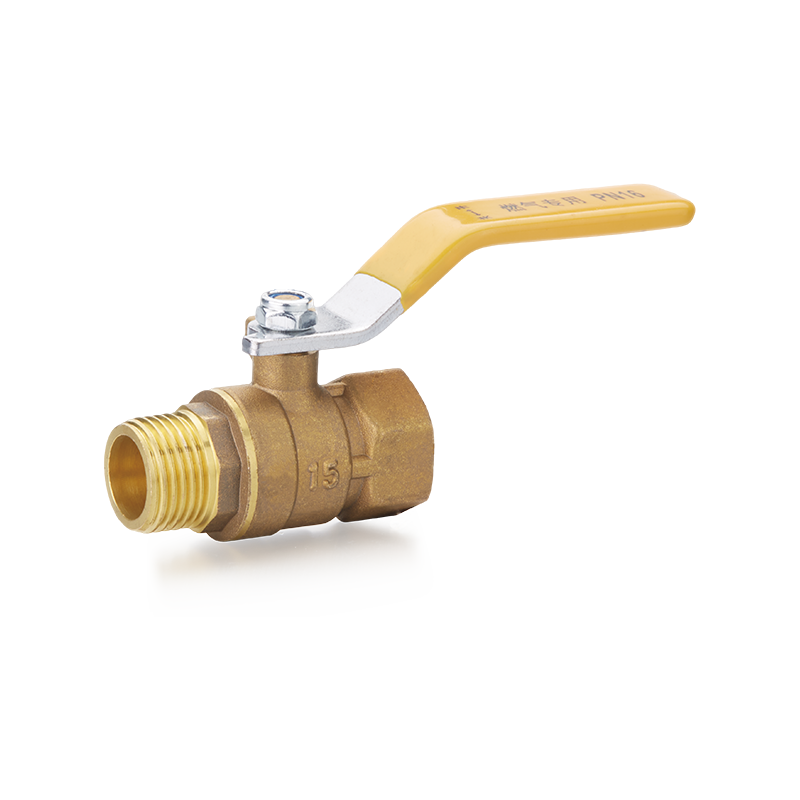
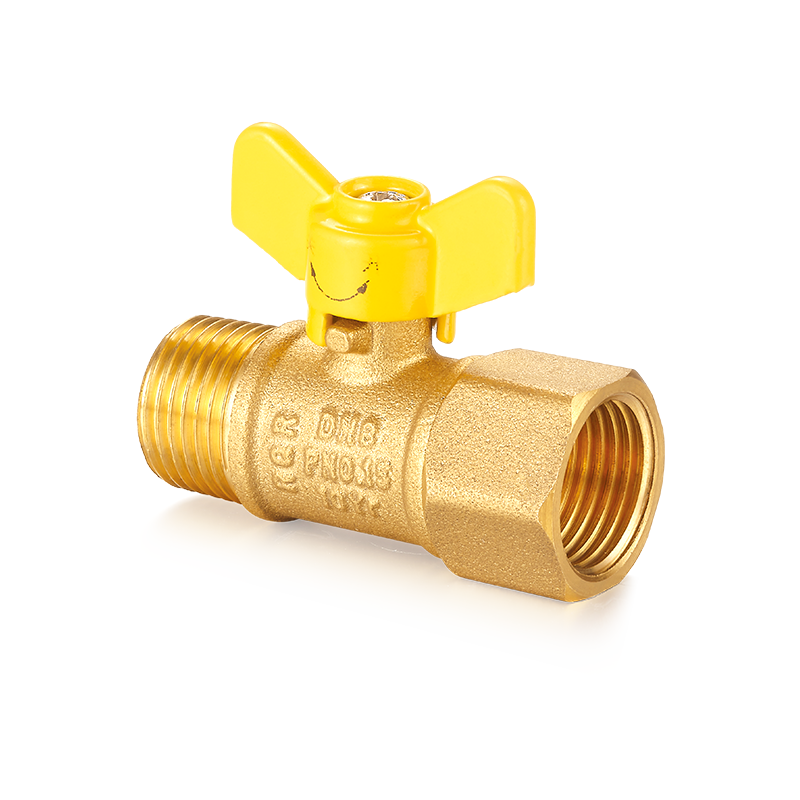
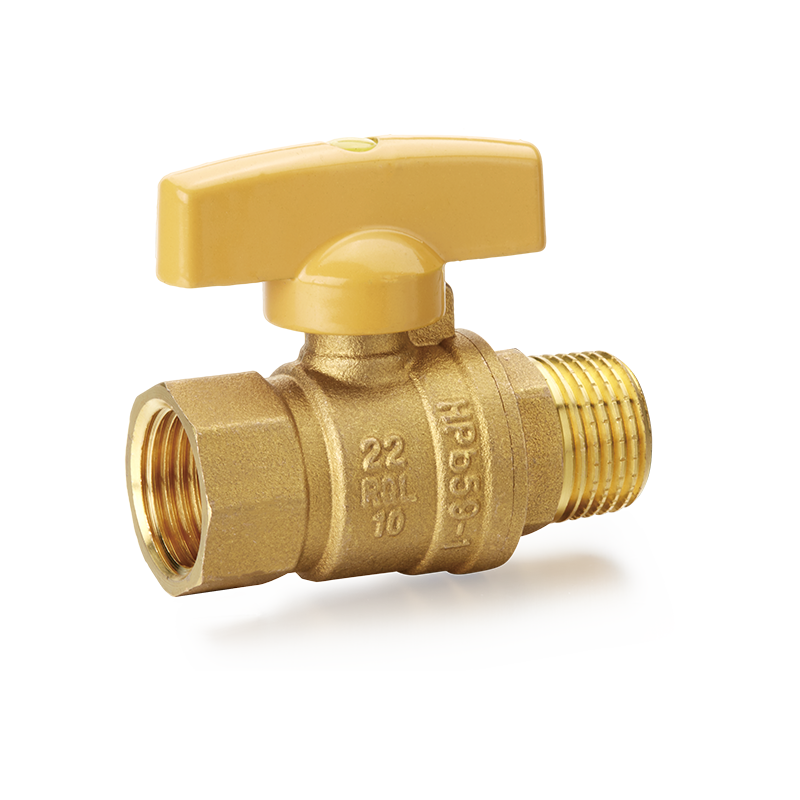
- 21 Product: YH-215 Brass Right Angle Ball Valve(F/M)
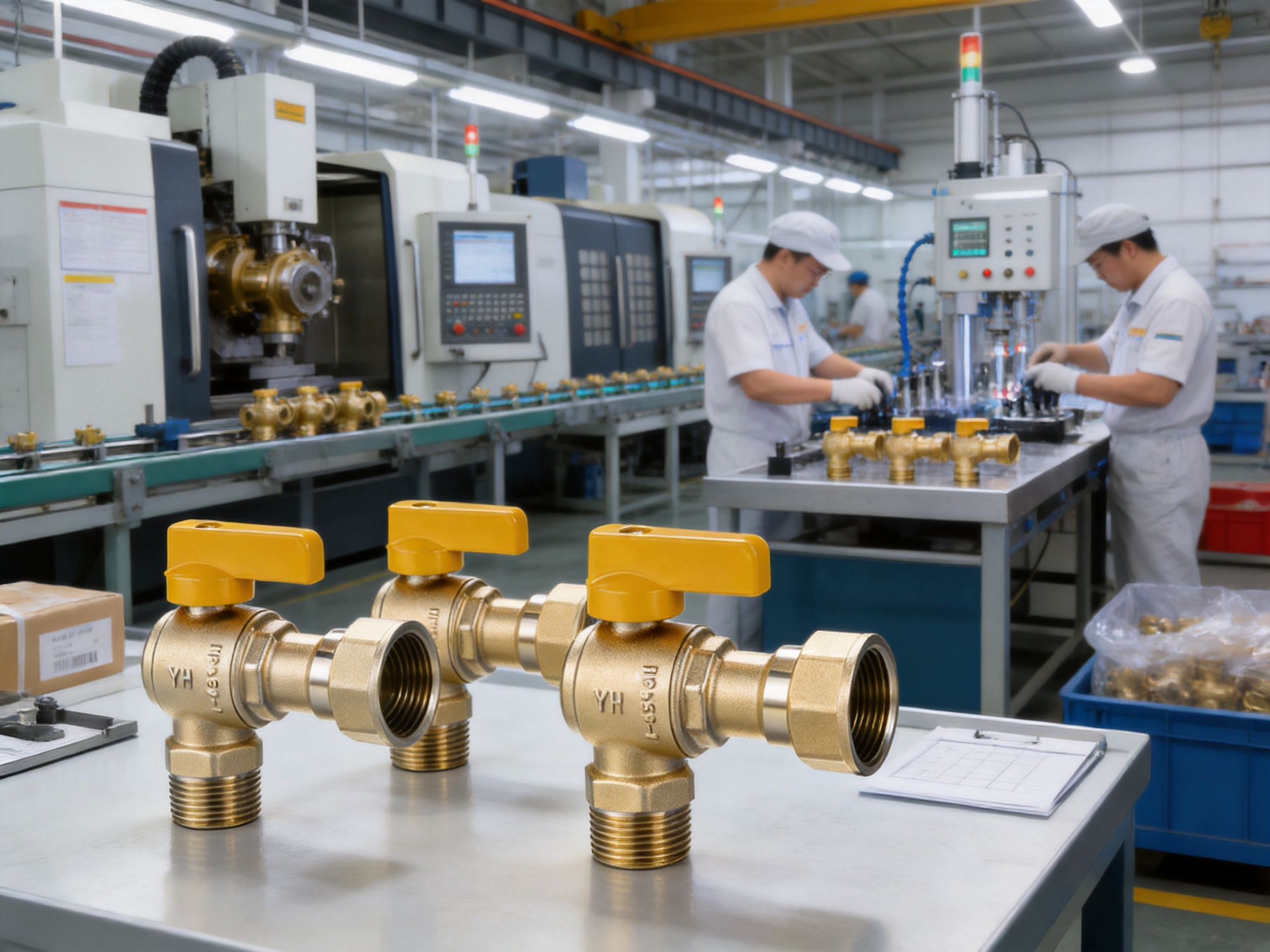
Modern plumbing, gas, utility, and equipment manufacturers increasingly need valves that provide dependable shutoff performance without taking up unnecessary installation space. In many compact systems, a conventional straight ball valve cannot be installed efficiently because the available pipe route turns at a cabinet corner, equipment wall, service panel, or narrow enclosure. Using a separate elbow may solve the directional problem, but it also adds components, threaded joints, labor, and potential leak points.
The YH-215 Brass Right-Angle Ball Valve (F/M) is designed to address these installation challenges with an integrated 90-degree flow path and a dual-thread interface. Its female-and-male connection configuration enables direct joining between different threaded components, reducing the need for additional adapters. The compact brass construction is suitable for water, non-corrosive fluids, and gas applications within the stated operating range.
More than a simple shutoff component, the YH-215 is a practical solution for installers, equipment manufacturers, system integrators, and distributors seeking to simplify corner connections. Its right-angle body can reduce installation footprint, while its forged brass structure, ISO 228 parallel pipe threads, and 1.6 MPa nominal pressure rating support reliable use in medium-pressure utility systems.
Product Overview
The YH-215 belongs to the brass right-angle ball valve category. It is engineered for applications in which the pipeline must change direction by 90 degrees while retaining convenient valve control and service access. The valve combines the operating advantages of a ball valve with the space-saving geometry of an angle body.
A ball valve uses a drilled spherical closure element. When the bore of the ball aligns with the pipeline, the valve permits flow. When the ball rotates 90 degrees, the solid portion of the ball blocks the passage and stops flow. This quarter-turn operating principle allows fast opening and closing, which is especially useful during maintenance, emergency isolation, equipment replacement, and routine servicing.
The YH-215 adds a female-and-male threaded connection arrangement. One side provides an internal female thread, while the other provides an external male thread. This configuration can connect components with different thread directions or connection requirements without automatically requiring a separate adapter. In retrofit projects and mixed-pipeline systems, this feature may reduce fitting count and make the installation layout easier to manage.
| Item | Specification |
|---|---|
| Product model | YH-215 |
| Product type | Brass right-angle ball valve |
| Connection configuration | Female thread / male thread |
| Nominal pressure | 1.6 MPa |
| Working medium | Water, non-corrosive fluids, and gas |
| Working temperature | -20°C to below 80°C |
| Thread standard | Parallel pipe thread to ISO 228 |
| Body material | Brass |
| Flow configuration | 90-degree right-angle passage |
| Primary use | Compact pipeline isolation and corner connections |
These specifications make the valve suitable for a range of utility and equipment applications, provided that the system designer verifies pressure, temperature, medium compatibility, thread engagement, and local installation requirements before use.
Why a Right-Angle Ball Valve Matters
Pipeline direction changes are common in practical installations. Pipes must often pass around structural members, enter the side of a cabinet, connect to wall-mounted equipment, or route through a confined machinery compartment. A straight valve installed in these situations can require an additional elbow before or after the valve. Although a separate elbow is a familiar solution, it can create several disadvantages.
First, every additional fitting increases the number of connections that must be assembled correctly. Thread sealant, alignment, tightening, and inspection become necessary at each joint. Second, additional fittings occupy space and may make the assembly more difficult to access. Third, the extra connection can increase the number of potential leakage locations. Finally, a separate elbow and valve combination may be less visually organized than an integrated angle valve.
The YH-215 incorporates the directional change into the valve body. The pipeline can turn through 90 degrees within the valve rather than using an independent elbow. This integrated arrangement helps installers create a shorter and cleaner connection path. In compact installations, even a small reduction in assembly length can improve access to other components and make the overall system easier to service.
The right-angle design is particularly valuable when the valve must be installed near a wall or inside a narrow cabinet. A straight valve may project outward and interfere with doors, covers, insulation, wiring, or neighboring equipment. The YH-215 can orient the connection more naturally around a corner, helping designers use the available space more efficiently.
Dual Thread Interface for Flexible Installation
The female-and-male thread arrangement is one of the defining features of the YH-215. Many piping systems contain a mixture of threaded components, including pipe sections, nipples, equipment ports, regulators, filters, meters, manifolds, and service connections. A valve with identical connection types on both ends may require an additional nipple, union, or adapter to connect the entire assembly.
By combining an internal thread and an external thread, the YH-215 can directly connect between compatible components with different external and internal thread requirements. This may simplify the material list and reduce the number of separate transition fittings needed for a particular layout. It is also useful during retrofit work, where the existing pipe arrangement may not have been designed around a new valve.
The dual interface supports practical installation flexibility, but it does not eliminate the need for proper thread verification. Installers should confirm thread size, thread form, sealing method, and compatibility with the connected pipe or fitting. ISO 228 parallel pipe threads are designed to form connections in which sealing is generally achieved through a gasket, seal, O-ring, or other suitable sealing element rather than by thread taper alone. The selected sealing approach should match the system medium and the manufacturer’s installation instructions.
When installed correctly, the dual thread arrangement can help reduce unnecessary adapters and create a more direct connection path. Compared with an arrangement that uses a straight valve, separate elbow, and multiple transition fittings, the YH-215 may provide a more compact and orderly assembly. Fewer components can also make inspection and replacement more straightforward.
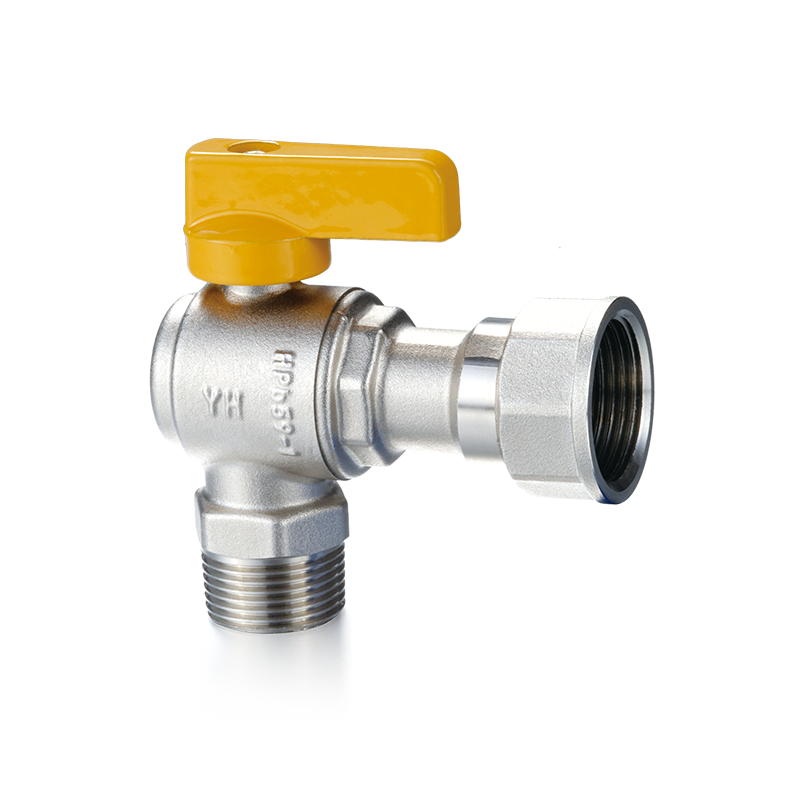
YH-215 Brass Right Angle Ball Valve(F/M)
Brass Construction and Pressure Capability
Brass is widely used for valves and fittings because it offers a balanced combination of mechanical strength, machinability, corrosion resistance in many general utility environments, and practical cost efficiency. The brass body of the YH-215 provides a solid foundation for threaded connections and repeated quarter-turn operation.
The stated nominal pressure rating is 1.6 MPa. This rating places the valve within a useful range for many medium-pressure water, utility, and gas applications. The actual suitability of a valve depends on the complete operating conditions, including fluid type, temperature, pressure fluctuations, installation orientation, and applicable regulations. A system should never be operated beyond the published rating.
A robust brass body is important because threaded valve connections experience mechanical loads during installation and service. The body must withstand tightening forces without distortion and maintain dimensional stability throughout its service life. Proper machining helps ensure that the thread profile, sealing surfaces, and internal flow passage are formed accurately.
Brass also provides good machinability for automated or precision machining processes. This allows manufacturers to create consistent bores, threads, valve seats, and connection surfaces. When machining parameters, tooling, inspection, and assembly controls are managed correctly, the resulting valve can achieve reliable fit and repeatable performance across production batches.
Flow Path and Pressure Loss Considerations
Flow resistance is a major consideration in valve selection. Excessive resistance can increase the pressure drop across a system, reduce downstream flow, and require larger pumps or higher supply pressure. The YH-215 is designed with a smooth 90-degree flow path intended to provide practical flow performance while changing the direction of the pipeline.
No directional valve can be evaluated solely by its external appearance. Flow behavior depends on the internal bore, ball-port geometry, seat arrangement, fluid viscosity, flow rate, and upstream and downstream piping. Nevertheless, integrating the directional change into a ball valve can avoid the need for a separate elbow immediately adjacent to the valve. This can help simplify the flow route and reduce the cumulative resistance associated with multiple fittings.
The ball valve operating principle also provides a direct passage when the valve is fully open. In an open position, the ball bore aligns with the inlet and outlet passage. This makes the valve suitable for on-off isolation duties where the system typically operates either fully open or fully closed. The valve should not automatically be treated as a precision throttling device unless the application has been specifically evaluated for partial-opening operation.
For system designers, the most effective approach is to consider the complete piping assembly. The valve’s nominal pressure rating, connection size, fluid velocity, and expected flow rate should be reviewed together. If the application requires precise flow regulation, a dedicated control valve may be more appropriate. If the main requirement is compact isolation at a corner connection, the YH-215 offers a practical configuration.
Compact Design for Restricted Spaces
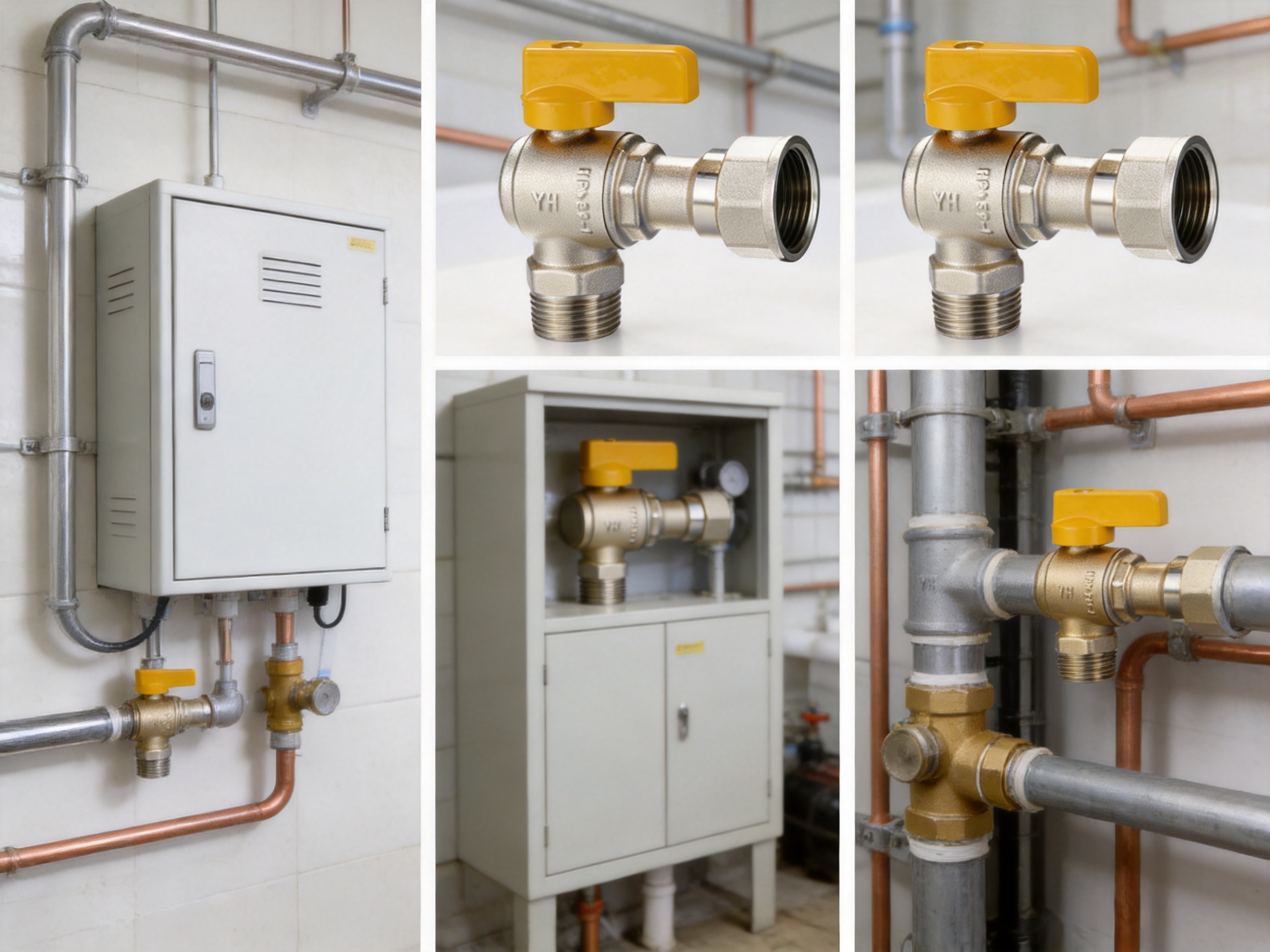
Space limitations are common in modern equipment. Wall-mounted water heaters, treatment units, gas appliances, cabinets, distribution panels, compact pumps, and packaged machinery often provide only limited clearance around service connections. A valve that works well in an open mechanical room may be difficult to install in a small enclosure.
The YH-215 is shaped for corner installations. Its right-angle body makes it possible to route piping along two intersecting directions without placing a separate elbow beside the valve. This can reduce the overall assembly footprint and help preserve clearance for covers, doors, insulation, and electrical components.
Compactness can also improve maintenance. A clean corner connection makes it easier to identify the shutoff point and access the valve handle or operating mechanism. When components are crowded together, a smaller valve assembly may allow technicians to work without removing unrelated equipment.
For original equipment manufacturers, a compact angle valve can support more efficient product packaging. Designers may be able to reduce cabinet depth, rearrange internal piping, or place the valve closer to the equipment inlet. These changes can contribute to a more compact final product, although the required service clearance and operating access must always be retained.
Space savings should not be achieved by forcing the valve into an unsuitable position. The valve must be installed without excessive pipe stress, bending load, or misalignment. Adequate room should remain for tightening, inspection, operation, and replacement. A compact design performs best when the surrounding layout is planned around it rather than when the valve is installed under mechanical strain.
Application Scenarios
Cabinet and Enclosure Connections
Compact cabinets frequently contain several pipes, hoses, electrical components, and control devices. A right-angle valve can help route a pipeline around the cabinet boundary while maintaining a convenient isolation point. The YH-215 may be used where water or other approved non-corrosive fluids enter or leave a confined enclosure.
Wall-Mounted Equipment
Wall-mounted equipment often has connections positioned close to the wall surface. A conventional straight valve may extend into the service area or conflict with adjacent components. The YH-215 can turn the connection away from or along the wall, helping create a neater installation while preserving shutoff capability.
Compact Plumbing Systems
Small plumbing assemblies benefit from fewer fittings and shorter connection paths. The valve may be used for local isolation near a fixture, appliance, utility module, or service branch, provided that the medium and operating conditions are within the specified range.
Gas and Utility Systems
The stated working media include gas and non-corrosive fluids. For gas service, the complete installation must comply with applicable gas safety codes, inspection requirements, thread-sealing rules, ventilation provisions, and local authority requirements. The valve should be selected only for gas types and pressures approved for the intended application.
Retrofit and Repair Projects
Existing piping rarely provides unlimited flexibility. A replacement valve may need to connect an internal-threaded port on one side and an externally threaded component on the other. The F/M interface can be helpful in this situation, particularly when the installer wants to avoid rebuilding a larger section of the pipework.
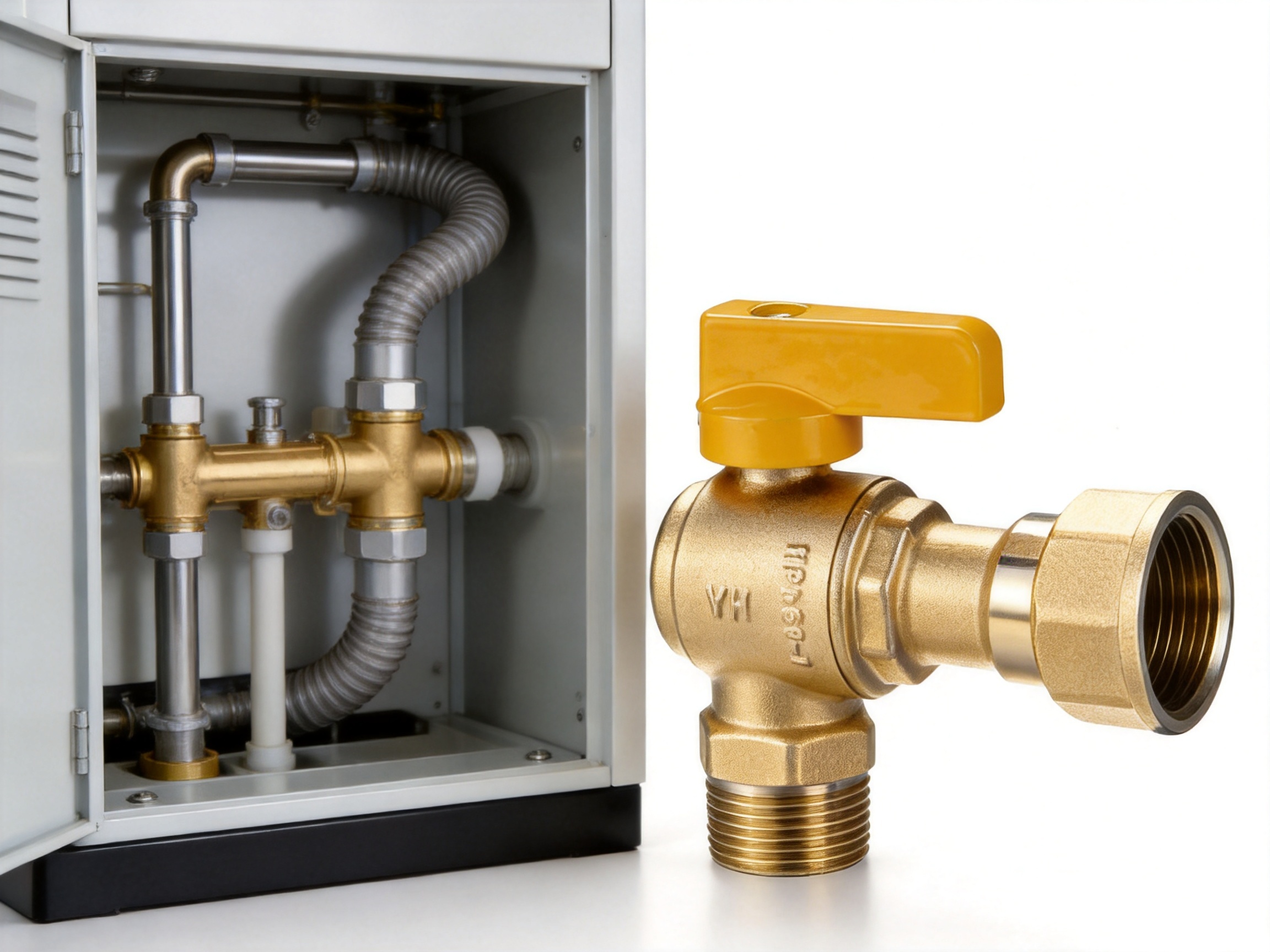
Advantages Compared with Conventional Alternatives
The YH-215 has several functional advantages when compared with a straight ball valve used together with a separate elbow and adapter arrangement. The most visible advantage is integration. The 90-degree flow route and shutoff function are contained in one coordinated valve body, which can reduce assembly complexity.
| Comparison factor | YH-215 right-angle ball valve | Conventional straight valve arrangement |
|---|---|---|
| Direction change | Integrated 90-degree path | Usually requires a separate elbow |
| Connection interface | Female and male threads | May require additional adapter or nipple |
| Installation footprint | Designed for compact corner routing | Can require more linear and lateral space |
| Component count | Potentially fewer fittings | Valve, elbow, and transition parts may be needed |
| Service arrangement | Integrated isolation point near the corner | Isolation point may be farther from the connection |
| Assembly complexity | More direct connection layout | More joints and alignment steps may be required |
| Typical use | Compact corner isolation | General straight-line installations |
This comparison does not mean that a right-angle valve replaces every straight valve. Straight valves remain suitable for many open installations and may be preferred where the piping route is linear. The advantage of the YH-215 becomes most apparent when direction change, limited clearance, and mixed thread connections are present at the same location.
Reducing component count can offer several practical benefits. It may lower procurement complexity, shorten assembly time, reduce the number of joints requiring sealing, and make the finished system easier to understand. For distributors and equipment manufacturers, one integrated product can also simplify packaging and bill-of-materials management for compact assemblies.
The YH-215 can also provide a more professional finished appearance. A valve and elbow combination may require multiple orientations to achieve the desired route, while the angle valve presents a purpose-built connection geometry. In visible equipment installations, this can support a cleaner and more organized appearance.
Manufacturing Strengths and Production Capabilities
The performance of a valve depends not only on its design but also on how consistently it is manufactured. Ningbo Yunhua Valve Co., Ltd. specializes in the research, development, production, sales, and service of gas and fluid valves, water supply valves, and hardware accessories. Its manufacturing capabilities are structured to support both product consistency and production scale.
The company operates across an area of approximately 20,000 square meters and has developed a precision machining workshop, assembly line, and testing workshop. These facilities create a production flow in which raw material processing, component machining, assembly, and inspection can be coordinated within an organized manufacturing system.
Precision machining is especially important for a brass threaded valve. The body must be machined to produce accurate external and internal threads, a properly formed flow passage, stable sealing surfaces, and consistent dimensions for internal components. CNC machine tools can support repeatable processing by controlling tool movement, cutting parameters, and machining sequences.
The company is equipped with advanced domestic and international CNC machine tools. This equipment supports the production of valve bodies and hardware components with controlled dimensional accuracy. Consistent machining reduces variation between units and helps ensure that components fit correctly during assembly.
Automated assembly equipment can improve production repeatability. A valve contains multiple elements that must be positioned, tightened, and tested correctly. Controlled assembly processes can reduce variation caused by manual operations, while trained personnel remain important for process supervision, abnormality handling, and final quality decisions.
Testing capability is another essential manufacturing strength. A valve must be evaluated not only for appearance but also for functional integrity. Pressure testing, leakage inspection, operating checks, thread verification, and visual examination can help identify defects before products are packed and shipped. A dedicated testing workshop allows these activities to be incorporated into the production process rather than treated as an afterthought.
The company reports an annual production capacity of approximately 2 million sets of valves and 10 million sets of hardware accessories. This scale can support the needs of distributors, plumbing brands, equipment manufacturers, and project suppliers. High capacity is valuable when it is combined with process control, because customers need both adequate supply and consistent product quality.
Quality Control from Machining to Shipment
Quality control for the YH-215 begins with the selection and verification of suitable brass material. Material consistency affects machining behavior, mechanical strength, surface appearance, and long-term performance. Incoming material should be managed according to internal specifications and applicable product requirements.
During machining, process controls help maintain the geometry of the valve body. Thread dimensions are particularly important because an incorrect thread can cause poor engagement, difficult installation, or leakage. The internal flow passage must also be free from machining debris and excessive burrs that could interfere with the ball or seat.
After machining, components should be cleaned and inspected before assembly. The ball, sealing elements, stem, body, and connection areas must be compatible with the intended valve design. Correct assembly ensures that the quarter-turn mechanism operates smoothly and that the closed position can achieve reliable shutoff.
Testing should confirm that the assembled valve can withstand the specified pressure conditions. Leak testing is essential for identifying leakage through the body, connections, stem area, or closed ball. Operational testing verifies that the valve can move between open and closed positions without abnormal resistance or binding.
Visual inspection also contributes to quality. The body should be checked for cracks, casting or forging abnormalities, serious machining marks, damaged threads, contamination, or other defects. Packaging should protect the threaded ends and operating components during storage and transportation.
A structured quality system is particularly important for products supplied to international customers. Different markets may require different documentation, labeling, packaging, or compliance procedures. Manufacturers that maintain organized production and testing records are better positioned to support customer audits, repeat orders, and technical communication.
Installation Guidance
Before installation, confirm that the valve model, connection sizes, thread type, pressure rating, temperature range, and working medium are appropriate for the system. Inspect the valve for transportation damage and make sure that the threads are clean and undamaged.
The piping should be aligned with the valve connections. The valve should not be used to correct a pipe misalignment or support the weight of an unsupported pipe. Pipe supports should be installed independently where necessary so that mechanical loads are not transferred to the valve body.
Because the YH-215 uses ISO 228 parallel pipe threads, the installer should use an appropriate sealing method for the connection design. The sealing element should be compatible with water, non-corrosive fluids, or gas as applicable. Excessive sealant should be avoided because loose material can enter the flow passage or interfere with the valve’s internal components.
Threaded connections should be tightened using suitable tools and procedures. The operating handle or stem should not be used as a lever for tightening the body. Excessive torque can damage threads, deform sealing surfaces, or place unnecessary stress on the valve.
After installation, operate the valve slowly through its full range and confirm that the movement is smooth. Pressurize the system gradually and inspect all connections for leakage. For gas applications, leak detection should follow approved safety procedures and must never rely on an open flame.
The valve should be installed in a location where the operating mechanism remains accessible. Even in a compact cabinet, technicians need enough clearance to turn the valve, inspect the body, and isolate the connected equipment when required.
Operating and Maintenance Recommendations
The YH-215 is intended primarily for quarter-turn on-off control. In normal service, the valve should be fully open or fully closed unless the manufacturer or system designer has approved partial opening for the specific application. Continuous throttling may increase wear or create flow conditions that are not suitable for the valve seats.
Operators should turn the valve without sudden impact. If the handle becomes unusually difficult to move, the system should be investigated rather than forcing the valve. Possible causes may include excessive pressure differential, contamination, corrosion, incorrect installation, or mechanical interference with surrounding equipment.
Periodic inspection should include checking for external leakage, damaged threads, corrosion, loose pipe supports, and abnormal operating resistance. The valve area should remain clean enough to allow early identification of leaks or surface damage.
If the valve is installed in a system that may freeze, suitable protection should be considered. Water trapped inside a valve can expand during freezing and damage internal components or the body. The stated operating temperature range is from -20°C to below 80°C, but the system designer must consider actual exposure, fluid behavior, and transient conditions.
When maintenance requires valve removal, isolate the system and release pressure safely before loosening any connection. For gas service, follow all applicable purge, ventilation, and ignition-control procedures. Reassembled connections should be tested before the equipment is returned to operation.
Material and Medium Compatibility
The listed working media are water, non-corrosive fluids, and gas. This wording is important because not every fluid is compatible with brass bodies, valve seats, seals, or other internal components. The general category of a fluid is not enough to establish compatibility in every case.
For water systems, factors such as water chemistry, chloride content, temperature, pressure, and treatment chemicals may affect service life. For non-corrosive fluids, the system designer should review the chemical composition and confirm that all wetted materials are suitable. For gas applications, the gas composition, pressure, safety classification, and regulatory requirements must be evaluated.
Temperature also affects sealing performance and material behavior. The YH-215 is specified for a working temperature range of -20°C to below 80°C. Operation outside this range should not be assumed to be acceptable without specific technical confirmation. Temperature cycling may also influence seals and threaded joints, particularly when the installation experiences repeated heating and cooling.
Where the medium is uncertain or chemically aggressive, the customer should provide complete application details before ordering. A responsible valve selection process considers the complete assembly, not just the metal body. Sealing materials, pipe materials, lubricants, thread compounds, and cleaning agents must all be reviewed together.
Value for Distributors and Equipment Manufacturers
Distributors need products that are easy to explain, stock, and apply across multiple customer segments. The YH-215 has a clear value proposition: a brass body, 90-degree flow direction, F/M threaded interface, compact form, and 1.6 MPa nominal pressure rating. These features make it suitable for a range of corner connection requirements.
The product can be positioned as a problem-solving valve rather than only as a standard commodity fitting. Customers who are dealing with limited clearance, awkward pipe orientation, or a mismatch between internal and external threads can immediately understand why an integrated right-angle design may be useful.
Equipment manufacturers can also benefit from standardized compact valve configurations. A consistent valve model may simplify design drawings, procurement, assembly instructions, and replacement-part planning. When the same basic connection concept is used across several equipment models, production teams may reduce training complexity and improve assembly familiarity.
For OEM and project customers, manufacturing capability is as important as product geometry. Ningbo Yunhua Valve Co., Ltd. combines machining, assembly, testing, and production capacity in an integrated organization. This can support repeat orders, product consistency, and communication regarding technical requirements, packaging, and supply planning.
Design Integration in Piping Layouts
When integrating the YH-215 into a piping layout, designers should begin by identifying the required flow direction and service access. The right-angle configuration should be oriented so that the pipeline route is natural and the operating mechanism can be reached without obstruction.
The designer should also consider the sequence of connected components. Because one end is female-threaded and the other is male-threaded, the valve may be especially effective where a male pipe or fitting must connect directly to a female port. However, the direction of assembly should be planned carefully so that the valve can be tightened without twisting an already installed pipe or stressing a nearby component.
Clearance should be checked in three dimensions. The design must allow space for the body, operating handle, installation tools, pipe insulation, access covers, and future maintenance. A valve that fits during initial assembly may still be unsuitable if the handle cannot be operated after the cabinet or enclosure is closed.
Flow direction, pressure, and possible water hammer should also be evaluated. Ball valves can close quickly because of their quarter-turn mechanism. In systems sensitive to pressure surges, operators may need to close the valve in a controlled manner, and the broader piping design should address transient conditions.
For gas systems, the valve location should support safe isolation and inspection. It should not be hidden behind permanent structures or installed where a leak could accumulate without detection. The final arrangement must follow applicable codes and the requirements of the responsible gas authority.
Company Manufacturing and Service Profile
Ningbo Yunhua Valve Co., Ltd. is an innovative enterprise focused on gas and fluid valves, water supply valves, and hardware accessories. Its activities cover research and development, manufacturing, sales, and service. This broad structure allows the company to connect product design with production realities and customer application requirements.
Over more than ten years, the company has developed its corporate culture, management system, and professional management team. A mature management structure supports coordination between engineering, production, quality control, purchasing, sales, and after-sales service. For valve customers, this coordination can be important when a product must be supplied repeatedly or adapted to a particular project requirement.
The company’s precision machining workshop is equipped with domestic and international CNC machine tools. Its assembly line and testing workshop support the transition from individual machined components to finished valves that are checked for function and integrity. This arrangement is suitable for products such as the YH-215, which depend on accurate threads, controlled internal geometry, consistent sealing, and reliable quarter-turn operation.
The reported production capacity of 2 million valve sets and 10 million hardware accessory sets per year demonstrates the company’s ability to support volume requirements. Capacity alone does not define quality, but a well-organized high-capacity operation can provide useful supply stability when supported by proper process controls and inspection procedures.
The company’s stated vision is to become a leading enterprise in the global fluid control industry. Its mission is to build a safe fluid ecosystem through high-quality valves. These objectives align with the practical requirements of the YH-215: safe isolation, dependable connection, controlled production, and suitability for demanding compact installations.
Selection Checklist for Buyers
Buyers evaluating the YH-215 should first identify the actual application. Is the valve intended for water, a non-corrosive liquid, or gas? What are the normal and maximum pressures? What temperature range will the valve experience? Are there pressure surges, vibration, outdoor exposure, or freeze risks?
The next step is to verify the connection details. The customer should confirm the required nominal size, the compatibility of the ISO 228 parallel threads, and which connected component will use the female end and which will use the male end. A drawing or sample connection can help prevent ordering errors.
Installation space should be measured before selection. The right-angle body is designed for compact routing, but the surrounding area must still provide enough room for tools, operation, inspection, and removal. The valve should not be selected solely on its connection size without reviewing the complete installation envelope.
Buyers should also confirm the required documentation. Depending on the market and application, this may include material information, pressure-test records, inspection procedures, packaging specifications, product drawings, or other technical documents. Early communication helps align the product with the customer’s internal quality system.
| Buyer question | Reason for checking |
|---|---|
| What is the working medium? | Confirms material and sealing compatibility. |
| What are the operating pressure and temperature? | Confirms that the stated rating and range are suitable. |
| What thread standard and size are required? | Prevents incorrect or incompatible connections. |
| Is a 90-degree route required? | Determines whether the angle configuration provides a real installation benefit. |
| Is the valve accessible after installation? | Ensures safe operation and future maintenance. |
| Are special testing or packaging documents needed? | Aligns delivery requirements with project or customer procedures. |
Common Questions and Answers
What is the primary purpose of the YH-215?
The primary purpose is to provide compact quarter-turn isolation while changing the pipeline direction by 90 degrees. It is intended for corner connections in cabinets, wall-mounted equipment, compact plumbing systems, and similar installations.
What does F/M mean on this valve?
F/M means female thread and male thread. One connection has an internal thread and the other has an external thread. This allows the valve to connect directly between compatible components with different threaded interfaces.
Can the valve eliminate every adapter?
Not in every installation. The F/M configuration may eliminate the need for certain adapters, nipples, or transition fittings, but the actual result depends on pipe size, thread standard, component orientation, and sealing requirements. Compatibility must be checked before installation.
What pressure can the valve handle?
The stated nominal pressure is 1.6 MPa. The system should remain within this rating, taking account of operating temperature, pressure fluctuations, transient conditions, and applicable regulations.
What media are suitable for the YH-215?
The listed working media are water, non-corrosive fluids, and gas. The customer must confirm that the specific fluid, gas composition, temperature, pressure, and sealing materials are compatible with the complete valve assembly.
What is the specified temperature range?
The working temperature is stated as -20°C to below 80°C. Applications outside this range require technical review and should not be assumed to be suitable.
Does the valve use a tapered thread?
The product information specifies parallel pipe thread to ISO 228. Parallel threads generally require an appropriate gasket, seal, or sealing element to achieve the connection seal. The installer should follow the approved sealing method for the application.
Is the YH-215 intended for flow regulation?
It is primarily an isolation ball valve for fully open or fully closed service. Partial opening should only be used when the application has been evaluated and approved for that operating condition.
Why is brass used for the valve body?
Brass offers useful mechanical strength, machinability, and resistance to corrosion in many general utility environments. It is also suitable for precision machining of threaded bodies and internal valve passages.
What makes the right-angle design useful in a cabinet?
The integrated 90-degree passage can route the pipeline around a corner without requiring a separate elbow. This may reduce the installation footprint and preserve clearance for cabinet covers, wiring, insulation, and neighboring components.
How should the valve be installed?
The piping should be aligned and independently supported. Threads must be clean and compatible, and the correct sealing method should be applied. The valve should be tightened with suitable tools, tested gradually after installation, and positioned where it remains accessible.
What manufacturing capabilities support this product?
The manufacturer operates precision machining, assembly, and testing workshops and uses domestic and international CNC machine tools together with automated assembly and testing equipment. These capabilities support consistent machining, assembly, inspection, and production volume.
Is the valve suitable for every gas application?
No. Gas applications require specific evaluation of gas type, pressure, temperature, sealing materials, installation method, and local safety regulations. The valve should be used only where the complete application has been approved.
How does the product help retrofit projects?
The compact angle body can help solve directional limitations, while the female-and-male interface can connect different compatible threaded components. This may reduce the need to rebuild a larger section of existing pipework.
What should be checked before ordering?
Buyers should confirm the medium, pressure, temperature, connection size, ISO 228 thread compatibility, available installation space, service access, required documentation, and any local compliance requirements.
Conclusion
The YH-215 Brass Right-Angle Ball Valve (F/M) is designed for a specific and increasingly common installation challenge: controlling flow where the pipeline must turn through a corner and available space is limited. Its integrated 90-degree flow path can reduce the need for separate elbows, while the female-and-male threaded interface provides useful flexibility for mixed-component and retrofit connections.
With a brass body, 1.6 MPa nominal pressure rating, working temperature range of -20°C to below 80°C, and compatibility with water, non-corrosive fluids, and gas under suitable conditions, the valve is positioned for medium-pressure utility and equipment applications. Its compact configuration may simplify installation, reduce component count, and improve access in cabinets, wall-mounted systems, and compact plumbing assemblies.
The product is further supported by the manufacturer’s investment in precision machining, CNC equipment, automated assembly, testing facilities, professional management, and high-volume production. These capabilities provide a foundation for consistent manufacturing and dependable supply to distributors, OEM customers, project contractors, and system integrators.
For the best results, the valve should be selected as part of the complete piping design. Thread compatibility, medium suitability, pressure, temperature, sealing method, mechanical support, operating access, and local safety requirements must all be considered. When those factors are properly addressed, the YH-215 offers an efficient and practical alternative to conventional straight-valve-and-elbow assemblies.
References
1. ISO 228, Pipe Threads Where Pressure-Tight Joints Are Not Made on the Threads.
2. General engineering principles for quarter-turn ball valve operation and pipeline isolation.
3. General brass alloy machining and corrosion-resistance practices for fluid-control components.
4. General guidance for threaded pipe connection design, sealing, alignment, and inspection.
5. Product specification information for the YH-215 Brass Right-Angle Ball Valve (F/M).
6. Manufacturer information concerning precision machining, automated assembly, testing workshops, production capacity, and fluid-control product development.
Product: YH-215 Brass Right Angle Ball Valve(F/M)

Related News
Contact Us
-

-
 +86-0574-63742169
 -
 No.104-128, Cizhang East Road, Zhangqi Town, Cixi City, Ningbo, Zhejiang Province, China


Message Us Now !
