


 English
  русский
  عربى
عربى  Español
Magnetic Lockable Ball Valve for Secure Utility Control
Content
- 1 Product Overview
- 2 Key Technical Data
- 3 Magnetic Anti-Tamper Locking: The Main Competitive Advantage
- 4 Full Bore Flow Path for Efficient Fluid Transport
- 5 1.6 MPa Pressure Rating for Versatile Applications
- 6 Material Selection: Lead-Free and Low-Lead Brass Options
- 7 Female-to-Female Threaded Connection for Installation Convenience
- 8 Applications in Public Buildings
- 9 Applications in Rental Properties and Metering Systems
- 10 Applications in Industrial Pipeline Access Control
- 11 Advantages Over Ordinary Ball Valves
- 12 Advantages Over External Padlock Valves
- 13 Manufacturing Strength Behind the Product
- 14 Quality Control from Raw Material to Finished Valve
- 15 Production Capacity and Supply Reliability
- 16 Design Value for Safety and Utility Management
- 17 Installation Considerations
- 18 Maintenance and Service Life Considerations
- 19 How the Valve Supports Sustainable System Performance
- 20 Q&A Section
- 20.1 What is the main purpose of the YH-204 Magnetic Lockable Ball Valve?
- 20.2 How does the magnetic locking function improve security?
- 20.3 Where is this valve commonly used?
- 20.4 What media can the valve handle?
- 20.5 What is the nominal pressure rating?
- 20.6 What is the working temperature range?
- 20.7 Why is full bore design important?
- 20.8 Can this valve be used for drinking water systems?
- 20.9 What sizes are available?
- 20.10 What thread standard does the valve use?
- 20.11 How does this valve compare with a padlock-type valve?
- 20.12 Is the valve suitable for industrial use?
- 20.13 What manufacturing strengths support product reliability?
- 20.14 Why should property managers consider this valve?
- 21 Purchasing and Selection Guidance
- 22 Conclusion
- 23 References
- 24 Product: YH-204 Magnetic Lockable Ball Valve(F/F)
In modern gas, water, and non-corrosive fluid systems, a valve is no longer judged only by whether it opens and closes reliably. Facility managers, contractors, utility operators, landlords, and industrial maintenance teams increasingly need valves that combine flow performance, tamper resistance, pressure capability, installation convenience, and long-term durability. The YH-204 Magnetic Lockable Ball Valve (F/F) is designed around this practical need. It is a brass lockable ball valve with a female-to-female threaded connection, a magnetic anti-tamper locking structure, a full bore flow path, and a nominal pressure rating of 1.6 MPa.
This valve is built for places where access control matters. Public buildings, rental properties, metering rooms, shared utility areas, industrial pipeline branches, and controlled service zones all require a simple but effective way to prevent unauthorized valve operation. Ordinary handle-operated ball valves can be turned by almost anyone. The YH-204 changes that by requiring a dedicated magnetic key for operation, helping professional operators maintain control over gas, water, and utility access while reducing the risk of misuse, accidental operation, or intentional tampering.
Beyond security, the valve is also engineered for hydraulic efficiency and material reliability. Its full bore design supports smooth flow and minimizes pressure loss. Its brass construction may be supplied in lead-free or low-lead material options, allowing the product to meet the requirements of drinking water systems where material safety is a priority. With a working temperature range of -20°C to 80°C and compatibility with water, non-corrosive fluids, and gas, it offers wide practical value for building services and industrial distribution systems.
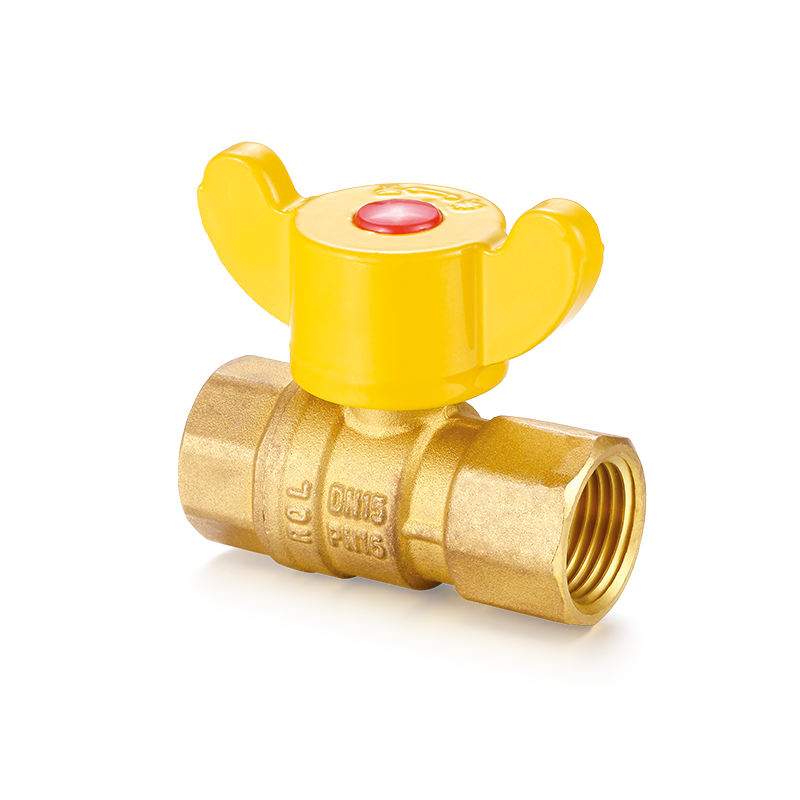
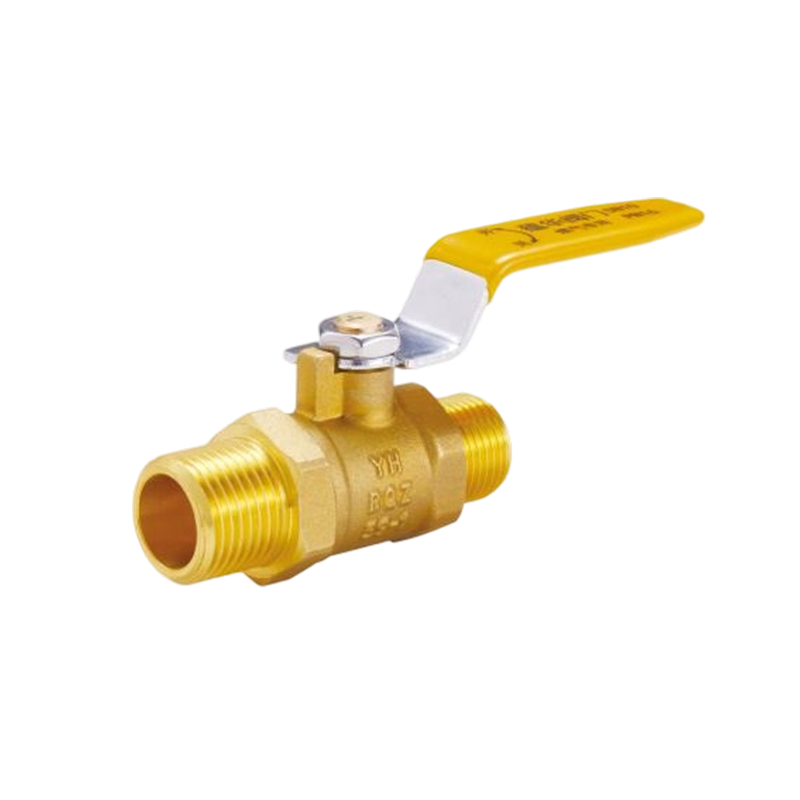
YH-204 Magnetic Lockable Ball Valve(F/F)
Product Overview
The YH-204 Magnetic Lockable Ball Valve (F/F) belongs to the brass lockable ball valve category. Its core function is to provide secure on-off control in a pipeline while preventing unauthorized users from changing the valve position. The “F/F” connection means that both ends use female threaded ports, making it suitable for direct connection with male threaded pipe fittings. The parallel pipe thread follows ISO 228, a common international thread standard for pipe connections in many plumbing and fluid control applications.
The valve is available in DN15 and DN20 specifications, corresponding to common pipe sizes used in household, commercial, metering, and small industrial pipeline branches. DN15 is widely used in smaller branch lines, appliance connections, and individual service points. DN20 is often selected when greater flow capacity is needed while still maintaining compact installation dimensions.
At the center of the product is a ball valve structure, a proven shut-off design known for fast operation, tight sealing, low flow resistance, and compact body form. However, the key difference between this valve and a conventional brass ball valve is its magnetic locking mechanism. Instead of relying on a regular lever handle that can be operated freely, this model is controlled by a dedicated magnetic key. The locking feature helps ensure that only authorized personnel can open or close the valve.
This security-focused structure makes the valve suitable for property management and utility control. In rental properties, landlords and facility managers may need to isolate a service line for maintenance, non-payment management, safety inspection, or emergency response. In public buildings, maintenance teams may need to prevent visitors, tenants, or non-professionals from changing the status of water or gas supply lines. In industrial environments, unauthorized valve operation can interrupt production, create process instability, or introduce safety risks. The YH-204 is designed to reduce these risks while preserving the flow performance expected from a full bore ball valve.
Key Technical Data
The following table summarizes the essential technical specifications and dimensions of the YH-204 Magnetic Lockable Ball Valve (F/F). These specifications help engineers, purchasers, and installers choose the correct model for a particular pipeline system.
| Item | Specification |
| Product Type | Magnetic lockable brass ball valve |
| Connection Type | Female thread to female thread |
| Nominal Pressure | 1.6 MPa |
| Working Medium | Water, non-corrosive fluids, gas |
| Working Temperature | -20°C < t < 80°C |
| Thread Standard | Parallel pipe thread to ISO 228 |
| Material Options | Lead-free brass or low-lead brass |
| Security Feature | Magnetic anti-tamper locking operation |
| Flow Structure | Full bore flow path |
The dimensional data for available sizes is as follows.
| Specs | G | D | L | A |
| DN15 | 1/2" | 12 | 55 | 43.5 |
| DN20 | 3/4" | 18 | 66 | 48 |
These compact dimensions allow the valve to be installed in limited spaces such as meter boxes, utility cabinets, pipeline shafts, wall-mounted distribution systems, and equipment compartments. The use of common thread sizes also helps simplify installation and replacement in existing pipeline networks.
Magnetic Anti-Tamper Locking: The Main Competitive Advantage
The most distinctive advantage of the YH-204 is its magnetic anti-tamper locking design. Many standard ball valves use exposed handles that can be moved by hand. This is convenient in private, controlled environments, but it creates problems in shared or public utility systems. A visitor, tenant, worker, or unauthorized person may accidentally or intentionally open or close a valve. Even a short interruption of water or gas supply can create inconvenience, service complaints, safety concerns, or damage to equipment.
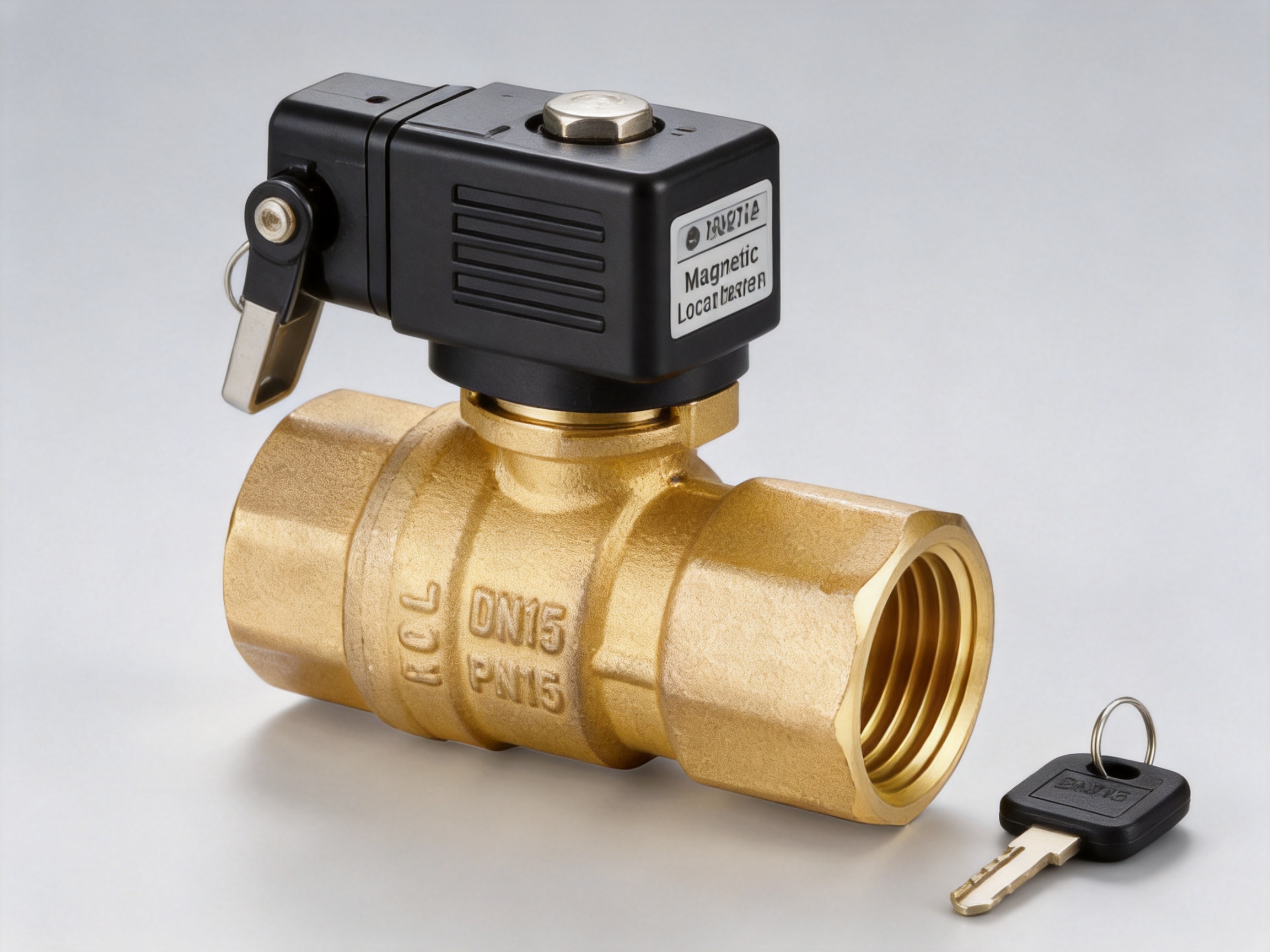
The magnetic locking system addresses this problem by requiring a special magnetic key for operation. Without the correct key, the valve cannot be operated in the same way as a standard handle valve. This creates a practical access-control barrier. It does not require electricity, wiring, software, batteries, or electronic authentication. Instead, it uses a mechanical and magnetic principle that is simple, durable, and suitable for harsh building-service conditions.
Compared with padlock-type valves, the magnetic locking structure is more compact and better integrated into the valve body. A padlock system may protrude from the valve and may be vulnerable to corrosion, cutting, or mechanical damage. It can also occupy more space, which is inconvenient in narrow cabinets or crowded pipe runs. The YH-204 offers a cleaner solution because the locking function is part of the valve design. This improves appearance, reduces external interference points, and supports easier installation in compact locations.
Compared with removable-handle valves, the YH-204 offers greater operational control. A removable handle can be lost, substituted, or improvised. In many cases, unauthorized users may still find a way to turn the valve stem with common tools. A magnetic key mechanism raises the barrier to unauthorized operation because the valve is not intended to be turned with ordinary hand tools. For property management, this means fewer unauthorized changes and more predictable control over service access.
For gas control, the anti-tamper advantage is especially important. Unauthorized opening of a gas line can create serious safety risks if downstream appliances are not properly prepared or inspected. Unauthorized closing can interrupt heating, cooking, or industrial processes. A lockable valve helps ensure that only trained personnel can change the supply status. For water systems, the same feature helps prevent illegal water use, uncontrolled leakage restoration, or improper operation during maintenance.
Full Bore Flow Path for Efficient Fluid Transport
Security is only one part of a valve’s value. A valve that restricts flow can cause pressure loss, increase pumping energy, reduce downstream performance, and create user dissatisfaction. The YH-204 uses a full bore flow path, meaning the internal passage is designed to keep flow as unobstructed as possible when the valve is fully open. This design is particularly valuable in branch lines where every pressure drop matters.
In a reduced-bore valve, the internal opening is smaller than the pipe size, which can cause turbulence and pressure loss. Reduced-bore designs may be acceptable in some applications, but they are not ideal when stable flow capacity is required. A full bore ball valve provides a straighter and wider flow channel. This supports efficient transport of water, gas, and other non-corrosive fluids.
For domestic and commercial water systems, full bore performance helps preserve water pressure at taps, appliances, meters, and service branches. For gas distribution, a smooth passage helps maintain stable supply to downstream appliances or process points. For industrial pipeline access control, the full bore design minimizes the valve’s influence on process conditions when it is open.
The full bore structure also helps reduce the accumulation of debris compared with more restrictive geometries. In water systems, fine particles, scale, or sediment may move through pipelines. A smoother path can reduce localized areas where material may settle. While proper filtration and system maintenance are still important, a full bore valve is generally more favorable for long-term flow stability.
From a competitive perspective, the combination of full bore design and magnetic locking gives the YH-204 a strong position. Some lockable valves focus mainly on security and compromise on flow capacity. Some high-flow ball valves lack tamper resistance. This product is designed to deliver both: controlled access and efficient pipeline performance.
1.6 MPa Pressure Rating for Versatile Applications
The valve has a nominal pressure rating of 1.6 MPa, equivalent to 16 bar under appropriate conditions. This pressure capability makes it suitable for many low-pressure and medium-pressure systems commonly found in buildings, utility installations, and general industrial applications. It offers a practical safety margin for water distribution and non-corrosive fluid service, while also being suitable for gas applications within the specified working conditions and applicable regulations.
A pressure rating is not merely a number on a datasheet. It reflects the ability of the valve body, ball, stem, sealing components, and threaded connections to perform under pressure. In real installations, pressure may fluctuate due to pump operation, thermal expansion, water hammer, system start-up, or changes in downstream demand. A valve rated for 1.6 MPa provides dependable capability for many common service environments.
Compared with lower-rated valves, the YH-204 offers broader application flexibility. Contractors and distributors may prefer to stock a valve that can be used across multiple project types rather than different valves for each pressure level. For facility managers, a higher pressure rating within the required range increases confidence when the valve is installed in uncertain or variable operating conditions.
However, correct valve selection should always consider the full system. Media type, working temperature, pressure fluctuations, thread compatibility, installation method, and local codes all influence suitability. The YH-204 is intended for water, non-corrosive fluids, and gas within its rated range. It should not be used for corrosive chemicals, incompatible media, or conditions outside the specified temperature and pressure limits.
Material Selection: Lead-Free and Low-Lead Brass Options
Material safety has become one of the most important issues in water system components. Brass has long been used in valves because it offers a strong balance of machinability, corrosion resistance in suitable environments, mechanical strength, sealing performance, and cost efficiency. The YH-204 can be supplied using lead-free brass or low-lead brass materials, supporting use in drinking water systems where regulatory compliance and health protection are essential.
Lead-free or low-lead brass is particularly important for potable water applications. In many markets, water-contact components must satisfy strict limits on lead content and metal leaching. Selecting appropriate brass helps reduce the risk of contamination and supports compliance with drinking water safety requirements. For property developers, plumbing contractors, and municipal projects, this material option is a significant advantage.
Compared with generic brass valves of unknown material composition, a valve with defined lead-free or low-lead material options offers greater purchasing confidence. It also supports better documentation for project approval, quality audits, and long-term maintenance records. In modern construction, component traceability and material compliance are increasingly important, especially in schools, hospitals, residential buildings, hotels, and public facilities.
Brass also provides advantages in gas and non-corrosive fluid service. It has good dimensional stability, reliable thread strength, and a smooth machined surface. When properly manufactured, brass valve bodies can maintain sealing alignment and mechanical integrity over long service periods. The YH-204 benefits from these characteristics while adding the functional value of magnetic locking.
Female-to-Female Threaded Connection for Installation Convenience
The YH-204 uses female threaded connections on both ends. This configuration is widely used because it allows the valve to connect directly to male threaded pipe fittings, adapters, nipples, meters, regulators, or equipment ports. Threaded valves are common in small and medium pipeline systems because they do not require welding, specialized fusion tools, or complex flange assemblies.
The ISO 228 parallel pipe thread standard supports compatibility with many international piping components. Parallel threads are often used where sealing is achieved with a washer, gasket, O-ring, or appropriate sealing method depending on the connection design. Installers should follow best practices and local standards when selecting sealing materials and tightening methods.
Installation convenience is a major advantage in maintenance and retrofit projects. In an existing building, replacing a standard valve with a magnetic lockable valve may be necessary to improve security. A compact F/F threaded body helps simplify this conversion. Installers can remove the existing valve, prepare the threads, apply approved sealing methods, and install the YH-204 without redesigning the whole pipeline.
Compact body dimensions also reduce installation difficulty. Meter boxes and utility cabinets often have limited clearance. A large handle, padlock, or bulky lock housing can interfere with nearby pipes, walls, or meters. The YH-204 is designed as a compact lockable solution, making it suitable for tight layouts where ordinary lockable valves may be inconvenient.
Applications in Public Buildings
Public buildings require a higher level of utility control than private spaces. Schools, hospitals, government facilities, shopping centers, transportation stations, exhibition halls, and community buildings all contain pipeline systems that may be accessible to many people. In these environments, unauthorized valve operation can create service disruption and safety hazards.
The YH-204 Magnetic Lockable Ball Valve helps facility managers maintain controlled access. For example, a water supply branch in a public restroom can be isolated for maintenance and locked to prevent accidental reopening. A gas line serving a kitchen or laboratory can be controlled by authorized personnel only. A service branch in a mechanical room can be secured so that visitors or untrained workers cannot interfere with the system.
In public buildings, response time is also important. The magnetic key operation provides authorized personnel with quick access when needed. Unlike valves hidden behind panels or secured with separate padlocks, a magnetic lockable valve can be operated efficiently by trained staff carrying the correct key. This balance of security and serviceability is one of the product’s most practical advantages.
The valve also supports standardized maintenance procedures. Facility teams can issue magnetic keys only to qualified technicians. Maintenance records can specify which lines are controlled by lockable valves. During inspections, staff can verify whether valves remain in the intended position. This creates a more organized utility management system.
Applications in Rental Properties and Metering Systems
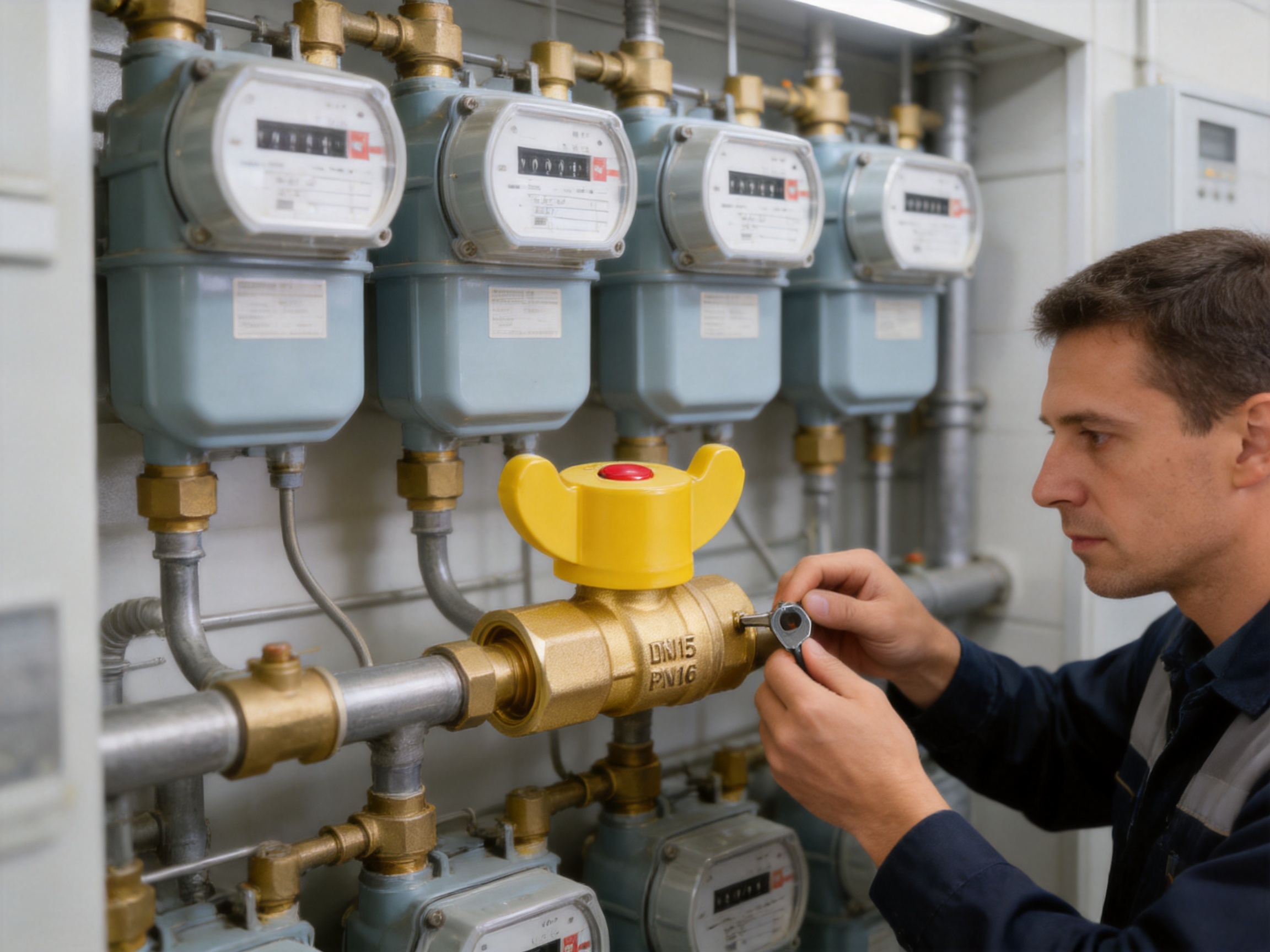
Rental properties often involve shared responsibility between landlords, tenants, property managers, and utility providers. Water and gas supply must be accessible for service but protected against unauthorized use or interference. The YH-204 is well suited to rental property gas and water metering areas because it helps secure individual service lines.
In apartment buildings, multiple meters may be installed in one room or cabinet. If ordinary valves are used, tenants or unauthorized persons may operate valves that affect other units. A magnetic lockable valve reduces this risk by limiting operation to authorized personnel. This can help prevent disputes, service interruptions, and unsafe changes to gas or water supply.
For property managers, the valve provides an effective tool for maintenance isolation. When a unit requires repair, the service line can be closed securely. The lockable function helps ensure the line remains isolated until work is complete. This is important when plumbers, gas technicians, or inspection teams are working downstream. Accidental reopening during maintenance can lead to leaks, flooding, or gas release.
Metering systems also benefit from anti-tamper control. Unauthorized valve operation near meters can interfere with billing, service activation, or safety procedures. The YH-204 supports controlled access without requiring complex electronic devices. Its mechanical magnetic system is simple, durable, and suitable for wide deployment in property management networks.
Applications in Industrial Pipeline Access Control
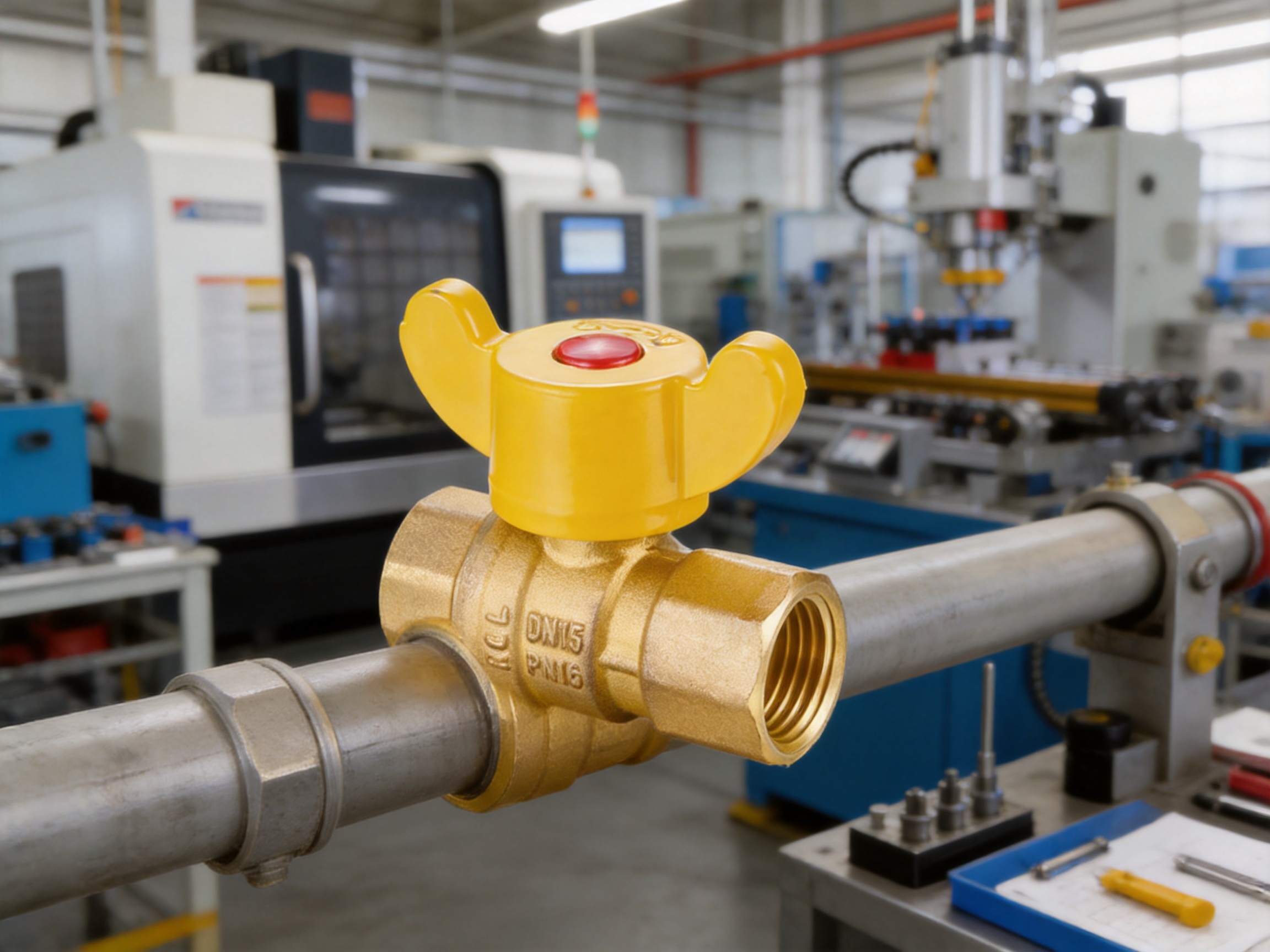
Industrial facilities often have many pipeline branches carrying water, gas, compressed air, or non-corrosive process fluids. While the YH-204 is not intended for corrosive media or extreme conditions, it is valuable in general utility and service pipelines where access control is needed. Unauthorized valve operation in an industrial setting can interrupt production, damage equipment, or create safety risks.
A lockable valve allows maintenance supervisors to control specific pipeline sections. For example, a branch supplying a test bench, cleaning station, burner, or process utility point can be opened only when authorized. During maintenance, the valve can be closed and secured to help prevent unintended operation. While full lockout-tagout procedures must still follow workplace safety regulations, a magnetic lockable valve can be part of a broader access-control and isolation strategy.
The full bore design is especially useful in industrial utility lines where flow demand can vary. When the valve is open, it helps reduce restriction and supports stable supply. The 1.6 MPa pressure rating provides sufficient capacity for many building-service and industrial auxiliary systems. The compact threaded body allows easy installation in equipment rooms, production support areas, and pipeline distribution panels.
Compared with basic commodity valves, the YH-204 offers a more professional solution for industrial sites that care about both function and management. The product helps convert a simple shut-off point into a controlled access point. This supports better discipline, safer maintenance, and more predictable utility operation.
Advantages Over Ordinary Ball Valves
Ordinary ball valves are widely used because they are simple, affordable, and effective. However, their biggest weakness in shared or controlled environments is that they are too easy to operate. Anyone can turn the handle. In some locations, the handle may even invite accidental movement. The YH-204 improves on the ordinary ball valve by adding magnetic anti-tamper control while retaining the benefits of a ball valve structure.
The first advantage is security. The magnetic key requirement prevents casual operation by non-professionals. This is valuable in public areas, rental properties, metering rooms, and industrial facilities. Instead of relying on signs or warnings, the valve physically restricts operation.
The second advantage is clean integration. Rather than attaching an external lock to a standard valve, the locking feature is built into the design. This reduces the chance of loose parts, bulky protrusions, or awkward installation. It also gives the valve a more professional appearance.
The third advantage is flow performance. Because the valve uses a full bore structure, it avoids the excessive pressure loss associated with restrictive designs. Users do not need to choose between security and flow efficiency.
The fourth advantage is material flexibility. Lead-free and low-lead brass options help the valve meet the requirements of potable water systems. Many low-cost valves do not provide this level of material assurance.
The fifth advantage is application versatility. With compatibility for water, non-corrosive fluids, and gas, and with a nominal pressure rating of 1.6 MPa, the YH-204 can serve many common utility control needs. This makes it attractive for distributors, project contractors, and maintenance teams seeking standardization.
Advantages Over External Padlock Valves
External padlock valves can prevent unauthorized operation, but they often introduce practical problems. A padlock requires space around the valve. It may be difficult to use in compact meter boxes. It may corrode in humid environments. It may be misplaced, cut, or damaged. The padlock and locking bracket may also create sharp edges or interfere with nearby pipes.
The YH-204 provides a more compact and integrated alternative. Its magnetic locking structure is designed as part of the valve system. This reduces external clutter and supports installation in restricted spaces. For facilities that need many lockable valves, an integrated design can create a neater and more standardized layout.
Padlock systems also require key management. If every valve has a different padlock, facility staff must carry many keys. If all padlocks use the same key, security may be weakened if one key is lost. A magnetic key system can be managed in a controlled way by issuing dedicated operation tools only to authorized personnel.
Another advantage is speed. Authorized operators can use the magnetic key quickly, without unlocking and removing a padlock before every operation. This improves maintenance efficiency, especially when many valves must be inspected or operated in sequence.
Manufacturing Strength Behind the Product
A secure and reliable valve depends not only on design, but also on manufacturing quality. Ningbo Yunhua Valve Co., Ltd. is an innovative enterprise specializing in the research, development, production, sales, and service of gas and fluid valves, water supply valves, and hardware accessories. The company’s manufacturing capabilities provide the foundation for stable product performance.
The company operates on a site covering approximately 20,000 square meters. This scale supports organized production flow, material storage, machining, assembly, inspection, and shipment. A valve factory with adequate space can separate critical operations, reduce cross-process interference, and maintain better production discipline.
The company has established a professional, fully automated precision machining workshop. Precision machining is especially important for ball valves because the sealing performance depends on accurate body dimensions, smooth sealing surfaces, correct thread formation, and consistent alignment of internal parts. If machining tolerances are poor, the valve may leak, operate roughly, or fail prematurely. Automated precision machining helps improve consistency from one batch to another.
Advanced domestic and international CNC machine tools are used in the production system. CNC machining allows accurate control of cutting, drilling, threading, boring, and surface finishing. Compared with manual or outdated machining methods, CNC equipment reduces dimensional variation and improves repeatability. This is particularly important for threaded connections to ISO 228, where thread quality affects installation reliability and sealing performance.
The company also maintains professional automated assembly and testing equipment. Assembly quality is critical for lockable ball valves. The ball, seats, stem, seals, locking structure, and body must work together smoothly. Automated or semi-automated assembly methods can help improve torque consistency, reduce human error, and ensure correct component placement.
Testing is another essential strength. Valves must be checked for sealing performance, pressure resistance, and functional operation. For a magnetic lockable valve, the locking mechanism must also be verified. A product that passes only visual inspection is not enough for demanding gas and water systems. Professional testing equipment helps ensure that product quality meets relevant standards before shipment.
Quality Control from Raw Material to Finished Valve
Reliable valve manufacturing begins with raw material control. Brass material must meet the required composition, mechanical properties, and safety expectations. For lead-free or low-lead brass options, material selection and verification are especially important. The manufacturer’s ability to manage material quality helps ensure that valves intended for potable water systems can meet customer expectations.
After material preparation, forging or forming processes create the basic valve body shape. Proper forming supports structural strength and reduces the risk of hidden defects. The body is then machined to create the threaded ports, internal cavity, sealing surfaces, and assembly features. Each of these steps must be controlled carefully. Small dimensional errors can affect sealing, flow, or installation.
Thread machining is a critical stage. Parallel pipe threads must be clean, accurate, and compatible with corresponding fittings. Poor threads can cause installation difficulty, leakage, or damage to mating components. Precision CNC machining helps maintain thread consistency and surface quality.
Surface quality inside the valve also matters. A ball valve depends on smooth contact between the ball and seats. If the internal surfaces are rough or misaligned, the valve may require excessive operating torque or may not seal properly. Controlled machining and assembly help ensure a smooth open-close action.
The magnetic locking mechanism requires additional attention. The lock structure must be secure enough to prevent unauthorized operation, but it must also respond properly to the dedicated magnetic key. If the mechanism is too loose, security is weakened. If it is too tight or inconsistent, authorized operation becomes difficult. This balance depends on precise parts, careful assembly, and functional testing.
Final inspection may include appearance checks, dimensional verification, pressure testing, leakage testing, operation testing, and packaging review. For export and project supply, consistent packaging also matters because valves must arrive without thread damage, surface damage, or missing components. Good manufacturing practice protects the product from factory to installation site.
Production Capacity and Supply Reliability
In addition to technical quality, supply reliability is a major factor for contractors and distributors. A well-designed valve has limited value if it cannot be delivered consistently. Ningbo Yunhua Valve Co., Ltd. has an annual production capacity of approximately 2 million sets of valves and 10 million sets of hardware accessories. This production capacity supports stable supply for both project orders and distribution channels.
Large production capacity offers several advantages. First, it allows customers to source products in volume for construction projects, public facility upgrades, property management programs, and utility control networks. Second, it supports consistent product availability, reducing the risk of project delays caused by component shortages. Third, it indicates that the company has experience managing repeated manufacturing processes at scale.
Scale also supports process improvement. When a manufacturer produces large quantities of valves, it can collect production data, identify common issues, refine tooling, improve assembly methods, and enhance inspection procedures. Over time, this creates stronger manufacturing knowledge and more stable product quality.
The company’s focus on gas and fluid valves, water supply valves, and hardware accessories also supports product specialization. A manufacturer with long-term experience in valve production is better positioned to understand sealing requirements, pressure performance, material behavior, and installation needs. This industry focus helps make the YH-204 more than a generic component; it is part of a broader fluid control product capability.
Design Value for Safety and Utility Management
The YH-204 is not only a mechanical device; it is a management tool. In many facilities, utility control depends on people following procedures. However, procedures are stronger when supported by physical safeguards. A lockable valve helps convert a policy into a practical control point.
For example, if a property manager decides that only maintenance staff may operate gas line valves, an ordinary handle valve does not enforce that rule. A magnetic lockable valve does. If a public building requires water branches to remain closed during repair, a lockable valve helps prevent accidental reopening. If an industrial supervisor needs to limit access to a service branch, the valve provides a simple physical restriction.
This is why the magnetic locking feature has value beyond anti-theft or anti-misuse. It supports safer workflows. It helps identify which valves are intended for controlled operation. It reduces dependence on temporary warnings, tape, or handwritten signs. It also helps professionalize the appearance of utility systems.
The product’s compact size and threaded connection make it practical for both new installations and retrofits. A facility does not need to redesign its entire system to introduce better valve access control. By replacing selected ordinary valves with magnetic lockable valves, operators can improve security at critical points.
Installation Considerations
Correct installation is essential for long-term performance. Before installing the YH-204, the pipeline should be depressurized, cleaned, and checked for compatibility. The installer should confirm that the valve size matches the pipe size, that the thread standard is suitable, and that the working medium is within the allowed range.
The valve should be installed with appropriate sealing materials and methods for ISO 228 parallel threads. Depending on the connection system, this may involve a gasket, washer, O-ring, or approved thread sealing product. Over-tightening should be avoided because excessive torque can damage threads or distort the valve body. Under-tightening may cause leakage. Installers should follow accepted plumbing or gas-fitting practices and local regulations.
Flow direction should be considered according to the system layout, although ball valves are generally suitable for bidirectional shut-off in many applications. The valve should be positioned so that authorized personnel can access the magnetic locking point with the key. In meter boxes or cabinets, clearance should be checked before final tightening.
After installation, the system should be pressure tested according to applicable standards. The valve should be operated with the magnetic key to confirm smooth opening and closing. The installer should also verify that the valve cannot be operated without authorization. For gas systems, leak testing and safety inspection must be performed by qualified personnel in accordance with local codes.
Maintenance and Service Life Considerations
Brass ball valves are known for low maintenance, but periodic inspection is still recommended. In controlled utility systems, maintenance teams should verify that the valve remains accessible, that the magnetic key operates properly, and that there are no signs of leakage, corrosion, mechanical damage, or thread loosening.
The valve should be operated periodically if the system allows. Long periods without operation can sometimes increase operating torque in valves due to deposits, temperature changes, or seal compression. Periodic authorized operation helps confirm readiness for emergency isolation or maintenance use.
The magnetic key should be managed carefully. It should be stored by authorized personnel, not left near the valve in public areas. Facilities using multiple magnetic lockable valves should establish a key control policy. Lost keys should be reported, and access procedures should be reviewed when staff changes occur.
The valve should not be exposed to incompatible chemicals or corrosive environments beyond its intended use. Although brass performs well in many water and gas applications, media chemistry can affect long-term durability. If the system carries unusual fluids, compatibility should be verified before installation.
How the Valve Supports Sustainable System Performance
Efficient fluid control contributes to sustainability in several ways. A full bore valve helps reduce pressure loss, which may reduce pumping energy in water systems. While a single valve may have a small effect, large buildings and industrial systems can contain many valves. Selecting low-resistance components throughout a system supports better overall efficiency.
Leak prevention also supports sustainability. A properly manufactured and tested valve helps prevent water waste, gas loss, and system inefficiency. Unauthorized operation can lead to leaks or service misuse. By restricting access, the YH-204 helps reduce unnecessary system disturbances.
Material selection also matters. Lead-free and low-lead brass options support safer water infrastructure. Durable brass construction can provide long service life, reducing replacement frequency and associated material waste. A reliable valve that performs for years is often more sustainable than a cheaper component that fails early.
From a management perspective, the valve supports responsible resource control. Public and rental properties often face challenges with unauthorized utility use. A magnetic lockable valve provides a direct physical method to control access and reduce waste.
Q&A Section
What is the main purpose of the YH-204 Magnetic Lockable Ball Valve?
The main purpose is to provide secure on-off control for water, gas, and non-corrosive fluid pipelines while preventing unauthorized operation. It is designed for locations where ordinary hand-operated valves may be misused, accidentally turned, or intentionally tampered with.
How does the magnetic locking function improve security?
The valve requires a dedicated magnetic key for operation. Without the correct key, non-professionals cannot easily open or close the valve. This helps property managers, utility operators, and maintenance teams control access to important pipeline branches.
Where is this valve commonly used?
It is commonly used in public building utility control, rental property gas and water metering systems, and industrial pipeline access control. It is suitable for meter rooms, utility cabinets, service branches, equipment rooms, and controlled access areas.
What media can the valve handle?
The valve is suitable for water, non-corrosive fluids, and gas within the specified pressure and temperature range. It should not be used for corrosive chemicals or media incompatible with brass and the valve’s sealing materials.
What is the nominal pressure rating?
The nominal pressure rating is 1.6 MPa. This makes the valve suitable for many low-pressure and medium-pressure building-service and utility systems when used within appropriate operating conditions.
What is the working temperature range?
The working temperature range is -20°C < t < 80°C. Applications outside this range should be evaluated carefully and should not be assumed suitable without technical confirmation.
Why is full bore design important?
A full bore design provides a more open internal flow path when the valve is fully open. This helps minimize pressure loss, reduce flow restriction, and support stable fluid or gas delivery to downstream equipment.
Can this valve be used for drinking water systems?
Yes, material options include lead-free brass or low-lead brass, which can support drinking water safety requirements. The final suitability depends on local regulations, project specifications, and certification requirements.
What sizes are available?
The available specifications include DN15 with G 1/2" thread and DN20 with G 3/4" thread. These are common sizes for branch lines, meters, and utility connections.
What thread standard does the valve use?
The valve uses parallel pipe thread to ISO 228. Installers should ensure that mating fittings and sealing methods are compatible with this thread standard.
How does this valve compare with a padlock-type valve?
Compared with external padlock-type valves, the magnetic lockable valve is more compact and integrated. It avoids bulky external locking parts, improves appearance, saves installation space, and allows authorized users to operate the valve efficiently with a dedicated magnetic key.
Is the valve suitable for industrial use?
Yes, it is suitable for many industrial utility pipelines carrying water, gas, or non-corrosive fluids within the rated conditions. It is especially useful where access control is required. However, it is not intended for corrosive media or conditions beyond its pressure and temperature limits.
What manufacturing strengths support product reliability?
The product is supported by precision machining, automated assembly, professional testing equipment, and advanced CNC machine tools. These manufacturing strengths help ensure dimensional consistency, thread accuracy, sealing performance, and reliable operation of the magnetic locking mechanism.
Why should property managers consider this valve?
Property managers should consider it because it helps prevent unauthorized gas or water valve operation, supports maintenance isolation, improves control of metering systems, and reduces the risk of service disputes or unsafe operation in rental and public properties.
Purchasing and Selection Guidance
When selecting the YH-204 Magnetic Lockable Ball Valve, buyers should begin by confirming the pipeline size. DN15 and DN20 cover many common service branches, but correct sizing is essential for installation compatibility and flow performance. The thread size must match the mating fittings, and the ISO 228 parallel thread standard should be suitable for the project.
The next consideration is medium compatibility. The valve is intended for water, gas, and non-corrosive fluids. If the system carries potable water, the buyer should specify lead-free or low-lead brass according to the required standard. If the system carries gas, the buyer should ensure that the valve selection, installation, and testing comply with local gas safety regulations.
Pressure and temperature should be checked carefully. The 1.6 MPa nominal pressure rating is suitable for many systems, but actual operating conditions may include pressure surges or unusual temperatures. A qualified engineer should evaluate demanding installations.
The buyer should also consider key management. If many valves are used in one facility, the operator should plan how magnetic keys will be issued, stored, and controlled. A lockable valve is most effective when combined with clear operating procedures.
Finally, buyers should consider the manufacturer’s production capacity and quality system. The valve is supported by a company with automated precision machining, assembly, and testing capabilities, as well as large annual production capacity. This makes it suitable not only for small orders but also for project-scale procurement and distribution programs.
Conclusion
The YH-204 Magnetic Lockable Ball Valve (F/F) is a practical and well-balanced solution for secure utility control. It combines a magnetic anti-tamper locking mechanism, 1.6 MPa pressure capability, full bore flow performance, ISO 228 female threaded connections, and lead-free or low-lead brass material options. These features make it suitable for public buildings, rental properties, metering systems, and industrial utility pipelines.
Its greatest value lies in the way it solves a real-world problem: ordinary valves are easy to operate, but many pipeline systems require controlled access. By requiring a dedicated magnetic key, the YH-204 helps prevent unauthorized opening and closing while still allowing trained personnel to operate the valve quickly. This improves safety, maintenance discipline, property management, and service reliability.
Compared with standard ball valves, it provides stronger security. Compared with padlock-type solutions, it offers a more compact and integrated structure. Compared with restrictive valve designs, it maintains efficient full bore flow. Supported by advanced manufacturing processes, CNC machining, automated assembly, professional testing, and large-scale production capacity, the valve offers both product-level performance and supply-level reliability.
For contractors, facility managers, property operators, distributors, and industrial maintenance teams seeking a secure, durable, and efficient brass lockable ball valve, the YH-204 represents a strong choice for modern gas, water, and non-corrosive fluid control systems.
References
International Organization for Standardization. ISO 228 Pipe Threads Where Pressure-Tight Joints Are Not Made on the Threads.
Crane Co. Flow of Fluids Through Valves, Fittings, and Pipe.
American Society of Plumbing Engineers. Plumbing Engineering Design Handbook.
Manufacturers Standardization Society. Valve Selection and Application Guidelines.
European Committee for Standardization. General Standards for Metallic Valves Used in Building Services.
Water Regulations Advisory Scheme. Guidance on Materials in Contact with Potable Water.
Product: YH-204 Magnetic Lockable Ball Valve(F/F)

Related News
Contact Us
-

-
 +86-0574-63742169
 -
 No.104-128, Cizhang East Road, Zhangqi Town, Cixi City, Ningbo, Zhejiang Province, China


Message Us Now !
