


 English
  русский
  عربى
عربى  Español
Irregular-Shaped Pipe Fittings: Custom Flow Connections for Reliable Fluid Systems
Content
- 1 What Are Irregular-Shaped Pipe Fittings?
- 2 Why Irregular-Shaped Pipe Fittings Matter in Modern Fluid Systems
- 3 Design Considerations for Irregular-Shaped Pipe Fittings
- 4 Materials and Product Selection
- 5 Advanced Manufacturing Process
- 6 Manufacturing Strengths That Create Customer Value
- 7 Advantages Over Generic or Poorly Matched Alternatives
- 8 Application Areas
- 9 How to Order the Correct Irregular-Shaped Pipe Fitting
- 10 Installation and Maintenance Recommendations
- 11 Why Work with a Specialized Manufacturer?
- 12 Frequently Asked Questions
- 12.1 What is an irregular-shaped pipe fitting?
- 12.2 When should I choose an irregular fitting instead of a standard fitting?
- 12.3 Can irregular-shaped fittings be manufactured from customer drawings?
- 12.4 What information is needed for a quotation?
- 12.5 Are these fittings suitable for gas applications?
- 12.6 Can an irregular fitting reduce leakage risk?
- 12.7 What manufacturing equipment is important for these products?
- 12.8 Can the same custom fitting be reordered later?
- 12.9 What materials are commonly considered?
- 12.10 How can I verify that the fitting is correct before installation?
- 13 Conclusion
- 14 References
- 15 Product: Irregular-Shaped Pipe Fittings
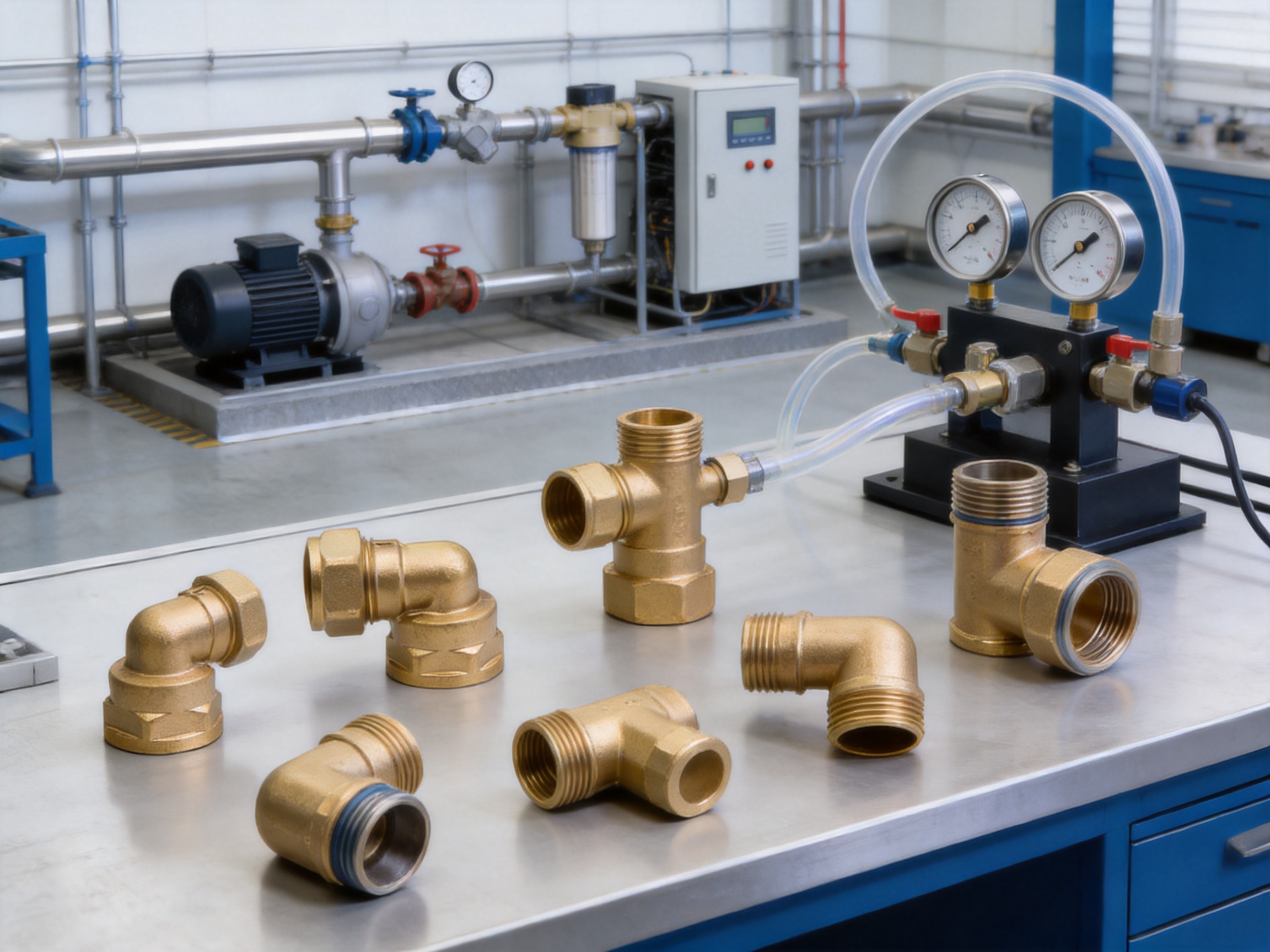
Irregular-shaped pipe fittings are essential components for fluid systems that cannot be completed with standard elbows, tees, reducers, couplings, or adapters alone. Their purpose is to connect, redirect, transition, support, or adapt pipelines when the available installation space, connection geometry, equipment layout, or operating requirements calls for a non-standard shape. In gas distribution, water supply, industrial equipment, agricultural machinery, building services, and general hardware applications, these fittings help engineers create practical and dependable connections without redesigning an entire pipeline.
Unlike simple, uniform fittings, irregular-shaped pipe fittings may include offset connections, multi-angle transitions, asymmetric bodies, special branches, customized outlets, unusual center distances, or combinations of different connection types. Their design must balance flow performance, mechanical strength, dimensional accuracy, sealing reliability, corrosion resistance, and ease of installation. A fitting that appears simple externally may require carefully coordinated engineering and machining processes to perform safely under pressure.
Ningbo Yunhua Valve Co., Ltd. develops and manufactures products for gas and fluid control, water supply systems, valves, and hardware accessories. Its production capabilities include precision machining, automated assembly, product testing, and organized quality management. With a professional manufacturing base, advanced CNC equipment, and dedicated assembly and testing workshops, the company is positioned to support the production of hardware accessories such as irregular-shaped pipe fittings while maintaining stable quality and efficient delivery.
This article explains the function, design value, manufacturing process, quality advantages, application fields, and purchasing considerations associated with irregular-shaped pipe fittings. It also describes how an experienced manufacturer can help customers obtain practical, repeatable, and application-focused fitting solutions.
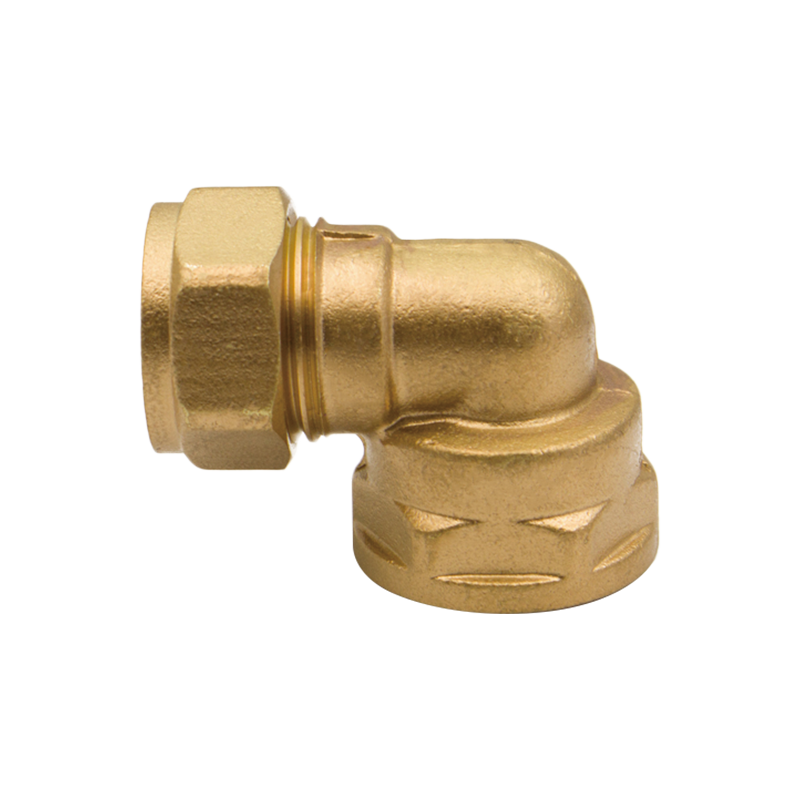
Irregular-Shaped Pipe Fittings
What Are Irregular-Shaped Pipe Fittings?
Irregular-shaped pipe fittings are specialized connection components whose geometry differs from conventional symmetrical pipe fittings. They are normally developed for a specific installation condition, connection requirement, or equipment interface. The fitting may have an offset body, a non-standard branch position, an uneven wall profile, a special transition, or an angle that is not available in standard product ranges.
Standard fittings are designed around commonly used dimensions and angles. They are highly useful for general pipeline construction, but they cannot solve every routing problem. Pipes may need to pass around structural beams, machinery, walls, tanks, meters, valves, or other obstacles. An equipment connection may also be positioned at an unusual height or orientation. In such situations, using several standard fittings can increase the number of joints, create unnecessary pressure losses, make installation more difficult, and increase the risk of leakage. An irregular-shaped fitting can often achieve the same connection with a more direct and compact structure.
The term “irregular-shaped” does not mean poorly defined or uncontrolled. A professional irregular fitting is produced according to a controlled drawing, dimensional specification, material requirement, and inspection standard. Its shape may be unusual, but its performance must remain predictable. Each important feature, including connection size, center distance, angle, wall thickness, sealing area, and surface condition, should be managed through engineering and quality procedures.
Depending on the application, an irregular-shaped pipe fitting may be produced as a one-piece machined component, a formed component, a forged component, a cast component, or an assembled hardware part. The appropriate manufacturing method depends on the material, production volume, pressure requirements, geometry, dimensional tolerance, and customer specification.
Common Geometric Features
Irregular-shaped fittings can contain many different geometric features. Examples include offset inlet and outlet ports, different port diameters, angled outlets, non-concentric transitions, special mounting faces, integrated support sections, and customized threaded or non-threaded connection ends. Some fittings may also combine a pipe connection with a valve, equipment interface, bracket, or sealing seat.
In complex installations, a fitting may need to connect pipes that are not aligned on the same centerline. An offset body can reduce the need for multiple elbows. A special branch fitting can allow a smaller pipeline to connect to a main line at a predetermined position. A customized transition can join components with different dimensions while maintaining a compact flow path. Each of these designs can help reduce installation complexity.
Difference Between Standard and Irregular Fittings
Standard fittings normally follow widely recognized size ranges, angle configurations, and connection conventions. They are convenient to purchase and replace, and they are often suitable for routine piping layouts. Irregular fittings are developed when standard shapes cannot satisfy the complete technical requirement.
The main difference is not simply appearance. An irregular fitting must be designed around a particular relationship between connection points and surrounding components. This means that engineering communication becomes more important. Drawings, three-dimensional models, samples, photographs, installation measurements, or detailed dimensional tables may be required before production begins.
| Comparison Item | Standard Pipe Fitting | Irregular-Shaped Pipe Fitting |
|---|---|---|
| Geometry | Common angles and symmetrical configurations | Customized, offset, asymmetric, or application-specific geometry |
| Typical Use | General pipeline routing | Restricted spaces, special equipment interfaces, and complex layouts |
| Design Process | Based on established catalog dimensions | Based on drawings, samples, measurements, and application requirements |
| Installation Benefit | Easy selection for common systems | Can reduce extra joints and simplify difficult connections |
| Manufacturing Requirement | Repeatable standard production | More detailed machining, inspection, and configuration control |
| Replacement Consideration | Often available from multiple sources | Should be documented carefully for future repeat orders |
Why Irregular-Shaped Pipe Fittings Matter in Modern Fluid Systems
Fluid systems are becoming increasingly compact and integrated. Equipment rooms often contain pumps, valves, filters, meters, regulators, tanks, and control devices in limited space. Residential and commercial construction also requires piping to fit around walls, ceilings, foundations, structural members, and service access areas. Industrial machines may have fixed ports that cannot be relocated. These conditions create a strong demand for fittings that adapt the pipeline to the actual installation environment.
A well-designed irregular fitting can improve the overall system in several ways. It can shorten the connection route, reduce the quantity of threaded or joined sections, improve alignment, provide a cleaner appearance, and make future maintenance easier. Fewer joints may also mean fewer potential leakage points, although the complete system still depends on correct assembly, suitable sealing materials, and proper pressure testing.
Irregular fittings are also valuable when a system must be upgraded. Existing pipelines may have been installed years earlier, and new equipment may not match the original connection location. Replacing a large section of pipe can be expensive and disruptive. A customized fitting can provide a controlled transition between the existing line and the new equipment, helping reduce modification time and installation cost.
Space Optimization
One of the most important advantages of an irregular-shaped fitting is its ability to use available space efficiently. A conventional arrangement may require several elbows and short pipe sections to achieve a particular route. A specialized offset or angled fitting can combine these changes into one compact component.
Space optimization is especially important in valve cabinets, pump skids, water treatment units, gas equipment, heating systems, and machinery assemblies. A compact design can leave more room for insulation, inspection, tools, and component replacement. It may also improve the appearance and organization of an exposed pipeline.
Reduction of Connection Points
Every additional connection in a pipeline requires appropriate assembly, sealing, alignment, and inspection. Excessive joints can increase installation time and create more locations that require future maintenance. By integrating multiple directional or dimensional changes into one fitting, an irregular-shaped product can help reduce the number of connections.
Reducing connection points does not automatically guarantee a leak-free system. Joint design, thread quality, gasket selection, torque, pipe preparation, operating temperature, and pressure all remain important. However, a fitting with a suitable geometry can create a simpler foundation for reliable installation.
Improved Equipment Compatibility
Many pumps, valves, meters, regulators, filters, and other devices have connection arrangements that are determined by their internal design. The inlet and outlet may be positioned at different heights or on different axes. An irregular fitting can bridge the difference between equipment ports and the surrounding pipeline without requiring extensive modification of the equipment.
This compatibility is useful in original equipment manufacturing as well as replacement projects. It enables manufacturers to design assemblies around functional equipment requirements rather than forcing every component to conform to a standard pipeline layout.
Design Considerations for Irregular-Shaped Pipe Fittings
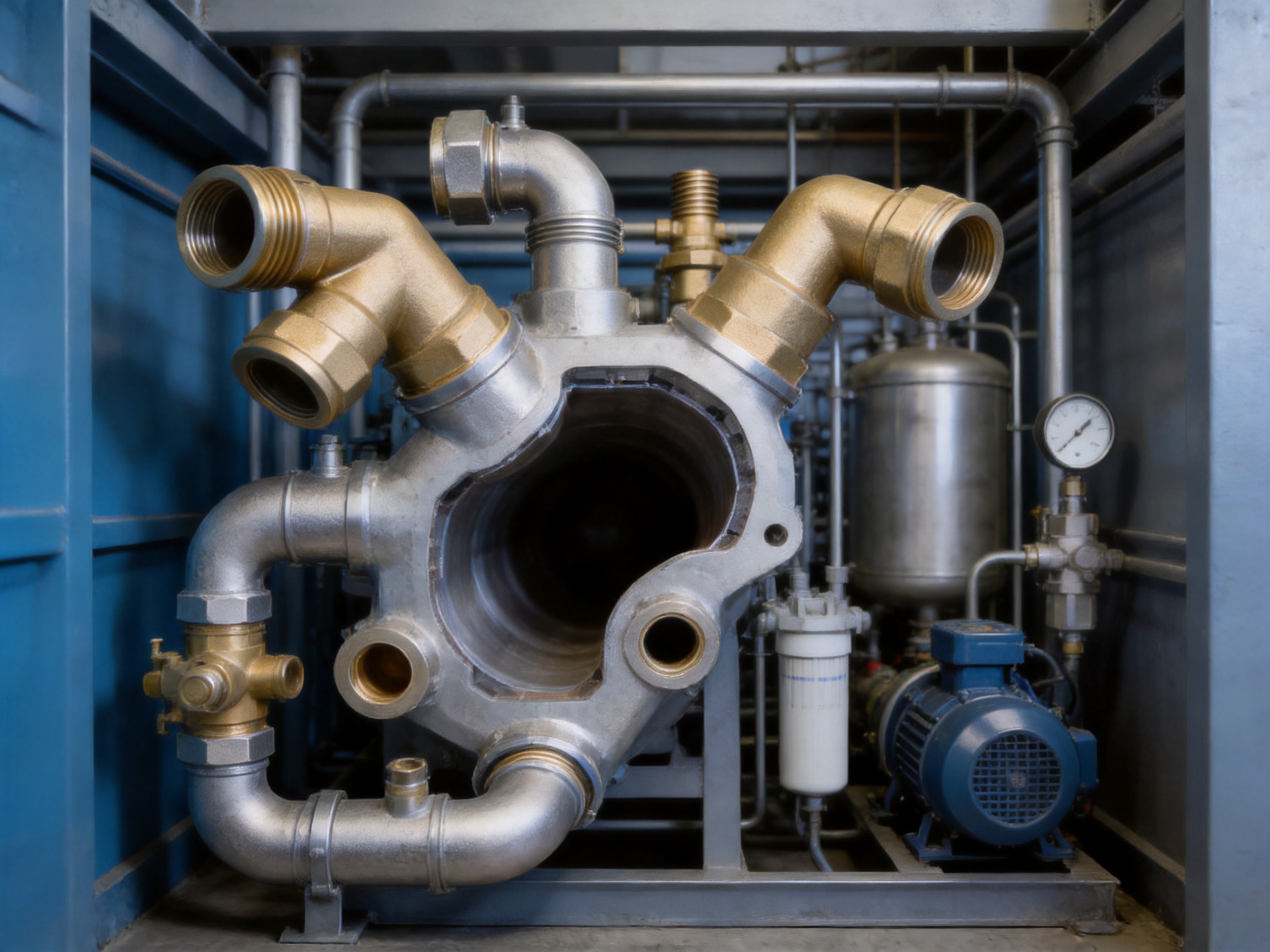
Successful fitting design begins with a clear understanding of the application. A manufacturer must know what the fitting connects, what medium passes through it, what pressure and temperature conditions may occur, how it will be installed, and what space limitations must be respected. A detailed design review helps prevent dimensional errors and reduces the risk of costly revisions.
Connection Type
The fitting may use internal threads, external threads, socket connections, compression interfaces, flanged ends, welded ends, or a combination of connection types. Threaded designs are often selected for compact assemblies and serviceable connections. The thread standard, nominal size, thread length, engagement depth, and sealing method should be clearly defined.
When two different connection standards are combined, the manufacturer must confirm compatibility. Thread profile, pitch, taper, nominal diameter, and sealing position all influence assembly performance. A drawing should identify the connection standard rather than relying only on general descriptions such as “male thread” or “female thread.”
Dimensional Accuracy
Irregular fittings often contain several critical dimensions that determine whether the component will fit correctly. These may include center-to-center distance, overall length, port orientation, offset distance, outlet angle, thread location, sealing face position, and mounting dimensions.
Dimensional accuracy is particularly important when the fitting is installed between fixed components. Even a small error may create stress, misalignment, or difficulty during assembly. Precision machining and appropriate inspection tools help maintain consistency from one production batch to another.
Flow Path and Internal Geometry
The external shape of a fitting is visible, but the internal flow path is equally important. Sharp internal transitions, unnecessary restrictions, rough surfaces, and sudden changes in direction may increase turbulence or pressure loss. The internal geometry should therefore be considered during design, especially for gas systems, pump discharge lines, metering assemblies, and applications where flow stability is important.
Not every application requires the same internal profile. A compact fitting for a low-flow utility line may have different priorities from a fitting used in a high-flow industrial system. The design should reflect the actual operating conditions instead of applying a single geometry to every project.
Wall Thickness and Mechanical Strength
The fitting must withstand the mechanical and pressure loads expected in service. Wall thickness, material strength, connection depth, body shape, and stress concentration all influence durability. Irregular geometries may create areas where loads are distributed differently from a conventional symmetrical component.
Designers should also consider external forces caused by pipe weight, vibration, thermal expansion, installation movement, and accidental impact. The fitting should not be treated as an isolated part. It forms part of a complete piping assembly, and the surrounding pipe supports and connection methods also affect service life.
Sealing Surfaces
A sealing surface must be designed and manufactured carefully. Threaded fittings may rely on thread sealant, tape, an elastomeric seal, or a specialized sealing structure. Other fittings may use gaskets, O-rings, compression elements, or metal-to-metal contact. The selected sealing method should be compatible with the fluid, pressure, temperature, and maintenance requirements.
Surface finish, burr removal, concentricity, and dimensional consistency are important for sealing performance. A fitting with a well-designed sealing area can reduce assembly problems and support more stable field performance.
Materials and Product Selection
Material selection should be based on the medium, operating environment, pressure, temperature, connection method, and expected service life. Common material families used for pipe fittings and related hardware include brass alloys, carbon steel, stainless steel, ductile iron, copper alloys, and engineering plastics. The correct choice depends on the application and the technical specification.
Brass and Copper Alloys
Brass is widely used for water supply, gas-related hardware, instrumentation, and general fluid connections because it offers a useful combination of machinability, strength, corrosion resistance, and dimensional stability. It can be efficiently processed for threaded ports and detailed geometries, making it suitable for many compact fittings.
For gas applications, the material grade, applicable standards, sealing design, and testing requirements must be confirmed carefully. A brass fitting should be selected according to the actual gas medium and service conditions rather than by appearance alone.
Forged Steel and Carbon Steel
Forged steel components are valued for their strength and resistance to demanding mechanical conditions. A forged body can provide a robust foundation for applications involving pressure, vibration, or heavy-duty service. Machining after forging is often required to produce accurate connection surfaces and final dimensions.
Carbon steel may be appropriate for certain industrial systems, but corrosion protection must be considered. Surface treatment, coating, storage conditions, and the surrounding environment all influence performance.
Stainless Steel
Stainless steel may be selected where corrosion resistance, cleanliness, or exposure to aggressive environments is important. It is commonly considered for water treatment, food-related systems, chemical service, outdoor equipment, and industrial applications. The exact stainless steel grade should be matched to the fluid and environmental conditions.
Engineering Plastics
Engineering plastics can provide low weight, corrosion resistance, and electrical insulation in suitable applications. They may be used in low- to moderate-pressure water systems, chemical handling, or specialized equipment. Temperature limits, ultraviolet exposure, mechanical loading, and compatibility with the medium must be assessed before selection.
| Selection Factor | Questions to Confirm | Why It Matters |
|---|---|---|
| Fluid Medium | Is the system carrying water, air, gas, oil, chemicals, or another fluid? | Determines material compatibility and sealing requirements |
| Pressure | What are the normal, maximum, and possible surge pressures? | Influences wall thickness, connection strength, and testing |
| Temperature | What are the minimum and maximum service temperatures? | Affects material strength and seal behavior |
| Environment | Will the fitting be indoors, outdoors, underground, or exposed to chemicals? | Guides corrosion protection and material selection |
| Connection | Which thread, flange, compression, or welding standard is required? | Ensures compatibility with mating components |
| Geometry | What are the exact offsets, angles, center distances, and clearances? | Ensures correct installation and alignment |
| Quantity | Is the requirement a prototype, small batch, or large production order? | Helps determine the most efficient manufacturing process |
Advanced Manufacturing Process
The manufacturing of irregular-shaped pipe fittings requires more than simply cutting a pipe and adding threads. A controlled process is needed to translate customer requirements into a repeatable product. The process may include technical review, drawing confirmation, material preparation, forming or rough machining, precision CNC machining, deburring, surface treatment, cleaning, assembly, inspection, pressure testing, packaging, and documentation.
Technical Review and Drawing Confirmation
The first step is to review the customer’s application and technical information. A manufacturer may work from a two-dimensional drawing, three-dimensional model, physical sample, equipment interface, or dimensional sketch. Important details include material, connection standard, critical tolerances, surface requirements, pressure rating, medium, quantity, and testing expectations.
During this stage, manufacturability should be considered. A design may function correctly in theory but require unnecessary machining, difficult tooling, or excessive production time. Experienced engineers can identify opportunities to simplify the structure while preserving the required performance.
Material Preparation
Material preparation includes selecting the specified grade, checking incoming material, and organizing traceability where required. The raw material must be suitable for the intended manufacturing method. Its dimensions should provide enough allowance for forming and machining while avoiding excessive waste.
Material control is important because inconsistent raw material can affect machining behavior, strength, surface quality, and final dimensions. A systematic manufacturer can reduce these risks through supplier management and incoming inspection procedures.
Forming, Forging, Casting, or Rough Machining
The initial body may be produced through forging, casting, bar stock machining, tube processing, or another appropriate method. The selection depends on the geometry and production volume. Forging may be suitable for strong metal bodies, while machining from bar stock can support precise and flexible low- or medium-volume production. Other methods may be considered for more complex or high-volume designs.
At this stage, the part is usually produced with additional material allowance. Subsequent machining establishes the final connection surfaces, internal passages, and critical external dimensions.
CNC Precision Machining
CNC machine tools provide controlled processing for ports, threads, bores, sealing areas, offsets, shoulders, and other detailed features. Computer-controlled machining can improve repeatability and reduce variation between individual fittings. It also allows manufacturers to produce complex geometries that would be difficult to achieve consistently with manual methods alone.
Tool selection, workholding, cutting parameters, and machining sequence must be planned according to the material and geometry. A suitable sequence can minimize distortion, protect finished surfaces, and maintain alignment between multiple connection points.
Deburring and Surface Finishing
After machining, burrs and sharp edges must be removed. This is important for safety, sealing, cleanliness, and flow performance. Internal burrs can interfere with fluid movement or damage seals, while external burrs can complicate handling and assembly.
Surface finishing may include cleaning, polishing, plating, coating, passivation, or another treatment depending on the material and application. The selected treatment should be consistent with the intended environment and customer requirements.
Automated Assembly
Where the product includes multiple components, automated assembly equipment can help improve consistency and production efficiency. Controlled assembly can support uniform positioning, repeatable tightening, and accurate installation of seals or related hardware.
Automation is particularly valuable when a product is ordered repeatedly. It helps reduce dependence on individual operator technique and supports stable cycle times. However, automation should be combined with appropriate process monitoring and final inspection rather than used as a replacement for quality control.
Testing and Final Inspection
Testing confirms whether the finished fitting meets the applicable requirements. Depending on the product and application, inspections may include dimensional checks, thread gauges, visual inspection, surface inspection, material verification, pressure testing, leakage testing, and functional checks for assembled components.
A dedicated testing workshop allows products to be evaluated in an organized environment. Test procedures should be defined according to the product specification and relevant standards. Inspection records can also help support traceability, quality analysis, and future repeat orders.
Manufacturing Strengths That Create Customer Value
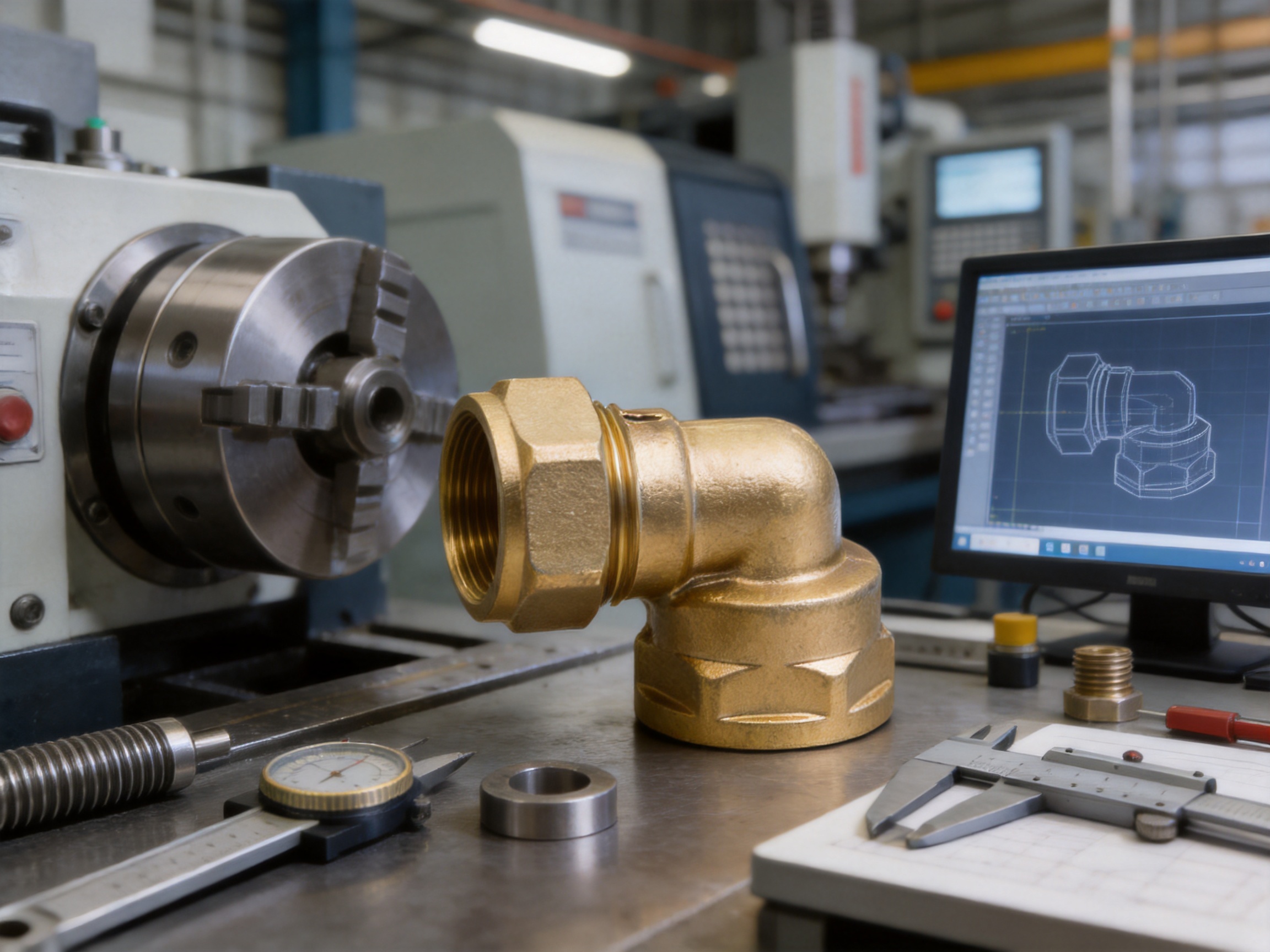
The value of an irregular-shaped pipe fitting comes from both its design and the manufacturing system behind it. A good drawing is not sufficient if the factory cannot maintain dimensions, control materials, test finished parts, or deliver consistent batches. Manufacturing strength directly affects product reliability, project efficiency, and long-term purchasing confidence.
Integrated Production Capability
Ningbo Yunhua Valve Co., Ltd. operates with capabilities covering research and development, production, sales, and service. This integrated approach can simplify communication between product design, machining, assembly, testing, and customer support. When technical questions arise, customers can work with a manufacturer that understands both the product and its production process.
The company has established a professional precision machining workshop, assembly line, and testing workshop. This arrangement supports a complete production flow rather than relying solely on disconnected subcontracting steps. Better process coordination can help improve scheduling, quality consistency, and response speed.
CNC Equipment and Precision Processing
Advanced domestic and international CNC machine tools support accurate processing of complex metal parts. For irregular-shaped fittings, CNC machining is especially useful because the product may contain several critical features that must remain aligned. Controlled machining helps reduce dimensional variation and supports repeatable production.
Precision equipment also makes it easier to develop new configurations. Once the drawing and process are confirmed, the same program and inspection requirements can be used to support future orders, subject to proper process verification.
Automated Assembly and Testing Equipment
Professional automated assembly and testing equipment can improve repeatability in high-volume production. It can help maintain consistent assembly conditions and reduce avoidable variation. Automated testing can also support efficient inspection of large quantities while allowing qualified personnel to review abnormal results and manage process improvements.
Production Capacity
The company reports an annual production capacity of approximately 2 million sets of valves and 10 million sets of hardware accessories. This capacity indicates that its production system is designed to support both valve products and associated hardware components at commercial scale.
For customers purchasing irregular-shaped pipe fittings, production capacity can be important even when the fitting itself is customized. It suggests that the manufacturer has experience organizing materials, machining operations, assembly resources, testing activities, and delivery schedules across a broad product portfolio.
Quality-Oriented Management
A quality-oriented management system should cover every stage, from technical confirmation and material purchasing to machining, assembly, testing, packaging, and after-sales service. This is particularly important for customized fittings because a small misunderstanding at the beginning can influence the entire production batch.
Clear documentation, controlled drawings, inspection records, and communication between departments help reduce errors. A manufacturer that treats quality as a complete process can provide more reliable results than a supplier that focuses only on final visual inspection.
Advantages Over Generic or Poorly Matched Alternatives
Irregular-shaped pipe fittings are not automatically better than standard fittings in every situation. Standard products remain the best choice when they fully meet the installation and operating requirements. The advantage of an irregular fitting appears when a standard product would force compromises in routing, alignment, maintenance, or space utilization.
Application-Specific Geometry
A customized geometry can match the actual equipment arrangement. This reduces the need to adapt the entire system to the limitations of an off-the-shelf fitting. When the connection points are correctly positioned, installation can be faster and the finished assembly can be more compact.
Fewer Unnecessary Components
Using several standard elbows, nipples, reducers, and adapters may create a complicated assembly. A specialized fitting can combine some of these functions into a single component. This may reduce material use, assembly labor, and the number of potential leakage points.
Better Visual and Mechanical Organization
In equipment packages and exposed piping systems, a clean layout is more than an aesthetic benefit. Organized routing can improve access to valves, simplify inspection, and reduce accidental interference with nearby parts. A fitting designed around the installation layout can support better mechanical organization.
Repeatable Custom Production
A custom fitting does not have to mean a one-time handmade product. Once the drawing, material, process, and inspection criteria are approved, the fitting can be manufactured repeatedly. A professional producer can maintain a record of the approved configuration and use it as the basis for future orders.
Support for OEM and Project Requirements
Equipment manufacturers often need components that match their own product design. Irregular fittings can be produced as OEM or project-specific hardware when the customer provides the necessary technical information. This supports equipment integration and helps maintain consistency across multiple machines or installation sites.
Application Areas
Irregular-shaped pipe fittings can serve a wide range of applications. Their exact suitability depends on material, design, pressure rating, connection method, and applicable regulations.
Gas Systems
Gas equipment may require compact connections around regulators, meters, burners, valves, and appliances. Customized fittings can help position the pipeline correctly while reducing unnecessary routing. For any gas-related application, the product must be selected and tested according to the relevant safety requirements and local regulations.
Water Supply Systems
Water supply installations frequently encounter restricted spaces, wall penetrations, equipment interfaces, and different pipe elevations. Irregular fittings can help connect tanks, pumps, valves, filters, and distribution lines in a practical arrangement. Brass and other corrosion-resistant materials are often considered for suitable water applications.
Industrial Equipment
Industrial machinery may contain fixed ports that do not align with standard piping. A special fitting can connect the machine to the plant pipeline while preserving access to operating controls and maintenance points. Material and design selection should reflect the industrial medium, vibration, temperature, and pressure conditions.
Heating and Cooling Systems
Heating and cooling equipment often includes compact pipe layouts with multiple components positioned close together. Customized offsets and transitions can help reduce congestion around heat exchangers, pumps, control valves, and circulation units.
Agricultural and Irrigation Equipment
Agricultural machinery and irrigation systems may use a combination of pipe sizes, valves, pumps, and mobile equipment. Special fittings can help adapt connections and support practical field installation. Resistance to outdoor exposure and ease of replacement may be important selection factors.
Building Services and Hardware Assemblies
Plumbing, fire protection support systems, utility equipment, and general hardware assemblies may require small special-purpose connections. An irregular fitting can help solve a dimensional or routing problem without requiring extensive changes to the surrounding structure.
How to Order the Correct Irregular-Shaped Pipe Fitting
Clear technical information is the foundation of a successful order. Customers should provide as much relevant information as possible before quotation and production. A physical sample can be useful, but a dimensioned drawing is normally the clearest reference for repeatable manufacturing.
Provide a Complete Drawing
The drawing should identify all connection sizes, thread standards, center distances, angles, offsets, overall dimensions, wall thicknesses, sealing areas, and critical tolerances. If a dimension is not critical, it may be identified accordingly. If a surface requires a specific finish, that requirement should also be included.
Explain the Application
The manufacturer should know whether the fitting is used for water, gas, air, oil, chemicals, or another medium. Operating pressure, temperature, flow conditions, installation environment, and expected service life can influence material and structural recommendations.
Confirm Materials and Surface Treatment
Customers should specify the preferred material grade or request a recommendation based on the application. Surface treatment, plating, coating, passivation, color, marking, and packaging requirements should be confirmed before production.
Discuss Samples and Approval Procedures
For a new design, a sample or first-article approval process can reduce risk. The customer can check the fitting against the equipment or installation before mass production begins. Any design changes should be documented and approved so that the production team is working from a single controlled version.
Plan for Future Replacement
Because irregular fittings are application-specific, future replacement can be easier when the customer retains the approved drawing, material information, test requirements, and product identification. The manufacturer should also maintain appropriate records for repeat orders where possible.
Installation and Maintenance Recommendations
Even a precisely manufactured fitting requires correct installation. Before assembly, installers should verify that the product matches the drawing, connection standard, material requirement, and intended location. Damaged threads, sealing surfaces, or body sections should not be used.
Pipe ends should be clean, properly aligned, and free from excessive force. The fitting should not be used to correct major pipe misalignment by force. Excessive bending, twisting, or tightening can place stress on the body and connected equipment.
The correct sealing method should be applied according to the connection design. Sealant should not obstruct the internal passage, and excessive material should not enter the fluid system. Threaded connections should be tightened using suitable tools and procedures rather than uncontrolled force.
After installation, the system should be inspected and tested according to the applicable project requirements. Leakage checks, pressure tests, and visual inspections can identify problems before the system enters normal service. During maintenance, operators should check for corrosion, vibration, mechanical damage, seal deterioration, and signs of leakage.
Why Work with a Specialized Manufacturer?
A specialized valve and hardware manufacturer can offer more than a basic catalog product. It can provide technical communication, design review, material guidance, machining capability, assembly support, testing, and production coordination. This is valuable when the fitting has unusual geometry or must integrate with other fluid-control products.
Ningbo Yunhua Valve Co., Ltd. focuses on gas and fluid valves, water supply valves, and hardware accessories. Its experience across related product categories provides a useful foundation for understanding connection requirements and fluid-system applications. The company’s manufacturing facilities cover approximately 20,000 square meters and include precision machining, assembly, and testing resources.
The combination of product development, production, sales, and service allows the company to approach irregular-shaped pipe fittings as part of a complete fluid-control solution. Customers can discuss not only the shape of the fitting but also the surrounding valve, pipeline, connection, and testing requirements.
For international customers, stable communication and clear documentation are equally important. A reliable supplier should be able to confirm drawings, explain production limitations, identify inspection points, and provide consistent information for future purchases. These capabilities help transform a special component from a one-time procurement challenge into a manageable long-term product program.
Frequently Asked Questions
What is an irregular-shaped pipe fitting?
An irregular-shaped pipe fitting is a specialized connection component with a non-standard geometry. It may include offsets, unusual angles, different connection sizes, asymmetric branches, or customized equipment interfaces. It is produced according to defined technical requirements rather than selected solely from a standard catalog.
When should I choose an irregular fitting instead of a standard fitting?
You should consider an irregular fitting when standard components cannot provide the required alignment, space clearance, center distance, connection type, or equipment compatibility. If a standard fitting meets all requirements without creating unnecessary joints or installation problems, it may remain the more economical option.
Can irregular-shaped fittings be manufactured from customer drawings?
Yes. A professional manufacturer can generally review customer drawings, samples, or dimensional information and develop a production solution. The final feasibility depends on material, geometry, tolerance, quantity, connection standard, and application requirements.
What information is needed for a quotation?
Useful information includes a drawing or sample, material requirement, connection sizes, thread standard, critical dimensions, operating medium, pressure, temperature, surface treatment, quantity, packaging requirements, and testing expectations. Complete information helps the manufacturer provide a more accurate quotation and production schedule.
Are these fittings suitable for gas applications?
Some irregular-shaped fittings may be designed for gas systems, but suitability must be confirmed for the specific gas, pressure, temperature, material, sealing method, and applicable regulations. Gas-related products require careful engineering and testing. Customers should not use a general-purpose fitting in a gas system without confirming its approval and suitability.
Can an irregular fitting reduce leakage risk?
A suitable design can reduce the number of joints and simplify installation, which may reduce potential leakage locations. However, leakage performance also depends on material, sealing structure, thread quality, installation technique, pressure testing, and the condition of connected components.
What manufacturing equipment is important for these products?
CNC machine tools are important for producing accurate ports, threads, bores, sealing surfaces, and complex external profiles. Automated assembly equipment can improve consistency for multi-part products, while dedicated testing equipment supports dimensional, pressure, leakage, and functional verification.
Can the same custom fitting be reordered later?
Yes, repeat orders are possible when the approved drawing, material, process, inspection criteria, and product identification are properly documented. Customers should keep the final approved specifications and communicate any requested changes before production begins.
What materials are commonly considered?
Brass, copper alloys, carbon steel, stainless steel, ductile iron, and engineering plastics may be considered depending on the application. The correct choice depends on fluid compatibility, pressure, temperature, corrosion exposure, mechanical loading, connection design, and regulatory requirements.
How can I verify that the fitting is correct before installation?
Check the product against the approved drawing, including dimensions, connection type, orientation, material identification, surface condition, and sealing areas. For new designs, a sample approval and application-specific pressure or leakage test can provide additional confidence before quantity production or field installation.
Conclusion
Irregular-shaped pipe fittings provide a practical answer to the connection challenges found in modern gas, water, industrial, and equipment piping systems. Their value lies in their ability to adapt to unusual layouts while maintaining controlled dimensions, reliable sealing areas, suitable mechanical strength, and efficient installation.
Compared with poorly matched combinations of standard components, a properly designed irregular fitting can reduce unnecessary joints, improve alignment, use limited space more effectively, and support cleaner equipment integration. Its success depends on accurate technical communication, appropriate material selection, precision manufacturing, careful inspection, and correct installation.
Ningbo Yunhua Valve Co., Ltd. combines research and development, precision machining, automated assembly, testing, and service capabilities in the valve and hardware-accessory sector. With a manufacturing area of approximately 20,000 square meters, advanced CNC equipment, professional workshops, and substantial annual production capacity, the company can support customers seeking dependable and application-specific connection components.
For projects requiring a non-standard pipe route, unusual equipment interface, compact assembly, or customized hardware solution, irregular-shaped pipe fittings can be developed as a controlled and repeatable product. The best results come from working with a manufacturer that understands both the geometry of the fitting and the operating demands of the complete fluid system.
References
American Society of Mechanical Engineers. General principles of pressure-containing piping components and dimensional control.
International Organization for Standardization. Quality management principles for manufacturing organizations.
International Organization for Standardization. Industrial metallic piping and pressure testing practices.
American Society for Testing and Materials. Material standards for copper alloys, carbon steels, stainless steels, and related hardware.
Manufacturers Standardization Society. Guidance for pipe fittings, valves, flanges, and connection terminology.
Professional engineering references on fluid-system design, pipe routing, sealing technology, CNC machining, and industrial quality inspection.
Product: Irregular-Shaped Pipe Fittings

Related Products
Related News
Contact Us
-

-
 +86-0574-63742169
 -
 No.104-128, Cizhang East Road, Zhangqi Town, Cixi City, Ningbo, Zhejiang Province, China


Message Us Now !
