


 English
  русский
  عربى
عربى  Español
Pipe Fittings: Reliable Connections for Modern Fluid Control Systems
Content
- 1 Understanding Pipe Fittings
- 2 Why Fitting Quality Matters
- 3 Principal Advantages of Professionally Manufactured Pipe Fittings
- 4 Types of Pipe Fittings and Their Functions
- 5 Material Selection for Pipe Fittings
- 6 Advanced Manufacturing Process
- 7 Manufacturing Strengths and Competitive Advantages
- 8 Pipe Fittings Compared with Competing Low-Cost Products
- 9 Applications Across Multiple Industries
- 10 Selection Guide for Buyers
- 11 Important Technical Factors
- 12 Installation Best Practices
- 13 Maintenance and Service Considerations
- 14 Quality Management from Production to Delivery
- 15 Choosing a Pipe Fittings Supplier
- 16 How Pipe Fittings Support Valve Performance
- 17 Custom Pipe Fittings for Specialized Requirements
- 18 Environmental and Economic Value
- 19 Future Development of Pipe Fittings
- 20 Frequently Asked Questions
- 20.1 What are pipe fittings used for?
- 20.2 What is the difference between a coupling and a union?
- 20.3 Why is thread accuracy important?
- 20.4 Are all fittings with the same nominal size compatible?
- 20.5 Which material is best for pipe fittings?
- 20.6 Can brass fittings be used for gas?
- 20.7 How does CNC machining improve fitting quality?
- 20.8 Why are pressure tests important?
- 20.9 How should a fitting be selected for a valve connection?
- 20.10 What information should be provided when requesting a quotation?
- 20.11 How can leakage after installation be prevented?
- 20.12 What makes a supplier competitive beyond price?
- 21 Conclusion
- 22 References
- 23 Product: Pipe Fittings
Pipe fittings are essential components in nearly every fluid-handling installation. They connect pipes, change flow direction, adapt different pipe sizes, create branch lines, close unused outlets, and support the safe distribution of water, gas, air, oil, and other compatible media. Although fittings are often smaller and less visible than valves, pumps, or tanks, their performance has a direct influence on the safety, efficiency, service life, and maintenance requirements of an entire piping system.
High-quality pipe fittings must do more than simply join two sections of pipe. They must maintain dimensional accuracy, provide dependable sealing, tolerate pressure and temperature changes, resist corrosion, and remain stable during repeated installation and service. A poorly manufactured fitting can cause leakage, thread damage, misalignment, pressure loss, or premature system failure. For this reason, professional buyers, installers, distributors, and equipment manufacturers increasingly seek fittings produced through controlled manufacturing processes rather than low-cost components with inconsistent quality.
Ningbo Yunhua Valve Co., Ltd. develops and manufactures valves and hardware accessories for gas, fluid, and water supply applications. Its pipe fittings product line is supported by precision machining, automated assembly, systematic inspection, and practical experience in fluid-control component production. With a manufacturing area of approximately 20,000 square meters, a professional machining workshop, assembly lines, and testing facilities, the company is positioned to provide dependable components for commercial, industrial, residential, and infrastructure projects.
This article explains the structure, applications, advantages, manufacturing technology, inspection procedures, selection criteria, installation practices, and future development of pipe fittings. It also describes how a professionally organized manufacturer can provide greater consistency and value than suppliers focused only on basic production cost.
Understanding Pipe Fittings
Pipe fittings are mechanical components used to connect, redirect, divide, reduce, extend, or terminate piping. They may be manufactured from brass, stainless steel, carbon steel, forged steel, ductile iron, plastic, or other materials selected according to the medium and operating conditions. The correct fitting must match the pipe material, connection method, pressure rating, temperature range, fluid characteristics, and installation environment.
Common fitting types include elbows, tees, crosses, reducers, couplings, unions, adapters, nipples, caps, plugs, and threaded connectors. Each type has a specific role. An elbow changes the direction of flow, a tee creates a branch connection, a reducer joins pipes with different diameters, and a coupling connects two pipes with the same nominal size. A union allows convenient disconnection for maintenance, while a cap or plug closes the end of a pipe.
Pipe fittings may use threaded, soldered, brazed, welded, compression, flanged, press-fit, or grooved connections. Threaded fittings are widely used in smaller-diameter systems because they are practical, compact, and easy to install without welding equipment. They are often selected for water lines, gas systems, compressed air installations, heating systems, and general hardware applications.
The performance of a fitting depends on more than its external appearance. Important characteristics include thread precision, wall thickness, internal smoothness, sealing-surface quality, material composition, resistance to mechanical stress, and dimensional compatibility. A fitting that appears acceptable visually may still fail if its threads are poorly formed or if its internal passage is uneven.
Why Fitting Quality Matters
Fluid systems operate under changing conditions. Pressure may rise and fall as pumps start or stop, valves open or close, and demand changes throughout the day. Temperature may fluctuate because of weather, heating equipment, hot water, or industrial processes. Vibration may be transmitted from pumps, compressors, or machinery. Pipe expansion and contraction can place additional stress on connection points.
These conditions make fittings critical points of system reliability. A high-quality fitting helps maintain a secure connection when the piping system experiences pressure cycles, thermal movement, or moderate mechanical loads. It also reduces the likelihood of leakage, which can result in water damage, energy waste, contamination, corrosion, or safety hazards.
In gas applications, sealing reliability is especially important. Even a small leak can create a serious risk when the transported medium is flammable or hazardous. Fittings used in gas installations therefore require suitable materials, accurate threads, compatible sealing methods, and appropriate testing. They must also be selected and installed according to applicable local regulations and project specifications.
In water supply systems, fittings influence hygiene, corrosion resistance, and long-term service performance. In industrial systems, they may be exposed to aggressive chemicals, high temperatures, high pressure, or continuous vibration. These environments require careful material selection and a clear understanding of the fitting’s intended operating limits.
Principal Advantages of Professionally Manufactured Pipe Fittings
Dimensional Consistency
Consistent dimensions are fundamental to interchangeable fittings. When the outside diameter, thread profile, wall thickness, and connection length remain within controlled tolerances, installers can assemble components more efficiently and reduce adjustment work. Consistency also helps distributors maintain reliable inventory because fittings from different production batches can be used with confidence.
Precision CNC machining provides a higher level of repeatability than uncontrolled manual processing. Computer-guided equipment can maintain programmed dimensions over large production runs while reducing variation between individual pieces. This is particularly important for threaded fittings, where small dimensional errors may affect engagement depth and sealing performance.
Reliable Thread Performance
Threads must be accurately formed, clean, and free from burrs or deformation. A thread that is too shallow may not provide sufficient engagement. A thread that is too tight or irregular may damage the mating component during installation. Excessive variation can also make it difficult to achieve a reliable seal.
Professionally manufactured fittings use controlled machining and inspection to help ensure that threaded surfaces match the required connection specifications. Clean thread crests and roots support easier assembly, while appropriate surface quality helps sealing materials perform as intended.
Strong and Stable Materials
The material of a fitting must be suitable for the application. Brass is valued for its machinability, corrosion resistance, and broad use in water, gas, and general plumbing systems. Stainless steel offers strong corrosion resistance and is often selected for demanding environments. Forged steel provides high strength and structural integrity for applications involving pressure, mechanical stress, or harsh service conditions.
A responsible manufacturer does not treat material selection as a one-size-fits-all decision. Instead, material options should be evaluated according to the fluid, pressure, temperature, external environment, connection type, and expected service life. Customers should also verify whether a selected material meets the technical and regulatory requirements of the installation.
Improved Sealing Reliability
Leak prevention depends on the interaction between the fitting, the pipe, and the sealing method. Accurate threads and properly finished sealing surfaces provide a sound foundation for threaded connections. When combined with a compatible thread sealant, gasket, or sealing ring, a well-made fitting can support a dependable joint.
Fittings with uneven surfaces, hidden cracks, damaged threads, or inconsistent geometry are more difficult to seal. They may require excessive tightening, which can create stress concentration, distortion, or damage. Consistent manufacturing reduces these risks and makes installation more predictable.
Better Installation Efficiency
Installation teams benefit from fittings that are easy to identify, handle, align, and assemble. Accurate dimensions reduce the need for rework. Clean surfaces reduce preparation time. Consistent packaging and clear product information help installers select the correct item quickly.
Efficient installation lowers total project cost. The purchase price of a fitting is only one part of the final expense. Labor, transportation, downtime, replacement, leakage repair, and site delays can exceed the original component cost. A reliable fitting can therefore deliver better value even when its initial price is not the lowest available.
Compatibility with Fluid-Control Systems
Pipe fittings are often installed together with valves such as globe valves, ball valves, check valves, gate valves, and pressure-control components. Properly designed fittings support smooth transitions between pipe sections and valve bodies. They can also simplify equipment replacement and future maintenance.
A manufacturer experienced in both valves and hardware accessories can better understand the relationship between fittings and broader fluid-control systems. This integrated knowledge helps support practical product development, dimensional coordination, and application guidance.
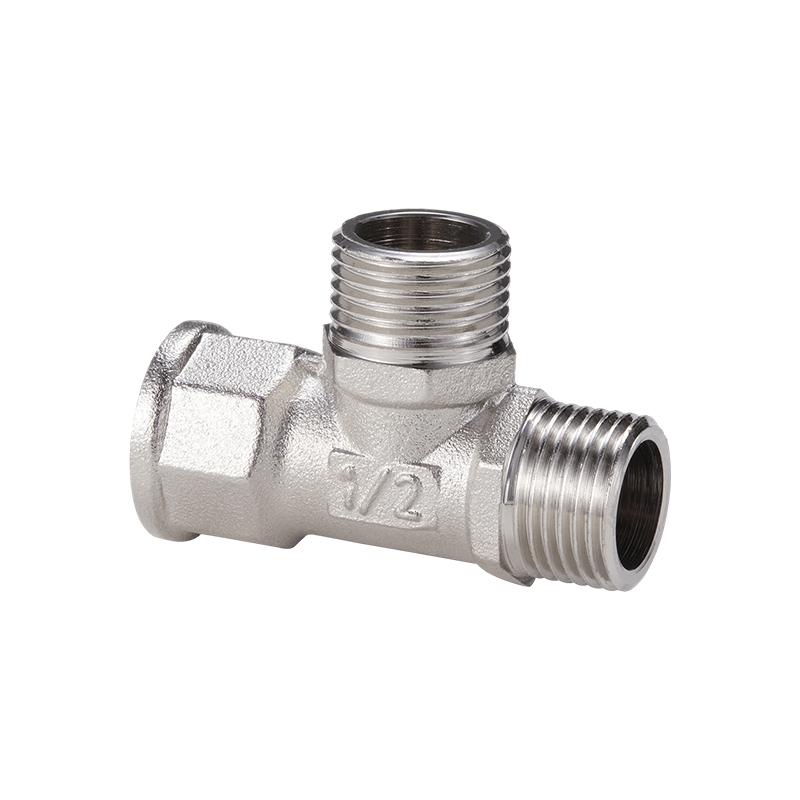
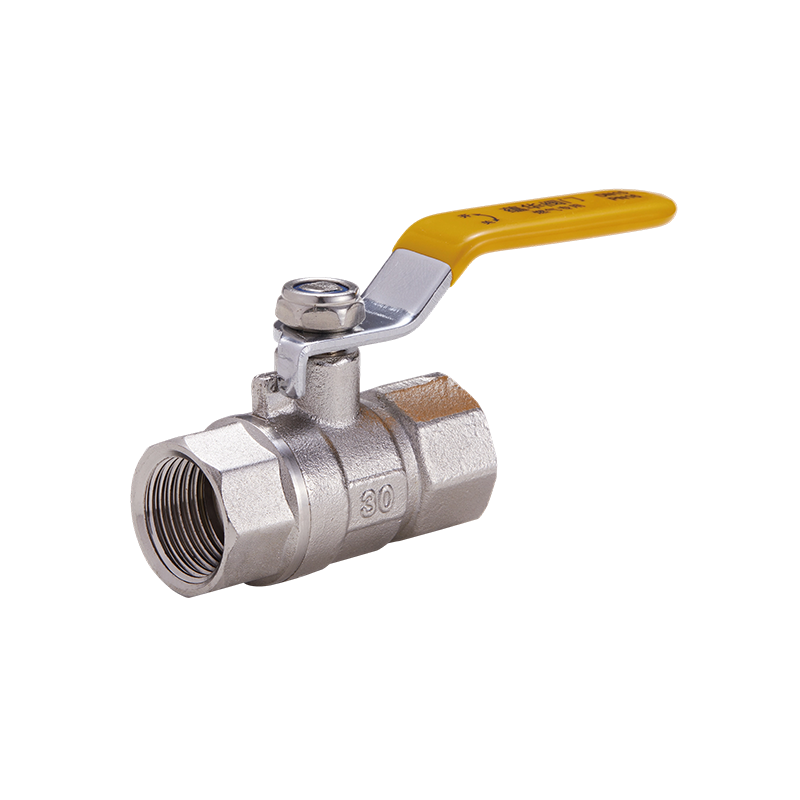
Pipe Fittings
Types of Pipe Fittings and Their Functions
Elbows
Elbows redirect piping, commonly at 45-degree or 90-degree angles. They are used when a pipeline must turn around equipment, follow a building layout, or connect with another section at a different orientation. A smooth internal radius can help reduce turbulence and pressure loss compared with abrupt changes in direction.
Elbows are available in different connection styles, materials, and sizes. The correct choice depends on the pipe diameter, required flow characteristics, installation space, pressure rating, and desired maintenance method.
Tees
Tees connect a main line to a branch line. They are frequently used in water distribution, heating, cooling, irrigation, compressed air, and process systems. Equal tees have the same nominal size at all openings, while reducing tees connect a larger main pipe to a smaller branch.
Branch connections should be selected carefully because they can influence flow distribution and local mechanical stress. A properly manufactured tee should maintain accurate opening dimensions and sufficient wall strength at the intersection.
Reducers
Reducers connect pipes with different diameters. Concentric reducers maintain a common centerline, while eccentric reducers have offset centerlines. The appropriate configuration depends on the system layout, fluid behavior, drainage requirements, and equipment connection.
Reducing the pipe size can increase velocity and influence pressure loss. Therefore, reducers should be selected as part of an overall hydraulic design rather than simply chosen according to the available pipe sizes.
Couplings and Unions
Couplings join two pipes, usually with the same nominal diameter. They are simple and compact, making them suitable for permanent or semi-permanent connections. Unions perform a similar connection function but allow the line to be separated more easily for maintenance or equipment replacement.
Unions are particularly useful near valves, meters, pumps, filters, water heaters, and other components that may require periodic servicing. Their design should provide secure sealing while allowing repeated assembly without excessive wear.
Adapters and Nipples
Adapters connect different connection types, such as threaded pipe to a valve inlet or threaded pipe to another fitting style. Nipples are short sections of pipe with external threads and are used to extend a connection or join two internally threaded components.
These products are valuable when a system includes components from different connection standards or when installation space is limited. Accurate length and thread quality are important because even small dimensional differences can affect alignment.
Caps and Plugs
Caps close the external end of a pipe, while plugs generally close an internal threaded opening. They may be used for temporary isolation, permanent termination, pressure testing, equipment protection, or future expansion.
When used in pressure systems, caps and plugs must be rated for the intended service. Temporary closure components should also be removed or inspected according to the project’s maintenance procedures.
Material Selection for Pipe Fittings
Material selection should begin with the operating medium. Water, natural gas, compressed air, steam, oil, and chemical fluids may require different materials and sealing approaches. A fitting suitable for clean water may not be suitable for a corrosive chemical, while a fitting intended for low-pressure air may not be appropriate for a high-pressure process line.
Brass Fittings
Brass is widely used in plumbing, water supply, gas, heating, and hardware applications. It is relatively easy to machine, offers good corrosion resistance in many environments, and provides a practical balance between strength and cost. Brass also supports accurate thread production, making it suitable for compact threaded connections.
Brass fittings must nevertheless be selected according to the specific fluid and regulatory requirements. Water chemistry, temperature, pressure, and local material restrictions should be considered before installation.
Forged Steel Fittings
Forged steel fittings are produced from steel that is shaped under controlled force. The forging process can provide strong grain structure and high resistance to mechanical stress. These fittings are commonly considered for demanding pressure, temperature, and industrial applications.
Forged steel products may require protective coatings, suitable surface treatment, or corrosion-control measures depending on the installation environment. Their strength and durability make them useful in systems where structural reliability is a major concern.
Stainless Steel Fittings
Stainless steel fittings are selected for applications requiring enhanced corrosion resistance, cleanliness, or resistance to elevated temperature. They may be used in food processing, chemical handling, marine environments, water treatment, and industrial equipment.
Different stainless steel grades have different performance characteristics. Buyers should confirm the grade, surface finish, pressure rating, and compatibility with the intended medium rather than relying only on the general term “stainless steel.”
Material Traceability
For professional projects, material traceability can be important. Records relating to raw material batches, production lots, inspection results, and packaging identification can help customers manage quality control and future maintenance. A structured manufacturer is better prepared to provide such information when it has established production and management systems.
Advanced Manufacturing Process
The performance of pipe fittings begins with product design and continues through raw material preparation, machining, finishing, assembly, testing, packaging, and shipment. Each stage contributes to the final result. Ningbo Yunhua Valve Co., Ltd. combines precision machining capabilities with automated assembly and testing equipment to support stable, repeatable production.
Product Design and Process Planning
Before production begins, engineers and technicians review the fitting’s dimensions, material, connection type, intended application, and manufacturing method. Process planning determines how the raw material will be cut, formed, machined, inspected, and finished.
Good process planning reduces unnecessary operations and helps control dimensional variation. It also allows the manufacturer to identify critical characteristics, such as thread accuracy, sealing surfaces, internal passage diameter, and wall thickness, before large-scale production.
Material Preparation
Raw materials must be received, identified, and prepared according to the product requirements. Depending on the fitting type, the starting material may be bar stock, cast material, forged blanks, tubes, or other formed components.
Material preparation may include cutting to length, removal of surface defects, preliminary forming, and batch identification. Proper preparation helps reduce machining waste and improves production consistency.
Precision CNC Machining
Computer numerical control machining is central to the production of accurate fittings. CNC lathes and machining centers can perform turning, drilling, boring, threading, facing, grooving, and other operations with programmed accuracy.
Compared with loosely controlled manual machining, CNC production offers improved repeatability and better process documentation. It is especially valuable when manufacturing large quantities of components that must remain interchangeable. Tool condition, cutting parameters, workholding, coolant management, and program control all influence the finished product.
Precision machining also supports the production of complex internal passages and detailed connection profiles. A properly machined internal bore can reduce unnecessary turbulence and improve the transition between connected components. Clean external surfaces and accurate end dimensions make the fitting easier to install.
Thread Manufacturing
Threading is one of the most important operations for threaded pipe fittings. The process must control pitch, major diameter, minor diameter, thread angle, crest condition, root condition, and effective engagement length.
Thread tools must be selected according to the material and required profile. Cutting conditions should be managed to prevent tearing, burr formation, overheating, or dimensional drift. After machining, threads may be cleaned and checked using suitable gauges or measurement equipment.
Thread inspection should include both visual examination and functional verification. A fitting may have a visually clean thread but still fail to assemble properly if the profile is outside tolerance. Consistent thread control is therefore a major distinction between professionally manufactured fittings and unreliable low-cost alternatives.
Deburring and Surface Finishing
Machining can leave small burrs at openings, edges, grooves, and threads. These burrs must be removed because they can interfere with assembly, damage seals, restrict flow, or detach into the fluid system.
Surface finishing may include cleaning, polishing, passivation, plating, coating, or other treatments, depending on the material and product requirements. The selected finish should protect the component without reducing dimensional accuracy or contaminating the intended medium.
Automated Assembly
Where fittings include seals, nuts, washers, sleeves, or other accessories, assembly accuracy becomes important. Automated or semi-automated equipment can help control component placement, assembly sequence, and production efficiency.
Automation reduces variation caused by fatigue or inconsistent manual handling. It also enables a manufacturer to maintain stable output when producing large quantities. Skilled personnel remain important for equipment setup, process supervision, troubleshooting, and final verification.
Testing and Inspection
Testing confirms whether the finished fitting meets defined requirements. Depending on the product, inspection may cover dimensions, thread gauges, appearance, material condition, pressure resistance, leakage performance, and assembly function.
Pressure testing can identify leaks or structural weaknesses that are not visible during a routine visual inspection. Functional checks can confirm that a fitting connects correctly with representative mating components. Inspection records support process improvement and provide greater confidence to customers.
Packaging and Protection
Even a precisely manufactured fitting can be damaged during handling or transportation if it is not packaged properly. Threads should be protected from impact, contamination, and moisture. Components should be separated or arranged to prevent scratching and deformation.
Clear labeling helps identify product type, size, material, batch, quantity, and destination. Effective packaging supports warehouse management and reduces the risk of incorrect installation at the job site.
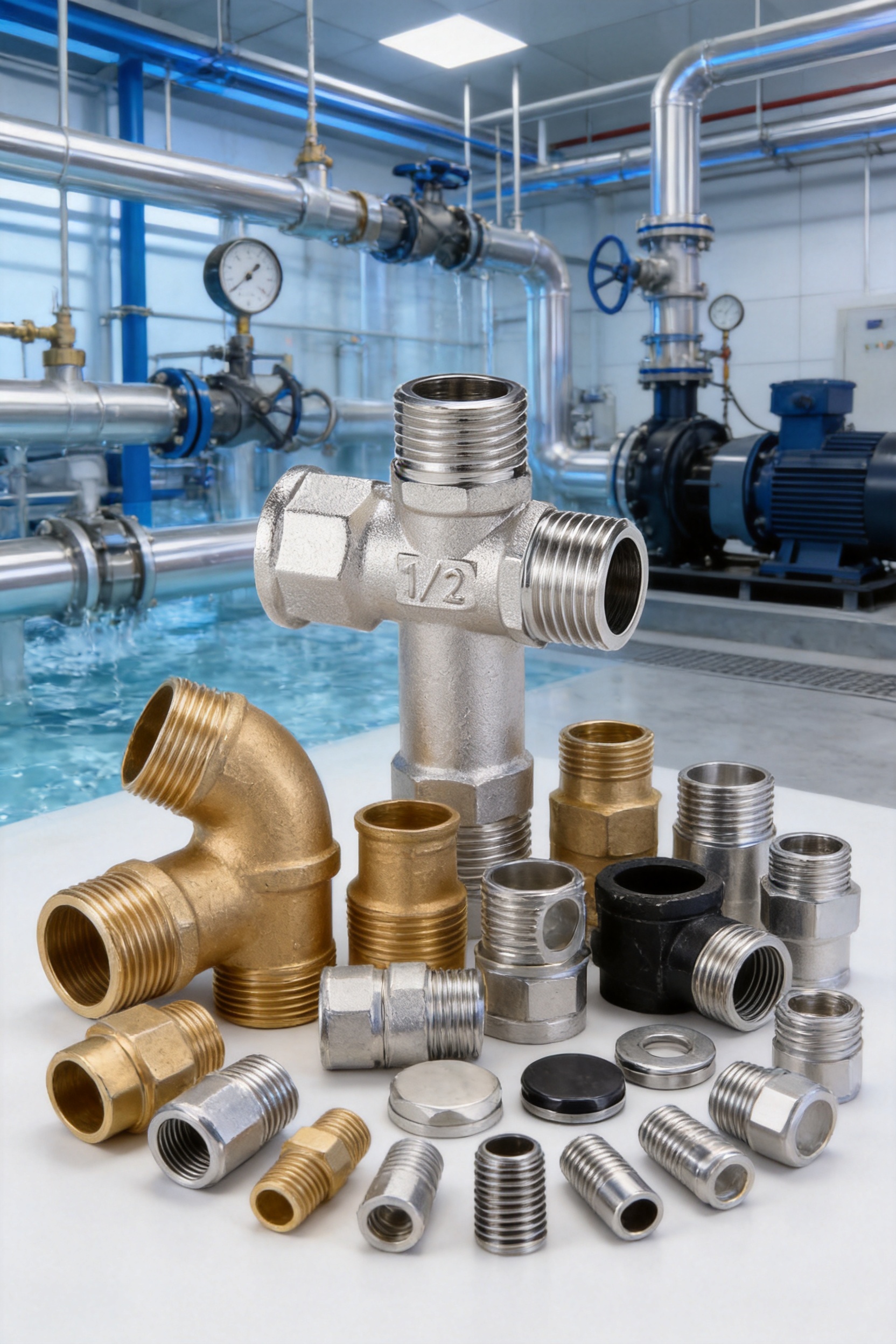
Manufacturing Strengths and Competitive Advantages
Integrated Production Capability
A manufacturer that combines product development, precision machining, assembly, testing, and service within one organization can respond more efficiently to customer requirements. Integrated production reduces dependence on multiple outside suppliers and improves communication between engineering, manufacturing, and quality teams.
Ningbo Yunhua Valve Co., Ltd. operates professional machining, assembly, and testing workshops. This structure supports coordinated production of valves and hardware accessories, including pipe fittings. It also allows the company to understand how fittings function within complete fluid-control systems rather than treating them as isolated hardware items.
Large and Organized Production Capacity
The company has an annual production capacity of approximately two million sets of valves and ten million sets of hardware accessories. This level of capacity indicates the ability to support both regular distribution demand and larger project requirements, subject to product specifications, scheduling, and order confirmation.
Capacity alone does not guarantee quality, but organized capacity provides practical advantages. It supports more efficient procurement, stable production planning, repeatable process control, and improved delivery coordination. It can also help customers consolidate purchasing across related product categories.
Modern Equipment
Advanced domestic and international CNC machine tools provide the accuracy and flexibility required for modern fitting production. Automated assembly and testing equipment further support consistent output and reduced manual variation.
Modern equipment is most effective when combined with capable personnel and documented procedures. Machine calibration, tool management, maintenance planning, inspection standards, and operator training all contribute to the final quality of the product.
Experience in Fluid-Control Products
Over more than ten years of development, the company has focused on gas and fluid valves, water supply valves, and hardware accessories. This product experience is valuable because pipe fittings must operate in connection with other components. Understanding flow paths, sealing principles, pressure conditions, and installation requirements supports more practical product development.
The company’s product scope includes components associated with threaded globe valves, forged steel valves, brass gas ball valves, and other fluid-control products. Pipe fittings can therefore be supplied as part of a broader solution for customers seeking coordinated hardware and valve components.
Quality-Oriented Corporate Structure
A professional management system provides a foundation for stable production. Clear responsibilities, production records, inspection procedures, equipment maintenance, and customer-service processes help reduce avoidable errors.
The company describes its mission as building a safe fluid ecosystem through high-quality valves. This quality-oriented approach is relevant to pipe fittings because safe fluid control depends on the reliability of every connection, not only the valve body itself.
Support for Custom Requirements
Different markets may require different thread standards, dimensions, materials, markings, packaging formats, or accessory combinations. A manufacturer with engineering and production capabilities can evaluate custom requirements more effectively than a trading company that only resells standard inventory.
Customers requesting customized pipe fittings should provide complete technical information, including drawings, nominal size, connection standard, material, pressure and temperature conditions, surface treatment, testing requirements, marking, quantity, and delivery expectations. Early technical communication reduces misunderstandings and supports accurate quotation and production planning.
Pipe Fittings Compared with Competing Low-Cost Products
Price is an important purchasing consideration, but it should not be the only basis for comparison. Low-cost fittings may reduce material quantity, simplify inspection, use inconsistent raw materials, or apply less controlled machining. These practices may not be obvious until installation or service.
Professionally manufactured fittings offer advantages in dimensional control, traceability, thread quality, sealing performance, and repeatability. These benefits can lower total ownership cost by reducing installation delays, leakage repairs, premature replacement, and inventory complications.
Another competitive advantage is product consistency across batches. Contractors and distributors prefer fittings that perform similarly each time they are ordered. Consistency reduces the need for repeated field adjustments and makes it easier to standardize installation procedures.
Technical support is also an important difference. A capable manufacturer can help customers compare materials, clarify connection standards, select appropriate products, and evaluate custom specifications. This level of support is particularly valuable when fittings are used in gas, industrial, or infrastructure systems where an incorrect choice can have serious consequences.
Applications Across Multiple Industries
Residential Plumbing
Pipe fittings are used in cold-water lines, hot-water systems, heating circuits, drainage-related connections, and household equipment. Compact threaded fittings are convenient for installation in confined spaces and for connecting valves, meters, filters, water heaters, and fixtures.
Commercial Buildings
Office buildings, hotels, hospitals, schools, and retail facilities contain extensive water, heating, cooling, fire-protection, and utility networks. Fittings support branch connections, equipment interfaces, maintenance points, and system expansion.
Gas Distribution
Gas piping requires careful attention to material compatibility, sealing, pressure rating, installation practice, and regulatory compliance. Brass gas fittings and fittings used with gas valves must be selected only for approved applications and installed by qualified personnel.
Water Treatment
Water-treatment equipment uses fittings around filters, pumps, dosing units, storage tanks, membranes, and control valves. Corrosion resistance and clean internal passages may be important, particularly where treated water quality must be maintained.
Agricultural Irrigation
Irrigation systems use fittings to connect pumps, main lines, branch lines, filters, pressure regulators, and sprinklers. Outdoor exposure, soil contact, water chemistry, and seasonal temperature changes should be considered when selecting materials and protective finishes.
Compressed Air
Compressed-air systems depend on secure connections because leakage wastes energy and reduces pressure at points of use. Fittings should be selected according to pressure, temperature, air quality, pipe material, and connection method.
Industrial Equipment
Manufacturing machinery, boilers, compressors, chemical equipment, and process systems may require specialized fittings capable of handling vibration, elevated temperature, pressure fluctuation, or aggressive media. Detailed engineering review is recommended for demanding industrial service.
Hardware and OEM Assemblies
Original equipment manufacturers may integrate fittings into packaged equipment, manifolds, control panels, heating units, pump assemblies, and other products. Stable dimensions and reliable supply are essential because a fitting change can affect the design of the complete assembly.
Selection Guide for Buyers
The first selection factor is nominal size. Pipe size may be described using different systems, so the buyer should confirm whether the specification refers to nominal pipe size, outside diameter, inside diameter, or a particular regional standard.
The second factor is connection type. Internal threads, external threads, compression connections, flanges, welding ends, and press connections are not interchangeable. The fitting must match the pipe and the equipment to which it will connect.
The third factor is thread standard. Threaded products may follow different standards for profile, pitch, taper, and dimensional designation. Buyers should never assume that two products are compatible merely because they have the same nominal size.
The fourth factor is material. Consider the transported medium, corrosion conditions, pressure, temperature, external environment, and applicable regulations. For gas service, confirm that the fitting is specifically intended and approved for the application.
The fifth factor is pressure and temperature rating. The fitting must be capable of handling the maximum expected operating pressure and temperature, including possible surges. Ratings may change depending on material, size, connection type, and temperature.
The sixth factor is flow requirement. Internal diameter, surface condition, fitting geometry, and the number of directional changes can influence pressure loss. A fitting should support the required flow without creating unnecessary restriction.
The seventh factor is maintenance strategy. If equipment will need regular removal, unions or other disconnectable connections may be useful. If the connection is intended to remain permanent, a coupling or welded fitting may be more appropriate.
The eighth factor is documentation. Professional projects may require drawings, inspection reports, material information, batch identification, packing lists, or other records. These requirements should be confirmed before production.
Important Technical Factors
| Selection Factor | Why It Matters | Recommended Buyer Action |
|---|---|---|
| Nominal size | Determines dimensional compatibility and flow capacity | Confirm the applicable sizing system and pipe dimensions |
| Connection type | Controls how the fitting joins the pipe or equipment | Specify threaded, welded, flanged, compression, or other connection |
| Thread standard | Affects assembly, sealing, and interchangeability | State the exact thread profile and pitch requirement |
| Material | Influences strength, corrosion resistance, and fluid compatibility | Match the material to the medium and environment |
| Pressure rating | Determines safe operating capability | Compare rating with normal and maximum system pressure |
| Temperature range | Can affect material strength and seal performance | Provide minimum, normal, and maximum temperatures |
| Surface treatment | Helps protect against corrosion or improves appearance | Specify plating, coating, polishing, or other requirements |
| Testing and records | Supports project quality assurance and traceability | Confirm inspection, pressure testing, and documentation needs |
| Packaging | Protects threads and surfaces during transport | Request suitable protection and clear identification |
Installation Best Practices
Before installation, inspect fittings for cracks, dents, damaged threads, contamination, corrosion, or missing components. Confirm that the product size, material, and connection type match the design documents and the actual pipe.
Clean the pipe and fitting threads carefully. Dirt, metal chips, old sealant, and moisture can interfere with sealing. Do not force mismatched threads together. If the parts do not engage smoothly by hand at the beginning of assembly, stop and verify compatibility.
Use a sealing method suitable for the thread type and transported medium. Thread sealant, sealing tape, gaskets, and sealing rings are not universally interchangeable. Follow the sealant manufacturer’s instructions and applicable installation standards.
Tighten the connection using appropriate tools and technique. Excessive torque can crack a fitting, distort a sealing surface, damage threads, or place unnecessary stress on the pipe. Insufficient torque may leave the connection loose. Where torque values are specified, use them as the primary guide.
Prevent the fitting from carrying excessive pipe weight. Provide suitable pipe supports, brackets, and alignment so that connections are not subjected to bending loads. This is especially important near valves, pumps, meters, and vibrating equipment.
After installation, inspect the complete system and perform the required pressure or leakage test. Testing should follow the project procedure and applicable safety requirements. Never investigate a suspected high-pressure leak with bare hands. Use safe inspection methods and isolate the system before making corrections.
Maintenance and Service Considerations
Routine maintenance should include visual checks for leakage, corrosion, damaged surfaces, unusual movement, and signs of stress. Insulated piping may require inspection at connection points where moisture can accumulate. Outdoor fittings should be checked for coating damage and environmental corrosion.
If a leak develops, do not simply continue tightening the fitting without determining the cause. The problem may result from incorrect thread compatibility, damaged threads, unsuitable sealant, pipe movement, excessive stress, or a cracked component. Corrective action should address the root cause.
During replacement, use a fitting with the same or improved material, size, connection standard, and service rating. Mixing incompatible materials can create galvanic corrosion or other performance problems. New sealing materials should generally be used rather than reusing damaged or compressed seals.
Maintain records of replacement dates, product specifications, test results, and observed conditions. These records can help identify recurring problems and support future purchasing decisions.
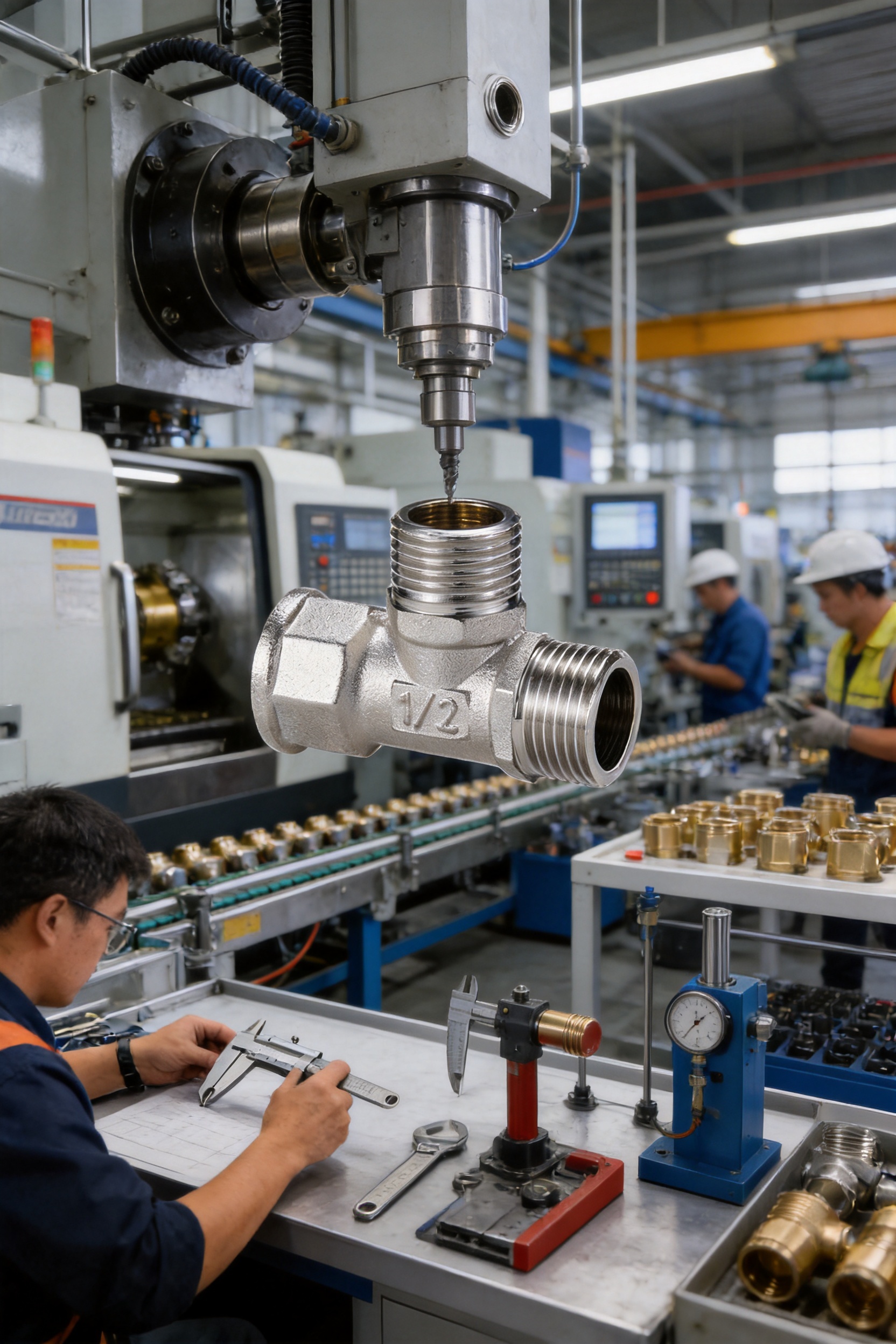
Quality Management from Production to Delivery
Quality is most effective when it is built into every stage rather than checked only at the end. Incoming material control helps prevent unsuitable raw materials from entering production. Process monitoring helps identify drift before large quantities are completed. In-process inspection allows corrective action while the product is still being manufactured.
Final inspection provides another level of assurance, but it should complement—not replace—process control. Measurements, thread checks, appearance inspections, pressure tests, and packaging verification should be organized according to the product’s critical characteristics.
Equipment maintenance is equally important. CNC machines, gauges, pressure-testing devices, and automated assembly systems must remain in suitable operating condition. Calibration and preventive maintenance help ensure that measurement results are dependable.
Personnel training supports stable execution. Operators should understand drawings, work instructions, equipment settings, inspection points, and safety procedures. Technical staff should be able to evaluate nonconforming products and implement corrective actions.
A mature management system also includes customer feedback. Information about installation performance, packaging, delivery, and field problems can be used to improve design and manufacturing. This continuous-improvement cycle benefits both the manufacturer and the customer.
Choosing a Pipe Fittings Supplier
When comparing suppliers, customers should evaluate manufacturing capability, product range, quality systems, technical communication, delivery reliability, and after-sales support. A supplier that only provides a catalog may be less useful than a manufacturer able to understand a complete application.
Ask whether the supplier operates its own machining and assembly facilities. Determine whether testing is performed internally and whether product batches can be identified. Confirm whether the supplier can support the requested material, size, thread standard, surface treatment, and packaging requirements.
It is also useful to review the supplier’s experience with related products. A company producing valves, water-control products, gas-control components, and hardware accessories may offer better system-level understanding than a supplier with no fluid-control background.
Communication should be clear from the beginning. Technical drawings, sample approvals, inspection requirements, labeling, and delivery schedules should be documented. This reduces the risk of misunderstanding between the buyer, manufacturer, distributor, and installer.
Ningbo Yunhua Valve Co., Ltd. provides pipe fittings as part of a wider portfolio of gas and fluid valves, water supply valves, and hardware accessories. Its manufacturing resources, automated equipment, production capacity, and industry focus make it a practical candidate for buyers seeking coordinated components for fluid-control systems.
How Pipe Fittings Support Valve Performance
Valves can only perform effectively when connected to a stable and properly designed piping system. A valve installed with poorly aligned or leaking fittings may experience additional mechanical stress and reduced service life. Proper fittings help maintain alignment and provide secure transitions between the valve and pipe.
Threaded globe valves, for example, are commonly integrated into smaller piping systems where controlled flow adjustment and shutoff are required. Accurate threaded fittings help connect the valve to upstream and downstream piping while supporting maintenance access.
Forged steel valves are often selected for applications requiring strength and resistance to demanding operating conditions. Their associated fittings must be compatible in material, pressure rating, connection type, and temperature capability.
Brass gas ball valves are used in suitable gas-control installations where quick shutoff and compact construction are required. The connecting fittings must be intended for the gas service and must support dependable sealing under the specified conditions.
This relationship demonstrates why fittings should be evaluated as part of a complete fluid-control assembly. A strong valve connected through an unsuitable fitting does not create a reliable system. System performance depends on the compatibility and quality of every component.
Custom Pipe Fittings for Specialized Requirements
Standard fittings are suitable for many applications, but specialized equipment may require customized dimensions or features. Custom options may include modified lengths, special thread combinations, nonstandard port arrangements, unique materials, special markings, surface treatments, or customized packaging.
Custom production should begin with a clear technical definition. Drawings should identify all critical dimensions, tolerances, reference points, thread details, material requirements, inspection criteria, and intended use. Samples or prototypes may be required before full production.
Manufacturing feasibility should be reviewed before an order is finalized. Some features may require additional tooling, special fixtures, extra machining, or longer inspection time. Early consultation helps balance performance, cost, and delivery requirements.
A manufacturer with CNC machining and automated production capability can often adapt processes more efficiently than a supplier limited to fixed catalog products. However, every custom fitting should be evaluated according to its intended pressure, temperature, fluid, and regulatory environment.
Environmental and Economic Value
Reliable pipe fittings contribute to environmental performance by reducing leakage and extending system service life. A leak-free water system conserves water, while a tight compressed-air or gas system reduces energy loss and safety risks.
Durable fittings also reduce material consumption associated with frequent replacement. Longer service life means fewer discarded components, fewer transportation cycles, and less labor spent on repair. Proper material selection and surface treatment can further improve durability in corrosive environments.
Manufacturing efficiency has economic value as well. CNC machining, automated assembly, and organized testing can reduce production variation and improve resource utilization. Stable processes help manufacturers deliver consistent products while controlling waste and rework.
Buyers can support these benefits by selecting products according to actual service conditions rather than purchasing solely on the lowest initial price. A fitting that performs reliably over many years may provide a lower total cost than a cheaper component that requires early replacement.
Future Development of Pipe Fittings
The pipe fittings industry is developing alongside broader trends in automation, energy efficiency, smart infrastructure, water conservation, and industrial modernization. Customers increasingly expect accurate products, reliable delivery, flexible customization, and stronger technical documentation.
Digital manufacturing systems can improve production scheduling, equipment monitoring, process records, and quality analysis. Automated inspection may support faster detection of dimensional variation. More advanced data management can improve traceability from raw material through final shipment.
Product development is also likely to focus on improved flow geometry, corrosion resistance, lighter construction, lower environmental impact, and compatibility with new piping materials. As buildings and industrial facilities become more connected, fittings may be evaluated not only for mechanical connection but also for their contribution to system efficiency and maintainability.
Manufacturers with established machining, assembly, testing, and management resources are well placed to respond to these changes. Continued investment in equipment, personnel, process control, and customer service can help pipe fittings meet increasingly demanding market expectations.
Frequently Asked Questions
What are pipe fittings used for?
Pipe fittings connect pipes, change flow direction, create branches, reduce or increase pipe size, adapt connection types, and close pipe ends. They are used in water, gas, heating, cooling, compressed-air, irrigation, industrial, and equipment systems.
What is the difference between a coupling and a union?
A coupling generally joins two pipes in a relatively permanent connection. A union also connects two sections but is designed to allow easier disconnection for maintenance, repair, or equipment replacement.
Why is thread accuracy important?
Accurate threads provide correct engagement between mating components and support reliable sealing. Poor threads may cause cross-threading, leakage, difficult installation, or damage to the pipe and fitting.
Are all fittings with the same nominal size compatible?
No. Products with the same nominal size may use different thread standards, connection types, materials, or dimensional systems. Buyers must verify the complete technical specification before assembly.
Which material is best for pipe fittings?
There is no single best material for every application. Brass, forged steel, stainless steel, and other materials each have different strengths. The correct choice depends on the fluid, pressure, temperature, corrosion conditions, regulations, and expected service life.
Can brass fittings be used for gas?
Brass fittings may be suitable for certain gas applications when they are specifically designed, rated, and approved for that service. The installation must comply with local regulations, and the fitting must be compatible with the gas, pressure, sealing method, and connected equipment.
How does CNC machining improve fitting quality?
CNC machining uses programmed equipment to produce controlled dimensions repeatedly. It can improve consistency in turning, drilling, boring, threading, and other operations, especially during larger production runs.
Why are pressure tests important?
Pressure tests can reveal leakage or structural weaknesses that may not be visible during visual inspection. The appropriate test method and pressure must follow the product specification, project procedure, and applicable safety requirements.
How should a fitting be selected for a valve connection?
Confirm the valve port size, connection type, thread standard, material, pressure rating, temperature range, and fluid compatibility. The fitting should also support correct alignment and allow the required maintenance access.
What information should be provided when requesting a quotation?
Provide the product type, quantity, nominal size, connection standard, material, pressure and temperature conditions, surface treatment, testing requirements, marking, packaging, delivery destination, and any drawing or customization requirements.
How can leakage after installation be prevented?
Use compatible components, clean the threads, apply a suitable sealant, avoid cross-threading, tighten correctly, support the piping, and conduct the required pressure or leakage test. If leakage occurs, investigate the underlying cause rather than applying excessive torque.
What makes a supplier competitive beyond price?
Manufacturing control, dimensional consistency, material knowledge, testing capability, production capacity, technical communication, traceability, customization support, packaging quality, and dependable service all contribute to supplier competitiveness.
Conclusion
Pipe fittings are small but essential elements of safe and efficient fluid-control systems. Their responsibilities include maintaining secure connections, supporting accurate flow paths, accommodating changes in direction and size, enabling equipment maintenance, and protecting the overall piping system from leakage and premature failure.
The strongest advantages come from accurate dimensions, reliable threads, suitable materials, effective sealing surfaces, controlled production, and appropriate inspection. These characteristics are difficult to guarantee through uncontrolled low-cost manufacturing alone. Professional production methods, including CNC machining, automated assembly, systematic testing, and organized quality management, provide a stronger foundation for consistent performance.
Ningbo Yunhua Valve Co., Ltd. combines experience in valves and hardware accessories with a professional manufacturing structure, a precision machining workshop, assembly lines, testing facilities, advanced CNC equipment, and substantial annual production capacity. This combination supports the production of pipe fittings and related fluid-control components for a broad range of applications.
For buyers, the best purchasing decision is based on total system requirements rather than price alone. By confirming size, connection type, thread standard, material, pressure, temperature, fluid compatibility, testing, and documentation, customers can select fittings that deliver dependable service and long-term value.
References
1. General principles of industrial piping design, component selection, pressure control, and maintenance.
2. Technical guidance for threaded pipe connections, sealing methods, and installation inspection.
3. Manufacturing engineering practices for CNC turning, drilling, boring, threading, deburring, and dimensional control.
4. Quality-management principles for incoming material inspection, process monitoring, final testing, traceability, and corrective action.
5. Engineering references concerning brass, forged steel, stainless steel, and other materials used in fluid-control components.
6. Plumbing, gas, water-supply, compressed-air, and industrial piping installation practices.
7. Product and manufacturing information supplied for pipe fittings, valves, and hardware accessories.
Product: Pipe Fittings

Related Products
Related News
Contact Us
-

-
 +86-0574-63742169
 -
 No.104-128, Cizhang East Road, Zhangqi Town, Cixi City, Ningbo, Zhejiang Province, China


Message Us Now !
