


 English
  русский
  عربى
عربى  Español
Pipe Fittings for Safe, Efficient, and Reliable Fluid Systems
Content
- 1 Understanding the Role of Pipe Fittings
- 2 Product Scope and Typical Fitting Configurations
- 3 Material Selection for Pipe Fittings
- 4 Advantages of Precision-Manufactured Pipe Fittings
- 5 Manufacturing Strengths and Production Capabilities
- 6 Quality Control from Raw Material to Finished Product
- 7 Comparison of Key Selection Factors
- 8 Advantages over Inconsistent or Low-Quality Alternatives
- 9 Applications in Gas Systems
- 10 Applications in Water Supply and Plumbing
- 11 Applications in Industrial Fluid Control
- 12 Installation Recommendations
- 13 Customization and OEM Support
- 14 Why Manufacturing Integration Matters
- 15 Environmental and Operational Considerations
- 16 Maintenance and Service Life
- 17 Frequently Asked Questions
- 17.1 What are pipe fittings used for?
- 17.2 How do I choose the correct pipe fitting?
- 17.3 Why is thread accuracy important?
- 17.4 Are brass fittings suitable for gas systems?
- 17.5 When should forged steel fittings be considered?
- 17.6 What is the benefit of CNC machining?
- 17.7 How are pipe fittings tested?
- 17.8 Can pipe fittings be customized?
- 17.9 Why buy fittings from a valve manufacturer?
- 17.10 What should be checked before installation?
- 18 Conclusion
- 19 References
- 20 Product: Pipe Fittings
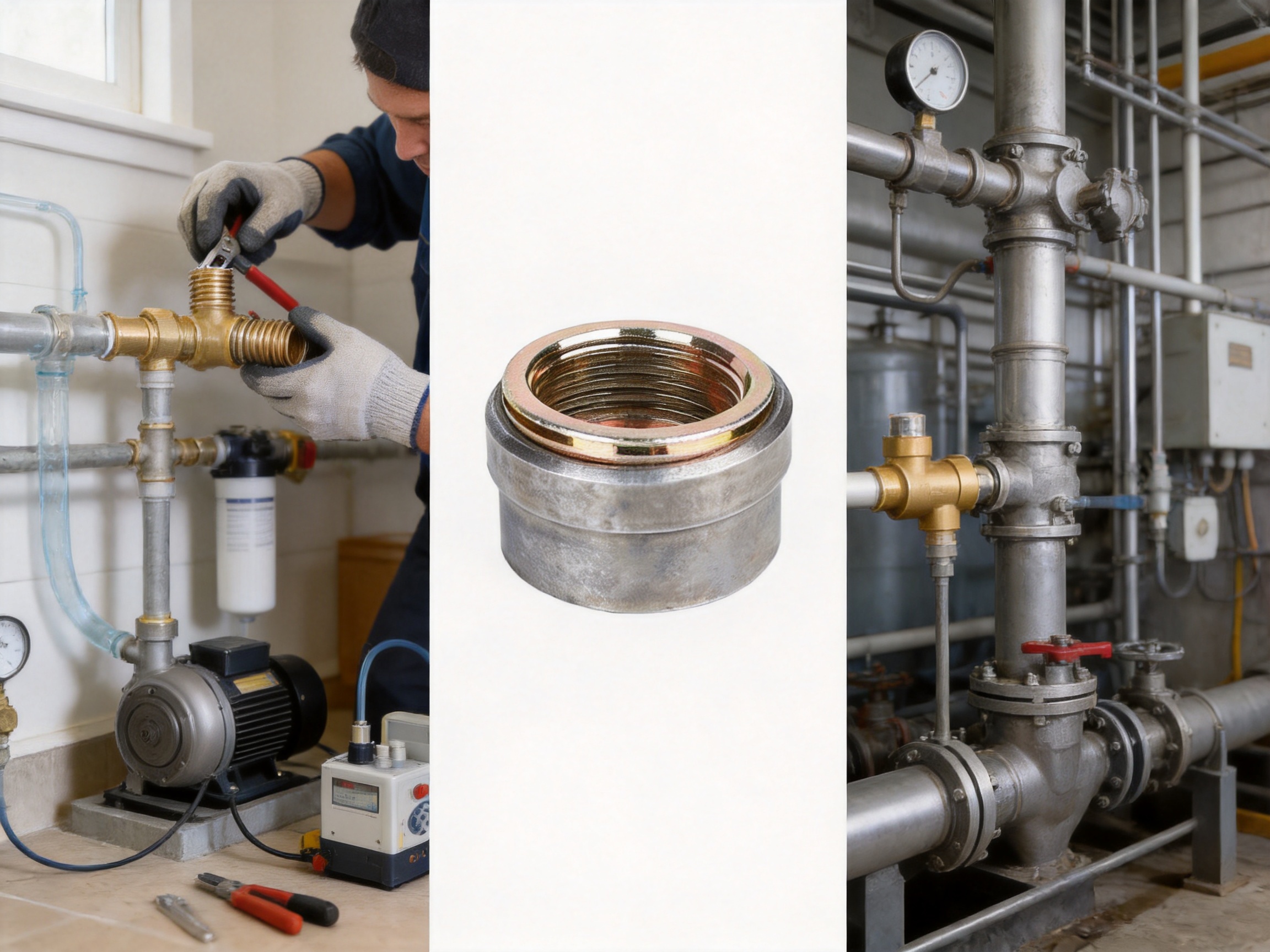
Pipe fittings are essential components in modern fluid-control systems. They connect, redirect, extend, reduce, isolate, and support pipelines used for gas, water, air, and other compatible fluids. Although fittings are often smaller than valves or pipes, their quality has a direct effect on system safety, operating efficiency, installation convenience, and long-term maintenance costs. A well-designed fitting can help prevent leakage, maintain stable flow, simplify assembly, and support reliable service under demanding working conditions.
Pipe Fittings manufactured by Ningbo Yunhua Valve Co., Ltd. are developed for practical use in gas and fluid-control applications, water supply systems, and hardware assemblies. The company combines product development, precision machining, automated assembly, testing, and quality management to provide fittings suitable for a broad range of connection requirements. Its manufacturing capabilities also support related products such as threaded globe valves, forged steel valves, and brass gas ball valves, allowing customers to coordinate fittings and valves within the same supply program.
This article explains the structure, functions, advantages, selection factors, production processes, testing methods, and application value of high-quality pipe fittings. It also examines why manufacturing experience, automated equipment, material control, and technical service are important when selecting a long-term supplier.
Understanding the Role of Pipe Fittings
A pipeline is rarely a simple straight line. It must pass around equipment, change direction, connect to different pipe sizes, branch into several circuits, or terminate at a valve, meter, appliance, or other component. Pipe fittings provide the mechanical connections needed to create these practical systems.
Common fitting functions include changing the direction of flow, joining two pipes, connecting pipes with different diameters, creating a branch connection, closing an unused outlet, and adapting a pipe to a threaded component. Some fittings are also used to connect flexible hoses, service equipment, gauges, or valves. The correct fitting ensures that these connections remain mechanically secure and fluid-tight during normal operation.
In gas systems, connection reliability is especially important because even a small leak can create a serious safety risk. In water systems, fittings must resist corrosion, pressure fluctuations, and repeated changes in operating conditions. In industrial fluid applications, the fitting may need to withstand vibration, temperature variation, chemical exposure, and frequent maintenance activity.
For these reasons, a fitting should not be evaluated solely by its external appearance or purchase price. Its material, dimensional accuracy, thread quality, sealing design, surface finish, pressure capability, and compatibility with the rest of the system must all be considered.
Product Scope and Typical Fitting Configurations
Pipe fittings can be produced in many shapes and connection configurations. The exact product range depends on the customer’s requirements, regional standards, application environment, and available materials. A professional manufacturer can organize production around standard parts while also supporting customized sizes, threads, finishes, and packaging requirements.
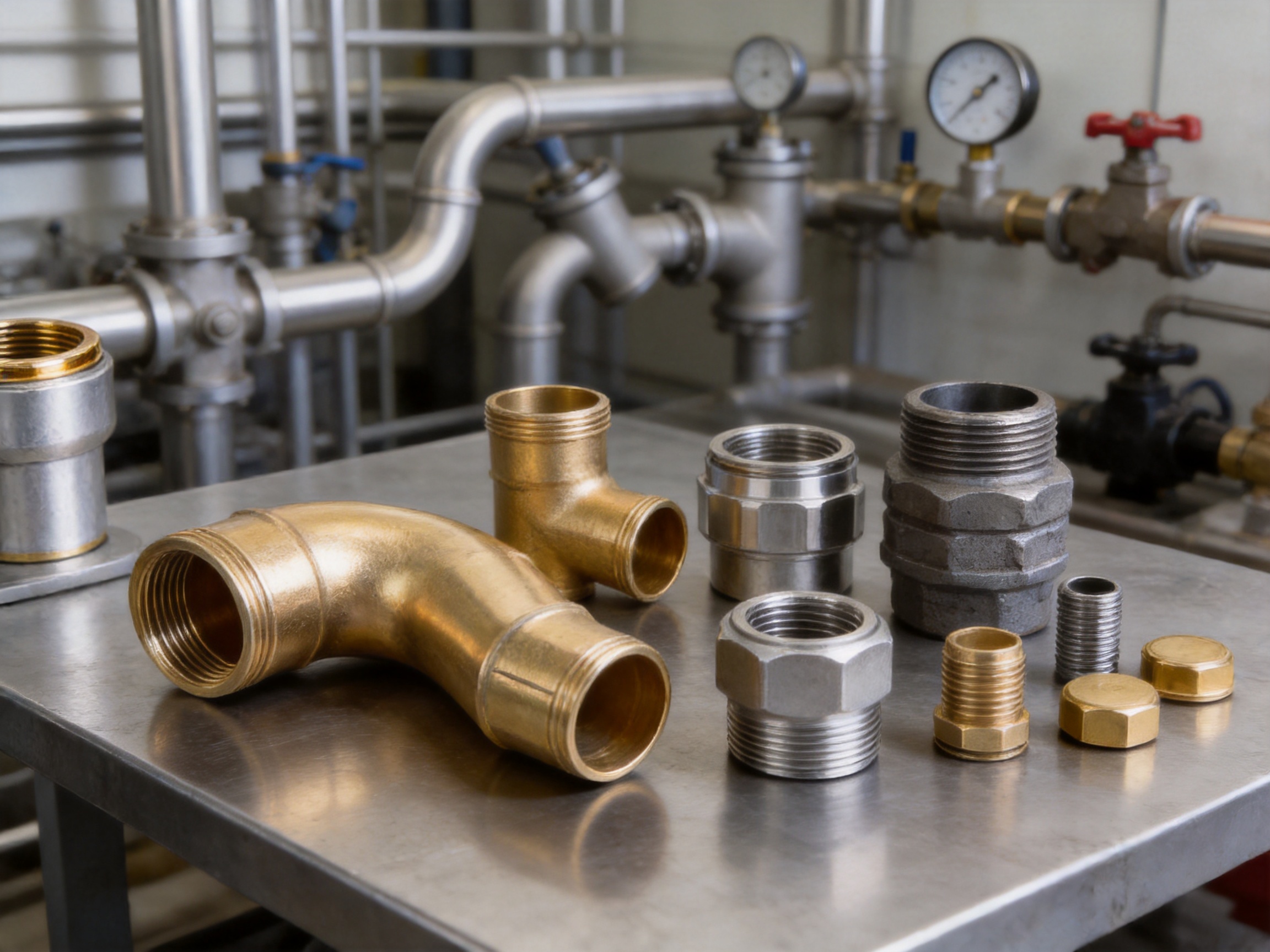
Elbows
Elbows change the direction of a pipeline. They are commonly available in 45-degree and 90-degree configurations, although other angles can be produced for particular layouts. A properly designed elbow helps maintain a smooth transition between connected pipes and reduces unnecessary installation space.
In compact water, gas, and equipment assemblies, elbows can make routing easier and reduce the need for excessive pipe bending. Accurate end dimensions and consistent thread geometry are important because poor alignment can place additional stress on the pipe and connection.
Tees and Branch Fittings
Tees divide or combine flow between a main pipeline and a branch line. Equal tees have the same nominal size at all outlets, while reducing tees connect a larger main line to a smaller branch. These fittings are widely used in water distribution, gas supply, equipment connections, and process piping.
The internal passage should be formed carefully to avoid unnecessary turbulence or excessive restriction. The outside structure must also provide sufficient strength around the branch connection. Consistent wall thickness and accurate machining contribute to reliable service.
Couplings
Couplings join two pipes with the same or similar connection size. They are useful when extending a pipeline, replacing a section, or connecting separately prepared pipe assemblies. A coupling should provide sufficient engagement length and maintain accurate alignment between both sides.
Reducers and Adapters
Reducers connect pipes with different diameters. Adapters change the connection type, such as connecting a threaded fitting to another component with a different thread or interface. These products are particularly useful in systems that combine different pipe sizes, equipment connections, or regional standards.
Because adapters often connect components from different manufacturers, dimensional accuracy is critical. A small error in thread profile, pitch, or end diameter may prevent proper assembly or cause leakage during operation.
Plugs, Caps, and End Fittings
Plugs and caps close pipe ends or unused outlets. They may be installed permanently or used temporarily during transportation, testing, maintenance, or system expansion. The sealing surface and external dimensions should be designed for easy installation and removal without damaging the connected component.
Material Selection for Pipe Fittings
Material selection influences strength, corrosion resistance, weight, machinability, appearance, and service life. Different applications require different material characteristics, so no single material is ideal for every system.
Brass
Brass is widely used for fittings in water supply, gas distribution, general plumbing, and hardware applications. It offers good machinability, a useful balance of strength and corrosion resistance, and a clean appearance. Brass can be accurately machined to create threads, sealing surfaces, and internal passages.
Brass fittings are also valued for their compatibility with many common connection systems. When properly selected and manufactured, they can provide dependable service in residential, commercial, and light industrial installations. Brass gas ball valves and related brass components are commonly integrated with threaded fittings in gas-control assemblies.
Forged Steel
Forged steel fittings are selected when higher mechanical strength and greater resistance to demanding operating conditions are required. Forging can produce a dense material structure and robust external geometry. These characteristics make forged steel suitable for applications involving higher pressure, vibration, temperature variation, or industrial service.
Forged steel valves and fittings should be produced with careful control of material quality, forging conditions, machining accuracy, and surface treatment. The final product must also be matched to the pressure, temperature, and fluid requirements of the installation.
Other Compatible Materials
Depending on customer requirements and application standards, fittings may also be produced from stainless steel, carbon steel, ductile iron, or engineering plastics. Each material has different advantages. Stainless steel offers strong corrosion resistance in many environments. Carbon steel provides strength and cost efficiency in suitable systems. Engineering plastics can offer light weight and resistance to selected chemicals.
The manufacturer and customer should confirm the material grade, working temperature, fluid compatibility, pressure rating, and applicable regulations before production. Material selection should never be based only on color, weight, or initial cost.
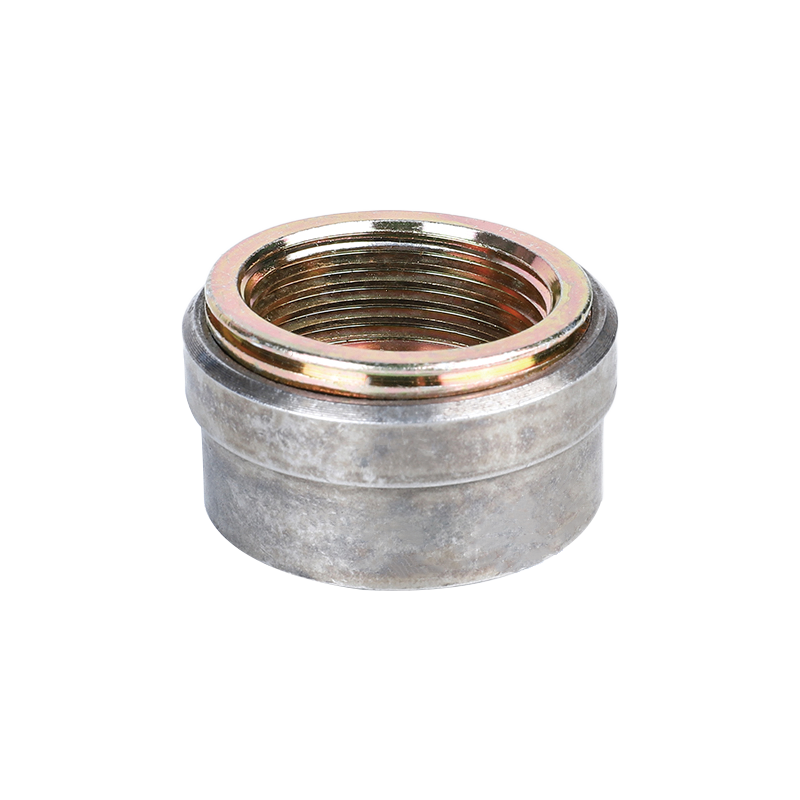
Pipe Fittings
Advantages of Precision-Manufactured Pipe Fittings
High-quality pipe fittings provide several advantages over low-cost products made with inconsistent materials or insufficient process control. These advantages are especially important in systems where maintenance is difficult, leakage would be costly, or safety is a major concern.
Reliable Dimensional Accuracy
Accurate dimensions support smooth assembly and improve compatibility with pipes, valves, meters, and other components. Precision machining helps maintain thread size, pitch, taper, outside diameter, internal passage, and sealing geometry within the required tolerances.
Reliable dimensions reduce the need for excessive force during installation. They also lower the risk of cross-threading, misalignment, incomplete engagement, or damage to sealing materials. When a large number of fittings are installed, dimensional consistency can significantly improve productivity.
Improved Sealing Performance
A fitting must form a dependable seal under the expected operating conditions. The sealing method may involve tapered threads, parallel threads with a gasket, an O-ring, a compression surface, or another approved connection design. The mating surfaces must be smooth and accurately formed.
Good sealing performance reduces fluid loss and helps protect the surrounding environment. In gas applications, it contributes directly to operational safety. In water applications, it helps prevent hidden leakage, wall damage, corrosion, and unnecessary consumption.
Strong Mechanical Construction
Pipe fittings experience more than internal pressure. They may also be exposed to vibration, pipe expansion, installation loads, impact, and repeated connection or disconnection. A strong body design and appropriate material provide a better margin of safety against deformation and failure.
Manufacturing processes such as forging, controlled machining, and careful deburring can help produce a fitting with a sound structure. The design should also avoid sharp transitions or unnecessary thin sections that could become weak points.
Consistent Internal Flow Passage
The internal passage influences pressure loss and flow behavior. An uneven or excessively restricted passage can increase turbulence, noise, and energy consumption. A well-machined internal profile supports more predictable system performance.
Although a fitting cannot eliminate all pressure loss, a properly selected and manufactured design can reduce avoidable restrictions. This is valuable in water supply networks, gas distribution systems, compressed-air lines, and equipment piping.
Corrosion Resistance and Surface Quality
Surface treatment and material selection help protect fittings from corrosion. Depending on the product, surface options may include polishing, plating, coating, passivation, or another suitable treatment. A clean and uniform surface also improves appearance and makes inspection easier.
Corrosion resistance should be evaluated in relation to humidity, water chemistry, gas composition, outdoor exposure, cleaning chemicals, and installation location. A fitting suitable for an indoor dry environment may not be appropriate for a coastal or chemically aggressive location.
Efficient Installation
Fittings with consistent threads, clear identification, and clean surfaces are easier to install. Efficient installation saves labor time and reduces the likelihood of assembly mistakes. This is particularly beneficial for contractors managing large projects with many connection points.
A practical fitting design should allow installers to use appropriate tools without damaging the body or connection. The external shape should provide sufficient tool engagement while avoiding unnecessary interference with nearby components.
Manufacturing Strengths and Production Capabilities
The performance of pipe fittings depends heavily on the manufacturing system behind them. Ningbo Yunhua Valve Co., Ltd. has developed an integrated production structure covering research and development, manufacturing, sales, and service. This structure allows the company to coordinate product design with machining, assembly, testing, and customer support.
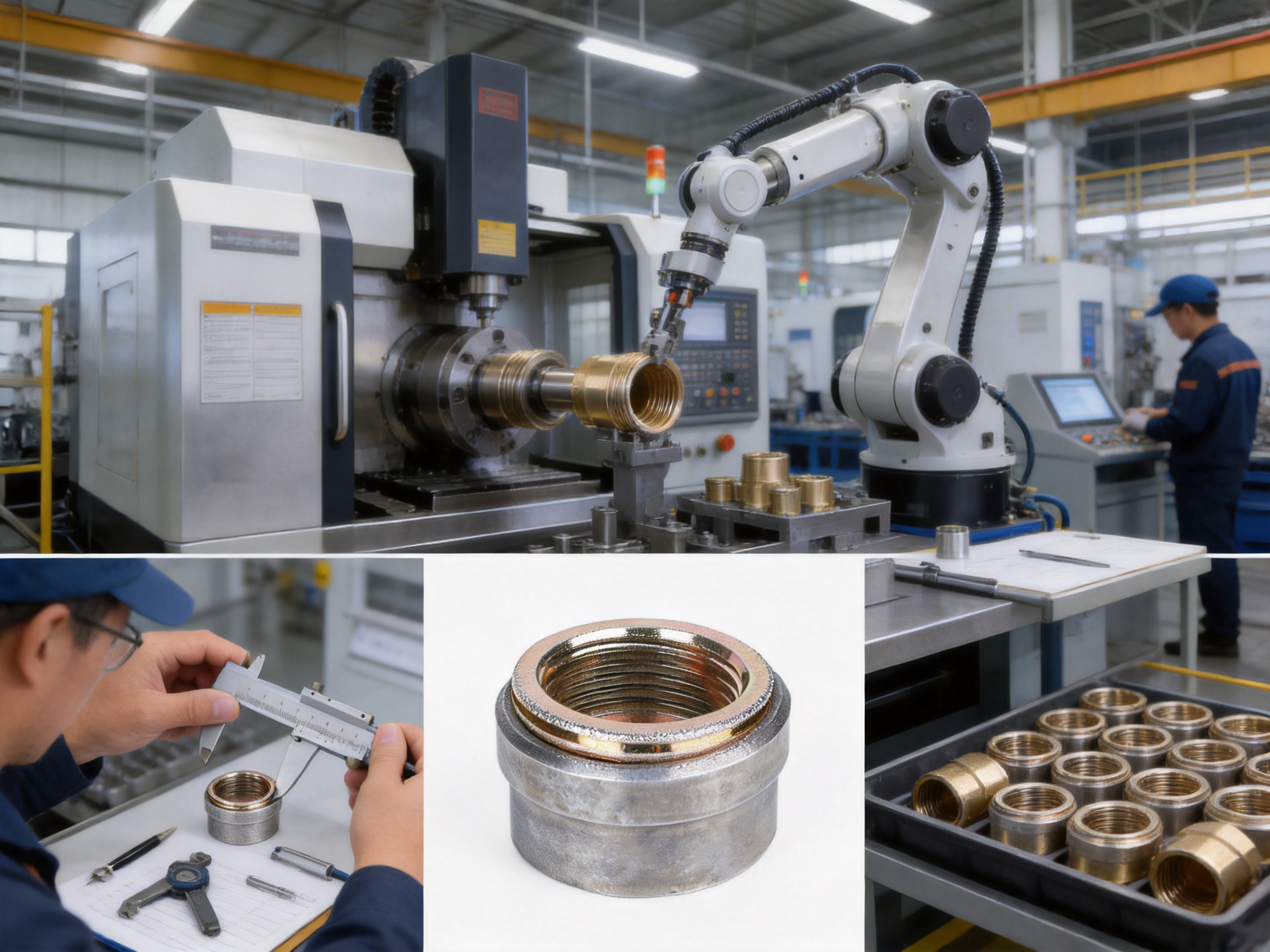
The company operates on an area of approximately 20,000 square meters and has established a precision machining workshop, assembly line, and testing workshop. Its production facilities include advanced domestic and international CNC machine tools as well as automated assembly and testing equipment. These resources support consistent manufacturing and help reduce variation between production batches.
Research and Development
Product development begins with understanding the application. Fittings used in water systems may require different materials and sealing methods from fittings used in gas systems or industrial equipment. Engineers must consider connection standards, pressure requirements, installation conditions, fluid compatibility, and customer preferences.
During development, the design can be reviewed for machinability, assembly efficiency, material usage, strength, and testing requirements. This approach helps create products that are not only technically suitable but also practical to manufacture and install.
CNC Precision Machining
CNC machine tools support repeatable production of important fitting features. These include thread profiles, end diameters, bores, shoulders, sealing faces, and tool surfaces. Computer-controlled machining can improve consistency and reduce manual variation.
Precision machining is particularly valuable for threaded products. Threads must be formed with the correct diameter, pitch, angle, depth, and surface finish. A fitting that looks acceptable but has an inaccurate thread may be difficult to assemble or may fail to seal properly.
Automated Assembly
Automation can improve assembly consistency and production efficiency. Depending on the product, automated equipment may support component feeding, insertion, tightening, inspection, and packaging preparation. Consistent assembly force is important for fittings that include seals, inserts, or integrated components.
Automation does not replace technical management. It must be supported by correct equipment settings, process instructions, maintenance programs, and inspection procedures. When these elements are properly coordinated, automated assembly can reduce human error and increase output stability.
Testing Workshop
A dedicated testing workshop allows products to be evaluated before shipment. Testing may include visual inspection, dimensional verification, thread checking, pressure testing, leakage testing, operating checks, and other inspections required by the product or customer.
Testing helps identify problems that may not be visible during ordinary production. It also provides process feedback. If a recurring issue appears, the manufacturing team can investigate tooling, material, machining, assembly, or handling conditions and introduce corrective action.
Production Capacity
The company has an annual production capacity of approximately 2 million sets of valves and 10 million sets of hardware accessories. This scale provides important benefits for customers. It indicates that the company is organized to support regular production, repeat orders, scheduled delivery, and large-volume supply programs.
Capacity alone does not guarantee quality, but a combination of capacity and process control can help customers avoid supply interruptions. A supplier with coordinated workshops and established management practices is better positioned to maintain product availability while meeting technical requirements.
Quality Control from Raw Material to Finished Product
Quality control should be applied throughout the product life cycle rather than only at the final inspection stage. The most reliable approach combines incoming material control, process inspection, assembly verification, final testing, and traceable records.
Incoming Material Inspection
Materials should be checked against purchasing requirements before entering production. Relevant checks may include material identification, dimensions, surface condition, chemical composition documentation, and supplier records. This step helps prevent unsuitable or inconsistent raw materials from entering the machining process.
For brass and steel components, material selection affects machining behavior, strength, corrosion resistance, and final performance. Clear material management supports stable production and provides useful information for customer documentation.
Process Inspection
Process inspection verifies important dimensions during machining. Operators or quality personnel may inspect the first piece of a production run, monitor samples at defined intervals, and check tooling condition. Measurements can include thread gauges, calipers, micrometers, bore gauges, and other suitable instruments.
Process inspection is valuable because it can identify deviation before a large quantity of parts is completed. Corrective action at an early stage reduces waste and improves delivery reliability.
Surface and Appearance Inspection
Visual inspection can identify scratches, cracks, burrs, deformation, discoloration, incomplete finishing, or contamination. Although appearance does not determine every aspect of performance, surface defects can indicate deeper manufacturing problems or create installation difficulties.
Deburring is especially important. Sharp edges can injure installers, damage seals, restrict flow, or create stress concentration. Properly finished fittings are safer to handle and easier to assemble.
Pressure and Leakage Testing
Where required by the product design and application, fittings and related valve assemblies may be subjected to pressure or leakage tests. These tests confirm whether the connection or component can withstand the specified test conditions without unacceptable leakage or deformation.
Test procedures should define the medium, pressure, holding time, acceptance criteria, and safety precautions. The exact requirements depend on the applicable product standard and customer specification.
Final Inspection and Packaging
Before shipment, finished fittings should be checked for quantity, model, size, thread type, surface condition, test status, and packaging requirements. Correct packaging protects the products from impact, moisture, contamination, and mixing during transportation.
Clear labeling helps customers identify products quickly after delivery. For large projects, organized packaging can reduce warehouse handling time and support efficient installation at the job site.
Comparison of Key Selection Factors
Customers evaluating competing pipe fittings should compare more than unit price. The following table summarizes important factors that influence overall value.
| Selection Factor | Why It Matters | What to Confirm |
|---|---|---|
| Material | Determines strength, corrosion resistance, and fluid compatibility | Material grade, application suitability, and documentation |
| Thread Accuracy | Supports proper assembly and reliable sealing | Thread standard, size, pitch, tolerance, and gauge inspection |
| Body Strength | Helps withstand pressure, vibration, and installation loads | Design structure, material properties, and applicable rating |
| Internal Passage | Influences flow restriction and pressure loss | Bore geometry, transitions, and surface condition |
| Surface Treatment | Improves corrosion resistance and appearance | Finish type, uniformity, and environmental suitability |
| Testing | Confirms product performance before shipment | Inspection plan, pressure testing, leakage criteria, and records |
| Production Capacity | Supports delivery consistency and repeat orders | Annual capacity, equipment, lead time, and scheduling |
| Technical Service | Reduces selection and installation errors | Drawing support, customization, communication, and after-sales response |
Advantages over Inconsistent or Low-Quality Alternatives
Low-cost fittings may appear attractive during initial purchasing, but inconsistent products can create higher costs later. Poor thread accuracy may require rework or replacement. Weak materials may deform during installation. Inadequate surface treatment may lead to premature corrosion. Internal burrs may affect flow or damage connected components.
Precision-manufactured fittings provide a stronger basis for predictable installation and operation. Consistent dimensions reduce the risk that one fitting will assemble differently from another fitting in the same batch. Controlled materials support stable performance. Testing provides additional confidence before products leave the factory.
Another advantage is supplier coordination. A manufacturer experienced in both pipe fittings and valves can help customers create compatible assemblies. For example, a threaded globe valve, forged steel valve, or brass gas ball valve may need to connect with fittings that use matching thread standards and sizes. Coordinating these products through one qualified source can simplify purchasing, technical communication, and quality management.
Customization is another important competitive advantage. Standard products are suitable for many applications, but some projects require special dimensions, nonstandard threads, particular finishes, modified packaging, or private-label production. A manufacturer with engineering and CNC capabilities can evaluate these requirements more effectively than a trading source with limited control over production.
Applications in Gas Systems
Gas systems require careful attention to connection integrity, material compatibility, sealing performance, and installation procedures. Pipe fittings are used to connect supply lines, regulators, meters, shutoff valves, appliances, and equipment.
Brass fittings are frequently selected for suitable gas applications because of their machinability, strength, and corrosion resistance. However, the fitting must be designed and approved for the specific gas service. The thread type and sealing method must match the system requirements, and installers must use approved sealing materials and procedures.
Fittings used with brass gas ball valves should be selected to maintain a secure connection and adequate flow passage. The complete assembly should be evaluated as a system rather than as separate parts. Valve size, fitting size, pipe material, operating pressure, and installation environment all influence performance.
After installation, gas connections should be inspected and tested according to applicable regulations. Any suspected leakage must be addressed immediately. Product quality is essential, but correct installation and commissioning are equally important for safe operation.
Applications in Water Supply and Plumbing
Water supply systems use fittings in residential buildings, commercial facilities, agricultural installations, public infrastructure, and industrial plants. Fittings may connect pumps, tanks, meters, filters, valves, fixtures, and distribution lines.
Water applications can expose fittings to pressure surges, humidity, mineral deposits, temperature changes, and varying water chemistry. The selected material and surface treatment should match these conditions. In potable water systems, additional requirements may apply to material composition, cleanliness, and regulatory approval.
Threaded fittings are useful where equipment must be installed, removed, or serviced. A reliable threaded connection allows maintenance without replacing an entire pipe section. However, repeated disassembly should be performed carefully to avoid thread wear or damage to sealing surfaces.
In larger water systems, proper sizing is important. A fitting that is too small may create unnecessary pressure loss, while an incorrectly selected reducer may cause an abrupt flow transition. Designers should consider flow rate, pressure, pipe size, and the number of directional changes in the system.
Applications in Industrial Fluid Control
Industrial systems often require fittings that can operate under more demanding conditions than ordinary plumbing installations. They may transport compressed air, water, oil, inert gas, process fluids, or other compatible media. The fitting must be selected according to pressure, temperature, chemical exposure, vibration, and maintenance requirements.
Forged steel fittings and valves are often considered for applications requiring robust mechanical construction. Their suitability depends on the material grade, design, pressure rating, temperature range, and applicable standard. A forged product should not be assumed to be appropriate for every industrial medium without technical confirmation.
Precision fittings also support equipment manufacturing. Original equipment manufacturers can integrate them into pumps, compressors, heating systems, filtration units, gas-control equipment, and other assemblies. Consistent dimensions are valuable in production environments because they support repeatable assembly and reduce adjustment time.
Installation Recommendations
Correct installation is necessary to obtain the full performance of a high-quality fitting. Before assembly, installers should confirm the product size, material, thread type, and intended service. The pipe and fitting should be clean, undamaged, and free from metal chips, dirt, oil, or other contaminants that could affect sealing.
Threads should be aligned by hand before tools are applied. If resistance occurs immediately, the connection should be removed and inspected rather than forced. Cross-threading can damage both the fitting and the connected component.
Suitable sealing materials should be selected for the fluid, pressure, temperature, and connection type. Excessive sealant may enter the pipeline and restrict flow or contaminate downstream equipment. Insufficient or unsuitable sealant may result in leakage.
Tools should be applied to the designated wrench surfaces whenever possible. Turning a fitting by gripping a thin section, decorative surface, or adjacent component may cause deformation or damage. Installers should avoid excessive tightening because over-tightening can distort threads, split components, or reduce sealing performance.
After installation, the system should be inspected and tested according to the relevant requirements. Testing should be conducted safely, using the correct test medium and pressure. Connections should be monitored for leakage, movement, or abnormal behavior before the system is placed into full service.
Customization and OEM Support
Different markets and projects may require different fitting specifications. Customization can involve thread standards, dimensions, material grades, surface finishes, markings, packaging, and production quantities. A professional supplier should be able to review technical drawings, samples, specifications, and application information before confirming feasibility.
CNC machining provides flexibility for producing modified dimensions and specialized features. However, customization should be managed through controlled drawings and approval procedures. Changes to thread form, wall thickness, bore size, or sealing surfaces can affect performance and should be evaluated carefully.
OEM customers may also require neutral packaging, customized labels, barcodes, inspection documents, or coordinated shipment with valves and other hardware accessories. Clear communication at the quotation and pre-production stages helps prevent misunderstandings and reduces the risk of incorrect deliveries.
For repeat orders, approved samples and controlled product records can support consistency. The supplier and customer should agree on the critical dimensions, acceptable surface conditions, test requirements, and change-control process.
Why Manufacturing Integration Matters
A company that manages design, machining, assembly, testing, and service within an integrated organization can respond more efficiently to product issues and customer requests. Information can move directly between engineering, production, quality, and sales teams.
This integration is useful when a customer needs a fitting that connects to a specific valve or equipment interface. Rather than treating the fitting as an isolated commodity, engineers can review the complete connection. They can consider thread compatibility, installation space, sealing method, operating pressure, and maintenance requirements.
Integrated manufacturing also supports better process improvement. If inspection data identifies a recurring dimensional deviation, the responsible team can examine the machining program, cutting tools, fixtures, material condition, and inspection frequency. Corrective action can then be implemented systematically.
For international customers, a stable management system is particularly important. Export orders may involve different technical standards, documentation requirements, packaging methods, and delivery schedules. A supplier with established processes is better prepared to coordinate these details.
Environmental and Operational Considerations
Long-lasting pipe fittings can contribute to more efficient resource use by reducing replacement frequency, leakage, rework, and unnecessary transportation. A reliable connection also helps systems operate closer to their intended efficiency.
Manufacturing efficiency is another consideration. Automated equipment can reduce repetitive manual work and support more consistent production. Modern CNC machining can also improve material utilization when programs and tooling are properly managed. The environmental benefits depend on the complete production system, including energy use, scrap control, packaging, and waste management.
Customers should evaluate the expected service life and total ownership cost rather than focusing only on the purchase price. A fitting that costs slightly more but installs easily, seals reliably, and lasts longer may provide better value over the life of the system.
Maintenance and Service Life
Many pipe fittings require little routine maintenance once properly installed. Nevertheless, visible connections should be included in regular system inspections. Maintenance personnel can check for corrosion, moisture, unusual deposits, movement, vibration, surface damage, or signs of leakage.
In gas systems, inspection and testing should follow applicable safety regulations. In water systems, signs of persistent dampness or pressure loss should be investigated promptly. In industrial systems, inspection intervals should reflect the fluid, pressure, temperature, vibration, and consequences of failure.
When a fitting must be removed, the connected system should first be isolated and depressurized. The fitting should be replaced if threads, sealing faces, or body sections are damaged. Reusing a component that has been distorted or heavily corroded may create an avoidable risk.
Correct material selection and installation are the strongest foundations for long service life. Environmental exposure, chemical compatibility, and operating conditions should be reviewed whenever a system is modified or relocated.
Frequently Asked Questions
What are pipe fittings used for?
Pipe fittings are used to connect pipes, change flow direction, create branches, join different sizes, adapt connection types, and close pipe ends. They are used in gas, water, air, plumbing, industrial, and equipment systems.
How do I choose the correct pipe fitting?
Consider the fluid, pressure, temperature, pipe size, connection standard, material compatibility, installation environment, required flow rate, and applicable regulations. The fitting should also be compatible with connected valves, meters, hoses, or equipment.
Why is thread accuracy important?
Thread accuracy affects assembly, alignment, mechanical engagement, and sealing. Incorrect threads can cause cross-threading, leakage, component damage, or premature failure.
Are brass fittings suitable for gas systems?
Brass fittings may be suitable for specific gas applications when they are designed, manufactured, and approved for that service. The material, connection type, pressure rating, sealing method, and local regulations must be confirmed before use.
When should forged steel fittings be considered?
Forged steel fittings may be considered for applications requiring robust mechanical strength or demanding industrial service. Their suitability depends on the exact material grade, design, pressure, temperature, and fluid conditions.
What is the benefit of CNC machining?
CNC machining provides repeatable control of dimensions, threads, bores, and sealing surfaces. It supports consistent production and can also provide flexibility for customized fitting designs.
How are pipe fittings tested?
Testing may include visual inspection, dimensional checks, thread gauging, surface inspection, pressure testing, leakage testing, and other evaluations specified by the product or customer. The exact testing plan depends on the application and applicable standard.
Can pipe fittings be customized?
Many fitting features can be customized, including size, thread standard, material, surface finish, markings, packaging, and selected dimensions. Feasibility should be confirmed through drawings, samples, or detailed technical specifications.
Why buy fittings from a valve manufacturer?
A valve manufacturer with fitting capability may provide better coordination between connection components. This can simplify thread matching, technical communication, quality control, packaging, and supply management for complete fluid-control assemblies.
What should be checked before installation?
Confirm the model, size, material, thread type, service compatibility, and product condition. Clean the connection, inspect for damage, use the correct sealing method, align the threads by hand, and avoid excessive tightening.
Conclusion
Pipe fittings are fundamental to the safety and performance of fluid systems. Their responsibilities include creating secure connections, maintaining alignment, supporting flow, enabling maintenance, and adapting pipelines to practical installation requirements. High-quality fittings provide value through accurate dimensions, dependable sealing, strong construction, suitable materials, corrosion resistance, and consistent production.
Ningbo Yunhua Valve Co., Ltd. combines product development, precision machining, automated assembly, testing, and technical service to support the production of pipe fittings and related fluid-control products. Its approximately 20,000-square-meter manufacturing site, CNC equipment, automated production resources, dedicated testing workshop, and large annual capacity provide a foundation for stable supply and repeatable quality.
For customers purchasing pipe fittings, the best decision should consider the complete product life cycle. Material suitability, technical accuracy, installation efficiency, testing, delivery capability, customization support, and after-sales communication all contribute to total value. By working with a capable manufacturer and selecting fittings according to actual operating conditions, customers can build safer, more efficient, and more durable gas, water, and industrial fluid systems.
References
1. General principles of piping system design, connection selection, and fluid-control equipment specification.
2. Industrial guidance on metallic pipe threads, dimensional tolerances, and threaded connection inspection.
3. Technical references for brass, forged steel, stainless steel, and engineering plastic materials used in piping components.
4. Quality management principles for CNC machining, automated assembly, incoming material inspection, and final product testing.
5. Engineering guidance for pressure testing, leakage detection, installation safety, and maintenance of gas and water piping systems.
6. Manufacturer information concerning pipe fittings, valves, hardware accessories, precision machining, production capacity, and testing facilities.
Product: Pipe Fittings

Related Products
-
 View More
-
 View More
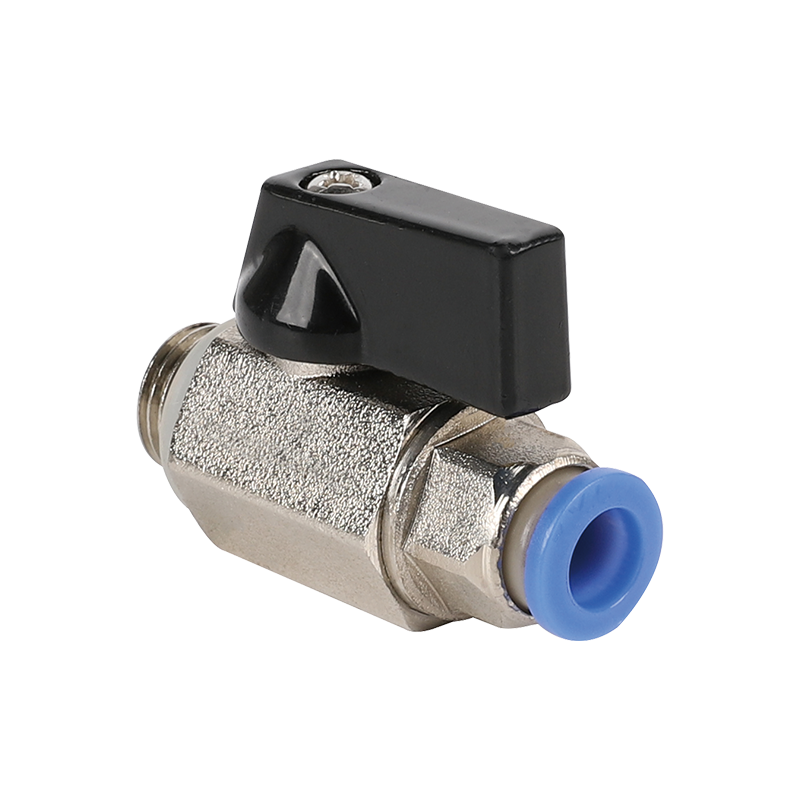
MINI-2 Mini Short-Handle Ball Valve(M/M)
-
 View More
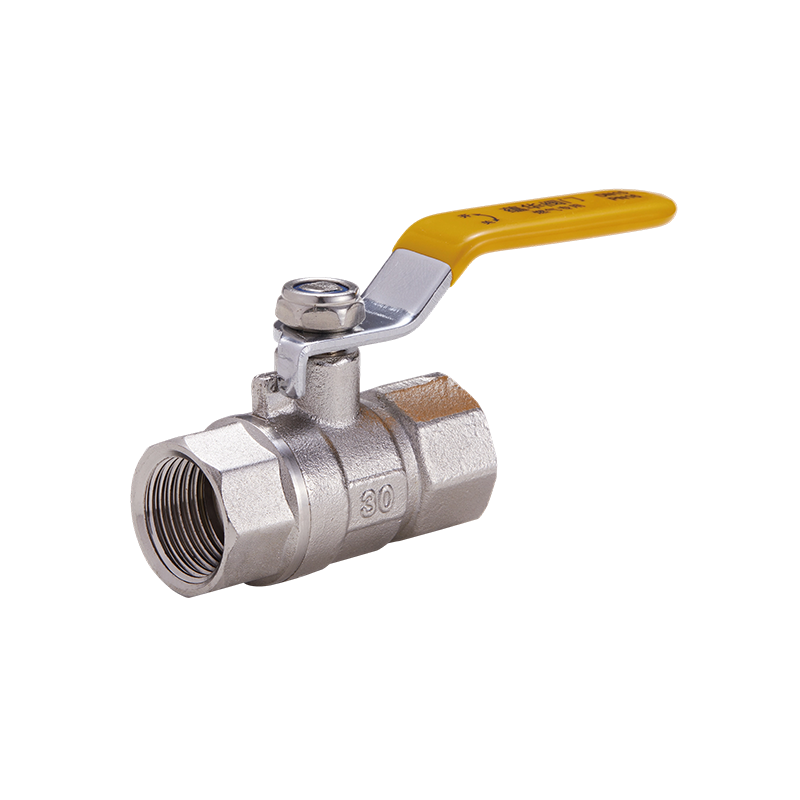
YH-2210 Forged Steel Ball Valve with Long Handle (F/F)
-
 View More
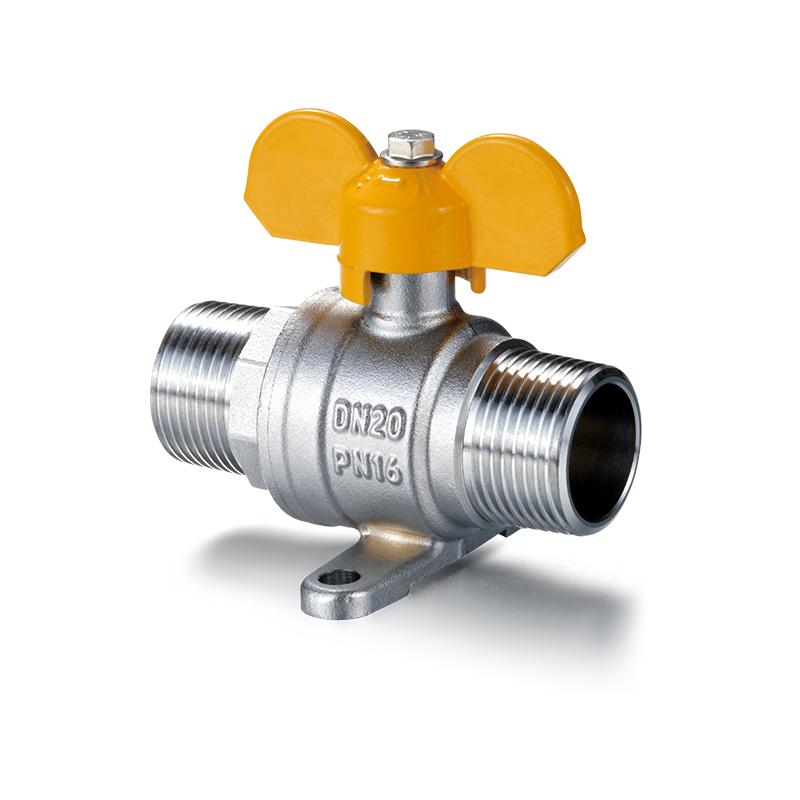
YH-214 Brass Ball Valve with Base& Butterfly Handle(M/M)
-
 View More
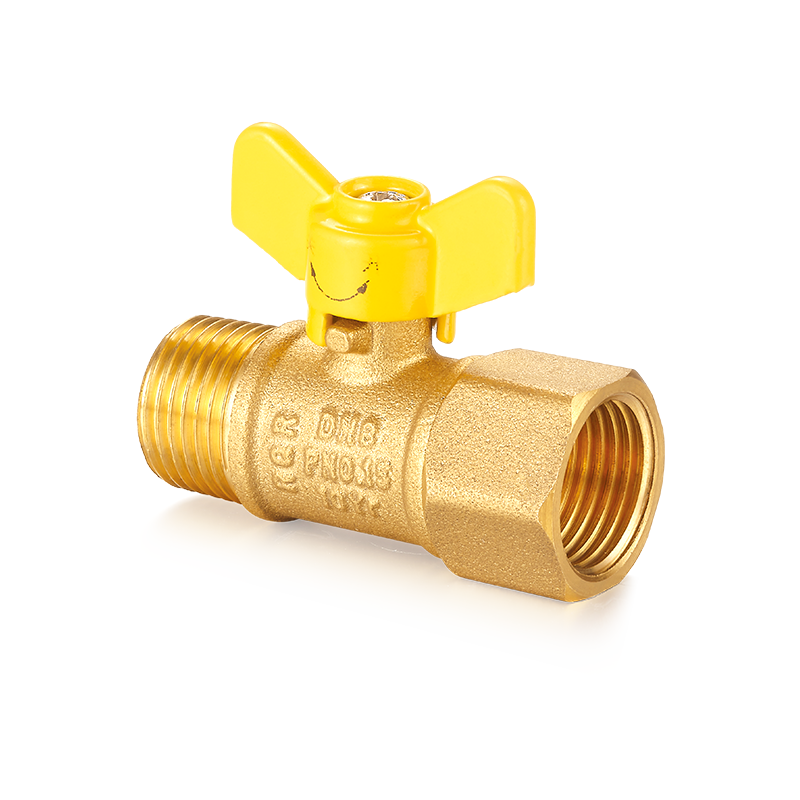
YH-205 Brass Ball Valve with Butterfly Handle(F/M)
-
 View More
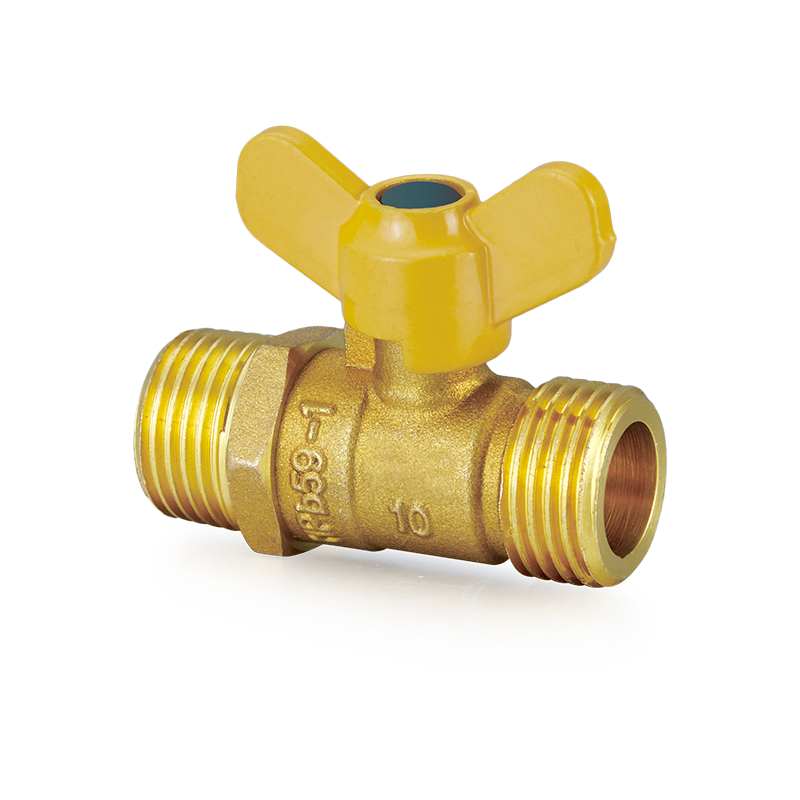
YH-206 Brass Ball Valve with Butterfly Handle(M/M)
Related News
Contact Us
-

-
 +86-0574-63742169
 -
 No.104-128, Cizhang East Road, Zhangqi Town, Cixi City, Ningbo, Zhejiang Province, China


Message Us Now !
